Did you know that as of early 2026, the success rate for microdiscectomy has climbed to a remarkable 86.8%? You’ve likely spent years exhausted by chronic back pain and the persistent fear that traditional spine surgery might leave you sidelined for months. It’s natural to feel anxious about large scars or a long recovery that keeps you away from your family and hobbies. At Minimally Invasive Neurosurgery of Texas, we believe minimally invasive neurosurgery should be the first choice for patients who want to reclaim their mobility without the trauma of open procedures.
This article reveals how advanced MISS techniques have become the modern gold standard, offering a precision-guided path to recovery that prioritizes your spinal integrity. You’ll discover how cutting-edge tools like the Globus ExcelsiusGPS and the Medtronic Stealth AXiS system, cleared by the FDA in February 2026 for spine procedures, allow Dr. Scott Kutz to provide world-class care with minimal blood loss. We will explore how these high-tech innovations help you get back to life quickly and explain why specialized surgical centers are now the preferred setting for superior patient outcomes and reduced post-operative complications.
Key Takeaways
- Learn how the muscle-sparing approach of MISS avoids the tissue trauma of traditional open surgery to preserve your natural spinal anatomy.
- Explore how advanced robotics and navigation systems achieve nearly 100% accuracy in hardware placement for safer, more predictable outcomes.
- Understand the true value of minimally invasive neurosurgery by comparing its shorter hospital stays and lower complication rates against traditional methods.
- Identify which chronic spinal conditions, such as spinal stenosis or degenerative disc disease, respond most effectively to these modern surgical techniques.
- Discover why choosing a specialized boutique practice like MINT provides the board-certified expertise and personal attention needed to help you get back to life.
Defining Minimally Invasive Neurosurgery for Modern Spine Care
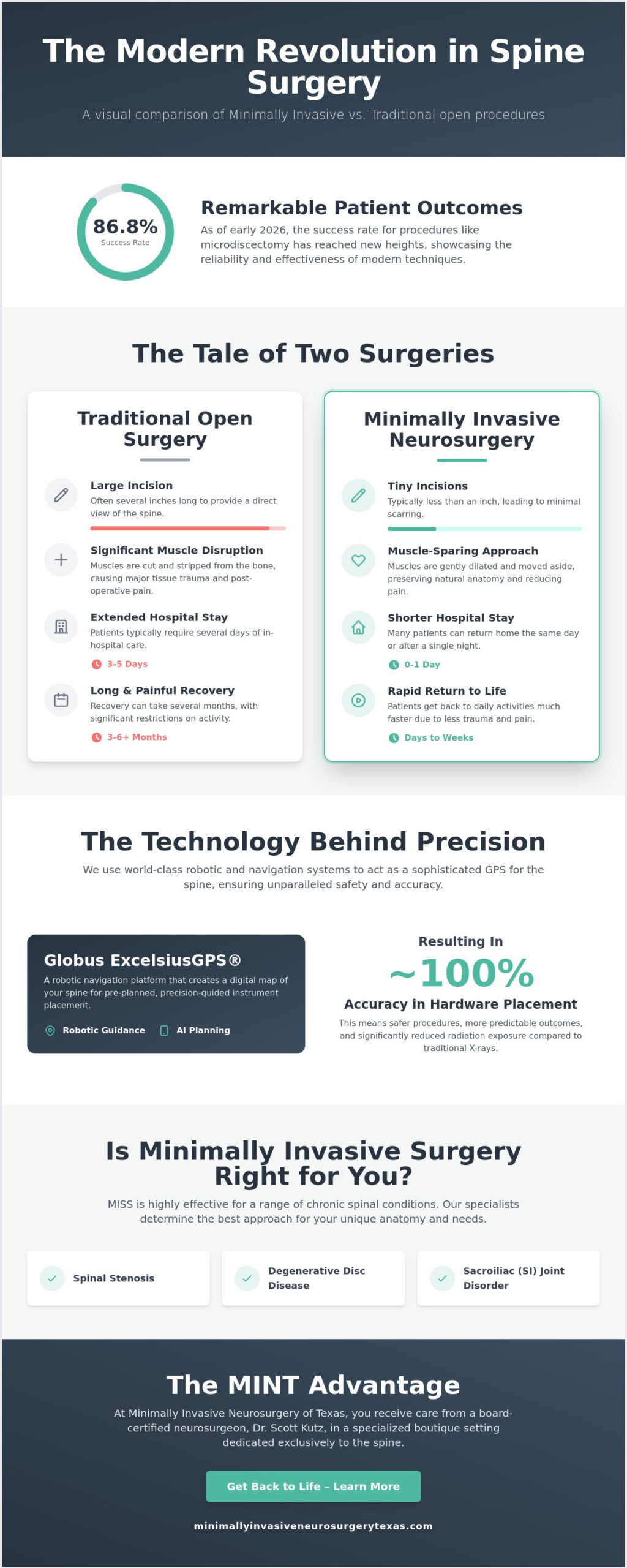
Traditional “open” surgery often involves long incisions and significant muscle retraction to provide the surgeon with a direct view of the spine. This invasive method frequently results in a difficult recovery period and extended hospital stays. Minimally invasive spine surgery (MISS) represents a fundamental shift in how we approach spinal health. The primary goal of minimally invasive neurosurgery is to achieve the exact same clinical results as traditional surgery but with far less disruption to your body’s natural architecture. At Minimally Invasive Neurosurgery of Texas (MINT), we focus exclusively on the complex structures of the spine. We don’t perform cranial neurosurgery or treat brain-related conditions. This hyper-specialization ensures our patients receive a level of expertise that general surgical centers simply cannot match.
The Core Principles of Muscle-Sparing Techniques
Standard surgical procedures typically require stripping muscles away from the bone to reach the affected area. This trauma to the soft tissue is often the primary cause of intense post-operative pain. In contrast, modern MISS uses a muscle-sparing approach. Muscle-sparing is the avoidance of stripping muscles from the spinal column. Our surgeons utilize tubular retractors to create a precise path to the spine. These specialized instruments gently dilate the muscles, pushing them aside rather than cutting or detaching them. By preserving these vital structures, we significantly reduce blood loss and the risk of infection. Patients experience a faster return to daily activities because the body doesn’t need to repair large-scale muscle damage.
Why a Neurosurgeon is the Right Choice for Spine Surgery
When your health involves the delicate nerves within the spinal canal, the choice of specialist matters. Neurosurgeons receive extensive training dedicated to the nervous system, making them uniquely qualified to navigate the intricate anatomy of the spine. This specialized background is essential for treating conditions like degenerative disc disease or sacroiliac joint disorder with absolute precision. At MINT, we offer a boutique surgical center experience that contrasts sharply with the cold, impersonal nature of large hospital systems. Dr. Scott Kutz is a board-certified authority who has dedicated his career to mastering advanced MISS techniques in Lewisville and Plano. This combination of board-certified expertise and a patient-centered emotional style provides the reassurance you need. We use world-class technology to ensure every procedure is as safe and effective as possible, helping you get back to life without the burdens of chronic pain.
The Technology Behind Precision: Robotics and Augmented Reality
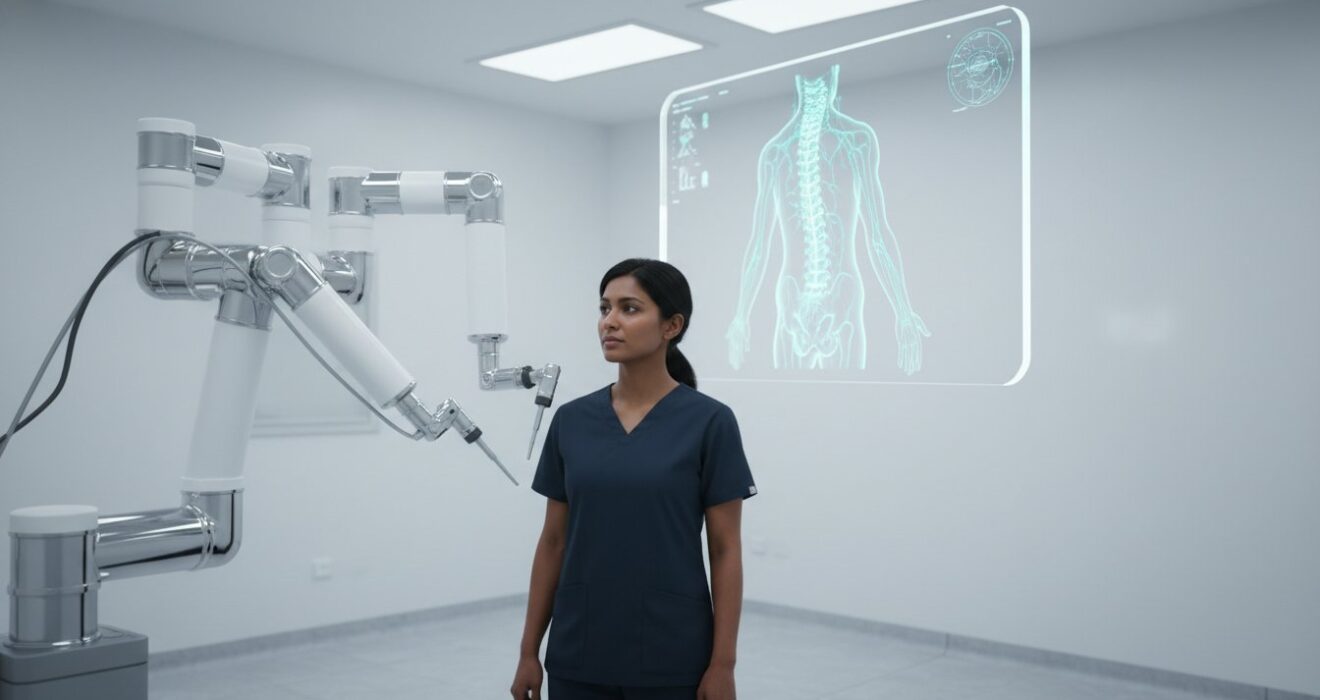
Modern medicine has transformed the surgical experience for patients dealing with chronic spinal pain. The concept of the “High-Tech Healer” isn’t just a theoretical ideal; it’s the daily reality at our practice. By utilizing minimally invasive neurosurgery, we leverage specialized systems that act as a sophisticated GPS for the spine. This technology allows for hardware placement with an accuracy rate that reaches nearly 100%. In the past, surgeons relied on repeated intraoperative X-rays to verify their position. Our advanced navigation platforms significantly minimize radiation exposure for both the patient and the surgical team. This evolution in care is underscored by the February 2026 FDA clearance of the Medtronic Stealth AXiS system, which further integrates AI-driven planning into the neurosurgical workflow.
Globus ExcelsiusGPS: The Gold Standard in Robotic Navigation
The Globus ExcelsiusGPS system is a cornerstone of our precision-guided approach. It allows Dr. Scott Kutz to create a comprehensive digital map of your unique spinal anatomy before the procedure even begins. During surgery, a robotic arm provides real-time guidance, ensuring every instrument follows the exact path planned. This level of control means we can use much smaller incisions than traditional surgery requires. Because the robotic arm’s precision reduces the need for large entry points, there’s less tissue disruption and minimal blood loss. These smaller incisions are the foundation of our “get back to life” promise. They result in less post-operative scarring and a significantly faster return to the hobbies and work you enjoy. If you’re ready to see how this precision can change your recovery, consider scheduling a consultation at Minimally Invasive Neurosurgery of Texas.
Augmedics AR: Seeing Through Tissue with Augmented Reality
Augmented reality has moved from the world of high-tech gaming directly into our operating rooms. The Augmedics system provides what many describe as “X-ray vision” through human tissue. The surgeon wears a specialized headset that projects a 3D visualization of the patient’s internal spinal structures directly onto their field of view. This allows the surgeon to see exactly where they are working without ever taking their eyes off the patient. Unlike traditional methods that require looking away at a monitor, this technology keeps the focus entirely on you. This constant visual connection dramatically increases the safety profile for complex spinal fusions. Leading institutions, such as those providing Minimally Invasive Spine Surgery at Johns Hopkins, emphasize that these visualization tools are essential for modern, high-precision care. By combining robotic navigation with AR headsets, we ensure that every movement is calculated and every outcome is optimized for your long-term health.
Traditional vs. Minimally Invasive Spine Surgery: A Comparative Analysis
Choosing the right surgical approach is a pivotal decision in your journey toward pain relief. While traditional open surgery has been the historical standard, modern minimally invasive neurosurgery offers a more refined framework for patient recovery. Many patients are initially unaware of the “hidden” costs associated with traditional methods. These aren’t just financial expenses; they include the physical toll of multi-day hospital stays and the emotional drain of months spent in intensive rehabilitation. Some mistakenly believe that a smaller incision means the surgery is less effective. If you’ve encountered conflicting information about procedures, our guide to back surgery myths vs. reality can help you separate fact from fiction before making any decisions. In reality, our MISS (Minimally Invasive Spine Surgery) techniques provide the same clinical decompression and stabilization as open surgery but with significantly higher precision. This muscle-sparing philosophy ensures we address the root cause of your pain without the collateral damage of older, more aggressive techniques.
Recovery Timelines and Hospital Stays
The difference in recovery speed is often the most life-changing factor for our patients. Traditional back surgery typically requires a three to five-day hospital stay for monitoring and pain management. In contrast, many of our MISS procedures are performed in outpatient ambulatory surgery centers (ASCs). Recent industry data from early 2026 indicates that these outpatient facilities are often 20% to 40% less expensive than traditional hospital settings. Because we avoid detaching major muscle groups, our patients experience a dramatic reduction in their reliance on post-operative narcotic pain medications. Most individuals are able to return to work and light physical activity within two to four weeks. This stands in stark contrast to the three to six-month recovery window often seen with traditional open procedures, allowing you to get back to life on your own terms.
Clinical Outcomes: Blood Loss and Infection Rates
Clinical data supports the safety profile of specialized neurosurgical techniques. According to research on Minimally Invasive Spine Surgery from AAOS, smaller incisions directly correlate with statistically lower infection rates. Large, open incisions expose a greater surface area of internal tissue to the environment, which naturally increases the risk of complications. Furthermore, the specialized tools used at MINT ensure minimal blood loss during the procedure. This is a critical advantage for older patients or those managing comorbidities like hypertension. A smaller scar is certainly an aesthetic benefit, but its true value lies in what it represents: a significant reduction in internal trauma. By preserving the integrity of the surrounding ligaments and tendons, we ensure the spine remains stable and the path to healing remains clear.
Determining Candidacy: Is Minimally Invasive Surgery Right for You?
One of the most frequent questions we encounter is, “Am I too old or too injured for this procedure?” It’s a valid concern for those who’ve lived with chronic pain for years. Age itself is rarely the deciding factor for minimally invasive neurosurgery. In fact, because MISS techniques minimize blood loss and physiological stress, they’re often the safer choice for older adults who might not tolerate the trauma of traditional open surgery. We also specialize in helping patients who suffer from Failed Back Surgery Syndrome (FBSS). If you’ve had a previous operation elsewhere that didn’t provide relief, or if your pain has returned, you shouldn’t lose hope. A second opinion focusing on advanced revision techniques can often identify the precise nerve compression that was missed during a more invasive procedure.
To help you prepare for your visit, use this checklist during your initial consultation:
- Have my symptoms persisted for more than 6 to 12 weeks despite conservative care?
- Does my pain radiate into my legs or arms, suggesting nerve involvement?
- Have I been told I need a spinal fusion, and am I interested in motion-sparing alternatives?
- Is my chronic pain preventing me from performing daily activities or returning to work?
Common Conditions Treated with MIS Techniques
Modern neurosurgical innovations allow us to treat a wide range of degenerative conditions with extreme precision. Spinal stenosis and herniated discs are the most common issues that respond exceptionally well to minimally invasive spine techniques. For patients worried about losing mobility, we offer Artificial Disc Replacement. This is a sophisticated, motion-sparing alternative to traditional fusion that preserves your natural range of motion. Patients with cervical disc disease may also want to explore neck disk replacement in Plano and Lewisville, a cutting-edge option that restores motion while relieving chronic radiating arm pain. We also frequently treat Sacroiliac (SI) Joint Dysfunction. This condition is often misdiagnosed as a lumbar disc issue, but it requires a specific, targeted approach to provide lasting relief. Our goal is to ensure you receive the correct diagnosis so you can finally get back to life.
When Traditional Surgery May Still Be Necessary
While we prioritize muscle-sparing methods, we maintain our clinical authority by acknowledging that minimally invasive neurosurgery isn’t the universal solution for every patient. Certain complex cases, such as severe scoliosis with significant curvature or extreme spinal instability, may still require a traditional open approach to ensure the best long-term outcome. At MINT, we use advanced diagnostics and real-time imaging to evaluate your unique anatomy. We’ll never recommend a procedure just because it’s “high-tech” if a different path offers a better chance of success. Your safety and recovery are our absolute priorities. If you’re ready to find out which path is right for your spine, you can Schedule your evaluation at Minimally Invasive Neurosurgery of Texas today.
The MINT Advantage: Leading Neurosurgery in Lewisville and Plano
Choosing a surgical partner is a deeply personal decision that shouldn’t feel like a transaction within a massive hospital system. Minimally Invasive Neurosurgery of Texas (MINT) offers a boutique experience where precision technology meets compassionate care. We prioritize your health by combining the authority of board-certified expertise with the accessibility of a local practice. Dr. Scott Kutz has spent years refining the art of minimally invasive neurosurgery, ensuring that every patient in the DFW metroplex has access to world-class spinal care. Unlike generic medical centers, our focus is exclusively on the spine. This allows us to master the specific nuances of nerve-related pain and structural integrity without the distractions of a general surgical department.
Expert Care Close to Home in Lewisville and Plano
Convenience plays a vital role in your recovery journey. We’ve strategically placed our clinics to serve the North Texas community, providing easy access for both pre-operative evaluations and post-operative follow-ups. As of January 1, 2026, our main Lewisville office relocated to a specialized facility at 1850 Lakepointe Drive, Suite 500. This move reflects our commitment to providing a modern, patient-centered environment that avoids the coldness and complexity of large hospital corridors. By choosing a specialized center, you receive personalized attention from a team that knows your name and understands your specific goals. Our High-Tech Healer approach ensures you benefit from robotic precision while feeling supported by a dedicated local physician. We don’t just treat symptoms; we provide the path you need to finally get back to life.
Scheduling Your Consultation at MINT
Taking the first step toward a pain-free future is simple. When you arrive for your initial evaluation, please bring any recent imaging, such as an MRI or CT scan, along with a detailed history of your previous treatments. This information is essential for Dr. Kutz to develop a targeted plan tailored to your unique anatomy. We also provide a vital second opinion service for individuals who’ve been told that traditional open surgery is their only option. In many cases, we can offer a minimally invasive neurosurgery alternative that achieves the same clinical goals with significantly less downtime. Whether you’re visiting our Plano office or our new Lewisville location, you’ll find a team ready to restore your quality of life. Don’t let chronic pain dictate your future. Contact us today to schedule your consultation and discover why MINT is the premier choice for advanced spine care in North Texas.
Reclaiming Your Future with Precision Spine Care
Choosing to address chronic pain is the first step toward a renewed quality of life. The evolution of minimally invasive neurosurgery has replaced the uncertainty of traditional open surgery with the absolute certainty of robotic precision. By utilizing world-class systems like Globus ExcelsiusGPS and Augmedics AR, board-certified neurosurgeon Dr. Scott Kutz ensures every procedure is tailored to your unique anatomy. These innovations lead to significant benefits, including minimal blood loss and the opportunity to recover in specialized outpatient settings rather than cold hospital wards. With success rates for specific procedures like microdiscectomy reaching 86.8% as of May 2026, the data clearly supports this modern standard of care.
You don’t have to let spinal stenosis or degenerative disc disease define your daily experience. Our boutique practices in Lewisville and Plano provide the personalized attention you deserve from a team that prioritizes your relief. It’s time to move from a state of concern to a state of informed confidence. Schedule your consultation with Dr. Scott Kutz today to get back to life. We are here to help you enjoy every single day without the burden of chronic pain.
Frequently Asked Questions
How long is the recovery period after minimally invasive neurosurgery?
Most patients return to light work and daily hobbies within 2 to 4 weeks after the procedure. Traditional open surgery often requires a recovery window of 3 to 6 months. Because our muscle-sparing techniques avoid significant tissue trauma, you’ll experience less post-operative pain. This faster timeline is a key reason why minimally invasive neurosurgery has become the preferred choice for active adults in 2026.
Is minimally invasive spine surgery safer than traditional open surgery?
Clinical data confirms that MISS is safer for many patients due to a statistically lower risk of infection and minimal blood loss. As of early 2026, the success rate for microdiscectomy is approximately 86.8%. Smaller incisions expose less internal tissue to the environment, which reduces the chance of complications. This is especially beneficial for patients with comorbidities like diabetes who face higher risks with open surgery.
Will my insurance cover robotic-assisted spine surgery at MINT?
Most major insurance providers cover robotic-assisted spine surgery when it’s medically necessary for conditions like spinal stenosis or degenerative disc disease. In 2026, patients with in-network insurance typically face out-of-pocket costs between $1,500 and $6,000. Our team works directly with your provider to verify benefits for advanced systems like Globus ExcelsiusGPS. We prioritize transparency so you can focus entirely on your journey to get back to life.
What is the difference between a neurosurgeon and an orthopedic spine surgeon?
Neurosurgeons undergo specific, intensive training dedicated to the delicate nerves and the spinal cord itself. While both types of surgeons perform spine surgery, a neurosurgeon’s expertise is vital when dealing with the intricate neural structures inside the spinal canal. Dr. Scott Kutz is a board-certified authority who utilizes this specialized background to navigate complex cases with absolute precision, ensuring the highest level of safety for your nervous system.
Can minimally invasive techniques fix a failed previous back surgery?
Yes, minimally invasive neurosurgery is a highly effective option for treating Failed Back Surgery Syndrome (FBSS). Many patients seek a second opinion after a traditional open surgery fails to provide relief. We use advanced navigation and augmented reality to identify and correct issues like persistent nerve compression. This targeted approach allows us to perform revision surgery with much less disruption than another open procedure would require.
How small are the incisions in a typical MISS procedure?
Incisions in a typical MISS procedure are remarkably small, usually measuring between 1 and 2 centimeters. Traditional open surgeries often require incisions of 10 to 15 centimeters to allow the surgeon to see the spine directly. By using tubular retractors and high-definition cameras, we can perform complex work through an opening no larger than a thumbnail. This results in minimal scarring and significantly less internal trauma to the surrounding muscles. For those interested in addressing other aesthetic concerns like hair loss or scalp scars, nuhairink.com offers professional scalp micropigmentation.
Do I need a referral to see a minimally invasive neurosurgeon in Plano?
Whether you need a referral depends entirely on your specific insurance policy. Most PPO plans allow you to schedule an appointment directly at our Plano or Lewisville offices without a primary care physician’s referral. However, some HMO plans still require an initial referral to cover the cost of the specialist visit. We recommend calling our office with your insurance information so our staff can verify your specific requirements before your consultation.
What happens if I am not a candidate for a minimally invasive approach?
If advanced diagnostics show you aren’t a candidate for MISS, we will discuss the safest traditional surgical options or non-surgical treatments. Certain conditions, such as severe scoliosis or extreme spinal instability, may require a traditional approach to ensure long-term stability. Our priority is always your health and achieving the best possible outcome. We’ll guide you through every choice with clinical authority to ensure you find lasting relief. To better understand how to evaluate your options, review our 2026 checklist for minimally invasive spine techniques to help you select the path that best fits your recovery goals.