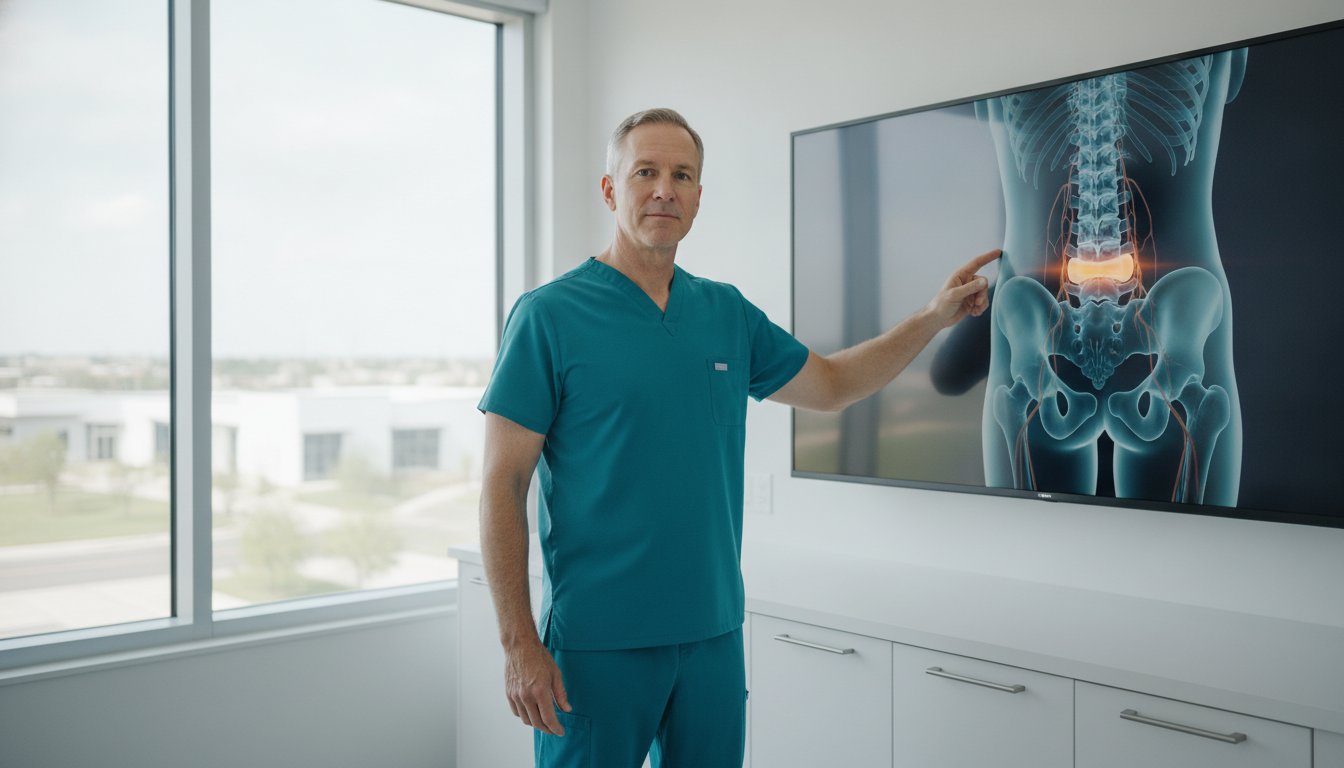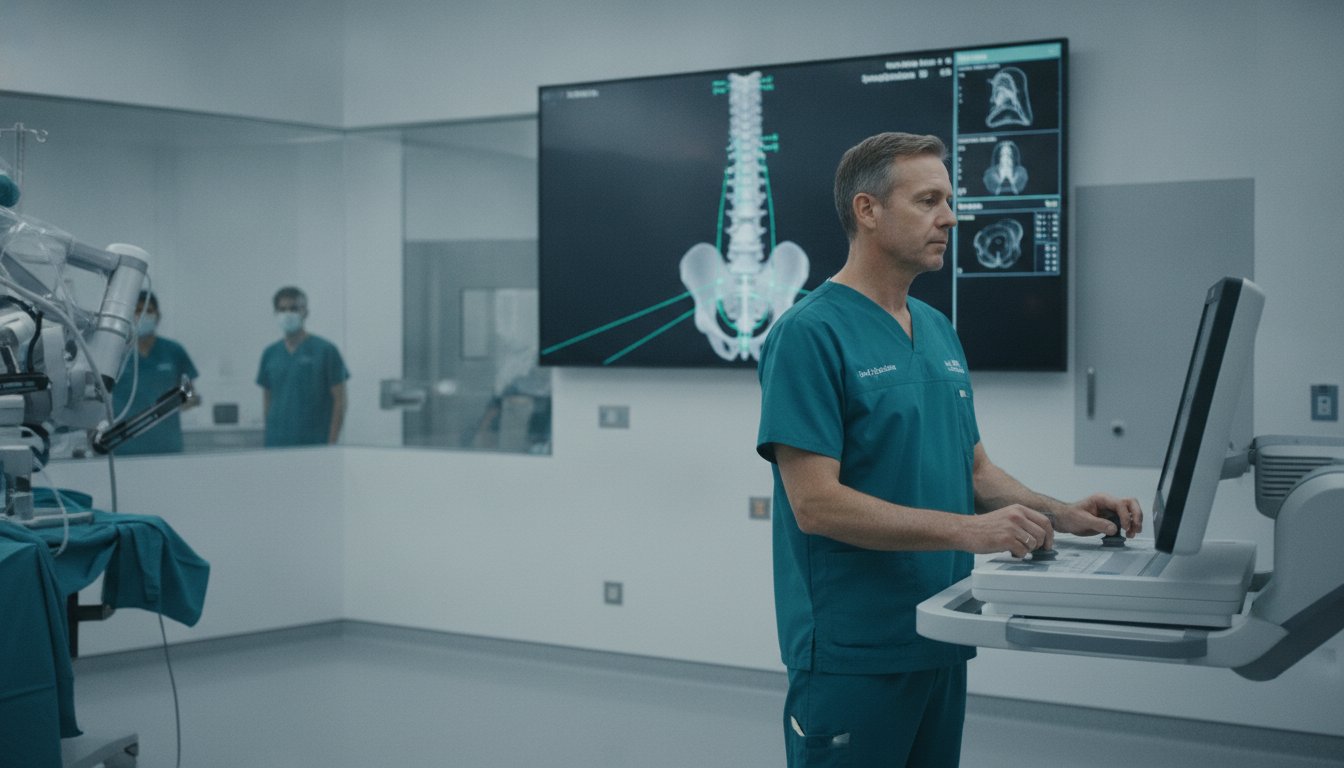
Minimally Invasive Neurosurgery of Texas (MINT) is a specialized surgical center led by Dr. Scott Kutz, a board-certified neurosurgeon and Fellow of the American Association of Neurological Surgeons. From his boutique satellite office in Plano and the new 2026 headquarters in Lewisville, Dr. Kutz provides advanced spondylolisthesis treatment Plano TX using robotic precision and motion-preserving techniques to help patients regain their quality of life.
What if the solution to your chronic leg pain and spinal slippage didn’t require the grueling recovery of traditional open back surgery? You likely feel the daily strain of sciatica or the inability to stand for extended periods, and it’s natural to fear being sidelined by a major operation. This comprehensive guide reveals how modern surgical innovations under Dr. Scott Kutz can resolve your pain with minimal disruption to your body. You’ll learn about the different grades of vertebral slippage, the benefits of the Globus Excelsius robotic system, and how our patient-centered approach facilitates a faster return to your normal activities.
Key Takeaways
- Understand how the Meyerding grading system helps Dr. Scott Kutz categorize your spinal slippage to create a personalized recovery plan.
- Identify the non-surgical therapies that serve as the first line of defense against sciatica and limited mobility.
- Learn why advanced spondylolisthesis treatment Plano TX at MINT utilizes the Globus Excelsius robotic system for unmatched surgical precision.
- Discover how minimally invasive techniques reduce muscle disruption and allow for significantly shorter hospital stays.
- Gain clarity on the recovery process and how motion-preserving surgery helps you return to your normal activities faster.
Understanding Spondylolisthesis Treatment in Plano TX
Living with a slipped vertebra often means dealing with persistent, radiating leg pain and a significant loss of mobility. Dr. Scott Kutz uses his extensive background as a Fellow of the American Association of Neurological Surgeons and a Fellow of the American College of Surgeons to help patients navigate these challenges. We focus on modern, motion-preserving techniques that allow you to reclaim your daily routine without the burden of chronic discomfort. Our practice functions as a source of optimism for those who feel limited by their physical condition, providing a clear path toward a pain-free life.
The Role of a Plano Neurosurgeon in Spinal Care
A neurosurgeon is uniquely qualified to treat the nerve compression that typically accompanies spinal slippage. While various specialists handle general back pain, a neurosurgeon’s expertise lies in the intricate balance between the spinal column and the nervous system. Dr. Scott Kutz brings over 20 years of experience to his practice, ensuring that every patient receives a highly specialized level of care. At our Plano office, we utilize a collaborative approach that puts your health and recovery first. We prioritize conservative options when possible; however, when surgery becomes necessary, we employ the latest technological innovations to ensure precision. This dedication to professional excellence helps our patients transition from a state of concern to a state of informed confidence.
Spondylolisthesis vs Spondylosis: Knowing the Difference
Understanding the specific cause of your back pain is the first step toward effective relief. Patients often hear the terms spondylosis and spondylolisthesis and wonder if they describe the same issue. Spondylosis is essentially age-related wear and tear, or spinal arthritis, which affects the discs and joints. In contrast, Understanding Spondylolisthesis involves the actual physical displacement of a bone. This slippage can be more aggressive in how it impacts your ability to walk or stand for extended periods. It’s quite common for both conditions to occur simultaneously, as degenerative changes often lead to instability in the spine. Dr. Kutz identifies the precise grade of your slippage to determine the best course of action. Whether you need lifestyle modifications or minimally invasive spine surgery, our goal remains a return to normal activity with minimal physical impact.
Grades and Types: Why Your Diagnosis Dictates Your Treatment
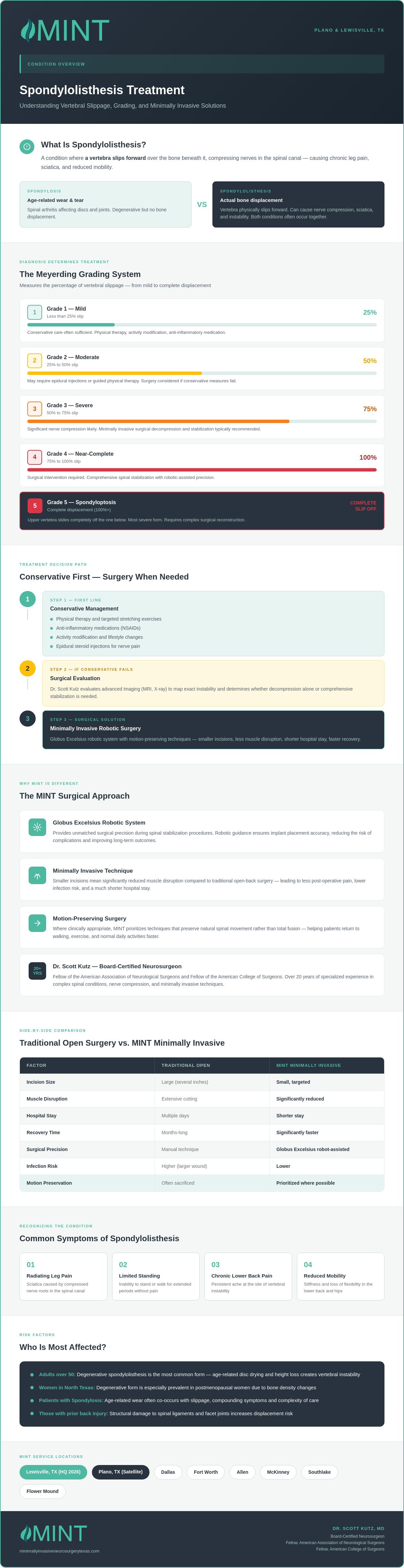
The severity of vertebral slippage directly influences the complexity of your care plan. Clinicians utilize the Meyerding grading system to measure the percentage of one vertebra slipping over another. Grade 1 represents a mild slip of less than 25 percent, while Grade 4 indicates a near-total displacement. Grade 5, known as spondyloptosis, occurs when the upper vertebra slides completely off the one below it. When you seek spondylolisthesis treatment Plano TX, Dr. Scott Kutz utilizes advanced diagnostic imaging at our boutique Plano office to map the exact degree of instability. This precision allows him to determine whether your spine requires simple decompression or a more comprehensive stabilization procedure to resolve your symptoms.
Degenerative Spondylolisthesis in the Aging Spine
As we age, intervertebral discs dry out and lose height, creating instability that allows vertebrae to shift. Degenerative spondylolisthesis is the most common form for patients over age 50, especially women in North Texas. This shifting often narrows the spinal canal, causing radiating sciatica. Following our move from the Frisco office to our new 2026 Lewisville headquarters, we continue to provide specialized care for these age-related conditions. You can learn about our patient-centered approach on the Minimally Invasive Neurosurgery of Texas about us page. Dr. Kutz evaluates options for spondylolisthesis treatment Plano TX, including Conservative vs Surgical Interventions, to align with your lifestyle goals.
Isthmic Spondylolisthesis and Pars Defects
Isthmic spondylolisthesis involves a structural issue in the pars interarticularis, the small bridge of bone in the vertebra. Repetitive stress from sports often causes a stress fracture or pars defect. While these fractures can begin in childhood, the resulting slippage typically causes pain in adulthood. Dr. Scott Kutz, a board-certified neurosurgeon and Fellow of the American College of Surgeons, stabilizes these segments to restore spinal integrity. View our patient stories to see how our specialized care helps others return to their normal activities.
Conservative vs Surgical Interventions for Spinal Slippage
Most patients begin their journey toward relief with non-surgical methods. Dr. Scott Kutz, a board-certified neurosurgeon, Fellow of the American Association of Neurological Surgeons, and Fellow of the American College of Surgeons, believes that the best spondylolisthesis treatment Plano TX starts with the least invasive options possible. This first line of defense typically includes focused physical therapy, activity modification to reduce spinal strain, and anti-inflammatory medications. These steps aim to reduce inflammation and strengthen the core muscles that support the spine. A comprehensive review of spondylolisthesis management suggests that these conservative measures successfully manage symptoms for many patients without the need for an operating room.
When oral medications don’t provide enough relief, epidural steroid injections can manage acute radiculopathy or radiating leg pain. These injections deliver powerful anti-inflammatory medicine directly to the affected nerve root. While effective for symptom management, they don’t fix the underlying slippage. Dr. Kutz monitors patients closely for red flags that indicate surgery has become necessary. These include progressive neurological deficits, such as worsening weakness in the legs or a loss of bowel and bladder control. In these specific cases, waiting too long can lead to permanent nerve damage.
When Physical Therapy Is Not Enough
MINT does not provide in-house physical therapy. Instead, we collaborate with a network of trusted local Plano providers to ensure you receive expert rehabilitative care. We generally consider 6 to 12 weeks of no improvement as the threshold for failed conservative care. If your pain persists or your mobility continues to decline after this window, it’s time to re-evaluate your treatment plan. Dr. Scott Kutz emphasizes that timely intervention prevents the long-term consequences of chronic nerve compression. We focus on moving you from a state of persistent discomfort to a clear path of recovery.
The Transition to Minimally Invasive Consultations
A specialized neurosurgical evaluation in Plano TX is the next logical step when conservative efforts stall. Dr. Scott Kutz reviews all diagnostic imaging personally to determine the exact degree of instability in your spine. He looks for signs that the vertebrae are shifting during movement, which often dictates the need for stabilization. For patients requiring advanced intervention, we offer minimally invasive spine surgery to restore structural integrity. This transition ensures that your care moves from simply managing symptoms to addressing the root cause of your spinal slippage with modern precision.
The MINT Approach: Minimally Invasive and Robotic-Assisted Surgery
Traditional back surgery often involves long incisions and significant muscle retraction, which extends your time in the hospital and slows your recovery. At MINT, Dr. Scott Kutz utilizes advanced spondylolisthesis treatment Plano TX protocols that prioritize minimally invasive techniques. By using smaller incisions, he reduces muscle disruption and minimizes physical trauma to the body. This specialized approach leads to significantly less blood loss and lower infection rates compared to traditional open surgery. Patients often feel more optimistic about their recovery when they understand that modern spine surgery focuses on precision rather than large-scale intervention. This dedication to innovation allows us to provide the relief of suffering with the least possible impact on your physical health.
Robotic Navigation for Spondylolisthesis Stabilization
Dr. Scott Kutz was an early adopter of the Globus Excelsius robotic navigation system, which functions as a high-tech GPS for the spine. This system allows for sub-millimeter accuracy when placing stabilization hardware, which is critical for complex cases of spinal fusion. Additionally, Dr. Kutz uses Augmedics Augmented Reality (AR) to see the patient’s anatomy in 3D through specialized headsets during the procedure. This “x-ray vision” ensures that every screw and implant is positioned with absolute certainty. As a board-certified neurosurgeon, Fellow of the American Association of Neurological Surgeons, and Fellow of the American College of Surgeons, Dr. Kutz combines his 20 years of experience with these proprietary technological systems to ensure the best possible clinical outcomes.
Motion-Preserving Options and Artificial Disc Replacement
While spinal fusion is the standard for many cases of instability, some patients may qualify for motion-preserving alternatives. Traditional fusion locks two vertebrae together, which can sometimes place extra stress on the levels above or below the surgical site. Dr. Kutz evaluates each patient for Artificial Disc Replacement when appropriate. This procedure aims to stabilize the slippage while maintaining the natural flexibility of the spine. Protecting the adjacent levels is a primary goal of our motion-preserving philosophy. By choosing a specialized boutique surgical center like MINT, you receive personal attention and access to the absolute forefront of modern surgical innovation. We focus on stabilizing your spine while protecting your long-term mobility.
If you are ready to resolve your spinal slippage and return to daily activities without pain, contact our Plano office today to schedule your neurosurgical evaluation.
Recovery and Long-Term Outcomes for Plano Patients
The recovery process for modern spondylolisthesis treatment Plano TX differs significantly from traditional open-back methods. Because Dr. Scott Kutz uses minimally invasive techniques, the physical impact on your body remains much lower. Many patients return home the same day of their procedure or after a single night stay in the hospital. We encourage walking within hours of the surgery to promote circulation and prevent complications. This rapid mobilization serves as a hallmark of our high-tech approach to spinal care, moving you quickly from a state of post-operative rest to active recovery.
Long-term success depends on a structured follow-up plan. Dr. Scott Kutz, a board-certified neurosurgeon and Fellow of the American Association of Neurological Surgeons, oversees your progress through regular appointments. These check-ups occur at either our boutique satellite office in Plano or our new 2026 headquarters in Lewisville. We monitor your spinal stabilization through imaging and physical assessments to ensure your vertebrae remain in the correct position. This dedicated attention avoids the coldness of a large hospital system, providing you with the personal care necessary for a full return to normal activity.
The First Two Weeks After Surgery
During the initial healing phase, protecting the surgical site is the top priority. Dr. Scott Kutz provides specific guidelines that restrict lifting, twisting, and bending to allow the bone and soft tissues to heal properly. The small incisions used at MINT result in significantly less post-operative pain than traditional surgery, which often reduces the need for heavy medications. Most patients find they can manage their discomfort with ease while they focus on gentle walking. You can see real examples of this progress by reading our MINT Testimonials from patients who have successfully reclaimed their lives.
Returning to an Active Texas Lifestyle
Regaining your mobility means returning to the activities that define the Plano community. Our goal is to help you get back to the golf course, the tennis court, or long walks through local parks without the burden of radiating leg pain. Most patients see full stabilization and complete pain relief within a few months as the spine strengthens. Dr. Scott Kutz, also a Fellow of the American College of Surgeons, focuses on restoring your quality of life through motion-preserving techniques whenever possible. We measure our success by your ability to return to your daily routines with informed confidence and physical freedom.
Take Control of Your Spinal Health Today
Understanding the specific grade of your vertebral slippage is the first step toward effective relief. Modern medical technology ensures you don’t have to choose between chronic pain and the risks of invasive open surgery. Choosing specialized spondylolisthesis treatment Plano TX at MINT means prioritizing your mobility through motion-preserving techniques and robotic precision. This high-tech approach minimizes physical impact while maximizing your chances for a successful clinical outcome.
Dr. Scott Kutz, a board-certified neurosurgeon with over 20 years of experience, provides the specialized care needed to resolve complex spinal disorders. Our boutique surgical center combines state-of-the-art robotic navigation with a compassionate, patient-centered emotional style. We focus on your health as the top priority, helping you move from a state of concern to a state of informed confidence. Take the next step in your recovery and schedule a consultation with Dr. Scott Kutz in Plano or Lewisville to discuss your personalized treatment plan. You don’t have to live with the limitations of spinal pain; a future of restored movement and physical freedom is within reach.
Frequently Asked Questions
Is spondylolisthesis a serious condition that requires immediate surgery?
Spondylolisthesis only requires immediate surgery if you experience progressive neurological deficits like severe leg weakness or loss of bowel control. Most cases allow for a trial of conservative care before Dr. Scott Kutz considers surgical intervention. He evaluates the specific grade of your slippage at our Plano office to determine the urgency of your care. We prioritize stabilizing your spine to prevent long term nerve damage.
Can spondylolisthesis be cured without surgery in Plano?
You can often manage the symptoms of spinal slippage through physical therapy and activity modification in Plano. While non surgical methods do not physically move the bone back to its original position, they strengthen supporting muscles to stabilize the area. We prioritize these conservative paths for spondylolisthesis treatment Plano TX before discussing surgical options. This approach helps many patients return to their daily routines without pain.
How long is the recovery time after a minimally invasive spondylolisthesis procedure?
Most patients return home the same day or after one night following a minimally invasive procedure at MINT. You can expect to walk within hours and return to light office work within 2 to 4 weeks. Full stabilization and a return to more strenuous activities like golf or tennis typically occur within 3 to 6 months. Dr. Scott Kutz uses small incisions to ensure your recovery remains as brief as possible.
What is the success rate of Dr. Scott Kutz for treating spinal slippage?
Clinical data for procedures like Anterior Lumbar Interbody Fusion shows success rates between 88 percent and 94 percent. Dr. Scott Kutz utilizes his 20 years of experience and robotic precision to aim for these high standard outcomes. His focus on minimally invasive techniques contributes to lower infection rates and faster recovery timelines. This specialized expertise provides a source of optimism for patients dealing with chronic spinal conditions.
Will I need a brace after my spondylolisthesis surgery in Plano?
Some patients require a lumbar brace for several weeks following surgery to provide extra support while the spine stabilizes. Dr. Scott Kutz determines the need for bracing based on the specific grade of your slippage and the complexity of the stabilization performed. Our team provides clear instructions on when to wear the brace during your follow up visits in Plano. This support helps ensure the best possible long term results.
Does insurance typically cover robotic-assisted spine surgery at MINT?
Most major private insurance plans in Texas cover robotic assisted spine surgery when Dr. Scott Kutz deems it medically necessary. Payers like Aetna and Blue Cross Blue Shield typically require proof of six months of unsuccessful conservative treatment first. Our staff helps verify your specific benefits for spondylolisthesis treatment Plano TX during your initial consultation. We work to move you from a state of concern to a state of informed confidence.
What happens if spondylolisthesis is left untreated for years?
Leaving a slipped vertebra untreated can lead to chronic nerve compression and permanent neurological damage. Over time, the instability may progress to a higher grade, which makes eventual surgical correction more complex. You might experience worsening sciatica, persistent muscle weakness, or a significant decrease in your ability to walk long distances. Early intervention under a board certified neurosurgeon helps protect your long term mobility and quality of life.
How do I know if my back pain is spondylolisthesis or just a bulging disc?
A bulging disc involves the soft center of a spinal disc pushing outward, while spondylolisthesis is the physical sliding of one vertebra over another. Both can cause similar radiating leg pain, but they require different diagnostic approaches. Dr. Scott Kutz uses advanced imaging to identify whether your pain stems from disc material or bone displacement. An accurate diagnosis ensures that your treatment plan addresses the root cause of your discomfort.