In 2026, the success of your recovery depends less on the size of the incision and more on the specific robotic precision guiding your surgeon’s hand. You’ve likely spent months managing persistent pain with physical therapy only to find that your daily quality of life hasn’t truly improved. It’s natural to feel anxious about potential nerve damage or overwhelmed by the complex marketing terms used to describe modern back surgery. You deserve a solution that offers minimal scarring and a reduced reliance on medication so you can get back to the life you love.
This article provides a comprehensive medical checklist to help you evaluate advanced minimally invasive spine techniques, ensuring you select the surgical path that leads to a swift return to your normal activity levels. We’ll examine the latest FDA-cleared robotic systems, such as the Medtronic Stealth AXiS, and explain how 2026 CMS regulatory changes are making outpatient recovery more accessible than ever. By the end of this guide, you’ll have the clinical clarity needed to move from a state of concern to a state of informed confidence in your surgical plan.
Key Takeaways
- Learn how modern minimally invasive spine techniques prioritize muscle preservation to maintain your spinal stability and accelerate your return to normal activity.
- Identify the essential diagnostic benchmarks, including high-resolution imaging and conservative care trials, that determine if you are a candidate for a specialized surgical approach.
- Compare the clinical advantages of endoscopic visualization versus motion-preserving artificial disc replacement for your specific spinal condition.
- Understand the immediate post-operative timeline, from same-day discharge to managing “nerve wake-up” sensations during the first 72 hours of recovery.
- Evaluate the critical credentials to look for in a North Texas specialist to ensure your procedure is performed with the highest level of surgical precision.
Defining Modern Minimally Invasive Spine Techniques
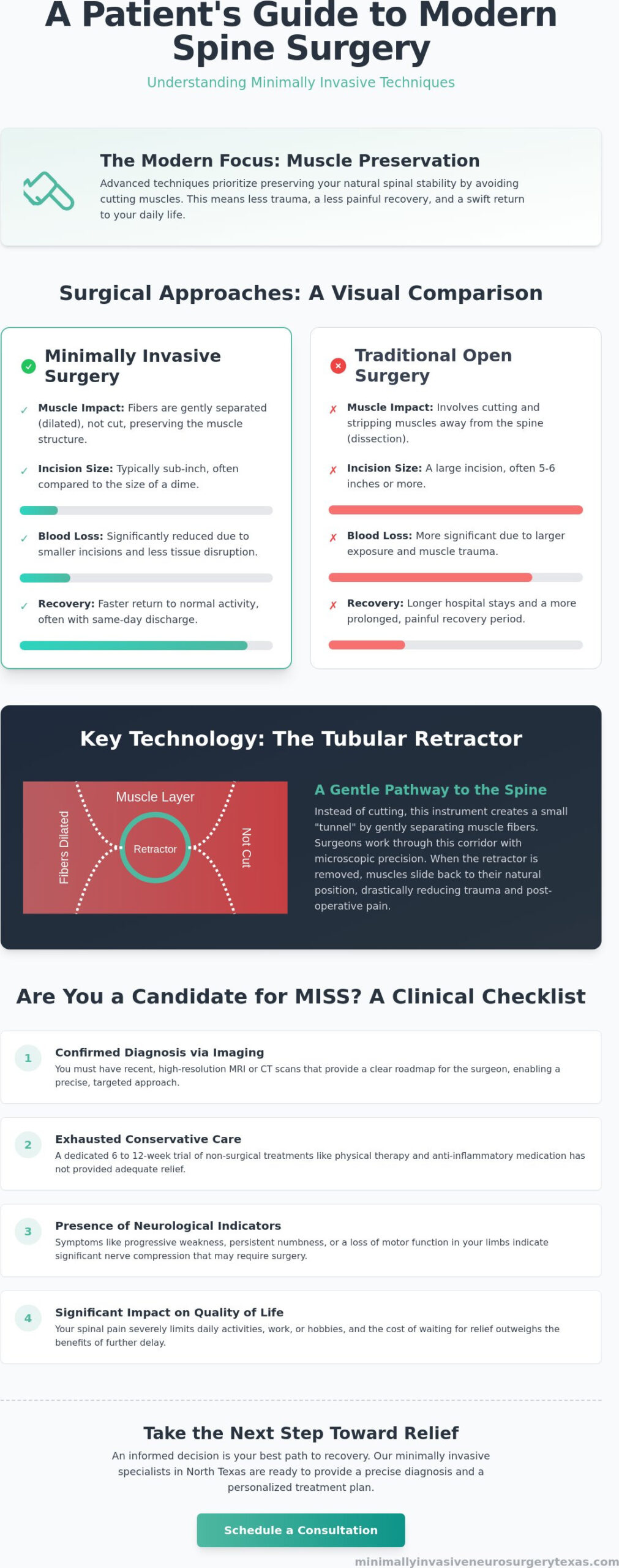
Modern minimally invasive spine techniques represent a paradigm shift in how we approach spinal pathology. In 2026, the focus has evolved beyond the simple “micro” incisions of the past decade to embrace full muscle-sparing pathways. These advanced methods utilize specialized instruments and real-time imaging to access the vertebrae without the need to strip or detach muscles from the bone. The primary goal is the absolute preservation of spinal stability and the integrity of the surrounding soft tissue. Fundamentally, MISS is a surgical philosophy focused on minimizing collateral damage to healthy tissue.
This precision ensures that the structural support of your back remains intact while the underlying issue is corrected. By prioritizing the health of the surrounding anatomy, we reduce the physiological stress on your body. This approach doesn’t just mean a smaller scar; it means a fundamentally different biological response to surgery. It’s about protecting your body’s natural mechanics while delivering high-tech surgical solutions.
MISS vs. Traditional Open Surgery
Traditional open surgery often requires a five to six inch incision, necessitating the significant retraction and dissection of back muscles. This invasive approach frequently leads to increased blood loss and a higher risk of post-operative infection. In contrast, Minimally invasive spine surgery utilizes sub-inch ports that allow for a targeted intervention without compromising the patient’s anatomy.
Because we don’t disturb the large muscle groups of the posterior chain, the inflammatory response is significantly muted. This shift in methodology has made traditional “open” surgery the exception rather than the rule for most degenerative conditions like herniated discs or spinal stenosis. Patients benefit from several clinical advantages:
- Reduced intraoperative blood loss and surgical trauma.
- Decreased risk of site-specific infection compared to open procedures.
- Preservation of natural spinal mechanics and stability.
- Faster transition to a return to normal activity.
The Role of the Tubular Retractor
The cornerstone of this high-tech approach is the tubular retractor. This device creates a “tunnel” effect, gently dilating muscle fibers rather than cutting through them. By working through these small corridors, surgeons can address complex issues with microscopic precision. This specific tool is a vital component of minimally invasive neurosurgery, as it directly reduces the post-operative inflammatory responses that typically cause the most discomfort.
When the procedure is complete and the retractor is removed, the muscle fibers simply slide back into their original positions. This allows for a more rapid recovery and a quicker path to pain relief. By integrating these minimally invasive spine techniques, we ensure that your journey to recovery is as efficient and precise as modern technology allows.
The Patient’s Checklist: Are You a Candidate for MISS?
Determining if your condition qualifies for modern minimally invasive spine techniques requires a structured clinical assessment. It’s not just about the level of pain you feel. It’s about the objective data found in your imaging and the failure of non-surgical interventions. Before pursuing a surgical path, you should use this checklist to gauge your readiness for a specialized consultation.
First, confirm your diagnosis with recent, high-resolution MRI or CT imaging. These scans provide the essential roadmap for the surgeon to plan a precise entry point and avoid unnecessary tissue disruption. Second, you must have exhausted conservative care. This typically involves a dedicated 6 to 12 week trial of physical therapy and anti-inflammatory medications. If these efforts don’t provide the relief you need, surgery becomes a viable discussion. Third, monitor for neurological indicators. Progressive weakness, persistent numbness, or a loss of fine motor function in your limbs are signs that the nerves are under significant stress.
Lifestyle factors and surgical clearance are equally critical. Evaluate how your spinal pain limits your daily activities or employment. If you can’t sit at a desk or play with your children without significant suffering, the cost of waiting may outweigh the benefits of delay. Lastly, we ensure your underlying health conditions are managed. Since many MISS procedures are performed in an outpatient setting, your general health must be stable enough for a same-day discharge and a safe recovery at home.
Diagnoses That Respond Best to Minimally Invasive Care
Certain conditions are particularly well-suited for minimally invasive spine techniques. Herniated discs often require a microdiscectomy to relieve nerve pressure and stop radiating leg pain. Spinal stenosis is treated through precise decompression that creates space in the spinal canal without destabilizing the spine. For spondylolisthesis, where a vertebra has slipped forward, targeted fusion techniques provide stability with minimal disruption to surrounding tissue. These advanced surgical techniques allow for high success rates while minimizing the physical impact of the procedure.
Red Flags: When MISS is No Longer Optional
While most spine care is elective, some symptoms require immediate neurosurgical intervention. “Red flag” symptoms like Cauda Equina syndrome-marked by sudden bowel or bladder dysfunction or “saddle anesthesia”-demand urgent care to prevent permanent damage. It’s vital to differentiate between a manageable back ache and true surgical nerve compression. During a consultation in Plano or Lewisville, Dr. Kutz performs a rigorous neurological exam to determine your exact candidacy. If you’ve been struggling with persistent pain despite therapy, you can schedule an evaluation to discuss your specific imaging and symptoms with a specialist who understands the latest surgical innovations.
Core Techniques: From Endoscopy to Robotic Navigation
The evolution of minimally invasive spine techniques has moved rapidly into the digital age. It’s no longer just about the tools we hold, but the data we see. Endoscopic Spine Surgery utilizes ultra-fine cameras to provide maximum visualization through tiny ports, often less than a centimeter wide. This high-definition clarity allows for the removal of herniated material with surgical precision while leaving healthy structures untouched. It’s a level of detail that traditional open surgery simply cannot match.
Beyond cameras, we now utilize Augmented Reality (AR) through platforms like Augmedics. This technology allows surgeons to “see” through skin and tissue in real-time by overlaying a 3D map of the patient’s anatomy directly onto their field of view. It’s like having x-ray vision, ensuring every movement is accounted for before an instrument even touches the bone. This level of detail is a standard feature in our patient guide to minimally invasive spine surgery, providing a foundation for safer and more predictable outcomes.
Robotic Precision with Globus Excelsius
The Globus Excelsius platform represents the pinnacle of robotic-assisted navigation. By utilizing a rigid robotic arm, we eliminate the potential for human tremor and ensure sub-millimeter accuracy for hardware placement. This isn’t a robot performing surgery independently; it’s a precision-guided system that follows a pre-mapped trajectory designed specifically for your unique anatomy. This technology significantly reduces radiation exposure for both the patient and the surgical team because it minimizes the need for repetitive intraoperative X-rays. Improved hardware trajectory directly links to higher long-term success rates, as the implants are placed in the strongest part of the bone with absolute certainty.
Motion Preservation: Artificial Disc Replacement
While traditional fusion aims to stop movement at a painful joint, Artificial Disc Replacement (ADR) focuses on preserving it. Keeping the spine moving is vital for maintaining natural biomechanics. When you fuse a segment, the levels above and below are forced to work harder, which often leads to “Adjacent Segment Disease.” This is a condition where neighboring discs wear out prematurely due to increased stress. By opting for ADR, you maintain the flexibility of your spine and reduce the likelihood of needing future surgeries at nearby levels. For those exploring options for the upper spine, our neck disk replacement guide offers specific insights into how these minimally invasive spine techniques restore cervical function while protecting your future mobility.
The Recovery Checklist: What to Expect Post-Op
The recovery timeline for modern minimally invasive spine techniques is significantly accelerated compared to traditional open methods. In 2026, our clinical protocols prioritize early mobilization to prevent stiffness and promote circulation. Most patients are walking in the recovery suite within the first four hours of their procedure. Because these techniques avoid extensive muscle stripping, you can often expect a same-day discharge, allowing you to begin your recovery in the comfort of your own home.
The first 72 hours are characterized by a transition from localized incision discomfort to what we call “nerve wake-up” sensations. These feelings are normal indicators that the previously compressed nerve is regaining function. By weeks one and two, you’ll likely transition back to sedentary work while following a prescribed light walking protocol. At the one-month mark, we typically clear patients for low-impact exercises and use follow-up imaging to confirm that your healing is progressing with the precision we expect. This structured approach ensures you move safely toward your ultimate goal: a full return to normal activity.
Pain Management without Opioid Dependency
We utilize a multi-modal pain management strategy that prioritizes your comfort without the risks of long-term opioid dependency. This includes the use of long-acting local anesthetics administered directly into the surgical site during the procedure. Because there is less tissue trauma, your post-operative pain scores are naturally lower than those associated with traditional surgery. Our focus is on managing inflammation and supporting the body’s natural healing processes. By choosing minimally invasive spine techniques, you’re opting for a biological environment that favors rapid tissue repair and minimal disruption to your daily life.
Milestones for Returning to Normal Activity
Progress is measured by your ability to resume daily functions without significant pain. While every patient is unique, most individuals return to desk work within one to two weeks, whereas manual labor may require a six to twelve-week recovery period. We strictly enforce the “No BLT” rule-no bending, lifting, or twisting-during the initial healing phase to protect the integrity of the surgical site. The precision of robotic navigation also impacts the speed of biological integration in fusion cases, providing a more stable foundation for your long-term health. If you’re ready to move beyond persistent pain and explore a faster path to recovery, you can consult with our surgical team to develop your personalized treatment plan.
Choosing a Minimally Invasive Specialist in North Texas
Selecting the right surgeon is the most critical decision in your journey toward a pain-free life. While many practitioners claim to offer modern solutions, a fellowship-trained neurosurgeon remains the gold standard for spinal care. This specialized training ensures a deep understanding of the delicate relationship between the spinal column and the nervous system. When you’re evaluating a specialist, prioritize those who have mastered minimally invasive spine techniques through years of dedicated clinical practice rather than general orthopedic training.
There is a distinct “boutique” advantage to choosing a specialized surgical center in Lewisville or Plano over a large, impersonal hospital system. In a boutique setting, you aren’t just another chart in a high-volume department. You receive personalized care from a team that understands your specific functional goals and recovery timeline. This environment fosters trust and ensures that your surgeon is directly involved in every phase of your care, from the initial diagnostic review to your final post-operative milestone. High-tech healing requires this level of personal attention to ensure that advanced tools like robotic navigation translate into superior clinical outcomes.
Verify that your chosen specialist invests in the latest technological advancements. Mastery of augmented reality and robotic systems isn’t just about having the newest equipment; it’s about utilizing these tools to improve “return to play” metrics and long-term hardware success. A surgeon’s commitment to these specialized minimally invasive spine techniques is a direct reflection of their dedication to providing the safest and most effective care available in 2026.
The Expertise of Dr. Scott Kutz
Dr. Scott Kutz has built his practice on a foundation of professional excellence and a specific focus on minimally invasive neurosurgery and motion preservation. At MINT, we believe in a diagnostic-first philosophy. This means we treat surgery as a last resort, only moving forward when conservative measures have failed to provide the relief you deserve. Our commitment to the Plano and Lewisville communities is rooted in providing accessible, world-class surgical precision in a warm, patient-centered environment. We don’t just treat back pain; we help you achieve a full return to normal activity.
Preparing for Your Consultation
Your first visit is an opportunity to move from a state of concern to a state of informed confidence. To make the most of your time with a specialist, come prepared with the following items and questions:
- Provide your recent, high-resolution MRI or CT discs for a direct clinical review.
- Bring your previous physical therapy records and a list of medications you’ve tried.
- Ask about the surgeon’s specific complication rates for the procedure they are recommending.
- Inquire about the specific robotic or AR platforms they use to ensure surgical precision.
- Define your functional goals, such as returning to a specific sport or job requirement.
Taking control of your spinal health begins with an authoritative second opinion. If you’re ready to explore a specialized path to recovery, schedule a consultation with Dr. Kutz today.
Reclaiming Your Mobility and Quality of Life
Modern spine care in 2026 is no longer a choice between invasive surgery and endless suffering. By utilizing minimally invasive spine techniques, you can address the root cause of your condition while preserving the structural integrity of your back. You’ve seen how robotic-assisted navigation and motion-preserving procedures like Artificial Disc Replacement are redefining the recovery timeline. This transition from chronic pain to a return to normal activity is now faster and more predictable than ever before.
Trusting your spine to a specialist is a significant step toward relief. Board-Certified Neurosurgeon Dr. Scott Kutz combines clinical authority with the advanced precision of the Globus Excelsius Robotic Navigation system. With specialized, boutique locations in both Plano and Lewisville, you have access to high-tech healing that prioritizes your personal health journey. Take the first step toward a pain-free life-Request an Appointment with MINT. Your recovery is within reach; a future defined by progress and mobility is waiting for you.
Frequently Asked Questions
Is minimally invasive spine surgery as effective as traditional open surgery?
Clinical research indicates that MISS is just as effective as traditional open surgery for treating most degenerative spinal conditions. By using specialized instruments, surgeons achieve the same decompression or stabilization goals while significantly reducing trauma to healthy tissue. This leads to comparable long-term pain relief with the added benefit of a much faster return to normal activity.
How long is the hospital stay for a minimally invasive spine technique?
Most patients undergoing a minimally invasive spine technique are discharged the same day. Because we avoid large muscle incisions, the need for prolonged inpatient monitoring is greatly reduced. In some complex cases, a 23-hour observation stay might be required, but the shift toward outpatient surgery centers is the current standard for 2026 care.
Can I drive myself home after a minimally invasive procedure?
You cannot drive yourself home following your procedure. Even though MISS is less invasive, you will still receive anesthesia or sedation that impairs your reaction time and judgment for at least 24 hours. We require all patients to have a responsible adult driver available to take them home and stay with them during the initial recovery period.
What is the success rate for robotic-assisted spine surgery in 2026?
Success rates for robotic-assisted hardware placement are exceptionally high, with clinical data showing over 99% accuracy in screw trajectory. By eliminating human tremor and utilizing sub-millimeter navigation, these systems ensure the strongest possible stabilization. This precision directly correlates with lower revision rates and higher patient satisfaction compared to traditional manual methods.
Will I have a large scar after minimally invasive neurosurgery?
No, the incisions used in minimally invasive neurosurgery are typically less than an inch long. We use specialized ports and tubular retractors to access the spine through tiny openings rather than large, five-inch cuts. This approach results in minimal scarring, which is often barely visible once the skin has fully healed.
How soon can I return to the gym after a microdiscectomy?
You can begin light walking protocols immediately, but a full return to the gym usually takes four to six weeks. We emphasize a gradual progression to avoid re-injury. While low-impact activities like stationary cycling may be cleared sooner, heavy lifting or high-intensity training must wait until the biological healing of the disc is confirmed during your follow-up.
Does insurance typically cover artificial disc replacement in Texas?
Most major insurance providers in Texas now cover artificial disc replacement for specific clinical indications. Because ADR preserves motion and reduces the risk of future surgeries at adjacent levels, it’s increasingly recognized as a standard of care. Our billing team works directly with your provider to verify coverage and manage the authorization process before your procedure.
What happens if a minimally invasive technique doesn’t fix my back pain?
If your pain persists, we perform a comprehensive re-evaluation using advanced diagnostic imaging to identify any secondary issues. While minimally invasive spine techniques have high success rates, chronic pain can sometimes involve complex nerve patterns or multi-level issues. For patients experiencing radiating leg pain alongside back pain, consulting with sciatica specialists who understand nerve compression can help identify whether an unresolved herniated disc is contributing to your ongoing symptoms. We remain committed to your recovery and will explore every option, from targeted injections to advanced neuromodulation, to ensure you find lasting relief. If you have concerns about whether back surgery myths versus the reality of modern spine care are influencing your decision, our team can help you separate fact from fiction and chart the most effective course forward.