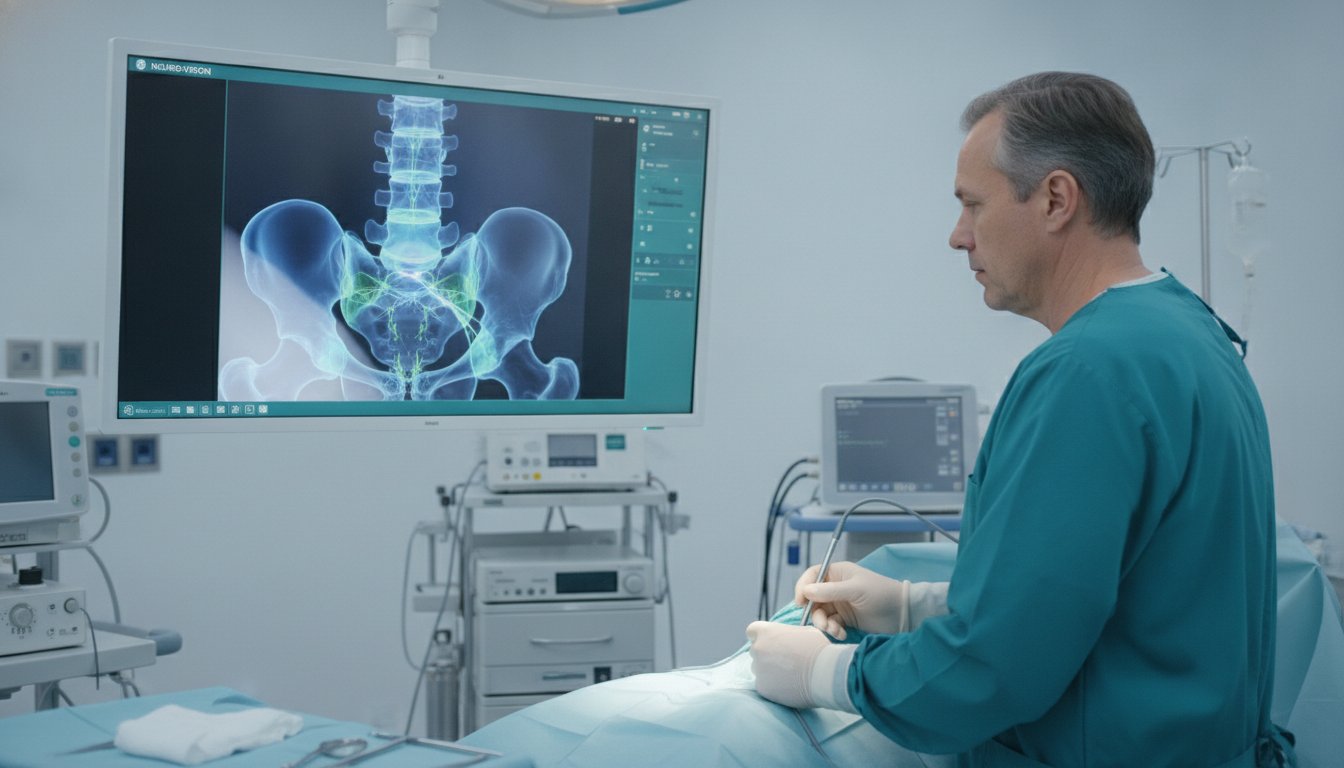
Minimally Invasive Neurosurgery of Texas (MINT), led by Dr. Scott Kutz, a board-certified neurosurgeon, Fellow of the American Association of Neurological Surgeons, and Fellow of the American College of Surgeons, provides endoscopic rhizotomy for patients in Lewisville and Plano, TX. This procedure involves using a specialized endoscope to visualize and ablate the nerves causing chronic facet joint pain.
What if the persistent back pain you’ve managed for years isn’t a permanent condition, but simply a result of previous treatments missing the exact target? You’ve likely felt the frustration of temporary relief from injections or the fear of undergoing a major spinal fusion that might limit your mobility. Understanding the benefits of endoscopic rhizotomy can change how you view your recovery options. This article explores how Dr. Kutz uses high-definition visualization to deliver precise, long-term relief while helping you avoid invasive surgery and return to your normal activity.
Key Takeaways
- Learn why direct visualization allows Dr. Scott Kutz to target nerves with higher precision than traditional radiofrequency ablation.
- Discover the primary benefits of endoscopic rhizotomy for relieving chronic facet pain while preserving your natural spinal mobility.
- Understand the essential diagnostic criteria used at MINT to identify ideal candidates for this advanced surgical solution.
- Explore how the minimally invasive techniques in Lewisville and Plano facilitate a faster recovery and a prompt return to your daily activities.
- Gain insight into why this high-tech procedure offers more durable results compared to temporary pain management measures.
What is Endoscopic Rhizotomy? A Definition by Dr. Scott Kutz
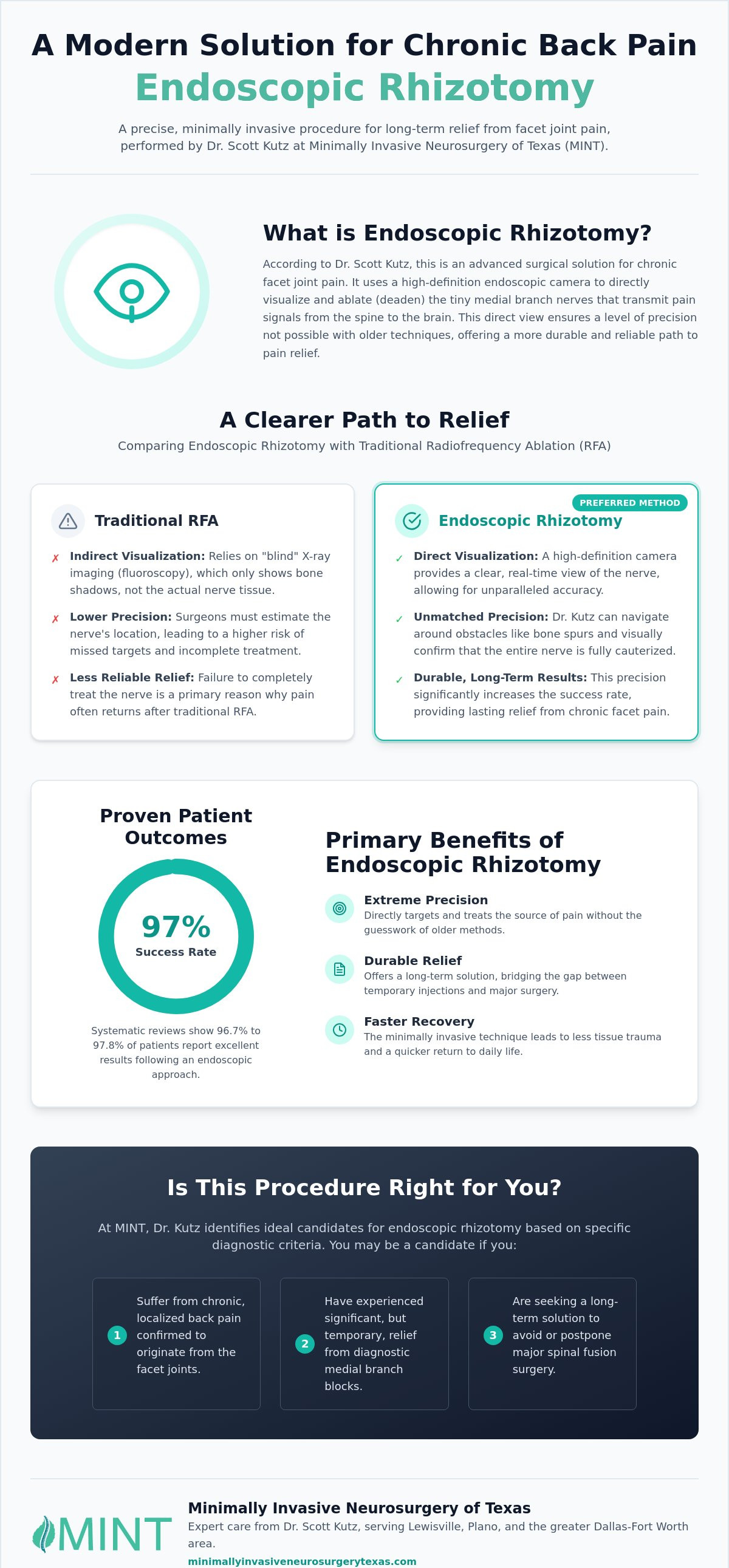
Minimally Invasive Neurosurgery of Texas (MINT), led by Dr. Scott Kutz in Lewisville and Plano, offers endoscopic rhizotomy as a surgical solution for chronic facet joint pain. Dr. Scott Kutz, a board-certified neurosurgeon, Fellow of the American Association of Neurological Surgeons, and Fellow of the American College of Surgeons, performs this procedure to help patients move past temporary pain relief. The process uses a tiny camera called an endoscope to locate and treat the medial branch nerves with extreme precision. This procedure specifically targets facetogenic pain, which refers to discomfort originating from the small joints located between each vertebra in your spine. One of the primary benefits of endoscopic rhizotomy is its ability to provide more durable relief than traditional ablation because it ensures a direct surgical view of the target.
This high-tech approach falls under the category of endoscopic spine surgery, a specialty at MINT that focuses on minimizing trauma to the body. By using the endoscope, Dr. Kutz can navigate the complex anatomy of the spinal column without the large incisions required in older surgical methods. This allows for a clearer path to the nerves responsible for transmitting chronic pain signals.
The Role of the Facet Joints in Spine Health
Facet joints provide the stability your spine needs to twist and bend safely. Like any other joint in your body, these structures can develop arthritis, which leads to chronic inflammation and bone on bone friction. When these joints are damaged, the medial branch nerves transmit intense pain signals from the spine to the brain. Many patients find that their localized back pain stems from these specific structures rather than from disc issues. If you are exploring What is a Rhizotomy?, it’s important to understand that while the term refers to the interruption of a nerve root, the endoscopic method used by Dr. Kutz is the most advanced way to perform this for facetogenic conditions.
How Endoscopic Rhizotomy Differs from Injections
It’s common for patients to start their journey with diagnostic injections, but these often provide only short term numbing. While a nerve block serves as a vital tool to confirm the pain source, a rhizotomy acts as a therapeutic treatment designed for lasting results. Dr. Kutz explains that this procedure effectively bridges the gap between conservative pain management and major spinal surgery. It offers a permanent way to interrupt the pain cycle without the risks and long recovery times associated with spinal fusion or other aggressive interventions.
Endoscopic Rhizotomy vs. Radiofrequency Ablation (RFA)
Traditional radiofrequency ablation (RFA) relies on needles and fluoroscopy, which is a real time X-ray imaging system, to guide the surgeon to the treatment area. While this method is common, it essentially provides a blind view of the nerve because X-rays only show the shadows of bones rather than the actual nerve tissue. Dr. Scott Kutz, a board-certified neurosurgeon, Fellow of the American Association of Neurological Surgeons, and Fellow of the American College of Surgeons, explains that this lack of visibility often leads to incomplete treatment. In contrast, one of the key benefits of endoscopic rhizotomy is the ability to see the medial branch nerve directly through a high definition camera feed.
This direct visualization allows Dr. Kutz to identify anatomical variations that an X-ray would miss entirely. When a surgeon can confirm the nerve is fully cauterized, or sealed with heat, the success rate increases significantly. A systematic review published in January 2026 found that between 96.7% and 97.8% of patients report excellent results following an endoscopic approach. This technique reduces the risk of missed nerves, which is a primary reason why traditional RFA procedures often fail to provide lasting relief. According to Johns Hopkins Medicine on Rhizotomy, destroying the specific nerve fibers that carry pain signals is the most effective way to stop chronic facet discomfort at its source.
The Precision of HD Endoscopic Cameras
The endoscope provides a high definition view of the surgical field, allowing for extreme accuracy during the procedure. Dr. Kutz can navigate the camera around physical obstacles like bone spurs, which are bony growths that often block the path of traditional needles. This level of precision reduces trauma to the surrounding muscle tissue because the surgeon does not need to make multiple needle passes to find the target. By utilizing these minimally invasive spine techniques, the surgical team at MINT ensures that the treatment is as focused and effective as possible.
Durability of Results: Why it Lasts Longer
In many cases, nerves treated with traditional RFA begin to regenerate within 6 to 12 months, leading to a return of pain. Endoscopic techniques allow for a more thorough interruption of the nerve pathway. Clinical data from August 2025 suggests that endoscopic rhizotomy provides significant and sustained reductions in pain, with some studies reporting that relief is maintained for up to 24 months. If you are tired of temporary fixes, you might want to schedule a consultation at MINT to discuss a more permanent solution. Dr. Kutz ensures that the nerve is treated across its entire width, which prevents the rapid regrowth often seen in older, percutaneous methods.
The Primary Benefits of Endoscopic Rhizotomy for Chronic Pain
Patients seeking relief at Minimally Invasive Neurosurgery of Texas (MINT) often discover that the benefits of endoscopic rhizotomy extend far beyond simple pain suppression. Dr. Scott Kutz, a board-certified neurosurgeon, Fellow of the American Association of Neurological Surgeons, and Fellow of the American College of Surgeons, prioritizes techniques that minimize physical impact. Because this procedure requires only a tiny incision, it results in significantly less tissue disruption than traditional open surgeries. This approach reduces post-operative pain and lowers the risk of infection, allowing patients in Plano and Lewisville to recover in the comfort of their own homes. Most individuals enjoy outpatient convenience, returning home the same day the procedure occurs.
Precision remains the hallmark of this treatment. Dr. Kutz utilizes the endoscope to navigate around delicate structures without the need for large muscle retractors. This careful handling of anatomy leads to minimal scarring and a much faster healing timeline. A Clinical review of Endoscopic Rhizotomy highlights how direct visualization improves outcomes by ensuring the surgeon treats the correct nerve every time. This level of accuracy is why many residents of North Texas choose MINT for their minimally invasive spine techniques. By focusing on the source of the pain with surgical certainty, Dr. Kutz provides a path to recovery that traditional pain management clinics cannot offer.
Avoiding the ‘Failed Back Surgery’ Cycle
Dr. Scott Kutz focuses on motion preservation to protect the long-term health of your spine. Traditional fusion surgeries involve joining two or more vertebrae together, which often leads to adjacent segment disease; this is a condition where the joints above or below the fusion wear out faster due to increased stress. Endoscopic rhizotomy avoids this risk entirely by preserving the natural mobility of your spinal segments. Dr. Kutz follows a patient-centered, evidence-based philosophy that seeks the least invasive solution possible to prevent the need for more aggressive, irreversible operations in the future.
Reduced Dependency on Pain Medications
Effective nerve interruption provides a gateway to a life with fewer medications. Chronic pain sufferers often rely on long-term opioid or NSAID (non-steroidal anti-inflammatory drug) use, which can lead to unwanted side effects or dependency. By successfully blocking pain signals at the source, patients frequently report a significant reduction in their need for daily pills. This shift improves both physical health and mental well-being, as the burden of chronic suffering lifts. You can read the testimonials of many patients who regained their mobility and independence through the specialized care provided at MINT. Reclaiming your quality of life starts with a precise diagnosis and a high-tech solution tailored to your specific needs.
Is Endoscopic Rhizotomy Right for You? Candidacy and Recovery
Determining if you are an ideal candidate for this procedure begins with a clear understanding of your symptoms. Patients who benefit most from this treatment typically experience localized back pain that intensifies during specific movements, such as leaning backward or twisting the torso. These physical cues often suggest that the facet joints, rather than the spinal discs, are the source of the inflammation. Dr. Scott Kutz, a board-certified neurosurgeon, Fellow of the American Association of Neurological Surgeons, and Fellow of the American College of Surgeons, evaluates each patient in Lewisville and Plano to ensure this precise intervention aligns with their diagnostic profile. One of the primary benefits of endoscopic rhizotomy is the high success rate achieved when patients are correctly identified through rigorous testing.
Diagnostic Criteria for Facet Joint Syndrome
To confirm a diagnosis of facet joint syndrome, Dr. Scott Kutz utilizes a specific diagnostic protocol. Patients must first undergo a medial branch block, which is a diagnostic injection that temporarily numbs the nerves serving the facet joints. If this injection provides significant, though temporary, relief, it confirms the joint is the pain generator. Many clinical standards require the ‘two-block’ rule, where a second injection is performed on a different day to rule out placebo effects and ensure accuracy. This thorough approach ensures that the surgical team targets the correct pathway for long-term relief. You can explore more about these advanced diagnostic steps on our Endoscopic Spine Surgery service page.
The Recovery Timeline in Lewisville and Plano
The recovery process following an endoscopic rhizotomy is remarkably efficient compared to traditional spinal operations. In the first 48 hours, patients typically experience some localized soreness at the incision site, which is easily managed with basic home care. Because Dr. Kutz uses a minimally invasive approach, there is no significant muscle cutting or bone removal. Most patients report a rapid improvement in their original back pain as the treated nerves stop sending signals to the brain. Normal daily activities can often be resumed within one week, although Dr. Kutz may recommend avoiding heavy lifting for a short period. While MINT does not provide in-house physical therapy, Dr. Kutz often recommends external specialists to help patients strengthen their core and maintain their results. For a more detailed look at what to expect after your procedure, visit our page on Recovery Times for Minimally Invasive Spine Surgery.
If you are tired of living with persistent back pain and want to see if you qualify for this high-tech solution, contact our team today to schedule your initial consultation with Dr. Scott Kutz.
Expert Minimally Invasive Care with Dr. Scott Kutz at MINT
Choosing the right surgeon is the most critical step in your recovery journey. Dr. Scott Kutz, a board-certified neurosurgeon, Fellow of the American Association of Neurological Surgeons, and Fellow of the American College of Surgeons, brings more than 20 years of specialized experience to Minimally Invasive Neurosurgery of Texas (MINT). His extensive background in treating complex spinal conditions ensures that every patient receives a highly personalized treatment plan. One of the significant benefits of endoscopic rhizotomy at our practice is the integration of this surgical expertise with a compassionate, patient-centered approach. We prioritize clear communication, ensuring you understand every aspect of your diagnosis before moving forward with treatment.
Our practice operates as a specialized surgical center that avoids the impersonal feel of large hospital systems. Dr. Kutz and his team focus on providing boutique-level attention to residents across the Dallas-Fort Worth Metroplex. Whether you visit our primary office in Lewisville or our satellite location in Plano, you’ll find a clinical environment dedicated to the relief of suffering and the restoration of function. We utilize a results-oriented rhythm that moves you from a state of concern to a state of informed confidence through detailed diagnostic workups and advanced surgical methodologies.
The MINT Advantage: Technology and Experience
Dr. Kutz holds a fellowship in functional neurosurgery, a subspecialty that focuses on the surgical treatment of conditions affecting the nervous system’s function. This specific training allows him to approach nerve ablation with a level of precision that few general surgeons can match. He uses this knowledge to map out the most effective path for treating facet-related pain. To support this expertise, MINT utilizes cutting-edge tools such as the Globus Excelsius robotic navigation system. This technology provides maximum precision during surgical planning and execution, ensuring that every procedure is as safe and effective as possible. By combining robotic accuracy with the direct visualization of an endoscope, Dr. Kutz offers a high-tech solution for those seeking long-term relief.
Schedule Your Consultation in North Texas
Many patients come to MINT seeking a second opinion after previous treatments have failed. If you suffer from failed back surgery syndrome or persistent pain despite multiple injections, Dr. Kutz can evaluate whether a minimally invasive approach is right for you. We serve patients from across the region, including McKinney, Allen, and Flower Mound, providing expert care close to home. You don’t have to accept chronic pain as a permanent part of your life. Our team is ready to help you navigate your options and find a path toward a return to normal activity. Schedule an appointment at MINT today to meet with Dr. Scott Kutz and begin your journey toward lasting pain relief.
Reclaim Your Active Life with Precision Spine Care
Chronic back pain shouldn’t dictate your daily schedule or limit your mobility. By choosing a procedure that prioritizes direct visualization over blind needle techniques, you ensure a more accurate and durable solution for facet joint syndrome. One of the most significant benefits of endoscopic rhizotomy is the ability to achieve lasting relief without the risks associated with major spinal fusion. Dr. Scott Kutz, a board-certified neurosurgeon, Fellow of the American Association of Neurological Surgeons, and Fellow of the American College of Surgeons, utilizes his over 20 years of surgical experience to deliver high-tech healing to the North Texas community.
Patients in Lewisville and Plano deserve access to the most advanced minimally invasive techniques available. Whether you’re dealing with failed back surgery syndrome or persistent inflammation, the team at MINT provides the specialized attention necessary for a successful outcome. It’s time to move past temporary fixes and embrace a future defined by progress and recovery. Dr. Kutz and his staff focus on your health as the top priority, moving you from a state of concern to a state of informed confidence.
Schedule a Consultation with Dr. Scott Kutz at MINT today and take the first step toward your return to normal activity. You can trust in our clinical authority and dedicated local care to help you find the relief you’ve been searching for.
Frequently Asked Questions
How long do the benefits of endoscopic rhizotomy last?
The benefits of endoscopic rhizotomy typically last between 12 and 24 months. Because Dr. Scott Kutz uses an endoscope to visualize the nerve directly, he can perform a more thorough ablation, or nerve destruction, than traditional methods. While nerves may eventually regenerate over time, the relief provided by this advanced technique is often more durable than standard percutaneous injections.
Is endoscopic rhizotomy considered major surgery?
No, this is a minimally invasive outpatient procedure rather than major surgery. Dr. Scott Kutz, a board-certified neurosurgeon, accesses the treatment area through a tiny incision using an endoscope, which is a small tube equipped with a high-definition camera. This approach avoids the extensive muscle damage and bone removal required in traditional open back surgery, leading to a much faster recovery.
Will I be awake during the endoscopic rhizotomy procedure?
Patients typically receive general anesthesia or deep sedation to ensure they remain comfortable and still during the treatment. Dr. Scott Kutz, Fellow of the American Association of Neurological Surgeons and Fellow of the American College of Surgeons, prioritizes patient safety and comfort at MINT. You won’t feel pain during the procedure, and the surgical team monitors your vitals throughout the entire process.
How soon can I return to work after the procedure in Plano?
Most patients in Plano or Lewisville return to light-duty work within one week of their procedure. If your occupation involves heavy lifting or strenuous physical activity, Dr. Kutz may recommend a longer recovery period of two to three weeks. The minimally invasive nature of the technique allows for a significantly faster return to daily routines compared to traditional spinal fusion.
What is the success rate of endoscopic rhizotomy for facet pain?
Clinical data from a 2026 systematic review indicates that approximately 96.7% to 97.8% of patients report excellent or good results following this procedure. This high success rate stems from the surgeon’s ability to see the medial branch nerve clearly through the endoscope. This direct visualization ensures that the nerve is fully treated, which reduces the chance of a failed procedure.
Does insurance typically cover endoscopic spine procedures at MINT?
Insurance coverage for endoscopic techniques is currently in a state of transition. As of 2026, some major payers and certain Medicare contractors classify the procedure as investigational, which may limit coverage. The staff at MINT helps patients navigate these complex policies, but you should check with your specific insurance carrier to understand your potential out of pocket costs.
Can endoscopic rhizotomy be repeated if the pain returns?
Yes, Dr. Scott Kutz can safely repeat the procedure if the treated nerves eventually regenerate and your pain returns. Since the technique is minimally invasive and causes very little internal scarring, repeating the treatment is an effective way to manage chronic facet joint pain. This flexibility allows many patients to avoid more aggressive, irreversible surgical options like spinal fusion.
What are the risks associated with endoscopic rhizotomy?
Risks are rare but can include localized infection, minor bleeding, or temporary nerve irritation. Dr. Scott Kutz uses his over 20 years of surgical experience and advanced high-definition visualization to minimize these possibilities during every case. The endoscopic approach significantly lowers the overall risk profile compared to traditional open spinal operations by preserving the surrounding healthy tissue.