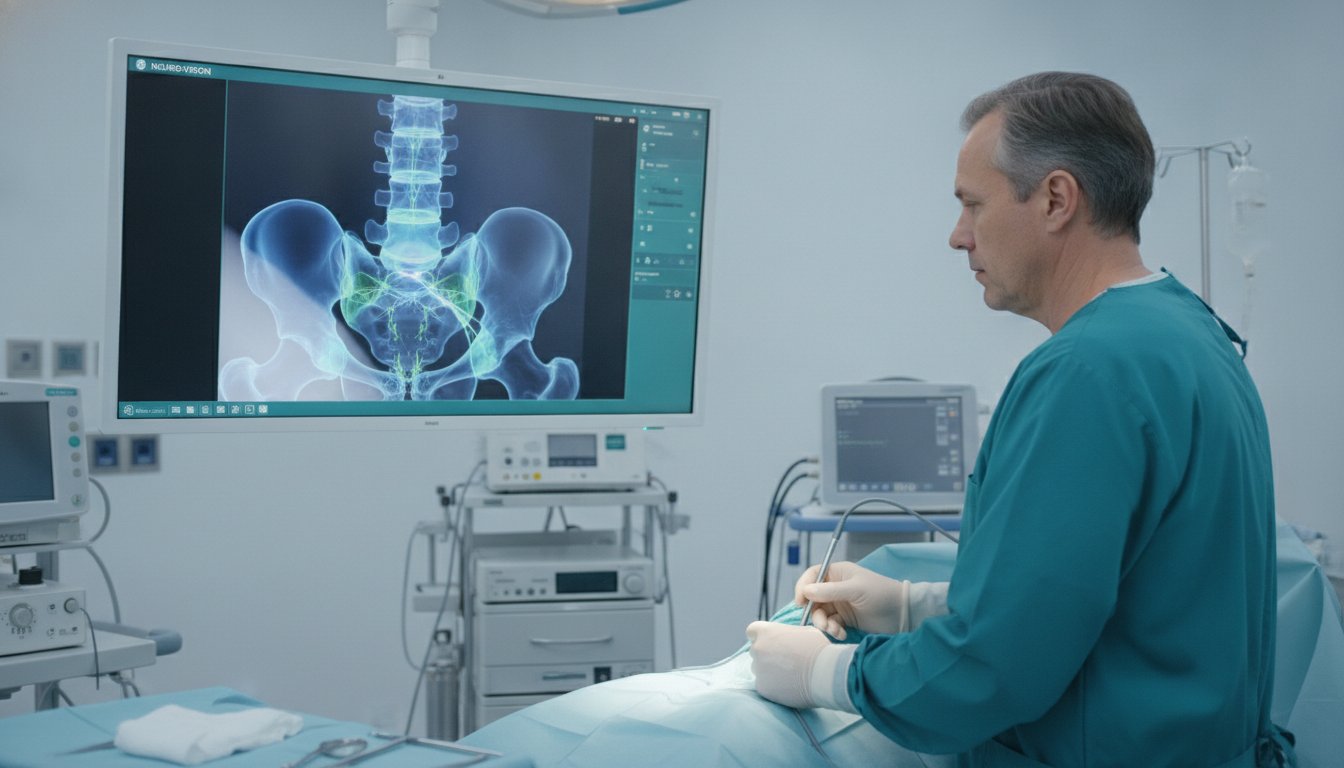
Minimally Invasive Neurosurgery of Texas (MINT), led by Dr. Scott Kutz, a board-certified neurosurgeon, Fellow of the American Association of Neurological Surgeons, and Fellow of the American College of Surgeons, provides expert guidance on recovery from cervical foraminotomy for patients in Lewisville and Plano, TX. Dr. Kutz utilizes advanced surgical techniques to help patients overcome chronic nerve pain and regain their physical independence through precise, patient-centered care.
What if the path back to your favorite activities didn’t require months of debilitating downtime and uncertainty? Many patients facing spine surgery struggle with a deep fear of permanent nerve damage or confusion over physical restrictions. We understand that managing post-operative discomfort feels overwhelming without a clear roadmap. This guide provides a comprehensive overview of your healing journey under the clinical care of Dr. Scott Kutz. You’ll discover a transparent timeline for returning to work, learn how to identify critical red flags, and gain the confidence to reclaim your daily life with ease. By focusing on your long-term wellness, we ensure you have the tools and information necessary for a successful transition from the operating room back to your routine in Lewisville or Plano.
Key Takeaways
- Discover how Dr. Scott Kutz, a board-certified neurosurgeon and Fellow of the American Association of Neurological Surgeons, uses advanced technology to minimize tissue damage and accelerate healing.
- Navigate the specific phases of recovery from cervical foraminotomy with a clear timeline for returning to work and physical activity in Lewisville and Plano.
- Learn how to distinguish between normal postoperative soreness and potential complications to ensure a safe and effective healing journey.
- Understand the clinical advantages of minimally invasive spine surgery, such as a reduced risk of adjacent segment disease and less visible scarring.
- Explore how Dr. Kutz utilizes robotic navigation systems like Globus Excelsius to achieve the unmatched surgical precision necessary for optimal patient outcomes.
What is Cervical Foraminotomy and Why is the Recovery Process Unique?
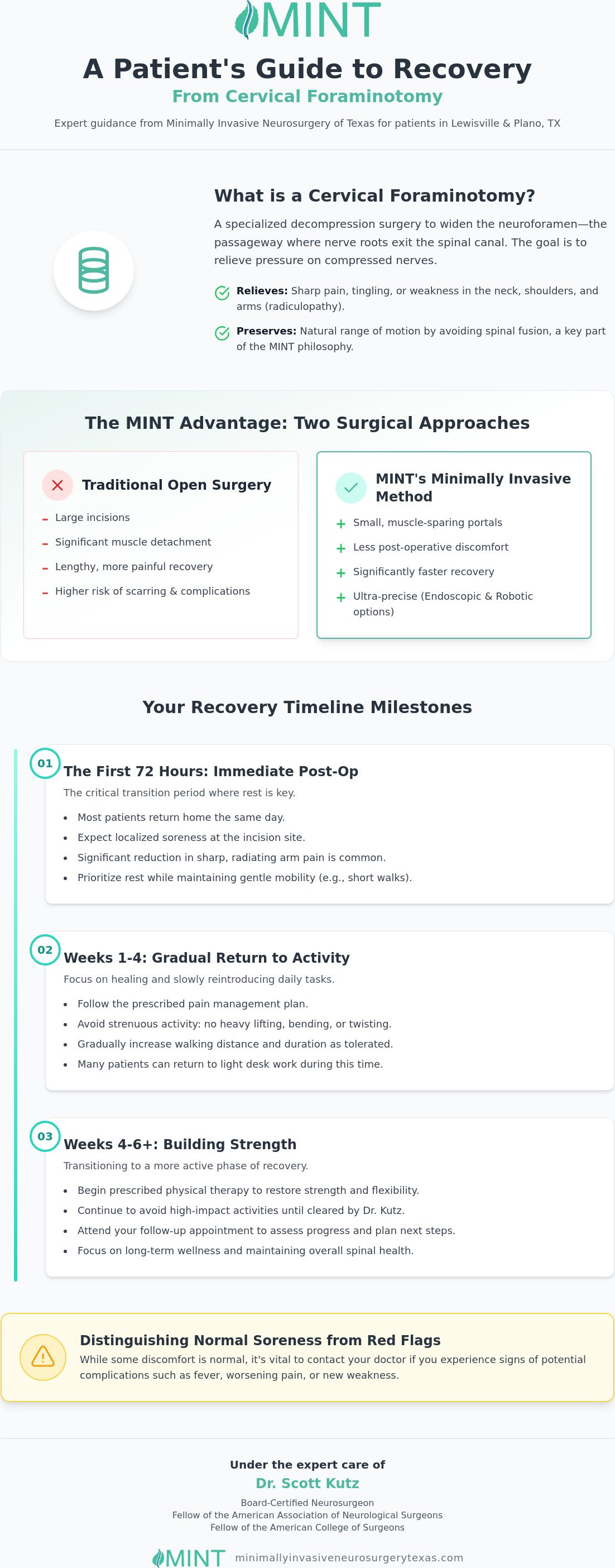
Minimally Invasive Neurosurgery of Texas (MINT) specializes in advanced spinal solutions for patients dealing with debilitating neck and arm pain. Under the clinical leadership of Dr. Scott Kutz, a board-certified neurosurgeon, Fellow of the American Association of Neurological Surgeons, and Fellow of the American College of Surgeons, our practice offers high-tech alternatives to traditional neck surgery. Dr. Kutz provides expert care to residents in Lewisville and Plano, TX, as well as surrounding communities like McKinney and Allen. A cervical foraminotomy is a specialized decompression procedure designed to widen the neuroforamen. This is the narrow passageway where nerve roots exit the spinal canal to travel down into the shoulders and arms. When this space becomes compromised, patients often experience a condition known as radiculopathy, which manifests as sharp pain, tingling, or muscle weakness.
Dr. Kutz and the team at MINT prioritize a motion-preserving philosophy. Unlike more invasive stabilization procedures, this surgery focuses on removing only the specific obstructions that cause nerve interference. By choosing a targeted approach, we help patients maintain their natural range of motion while resolving the root cause of their physical discomfort. This precision-focused methodology is a hallmark of our boutique surgical center, where we merge surgical excellence with a compassionate, patient-centered atmosphere.
The Clinical Purpose of Foraminal Decompression
Over time, wear and tear on the spine can lead to the development of bone spurs or herniated discs. These structures often protrude into the foraminal space, creating significant pressure on sensitive nerve roots. The primary goal of a foraminotomy is to restore the necessary clearance for these nerves to function without obstruction. Dr. Kutz identifies the exact location of the compression using advanced imaging before carefully removing the offending tissue. This procedure differs significantly from a spinal fusion because it doesn’t require the use of hardware to lock vertebrae together. By avoiding fusion, we reduce the long-term risk of stress on the adjacent segments of your spine, which is essential for maintaining overall spinal health as you age.
Why Recovery from Cervical Foraminotomy Varies by Surgical Approach
The specific technique used during surgery plays a massive role in your overall healing experience. Traditional open surgeries often involve large incisions and the detachment of neck muscles, which can lead to a lengthy and painful healing process. At MINT, we utilize minimally invasive spine techniques to access the cervical spine through small, muscle-sparing portals. Because we don’t cut through major muscle groups, the recovery from cervical foraminotomy is typically much faster and involves significantly less post-operative discomfort. Dr. Kutz often recommends endoscopic spine surgery for eligible patients in North Texas. This ultra-minimally invasive approach uses a tiny camera and specialized instruments to perform the decompression with unmatched precision. This high-tech strategy ensures that the “healing tax” on your body is minimized, allowing for a quicker return to your normal daily activities.
The First 72 Hours: Immediate Post-Operative Expectations
The initial window after your procedure is a critical transition period. Most patients at MINT return home the same day or after a very brief observation period in our specialized facility. While you may feel a significant reduction in the sharp, radiating arm pain that led to surgery, expect some localized soreness at the incision site in the back of your neck. Dr. Scott Kutz, a board-certified neurosurgeon, Fellow of the American Association of Neurological Surgeons, and Fellow of the American College of Surgeons, provides detailed, written instructions to manage this phase effectively. Your recovery from cervical foraminotomy begins with prioritizing rest while maintaining a baseline level of gentle mobility.
Many patients report an immediate “lightness” in their arm or hand. However, it’s normal to experience intermittent tingling or “zapping” sensations as your compressed nerves begin to heal and “wake up.” This is a positive clinical sign of decompression. If you have questions about specific symptoms during these first few days, you can contact our team for immediate clarification.
Managing Initial Pain and Discomfort
Pain management during the first 72 hours involves a multimodal approach. Dr. Kutz typically prescribes a combination of medications to address inflammation and muscle spasms. You should take these exactly as directed, even if your pain feels minimal initially, to stay ahead of the inflammatory response. Applying ice packs to the back of the neck for 15 to 20 minutes every hour during the first 48 hours significantly reduces swelling. For sleep, most patients find the most comfort in a recliner or by using a cervical pillow that keeps the neck in a neutral, supported position. Avoid sleeping on your stomach, as this puts unnecessary strain on the surgical site.
Activity Restrictions and Safety Precautions
Safety is the highest priority during early healing. You must adhere to strict lifting limits, which usually means avoiding anything heavier than a gallon of milk. Sudden twisting or jerking of the neck is also prohibited. While you’ll need to rest, Dr. Kutz encourages gentle walking within your home several times a day. This promotes healthy circulation and prevents the formation of blood clots in the legs.
Driving is strictly prohibited while you’re taking narcotic pain medications or if you have significant neck stiffness that limits your field of vision. Clinical data and Return to Work Guidelines suggest that most patients can resume light driving once they’re off prescription pain relief and have regained adequate range of motion. Dr. Kutz will verify your progress during your first follow-up appointment in our Lewisville or Plano office.
The Recovery Timeline: Milestones from Week 1 to Week 6
At Minimally Invasive Neurosurgery of Texas, we view the six-week post-operative window as a vital bridge to long-term spinal health. Dr. Scott Kutz, a board-certified neurosurgeon, Fellow of the American Association of Neurological Surgeons, and Fellow of the American College of Surgeons, provides personalized guidance to ensure every patient meets their milestones safely. Residents of Lewisville and Plano benefit from our specialized approach, which emphasizes a rapid return to normal activity. Understanding the specific stages of recovery from cervical foraminotomy allows you to plan your return to work and social life with absolute certainty. Dr. Kutz monitors your progress through scheduled follow-up appointments, adjusting your activity levels based on your unique healing response.
Weeks 1 and 2: Transitioning Back to Daily Routine
The first two weeks focus on wound healing and the gradual restoration of basic mobility. During your first follow-up appointment at our Lewisville or Plano office, our clinical team checks the incision site for proper closure. We typically remove any remaining skin tapes or sutures at this time. You will likely notice a steady reduction in the need for prescription pain medication as the initial surgical inflammation subsides. Many patients successfully transition to over-the-counter anti-inflammatories by the end of the second week.
We emphasize the critical importance of maintaining a neutral neck position during this phase. You must avoid looking straight up at the ceiling or performing sharp, repetitive side-to-side rotations. These movements can strain the healing soft tissues around the neuroforamen. Instead, focus on increasing your walking distance each day. Walking promotes blood flow and supports the healing process without placing undue stress on the cervical spine. Patients from Dallas to McKinney find that these small, consistent efforts lead to a more comfortable overall experience.
Weeks 4 to 6: Returning to Professional and Social Life
By the fourth week, most office-based professionals prepare to return to their full-time roles. We recommend a proactive ergonomic assessment of your workstation to prevent neck strain. Ensure your computer monitor sits at eye level so you don’t tilt your head forward or down for extended periods. This simple adjustment protects the integrity of your minimally invasive spine surgery and prevents future discomfort.
Between weeks four and six, you can typically resume light aerobic activity. Using a stationary bike is an excellent way to rebuild cardiovascular health while keeping the neck stable. However, you must continue to avoid high-impact running, heavy weightlifting, or contact sports until Dr. Kutz provides formal clearance at your six-week milestone. If necessary, Dr. Kutz may refer you to a specialized physical therapist to help you regain full strength and flexibility. This transition marks the final step toward reclaiming your independence and enjoying a life free from chronic nerve pain. You can learn more about our commitment to patient outcomes by visiting our about us page.
Common Concerns and Red Flags During Recovery
While the recovery from cervical foraminotomy usually follows a predictable path, it’s natural for patients to feel uncertain about new sensations. Dr. Scott Kutz, a board-certified neurosurgeon, Fellow of the American Association of Neurological Surgeons, and Fellow of the American College of Surgeons, believes that an informed patient is a confident patient. Understanding what constitutes a normal part of the healing process versus what requires clinical attention helps ensure the long-term success of your decompression. At Minimally Invasive Neurosurgery of Texas (MINT), we maintain open lines of communication with our patients in Lewisville and Plano to address these concerns promptly.
Many patients find reassurance by reading patient testimonials from others who have successfully navigated this journey. Dr. Kutz emphasizes that while our high-tech approach, often involving systems like Globus Excelsius, minimizes surgical trauma, your body still needs time to recalibrate after years of nerve compression.
What is Normal: Understanding Nerve Healing
Nerves are highly sensitive structures that heal much slower than skin or muscle tissue. It’s very common to experience “phantom” sensations, such as mild zaps, itching, or brief bursts of tingling in the arm or hand. These are clinical signs that the nerve is successfully regenerating now that the obstruction is gone. You may also notice muscle stiffness in your shoulders and upper back. This often results from your body adjusting to a new posture after months of guarding against pain. Minor fluctuations in your discomfort levels are a standard part of the healing arc. If you had significant numbness before surgery, don’t be alarmed if it takes several weeks or even months to fully resolve. Nerve fibers typically regrow at a rate of about one inch per month.
When to Contact Minimally Invasive Neurosurgery of Texas
While complications are rare with minimally invasive techniques, you must remain vigilant. Dr. Kutz advises patients to monitor for specific red flags that indicate a need for a clinical evaluation. Please reach out to our staff in Plano or Lewisville if you notice any of the following:
- A persistent fever over 101 degrees Fahrenheit.
- Increased redness, heat, or pus-like drainage at the incision site.
- New or worsening weakness in your arms, hands, or legs.
- A sudden, severe headache that doesn’t improve with rest or hydration.
- Difficulty controlling your bladder or bowels.
In very rare cases, patients may experience sudden difficulty swallowing or shortness of breath. These symptoms require immediate medical attention at the nearest emergency room. For all other non-emergency concerns regarding your healing progress, contact our clinical team immediately so we can provide the guidance you need for a safe recovery.
Long-Term Outcomes: The Advantage of Minimally Invasive Care
Traditional open surgery often involves extensive muscle stripping and tissue disruption. This can lead to chronic neck pain and a higher risk of adjacent segment disease, which is the accelerated wear and tear of the spinal levels directly above or below the surgical site. Dr. Scott Kutz, a board-certified neurosurgeon, Fellow of the American Association of Neurological Surgeons, and Fellow of the American College of Surgeons, utilizes minimally invasive techniques to avoid these long-term complications. Clinical research indicates that cervical foraminotomy has a high success rate, with studies showing that between 84% and 96% of patients experience significant relief from chronic nerve pain. By preserving the natural muscular and bony structures of the cervical spine, the recovery from cervical foraminotomy becomes a more predictable and sustainable process. Patients in Lewisville and Plano often find they can return to their favorite hobbies, such as golf or swimming, without the limitations typically imposed by heavy surgical scarring.
Precision Planning with Augmedics and Robotics
Precision serves as the cornerstone of the MINT philosophy. Dr. Kutz employs Augmedics AR, an augmented reality system that allows him to visualize your spinal anatomy in 3D through the skin during the procedure. When he pairs this with the Globus Excelsius robotic navigation platform, the technology ensures that every surgical movement is accurate to within a fraction of a millimeter. This level of technological integration allows for the smallest possible incisions. Smaller incisions result in less blood loss and a significantly reduced risk of post-operative infection. This high-tech approach directly translates to a smoother recovery and superior long-term clinical outcomes for our patients in Southlake and Flower Mound.
Life After Recovery: Maintaining Spinal Health
Achieving a full return to normal activity is the ultimate goal of every procedure we perform. Dr. Kutz encourages patients to prioritize long-term neck health to prevent the recurrence of symptoms or the development of new spinal issues. This proactive approach includes practicing proper ergonomics at your workstation and engaging in regular neck-strengthening exercises that support the cervical spine. Maintaining a healthy weight and avoiding tobacco products also play a vital role in preserving the integrity of your spinal discs over time. We recommend regular follow-up appointments at our Lewisville or Plano offices to monitor your spinal alignment and ensure your continued progress. If you are ready to address your chronic neck pain with a precision-guided solution, schedule a consultation with Dr. Scott Kutz to discuss your personalized treatment plan.
Reclaim Your Active Lifestyle with Precision Care
Choosing a motion-preserving approach ensures that your path to wellness prioritizes both speed and long-term spinal stability. By utilizing advanced robotic navigation with the Globus Excelsius system, Dr. Scott Kutz provides the surgical precision necessary to resolve nerve compression while protecting your natural anatomy. Your recovery from cervical foraminotomy depends on this high-tech foundation and your commitment to the clinical healing milestones we’ve outlined. Whether you’re returning to a professional environment in Plano or enjoying the local parks in Lewisville, our team provides the expert guidance you need to navigate the first six weeks with total confidence.
Dr. Scott Kutz, a board-certified neurosurgeon, Fellow of the American Association of Neurological Surgeons, and Fellow of the American College of Surgeons, focuses on restoring your quality of life through modern innovation. You don’t have to live with the fear of permanent nerve damage or the burden of chronic neck pain. Take the first step toward a future of unrestricted movement and lasting relief today. Request an appointment with Dr. Scott Kutz at MINT to explore your options for specialized spinal care. We look forward to helping you achieve a full return to normal activity with a renewed sense of optimism.
Frequently Asked Questions
How long does pain last after a cervical foraminotomy?
Acute surgical discomfort usually decreases significantly within the first 7 to 14 days. While the sharp, radiating nerve pain often disappears immediately after the procedure, you may feel localized soreness at the incision site for several weeks. Dr. Scott Kutz uses a multimodal pain management strategy to ensure you remain comfortable during the initial stages of healing in Lewisville or Plano.
Can I walk stairs immediately after my neck surgery?
You can typically navigate stairs as soon as you return home, provided you feel stable and use a handrail for support. Dr. Kutz encourages frequent, short walks to promote circulation and prevent complications like blood clots. Avoid carrying heavy objects while using the stairs during the first two weeks to maintain your balance and protect your neck.
When can I return to work following a minimally invasive foraminotomy?
Most patients return to sedentary desk work within 1 to 2 weeks of their procedure. If your profession requires physical labor or heavy lifting, you may need to wait 4 to 6 weeks before returning to full duty. The specific timeline for recovery from cervical foraminotomy varies based on your individual healing progress and the physical demands of your specific workplace.
Will I need to wear a neck brace during my recovery?
Most patients don’t need a rigid neck brace because Dr. Kutz utilizes muscle-sparing, minimally invasive techniques. He may occasionally suggest a soft cervical collar for brief periods if you find it provides extra comfort or helps you remember to avoid sharp neck rotations. Our clinical goal is to preserve your natural range of motion throughout the healing process.
How soon can I resume exercise after cervical nerve decompression?
You should start with gentle walking on level surfaces immediately after surgery to stay active. Low-impact aerobic exercises, such as using a stationary bike, are generally safe after 4 weeks of healing. Dr. Scott Kutz, a board-certified neurosurgeon, typically clears patients for more strenuous activities and weightlifting after the comprehensive 6-week post-operative evaluation in our office.
Is it normal to have a sore throat after a posterior cervical procedure?
It is common to experience a mild sore throat or a sensation of fullness in the throat for a few days after surgery. This usually results from the endotracheal tube used for anesthesia rather than the surgical procedure itself. These symptoms are temporary and typically resolve within 48 to 72 hours with the help of cool liquids or throat lozenges.
What is the success rate for recovery from cervical foraminotomy at MINT?
Clinical success rates for this procedure are very high, with research indicating that 84% to 96% of patients experience significant relief from their preoperative symptoms. Dr. Scott Kutz, a Fellow of the American Association of Neurological Surgeons, enhances these outcomes by using advanced robotic navigation and motion-preserving techniques. This high-tech approach ensures the best possible environment for a successful long-term recovery.
How should I clean the incision site on my neck?
You must keep the incision site clean and dry for the first 2 to 3 days following your surgery. After this period, you may shower and allow mild soap and water to run over the area, but you must not scrub the incision directly. Pat the site dry gently with a clean, soft towel and avoid submerging the area in baths, hot tubs, or pools until Dr. Kutz provides clearance.