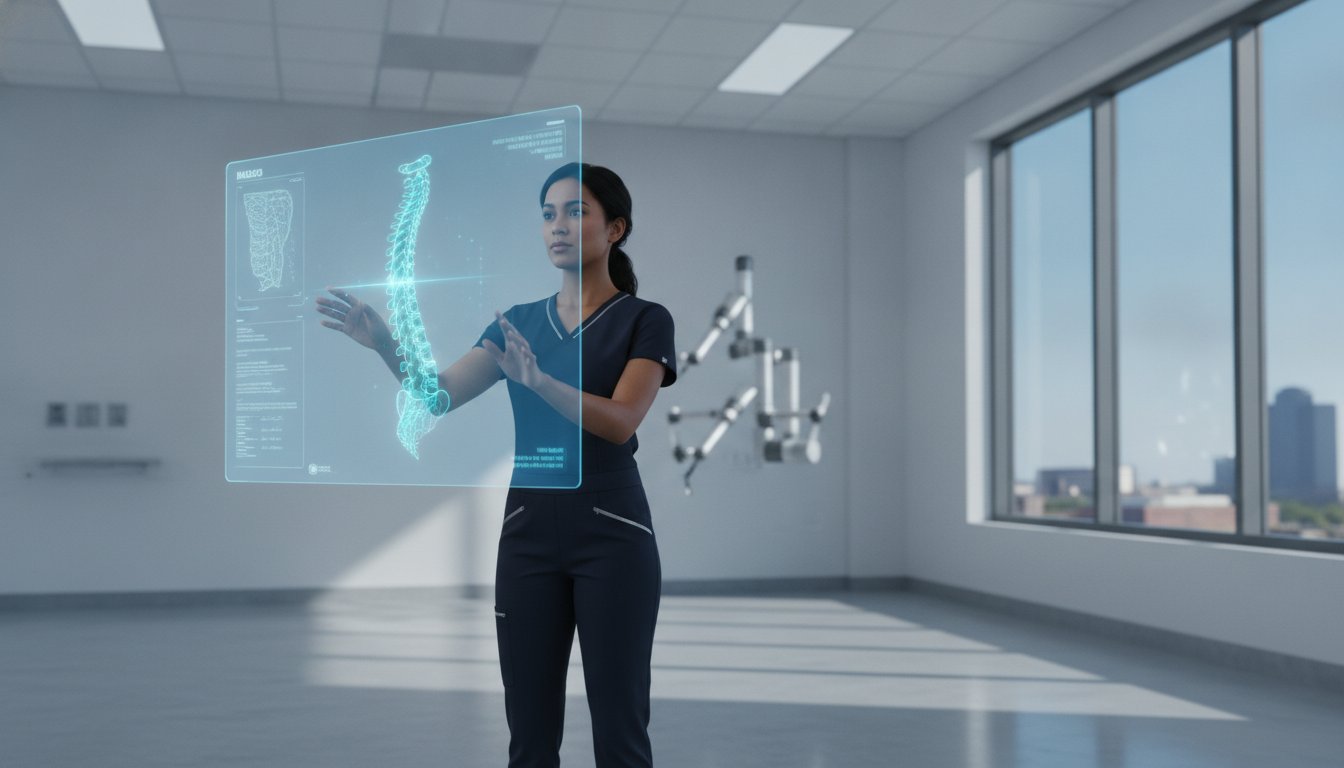
If you’re facing a complex spinal procedure, does it matter more who handles the bone or who protects the nerves? When comparing a neurosurgeon vs orthopedic surgeon for spine pain, the choice often feels like a high-stakes decision between structural stability and neurological safety. It’s natural to feel anxious about potential nerve damage or overwhelmed by conflicting medical opinions. You deserve a path to recovery that prioritizes both surgical precision and a swift return to your daily routine.
We’ll help you understand the critical differences between these two specialties to ensure you choose the most qualified expert for your unique condition. While both paths offer significant expertise, the distinction lies in their foundational training and their specific approach to delicate neural tissues. This article explores the latest 2026 advancements in endoscopic techniques and robotic guidance. You’ll learn how to identify a specialist who minimizes recovery times through advanced, minimally invasive neurosurgery. By the end, you’ll have the clarity needed to move from a state of concern to one of informed confidence; ensuring your spine is in the hands of a high-tech healer dedicated to your long-term quality of life.
Key Takeaways
- Compare the specialized training pathways of neurosurgeons and orthopedic surgeons to determine which expert aligns best with your specific diagnosis.
- Discover why the choice of neurosurgeon vs orthopedic surgeon for spine pain increasingly depends on the surgeon’s mastery of neural preservation and robotic guidance.
- Learn how modern minimally invasive neurosurgery and endoscopic techniques significantly reduce recovery timelines and post-operative discomfort.
- Understand the specific scenarios where a neurosurgeon’s focus on the spinal cord provides a critical safety advantage during complex procedures.
- Explore the benefits of seeking specialized care in Plano and Lewisville to ensure a seamless transition back to your active daily life.
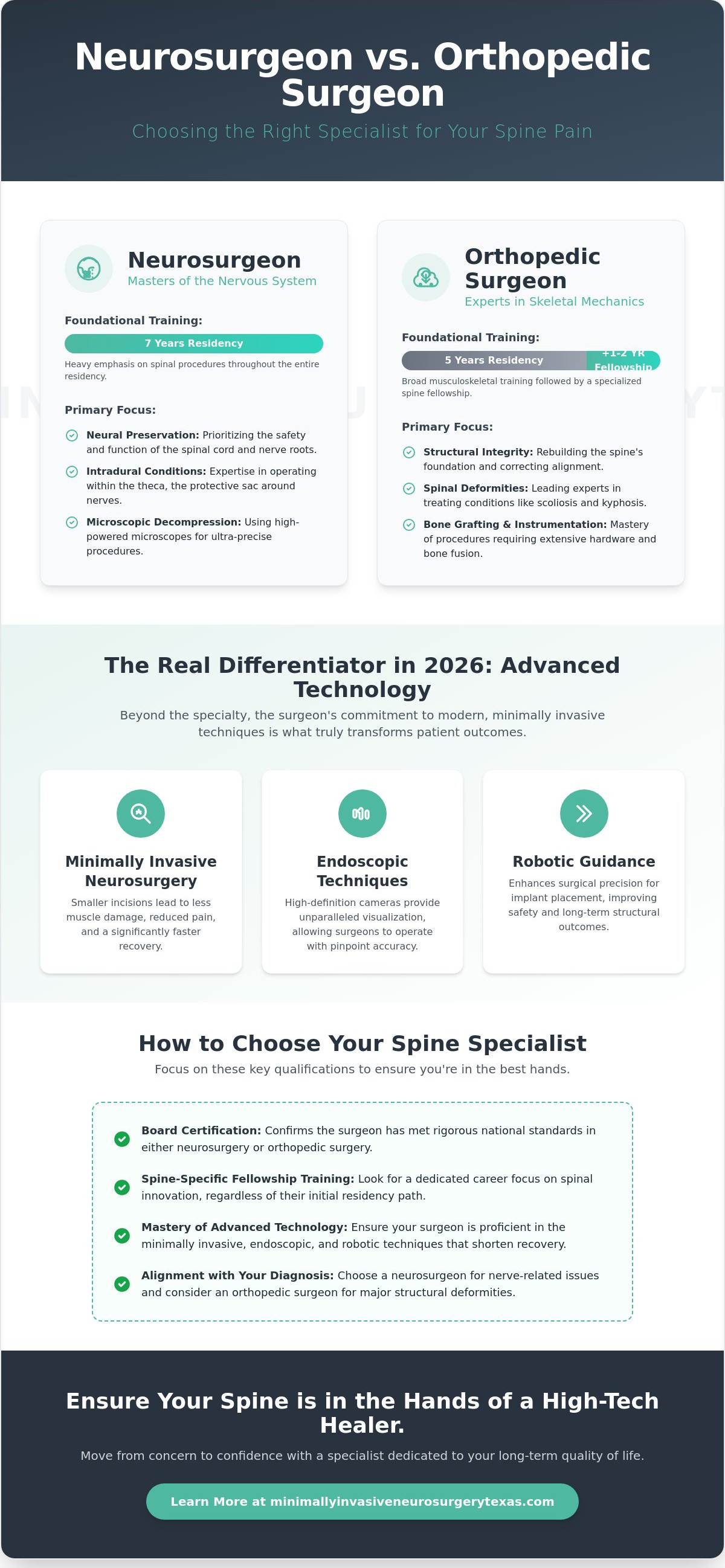
Neurosurgeon vs. Orthopedic Surgeon: The Foundational Differences
Understanding the choice between a neurosurgeon vs orthopedic surgeon for spine pain begins with their educational roots. While both specialists treat complex back conditions, they view the spine through different clinical lenses. An orthopedic surgeon typically approaches the spine as a structural framework of bones and joints. A neurosurgeon views it as a protective conduit for the delicate nervous system. Patients often benefit from exploring all specialized perspectives, including those available through Upper Cervical Care, to understand how spinal alignment impacts overall neurological function. This distinction is vital because your specific diagnosis dictates which perspective is most valuable for your recovery.
The training gap remains a significant factor in 2026. Neurosurgical residency typically lasts seven years, with a heavy emphasis on spinal procedures throughout the entire duration. In contrast, orthopedic residency usually spans five years and covers the entire musculoskeletal system, from hips and knees to hands and feet. To bridge this gap, orthopedic surgeons who wish to specialize in the spine must complete a one or two year fellowship. This shared territory means that for many degenerative conditions, both specialists are highly qualified, yet their core philosophies remain distinct and specialized.
The Neurosurgical Pathway: Masters of the Nervous System
Neurosurgery is a discipline dedicated to the diagnosis and surgical treatment of disorders affecting the nervous system. During their seven year residency, neurosurgeons develop an intimate understanding of the theca, which is the protective sac surrounding the spinal nerves. Their training emphasizes microscopic decompression and the management of intradural conditions. This focus makes them exceptionally skilled at navigating the high stakes environment where nerves and bone intersect. They prioritize neural safety as the primary objective of every intervention to ensure the best possible functional outcome.
The Orthopedic Pathway: Experts in Skeletal Mechanics
Orthopedic surgeons are the masters of the body’s structural integrity. Their five year residency provides deep expertise in bone health, joint mechanics, and ligamentous stability. Historically, they’ve led the way in treating complex structural deformities like scoliosis and kyphosis. They often excel in large scale bone grafting and procedures requiring extensive instrumentation to realign the skeletal system. For patients whose pain stems from significant mechanical instability or pediatric deformities, an orthopedic background offers unique strengths in rebuilding the spine’s foundation.
Regardless of the initial residency, the most important credentials in 2026 are board certification and fellowship training. These certifications prove the surgeon has met rigorous national standards for excellence. When you evaluate a neurosurgeon vs orthopedic surgeon for spine pain, look for a specialist who has dedicated their career to spinal innovation. Whether they started in orthopedics or neurosurgery, their commitment to advanced, patient centered techniques is what ultimately secures your return to normal activity.
When the Nervous System Takes Priority: The Neurosurgeon’s Edge
While an orthopedic perspective on back pain often focuses on the alignment of the vertebrae, the neurosurgeon’s expertise begins where the bone meets the nerve. For many patients, the decision between a neurosurgeon vs orthopedic surgeon for spine pain rests on the specific location of the pathology. When a condition involves the spinal cord itself or the delicate nerve roots exiting the spinal column, a neurosurgical background is vital. These specialists are trained to operate within the theca, the protective membrane surrounding the central nervous system, where precision is measured in fractions of a millimeter.
The primary tool of the modern neurosurgeon is the high powered surgical microscope. This technology allows for extreme visualization of neural structures that are nearly invisible to the naked eye. By utilizing microscopic techniques, a neurosurgeon can perform precise decompression, removing only the specific tissue causing pressure while leaving the surrounding healthy structures untouched. This level of detail is essential for preventing permanent nerve damage and ensuring a successful return to normal activity. If you’re seeking a second opinion on a complex diagnosis, consider how minimally invasive neurosurgery can offer a more targeted path to relief.
Nerve Decompression and Herniated Discs
Precision is the deciding factor when treating herniated discs that compress spinal nerves. Traditional open decompression often requires larger incisions and more significant muscle disruption to gain visibility. In contrast, neurosurgical micro-dissection uses specialized instruments to navigate through small corridors. This approach is particularly effective for managing failed back surgery syndrome, where a neurosurgeon must carefully clear scar tissue from previous operations that has become entangled with sensitive nerve roots. Because neurosurgeons spend their entire residency focused on neural anatomy, they possess a unique “nerve first” philosophy that prioritizes the safety of the spinal cord at every step.
Spinal Tumors and Vascular Malformations
Certain rare conditions fall strictly within the neurosurgical domain due to their complexity and location. Vascular malformations and tumors that grow within the spinal cord require the same delicate handling as brain surgery. The intersection of brain and spine health is most evident in these cases, where the surgical techniques used to protect cerebral tissue are applied to the spinal column. Intradural tumors, which reside inside the protective lining of the spinal cord, are exclusively the domain of neurosurgery because they necessitate a specialized opening and closing of the dura mater that orthopedic training does not typically cover.
The Structural Perspective: When Orthopedic Specialists Lead
While neurosurgery focuses on the delicate neural pathways, orthopedic surgery excels in the mechanical reconstruction of the spinal column. This structural perspective is vital when the primary clinical issue is the bone itself rather than the nerves it protects. When comparing a neurosurgeon vs orthopedic surgeon for spine pain, patients with significant curvature or bone density loss often benefit from the orthopedic specialty’s focus on skeletal mechanics. Medicare data from 2013 to 2022 reveals that orthopedic surgeons performed 61.8% of spinal deformity procedures and 68.2% of anterior lumbar interbody fusions (ALIF). These statistics underscore their historical leadership in large scale reconstructions that require extensive instrumentation and complex bone grafting to stabilize the foundation.
In 2026, the most effective care often involves a collaborative “team” approach. Major academic medical centers frequently pair both specialists to manage cases that involve both structural instability and neural compromise. This synergy ensures that the mechanical alignment of the vertebrae is restored while the spinal cord remains protected. By viewing the spine as both a structural pillar and a neural conduit, surgeons can provide a more comprehensive path to recovery. This high tech approach to back surgery prioritizes long term stability and a swift return to normal activity.
Correcting Major Skeletal Deformities
Orthopedic surgeons are the primary specialists for re-aligning the entire skeletal column. Their expertise is essential for treating conditions like adult onset scoliosis or severe kyphosis, where the goal is to restore the body’s natural balance. These procedures often involve multi-level spinal fusions and the use of sophisticated hardware to hold the spine in its new position. Because their training covers the entire musculoskeletal system, they are uniquely qualified to address limb length discrepancies that can cause or complicate chronic spine pain. They ensure the spine’s alignment works in harmony with the rest of the body’s framework.
Bone Health and Systemic Musculoskeletal Care
An orthopedic specialist considers the body’s entire kinetic chain during the diagnostic process. It’s surprisingly common for hip or knee pathologies to masquerade as lower back issues; a phenomenon that an orthopedic surgeon is specifically trained to identify. They also lead the way in managing bone specific pathologies like osteoporosis, which can lead to painful vertebral compression fractures. By addressing the systemic health of the bone, they provide a stable environment for surgical success. This focus on the “bone first” approach ensures that any surgical intervention has a solid foundation, minimizing the risk of future structural failures.
The Real Differentiator: Minimally Invasive Technology and Robotics
In 2026, the traditional debate of neurosurgeon vs orthopedic surgeon for spine pain is shifting toward a more critical question: is your surgeon a master of minimally invasive technology? The specialty title on the door matters less than the surgical philosophy practiced inside. The most significant advancement in modern spine care is the transition from large, traumatic incisions to ultra-precise, tissue-preserving techniques. While both specialties may have access to advanced tools, the real differentiator is the commitment to minimizing the physical impact of surgery on the patient’s body.
Robotic guidance systems, such as the Globus Excelsius, have redefined what is possible in terms of surgical accuracy. These systems allow for sub-millimeter precision when placing hardware, which is vital for long-term stability and neural safety. Simultaneously, Augmented Reality (AR) platforms like Augmedics empower surgeons to “see” through the skin and muscle in real-time. This “X-ray vision” means we can navigate the complex anatomy of your spine with absolute certainty without the need for large openings. Patients who choose these high-tech pathways benefit from smaller incisions, significantly less blood loss, and a much faster return to work and normal activity.
Artificial Disc Replacement: A Modern Alternative to Fusion
Artificial Disc Replacement (ADR) represents a paradigm shift in treating degenerative conditions. Neurosurgeons often excel in this area because the procedure requires meticulous nerve clearance and microscopic decompression before the new disc is implanted. Unlike traditional fusion, which “locks” the spine and can lead to the degeneration of surrounding levels, ADR preserves your natural range of motion. If you’re struggling with chronic cervical pain, exploring a neck disk replacement can be a life-changing alternative that maintains your flexibility and quality of life.
Endoscopic Spine Surgery: The ‘Ultra-Minimally’ Invasive Choice
Endoscopic techniques allow us to treat bulging or herniated discs through a specialized tube roughly the size of a pencil. Neurosurgeons use these miniature cameras to decompress nerves with zero muscle cutting, which is a stark contrast to the muscle-stripping required in traditional “open” surgery. This method is exceptionally gentle on the body and often allows for a faster recovery with minimal post-operative discomfort. Endoscopic spine surgery is the gold standard for outpatient spine care in 2026. If you’re ready to reclaim your lifestyle, consider scheduling a consultation for Minimally Invasive Neurosurgery to see if you’re a candidate for these precision-driven procedures.
Choosing Your Spine Specialist in Plano and Lewisville
Selecting the right expert in North Texas is a decision that impacts your long-term mobility and quality of life. While the clinical choice between a neurosurgeon vs orthopedic surgeon for spine pain is foundational, the logistics of your care matter just as much. Local expertise in the Plano and Lewisville area ensures that your pre-operative planning and post-surgical follow-ups are convenient and consistent. Choosing a specialist within your community allows for a more integrated recovery process where your surgeon remains accessible throughout every stage of your healing journey.
The environment where your surgery takes place is equally significant. Large hospital systems often operate with a high-volume, corporate mentality that can feel impersonal during a vulnerable time. In contrast, a boutique surgical center offers a specialized, patient-centered atmosphere. These facilities are frequently at the absolute forefront of modern surgical innovation, providing the same cutting-edge technology as major hospitals but with a higher degree of personal attention. This boutique approach ensures that your health remains the top priority, moving you from a state of concern to a state of informed confidence.
Questions to Ask Your Potential Surgeon
Before committing to a procedure, you must verify that your surgeon’s experience matches your specific needs. Start by asking what percentage of their practice is dedicated exclusively to the spine. In 2026, a high-volume specialist is often more adept at navigating complex cases than a generalist. You should also inquire about their use of proprietary technological systems. Ask if they utilize robotic guidance or AR navigation during surgery to enhance precision. Finally, request a detailed explanation of their specific protocol for minimally invasive recovery. A surgeon committed to your daily quality of life will have a clear, results-oriented plan to help you return to normal activity as quickly as possible.
The MINT Advantage: Dr. Scott Kutz’s Approach
Dr. Scott Kutz at Minimally Invasive Neurosurgery of Texas (MINT) provides a sophisticated blend of clinical authority and compassionate reassurance. As a board-certified neurosurgeon with locations in Plano and Lewisville, he focuses his practice entirely on spinal health. By utilizing minimally invasive neurosurgery, Dr. Kutz prioritizes nerve safety and structural integrity while minimizing the physical impact on your body. This specialized approach distinguishes his practice from traditional, more invasive methods. Whether you are seeking a first consultation or a second opinion for a complex diagnosis, the goal remains the same: providing the relief of suffering through precision-driven innovation. His commitment to professional excellence ensures that every patient has a clear path toward a successful clinical outcome and a swift return to the activities they love.
Your Path to a Pain-Free Future
Choosing between a neurosurgeon vs orthopedic surgeon for spine pain is a pivotal moment in your healthcare journey. You’ve learned that while both specialists offer unique strengths, the modern standard of care increasingly relies on precision and neural preservation. Whether your condition requires structural expertise or the delicate micro-dissection skills of a neurosurgeon, your priority remains a safe, effective recovery. Minimizing the physical impact of surgery through robotic guidance and endoscopic techniques is the key to achieving a swift return to normal activity.
At Minimally Invasive Neurosurgery of Texas, we combine clinical excellence with the personal attention of a boutique practice. Board-certified neurosurgeon Dr. Scott Kutz has served the Plano and Lewisville communities for over a decade. By utilizing the Globus Excelsius robotic navigation system, he ensures every procedure meets the highest standards of accuracy and safety. Don’t let chronic pain dictate your future any longer. Schedule a consultation with Dr. Scott Kutz at MINT today to discover how our specialized approach can restore your quality of life. You deserve a solution that prioritizes your health and long-term well-being.
Frequently Asked Questions
Is a neurosurgeon better than an orthopedic surgeon for a herniated disc?
Neurosurgeons often provide a distinct advantage for herniated discs because their training focuses on the delicate micro-dissection of neural tissues. While both specialists are qualified to treat this condition, a neurosurgeon’s mastery of the surgical microscope allows for precise decompression with minimal impact on surrounding structures. This focused approach reduces the risk of nerve irritation and supports a faster return to normal activity.
Do neurosurgeons only perform surgery on the brain?
Neurosurgeons don’t just operate on the brain; in fact, many modern neurosurgical practices dedicate the majority of their volume to spinal care. Their residency involves seven years of intensive training focused on the spinal cord and peripheral nerves. This makes them exceptionally qualified to handle complex back and neck conditions that intersect with the central nervous system.
Can an orthopedic surgeon perform a spinal fusion?
An orthopedic surgeon is fully qualified to perform spinal fusions and often specializes in the structural aspects of these procedures. They have deep expertise in using instrumentation and bone grafting to stabilize the vertebrae. When choosing between a neurosurgeon vs orthopedic surgeon for spine pain, consider that both specialties perform fusions with high success rates using modern robotic guidance.
What is the recovery time difference between neurosurgeons and orthopedic surgeons?
Recovery time is determined by the invasiveness of the procedure rather than the surgeon’s base specialty. Patients undergoing endoscopic or minimally invasive techniques often return to light activity within days. Traditional open surgeries require longer healing periods for muscle tissue regardless of whether an orthopedic surgeon or neurosurgeon performs the operation. Choosing a specialist who uses advanced technology is the best way to minimize your downtime.
Should I see a neurosurgeon for sciatica pain?
You should consider seeing a neurosurgeon for sciatica if your pain is caused by nerve root compression that hasn’t responded to conservative treatments. Neurosurgeons prioritize the health of the sciatic nerve and use specialized tools to remove the source of pressure. Their philosophy ensures that the primary goal of surgery is functional relief and the prevention of long-term neurological damage.
How do I know if my spine pain requires a specialist or just physical therapy?
You likely need a specialist if you experience progressive weakness, numbness, or pain that radiates into your limbs. Most patients start with physical therapy, but if symptoms persist for more than six weeks, a surgical consultation is appropriate. A specialist can determine if your pain stems from a structural or neurological issue that therapy alone cannot resolve.
Are neurosurgeons more expensive than orthopedic surgeons for spine surgery?
Professional fees for both specialists are typically comparable for the same spinal procedures. The total cost of care is usually influenced more by whether the surgery happens in a specialized boutique center or a large hospital system. Insurance coverage and the complexity of the hardware used also play a larger role in final costs than the surgeon’s specific residency background.
What is the success rate of minimally invasive spine surgery vs. traditional surgery?
Minimally invasive spine surgery offers success rates comparable to traditional open surgery but with significantly lower infection and complication rates. Patients benefit from less blood loss and reduced post-operative pain during the initial healing phase. These advanced techniques allow for a much faster recovery, making them a preferred choice for most degenerative spinal conditions in 2026.