What if the most effective way to repair your spine was through an opening no larger than a pencil tip? While traditional methods often rely on large incisions that disrupt healthy tissue, endoscopic surgery for spine conditions represents a biomechanical preservation strategy that leaves your supporting structures untouched. You shouldn’t have to choose between permanent relief and a long, painful recovery. In 2026, advanced systems like the Medtronic Stealth AXiS, which received FDA clearance on February 13, 2026, allow surgeons to navigate your anatomy with unprecedented precision.
It’s natural to feel anxious about surgery or confused by the various “minimally invasive” labels. You want to know exactly how a surgeon can fix your back through a tiny tube without causing muscle damage. This guide will clarify the procedural steps of MISS and show you how these techniques provide faster relief for chronic back pain. We’ll explore the latest 2026 technology and provide a clear path so you can gain the confidence to choose a specialist and finally get back to life.
Key Takeaways
- Understand how high-definition endoscopes allow for precise treatment while preserving surrounding muscle tissue and spinal stability.
- Explore the procedural advantages of conscious sedation, which promotes a faster return to your daily routine compared to traditional general anesthesia.
- Discover why endoscopic surgery for spine care utilizes an 8mm incision to minimize trauma and significantly reduce post-operative scarring.
- Learn the specific symptoms and diagnostic “red flags” that indicate you may be an ideal candidate for ultra-minimally invasive decompression.
- See how world-class technologies like Globus Excelsius and Augmedics AR provide a higher standard of surgical precision to help you get back to life.
What is Endoscopic Surgery for the Spine?
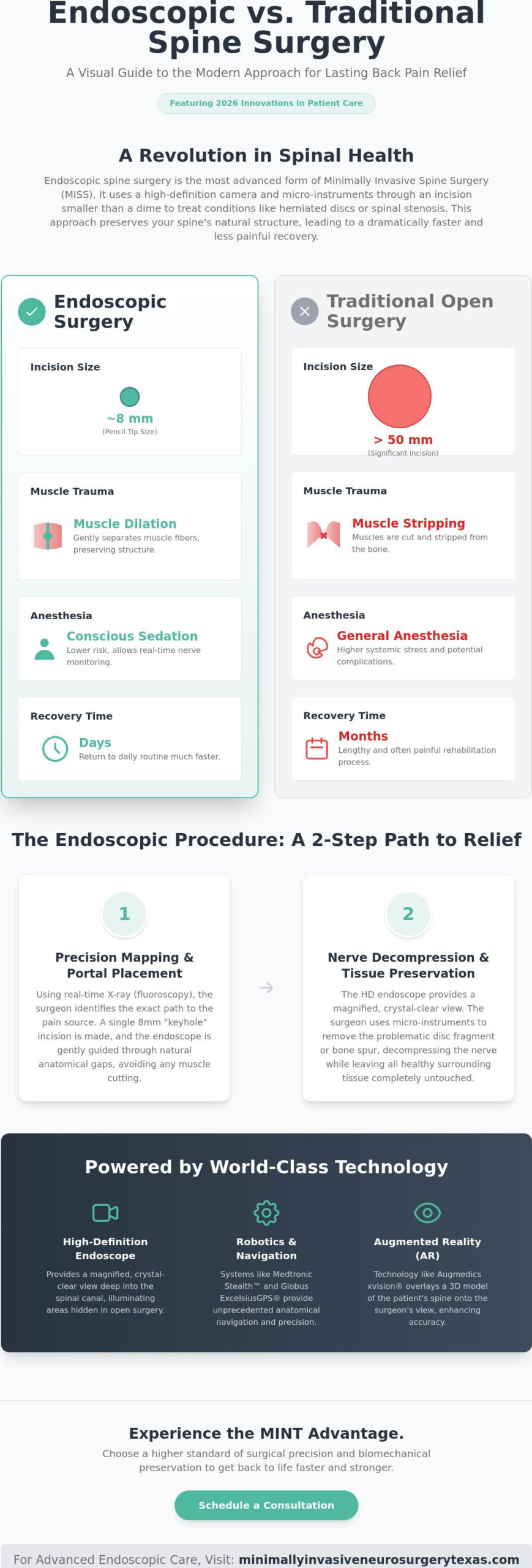
Endoscopic surgery for spine care represents the pinnacle of modern neurosurgical innovation. It’s the most advanced form of Minimally invasive spine surgery (MISS) available in 2026. This technique uses a high-definition endoscope to treat complex conditions like spinal stenosis or herniated discs with extreme precision. In traditional open surgery, surgeons often make incisions exceeding 50mm. They have to strip muscle away from the bone just to see the spine. Endoscopy changes that. We use a tiny “keyhole” incision, usually around 8mm, to insert a camera and light source directly to the site of the pain. This approach allows the surgeon to act as a High-Tech Healer, fixing the problem while leaving your body’s natural support structures intact.
The Evolution from Traditional MISS to Endoscopy
The journey toward ultra-minimally invasive care has been steady and purposeful. Early forms of MISS introduced tubular retractors to push muscles aside rather than cutting them. Endoscopy takes this a step further by using even smaller portals that require minimal muscle dilation. Smaller incisions aren’t just about smaller scars; they’re about biomechanical preservation. By keeping the muscles and ligaments attached to the spine, we ensure the back remains strong and stable after the procedure. This reduction in surgical site trauma leads to less pain and a significantly lower risk of blood loss, helping you get back to life faster than ever before. Patients often find that the recovery is measured in days rather than the months associated with traditional techniques.
Key Components: The Endoscope and Micro-Instruments
Precision requires the right tools. The HD camera lens provides a magnified, crystal-clear view of the spinal canal. It allows the surgeon to see around anatomical corners and deep into the neural foramen, areas that were previously hidden during open surgery. We use specialized micro-instruments, such as tiny graspers and diamond burrs, designed specifically to fit through an 8-10mm port. These tools allow for the delicate removal of bone spurs or disc fragments without touching the spinal cord or sensitive nerve roots. A continuous flow of sterile fluid irrigation keeps the surgical field perfectly clear and flushes out bacteria to ensure the lowest possible risk of infection. This combination of high-tech visualization and specialized instrumentation ensures that only the pathology is treated, while your healthy tissue remains undisturbed.
How the Procedure is Performed: A Step-by-Step Breakdown
Understanding the journey from arrival to discharge helps alleviate the anxiety often associated with spinal intervention. On the day of your endoscopic surgery for spine, you’ll enter a specialized surgical suite designed for precision and comfort. Unlike traditional open surgeries that require heavy general anesthesia and intubation, many endoscopic procedures are performed under local anesthesia or conscious sedation. This approach keeps you comfortable and relaxed while allowing for real-time monitoring of nerve function. It’s a safer, more modern way to address chronic pain without the systemic stress of deep sedation, ensuring you remain the priority throughout the entire process.
Step 1: Precision Mapping and Portal Placement
The process begins with precision mapping. Your surgeon uses advanced fluoroscopy, a type of real-time X-ray, to identify the exact anatomical path to the problematic disc or bone spur. Once the target is identified, a single, tiny incision is made. This “portal” is often no larger than 8mm, which is smaller than a postage stamp. Through this opening, the endoscope is gently guided through the natural gaps in the bone. There’s no cutting of the skin or muscle; instead, specialized dilators create a narrow corridor for the camera and instruments to pass through safely.
Step 2: Nerve Decompression and Tissue Preservation
Once the endoscope is in place, the decompression phase begins. This is where the surgeon removes the source of your pain, such as a herniated disc fragment or an osteophyte. By utilizing the high-definition visualization of an Endoscopic Diskectomy, the surgeon can see the nerve roots with extreme clarity. This allows for the precise removal of tissue that’s pressing on the nerves while leaving healthy structures untouched. Because the surrounding muscles are dilated rather than stripped or cut, collateral damage is virtually eliminated. This preservation of anatomy is the hallmark of advanced endoscopic surgery for spine care. If you’re ready to explore these options, you can schedule a consultation with our team to discuss your specific diagnosis.
Step 3: Closing and Immediate Recovery
After the pressure is removed from the nerve, the endoscope is withdrawn. The closure process is remarkably simple, often requiring only a single stitch or surgical tape and a small bandage. You’ll be moved to a comfortable recovery suite where our staff will monitor your progress as the sedation wears off. Most patients are up and walking within 2 hours of the procedure. Our “get back to life” philosophy starts the moment you wake up; we prioritize early mobility to prevent stiffness and promote natural healing. Most patients return home the same day, feeling the immediate relief of a decompressed nerve without the burden of a large surgical wound.
Endoscopic vs. Traditional Spine Surgery: The Critical Differences
Choosing the right surgical path requires a clear understanding of how different techniques impact your long-term mobility. Traditional “open” spine surgery often relies on a large incision, typically 50mm or longer, to give the surgeon a direct line of sight. This requires stripping or detaching the muscles from the spinal column. In contrast, endoscopic surgery for spine conditions uses an incision of only 8mm. Because the endoscope provides a high-definition internal view, there’s no need for extensive tissue disruption. This fundamental difference shifts the procedure from a major hospital event to an efficient outpatient experience. Most patients go home the same day, avoiding the multi-day hospital stays and high infection risks associated with traditional open-back procedures.
One of the most significant advantages of the endoscopic approach is the reduced risk of Failed Back Surgery Syndrome (FBSS). In traditional surgery, the large-scale trauma to the tissues often leads to extensive internal scarring, or epidural fibrosis. This scar tissue can eventually compress the nerves, causing a return of the very pain the surgery was intended to fix. By utilizing ultra-minimally invasive portals, we minimize the biological footprint of the procedure. This preservation of the natural anatomy significantly lowers the chance of post-operative complications and chronic “surgical” pain, providing a more reliable path to permanent relief.
Why Muscle Preservation Matters for Your Long-Term Health
Your multifidus muscles act as the essential “guy wires” that stabilize your spinal column. When traditional surgery cuts or detaches these muscles, it can lead to permanent weakness and atrophy. This often results in a cycle of chronic instability and secondary back pain. endoscopic surgery for spine patients avoids this entirely by using muscle dilation. We gently move the fibers aside rather than cutting them. For residents in Plano and Lewisville who want to return to golf, tennis, or demanding physical work, this preservation is vital. It ensures your spine remains supported by its own natural musculature, allowing for a stronger, more resilient recovery.
Recovery Timelines: What the Data Shows
The speed of recovery is perhaps the most life-changing difference for our patients. Data indicates that patients undergoing endoscopic procedures often return to light office work within 3 to 5 days. Traditional open surgery, however, frequently requires 6 to 12 weeks of recovery before a patient can resume similar activities. Because the trauma to the body is so limited, there is also a drastically reduced need for narcotic pain medications. Most patients manage their post-operative discomfort with simple over-the-counter options. You can explore more about these specific Recovery Times for Minimally Invasive Spine Surgery to see how this modern standard compares to older, more invasive methods. This efficiency is why we’re committed to helping you get back to life as quickly and safely as possible.
Candidacy: Is Endoscopic Surgery the Right Solution for Your Back Pain?
Determining if you’re a candidate for endoscopic surgery for spine care starts with a shift in perspective. Many patients mistakenly believe that advanced endoscopic techniques are only reserved for “minor” ailments or simple disc slips. This is a common misconception. In reality, the high-definition visualization provided by the endoscope allows us to treat complex foraminal narrowing and multi-level stenosis that might otherwise require extensive bone removal in a traditional open setting. If your daily life is limited by persistent nerve pain, you deserve a specialized evaluation to see if ultra-minimally invasive tools can provide the relief you’ve been seeking.
The goal of candidacy is to match the right technology to your specific pathology. We don’t just treat the image on an MRI; we treat the patient. Whether you’re dealing with sharp, shooting pain down your leg or a dull, constant ache in your lower back, our focus remains on precision. We utilize a results-oriented diagnostic journey to ensure that endoscopic surgery for spine is the most effective path for your unique anatomy. This ensures that every step we take is designed to help you get back to life with absolute certainty.
Common Conditions Treated with Endoscopy
One of the most frequent applications for this technology is the Lumbar Discectomy. This procedure is specifically designed to relieve sciatica and leg weakness caused by herniated material pressing against a nerve root. By removing only the offending fragment, we preserve the rest of the healthy disc. We also specialize in Endoscopic Foraminotomy, which focuses on opening the “exit doors” where nerves leave the spinal canal. This is particularly effective for patients suffering from foraminal narrowing due to bone spurs or bulging discs. These targeted decompressions address the root cause of pain without the collateral damage of older, more invasive methods.
When to Seek a Consultation in North Texas
You should consider an endoscopic evaluation if you’ve failed to find relief through conservative measures like physical therapy or epidural steroid injections, typically after a period of 6 to 12 weeks. Red flags that suggest a need for surgical intervention include progressive muscle weakness, numbness in the extremities, or pain that prevents you from performing basic daily tasks. It’s vital to have a high-quality MRI reviewed by a board-certified neurosurgeon who understands the nuances of MISS. For residents across the DFW metroplex, we offer convenient access to world-class care at our Plano and Lewisville clinics. Don’t wait for your symptoms to worsen before seeking an expert opinion. Schedule your MRI review today to discover if a “keyhole” approach is the right choice for your recovery.
The MINT Advantage: Advanced Endoscopic Care in Plano and Lewisville
Dr. Scott Kutz leads Minimally Invasive Neurosurgery of Texas with a singular focus on ultra-minimally invasive techniques. As a board-certified neurosurgeon, he’s dedicated his career to the mastery of MISS and the relief of chronic suffering. Choosing a specialized boutique practice offers a level of personal attention that large, cold hospital systems often fail to provide. We treat you as a person with a life to reclaim, not just another chart in a crowded waiting room. Every aspect of our facility is optimized for endoscopic surgery for spine patients who demand world-class outcomes and a compassionate, patient-centered experience.
Our practice serves as a beacon of hope for those who’ve been told their only options are heavy narcotics or invasive open surgeries. We believe in the power of the High-Tech Healer; a surgeon who combines board-certified authority with the most advanced tools available in 2026. This commitment to innovation is why we’ve invested in the technology necessary to ensure your procedure is as precise as possible. By focusing exclusively on the spine and brain, we maintain the professional distance required for surgical excellence while projecting the warm reassurance you need during your recovery journey.
Precision Tech: Robotics and Augmented Reality
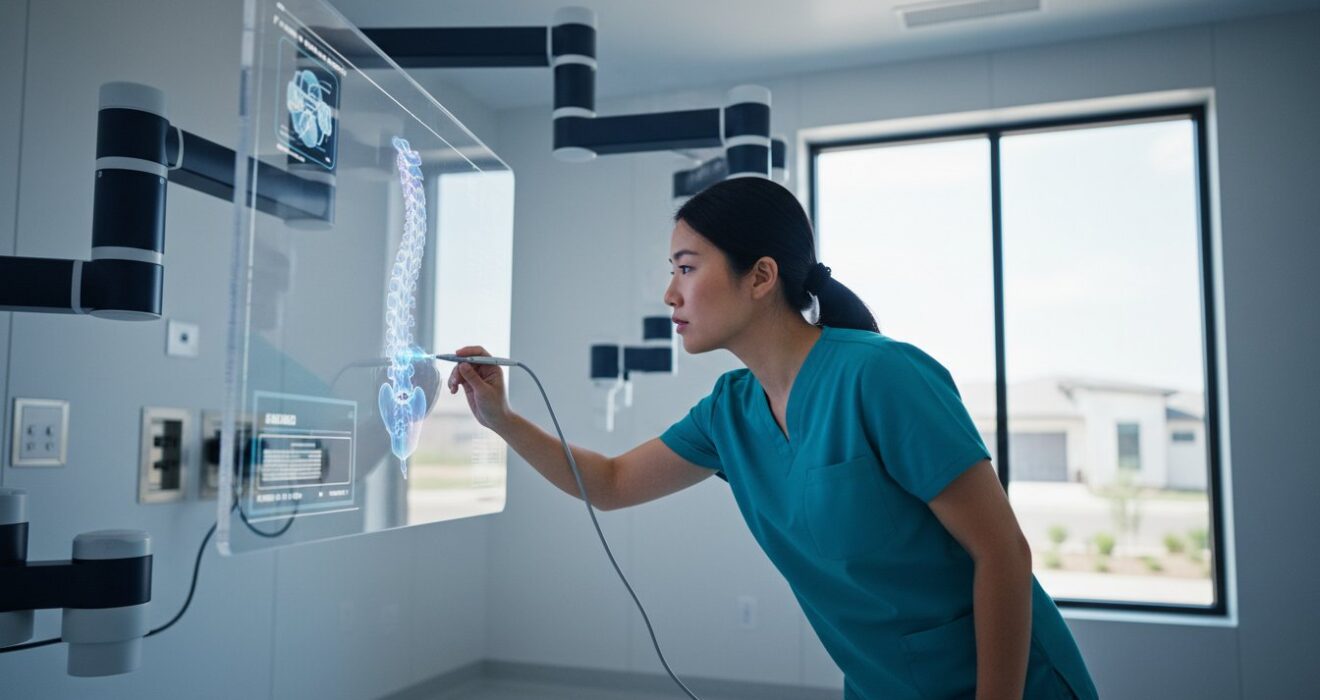
The integration of the Globus Excelsius robotic navigation system is a hallmark of the MINT approach. This high-tech hallmark allows for portal placement with accuracy measured to the millimeter. It eliminates the variables found in traditional approaches and ensures that the endoscope is positioned perfectly every time. We also utilize the Augmedics AR platform, which gives the surgeon “X-ray vision” through the skin. By wearing a specialized augmented reality headset, Dr. Kutz can see your internal spinal anatomy in 3D without making a large incision. This level of precision is a signature of our practice and ensures that your endoscopic surgery for spine is performed with the highest standard of safety and efficiency.
Your Journey Back to Life Starts Here
Your recovery is our top priority from the moment you walk through our doors. We understand that chronic back pain stops you from enjoying every single day of your life, and we’re here to help you change that. Our commitment to individualized care means we develop a plan tailored to your specific diagnosis and lifestyle goals. Whether you’re visiting our Plano or Lewisville locations, you’ll find a team dedicated to moving you from a state of concern to a state of informed confidence.
Don’t let another day pass in a cycle of pain and limited mobility. Residents across the DFW metroplex have access to specialized, innovative care right in their own community. We invite you to experience the difference that a dedicated, high-tech boutique center can make in your healthcare journey. Schedule your evaluation today and discover the clear path to getting back to life.
Your Path to a Pain-Free Future
Modern medicine has transformed the treatment of chronic back pain. By choosing endoscopic surgery for spine conditions, you’re opting for a biomechanical preservation strategy that prioritizes your long-term stability. You’ve seen how 8mm incisions and muscle-sparing techniques replace the trauma of traditional open surgery. You’ve also learned how high-definition visualization allows for the precise removal of herniated material while protecting your vital nerve structures. This isn’t just about a smaller scar; it’s about a smarter way to heal.
At Minimally Invasive Neurosurgery of Texas, we combine the clinical expertise of board-certified neurosurgeon Dr. Scott Kutz with the world-class accuracy of the Globus Excelsius robotic system. Whether you visit our convenient Lewisville or Plano locations, you’ll find a dedicated team ready to move you from a state of concern to informed confidence. It’s time to stop letting pain dictate your schedule and start enjoying every single day with the people you love.
Schedule Your Endoscopic Spine Evaluation with Dr. Kutz Today and discover how our specialized, high-tech care can help you finally get back to life.
Frequently Asked Questions
Is endoscopic spine surgery considered a major surgery?
Technically, any procedure involving the spinal column is serious, but endoscopic surgery for spine care is an ultra-minimally invasive outpatient procedure. Unlike traditional major surgery that requires large incisions and muscle stripping, this approach uses a tiny 8mm opening. It significantly reduces systemic stress on the body and carries a lower risk profile. This modern technique allows most patients to return home the same day rather than enduring a lengthy hospital stay.
How long does an endoscopic spine procedure typically take?
Most endoscopic procedures are completed in 60 to 90 minutes. The exact duration depends on your specific diagnosis, such as the size of a herniated disc or the severity of spinal stenosis. Because Dr. Kutz uses high-definition visualization and specialized micro-instruments, the process is highly efficient. Once the decompression phase is finished, patients typically move to a recovery suite for a brief monitoring period before being discharged.
What is the success rate of endoscopic surgery for herniated discs?
Clinical studies consistently show a success rate of approximately 90% for endoscopic discectomies. This mirrors the outcomes of traditional open surgery but with significantly less tissue trauma and a faster recovery. Most patients experience immediate relief from shooting leg pain or radiculopathy. Success is defined by your ability to return to daily activities and enjoy every single day without the burden of chronic pain or narcotic reliance.
Will I have a scar after endoscopic spine surgery?
Scars are minimal and often fade to the point of being barely visible. The incision is typically between 8mm and 10mm, which is roughly the width of a standard pencil. Because the surgeon dilates the muscle fibers rather than cutting them, there’s very little internal scarring or external blemish. Most patients find that the small mark is a minor trade-off for the profound relief they experience from the procedure.
Can endoscopic surgery be used for cervical (neck) spine issues?
Yes, endoscopic techniques are highly effective for treating specific cervical conditions like foraminal stenosis or disc herniations. While many surgeons still rely on anterior fusions that require hardware, an endoscopic posterior approach can often decompress the nerve without the need for bone grafts. This preserves the natural motion of your neck. It’s a sophisticated solution for patients who want to avoid the permanence of a fusion procedure.
How soon can I return to work after an endoscopic procedure?
Most patients return to sedentary or office-based work within 3 to 5 days. If your profession involves heavy lifting or high physical demand, we typically recommend waiting 4 to 6 weeks to ensure the disc has fully healed. This timeline is remarkably shorter than the 12-week recovery period often associated with traditional open-back operations. Our goal is always to help you get back to life as safely and quickly as possible.
Is endoscopic spine surgery covered by most insurance plans?
Most major insurance providers cover endoscopic surgery for spine procedures when they’re deemed medically necessary. However, coverage can vary depending on your specific plan and provider. Some insurers, such as certain branches of Blue Cross Blue Shield, have historically classified specific endoscopic variations as investigational. Our team works directly with your insurance company to verify your benefits and ensure you have a clear understanding of your coverage before your procedure.
What happens if I am not a candidate for endoscopic surgery?
If endoscopy isn’t the ideal solution for your specific anatomy, Dr. Kutz will explore other MISS options tailored to your needs. This might include robotic-assisted fusion with the Globus Excelsius system or artificial disc replacement. We don’t believe in a one-size-fits-all approach. Even if you aren’t a candidate for endoscopy, we remain committed to using the least invasive methods possible to resolve your pain and restore your mobility.