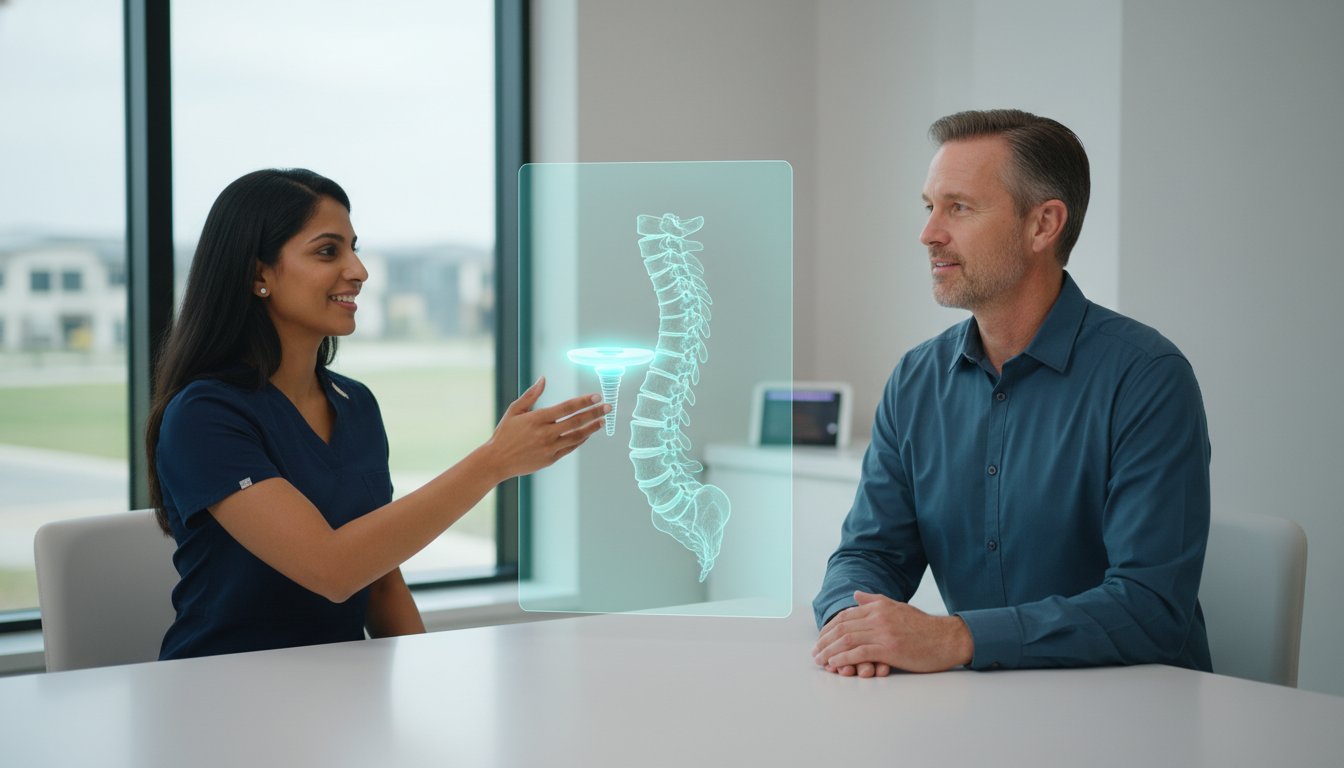
What if the solution to your chronic lower back pain didn’t require you to sacrifice the natural flexibility of your spine? For many residents in North Texas, the prospect of spinal fusion brings a deep-seated fear of permanent stiffness and a grueling recovery period. However, lumbar artificial disc replacement Plano is redefining the standard of care by offering a high-tech, motion-preserving alternative. Instead of fusing vertebrae together, this advanced procedure replaces damaged discs with sophisticated implants designed to mimic your body’s natural movement, allowing you to maintain the agility you need for daily life.
We understand that living with radiating leg pain and the limitations of degenerative disc disease is exhausting. You want to get back to your morning golf game or hiking the local trails without the constant shadow of physical discomfort. This article explains how artificial disc replacement provides a faster return to work and a significantly lower reoperation rate, which a 2024 study of over 2,000 patients found to be only 1.3 percent. We’ll explore the clinical benefits of this minimally invasive approach and help you understand how this modern technology can help you reclaim an active, pain-free lifestyle.
Key Takeaways
- Understand how motion preservation technology maintains your spine’s natural flexibility, offering a dynamic alternative to the rigid stability of traditional fusion.
- Discover if you meet the specific clinical criteria for lumbar artificial disc replacement Plano, including the standard requirement for six months of conservative treatment.
- Learn about the role of the Globus Excelsius robotic system in achieving sub-millimeter surgical precision for safer, more effective outcomes.
- Explore the streamlined recovery process that allows many patients to begin walking within hours of surgery and return home for a faster return to normal activity.
- Gain insights into how preserving natural disc height and movement helps protect the rest of your spine from the risks of adjacent segment disease.
What is Lumbar Artificial Disc Replacement (ADR)?
Lumbar artificial disc replacement Plano represents a significant leap forward in motion preservation technology. At its core, this procedure involves the surgical removal of a damaged or degenerated disc in the lower spine and replacing it with a high-tech prosthetic device. In clinical settings, specialists often refer to this as Total Disc Replacement (TDR). While the terminology might sound complex, the objective is straightforward: to relieve debilitating nerve pressure while maintaining the natural flexibility of your spine.
Unlike traditional methods that lock vertebrae together, this surgical intervention focuses on restoring the functional dynamics of the lumbar region. It’s a distinct approach compared to cervical ADR, which addresses the neck. Because the lower back supports the majority of your body weight, lumbar implants must be exceptionally robust to handle the mechanical stresses of daily activity. The primary goal is to eliminate chronic pain without the permanent stiffness often associated with older surgical techniques. By choosing this modern path, patients can address the root cause of their discomfort while keeping their spine moving as it was intended.
How the Artificial Disc Mimics Natural Anatomy
Modern prosthetics are masterpieces of bioengineering. They typically consist of two metallic plates made from medical-grade cobalt-chromium or titanium alloys, with a specialized polyethylene core between them. This design isn’t just about durability; it’s about precision. The implant is carefully sized to restore your proper disc height, which is essential for maintaining correct spinal alignment and preventing future strain on surrounding joints. The prosthetic is engineered to facilitate a natural range of motion, allowing for seamless flexion, extension, and rotation similar to a healthy human disc. By replicating these movements, the device helps protect the integrity of the entire spinal column.
Evolution of Disc Technology in 2026
The journey of disc technology has moved from early European experimental models to the sophisticated, FDA-approved designs available today. In 2026, we’ve seen a dramatic improvement in the biocompatibility of these devices. Modern materials are now designed to integrate more effectively with your bone, reducing the risk of wear over decades of use. This technological progress has changed the way surgeons view the procedure. What was once considered a “salvage” surgery for complex cases has now become a primary recommendation for active patients who refuse to let back pain dictate their lifestyle. This shift ensures that lumbar artificial disc replacement Plano remains at the forefront of modern neurosurgery, providing a reliable path back to an active life.
Are You a Candidate for Lumbar ADR in Plano?
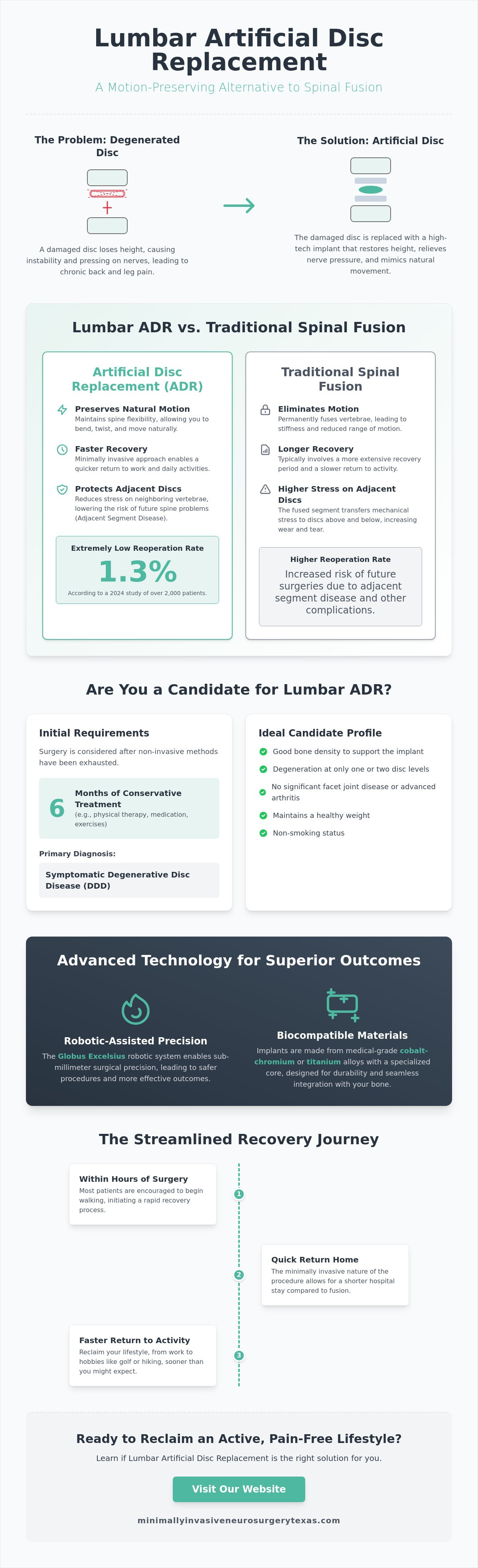
Determining if you’re a candidate for lumbar artificial disc replacement Plano requires a meticulous evaluation of your clinical history and spinal anatomy. Most patients who seek this procedure struggle with chronic lower back pain, persistent sciatica, or radiating leg numbness that interferes with their daily life. However, surgery is rarely the first step. Clinical protocols, often referred to as the 6-month rule, require that you exhaust conservative treatments like physical therapy, anti-inflammatory medications, and specialized exercises before considering a surgical intervention. This ensures that surgery is reserved for those who truly cannot find relief through non-invasive means.
The primary indicator for this procedure is symptomatic Degenerative Disc Disease (DDD). To confirm this diagnosis, we utilize high-resolution MRI scans to visualize disc wear and, in some cases, provocative discography to pinpoint exactly which disc is generating your pain. Understanding these lumbar disk replacement candidate criteria is the first step toward moving from a state of chronic suffering to one of informed confidence. Our goal is to ensure the procedure aligns perfectly with your body’s specific needs for long-term success.
Ideal Candidate Characteristics
Success with an artificial disc depends heavily on the quality of the surrounding structures. Ideal candidates are typically adults with good bone density, as the vertebrae must be strong enough to support the prosthetic plates. We look for patients with single-level or two-level disc degeneration who haven’t yet developed significant facet joint disease or advanced arthritis in the back of the spine. Maintaining a healthy weight and a non-smoking status are also critical factors; nicotine significantly hinders bone healing and the long-term integration of the implant. If you’re ready to explore your options, a specialized spine surgery consultation can provide the clarity you need to move forward.
When ADR May Not Be the Best Option
While this technology is revolutionary, it isn’t a universal fix. Certain conditions, known as contraindications, may make traditional methods a safer choice. If you have severe spinal stenosis, where the spinal canal is significantly narrowed, or spondylolisthesis, where one vertebra has slipped forward over another, an artificial disc may not provide the necessary stability. Active spinal infections or significant bone loss from osteoporosis also preclude the use of these implants. A common question we hear from patients is whether a previous back surgery disqualifies them. The answer depends on the nature of that procedure. While a prior fusion usually rules out ADR at that same level, those who have only had a simple discectomy or laminectomy may still be excellent candidates for lumbar artificial disc replacement Plano.
Lumbar ADR vs. Spinal Fusion: A Plano Comparison
When facing chronic back pain, the choice often comes down to two distinct philosophies: locking the spine or letting it move. Spinal fusion creates a rigid segment that stops all movement between two vertebrae. While this effectively eliminates pain from a diseased disc, it changes the fundamental way your back moves. This structural shift often leads to what surgeons call Adjacent Segment Disease, where the levels above and below the fusion site wear out prematurely due to increased stress. Choosing lumbar artificial disc replacement Plano helps patients avoid this domino effect by maintaining the spine’s natural load distribution.
The mechanical difference between these procedures directly impacts your recovery timeline. Spinal fusion requires a biological process where bone must grow across the disc space, a journey that typically takes three to six months to reach full stability. In contrast, an artificial disc provides immediate mechanical support. This allows for a much faster return to light activity. Long-term clinical data spanning over ten years suggests that ADR patients experience significantly lower rates of secondary surgeries at adjacent levels compared to those who undergo fusion. This makes it a compelling option for those looking for a permanent, motion-preserving solution. You can find more details in this lumbar artificial disc replacement overview from the AAOS.
Why Active Plano Residents Prefer ADR
For many in North Texas, “normal” means staying active on the golf course, gardening, or traveling without restriction. Fusion can sometimes leave patients feeling stiff or “mechanical” in their movements. ADR offers a psychological and physical advantage by preserving the natural feel of the spine. Patients report feeling more like themselves because they don’t have to compensate for a rigid segment in their lower back. This preservation of agility is why lumbar artificial disc replacement Plano has become the preferred choice for residents who refuse to let a surgery dictate their future activity levels.
Clinical Success Rates and Safety
Safety is a primary concern for any surgical patient. Both fusion and ADR have high success rates, but they carry different risk profiles. While fusion risks include “non-union” (where the bones fail to fuse), ADR risks are more related to the precise positioning of the implant. Modern minimally invasive neurosurgery has revolutionized these outcomes by reducing blood loss and tissue trauma. Ultimately, the success of the procedure depends heavily on the surgeon’s experience with these specific high-tech implants. When performed by a specialist, the complication rates for infection and hardware failure are remarkably low, providing a safe path toward lasting relief.
The MINT Approach: Minimally Invasive Lumbar ADR in Plano
The MINT approach focuses on precision and personal attention. Dr. Scott Kutz has dedicated his practice to mastering minimally invasive spinal fusion Texas and motion-preserving ADR. Unlike large, crowded hospital systems where patients can feel like a number, our boutique surgical center prioritizes a specialized environment. This focus allows us to implement the most advanced technological systems available in modern neurosurgery. By utilizing an anterior approach, we access the spine through smaller incisions that significantly reduce muscle trauma and blood loss. This methodology is central to our commitment to helping you achieve a faster return to normal activity. It’s a sophisticated way to treat a complex problem.
Choosing a specialized center means you benefit from a team that lives and breathes spinal innovation. We don’t just perform surgeries; we refine the techniques that lead to better patient lives. By focusing on minimally invasive pathways, we ensure that the structural integrity of your back remains as intact as possible. This approach is particularly beneficial for lumbar artificial disc replacement Plano, where preserving the surrounding soft tissue is key to a successful, long-term outcome. We combine clinical authority with a compassionate touch to guide you through every step of your surgical journey.
Advanced Technology in the Operating Room
We believe that superior outcomes are built on a foundation of technological excellence. Our surgical suite features the Globus Excelsius system, which provides robotic precision with sub-millimeter accuracy. This level of detail is vital for lumbar artificial disc replacement Plano, as the exact placement of the prosthetic determines the long-term health of the surrounding joints. We also incorporate Augmedics AR, an augmented reality system that grants the surgeon “X-ray vision” through specialized headsets. This allows for real-time visualization of your anatomy without the need for constant traditional radiation. By combining robotic navigation with real-time intraoperative imaging, we confirm the perfect alignment of your implant before the procedure is even finished. Precision isn’t just a goal; it’s our standard.
The Patient-Centered Diagnostic Journey
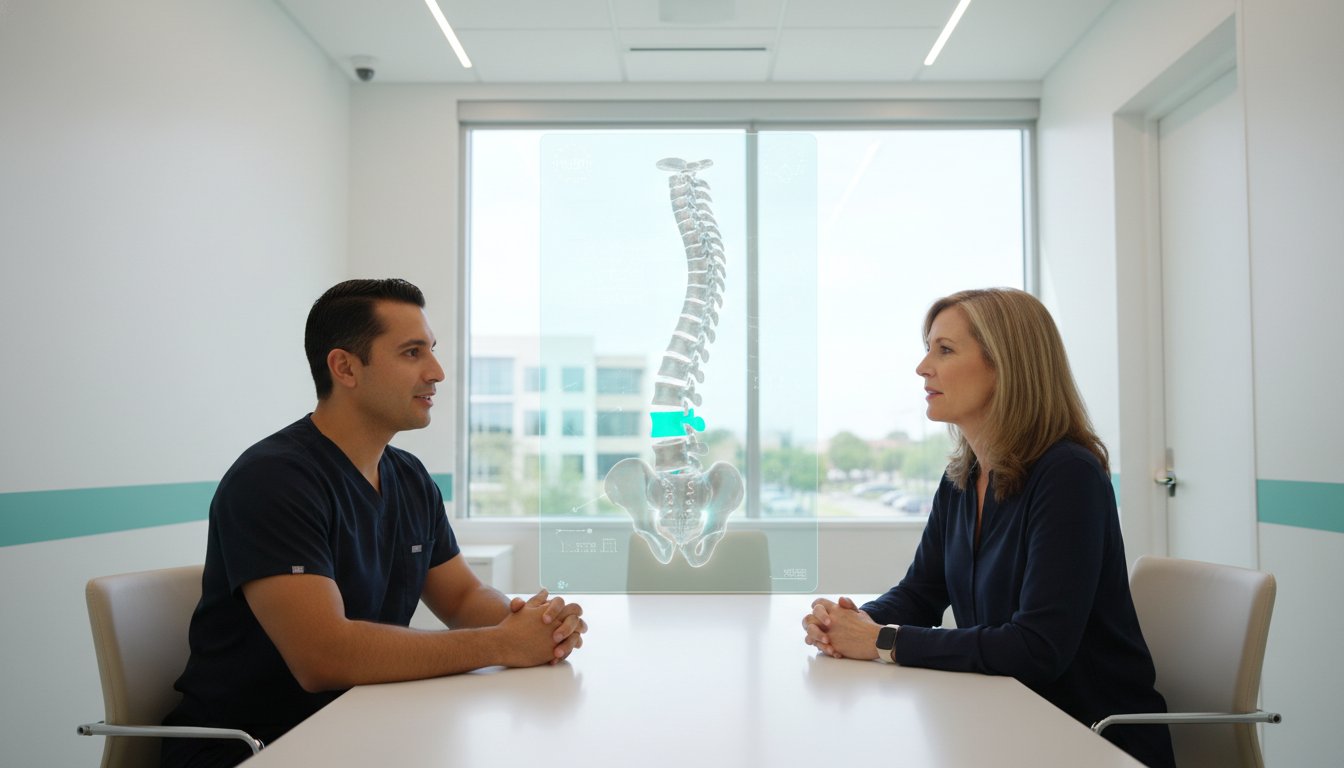
Your path to recovery begins with a conversation, not a prescription for surgery. We emphasize personalized consultations that explore every viable non-surgical path before recommending a procedure. Education is a cornerstone of the MINT philosophy; we ensure you understand the “why” behind every recommendation to reduce anxiety and improve your clinical results. Our team takes the time to walk you through your imaging and explain how the technology will work for your specific anatomy. While we are leaders in lumbar artificial disc replacement Plano, our expertise extends to the entire spine, including specialized care for neck disk replacement. This comprehensive approach ensures that your multi-level spinal health is always our top priority.
If you’re ready to experience a higher standard of specialized spine care, contact our Plano office today to schedule your diagnostic evaluation.
Recovery and Life After Lumbar Disc Replacement
The recovery process for lumbar artificial disc replacement Plano is often as innovative as the procedure itself. You’ll likely be surprised by how quickly the journey back to your routine begins. Most patients are encouraged to stand and walk within just a few hours of leaving the operating room. This early mobilization is essential; it helps prevent complications like blood clots and signals to your body that it’s time to begin the healing process. Unlike traditional open surgeries that require long periods of bed rest, this motion-preserving approach treats movement as a vital component of your clinical success.
Most patients benefit from an outpatient experience or a brief 23-hour observation stay in our Plano facility. This streamlined timeline is possible because our minimally invasive techniques prioritize the preservation of your natural muscle tissue. Because we cause less physical trauma during the procedure, our patients typically require significantly fewer narcotic pain medications compared to those undergoing traditional spinal fusion. We focus on a multimodal pain management strategy that emphasizes comfort and safety, allowing you to remain alert and active as you recover in the comfort of your own home.
Long-term maintenance is straightforward but necessary. We schedule routine follow-up appointments to monitor how well the prosthetic is integrating with your bone. These check-ups ensure that your spinal alignment remains optimal and that the device is functioning exactly as intended. By staying proactive with these visits, we can ensure your spine remains healthy for decades to come.
Week-by-Week Recovery Timeline
While every patient heals at their own pace, we generally follow a structured timeline to ensure a safe return to normal activity:
- Weeks 1-2: Your primary focus is on walking and light activity. You should avoid heavy lifting, repetitive bending, or forceful twisting to allow the initial healing to take place.
- Weeks 4-6: Most patients can gradually return to desk-based work and begin light exercise. This is often when we initiate a specialized physical therapy program to strengthen the core muscles supporting your new disc.
- Month 3 and beyond: After a final clinical evaluation, many patients receive clearance for high-impact activities. This includes returning to the golf course, running, or hiking the Texas trails you’ve missed.
Success Stories: Returning to a ‘Normal Life’
The aspirational goal for every patient we treat is simple: we want you to forget you ever had back surgery. Motion preservation is the key to achieving this. By maintaining the natural mechanics of your spine, we prevent the “stiff back” syndrome that often plagues fusion patients. You’ll be able to move with a level of fluidity and agility that traditional surgery simply cannot offer. This isn’t just about pain relief; it’s about reclaiming the lifestyle that chronic disc disease took away from you. Ready to reclaim your mobility? Schedule a consultation with Dr. Scott Kutz today to see if you’re a candidate for this life-changing technology.
Reclaim Your Active Lifestyle in North Texas
Living with chronic back pain shouldn’t mean choosing between a rigid spine and a limited lifestyle. Lumbar artificial disc replacement Plano offers a sophisticated path forward by prioritizing motion preservation over the restrictive stability of traditional fusion. By replacing damaged discs with advanced prosthetics, you can address the root cause of your sciatica or lower back pain while protecting the rest of your spinal column from premature wear. This modern standard of care is designed specifically for active individuals who refuse to let physical limitations define their daily quality of life.
At MINT, board-certified neurosurgeon Dr. Scott Kutz utilizes over 10 years of specialized experience and the Globus Excelsius Robotic Navigation system to ensure sub-millimeter surgical precision. This high-tech approach minimizes tissue trauma and accelerates your return to normal activity. Don’t let degenerative disc disease dictate your future. Book Your Lumbar ADR Consultation in Plano Today and discover how our boutique surgical center can help you return to the golf course or the trails with lasting confidence. We’re here to provide the expert care and clinical relief you deserve.
Frequently Asked Questions
How long does a lumbar artificial disc last?
Modern artificial discs are designed to be exceptionally durable, with the potential to last for decades. Long-term clinical data is very promising; a 2024 study of over 2,000 patients found that only 1.3 percent required a reoperation at the treated level over a 20-year period. These devices use medical-grade materials similar to those in high-performance hip and knee replacements to withstand the mechanical stresses of daily movement.
Is lumbar disc replacement covered by insurance in Texas?
Most major insurance providers in Texas cover single-level procedures when patients meet specific clinical criteria, such as failing six months of conservative therapy. However, coverage for two-level procedures can be more complex, as some insurance plans still categorize multi-level implants as experimental. We recommend a specialized benefits verification to confirm the requirements for lumbar artificial disc replacement Plano based on your specific policy.
What is the success rate of lumbar ADR compared to spinal fusion?
Clinical studies generally show that ADR success rates range between 75.5 percent and 95 percent, often exceeding those of traditional fusion. FDA clinical trial data specifically showed a success rate of over 87 percent for disc replacement patients, compared to 81 percent for spinal fusion patients. This higher rate is largely due to the device’s ability to preserve natural motion and reduce the risk of adjacent segment disease.
How soon can I return to work after lumbar disc replacement?
Many patients return to light desk work within two to four weeks following the procedure. If your profession involves physical labor or heavy lifting, you may need a recovery period of six to twelve weeks to ensure the implant is fully stable. Because we prioritize minimally invasive techniques, our patients typically experience a faster return to normal activity than those who undergo traditional, more invasive open back surgeries.
Can an artificial disc slip or move out of place?
While a prosthetic shift is extremely rare, it can occur if the device isn’t positioned with absolute precision. We minimize this risk by utilizing the Globus Excelsius robotic navigation system to achieve sub-millimeter accuracy during the implantation. Once the vertebrae integrate with the specialized coating on the prosthetic plates, the device becomes a permanent and secure part of your spinal anatomy.
Will I set off metal detectors at the airport with a spinal implant?
Most modern spinal implants are made of non-ferromagnetic alloys that don’t typically trigger standard walk-through metal detectors. The mass of the metal is usually too small to set off the alarm in a typical airport security setting. If you’re required to go through a high-sensitivity scanner, you can simply inform the security officer that you have a medical implant; specialized identification cards are rarely necessary today.
What is the difference between an anterior and posterior approach for ADR?
Lumbar ADR is performed through an anterior approach, meaning the surgeon reaches the spine through the abdomen. This allows for the complete removal of the diseased disc and the insertion of the prosthetic without disturbing the spinal nerves or back muscles. A posterior approach, which is common for fusions, is not used for ADR because it doesn’t provide the necessary space to safely place the artificial disc.
Can I have an MRI after receiving a lumbar artificial disc?
It’s perfectly safe to undergo an MRI after receiving a lumbar artificial disc replacement Plano. The implants are made from MRI-compatible materials like titanium or cobalt-chromium, which are non-ferromagnetic. While the metal may cause a slight blurring or “artifact” on the images in the immediate vicinity of the device, radiologists use specialized settings to clearly visualize the surrounding nerves and spinal structures.