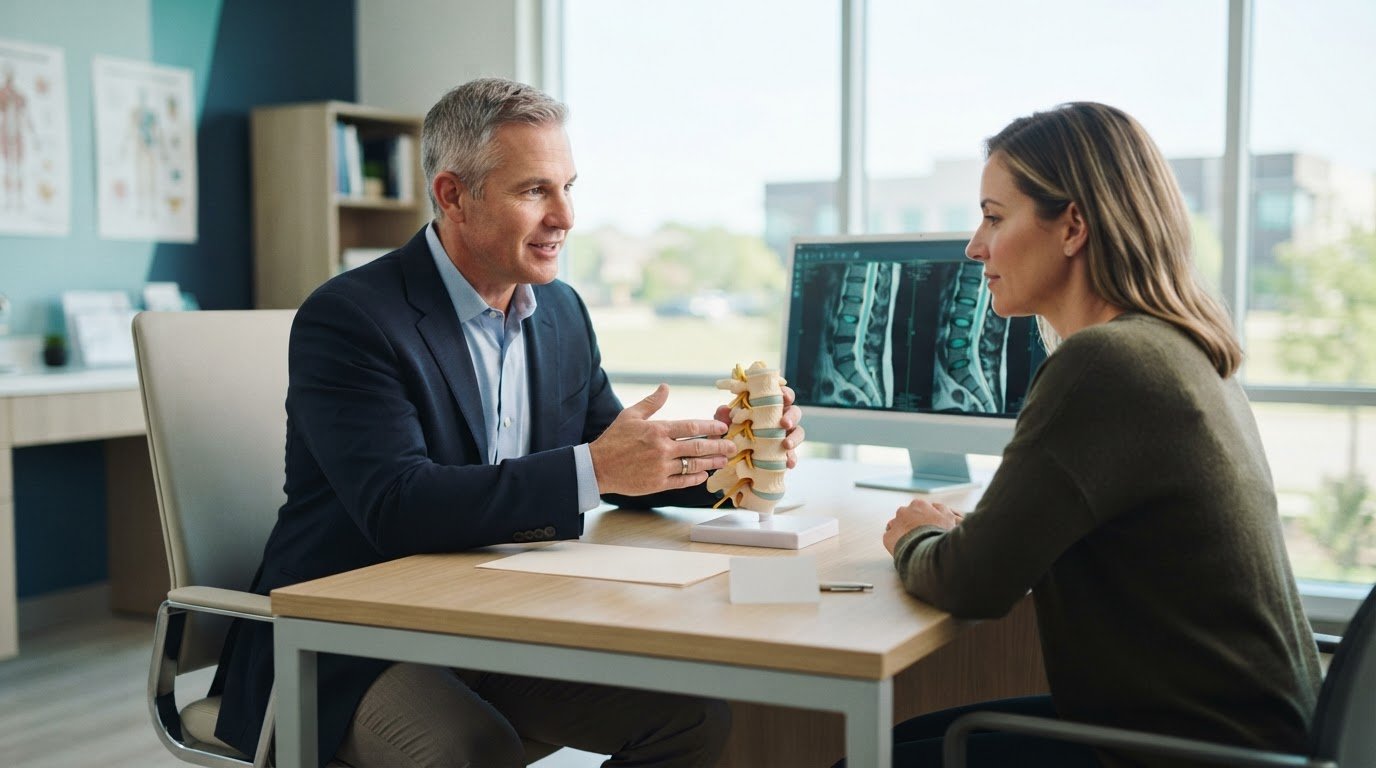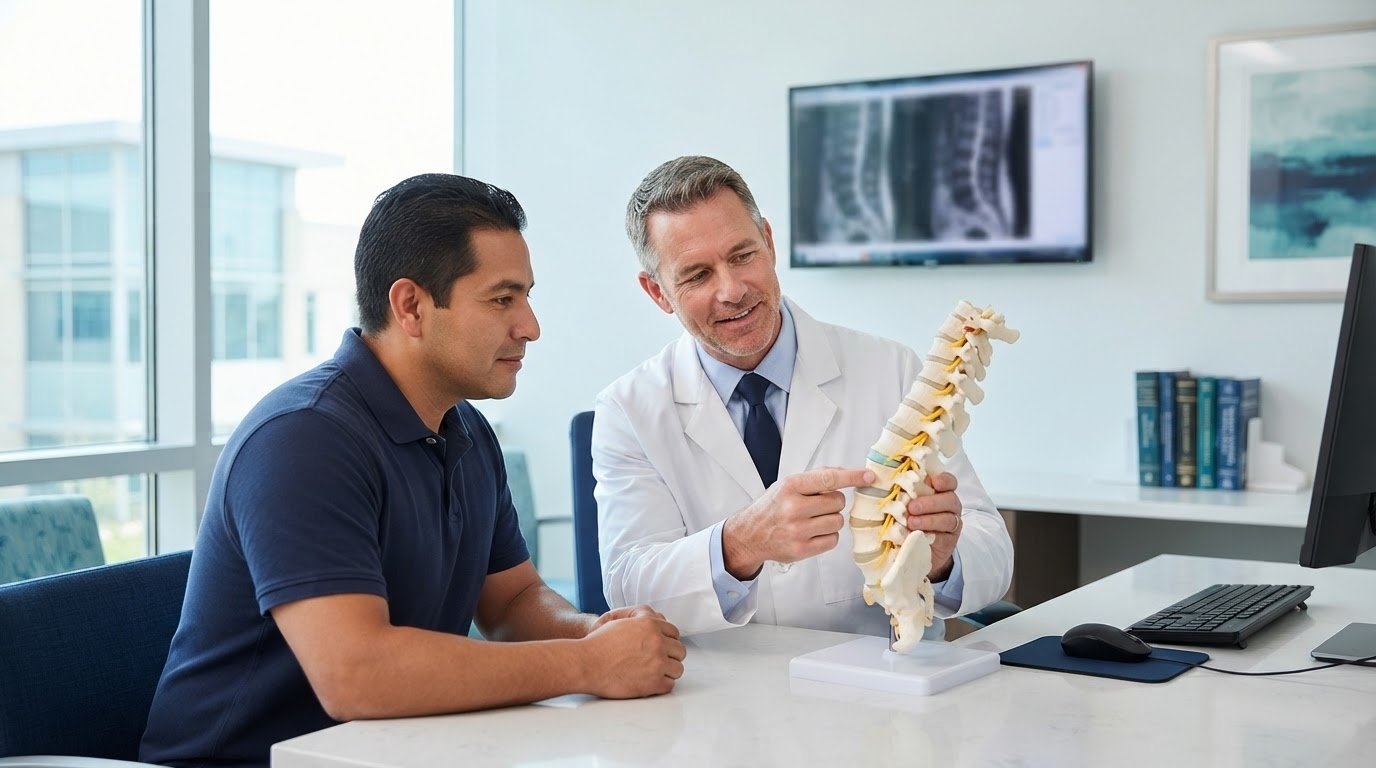
Minimally Invasive Neurosurgery of Texas (MINT), led by Dr. Scott Kutz, MD, provides spine-focused care in Lewisville and Plano, Texas, including minimally invasive spine care.
Could pain that travels down your leg or arm come from a nerve in your spine, even when your back or neck barely hurts? That uncertainty can make it hard to know whether you need a specialist or whether surgery might be next. A Lewisville neurosurgeon for radiculopathy can assess how your symptoms, examination, and imaging fit together before discussing care options.
In this guide, you’ll learn how symptom patterns can help a specialist assess possible radiculopathy, what a clinician considers when reviewing symptoms and MRI findings, and why scan results need context. You’ll also see why a diagnosis doesn’t automatically mean surgery and find practical questions to help you explore an appropriate next step in Lewisville or Plano.
Key Takeaways
- Radiculopathy describes symptoms linked to an irritated or compressed spinal nerve root. The affected nerve’s location helps explain whether symptoms travel into a leg or an arm.
- A specialist considers your symptom history, neurological assessment, and relevant imaging together to understand what may be causing your symptoms.
- A Lewisville neurosurgeon for radiculopathy can discuss continued care or surgical evaluation based on your symptoms, examination, imaging, underlying cause, and goals.
- Prepare questions about the diagnosis, how imaging relates to your symptoms, and which treatment options may fit your situation.
- MINT provides spine-focused care in Lewisville and Plano. Its Lewisville main office is at 1850 Lakepointe Drive, Suite 500, effective January 1, 2026.
What radiculopathy means and how it can affect daily movement
Spinal nerve roots branch from the spine and carry signals between the brain, spinal cord, and body. When a nearby spinal condition presses on or irritates a root, the resulting symptoms may follow the route of that nerve. A Lewisville neurosurgeon for radiculopathy considers this pattern alongside other clinical findings rather than treating one sensation as proof of a specific cause.
Symptoms can affect ordinary movement in different ways. A person might feel pain travel beyond the back or neck, notice tingling in a limb, lose some sensation, or experience weakness. Others may have only one of these symptoms. For example, discomfort may extend from the lower back into the leg, while symptoms related to a neck nerve may reach the shoulder or arm.
How nerve-root symptoms may feel
Radiating pain moves from the back or neck into another area. Pain that stays near the back or neck has a different pattern, though location alone cannot explain its cause. A clinician considers where sensations begin and where they travel to assess which nerve may contribute.
Notice what changes with movement, rest, or daily tasks. Does a sensation remain in one area or extend into a limb? Do you also feel tingling, reduced sensation, or weakness? These observations can help you describe your experience, but they cannot establish a diagnosis on their own. For a broader overview, see What is Radiculopathy?
Why the location and cause matter
The cervical spine means the neck region; the lumbar spine means the lower-back region. A cervical nerve may send symptoms toward the shoulder or arm, while a lumbar nerve may send them toward the buttock or leg. A clinician looks at the whole pattern instead of assuming that similar sensations share one source.
A herniated disc occurs when material inside a spinal disc pushes outward. Spinal stenosis means narrowing around the spinal canal or nerve openings. Either condition can press on a nerve, but the same symptoms can also have different causes. One person’s symptoms may also differ from another’s, even when both have the same spinal condition.
Individual assessment helps connect the symptom pattern with a possible spinal source. A specialist considers how the symptoms affect movement and whether examination findings and imaging support the same explanation. That connection gives the next conversation a clearer focus.
How a Lewisville neurosurgeon evaluates possible radiculopathy
A Lewisville neurosurgeon for radiculopathy looks for a consistent connection between your symptoms, the physical examination, and any relevant imaging. No single detail always provides the full answer. Dr. Scott Kutz, MD, evaluates the pattern as a whole so the discussion can focus on what may explain your symptoms and which steps may fit your needs.
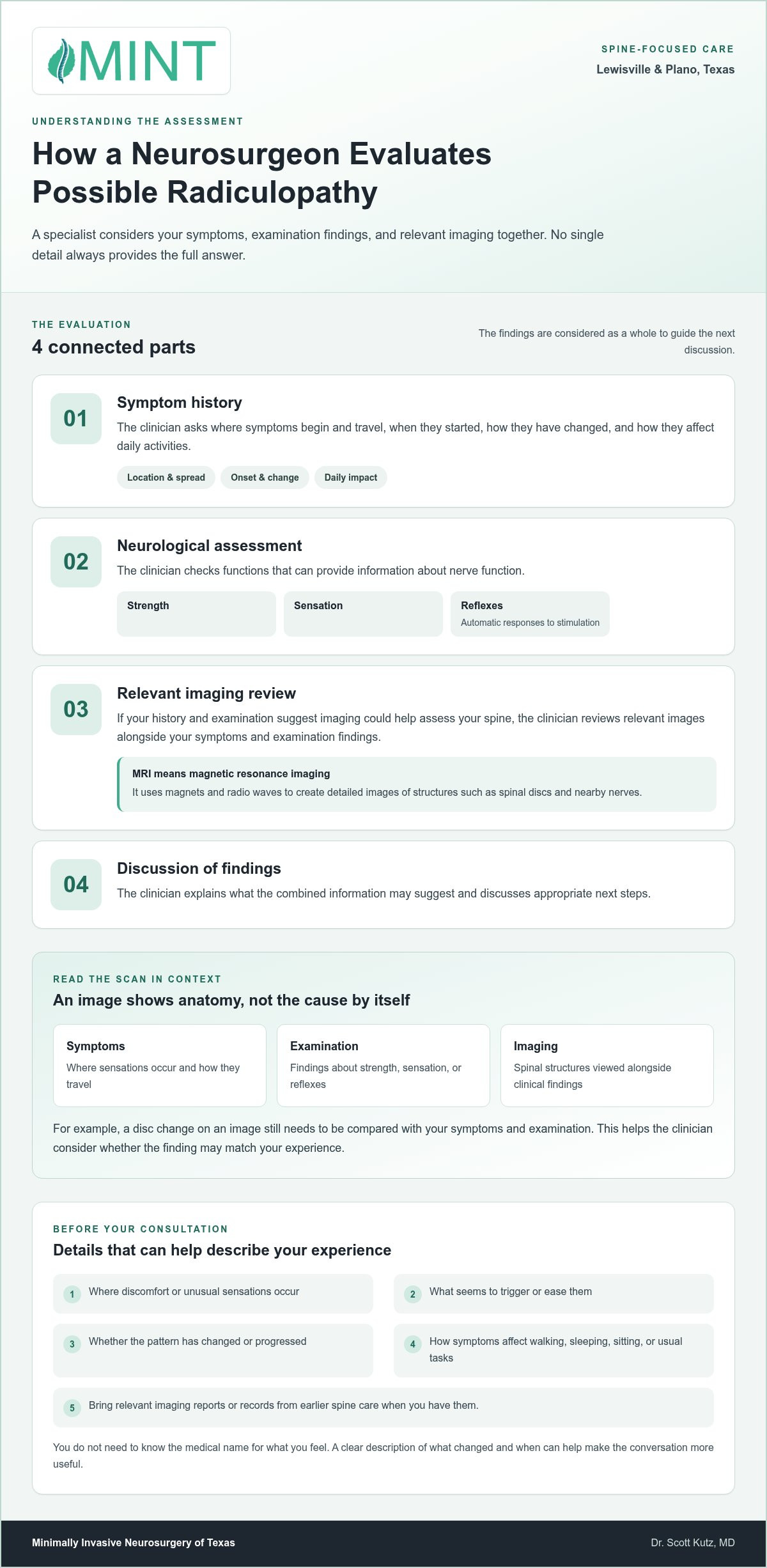
The evaluation generally moves through four connected parts:
- Symptom history: The clinician asks where symptoms begin and travel, when they started, how they have changed, and how they affect daily activities.
- Neurological assessment: The clinician checks functions such as strength, sensation, and reflexes. Reflexes are the body’s automatic responses to stimulation, and they can provide information about nerve function.
- Relevant imaging review: If your history and examination suggest that images could help assess your spine, the clinician reviews relevant imaging alongside your symptoms and examination findings.
- Discussion of findings: The clinician explains what the combined information may suggest and discusses appropriate next steps.
What to share during a specialist consultation
Before your visit, note where discomfort or unusual sensations occur, what seems to trigger or ease them, and whether the pattern has changed. Describe the practical effect, such as trouble walking, sleeping, sitting, or completing usual tasks. Mention numbness, weakness, or symptoms that have progressed. Bring relevant imaging reports or records from earlier spine care when you have them.
These details help the clinician consider symptom distribution, onset, duration, and functional impact together. You don’t need to know the medical name for what you feel. A clear description of what has changed and when can make the conversation more useful.
How clinical findings guide the next discussion
MRI, or magnetic resonance imaging, uses magnets and radio waves to create detailed images of structures inside the body, including spinal discs and nearby nerves. When your history and examination point to a possible need for imaging, a clinician may use MRI to assess the spine. A scan shows anatomy, but it doesn’t identify the cause by itself. The clinician compares its findings with your symptoms and examination.
For example, an image may show a disc change, but the clinician still considers whether that area matches your symptoms. The examination can add information about strength, sensation, or reflexes. Together, these findings may help identify a possible nerve-root source, while also showing when the explanation remains uncertain or needs further consideration.
The suspected cause shapes the options discussed. A herniated disc and spinal narrowing may call for different considerations, and the clinician also weighs how symptoms have progressed and how they affect your goals. This evaluation doesn’t automatically lead to surgery. If you’re considering an individualized spine assessment, you can contact MINT about an evaluation.
Radiculopathy treatment options: comparing continued care and surgical evaluation
A radiculopathy diagnosis doesn’t automatically mean you need surgery. A visit with a Lewisville neurosurgeon for radiculopathy can help clarify whether your symptoms and clinical findings support continued clinician-guided care, a surgical opinion, or another step. The right discussion depends on the individual, not just the name of a condition.
Clinicians consider how symptoms have changed, how they affect daily function, what the physical examination shows, and whether imaging aligns with the suspected nerve-root problem. They also look at the underlying cause, such as a herniated disc or spinal stenosis, and listen to your goals. These details help frame the options. They don’t make one approach right for everyone.
Continued care may involve clinician-guided, nonsurgical measures and monitoring how symptoms respond. The clinician can explain which approaches fit the suspected cause and your health circumstances. A surgical evaluation serves a different purpose: it examines whether a procedure could address an identified source of nerve compression. Seeking that opinion doesn’t commit you to an operation.
When a surgical opinion may enter the conversation
A clinician may discuss a surgical opinion if symptoms persist, limit activities, or raise concerns during the examination. The conversation should connect a possible procedure to a specific cause that matches your symptoms and clinical findings. It should also give you room to weigh your priorities, such as which activities you hope to resume and what concerns you about treatment.
Ask the clinician to explain potential benefits, risks, and alternatives in plain language. You can also ask how the findings support the recommendation, what continued care might involve, and what factors could change the plan. Clear answers help you make an informed decision without assuming surgery must follow.
How minimally invasive approaches fit the decision
Minimally invasive techniques aim to limit disruption to surrounding tissue compared with open surgical approaches. Endoscopic spine surgery uses a small camera and specialized instruments to let a surgeon access and treat certain spinal problems through a small incision. The method may come up for discussion when the clinical evaluation supports it, but the technique alone doesn’t establish whether an individual qualifies.
MINT provides endoscopic spine surgery as part of its spine-focused care. Dr. Scott Kutz considers minimally invasive options when they fit the patient’s specific findings and goals. A meaningful discussion should explain why a particular approach may suit the identified cause, what alternatives exist, and what trade-offs matter for your situation.
If symptoms continue to affect daily movement, an individualized discussion can help you understand the findings and possible next steps. You can contact MINT about your spine concerns to explore an evaluation.
How to assess a Lewisville neurosurgeon for radiculopathy care
Choosing a Lewisville neurosurgeon for radiculopathy care means looking for more than a surgical title. You need a clear explanation of what may cause your symptoms, how the clinician reached that view, and which options fit your situation. A focused discussion can help you understand the findings without assuming that a procedure must follow.
Use this checklist to guide your consultation:
- Spine focus: Look for a neurosurgeon whose practice includes spinal disorders and spine surgery.
- Diagnostic reasoning: Ask how your symptom pattern, examination, and imaging support the suspected nerve-root source.
- Options and alternatives: Discuss continued clinician-guided care as well as any surgical evaluation that may fit your findings.
- Open questions: Make sure you can ask about potential benefits, risks, uncertainties, and how each option relates to your daily goals.
A useful consultation leaves you with a clearer understanding of the reasoning, even if you still need time to decide. You can bring notes about your symptoms and the activities they affect, then use your questions to keep the conversation centered on your needs.
Questions to ask about diagnosis and options
Ask which examination or imaging findings support the suspected nerve-root source. Then ask which options fit those findings, what alternatives the clinician considers, and how the plan may change if your symptoms change. Finally, ask the clinician to explain potential benefits, risks, and uncertainties in plain language. You deserve to understand both the recommendation and what it cannot promise.
What relevant spine expertise can add
Board certification identifies a physician who has met a specialty board’s standards. Dr. Scott Kutz, MD, is a board-certified neurosurgeon and Fellow of the AANS and ACS. He specializes in spinal disorders and minimally invasive spine surgery. That focus can help connect the clinical discussion to spinal causes and treatment considerations. You can learn more about Dr. Scott Kutz’s background.
MINT takes a patient-centered approach by discussing the diagnosis and available options before considering a procedure. A recommendation should reflect your clinical findings and goals, not just an image or a procedure’s availability. If a surgical option enters the conversation, ask how it addresses the suspected cause and how the clinician weighs it against alternatives. These questions support an informed decision, whether you continue with nonsurgical care or explore a procedure.
For a personalized discussion of spine symptoms and evaluation options, contact MINT to discuss your care.
What to expect when contacting MINT in Lewisville or Plano
Minimally Invasive Neurosurgery of Texas (MINT) serves patients in Lewisville, Plano, and the broader Dallas-Fort Worth area. The Lewisville main office is at 1850 Lakepointe Drive, Suite 500, effective January 1, 2026. MINT also has a Plano satellite office, giving patients in nearby communities local access to spine-focused care.
A consultation gives you and the clinician an opportunity to discuss symptoms, relevant records, and possible next steps. It supports an informed conversation, but it doesn’t guarantee a diagnosis or mean that a procedure will follow. A clinician considers each person’s information and goals before discussing care options.
Preparing to request a consultation
A little preparation can help you make good use of the conversation. Note when your symptoms began, where you feel them, how they have changed, and which daily activities they affect. Write down prior evaluations or spine care and bring relevant records when available. List your questions, including what you hope to understand or do more comfortably.
The MINT website offers a Tele-Medicine Form for an online appointment request. Before submitting it, gather the details you want to share and keep your questions nearby. Submitting the New Patient Form does not establish a doctor-patient relationship.
- Summarize your symptom history and any changes.
- Note activities affected by pain, tingling, numbness, or weakness.
- Gather relevant imaging reports and prior spine-care records, if available.
- Write down questions about evaluation and possible options.
Local access and informed next steps
Lewisville serves as MINT’s main office, and Plano serves as a satellite office for patients in nearby communities. During a consultation, you can discuss how your symptoms affect daily movement and what the clinical findings may mean. If a procedure enters the discussion, ask how it relates to the suspected cause and what alternatives the clinician considers.
Minimally invasive spine surgery uses approaches designed to limit tissue disruption compared with open surgery. MINT offers minimally invasive spine surgery techniques when appropriate to an individual clinical evaluation. Learning about an approach can help you prepare questions, but only a clinician can assess whether it fits your situation.
For a thoughtful discussion about your symptoms and possible next steps, Contact MINT about your next step.
The content provided on the Websites is for informational purposes only. It is not intended as, nor should it be considered a substitute for professional medical advice, diagnosis, or treatment. Always seek the advice of your physician or qualified healthcare provider with any questions you may have regarding a medical condition.
Take a clear next step toward answers
Uncertainty can make it tempting to wait until you can describe every symptom perfectly. You don’t need to arrive with a diagnosis. Start with what you want to understand and which parts of daily life you hope to make easier. That goal can help shape a focused conversation with a Lewisville neurosurgeon for radiculopathy, whether you’re seeking clarity about your symptoms or considering what care might fit.
Before reaching out, choose one question you most want answered. You might ask how the clinician will connect your symptoms with examination findings, or how a proposed option relates to an activity that matters to you. A thoughtful discussion can help you take the next step with greater confidence, without assuming that surgery is the only path.
Contact MINT to discuss your next step and bring your questions to a focused conversation about your spine health. With clear information and individualized guidance, you can move forward at a pace that feels informed and manageable.
Frequently Asked Questions
Is radiculopathy the same as sciatica?
No. Sciatica commonly describes symptoms that travel along the sciatic nerve, a large nerve that runs from the lower back through the buttock and into the leg. Radiculopathy is a broader term for symptoms linked to a spinal nerve root, where a nerve branches from the spine. The terms can overlap in lower-back cases, but neither identifies the cause. Seek an evaluation if symptoms persist, worsen, or interfere with usual activities.
Can radiculopathy cause weakness without severe pain?
Yes. A nerve-root problem can involve weakness, numbness, tingling, pain, or a combination, and pain intensity can vary. For example, difficulty lifting the front of a foot or holding an object deserves attention even if discomfort feels mild. Don’t use pain severity alone to judge weakness. Arrange prompt medical assessment for new or worsening weakness, and seek urgent care if symptoms become severe or progress rapidly.
What happens if radiculopathy symptoms keep getting worse?
Worsening symptoms deserve timely medical assessment. A clinician can ask what has changed, review how symptoms affect movement and daily tasks, perform an examination, and consider imaging when appropriate. Seek urgent evaluation for severe or rapidly worsening weakness, loss of bladder or bowel control, or numbness around the groin. These warning signs need prompt attention rather than routine appointment planning, although they don’t identify a cause on their own.
Can an MRI show the cause of radiculopathy?
Magnetic resonance imaging (MRI), which uses magnets and radio waves to create detailed images, can show spinal structures and help a clinician assess possible nerve-root compression. But an image alone doesn’t establish what causes your symptoms. The clinician compares the scan with your symptom history and examination. Radiating pain doesn’t automatically mean you need an MRI, and one scan may not answer every question about your condition.
Does seeing a neurosurgeon for radiculopathy mean I need surgery?
No. Seeing a Lewisville neurosurgeon for radiculopathy doesn’t commit you to surgery. A consultation can clarify the suspected cause, explain which approaches may fit your findings, and determine whether a procedure merits consideration. You can ask how the clinician weighs potential benefits, risks, and alternatives, and how each option relates to your priorities. The decision should reflect your individual assessment and an informed discussion, not the referral alone.
When should I seek urgent care for symptoms that may involve a spinal nerve?
Seek urgent medical assessment for severe or rapidly worsening weakness, new loss of bladder or bowel control, or numbness around the groin. These symptoms require a different response from planning a routine specialist appointment. If symptoms start suddenly, feel severe, or progress quickly, contact emergency services or go to emergency care. Don’t wait for a scheduled consultation to address these warning signs.