
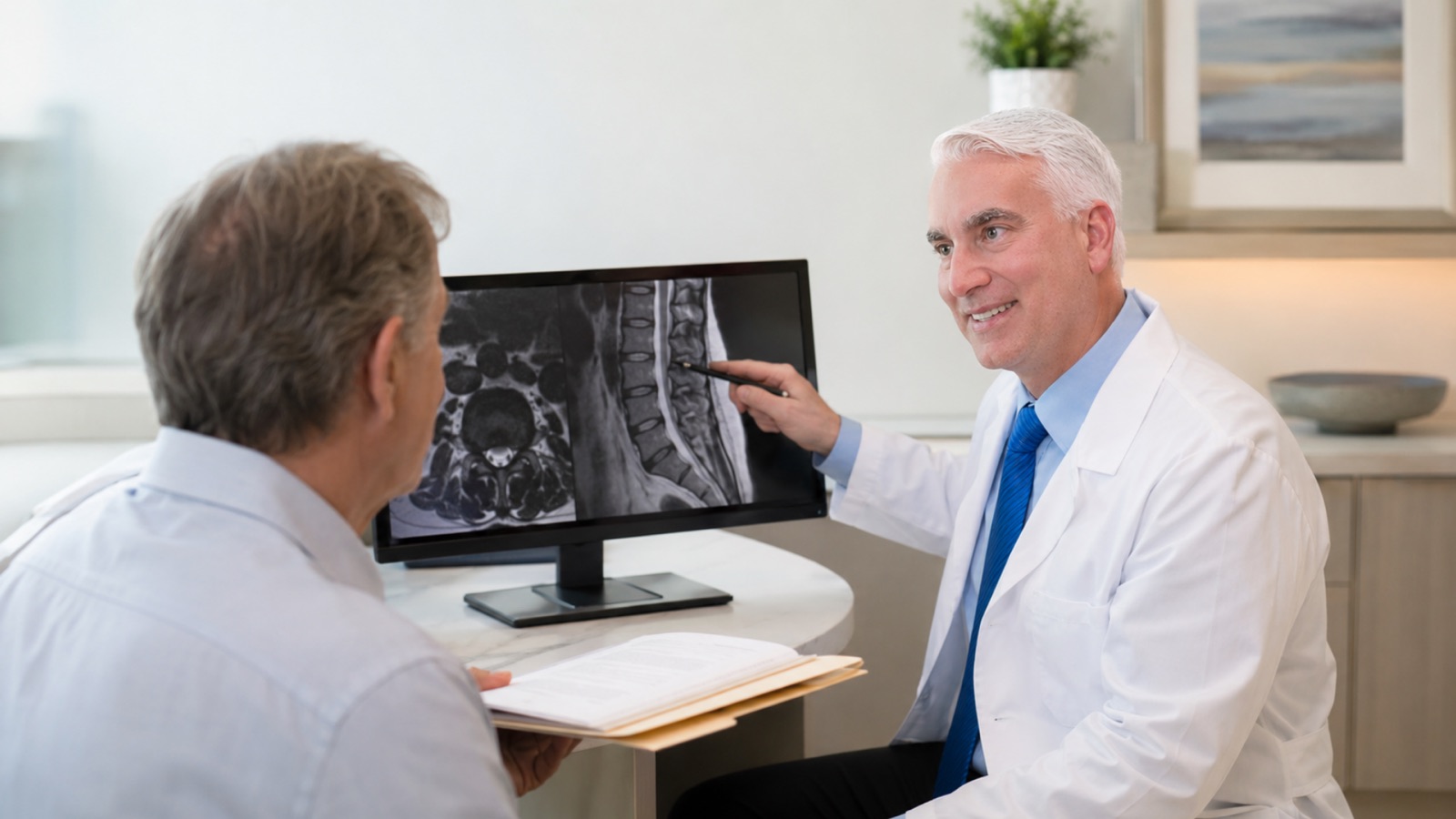
Why Get a Spine Surgery Second Opinion in Lewisville TX?
A spine surgery recommendation is a significant medical decision that affects your mobility, daily function, and quality of life for years to come. Seeking a second opinion before proceeding is a standard and widely encouraged practice in spine care. A second opinion provides independent confirmation of your diagnosis, may identify alternative treatment options you were not offered, and gives you greater confidence in your treatment plan regardless of whether the second opinion agrees with or differs from the first.
Many patients seek second opinions because they want to confirm that surgery is truly necessary, they want to explore whether a less invasive approach is available, they feel uncertain about the recommended procedure, they want to hear from a surgeon with different training or a different area of specialization, or their symptoms have not improved after a prior surgery and they need a fresh evaluation.
Scott C. Kutz, MD, a board-certified neurosurgeon at Minimally Invasive Neurosurgery of Texas, welcomes patients seeking a spine surgery second opinion Lewisville TX, at the practice’s Lewisville and Plano, Texas locations. Dr. Kutz approaches every second opinion consultation with a thorough, unbiased evaluation of the patient’s condition, imaging, and prior treatment history.
Second opinions are not about questioning the competence of another surgeon. They ensure patients have access to the full range of perspectives and treatment options before committing to a major procedure. Most spine surgeons encourage patients to seek additional opinions, and most insurance plans cover second-opinion consultations.
What Conditions Commonly Prompt a Second Opinion?
Patients seek second opinions for virtually any spine condition, but certain situations prompt them more frequently.
Recommendations for spinal fusion. Fusion permanently eliminates motion at one or more spinal segments. Patients often want to confirm that fusion is necessary and explore whether motion-preserving alternatives such as artificial disc replacement are appropriate for their condition.
Complex or multilevel surgery recommendations. When the recommended procedure involves multiple spinal levels, anterior and posterior approaches, or lengthy reconstruction, patients benefit from confirming the surgical plan with a surgeon experienced in similar procedures.
Persistent pain after a prior spine surgery. Patients with ongoing pain after a previous procedure face a particularly important decision. A second opinion can determine whether the persistent symptoms have a correctable structural cause, whether revision surgery is appropriate, or whether nonsurgical management is the better path.
Conflicting recommendations from different providers. Patients often receive different treatment recommendations from different providers. A second opinion can help clarify why the recommendations differ and which approach best fits the patient’s specific anatomy and goals.
Diagnosis of a condition with multiple treatment pathways. Conditions such as degenerative disc disease, spondylolisthesis, and cervical stenosis can be treated through several surgical approaches with different advantages and trade-offs. A second opinion ensures the patient knows all viable options.
Being told nothing more can be done. Some patients are told by one provider that their condition is not treatable or that no further options exist. A second opinion from a surgeon with different training or access to different technology may identify approaches that were not previously considered.
When Should You Seek a Second Opinion?
A second opinion is appropriate in several situations.
Before any elective spine surgery, if the procedure is not an emergency, there is time to seek another perspective. This is especially valuable before irreversible procedures such as spinal fusion.
When the recommended surgery is complex, multilevel fusions, deformity corrections, and revision procedures carry higher risks and longer recovery. Confirming the plan with a second experienced surgeon provides an additional layer of confidence.
When you have been given conflicting recommendations. If one provider recommends surgery and another recommends conservative care, or if two surgeons recommend different procedures, a third opinion may help clarify the situation.
When conservative treatment has not been fully explored, if you feel that nonsurgical options have not been adequately tried, a second opinion can confirm whether more conservative management is worth pursuing before surgery.
When your symptoms do not improve after a prior spine surgery, deciding whether to proceed with revision surgery is one of the most consequential decisions in spine care. A fresh, independent evaluation is particularly valuable in this situation.
When you want to explore minimally invasive or motion-preserving options. Not all surgeons offer the same range of techniques. A second opinion from a surgeon who specializes in minimally invasive or endoscopic spine surgery may identify less invasive approaches not discussed during the first consultation.
Who May Benefit from a Second Opinion?
Any patient facing a spine surgery recommendation can benefit from a second opinion. The following patients particularly benefit from seeking an additional perspective.
Patients facing their first spine surgery who want confidence that they are making the right decision.
Patients considering fusion who want to know whether motion-preserving alternatives are appropriate.
Patients with persistent pain after a prior procedure who need an honest evaluation of whether revision surgery could help.
Patients who have received conflicting advice and need a tiebreaker perspective.
Patients whose surgeon does not offer minimally invasive approaches who want to know whether a less invasive option is feasible for their condition.
Patients who feel rushed or uncertain. If the decision does not feel right or questions remain unanswered, a second opinion provides additional information and perspective.
Patients seeking a spine surgery second opinion Lewisville TX can contact Minimally Invasive Neurosurgery of Texas at (972) 244-3491 to schedule a consultation.
Who May Not Need a Second Opinion?
Patients with an emergent condition. Certain spine conditions require urgent surgical intervention, such as progressive neurological loss (worsening weakness, loss of bladder or bowel control) or spinal cord compression causing myelopathy. In these situations, timely treatment takes priority over seeking additional opinions.
Patients who are already confident in their diagnosis and treatment plan. If you have already received a thorough evaluation, understand the options, and feel comfortable with your surgeon’s recommendation, a second opinion is optional.
What Happens During a Second Opinion Consultation?
Dr. Kutz conducts a comprehensive evaluation that covers every component needed to form an independent assessment.
Detailed review of your history. Dr. Kutz reviews your symptoms, their onset and progression, prior treatments and their results, medications, and relevant medical history. Understanding what has already been tried and how the patient has responded is essential for forming an accurate opinion.
Review of existing imaging. Patients are asked to bring their MRI, CT, and X-ray imaging on disc (not just the written reports). Dr. Kutz reviews the actual images to evaluate the anatomy, pathology, and surgical planning considerations. In some cases, existing imaging may be outdated or insufficient, and Dr. Kutz will order new studies to obtain a current, complete picture.
Physical and neurological examination. A thorough examination of strength, sensation, reflexes, gait, and specific provocative tests helps correlate the patient’s symptoms with the imaging findings. This step is critical to determine whether the structural findings on imaging are truly responsible for the patient’s symptoms.
When needed, additional diagnostics. Dr. Kutz may order updated MRI or CT imaging, flexion-extension X-rays to evaluate spinal stability, or diagnostic injections to pinpoint a specific pain source. Dr. Kutz orders these additional studies only when the existing information is insufficient to form a confident opinion.
Honest assessment and recommendations. Based on the complete evaluation, Dr. Kutz provides a clear, honest assessment. If surgery is warranted, he discusses all available options, including minimally invasive and motion-preserving approaches that may not have been offered previously. If surgery is not necessary, he explains why and recommends appropriate conservative management. If the first surgeon’s recommendation is confirmed, that information gives the patient confidence to proceed.
What to Bring to a Second Opinion Appointment
Imaging on disc. Copies of your MRI, CT, and X-ray imaging on disc or USB drive. The actual images (not just the radiologist’s written reports) allow Dr. Kutz to evaluate the anatomy directly.
Operative reports. If you have had prior spine surgeries, bring the operative reports from each procedure. These reports describe what was done, what was found during surgery, and what hardware was placed.
Prior treatment records. A list of treatments you have tried (physical therapy, injections, medications, chiropractic care) and the results of each.
Current medications. A complete list of all medications and supplements.
Symptom notes. Written notes about your symptoms: when they started, where you feel them, what makes them better or worse, and how they affect your daily life, work, sleep, and activities.
Questions. A written list of questions you want answered during the consultation. Patients who come prepared with specific questions get the most value from a second opinion visit.
Common Outcomes of a Second Opinion
Confirmation of the original recommendation. In some cases, the second opinion confirms the original diagnosis and treatment plan. This gives the patient confidence to move forward, knowing that two independent evaluations reached the same conclusion.
Identification of a less invasive alternative. A surgeon with expertise in minimally invasive or endoscopic techniques may identify an approach that achieves the same surgical goals through a smaller incision, less tissue disruption, and faster recovery.
Recommendation for continued conservative treatment. The second opinion may determine that the patient has not exhausted nonsurgical options and that physical therapy, injections, or other conservative measures warrant further trial before considering surgery.
Identification of a different or additional pain source. A thorough evaluation may uncover a pain generator that was not identified in the initial workup, such as SI joint dysfunction, hip pathology, or peripheral nerve entrapment.
Determination that surgery is not appropriate at this time. In some cases, the second opinion concludes that the structural findings do not warrant surgical intervention, that the risks outweigh the likely benefits, or that the patient’s symptoms are better managed nonsurgically.
Dr. Kutz communicates his findings clearly and ensures the patient has the information they need to make an informed decision, whether they choose to proceed with treatment at MINT or return to their original provider.
Second Opinions After Prior Spine Surgery
Patients with persistent pain after a prior spine procedure face a unique and challenging situation. The question is not simply whether to operate again, but whether a specific, correctable structural cause drives the ongoing symptoms.
Dr. Kutz has experience evaluating complex post-surgical cases. The evaluation includes detailed review of prior operative reports, high-resolution imaging to assess for hardware position, fusion status, adjacent segment disease, and recurrent pathology, and sometimes diagnostic injections to isolate the pain source.
The Globus Excelsius GPS Robotic Navigation Platform is particularly valuable when revision surgery is being considered, as it provides sub-millimeter guidance for placing new hardware near existing implants and through scarred tissue.
Not every patient with persistent post-surgical pain is a candidate for revision. An honest assessment of what can and cannot be improved surgically is a critical part of the evaluation. When revision is not likely to help, the evaluation includes a discussion of nonsurgical management strategies.
For more detailed information about revision procedures, see the Revision Spine Surgery authority page.
Potential Benefits of a Second Opinion
Clarity. A second opinion provides additional information and perspective that helps you make a fully informed decision.
Confidence. Whether the second opinion confirms or changes the original recommendation, you move forward knowing you explored your options.
Access to different expertise. A surgeon with different training, a different specialty background, or access to different technology may offer approaches not previously considered.
Patient empowerment. Understanding your diagnosis and treatment options puts you in control of your healthcare decisions, rather than passively accepting a recommendation.
Risks and Considerations
Delays in treatment. Seeking a second opinion takes time. For elective procedures, this delay is reasonable and worthwhile. For patients with progressive neurological symptoms, timely treatment is critical.
Conflicting information. Different opinions can create uncertainty. Dr. Kutz helps patients understand why recommendations may differ and clearly explains the reasoning behind his assessment.
Additional diagnostic costs. If new imaging or diagnostic studies are needed, these may involve additional costs and time.
These considerations are minor relative to the importance of making a well-informed decision about spine surgery.
Why Choose Minimally Invasive Neurosurgery of Texas for a Second Opinion?
A second opinion is only as valuable as the thoroughness and independence of the evaluation. Dr. Kutz brings 27 years of neurosurgical experience, board certification from the American Board of Neurological Surgery, and fellowships in both the American Association of Neurological Surgeons and the American College of Surgeons to every second opinion consultation.
Because MINT specializes in minimally invasive and endoscopic approaches, Dr. Kutz can evaluate whether a less invasive option is feasible for conditions that were initially recommended for open surgery. He also offers motion-preserving alternatives such as cervical disc replacement and artificial disc replacement for patients who may not need fusion.
Dr. Kutz has published peer-reviewed content on Spine-Health and approaches every second opinion with the same thoroughness he applies to his own patients. The goal is to give the patient the information they need to make the best decision, regardless of where they ultimately choose to receive treatment.
Minimally Invasive Neurosurgery of Texas serves patients at two North Texas locations:
Lewisville office: 1850 Lakepointe Drive, Suite 500, Lewisville, TX 75057 Plano office: 5465 Legacy Drive, Suite 650, Plano, TX 75024
Patients seeking a spine surgery second opinion Lewisville TX can call (972) 244-3491 or visit the contact page.
Frequently Asked Questions
Should I get a second opinion before spine surgery?
Yes. A second opinion is a standard practice in spine care and is encouraged by most surgeons and insurance plans. It provides independent confirmation of your diagnosis and treatment plan and may identify alternative approaches you were not offered.
Will my surgeon be offended if I seek a second opinion?
Reputable surgeons welcome second opinions because they want their patients to feel confident in the treatment plan. If a surgeon discourages you from seeking a second opinion, that itself may be a reason to get one.
Does insurance cover a second opinion?
Most insurance plans cover second opinion consultations. Some plans require a second opinion before authorizing certain procedures. The MINT team can verify your coverage before your appointment.
What if the second opinion disagrees with the first?
Differing opinions are not uncommon in spine care because multiple approaches can be valid for the same condition. The consultation includes a clear discussion of the reasoning behind the recommendation, giving you the information you need to make an informed choice. In some cases, a third opinion may help.
Can I get a second opinion after a failed spine surgery?
Yes. Dr. Kutz evaluates patients with persistent pain after prior procedures and uses advanced diagnostics to determine whether a correctable structural cause exists and whether revision surgery could help. Not every post-surgical patient is a candidate for revision, and an honest assessment is critical.
What should I bring to a second opinion appointment?
Bring copies of your imaging on disc (MRI, CT, X-rays), operative reports from any prior spine surgeries, a list of treatments you have tried and their results, a list of current medications, and notes about your symptoms. Bringing the actual images rather than just the written reports allows the surgeon to evaluate your anatomy directly.
How long does a second opinion consultation take?
A thorough second opinion consultation typically takes 30 to 60 minutes, depending on the complexity of the case. Patients with prior surgeries and complex histories may require a longer evaluation.
Do I have to transfer my care to MINT if I get a second opinion there?
No. Dr. Kutz provides his assessment and recommendations. You are free to use that information to make your decision and proceed with whichever provider you choose. You are not obligated to transfer your care.
Who provides spine surgery second opinions in Lewisville and Plano TX?
Scott C. Kutz, MD, at Minimally Invasive Neurosurgery of Texas. Call (972) 244-3491 or visit the contact page.
Schedule a Consultation for Spine Surgery Second Opinions
Scott C. Kutz, MD, is a board-certified neurosurgeon serving patients at Minimally Invasive Neurosurgery of Texas in Lewisville and Plano, Texas. To discuss whether spine surgery second opinions is appropriate for your condition, call (972) 244-3491 or request an appointment online.
- Lewisville: 1850 Lakepointe Drive, Suite 500, Lewisville, TX 75057
- Plano: 5465 Legacy Drive, Suite 650, Plano, TX 75024