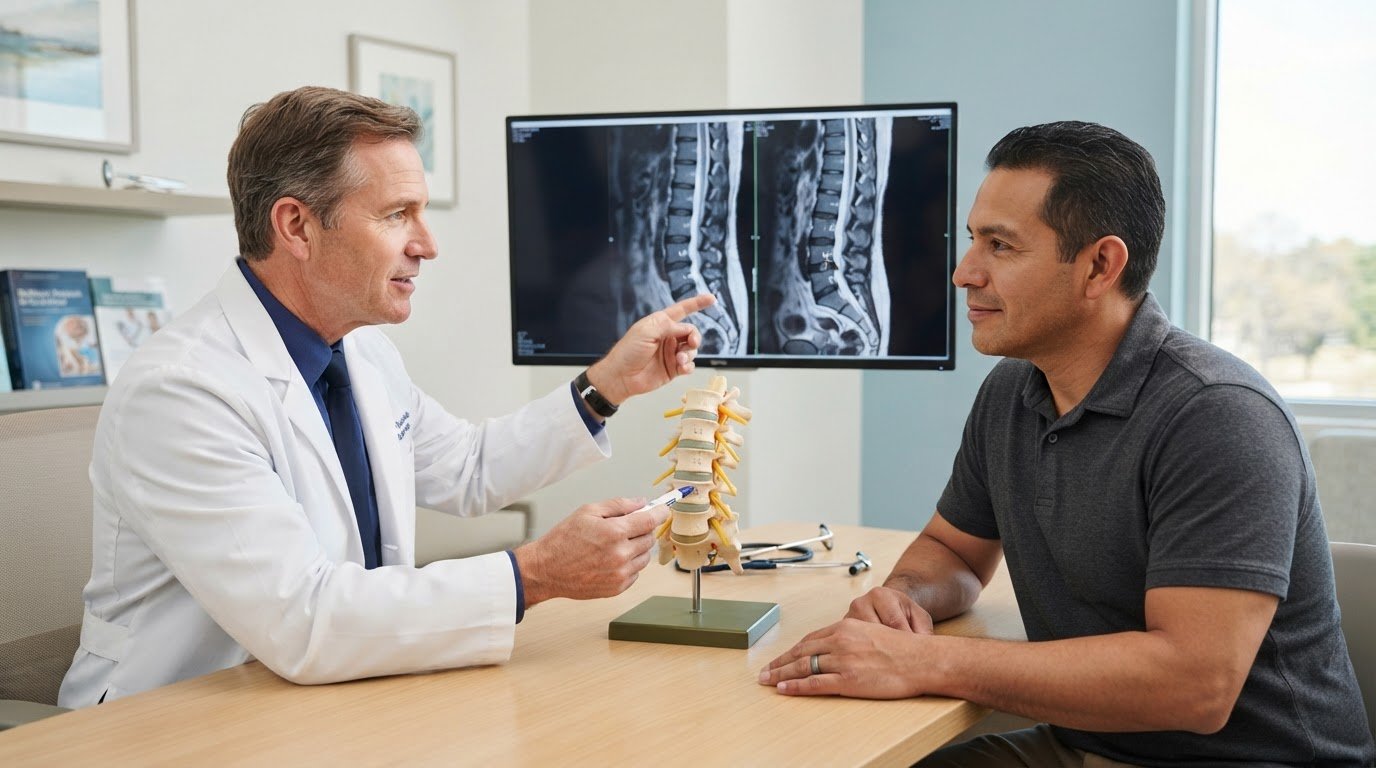
Minimally Invasive Neurosurgery of Texas provides minimally invasive spine surgery in Lewisville and Plano, Texas. Dr. Scott Kutz, a board-certified neurosurgeon and Fellow of the AANS and ACS, helps patients explore treatment options for spinal conditions.
Healthy habits can support healing, but your surgeon’s recovery instructions come first. Avoiding complications after spine surgery means making informed choices about daily activities and following your personalized care plan.
Learn how recovery habits may support healing, which complications and symptoms can occur, and when to seek medical advice. For an overview of the spine care practice, explore Minimally Invasive Neurosurgery of Texas.
Key Takeaways
- Protect healing by following your surgeon’s limits on bending, lifting, and twisting instead of rushing back to chores or exercise.
- Learn how to ease back into sitting, driving, bathing, and daily activity as your recovery progresses.
- Build supportive habits with gentle movement, nourishing food, and avoiding nicotine, especially during spinal fusion healing.
- Recognize changes such as worsening weakness or numbness, fever, or wound drainage that warrant prompt medical advice.
- Understand which complications can occur after lumbar surgery and why new or persistent symptoms deserve attention.
Can Lifestyle Changes Help Prevent Future Spine Problems After Surgery?
Yes. Following your surgeon’s guidance on movement and establishing safe routines can help protect healing tissues and support recovery. Restrictions vary by procedure, so follow your personalized instructions about bending, lifting, and twisting.
Spine Precautions and Lifting Mechanics
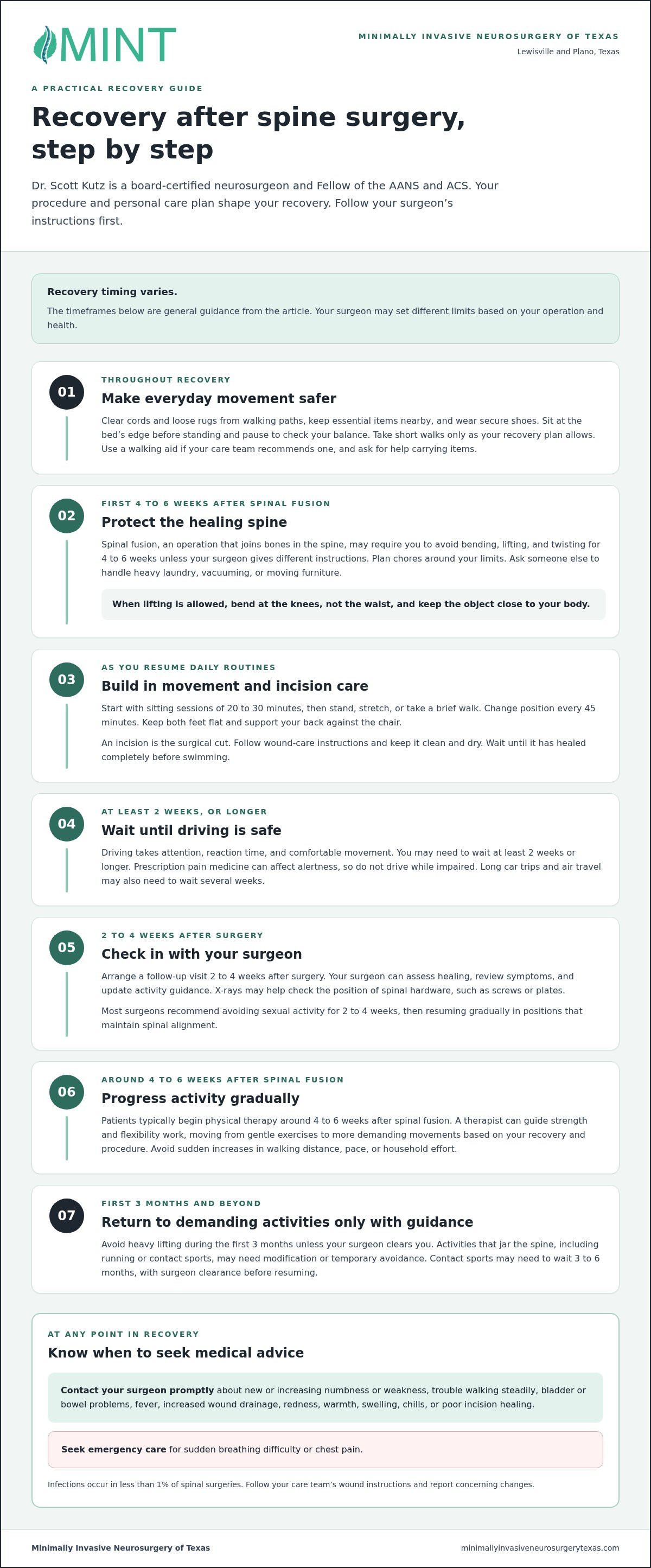
Spine precautions limit movements that strain the surgical area while it heals. After spinal fusion, avoid bending, lifting, and twisting for 4-6 weeks unless your surgeon gives different instructions. When lifting is allowed, bend at the knees rather than the waist and keep the object close to your body. These techniques reduce awkward reaching and help you move with control.
Plan household tasks around your restrictions. Keep frequently used items within easy reach, and ask someone else to handle heavy laundry baskets, vacuuming, or moving furniture. Avoid lifting heavy objects during the first three months after surgery unless your surgeon clears you. Before surgery, tell your surgical team about suspected infections and every medicine or supplement you take. Stop or adjust medication only as directed.
After surgery, take prescribed pain medicines as instructed. Your team may recommend compression stockings, early movement, or medication to reduce blood-clot risk. The right measures depend on your health and procedure, so don’t start aspirin or another blood thinner on your own.
Fall Prevention During Recovery
Preventing falls means making movement safer while your strength and balance return. Clear cords and loose rugs from walking paths, keep essential items nearby, and wear secure shoes. Sit at the edge of the bed before standing, then pause to check your balance. Use a mobility aid if your care team recommends one.
Ask for help carrying items so one hand stays free for a railing or walking aid. Short walks, as allowed by your recovery plan, let you practice steady movement without adding unnecessary strain. Tell your care team about dizziness or new balance problems, especially if standing or walking feels unsafe.
Follow-Up Visits and Imaging
Follow-up visits let your surgeon assess healing, review symptoms, and update activity guidance. Arrange follow-up 2 to 4 weeks after surgery. During office visits, your surgeon may use X-rays to check the position of spinal hardware, such as screws or plates. Imaging helps the team consider hardware position alongside your symptoms and examination.
Keep notes about new pain, changes in movement, or incision concerns so you can describe them clearly at follow-up. Your surgical plan also shapes precautions and recovery expectations. For example, endoscopic spine surgery uses a specialized approach, and your surgeon can explain the restrictions that apply to your procedure.
Risks and complications after lumbar spine surgery: what are the symptoms?
Complication rates vary with the procedure, operation duration, surgical technique, and a patient’s health. Available facts don’t support a numerical comparison between spinal fusion, decompression, and minimally invasive surgery. Possible complications include residual pain, nerve symptoms, infection, bruising or swelling, vascular problems, and reduced mobility. Infections occur in less than 1% of spinal surgeries.
Driving requires attention, reaction time, and comfortable movement. After surgery, patients may need at least 2 weeks or longer before driving. Prescription pain medicines can also affect alertness, so follow medication instructions and don’t drive while impaired. Long car trips and air travel may need to wait several weeks. Sitting for a long time can increase stiffness and discomfort, so change positions regularly.
Start with sitting sessions of 20-30 minutes, then stand, stretch, or take a brief walk. Keep both feet flat and support your back against the chair. Change position every 45 minutes to avoid staying still too long. During bathing, protect the incision, the surgical cut, by following wound-care instructions and keeping it clean and dry. Wait until the incision has healed completely before swimming.
Gradual activity helps patients rebuild physical function without straining the healing area. Short daily walks often provide a starting point, while physical therapy can guide strength and flexibility work. Patients typically begin therapy around 4-6 weeks after spinal fusion. Therapists progress from gentle exercises to more demanding movements, based on recovery and the procedure. Avoid sudden increases in distance, pace, or household effort.
Activities that jar the spine, including running or contact sports, may need modification or temporary avoidance. Contact sports should wait 3-6 months following surgery, with surgeon clearance before resumption. Recreational activities that create repeated jolts or vibration can also strain a healing back; return gradually and follow your surgical activity plan. The type of disease treated and the operation performed shape the appropriate pace.
Most surgeons recommend avoiding sexual activity for 2-4 weeks after surgery, then resuming gradually in positions that maintain spinal alignment. Stop if an activity causes sharp or worsening pain. New or increasing numbness, weakness, gait instability, bladder or bowel problems, fever, or increased wound drainage needs prompt contact with your surgeon. Redness, warmth, swelling, chills, or poor incision healing can also signal infection. Sudden breathing difficulty or chest pain requires emergency care.
The relative risk depends on the procedure’s duration and technique, as well as your health. There is no established ranking of these procedures by risk.
Nutrition, exercise, and avoiding nicotine
Nutrition, breathing practice, and a tailored activity plan can support preparation and recovery after a spinal procedure. Before surgery, discuss bone strength, your current health, and preparatory physical therapy with your medical team.
Nutrition and Nicotine Avoidance
A balanced diet supplies nutrients that support tissue repair, while avoiding nicotine helps protect spinal fusion healing. Choose meals with lean protein, vegetables, and other nourishing foods, and drink water regularly. The recovery guidance recommends up to 8 glasses of water per day to help prevent constipation. Ask your physician before using natural supplements because they can affect your care plan.
Quit smoking before back surgery, and avoid nicotine products during spinal fusion recovery. Smoking can impair fusion and recovery. Your medical team can assess your bone strength and overall health before the procedure, then help address factors that may affect healing. Share your usual diet and any difficulty eating or drinking so the team can account for those needs during preparation.
Deep-breathing exercises help maintain lung function after surgery. Take 10 to 15 consecutive breaths, holding each for 2 to 5 seconds. Complete 3 sets, with a 60-second pause between sets, and repeat the exercises hourly after surgery. Frequent deep breaths and coughing also help maintain lung function. Follow your team’s specific instructions if pain makes these actions difficult.
Exercise and Rehabilitation
Rehabilitation rebuilds strength and flexibility through exercises that match your condition, procedure, and physical capacity. A therapist may begin with gentle movements and gradually introduce more challenging exercises. The rehabilitation phase often spans 6 to 12 weeks, and the team may add activities as your healing progresses. This gradual approach helps you develop strength without asking your spine to manage sudden increases in effort.
Walking, swimming, and cycling are low-impact cardiovascular activities, but wait to swim until the incision has healed completely. High-impact activities such as running can place greater stress on the spine, so appropriate adjustments depend on your procedure. Contact sports add collision risk. Choose a gentler activity during recovery, and discuss changes in pain, balance, or stamina as your rehabilitation plan progresses.
Core muscles absorb shock and reduce the load on vertebrae during daily activities. Once your rehabilitation plan includes strengthening, controlled core exercises can help prepare you for tasks such as climbing stairs or carrying light groceries. Your age, underlying condition, procedure, and physical condition all shape that progression. Don’t use another person’s exercise routine as a template for your recovery.
Neurological complications and leg or foot symptoms
Neurological symptoms are changes involving nerves that carry signals between the brain, spinal cord, and body. After lumbar surgery, you may notice weakness, numbness, tingling, or reduced feeling in a leg or foot. These changes can affect standing, walking, and everyday movement. Track where each symptom occurs, when it starts, and whether it changes during the day. Share those details with your surgeon, especially if symptoms worsen or interfere with safe walking.
Some nerve symptoms after spinal fusion improve within a few weeks. Nerves may need more time to recover after pressure or irritation, so relief can continue gradually. Nerve damage may take up to two years to resolve after fusion, though that does not mean every symptom will last that long. Pay attention to the direction of change: improving sensation differs from spreading numbness or increasing weakness. Tell your care team about persistent pain or symptoms that limit daily activities.
New or worsening weakness needs prompt medical attention, particularly if it changes how you stand or move. Increasing numbness, tingling, unsteady walking, or loss of feeling in a foot also warrants a call to your surgeon. Bladder or bowel problems after spine surgery need immediate medical advice. Don’t wait for a scheduled visit if these symptoms develop. Describe when they began and whether they affect one leg, both legs, or your ability to walk.
Recovery expectations depend on the underlying nerve problem, the procedure, and how long the nerve was under pressure. Surgery can address a structural cause, but nerves may heal more slowly than the incision. For example, pain may improve before numbness or tingling changes. Keep a simple symptom record as you heal, noting changes in movement, standing tolerance, and sensation. Use those observations to discuss progress rather than judging recovery by one difficult day.
Infection can also affect recovery and requires attention. Watch for fever, chills, increasing pain, redness, warmth, swelling, poor incision healing, or wound drainage. A fever greater than 101.5 degrees can signal infection after spine surgery. Contact your doctor promptly if these signs appear, particularly when several occur together. Also report increased weakness alongside fever or wound changes. Clear symptom details help your care team assess what needs attention and guide the next step.
Possible complications after lumbar spine surgery
Lumbar surgery can lead to several kinds of complications, and the procedure and a patient’s health influence the risks. Possible problems include residual pain, infection, nerve symptoms, reduced mobility, and vascular complications. Serious complications can include a dural tear, a leak or opening in the membrane around the spinal cord, or damage to nearby blood vessels. Knowing what each problem may involve helps patients recognize changes and seek timely medical attention.
After spinal fusion, non-union means the vertebrae don’t grow together as intended. The fusion may then fail to provide the planned stability, and pain can persist. Hardware failure involves screws or plates breaking, loosening, or shifting. Adjacent segment disease describes symptoms that develop at spinal levels next to a fusion. These problems can affect movement and may lead a doctor to evaluate the spine with imaging and an examination.
Revision surgery means another operation to address a problem after the first procedure. It may be considered if a fusion doesn’t heal, hardware complications develop, adjacent segment disease causes symptoms, or pain continues despite appropriate conservative treatment. One estimate states that 8-45% of spinal fusions require revision surgery. That range describes a broad estimate, not an individual patient’s outcome. The procedure, healing, and reason for persistent symptoms all matter.
Some complications need urgent attention. Nerve damage can cause muscle weakness, numbness, tingling, or loss of feeling in the legs and feet. Very rarely, lumbar surgery can cause loss of movement in the legs or feet. Blood vessel damage can cause bleeding or blood clots. Sudden breathing difficulty, chest pain, or new loss of leg movement requires emergency care. New weakness or worsening numbness also warrants prompt contact with your surgeon.
Infection and wound problems can affect healing after surgery. Infections occur in less than 1% of spinal surgeries. Watch for redness, warmth, swelling, poor wound healing, increasing pain, fever, chills, or drainage. A fever greater than 101.5 degrees can signal infection. Contact a doctor promptly if these symptoms develop, especially when several appear together. Keep the incision clean and dry, and report changes instead of applying creams without instructions.
Recovery also means watching for persistent pain or limited function. Incision discomfort often improves with time, but chronic pain well after surgery needs medical attention. Follow medication instructions and attend scheduled physical therapy, which can help rebuild strength and flexibility after fusion. Track pain, muscle weakness, and changes in walking. Share those details at follow-up so your doctor can assess healing and determine whether symptoms need further evaluation.
Minimally Invasive Neurosurgery of Texas: Minimally Invasive Spine Surgery
Minimally Invasive Neurosurgery of Texas helps patients explore spine surgery options when pain, weakness, or other symptoms persist. Dr. Scott Kutz, a board-certified neurosurgeon and Fellow of the AANS and ACS, evaluates each patient’s condition and discusses whether minimally invasive techniques may suit their needs. These approaches are designed to reduce tissue disruption, but the right procedure depends on the diagnosis, anatomy, health, and treatment goals.
Patients in Lewisville and Plano, Texas, can learn about Minimally Invasive Spine Surgery, Endoscopic Spine Surgery, and Artificial Disc Replacement as possible treatment approaches. A consultation can clarify potential benefits, risks, and recovery considerations for a specific spinal condition.
Contact Minimally Invasive Neurosurgery of Texas to discuss your spine care questions and next steps.
Take Your Next Step Toward a Confident Recovery
Recovery gives you a chance to apply medical guidance to decisions in daily life. Keep your questions together, note changes that affect work or movement, and bring those details to a clinical conversation. This makes avoiding complications after spine surgery an active part of planning, rather than a source of constant worry. Clear expectations can also help you understand which concerns need attention and which can wait for a routine follow-up discussion.
For people considering treatment or seeking another perspective on their spinal condition, Minimally Invasive Neurosurgery of Texas offers Minimally Invasive Spine Surgery, minimally invasive neurosurgery options, and Artificial Disc Replacement. Dr. Scott Kutz can discuss how the diagnosis, symptoms, and personal goals inform treatment decisions. A thoughtful conversation can help you understand your options and prepare questions about the next phase of care.
Contact Minimally Invasive Neurosurgery of Texas to discuss your spine care. Take the next step with clear information and a plan focused on your recovery.
Frequently Asked Questions
Candidacy for Surgery: Who Is Likely to Experience Complications?
No single factor identifies every patient who may experience complications. A surgeon weighs the planned procedure, symptoms, medical history, spinal anatomy, general health, lifestyle, support system, and expectations. Share details such as prior operations, current medicines, smoking, and help available at home. These factors help shape the risk-benefit discussion and recovery plan, including practical steps for avoiding complications after spine surgery.
What Can I Do to Prevent Infection?
Tell your surgical team about a suspected infection before surgery, and follow their instructions for medicines and incision care. Keep the incision clean and dry after surgery, and don’t apply creams or other products unless your surgeon instructs you to. Your team may give antibiotics shortly before an operation, especially when the procedure uses bone grafts, screws, or plates.
What Are Common Problems After Spinal Fusion?
Common concerns include ongoing pain, nerve symptoms, wound infection, or limited mobility. Fusion-specific problems include non-union, when the vertebrae don’t grow together, and hardware complications involving screws or plates. A surgeon may also assess symptoms related to changes in spinal levels next to the fusion. Report persistent or worsening symptoms rather than assuming they are part of routine healing, and attend scheduled follow-up visits.
How Do Smoking, Diabetes, Obesity, and Age Affect Spine Surgery Complications?
These factors help the medical team assess your overall health and plan care. Smoking and other nicotine use can impair fusion and recovery. Diabetes, body weight, and age are part of a health review, but they don’t determine an individual outcome on their own. Share your medical history, blood sugar concerns, nicotine use, and daily activity demands so your team can consider them alongside your procedure and spinal condition.
What Are the Steps for Wound Care After Spine Surgery to Prevent Infection?
Follow your surgical team’s incision-care instructions and keep the wound clean and dry. Check for increasing redness, warmth, swelling, poor healing, or drainage. Don’t put creams or other products near the incision unless your surgeon directs you to. Report concerning changes promptly, especially if they occur with fever, chills, or increasing pain.
How Soon Should Patients Walk and Resume Normal Activities After Spine Surgery?
Patients often start moving soon after surgery, beginning with short walks. Increase activity gradually rather than following a fixed timetable for every task. Your procedure, symptoms, and physical condition shape the pace. Ask your care team how to progress from walking to household activities, work, and exercise. Stop and report new or worsening symptoms instead of pushing through them.
What Symptoms After Spine Surgery Require Urgent Medical Attention?
Contact your surgeon promptly for new or worsening weakness, increasing numbness, difficulty walking, bladder or bowel problems, fever, or increased wound drainage. Redness, warmth, swelling, chills, and worsening incision pain can also signal infection. Sudden breathing problems or chest pain need emergency attention. If you suspect a blood clot has traveled to the lungs, call 911 rather than waiting for a routine appointment.
This information is for educational purposes only and is not a substitute for professional medical advice, diagnosis, or treatment. The website and its content are provided “as is.”
What pain medicines and blood clot prevention are recommended after spine surgery?
Take prescribed pain medicines as instructed. Your team may recommend compression stockings, early movement, or medication to reduce blood-clot risk. Don’t start aspirin or another blood thinner on your own.