Minimally Invasive Neurosurgery of Texas, led by Dr. Scott Kutz, a board-certified neurosurgeon and Fellow of the AANS and ACS, provides artificial disc replacement in Lewisville and Plano, TX.
Pain can persist one year after artificial disc replacement, even when surgery has improved symptoms and daily function. A useful guide to what to expect 1 year after artificial disc replacement starts here: recovery differs for each person, and lingering discomfort deserves attention when it worsens or comes with new symptoms.
It’s understandable to wonder whether ongoing pain means something has gone wrong. One year after artificial disc replacement, your progress, remaining symptoms, and ability to resume everyday activities provide important context. This article explains what recovery may look like, how physical therapy can support neck strength, and which warning signs warrant contacting your surgeon.
Key Takeaways
- Pain can persist a year after surgery, so pay attention to how symptoms change and affect daily activities.
- Recovery milestones vary, but understanding the typical timeline can help you plan a gradual return to work, driving, and exercise.
- Physical therapy can help rebuild neck strength and movement when your surgeon recommends it.
- Know which changes around the incision or in your strength and sensation warrant contacting your surgeon.
- Follow-up visits help your surgeon assess progress and address concerns, even when recovery feels on track.
Will I have any long-term pain post cervical disc replacement?
At one year, patients can usually pursue activities and exercise their surgeon has cleared, including a gradual return to sports. Pain can persist after cervical disc replacement, but ongoing or worsening pain deserves attention, especially if it limits daily routines or occurs with new symptoms.
Artificial disc replacement removes a damaged disc and places a synthetic one designed to support the spine while preserving motion. It can reduce chronic pain, meaning pain that lasts over time, and improve physical function. However, surgery doesn’t guarantee that every source of neck or arm discomfort will disappear. Track whether your pain improves, stays stable, or worsens, and tell your surgeon how it affects work, sleep, and movement.
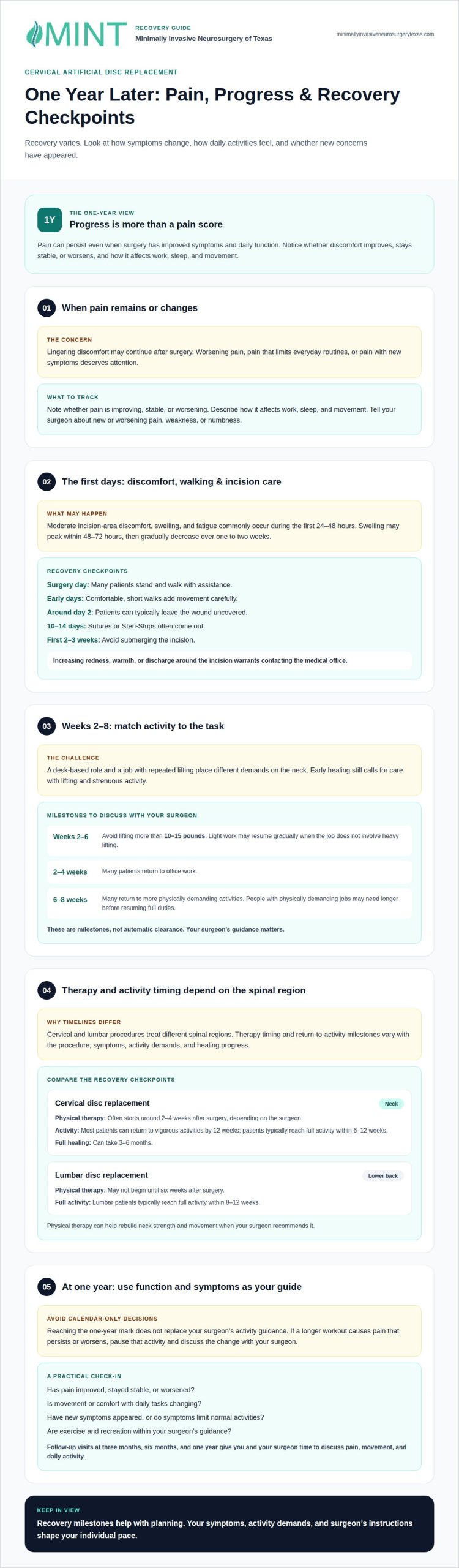
During weeks 2-6, recovery still calls for care with lifting and strenuous activity. Patients recovering from cervical disc replacement should avoid lifting more than 10-15 pounds during this period. They can gradually resume light work duties during weeks 2-6 when their job doesn’t involve heavy lifting. A desk-based role and a job requiring repeated lifting place different demands on the neck, so return-to-work plans should match the work itself.
Many patients return to office work 2-4 weeks after surgery. People with physically demanding jobs may need longer before resuming full duties; many return to more physically demanding activities 6-8 weeks after cervical disc replacement. These are recovery milestones, not permission to increase activity without guidance. A patient who can sit comfortably at a desk may still need to limit carrying, overhead work, or vigorous exercise during early healing.
By 12 weeks, most patients can return to vigorous activities, and cervical disc replacement patients typically reach full activity within 6-12 weeks. Full healing can take 3-6 months. After healing, most patients have no permanent activity restrictions. Your surgeon’s instructions still matter, particularly if pain returns or a specific movement causes symptoms.
At one year, safe activity means returning to exercise and recreation within your surgeon’s guidance, not treating the calendar as automatic clearance. Increase activity gradually and notice how your neck responds. For example, if a longer workout causes pain that persists or worsens, pause that activity and discuss the change with your surgeon.
Artificial disc replacement aims to preserve spinal motion, which can support a return to everyday movement. The artificial disc replacement procedure may be relevant for patients with chronic pain from a damaged disc that hasn’t improved with other treatments. At the one-year mark, persistent pain or limits on normal activities warrant a review of symptoms and recovery progress with your surgeon.
Recovery milestones from the first week through six months
Recovery progresses from caring for the incision to gradually increasing activity. The operated region, symptoms, and work demands all shape the pace.
Cervical and Lumbar Recovery Timelines
Cervical and lumbar procedures treat different spinal regions, so their recovery timelines differ. Full recovery after cervical disc replacement typically takes 3-6 months, while lumbar patients typically reach full activity within 8-12 weeks. These milestones help patients plan work and daily routines, but the demands of each activity also affect when it feels manageable.
During the first week, many patients stand and walk with assistance on surgery day. Moderate discomfort near the incision, swelling, and fatigue commonly occur during the first 24-48 hours. Swelling may peak within 48-72 hours, then gradually decrease over one to two weeks. Comfortable, short walks add movement carefully as recovery begins.
Incision care changes during this period. Patients can typically leave the wound uncovered by the second day, while sutures or Steri-Strips often come out around 10-14 days after surgery. Avoid submerging the incision for 2-3 weeks. Increasing redness, warmth, or discharge warrants contacting the medical office.
For cervical surgery, physical therapy often starts around 2-4 weeks after surgery, depending on the surgeon. Lumbar disc replacement therapy may not begin until six weeks after surgery. The procedure’s location therefore affects rehabilitation timing. Other factors include the patient’s symptoms, activity demands, and progress as healing continues.
Symptoms and Functional Improvements
At one year, patients may have less chronic pain and better physical function, although some discomfort can remain. Artificial disc replacement aims to support the spine while preserving motion. These changes can matter in everyday life, such as turning the neck more comfortably or managing routine activities with fewer symptoms.
People asking what to expect 1 year after artificial disc replacement should consider both symptoms and function. Progress may show up as easier movement or greater comfort with daily tasks, rather than the complete absence of discomfort. Patients asking what to expect 1 year after artificial disc replacement should also note whether pain stays stable, improves, or begins to worsen.
Recovery after cervical artificial disc replacement typically reaches full healing within 3-6 months. At one year, new or worsening pain, weakness, or numbness deserves attention from the surgeon. The timeline and outcome depend on the treated spinal region, symptoms, and functional demands. Follow-up visits at three months, six months, and one year let patients discuss changes in movement, pain, and daily activity.
Life After Full Recovery: What’s Different?
Full recovery can make work, exercise, recreation, and travel easier to plan. Follow-up visits still matter because symptoms and daily function can change after the procedure.
Follow-Up Visits and Returning to Driving
Follow-up visits let the surgeon review healing, symptoms, and movement at key milestones. Visits commonly occur at three months, six months, and one year, then every one to two years. Even when you feel well, these appointments help track the artificial disc and address changes in comfort or function.
Driving usually resumes around two to three weeks after surgery, once you’ve stopped opioid medication and can move comfortably. Safe driving requires turning to check your surroundings, so pain or limited neck movement can affect readiness. At a one-year visit, mention any symptoms that interfere with turning your head or staying comfortable behind the wheel.
Returning to Work and Exercise
Return to work depends partly on job demands. Patients may return within two to six weeks after surgery, while desk workers often return around four weeks. Heavy lifting and repeated physical tasks place different demands on the spine than computer work, so consider your specific duties when planning a return.
Exercise also progresses by function, not by a single calendar date. Most patients can return to vigorous activities around 12 weeks after artificial disc replacement. At one year, a patient who has healed and regained comfortable movement may have resumed regular exercise, while recurring symptoms can signal a need to adjust activity and discuss it during follow-up.
Recreation, Travel, and Sports
Recreation and travel may become easier to manage as healing supports longer periods of sitting, walking, and movement. Plan around symptoms: for example, take movement breaks during a long car ride if sitting increases discomfort. How well you tolerate an activity matters more than simply reaching a calendar milestone.
Most people can return to vigorous activities by 12 weeks, and cervical disc replacement patients typically reach full activity within six to 12 weeks. Full healing can take three to six months, so sports may return gradually as strength and comfort improve. At one year, discuss lingering pain or movement limits with your surgeon before changing a familiar sport or increasing its intensity.
Clinical follow-up remains useful after recovery. Visits at six months and one year provide opportunities to review progress, and follow-up often continues every one to two years. Bring concrete examples, such as discomfort during a work shift, exercise, or travel, so the surgeon can understand how symptoms affect your routine.
Physical therapy and neck-strengthening exercises
Physical therapy helps patients rebuild strength, control, and comfortable movement after disc replacement. Its timing and focus depend on the surgical region and recovery progress.
Physical Therapy and Rebuilding Strength
Physical therapy uses guided movement and strengthening to support spinal function after surgery. For cervical disc replacement, a therapist can help patients work on neck movement, posture, and the muscles that support the head. These skills can make daily activities, such as looking over a shoulder or sitting at a desk, more manageable.
Therapy also helps patients increase activity carefully rather than returning abruptly to demanding tasks. A session may focus on controlled movement before progressing to more challenging exercises. This progression matters when patients want to resume lifting, driving, or exercise without aggravating symptoms. The therapist can adjust the program as comfort, strength, and movement change.
Therapy Timing and Duration
Physical therapy after cervical disc replacement often starts around 2-4 weeks after surgery, depending on the surgeon. A common starting point is week 4. Patients typically attend 1-2 sessions per week for 4-8 weeks, depending on progress. The schedule gives the therapist opportunities to review movement and adjust exercises.
A therapy program can build in intensity over six to 12 weeks. This gradual progression supports continued strength gains without treating every patient’s recovery as identical. Lumbar disc replacement follows a different timeline: physical therapy may not begin until six weeks after surgery. The procedure’s location therefore affects when structured rehabilitation starts.
Pain relief and improved physical function can develop on different timelines. Therapy focuses on movement and strength, while the surgeon evaluates healing and ongoing symptoms. For example, a patient may find turning the neck easier before being able to complete a full workday comfortably. Sharing these specific changes helps the care team understand progress.
At one year, therapy needs depend on remaining symptoms and functional goals. Patients who still struggle with neck strength or movement can discuss those limitations with their surgeon. A physical therapist can then focus sessions on relevant tasks, such as maintaining comfortable posture at a desk or restoring controlled movement during exercise.
Follow the prescribed plan rather than adding strenuous exercises on your own. If a movement sharply increases pain, causes new symptoms, or makes normal tasks harder, report the change. Clear feedback helps the surgeon and therapist decide whether to adjust the program. A steady plan can support strength and function as patients return to normal activity.
Warning signs that require contacting a surgeon
At one year, cervical disc replacement patients typically return to work and normal activities 2-4 weeks sooner than patients undergoing cervical fusion. Both procedures have different recovery paths, so this comparison describes a general timeline, not an individual outcome.
Insurance coverage for follow-up care or revision surgery depends on the patient’s plan terms and how the plan evaluates the care. Policies differ in which follow-up services or additional procedures they cover.
After disc replacement surgery, patients can usually stand and walk with assistance on the day of surgery. Many go home the same day or within 24 hours after cervical surgery. During early recovery, many patients no longer need pain medication two weeks after the procedure, although pain levels and medication needs differ.
At any point in recovery, contact the surgeon’s medical office about changes that could signal a complication. A complication is a problem that affects healing or recovery. Pay attention to changes at the incision, meaning the surgical cut, and changes in pain, strength, or sensation.
- Increasing redness, warmth, or discharge at the incision warrants contacting the medical office.
- Unexpected swelling around the surgical area also warrants a call, especially if it increases rather than settles.
- A sudden rise in pain that prescribed medications don’t control needs prompt discussion with the surgeon.
- New or worsening weakness, numbness, or loss of sensation in an arm or leg calls for medical attention.
Persistent pain doesn’t automatically mean the disc replacement failed. However, pain that worsens, limits normal movement, or occurs with new weakness or numbness needs assessment. Describe when symptoms began, which activities affect them, and whether medication changes them. Those details help the surgeon understand the concern and decide what evaluation is appropriate.
Physical therapy may help patients rebuild strength, but new symptoms during exercise or after lifting deserve attention. Don’t treat increased pain as a reason to push through the activity. Contact the surgeon’s office and explain which movement triggered the change. The team can assess whether the symptoms require follow-up or an adjustment to the recovery plan.
A scheduled appointment also gives the surgeon a chance to review ongoing symptoms and functional progress. Bring specific examples, such as pain during work, difficulty walking, or numbness that affects daily tasks. Clear details help distinguish a stable recovery concern from a new or worsening problem that needs evaluation.
Minimally Invasive Neurosurgery of Texas: Artificial Disc Replacement
Minimally Invasive Neurosurgery of Texas provides Artificial Disc Replacement for patients whose spinal symptoms may benefit from surgical treatment. Led by Dr. Scott Kutz, a board-certified neurosurgeon and Fellow of the AANS and ACS, the practice serves patients in Lewisville and Plano, Texas.
If pain, weakness, numbness, or limits on daily activity persist, a clinical evaluation can help clarify possible next steps. Dr. Kutz can assess whether artificial disc replacement fits your condition and discuss how minimally invasive spine surgery may address your spinal problem. Learn more about the artificial disc replacement procedure.
Contact Minimally Invasive Neurosurgery of Texas to discuss your symptoms and care options.
Make Your Next Step About Your Goals
A year after surgery, your priorities may have shifted from getting through recovery to deciding what you want to do comfortably next. Perhaps you want to return to a favorite activity, manage a workday with fewer interruptions, or understand why a symptom still affects your routine. Naming that goal gives a clinical conversation a practical starting point.
Knowing what to expect 1 year after artificial disc replacement can help you describe what has changed and where you still need support. Bring your questions and explain which movements or daily tasks matter most to you. Your care team can use those details to discuss appropriate options for your situation.
If persistent symptoms or questions about spine care are shaping your next steps, contact Minimally Invasive Neurosurgery of Texas to discuss your concerns. A clear conversation can help you move forward with greater confidence and a plan centered on your goals.
Frequently Asked Questions
Are there any activities I’ll need to avoid permanently after cervical disc replacement?
Most patients have no permanent activity restrictions after full healing, which typically takes 3-6 months. That doesn’t mean every activity will feel exactly as it did before surgery. For example, a return to contact sports or repeated overhead lifting depends on comfort, strength, and the surgeon’s assessment. At follow-up, describe the specific activities you want to resume so your care team can discuss them in the context of your recovery.
How long do cervical disc replacements last, and what happens if mine wears out?
An artificial disc doesn’t have a set replacement date that applies to every patient. If symptoms return or worsen, the surgeon evaluates possible causes, which can include changes around the implant or another spinal problem. The next step depends on symptoms and clinical findings, not simply the time since surgery. Tell your surgeon about new pain, reduced movement, or changes in arm strength or sensation.
Will I be able to move my neck normally after cervical disc replacement?
Artificial disc replacement aims to preserve motion in the treated spinal segment, helping patients regain useful neck movement. “Normal” movement can feel different from person to person, especially if pain or stiffness existed before surgery. For a practical measure, note whether you can turn your head comfortably while dressing, working, or checking traffic. Share any persistent limitations with your surgeon during follow-up.
How long does recovery take after lumbar artificial disc replacement?
Full activity after lumbar artificial disc replacement typically takes 8-12 weeks, while desk work often resumes within 2-3 weeks. The return to work depends partly on physical demands: computer work differs from repeated lifting or prolonged standing. Physical therapy may not begin until six weeks after surgery. These milestones help with planning, but your surgeon’s instructions and your symptoms guide each increase in activity.
What complications or warning signs can occur after artificial disc replacement?
Contact your surgeon’s office about increasing redness, warmth, discharge, or unexpected swelling near the incision. A sudden increase in pain that prescribed medication doesn’t control also warrants a call. Report new or worsening weakness, numbness, or loss of sensation in an arm or leg. Describe when the change began and whether it affects walking, hand use, or other daily tasks.
How often does an artificial disc need revision or replacement, and what are the long-term outcomes?
Artificial discs don’t follow a routine replacement schedule. A surgeon considers revision when symptoms, examination findings, or implant-related concerns call for further evaluation. Long-term outcomes include ongoing pain relief and physical function, but individual progress varies. Clinical studies have followed artificial disc replacement patients for periods ranging from 5 to more than 10 years. Those follow-up periods describe study monitoring, not a guaranteed implant lifespan.
What follow-up appointments and imaging are recommended 1 year after artificial disc replacement?
A follow-up visit at one year gives the surgeon a chance to review symptoms, function, and recovery. After that, visits commonly continue every one to two years, even when patients feel well. The surgeon decides whether imaging, such as an X-ray, fits the clinical findings and symptoms. This information is for informational purposes only and is not a substitute for professional medical advice. The website and its content are provided “as is.”