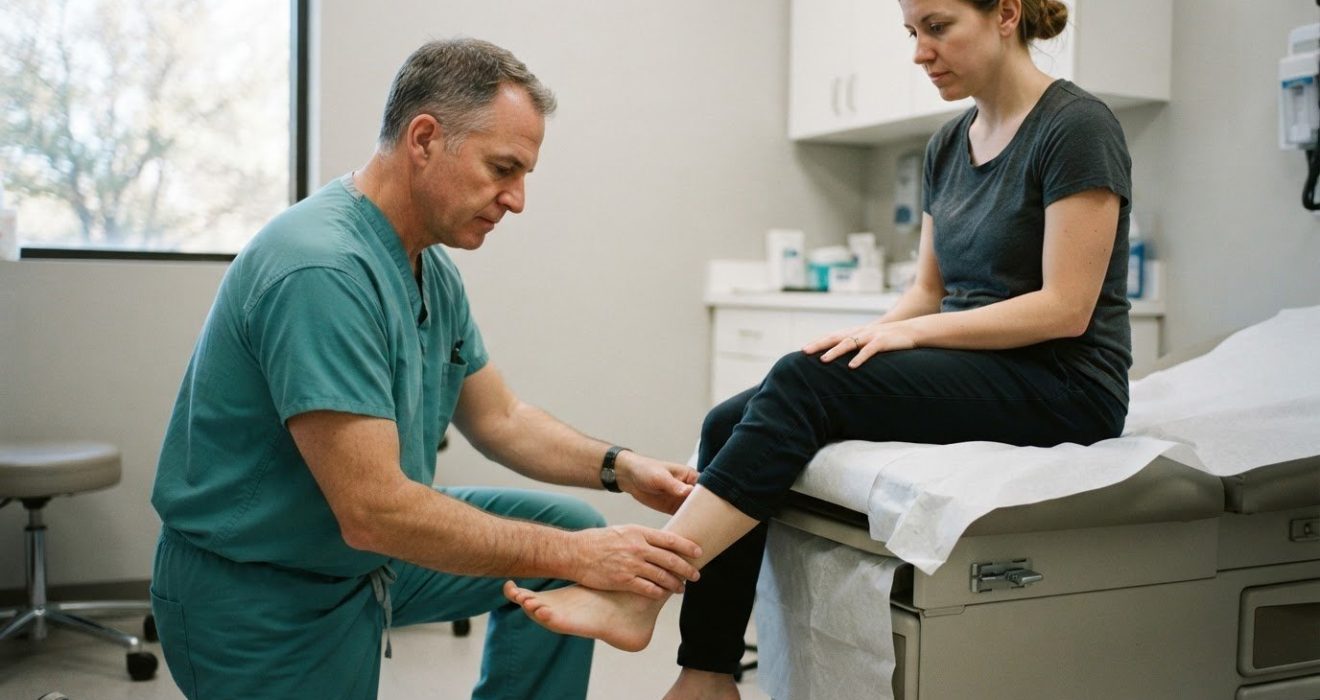
Minimally Invasive Neurosurgery of Texas provides minimally invasive spine care in Lewisville and Plano, TX. Dr. Scott Kutz, a board-certified neurosurgeon and Fellow of the AANS and ACS, evaluates spinal conditions and discusses treatment options, including surgery when appropriate.
The right doctor for back pain depends on its pattern and cause. A backache specialist can assess persistent pain, especially when it travels into a leg or comes with tingling, numbness, or weakness. Neurosurgical evaluation can help when symptoms last more than 4-6 weeks. Pain that extends down a leg may signal nerve compression, meaning pressure on a spinal nerve.
At your first visit, a specialist reviews your symptoms and medical history, examines how you move, and considers whether imaging could help identify the cause. Most back pain does not require surgery, so understanding its source helps guide care. This article explains which doctor to see and how specialists assess spinal conditions such as lumbar spinal stenosis, a narrowing of the lower spinal canal that can press on nerves.
Key Takeaways
- Match the specialist to your symptoms: persistent pain, pain that travels into a leg, or numbness and weakness can call for a closer spinal evaluation.
- At a first visit, expect a discussion of your symptoms and medical history, a physical examination, and consideration of whether imaging could help explain the cause.
- Neurosurgeons and orthopedic spine surgeons can both perform spinal surgery; the right evaluation focuses on the condition and the treatment options that fit it.
- Lumbar spinal stenosis can narrow the space around nerves in the lower back, so recognize how nerve-related symptoms may differ from localized backache.
- Learn how minimally invasive spine surgery and other approaches may enter the discussion when nonsurgical care does not address the underlying spinal problem.
Spinal and musculoskeletal conditions treated
Back pain can start in muscles, joints, discs, or nerves, so identifying its source matters. Acute mechanical pain, pain linked to strain or movement, often begins in the lower back and may spread into the buttocks and thighs. A herniated disc occurs when disc material pushes beyond its usual boundary and irritates nearby nerves. Spinal stenosis means narrowing around the spinal canal or nerve openings. Arthritis, joint inflammation and damage, osteoporosis, weakened bones, scoliosis, an abnormal sideways spinal curve, fractures, and spondylolisthesis, a shift between vertebrae, can also contribute.
The location and pattern of symptoms can help distinguish spinal from musculoskeletal causes. Cervical pain affects the neck, while lumbar pain affects the lower back. A compressed nerve can cause pain, tingling, numbness, or weakness beyond the spine, such as symptoms traveling into a leg. Spinal cord compression affects the cord, which carries messages between the brain and body. Fibromyalgia, a condition involving widespread pain and tenderness, can also cause back discomfort. Osteoarthritis, the gradual breakdown of joint tissue, may affect spinal joints.
- Disc and nerve conditions: A herniated disc or spinal stenosis may irritate or compress nerves.
- Joint and bone conditions: Arthritis, osteoporosis, fractures, and scoliosis can affect spinal movement or structure.
- Soft-tissue pain: Muscle strain can cause localized lower-back pain, often after lifting or activity.
During an evaluation, a clinician asks when the pain began, where it travels, and which movements make it worse. The physical examination may assess posture, walking, range of motion, strength, and sensation. Imaging can reveal structural changes, but those findings need to match your symptoms. Degenerative disc changes, for example, may appear on an MRI without causing pain, so an image alone does not establish the cause.
A spine surgeon reviews your examination and available imaging, then discusses treatment options. Surgery is not the starting point for most back pain. Nonsurgical care may include medication, activity adjustments, and physical therapy. A spine surgeon may also recommend a corticosteroid injection to reduce inflammation or help identify a pain source. The options depend on the condition, symptom pattern, and effect on daily activities.
For ongoing pain, physical therapy commonly forms part of the initial treatment plan for six weeks, alongside at-home care. A physical therapist can assess sitting, standing, and movement, then suggest posture or workspace changes. Under a provider’s guidance, home measures may include cold packs, heating pads, medication, stretching, strengthening exercises, or yoga. Choose activities that suit your symptoms, and don’t push through worsening pain.
A personalized plan connects each treatment to a clear goal, such as walking more comfortably or reducing leg symptoms. Track what triggers pain, how far it travels, and whether numbness or weakness appears. If pain persists, returns, or disrupts daily life, share that pattern at your appointment. New bowel or bladder control problems after an injury require emergency care.
Neurosurgeon or Orthopedic Surgeon for Spinal Surgery?
Both neurosurgeons and orthopedic spine surgeons may perform back surgery. Their training differs, while the diagnosis, affected anatomy, and treatment goals guide the evaluation.
Choosing a Backache Specialist
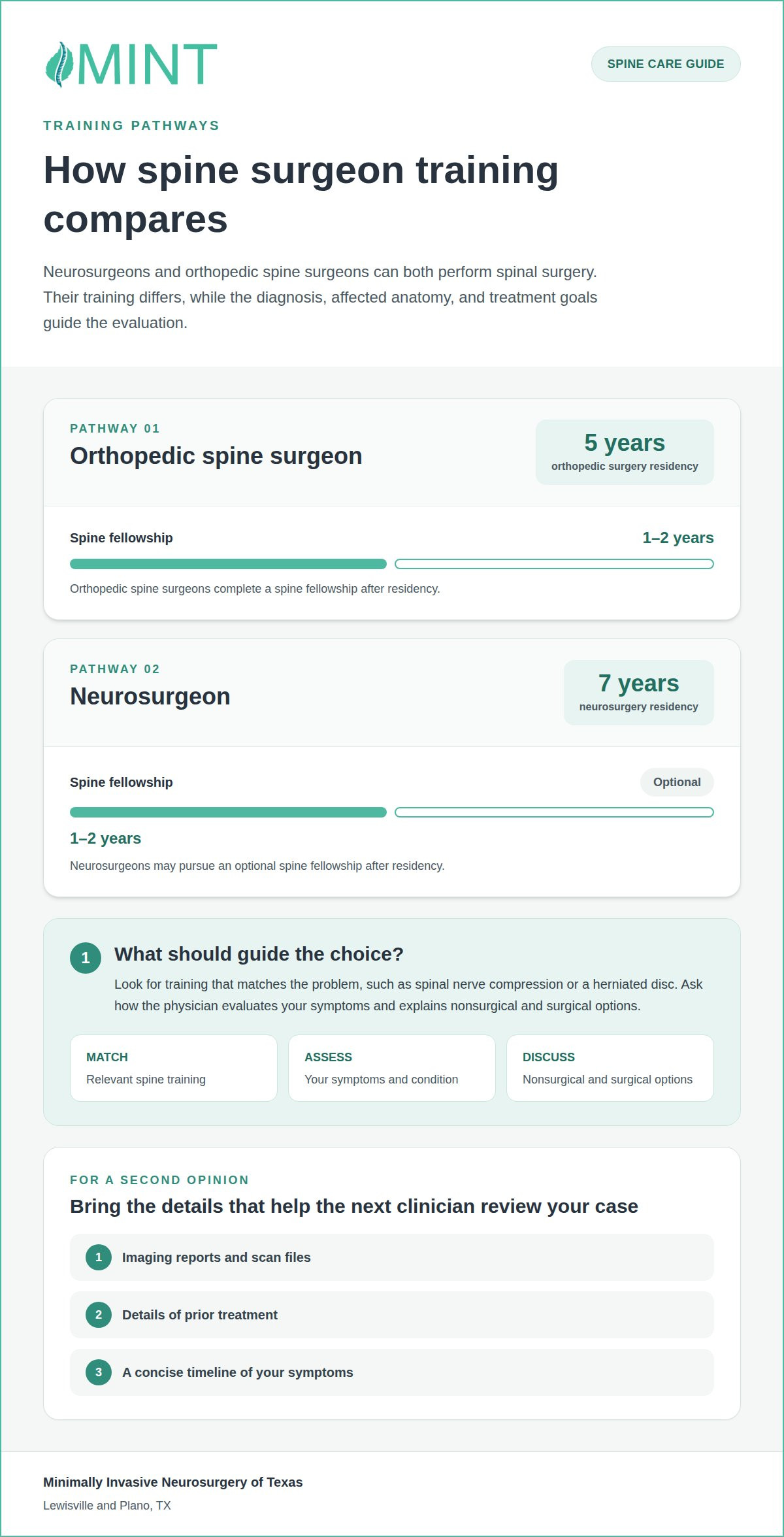
Look for a physician whose training matches the problem, such as spinal nerve compression or a herniated disc. Orthopedic spine surgeons complete five years of orthopedic surgery residency and one to two years of spine fellowship. Neurosurgeons complete seven years of neurosurgery residency and may pursue an optional one-to-two-year spine fellowship. Ask how the clinician evaluates your symptoms and explains nonsurgical and surgical options.
What credentials and experience should I look for in a backache specialist? Choose a physician with relevant spine training and experience evaluating the condition in question. For a second opinion, bring imaging reports, scan files, details of prior treatment, and a concise symptom timeline so the next clinician can review the same information.
Comparing Spine Care Providers
A spine physician evaluates spinal structures and nerve symptoms, while a pain management specialist focuses on persistent pain and may use injections or nerve ablation. Chiropractors provide chiropractic care, which differs from surgical evaluation and pain procedures. A rheumatologist evaluates inflammatory conditions, including some forms of arthritis; rheumatologists complete a two-to-three-year rheumatology fellowship.
How do back pain specialists differ from chiropractors and pain management doctors? Their training and treatment focus differ: spine physicians assess spinal conditions, pain specialists address persistent pain, and chiropractors provide chiropractic care. The right fit depends on whether your concern involves structural changes, nerve symptoms, or pain management.
Does health insurance require a referral to see a back pain specialist? Referral rules depend on your insurance plan and the specialist’s network status. Review your plan’s requirements before scheduling, especially if it requires a primary care referral.
How much does a back pain specialist visit cost without insurance? The amount varies with the appointment type, services involved, and practice. Ask about the visit charge and whether imaging or other evaluations would involve separate costs before scheduling.
Care may also involve a coordinated team. A primary care physician can assess symptoms, order imaging, and refer you to a specialist; physical therapists address movement and function. Rheumatology input can help when inflammatory disease may be causing symptoms, while a spine surgeon evaluates whether an operation fits the diagnosis.
For appropriate conditions, minimally invasive spine surgery uses smaller access points than open surgery. This approach is designed to reduce tissue disruption and blood loss and support faster recovery than traditional open surgery. Some spinal fusions and laminectomies, procedures that remove bone to relieve pressure, use minimally invasive techniques. Most people with back pain do not need surgery, so clinicians consider nonsurgical options first.
First-visit evaluation and physical examination
A first appointment connects your symptoms with possible causes, rather than relying on pain location alone. The doctor reviews your health history and examines movement and sensation, then considers whether imaging could clarify the diagnosis.
Describe when the pain began, where it travels, and what changes it. For example, tell the doctor whether lumbar pain worsens after sitting, spreads into a leg, or comes with tingling. Bring a list of medicines, prior imaging reports, and treatments you have tried. These details help the clinician compare your symptoms with examination findings.
The physical examination may include several focused steps:
- Movement: The doctor observes how you stand, walk, bend, and change positions.
- Strength and sensation: The examination checks muscle strength and feeling in areas linked to spinal nerves.
- Symptom response: The clinician notes whether a movement reproduces pain or changes numbness.
Neurologists evaluate disorders of the brain, spinal cord, and nerves. Their training includes a one-year internal medicine internship followed by three years of neurology residency. Some complete an optional one-to-two-year fellowship in areas such as neuromuscular medicine or pain medicine. A neurologist may assess weakness, altered sensation, or other nerve symptoms and coordinate diagnostic testing when the pattern suggests a neurological cause.
Schedule an appointment when lower-back pain lasts more than a few weeks, keeps returning, or interferes with daily activities. A neurosurgical evaluation can help when pain lasts more than 4-6 weeks or comes with radiating pain, tingling, numbness, or weakness. Persistent pain lasting more than a week also warrants an appointment with a back pain specialist, particularly if symptoms worsen after sitting or standing.
Tell the doctor how symptoms affect specific tasks, such as walking, sleeping, or lifting groceries. This functional detail helps distinguish occasional discomfort from pain that limits daily life. If you have prior MRI or other imaging, bring the report and images so the clinician can compare them with your current examination.
Seek emergency care after an accident or fall if back pain occurs with loss of bowel or bladder control, inability to walk, or sudden numbness in the groin or legs. These symptoms can indicate a serious condition, including cauda equina syndrome, which involves compression of nerves at the lower end of the spinal canal.
After the examination, the doctor explains the likely cause and next diagnostic steps. Imaging may help when physical findings suggest a structural problem, but the clinician compares each result with your symptoms. A useful plan clarifies what the evaluation supports, which treatment options may fit, and what changes should prompt follow-up.
Lumbar spinal stenosis and nerve compression
Lumbar spinal stenosis means narrowing in the lower spinal canal, where nerves travel. The narrowing can compress nerves and cause lower-back pain, leg symptoms, or difficulty walking. Spinal stenosis is the most common reason for lumbar spine surgery in patients older than 65 years. That fact alone doesn’t determine treatment; clinicians consider symptoms, examination findings, and how much daily activity the condition limits.
Nerve compression can cause symptoms beyond the back. Pain may travel into the buttock or leg, while tingling, numbness, or weakness can indicate nerve irritation. Note what happens during everyday activities, such as standing, walking, sitting, or bending forward. A symptom log can show which positions bring relief or worsen discomfort, giving the clinician useful context alongside examination and imaging findings.
Assessment connects your reported symptoms with suspected narrowing. A clinician reviews pain location, changes in sensation, muscle strength, and walking ability. Imaging can show where the spinal canal narrows, but the findings need to fit your symptoms. For example, a scan finding has different significance when you also report leg weakness or difficulty walking.
Treatment depends on the effects of compression and its underlying cause. Nonsurgical options may include medication, physical therapy, and changes to activities that trigger symptoms. Epidural steroid injections, which deliver medication near spinal nerves, generally provide temporary or short-term relief for lower-back pain and sciatica. A pain management specialist may consider a nerve block when medicines and physical therapy haven’t relieved back pain.
Spine surgery enters the discussion when symptoms and diagnostic findings support a procedure to address nerve pressure. The clinician weighs which spinal level is causing the problem, how many levels show stenosis, and whether the spine also has instability. For lumbar stenosis affecting one or two levels, outpatient minimally invasive decompression surgery can treat many patients. Decompression means removing or reducing tissue that presses on nerves.
Inflammatory conditions can also affect the spine, so clinicians consider whether pain reflects inflammation, structural narrowing, or muscle strain. These causes can produce overlapping symptoms but require different treatment plans. Share any known inflammatory diagnosis, previous procedures, and treatments that changed your symptoms. This context helps the care team connect clinical findings with your medical history.
Seek emergency care for loss of bowel or bladder control, inability to walk, or sudden numbness in the groin or legs. These symptoms may indicate a serious problem such as cauda equina syndrome, compression of nerves at the lower end of the spinal canal. Prompt emergency evaluation matters because these changes involve nerve function, not routine chronic back pain.
How to find a back pain specialist near me in the US
A physiatrist can be a useful first specialist for back pain, unless your primary care provider requires a referral. Physiatrists focus on physical medicine and rehabilitation, including conditions that affect movement and function. A primary care physician can also assess back pain, order imaging, prescribe medication, and refer you for specialized evaluation.
Start by matching the specialist’s role to your main concern. A physiatrist can evaluate movement and function, a neurologist assesses nerve-related symptoms, and a spine surgeon evaluates structural spinal problems and surgical options. If pain travels into a leg with numbness or weakness, a backache specialist can assess whether those symptoms point to a spinal or nerve condition.
Use a focused search process rather than choosing based on a name alone:
- Describe the problem: Include the affected area, such as lower-back pain, and symptoms such as tingling or leg weakness.
- Review relevant training: Look for a clinician whose specialty addresses your concern, such as spinal conditions or nerve symptoms.
- Check your plan’s process: Review whether your insurance requires a primary care referral or limits specialist visits to its network.
- Prepare for the appointment: Gather imaging reports, medication details, and a timeline of symptoms and prior treatment.
Referral rules differ by health plan. If your plan requires a primary care referral, arrange it before scheduling with a specialist. If you’re unsure which clinical role fits, your primary care physician can assess your symptoms and guide a referral. This offers a practical starting point without assuming every back problem requires the same specialist.
Consider what you need the visit to accomplish. A first evaluation may focus on your symptoms and movement, and whether imaging could help explain the cause. A spine-surgery evaluation can address structural findings and discuss surgical and nonsurgical options. That assessment doesn’t mean surgery must follow; most people with back pain don’t need an operation.
When choosing a backache specialist, look for a clear explanation of how the evaluation connects your symptoms with a possible diagnosis. Bring questions about the examination and how the clinician will interpret imaging alongside your symptoms. For example, ask how leg weakness or pain during walking affects the assessment, rather than focusing only on an image finding.
People in Lewisville and Plano, TX, can look for spine-focused evaluation close to home. If persistent pain or nerve symptoms affect your routine, schedule a spine evaluation to discuss your symptoms and next steps.
Minimally Invasive Neurosurgery of Texas: Minimally Invasive Spine Surgery
Minimally Invasive Neurosurgery of Texas provides spinal care in Lewisville and Plano, TX for people seeking evaluation of spinal conditions. Dr. Scott Kutz, a board-certified neurosurgeon and Fellow of the AANS and ACS, discusses care options based on your diagnosis and symptoms.
When a spinal condition calls for surgical evaluation, the practice offers minimally invasive spine surgery, which uses less disruptive surgical approaches than traditional open surgery. The evaluation can clarify whether this approach fits your condition and what alternatives may suit your needs.
Contact Minimally Invasive Neurosurgery of Texas to discuss your next step.
Move Forward With a Clear Care Plan
Your next appointment can focus on a practical goal: choosing care that addresses the spinal problem affecting your daily life. Before meeting with a specialist, write down which activities you want to manage more comfortably, such as walking, working, or sleeping. Bring that priority into the discussion, along with your questions about treatment.
A backache specialist can help connect your symptoms and diagnosis with a suitable next step. Minimally Invasive Neurosurgery of Texas offers minimally invasive neurosurgery, Minimally Invasive Spine Surgery, and Artificial Disc Replacement. An evaluation can clarify how these options relate to your spinal condition and whether a surgical discussion makes sense.
Ask how the proposed approach addresses the source of your symptoms, what alternatives fit your diagnosis, and what recovery involves. A clear conversation can help you make an informed decision about your care. Contact Minimally Invasive Neurosurgery of Texas to discuss your next step and move toward a care plan that supports your return to normal activity.
Frequently Asked Questions
Which Doctor Should You See for Back Pain?
For new back pain, start with your primary care doctor or a physiatrist, a physician who specializes in physical medicine and rehabilitation. A physiatrist can assess how pain affects movement and daily function. Your primary care doctor can guide you to a specialist if your symptoms point to a spinal or nerve condition. A backache specialist may be appropriate when pain persists or disrupts routine activities.
Is back pain ever a medical emergency?
Yes. Seek emergency care after an accident or fall if you lose bowel or bladder control, cannot walk, or develop sudden numbness in the groin or legs. These symptoms can signal cauda equina syndrome, serious compression of nerves at the base of the spinal canal. Don’t wait for a routine appointment if these changes appear; they need urgent assessment.
What kind of doctor does back surgery?
Neurosurgeons and orthopedic spine surgeons can both perform back surgery. Their specialties differ, but either may evaluate a spinal condition that requires an operation. The surgeon considers the affected spinal structures, the source of nerve pressure, and whether the spine also shows instability. Ask how the proposed procedure addresses your diagnosis and what alternatives, including nonsurgical care, have been considered.
When Is the Right Time to Seek Help for Your Pain?
Arrange medical evaluation when back pain lasts more than a few weeks, returns repeatedly, or interferes with work, sleep, or everyday tasks. Pain lasting more than a week also warrants an appointment with a back pain specialist. Before your visit, note when symptoms began and which activities affect them. For example, record whether lifting, sitting, or walking changes your pain.
When should I see a neurosurgeon for back pain?
Consider a neurosurgical evaluation when back pain lasts more than 4-6 weeks or comes with pain radiating into a limb, tingling, numbness, or weakness. A neurosurgeon assesses whether symptoms match a spinal or nerve problem and reviews relevant imaging. This evaluation doesn’t mean surgery must follow. It helps clarify the diagnosis and whether a surgical or nonsurgical approach fits the findings.
When should I see a spine specialist?
See a spine specialist if back or neck pain doesn’t improve or worsens over several months. Seek an earlier evaluation if symptoms include leg weakness, numbness, or pain traveling from your back. Bring previous scan reports and a list of treatments you’ve tried. That information helps the specialist understand what has changed and what questions the next assessment should answer.
What type of doctor specializes in back pain?
Several physicians focus on different aspects of back pain. A physiatrist assesses movement and function, a neurologist evaluates nerve-related problems, and a pain management specialist focuses on persistent pain. A neurosurgeon or orthopedic spine surgeon evaluates spinal conditions that may require surgery. Your symptoms and the purpose of the visit help determine which specialty is most relevant.
Should I see a primary care doctor, orthopedist, neurologist, or physiatrist for backache?
Choose based on your symptoms and care needs. A primary care doctor offers an initial assessment; a physiatrist focuses on movement and rehabilitation; a neurologist evaluates nerve symptoms; and an orthopedist may assess spinal and musculoskeletal problems. Your primary care doctor can help guide the next step. This information is for informational purposes only and is not a substitute for professional medical advice, diagnosis, or treatment. Website content is provided “as is.”