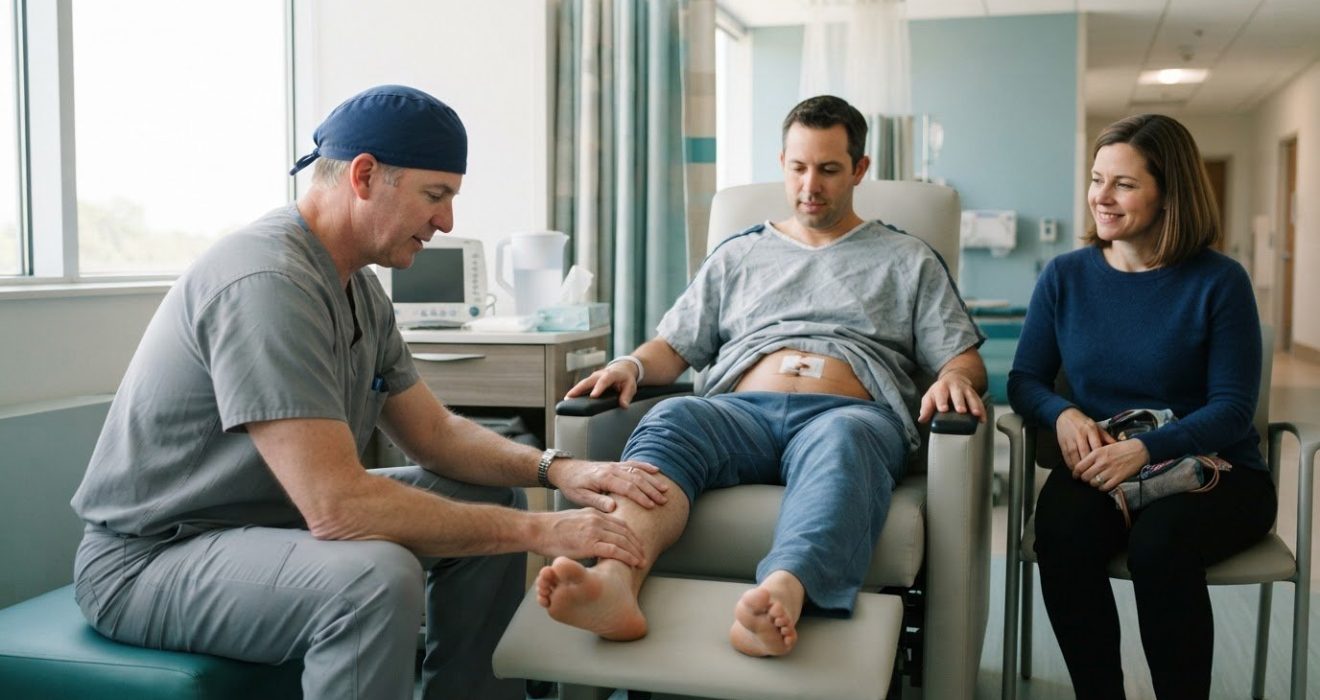
Definition: Minimally Invasive Neurosurgery of Texas, with Dr. Scott Kutz, a board-certified neurosurgeon and Fellow of the AANS and ACS, providing care, offers Minimally Invasive Spine Surgery in Lewisville and Plano, Texas.
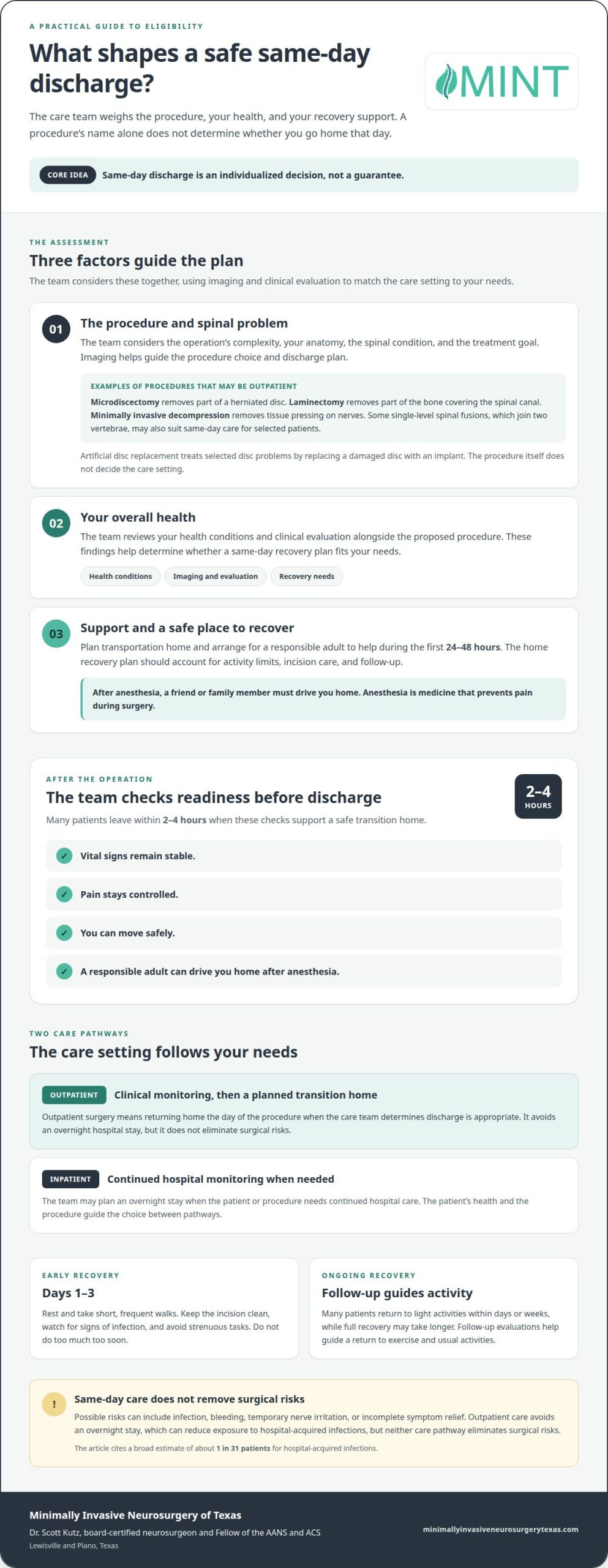
Same-day discharge doesn’t make spine surgery right for every patient. Whether outpatient spine surgery is safe for me depends on the procedure, your overall health, and the support available at home. An individualized assessment helps determine whether going home that day is appropriate for you.
Outpatient surgery means returning home the day of the procedure rather than staying overnight, when the care team determines discharge is appropriate. Eligibility depends on factors such as your health conditions, the complexity of surgery, and whether someone can drive you home and help during recovery. This article explains what outpatient spine surgery involves and how clinicians assess readiness for discharge.
Key Takeaways
- Learn how outpatient spine surgery differs from inpatient care and what returning home the same day involves.
- Understand which minimally invasive procedures may address herniated discs, nerve compression, and related spine conditions.
- See how overall health, surgical complexity, and support at home shape outpatient eligibility.
- Find out what care teams assess before discharge and how recovery planning supports a safer transition home.
- Explore how minimally invasive spine surgery options may fit into a plan for addressing back or spinal symptoms.
What Is Outpatient Spine Surgery?
Outpatient spine surgery allows a patient to return home the same day instead of staying overnight in a hospital. The care team plans this pathway around the procedure, the patient’s health, and the recovery environment.
Infection Exposure and Recovery Pathways
Outpatient care avoids an overnight hospital stay, which can reduce exposure to hospital-acquired infections. A broad estimate places these infections at about 1 in 31 patients. Large national studies report similar or lower complication rates for carefully selected patients having appropriate outpatient procedures. Risks can still include infection, bleeding, temporary nerve irritation, or incomplete symptom relief.
Inpatient care provides continued hospital monitoring when a patient needs it. Outpatient care includes clinical monitoring before discharge and a planned transition home. Neither pathway eliminates surgical risks, so the procedure and the patient’s health are central to choosing between them.
Preoperative Tests and Evaluations
Before surgery, imaging and clinical evaluations help determine whether a patient can follow a same-day discharge plan safely. The care team considers the spinal condition, proposed procedure, overall health, existing medical conditions, and available home support. These findings help match the recovery plan to the patient’s needs.
Preparation also includes planning transportation and a safe place to recover. A responsible adult should help during the first 24-48 hours. Discussing the recovery plan in advance helps clarify activity limits, incision care, and how follow-up will fit into daily routines.
Recovery, Activity, and Follow-Up Care
Recovery combines rest, gradual movement, incision care, and follow-up with the surgical team. During days 1-3, patients generally rest and take short, frequent walks. Walking supports circulation, while avoiding strenuous tasks helps protect recovery. Patients should keep the incision clean and watch for signs of infection.
Mild to moderate discomfort can occur during the first few days. Many patients return to light activities within days or weeks, but full recovery may take longer. Follow-up evaluations guide a return to exercise and usual activities. Avoid doing too much too soon.
When evaluating a surgeon and outpatient center, review the surgeon’s credentials and the center’s accreditation. Discuss procedure-specific risks, monitoring, and discharge planning, including who evaluates readiness to go home and how the team responds to recovery concerns.
Outpatient surgery costs vary by procedure, facility, and insurance plan. Coverage depends on the patient’s plan and its terms, so review benefits and authorization requirements before scheduling.
For example, endoscopic spine surgery may follow an outpatient pathway when the clinical evaluation supports same-day recovery. The team weighs the patient’s health and home support before planning discharge.
Minimally invasive spine procedures
Minimally invasive techniques use smaller surgical openings to reach and treat specific spinal problems. Whether same-day discharge is suitable depends on the procedure, your anatomy, and your health.
Conditions Treated in Outpatient Settings
Outpatient spine procedures may treat herniated discs, nerve compression, and certain forms of spinal instability. A herniated disc occurs when disc material presses on nearby nerves; nerve compression means pressure is affecting a nerve. For some patients, a surgeon may consider outpatient treatment for disc-related pain or sciatica, which can cause pain that travels along a nerve into the leg.
Minimally invasive decompression removes tissue pressing on nerves. A microdiscectomy removes part of a herniated disc, while a laminectomy removes part of the bone covering the spinal canal. Because these procedures address different causes of pressure, imaging and clinical evaluation guide the choice.
Common Same-Day Procedures
Surgeons may perform microdiscectomy, laminectomy, and minimally invasive spinal decompression in outpatient settings. Some single-level spinal fusions, which join two vertebrae, may also be suitable for same-day care, depending on the patient’s health and anatomy. Artificial disc replacement treats selected disc problems by replacing a damaged disc with an implant.
The procedure’s name alone doesn’t determine the care setting. The surgeon considers the operation’s complexity and the patient’s health before planning discharge. For example, a microdiscectomy incision typically measures under an inch, but that detail alone doesn’t establish outpatient eligibility.
The Same-Day Surgery Process
Before outpatient surgery, imaging and clinical evaluations help the team assess whether same-day discharge is suitable. The surgeon selects a procedure based on the spinal condition and treatment goals. For appropriate patients, minimally invasive spine surgery can reduce surgical trauma and may support less pain and a faster recovery.
After the procedure, the team monitors the patient and assesses readiness to go home. Many patients leave within 2-4 hours when their vital signs remain stable, pain stays controlled, and they can move safely. A friend or family member must drive them home after anesthesia, medicine that prevents pain during surgery.
Endoscopic spine surgery uses a small camera to help the surgeon view and treat a spinal problem through a small opening. It may suit selected conditions, but the care team still considers anatomy, health, and recovery needs when choosing the setting.
If you’re discussing minimally invasive options, minimally invasive spine techniques can help frame a conversation about procedure choices and recovery goals. For guidance about your situation, contact the practice.
Is Outpatient Spine Surgery Safe for Me?
Outpatient spine surgery can be safe for appropriately selected patients, but it isn’t suitable for everyone. The decision depends on the planned procedure, overall health, and ability to recover safely at home.
Ask your surgeon how your health and anatomy affect eligibility, what risks apply to your procedure, and how the team will manage anesthesia, medicine that prevents pain during surgery, and pain. Also ask what might lead the team to recommend inpatient care and what support you’ll need after discharge.
Health Factors Affecting Candidacy
Factors include age, overall health, existing medical conditions, and the complexity of the spinal problem. These details help the surgeon assess how well you may tolerate surgery and recover without overnight monitoring.
Severe medical complications, advanced spinal deformities, or complex surgical needs may make inpatient care more appropriate. A hospital can provide prolonged or intensive postoperative monitoring when needed. The surgeon also considers the procedure itself: an outpatient lumbar surgery may suit one patient but not another with different health or anatomy.
Home Support and Eligibility
Home support means having reliable help with transportation and basic recovery needs after outpatient surgery. Because anesthesia, medicine that prevents pain during surgery, can affect alertness and movement, you shouldn’t drive yourself home.
A responsible adult should assist during the first 24-48 hours. The care team considers whether someone can pick you up, stay available, and help you follow recovery instructions. A safe environment also matters: clear walking paths and a place to rest can make early movement easier. Without a driver or home assistance, outpatient surgery may not fit your recovery needs.
Eligibility depends on several factors together, not a single age or diagnosis. A patient with a manageable medical history and a suitable procedure may need a different plan from someone requiring extensive reconstruction or close monitoring. Before choosing a setting, the team weighs clinical evaluations, imaging, expected recovery demands, and home support.
Before deciding, ask how the planned procedure affects your personal risks, what monitoring you’ll receive, and how the team will assess readiness to go home. Clarify who will help you during the first 24-48 hours and what changes could shift the plan to inpatient care. Direct answers help you understand the reasoning behind your recommended setting.
For a personalized discussion of your spine surgery concerns, contact the practice.
Same-day discharge criteria and monitoring
Same-day discharge depends on a patient’s condition after surgery, not just the planned schedule. Before ending facility monitoring, clinicians assess medical stability, comfort, movement, and arrangements for getting home.
Discharge Criteria and Home Support
Discharge criteria are clinical checks that help show whether a patient can continue recovery safely at home. They matter because an overnight hospital stay provides additional observation when recovery needs exceed what outpatient care can support.
Before discharge, the team checks that vital signs remain stable, pain stays controlled, and the patient can move safely. A friend or family member must pick the patient up after anesthesia, medicine that prevents pain and awareness during surgery, and drive them home. A responsible adult should help during the first 24-48 hours, when patients may need support with basic activities.
Safety Monitoring Before Discharge
Safety monitoring tracks a patient’s response to surgery and anesthesia, medicine that prevents pain and awareness during surgery. It helps clinicians identify concerns that require further observation before discharge.
The team evaluates vital signs, pain control, and basic function, including safe movement. Staff also consider whether the patient feels well enough to leave. If you feel too unwell to go home, tell the team so they can assess whether inpatient care is more appropriate than the planned outpatient pathway.
Many patients go home within 2-4 hours after outpatient spine surgery. That timing follows the patient’s progress, not a fixed promise. The care team uses observation to decide whether discharge remains appropriate, even when the procedure itself has finished.
Home readiness is part of the safety plan. You need a ride, an available adult, and an environment that supports rest and careful movement. Clear walking paths and easy access to essentials can reduce unnecessary strain during the first hours at home and help you follow recovery instructions.
Outpatient care can reduce time spent in a hospital, which may also limit exposure to hospital-acquired infections. Leaving the facility sooner does not eliminate surgical risks or replace follow-up care. Understand your recovery instructions, including how to protect the incision and whom to contact about concerning changes.
Overall health continues to shape discharge decisions. A patient with stable vital signs and controlled pain may meet the criteria, while a new concern may call for continued monitoring. The care team bases discharge on the patient’s condition after surgery, not on an assumption that everyone will leave the same day.
Definition of outpatient spine surgery
Outpatient spine surgery describes a care pathway: the patient has an operation and returns home that day without an overnight hospital stay. It describes where recovery begins, not the surgical technique. A microdiscectomy, for example, removes disc material pressing on a spinal nerve, while minimally invasive describes how the surgeon reaches the treatment area.
This distinction matters because a smaller incision doesn’t automatically make a procedure outpatient. The surgeon considers the operation’s complexity, the patient’s overall health, and the recovery plan. Most outpatient spine surgeries take 45 minutes to 2 hours, depending on complexity, but operating time alone doesn’t determine discharge readiness.
Inpatient surgery follows a different recovery pathway, with a hospital stay for continued observation and care. This setting can accommodate patients who need prolonged or intensive monitoring after complex surgery. Outpatient care instead combines observation at the facility with a planned transition to recovery at home.
Comfort matters with either pathway. Anesthesia prevents pain during surgery; some outpatient procedures use local anesthesia, which numbs an area, with sedation, which helps the patient relax. The anesthesia team selects an approach suited to the procedure and patient. Planning also includes managing pain after surgery and explaining what to expect during the first hours of recovery.
Monitoring connects surgery to discharge. After the operation, clinicians assess vital signs, pain control, and safe movement. They also consider whether the patient feels well enough to leave and has a ride home. A friend or family member must drive the patient after anesthesia, and support at home helps with the transition.
Same-day discharge means leaving the surgical facility after clinicians determine the patient meets recovery criteria. It doesn’t mean recovery ends there. The patient continues healing at home, follows incision-care and activity instructions, and attends follow-up evaluation. Short, frequent walks during the first 1-3 days can support circulation, while strenuous activity can disrupt recovery.
The practical distinction is that outpatient care describes the discharge plan, while minimally invasive describes a surgical approach. The setting depends on how the procedure’s demands align with the patient’s health and home environment. Understanding the difference helps make discussions about comfort, monitoring, and recovery more specific.
Contact the practice to discuss how a spine procedure and recovery setting relate to your needs.
Minimally Invasive Neurosurgery of Texas
Minimally Invasive Neurosurgery of Texas helps patients understand spine surgery options and how procedure choice, health, and home support shape recovery planning. The practice focuses on minimally invasive spine surgery, which aims to limit disruption to surrounding tissue. Dr. Scott Kutz, a board-certified neurosurgeon and Fellow of the AANS and ACS, brings specialized spine-care expertise to these discussions.
A consultation can connect a diagnosis, such as a herniated disc or spinal stenosis, meaning narrowing of the spinal canal that can put pressure on nerves, with possible treatment options. Discuss the purpose of surgery, the expected recovery pathway, and whether outpatient care fits your circumstances. Your health, the procedure’s complexity, and support after discharge all matter when considering a same-day plan.
The practice offers Endoscopic Spine Surgery (ESS), which uses a small camera to guide treatment, and Artificial Disc Replacement, which replaces a damaged spinal disc with an implant. These procedures address different clinical needs. A discussion can clarify how Artificial Disc Replacement differs from other spine surgery approaches, including minimally invasive techniques.
Patients can turn to the practice when ongoing back or leg symptoms raise questions about surgical treatment, or when they want to understand whether outpatient care suits their situation. A useful discussion covers the condition, proposed procedure, anesthesia and recovery considerations, and help needed at home. It should also address when inpatient monitoring may better support a patient’s medical needs.
Dr. Kutz’s clinical assessment considers these factors together rather than treating same-day discharge as the goal. A suitable plan accounts for both the spinal condition and a safe recovery setting. Patients in Lewisville and Plano, Texas, can discuss their symptoms, imaging, treatment options, and concerns about returning home after surgery.
For a thoughtful discussion about spine surgery options and outpatient eligibility, contact Minimally Invasive Neurosurgery of Texas.
Take the Next Step Toward a Clearer Plan
Your next step isn’t to choose a surgery setting based on its label. It’s to understand how your diagnosis, treatment options, and recovery needs fit together. If you’re asking, “Is outpatient spine surgery safe for me?” a personalized clinical discussion can help clarify the factors behind that decision.
Minimally Invasive Neurosurgery of Texas offers Minimally Invasive Spine Surgery (MISS) and Endoscopic Spine Surgery (ESS). Artificial Disc Replacement may also be an option for certain spinal conditions. A useful discussion focuses on your symptoms, the purpose of each possible procedure, and what recovery could involve, without assuming one approach suits everyone.
Dr. Scott Kutz and the care team can discuss your spine concerns and explain how surgical options relate to your goals. Bring your questions, including what makes a same-day plan appropriate and when another setting may better support your care.
Contact Minimally Invasive Neurosurgery of Texas to start a conversation about your options. A clear, individualized plan can help you take your next step with greater confidence.
Frequently Asked Questions
Isn’t a hospital safer just in case?
Not automatically. A hospital can provide prolonged or intensive postoperative monitoring when a patient’s medical complexity or surgical needs call for it. Large national studies found similar or lower complication rates for carefully selected patients having appropriate outpatient procedures compared with hospital-based procedures. The key question is whether your health, planned operation, and recovery needs call for continued hospital observation.
Does a microdiscectomy require a hospital stay?
A microdiscectomy doesn’t automatically require an overnight hospital stay. The care team considers your health, anatomy, procedure, and recovery after surgery when planning discharge. A hospital stay may be more appropriate for patients with severe medical complications, complex surgical needs, or a need for extended monitoring. Ask what findings could change the planned setting so you understand how the team would respond to your recovery.
What if I feel too unwell to go home the same day?
Tell the care team before leaving if you feel too unwell to go home. You may request inpatient care after a planned outpatient procedure, and the team can assess your condition and need for continued observation. Discharge depends on your recovery, not just the original schedule. Make sure your ride and support person know the plan may change if you need more care.
What if something goes wrong after I get home?
Follow your postoperative instructions for recognizing concerns and contacting your care team. For example, keep the incision clean and watch for signs of infection as directed. If a symptom worries you or worsens, follow the care team’s instructions for getting help rather than waiting for a routine follow-up. Your discharge plan should explain whom to contact and what to do if your recovery changes at home.
Will I be in too much pain to manage at home?
Pain varies, and patients commonly experience mild to moderate discomfort during the first few days. Before discharge, clinicians assess pain control alongside movement and overall recovery. Ask the care team about the pain-management plan for your procedure and how to follow it at home. Also clarify what to do if pain remains difficult to manage or interferes with basic movement.
Who is a good candidate for outpatient spine surgery?
A suitable candidate has a procedure and health profile that support recovery without an overnight stay, along with reliable help at home. Clinicians consider age, general health, existing conditions, spinal anatomy, and surgical complexity. A responsible adult should help during the first 24-48 hours. The team also weighs whether the patient can get home safely and manage the recovery environment.
What medical conditions make outpatient spine surgery unsafe?
No single diagnosis automatically determines the care setting. Severe medical complications may make inpatient care more appropriate, especially when prolonged or intensive monitoring is needed. Advanced spinal deformities and complex surgical needs can also affect eligibility. The care team considers how the condition affects the planned procedure and recovery, rather than relying on a diagnosis name alone.
Which spine procedures can surgeons safely perform as outpatient surgery?
Depending on the patient and procedure, outpatient options may include microdiscectomy, laminectomy, minimally invasive spinal decompression, and some single-level spinal fusions. Artificial Disc Replacement may also take place in an outpatient setting when clinical evaluation supports it. The procedure’s name alone doesn’t establish eligibility. Clinicians weigh the patient’s health, anatomy, surgical needs, and recovery plan when selecting the setting.