Image sourced from Canva
Why Many Patients Seek Herniated Disc Treatment Without Fusion
Patients dealing with herniated disc pain often reach a crossroads where conservative care alone is no longer enough, and they begin exploring their surgical options. Many of those patients specifically want to know whether herniated disc treatment without fusion Lewisville TX is a viable path, and in most cases, the answer is yes. Fusion surgery is a valuable tool for certain spinal conditions, but it permanently alters the mechanics of the spine and carries a longer recovery than non-fusion alternatives. Today’s minimally invasive techniques enable providers to address disc problems precisely without locking vertebrae together or sacrificing natural spinal motion. Understanding these options before committing to a surgical plan puts patients in a far better position to make informed decisions about their care.
What Is a Herniated Disc and Why Does It Cause Pain
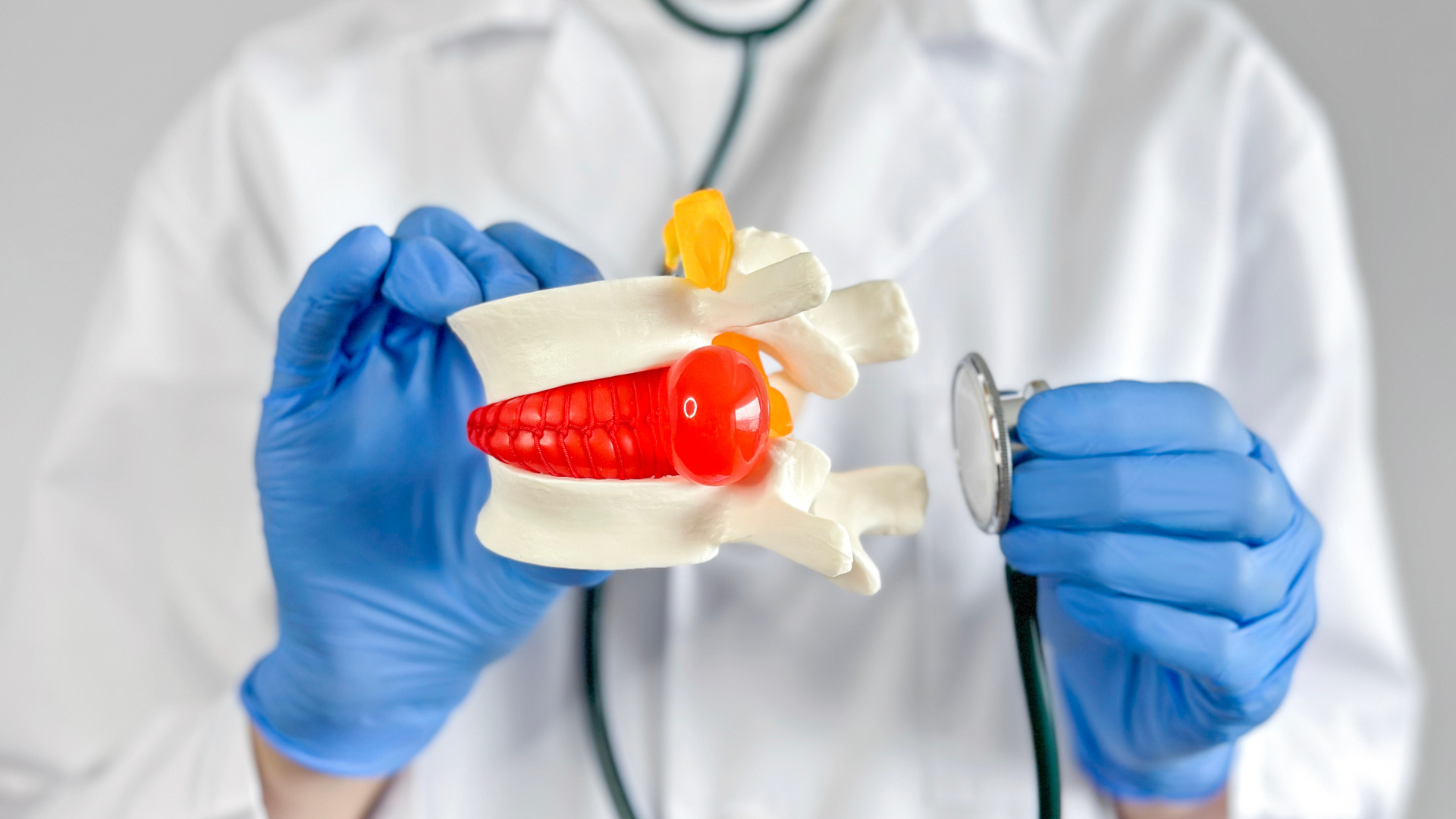
A herniated disc occurs when the soft inner material of a spinal disc pushes through a crack in its tough outer layer and puts pressure on a nearby nerve root or the spinal cord itself. This pressure produces a range of symptoms, including sharp, radiating pain, burning sensations, numbness, and muscle weakness that may travel down the arm or leg, depending on where the herniation is located. The lumbar spine and cervical spine are the most commonly affected regions, and symptoms can range from intermittently annoying to severely disabling when left untreated. Many patients searching for herniated disc treatment without fusion Lewisville TX have already tried rest, medication, injections, or physical therapy and now need a more direct and lasting solution. Understanding the anatomy of the problem helps patients and providers align on the most appropriate treatment strategy.
Not every herniated disc requires the same level of intervention, and a careful evaluation is essential before any treatment plan is recommended. Some herniations respond well to targeted non-surgical care, while others benefit from minimally invasive procedures that remove or reposition the disc material causing nerve compression. A qualified herniated disc specialist Lewisville TX evaluates imaging results, symptom severity, and how long the condition has persisted before making any specific recommendation. This comprehensive assessment process ensures that patients receive the appropriate level of care for their specific diagnosis rather than defaulting to the most aggressive option available. Patients who work with an experienced specialist from the beginning tend to reach the most effective treatment decision more quickly and with greater confidence in the outcome.
How Does Herniated Disc Treatment Without Fusion Lewisville TX Work?
Herniated disc treatment without fusion Lewisville TX works by targeting the source of nerve compression directly without altering the structural relationship between the surrounding vertebrae. This is the essential distinction between fusion and non-fusion approaches: fusion joins vertebrae together to create stability, while non-fusion treatment addresses the disc itself and relieves pressure on the nerve without changing the spinal architecture. Procedures such as endoscopic discectomy, microdiscectomy, and targeted nerve decompression remove or reduce the herniated disc material causing irritation while leaving the adjacent vertebrae completely undisturbed. This preserves the natural motion at that spinal segment, which matters for both function and the long-term health of the spine above and below the treated level. Patients who qualify for non-fusion care avoid the more demanding recovery that fusion procedures typically require.
A study published in the Journal of Spinal Disorders and Techniques evaluated outcomes in 100 patients with lumbar disc herniation and found that 67% experienced significant improvement in symptoms and returned to work without requiring surgery when appropriate conservative care was applied, while patients who did pursue minimally invasive non-fusion intervention achieved similar functional gains with faster recovery times than traditional surgical approaches. This data confirms the value of staged, targeted non-fusion herniated disc relief Lewisville TX strategies when applied appropriately based on diagnosis and symptom severity. Whether the path involves conservative management or a precise, minimally invasive procedure, avoiding unnecessary fusion preserves more of the spine’s natural function and positions patients for better long-term outcomes. Minimally invasive disc treatment Lewisville TX achieves this balance between precision and preservation, making it a preferred approach for both patients and experienced spine surgeons.
What Non-Fusion Treatment Options Are Available for Herniated Discs
Patients with herniated discs have access to a range of effective non-fusion options, and the right choice depends on their specific diagnosis and how long symptoms have been present. Conservative treatments such as targeted physical therapy, anti-inflammatory medications, and epidural steroid injections are typically the first line of intervention and produce meaningful relief for patients with mild to moderate symptoms. When these approaches do not provide adequate or lasting improvement, minimally invasive surgical options become the appropriate next step. Herniated disc treatment without fusion Lewisville TX at the surgical level most commonly involves endoscopic discectomy, a procedure where a tiny camera and specialized instruments are used to remove the herniated disc material through an incision smaller than half an inch. This targeted approach relieves nerve pressure with exceptional precision and does not require any adjacent vertebrae to be joined or stabilized.
Microdiscectomy is another widely used non-fusion procedure that removes the problematic disc fragment through a small, minimally invasive opening, allowing direct decompression of the affected nerve with minimal disruption of surrounding tissue. Both endoscopic and microscopic techniques enable surgeons to work with high precision while protecting the muscles, ligaments, and bone that support the spine’s normal function. Minimally invasive disc treatment Lewisville TX, using these methods typically involves a shorter hospital stay, faster return to daily life, and less post-operative discomfort than open fusion surgery. A qualified herniated disc specialist Lewisville TX determines which specific approach aligns best with the herniation’s location, the patient’s anatomy, and the degree of nerve involvement present on imaging. Choosing the most precisely matched procedure from the start sets patients on the fastest and most sustainable path toward lasting relief.
Who Makes a Good Candidate for Non-Fusion Herniated Disc Treatment
Most patients with a herniated disc qualify for some form of non-fusion treatment, making it the most common first approach to surgical disc care. Patients who experience arm or leg pain caused by nerve compression from a disc herniation but do not show significant structural instability in the spine are typically strong candidates for herniated disc treatment without fusion Lewisville TX. Spinal instability, defined as abnormal movement between adjacent vertebrae, is one of the primary clinical reasons fusion may be recommended over a targeted decompression procedure. When the herniation exists without instability, removing the offending disc material is usually sufficient to relieve symptoms and restore meaningful function. Patients with clearly defined single-level herniations and confirmed nerve compression on MRI often see the most dramatic improvements from minimally invasive non-fusion approaches.
Overall health, age, and the duration of symptoms also play a role in candidacy decisions for non-fusion herniated disc relief Lewisville TX. Patients who have experienced persistent symptoms for several months without adequate relief from conservative care may benefit from moving forward with a minimally invasive procedure rather than continuing to delay treatment. Non-fusion approaches also appeal to patients who want to preserve spinal motion and avoid the extended recovery associated with fusion surgery, and those preferences are entirely valid clinical considerations. Your herniated disc specialist Lewisville TX will review all relevant factors during a detailed consultation to determine whether a non-fusion approach is the most appropriate fit for your diagnosis and goals. The objective is always to choose the most targeted and least invasive option that will produce the most meaningful and durable results.
Why Minimally Invasive Neurosurgery of Texas Leads Non-Fusion Disc Care
Minimally Invasive Neurosurgery of Texas has built a reputation for helping patients find lasting relief from herniated disc pain without resorting to unnecessary fusion surgery. Their approach prioritizes preserving spinal motion, minimizing surgical impact, and returning patients to their daily lives as efficiently as possible. Every patient at Minimally Invasive Neurosurgery of Texas receives a thorough evaluation that incorporates their full medical history, imaging findings, prior treatment history, and symptom timeline before any treatment recommendation is made. This careful process ensures that herniated disc treatment without fusion Lewisville TX is recommended only when it is genuinely the best path forward, and fusion is only introduced when it is truly indicated by the clinical picture. The result is a care model that prioritizes long-term patient health over procedural convenience.
Dr. Scott C. Kutz, MD brings specialized expertise in advanced minimally invasive techniques that allow precise disc treatment with minimal disruption to the spine’s surrounding structures. His experience in minimally invasive disc treatment Lewisville TX covers a full range of non-fusion approaches, from endoscopic discectomy to targeted decompression procedures suited to a variety of disc-related conditions. Patients at Minimally Invasive Neurosurgery of Texas benefit from that expertise at every stage of care, from diagnosis and treatment selection through surgery and recovery follow-up. The team’s commitment to clear communication means patients always understand their diagnosis, their available options, and what to expect from the treatment path they choose. If you are living with herniated disc pain and want to explore what targeted non-fusion care can accomplish, Minimally Invasive Neurosurgery of Texas offers the expertise and commitment to deliver herniated disc treatment without fusion Lewisville TX, with real and lasting results.
Frequently Asked Questions
What is herniated disc treatment without fusion in Lewisville TX?
Herniated disc treatment without fusion addresses disc herniation using targeted techniques that relieve nerve compression without joining vertebrae together. Options include physical therapy, epidural steroid injections, endoscopic discectomy, and microdiscectomy. These approaches remove or reduce herniated disc material while preserving natural spinal motion. A spine specialist evaluates your imaging and symptom severity to determine which option fits your diagnosis.
How do I know whether I need herniated disc treatment or spinal fusion in Lewisville TX?
If your herniated disc does not involve significant spinal instability, a non-fusion procedure is typically the preferred approach. Fusion is generally recommended when vertebrae move abnormally or when structural instability accompanies the disc problem. A qualified herniated disc specialist reviews your imaging, symptoms, and prior treatment history to determine the most targeted and appropriate course of action for your condition.
How quickly can I recover from minimally invasive disc treatment in Lewisville TX?
Recovery from minimally invasive non-fusion disc procedures is generally much faster than recovery from open fusion surgery. Most patients return to light daily activities within 1 to 2 weeks and resume more demanding activities within 4 to 6 weeks, depending on the procedure performed. Your care team at Minimally Invasive Neurosurgery of Texas will outline a specific recovery plan tailored to your procedure and overall health at the time of your consultation.