What if the greatest risk to your mobility isn’t the procedure itself, but the outdated myths keeping you trapped in chronic pain? You’ve likely heard the horror stories of grueling recoveries and permanent stiffness. Perhaps you’re currently struggling with the sharp, relentless pull of sciatica that makes every step a challenge, or you’re feeling overwhelmed by conflicting medical advice. It is natural to feel anxious about the long-term impact of back surgery when traditional methods once seemed so invasive and uncertain.
Modern spine care has evolved far beyond these outdated misconceptions. Today, it’s a precision-engineered path to recovery rather than a desperate last resort. This 2026 guide reveals how minimally invasive neurosurgery techniques and advanced technological systems are turning once-complex operations into streamlined, patient-centered solutions. You’ll learn why procedures like endoscopic spine surgery and artificial disc replacement provide lasting relief while preserving your natural movement. We will explore the specific clinical advancements that allow patients to avoid the trauma of major “open” surgery and quickly return to their normal daily activities with absolute confidence.
Key Takeaways
- Understand why modern back surgery is now a proactive choice to prevent permanent nerve atrophy rather than a risky last resort.
- Discover how muscle-sparing, minimally invasive techniques eliminate the need for traditional large incisions and reduce physical impact.
- Explore motion-preserving alternatives to spinal fusion that protect your long-term mobility and the health of neighboring discs.
- Learn why early mobilization is the new standard for recovery, allowing many patients to begin walking the same day as their procedure.
- Gain clarity on how to select a specialist who combines board-certified neurosurgical expertise with the latest high-tech surgical innovations.
Debunking the ‘Last Resort’ Myth: When Back Surgery is the Proactive Choice
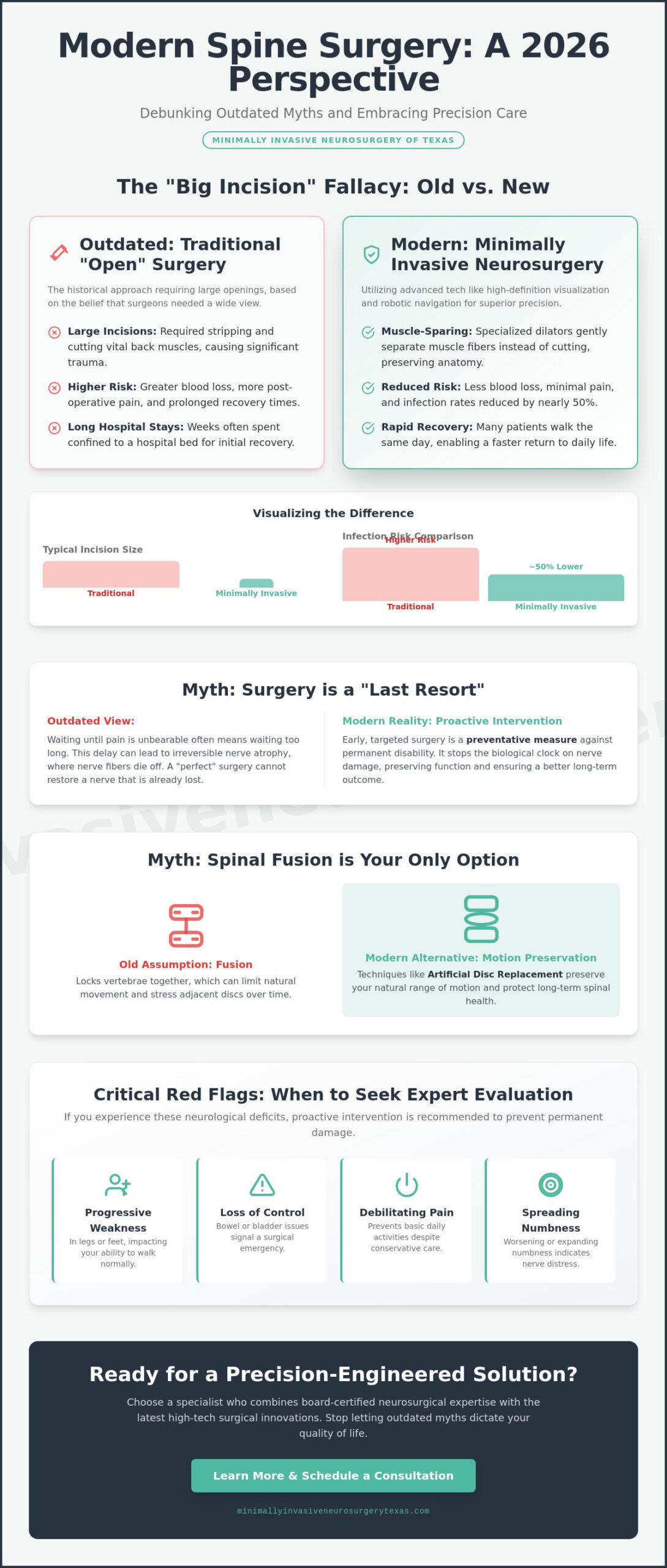
Many patients view back surgery as a gamble of last resort, a final option only to be considered when every other treatment has failed. This perspective is outdated and can be dangerous. In 2026, the clinical focus has shifted from salvage surgery to functional restoration. Waiting until the point of total physical collapse often leads to irreversible nerve atrophy. When a nerve is compressed for too long, the damage becomes permanent. A perfect surgical procedure cannot restore lost function if the nerve fibers have already died. Proactive intervention is often the most compassionate path to preserving your quality of life.
Identifying red flags is essential for a successful outcome. Surgery becomes a primary recommendation rather than a last resort when you experience specific neurological deficits:
- Progressive muscle weakness in the legs or feet that impacts your gait.
- Loss of bowel or bladder control, which indicates a surgical emergency.
- Pain that prevents basic daily movement despite consistent conservative care.
- Numbness that spreads or worsens, signaling advancing nerve distress.
Early intervention using minimally invasive neurosurgery prevents the cycle of chronic inflammation. It significantly reduces the risk of failed back syndrome, which often stems from waiting so long that the body’s compensatory mechanisms cause secondary issues in the spine.
The Danger of Chronic Nerve Compression
A compressed nerve root operates on a biological clock. Every day of severe impingement increases the risk of permanent muscle wasting. While physical therapy is a vital tool for muscular health, it cannot mechanically move a bone spur or a ruptured disc away from a sensitive nerve. Nerve decompression serves as a critical preventative measure against permanent disability. Choosing a precise, targeted procedure early can stop the clock on nerve damage before the window for full recovery closes. Patients experiencing radiating leg pain should consult with sciatica specialists who understand the delicate architecture of the nervous system to ensure timely and accurate intervention.
Modern Diagnostics vs. Traditional Guesses
Precise outcomes depend on precise planning. In Plano, advanced imaging allows us to move beyond broad labels like general back pain to identify target-specific structural issues. We use diagnostic injections to confirm the exact pain generator with absolute certainty. This transitions the patient journey from guesswork to a results-oriented plan. By identifying the specific structural cause, your back surgery becomes a precision-engineered solution designed for immediate relief and a rapid return to normal activity.
The ‘Big Incision’ Fallacy: Why Minimally Invasive Techniques Outperform Traditional Open Surgery
Traditional back surgery often evokes images of long, deep scars and weeks spent confined to a hospital bed. This is the “Big Incision” fallacy. For decades, the prevailing belief was that a surgeon needed a large opening to “see everything” clearly. Modern innovation has proved the opposite. Large incisions require stripping vital muscles away from the spine, which often results in significant trauma and prolonged recovery times. Today, we utilize high-definition visualization and robotic navigation to achieve superior results through openings no larger than a postage stamp.
By utilizing minimally invasive spine techniques, we prioritize the preservation of your natural anatomy. Specialized dilators gently move muscle fibers aside rather than cutting them. This approach maintains the structural integrity of your back. Clinical data indicates that these refined methods can reduce infection rates by nearly 50 percent compared to traditional open procedures. Smaller incisions mean less blood loss, less post-operative pain, and a significantly lower risk of complications. If you are ready to explore a more precise path to relief, consider how minimally invasive neurosurgery can help you reclaim your lifestyle.
Muscle Sparing vs. Muscle Cutting
In traditional open surgery, surgeons must detach muscles from the bone to access the spine. This “stripping” process is often the primary cause of post-surgical pain and long-term weakness. In contrast, muscle-sparing techniques use a series of small tubes to create a narrow corridor to the surgical site. We split the muscle fibers along their natural planes. This preservation leads to faster healing and ensures that your spinal stability remains intact, supporting a quicker return to normal activity.
Endoscopic Spine Surgery: The Ultra-Minimally Invasive Option
Endoscopic procedures represent the absolute forefront of surgical precision. By using a tiny camera called an endoscope, we can view the spinal structures in immense detail through a “keyhole” incision. This level of clarity allows for millimeter-level accuracy when removing a herniated disc or decompressing a nerve. In Lewisville, these procedures are frequently performed on an outpatient basis. Many patients even avoid the risks of general anesthesia, opting for conscious sedation that allows for a safer, more comfortable experience and a rapid return home the same day.
Myth: Spinal Fusion is Your Only Option for Chronic Pain
For years, many patients believed that back surgery inevitably meant fusing vertebrae together. This traditional view of “immobilization” as the only solution for instability often caused anxiety about losing flexibility. While spinal fusion has its place, the clinical landscape of 2026 focuses on motion preservation. We now distinguish between stabilization, which supports the spine, and immobilization, which stops movement entirely. Modern techniques prioritize keeping you moving while addressing the structural cause of your pain.
The primary concern with traditional fusion is “Adjacent Segment Disease.” When one level of the spine is fused, the discs above and below must work harder to compensate for the lost range of motion. This extra stress can lead to secondary issues later in life. By opting for motion-preserving alternatives, we protect the long-term health of your entire spine. Patients undergoing Artificial Disc Replacement typically experience a significantly faster return to physical activity compared to those recovering from traditional fusion procedures.
Artificial Disc Replacement (ADR) Explained
Artificial Disc Replacement is a sophisticated alternative designed to mimic the natural function of a healthy spinal disc. Whether you are seeking neck disk replacement or a lumbar solution, the goal is the same: restore disc height and maintain flexibility. ADR utilizes medical-grade materials that allow for bending, twisting, and shock absorption. This approach is ideal for patients with degenerative disc disease who still have healthy facet joints and want to avoid the mobility limitations of a fusion.
When Minimally Invasive Spinal Fusion Texas is the Right Choice
There are specific clinical scenarios where fusion remains the gold standard for patient safety. Conditions like high-grade spondylolisthesis, where one vertebra has slipped significantly over another, require the absolute stability that only Minimally Invasive Spinal Fusion Texas can provide. However, 2026 standards have refined this procedure. We use robotic navigation and specialized clinical systems to place hardware through tiny incisions. This high-tech precision ensures the spine is stabilized without the extensive tissue damage associated with older methods. It’s a results-oriented approach that dispels the myth that fusion must result in permanent stiffness; instead, it provides a stable foundation for a return to normal activity.
Misconceptions About Recovery: Returning to Life Faster Than You Think
The idea that back surgery requires six months of bed rest is a relic of the past. In 2026, we prioritize early mobilization to ensure the best clinical outcomes for our patients. Long periods of inactivity actually hinder recovery by allowing muscles to stiffen and increasing the risk of vascular complications. With modern, muscle-sparing techniques, most patients are encouraged to stand and walk within hours of their procedure. This active approach is a cornerstone of our results-oriented care model, designed to get you back on your feet quickly.
Because we avoid large incisions and extensive muscle stripping, the physical impact on your body is significantly reduced. This precision leads to a dramatic decrease in the need for long-term opioid use. Many patients find that over-the-counter anti-inflammatories are sufficient for managing post-operative discomfort after the first few days. Our goal is always to provide long-term pain relief without the burden of heavy medication. If you’re ready to start your journey toward recovery, contact our specialized surgical center to discuss your options.
The First 48 Hours: What to Expect
Immediately following your procedure, you may feel minor soreness at the incision site. This is distinct from the radiating nerve pain or sciatica that likely brought you to our clinic. Patients often report that their “old pain” is gone the moment they wake up. In Lewisville, many of our procedures are performed in an outpatient setting, allowing you to recover in the comfort of your own home. We will guide you through basic movements, such as “log rolling” to get out of bed, which protects your spine while it begins to heal.
The Path Back to Athletics and Work
Your return to professional life depends largely on the physical demands of your job. Patients with sedentary desk roles often return to work within one to two weeks. Those in physically demanding positions may require four to six weeks before resuming heavy lifting or strenuous labor. While our surgical intervention addresses the structural issue, we often recommend working with specialized physical therapists to rebuild core strength and flexibility. The average time to achieve a full return to normal activity after an endoscopic procedure is typically less than one month.
Choosing the Right Specialist in Plano and Lewisville: Precision Over Generalization
Selecting the right surgeon for your back surgery is a high-stakes decision that defines your recovery trajectory. While many medical professionals address spinal issues, a board-certified neurosurgeon like Dr. Scott Kutz possesses specialized training in the delicate neural structures that generalists may lack. This distinction is critical when dealing with the intricate pathways of the spinal cord and nerve roots. For patients suffering from nerve-related conditions, working with dedicated sciatica specialists in Plano and Lewisville ensures that the root cause of radiating pain is addressed with surgical precision rather than temporary symptom management. At MINT, we embrace the “High-Tech Healer” persona. We combine the absolute precision of robotic technology with a warm, patient-centered approach that prioritizes your individual quality of life. This balance ensures you aren’t just another case number in a massive system.
Opting for a boutique surgical practice offers significant advantages over large, impersonal hospital systems. In a specialized center, the focus remains entirely on your specific diagnostic journey and clinical outcome. We avoid the cold, bureaucratic environment of major hospitals to provide personal attention and streamlined communication. Dr. Scott Kutz is deeply committed to muscle-sparing techniques, ensuring that every procedure is as minimally invasive as possible. This dedication to precision-engineered care is why patients across North Texas trust us to facilitate their return to normal activity with confidence.
Technology at the Forefront: Globus Excelsius and Augmedics
Precision in modern spine care is driven by proprietary technological systems that eliminate guesswork. We utilize the Globus Excelsius robotic navigation platform, which increases hardware placement accuracy to near 100 percent. This level of reliability is a hallmark of our practice. Furthermore, our use of Augmedics Augmented Reality (AR) provides the surgeon with a “digital map” of your spine visualized directly through the skin. Plano residents seek out MINT because these high-tech systems allow for smaller incisions, less tissue disruption, and superior surgical results that traditional methods simply cannot match.
Your Diagnostic Journey at MINT
Your first visit to our Lewisville or Plano clinics is the beginning of a results-oriented partnership. We move beyond broad descriptions of pain to identify the exact structural generator of your discomfort through advanced imaging and targeted evaluations. This process is designed to replace anxiety with a clear, authoritative plan for recovery. We provide the emotional support and clinical expertise necessary to move you from chronic suffering to a state of physical progress. Your health is our top priority. Take the first step toward a pain-free life today by scheduling a consultation to evaluate your specific back surgery needs.
Reclaiming Your Future with Precision Spine Care
Modern spine care has moved past the era of large incisions and long hospital stays. You’ve learned how proactive intervention prevents permanent nerve damage and how motion-preserving technology protects your long-term mobility. Choosing the right path for back surgery is about embracing precision over traditional, more invasive methods. Our outpatient-focused approach ensures that recovery is measured in days rather than months; this allows you to return to normal activity with confidence.
At MINT, we combine the expertise of a board-certified neurosurgeon with the absolute accuracy of the Globus Excelsius Robotic Navigation system. This high-tech foundation allows us to deliver specialized care that is both safe and effective. Don’t let outdated fears dictate your physical future. Schedule Your Consultation with Dr. Scott Kutz at MINT Today and discover how our specialized clinical systems can restore your quality of life. Relief is within reach, and a more active, pain-free lifestyle is waiting for you.
Frequently Asked Questions
Is back surgery considered a major operation in 2026?
Modern minimally invasive techniques have redefined the traditional definition of major surgery. While these procedures still require high-level surgical expertise, the physical impact on your body is significantly reduced compared to traditional open methods. We utilize specialized clinical systems that prioritize muscle preservation, which results in less blood loss and a much faster recovery timeline for the patient.
What is the success rate of minimally invasive back surgery?
Success rates for back surgery using minimally invasive techniques are exceptionally high, often exceeding 90 percent for conditions like lumbar disc herniation. we define success as a significant reduction in pain and a full return to daily activities without heavy reliance on medication. These outcomes are supported by robotic navigation systems that ensure millimeter-level precision during every step of the procedure.
Can I have back surgery if I’ve already had a failed procedure elsewhere?
Revision surgery is a common focus at our practice for patients who have experienced “failed back syndrome” from procedures performed elsewhere. We use advanced diagnostic imaging to identify why the initial surgery didn’t provide relief, such as missed pathology or adjacent segment disease. Our specialized neurosurgical approach allows us to address these complex issues with targeted solutions that prioritize long-term stability.
How long do I have to stay in the hospital after a minimally invasive procedure?
Most minimally invasive procedures are performed on an outpatient basis, meaning you can return home the same day. For more complex cases, such as a multi-level artificial disc replacement, a 23-hour observation stay might be required. This streamlined approach is possible because our muscle-sparing techniques minimize the post-operative recovery needs typically associated with traditional hospital admissions.
Will I need to wear a back brace after my surgery?
Most patients undergoing minimally invasive spine surgery don’t require a rigid back brace. Because we preserve the muscles and ligaments that support the spine, your body maintains its natural stability throughout the healing process. In specific cases involving a multi-level fusion, we might recommend a soft support for comfort during the first few weeks, but early mobilization remains our primary goal.
How do I know if my back pain is serious enough for surgery?
Surgery is typically recommended when back pain is accompanied by neurological deficits like leg weakness, numbness, or loss of coordination. If conservative treatments have failed to improve your quality of life after six to twelve weeks, it’s time for a specialized evaluation. We look for structural issues that can only be resolved through mechanical decompression to prevent permanent nerve damage. Understanding when to see a spine surgeon for back pain can help you recognize the critical neurological red flags that signal it’s time to transition from general care to a specialized perspective.
What are the risks of ignoring a herniated disc that is causing leg numbness?
Ignoring persistent leg numbness or “foot drop” can lead to permanent nerve atrophy and irreversible muscle weakness. When a nerve is compressed, its blood supply is restricted, which starts a biological clock toward cell death. Timely back surgery to decompress the nerve is often the only way to stop this progression and ensure you regain full sensory and motor function.
Does insurance typically cover minimally invasive spine techniques?
Most major insurance providers cover minimally invasive spine procedures when they are deemed medically necessary. Because these techniques often lead to shorter hospital stays and fewer complications, they’re widely recognized as a standard of care. Our administrative team works directly with your provider to verify coverage and ensure you understand your benefits before moving forward with any surgical plan.