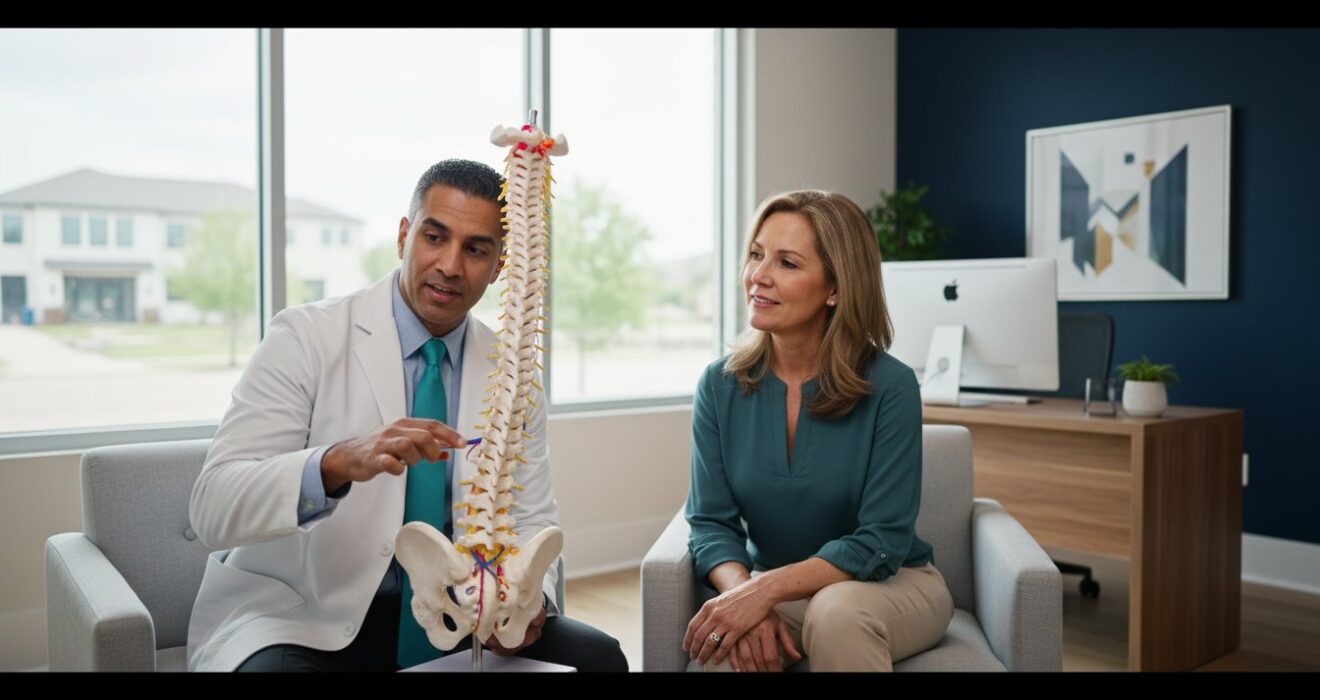
If sciatica is fundamentally a nerve compression issue, why settle for treatments that only mask the surface symptoms? You’ve likely felt the frustration of radiating leg pain that steals your sleep or a sudden weakness in your foot that makes daily movement feel impossible. Many patients in Plano and Lewisville find themselves stuck in a cycle of temporary fixes like steroid injections; this is particularly challenging now that 2026 Texas Medicare regulations require more rigorous prior authorizations for these procedures. It’s common to feel discouraged when statistics show that 20 to 30 percent of sciatica cases recur within just one year.
Finding the right sciatica specialists means looking beyond general care to the experts who understand the delicate architecture of the nervous system. A board-certified neurosurgeon provides the surgical precision necessary to address the herniated discs that cause 90 percent of all sciatica cases. In this article, you’ll discover how minimally invasive neurosurgery offers a definitive path toward nerve decompression. We’ll explain how advanced techniques lead to permanent relief and a return to your normal daily activities without the burden of heavy medication or the risks of traditional back surgery.
Key Takeaways
- Understand why a neurosurgeon’s specific expertise in delicate nerve structures provides a superior path for resolving chronic compression.
- Discover how top-tier sciatica specialists use microscopic visualization to achieve precision during decompression procedures.
- Compare the outcomes of traditional back surgery against the benefits of minimally invasive neurosurgery, such as reduced muscle trauma and quicker recovery timelines.
- Learn what’s required for a comprehensive consultation, from reviewing your imaging to performing a detailed physical examination of your reflexes and strength.
- Gain insight into the “Small Incision, Big Results” philosophy that prioritizes your return to normal activity through advanced surgical innovation.
Identifying the Right Sciatica Specialist for Your Persistent Pain
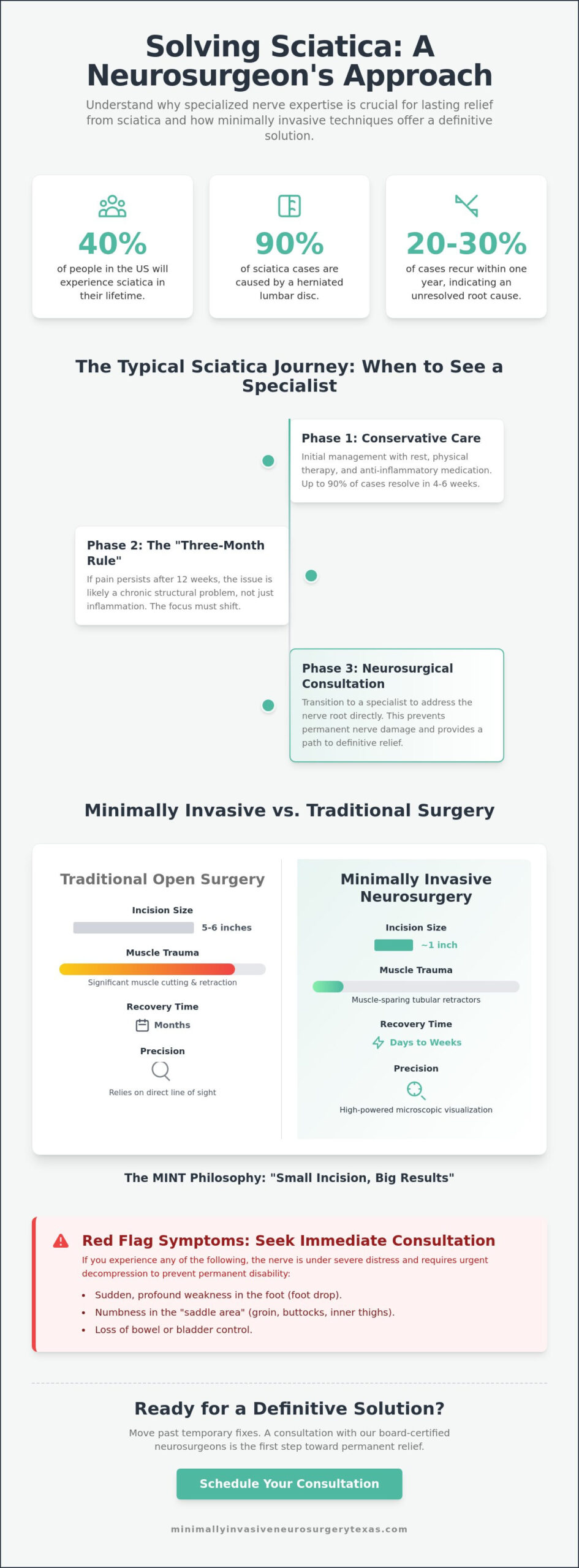
Approximately 40% of people in the United States will experience the sharp, electric shock of sciatica at some point in their lives. While many cases are acute and resolve with rest, understanding What is sciatica? is the first step in determining if your pain is a temporary flare-up or a sign of chronic nerve compression. Most initial episodes are managed by primary care physicians or physical therapists through anti-inflammatory protocols. However, when the pain persists, you need to consult sciatica specialists who can differentiate between simple inflammation and a structural issue like a herniated lumbar disc, which causes 90% of all cases.
Choosing to “wait and see” for too long isn’t just uncomfortable; it’s potentially dangerous for your long-term mobility. Chronic compression can lead to permanent nerve damage that no longer responds to treatment. You must seek immediate surgical consultation if you experience “red flag” symptoms. these include sudden, profound weakness in the foot (foot drop), numbness in the saddle area, or any loss of bowel and bladder control. These signs indicate that the nerve is under severe distress and requires urgent decompression to prevent lifelong disability.
When Conservative Treatment Fails
Standard conservative management resolves 80% to 90% of cases within four to six weeks. We typically follow a “three-month rule” for persistent radiculopathy. If you haven’t seen significant improvement after 12 weeks of physical therapy and medication, the condition has likely transitioned from an acute episode to a chronic structural problem. At this point, the focus must shift from managing symptoms to decompressing the nerve root. Transitioning to a neurosurgical consultation ensures you are exploring the least invasive surgical path before the nerve sustains irreversible injury. Understanding when to see a spine surgeon for back pain can help you recognize the critical milestones that signal it’s time to move beyond general care.
The Landscape of Sciatica Care in North Texas
Residents in Plano and Lewisville have access to various healthcare providers, but a multidisciplinary approach is only effective when it begins with a precise diagnosis. At Minimally Invasive Neurosurgery of Texas (MINT), we coordinate closely with your existing care team to ensure a seamless transition from primary care to specialized intervention. Our role as sciatica specialists is to provide the advanced imaging review and microscopic expertise that general practitioners might overlook. By focusing on the structural root of the problem, we help patients move past the cycle of temporary injections and toward a certain return to normal activity.
Why Neurosurgeons are the Ultimate Sciatica Specialists
Neurosurgeons are the ultimate sciatica specialists because their entire medical training centers on the delicate interaction between the spine and the nervous system. While both orthopedic surgeons and neurosurgeons perform spine surgery, a neurosurgeon’s primary objective is the preservation and decompression of nerve function. This specialized focus is critical when addressing the root causes of sciatic pain, where microscopic precision is the standard of care. It’s not just about the bone; it’s about the nerve. Dr. Scott Kutz treats complex nerve root issues by combining this traditional expertise with modern technological systems to ensure the highest level of safety.
Microscopic visualization is a hallmark of the neurosurgical approach. By using high-powered surgical microscopes, neurosurgeons can see the nerve roots and surrounding blood vessels with incredible clarity. This allows for the removal of even the smallest disc fragments that may be causing significant pain. This level of detail distinguishes a specialized surgical center from a general hospital setting, providing patients with the confidence that their recovery is in the hands of a master of cutting-edge technology.
The Anatomy of Nerve Decompression
Freeing a trapped nerve requires navigating the neural foramen, the narrow passageways where nerve roots exit the spinal column. Neural foraminal stenosis is a primary cause of sciatica characterized by the narrowing of these bone openings, which puts direct pressure on the nerve. Neurosurgeons use microdiscectomy and laminectomy to carefully widen these spaces. By focusing on the nerve’s path rather than just the bone structure, they ensure a more comprehensive resolution of symptoms. This approach minimizes the risk of recurring pain and supports a certain return to normal activity.
Advanced Diagnostic Accuracy
Effective treatment begins with an expert interpretation of your imaging. An MRI might show several abnormalities, but only a board-certified neurosurgeon can determine which specific level is generating your pain. They also look for “mimic” conditions, such as SI joint dysfunction, which can produce symptoms nearly identical to sciatica but require different sciatica treatment options. If you’ve received conflicting advice, a second opinion at a specialized center like Minimally Invasive Neurosurgery of Texas provides the clinical clarity you need to move forward with confidence. Understanding the nuances of your anatomy is the first step toward a permanent recovery.
Minimally Invasive vs. Traditional Surgery: A Sciatica Case Study
To understand the clinical superiority of modern neurosurgery, consider the case of a typical patient in Lewisville suffering from a severe L5-S1 herniated disc. In a traditional open surgery, the surgeon makes a three to five inch incision. This requires stripping the protective muscles away from the spinal column to reach the affected nerve. This “muscle stripping” is the primary cause of post-operative pain and long recovery times. At MINT, our sciatica specialists utilize a different philosophy that prioritizes the integrity of your supporting tissues.
Our approach employs tubular retractors and endoscopic techniques to create a narrow corridor to the spine. Instead of cutting muscle, we gently dilate it. This precision results in significantly different clinical outcomes:
- Blood Loss: Traditional surgery often involves significant blood loss; minimally invasive techniques reduce this to a negligible amount.
- Infection Rates: Smaller incisions naturally lower the risk of post-surgical site infections.
- Hospital Stays: While traditional back surgery may require several days in a hospital, MINT procedures are frequently performed on an outpatient basis.
The Endoscopic Advantage for Sciatica
Endoscopic spine surgery represents the pinnacle of nerve decompression. We visualize the compressed nerve through a tiny 7mm incision using a high-definition camera. This allows for the removal of the herniated material with microscopic accuracy without disturbing the surrounding anatomy. Patients in Plano often experience a faster return to work and daily activities because the physical trauma to the body is so limited. For those still weighing their options, reviewing this comprehensive overview of sciatica diagnosis and treatment can provide additional clarity on why precision matters. You can also explore the facts behind back surgery myths vs. reality to see how technology has changed the patient experience.
Recovery Timelines: What the Data Shows
The transition from a state of pain to a state of mobility is much more rapid with neurosurgical intervention. Clinical data from May 2026 indicates that patients undergoing minimally invasive decompression often achieve day-of-surgery mobility. This early movement is crucial for preventing blood clots and maintaining muscle tone. Long-term outcomes also show a reduced risk of adjacent segment disease, a common complication where the levels above or below a traditional fusion site begin to fail. Our sciatica specialists focus on preserving as much natural spinal motion as possible. You can find more details on what to expect in this guide to recovery times for minimally invasive spine techniques. Choosing the least invasive path is the key to a certain and sustainable recovery.
What to Expect from a Sciatica Specialist Consultation
Your first visit to sciatica specialists is more than a simple checkup; it’s a comprehensive diagnostic deep dive. Dr. Kutz begins by reviewing your full medical history and any existing imaging, such as MRIs or CT scans. It’s vital to bring digital copies of these reports, as they provide the structural roadmap necessary for surgical planning. We don’t just rely on the radiologist’s notes. We analyze the images ourselves to identify the exact point of nerve impingement and ensure the clinical symptoms align with the structural findings.
The physical examination focuses on your neurological function through targeted testing. We evaluate your reflexes, muscle strength, and skin sensation to map the specific nerve roots involved. For example, weakness in your big toe often points to the L5 nerve, while a diminished Achilles reflex suggests the S1 nerve. This clinical data allows us to create a personalized “Return to Normal Activity” roadmap. We discuss your specific quality-of-life goals, whether that’s returning to a demanding job or simply being able to walk through a grocery store without pain.
Essential Questions for Your Specialist
You should feel empowered to ask about the specific root cause of your pain during your visit. Is the compression caused by a herniated disc, bone spurs, or ligament thickening? Understanding the “why” helps you choose between sciatica specialists and general practitioners who might only offer symptom management. Inquire about modern alternatives to traditional fusion, such as Artificial Disc Replacement (ADR). While often discussed for the lumbar spine, you can also learn about similar motion-preservation techniques in our neck disk replacement buying guide to understand how MINT prioritizes your long-term mobility.
Navigating Insurance and Referrals in Texas
The administrative side of healthcare shouldn’t be a barrier to your relief. The MINT team proactively assists with the complex precertification process, which is especially important given the 2026 “WISeR” model requirements for Medicare patients in Texas. Most of our sciatica procedures follow an efficient outpatient model, allowing you to recover in the comfort of your own home rather than a hospital room. Whether you’re visiting our Lewisville or Plano offices, we ensure you’re prepared with all necessary documentation to move quickly from diagnosis to treatment. If you’re ready to stop managing pain and start resolving it, contact Minimally Invasive Neurosurgery of Texas today to schedule your evaluation.
Minimally Invasive Neurosurgery of Texas: Your Partners in Recovery
Dr. Scott Kutz leads Minimally Invasive Neurosurgery of Texas with a legacy defined by surgical excellence and a commitment to patient-centered care. While large hospital systems often feel impersonal, MINT operates as a specialized boutique center where every patient receives the personal attention they deserve. We built our practice on the “Small Incision, Big Results” philosophy. This means we prioritize techniques that minimize physical impact while maximizing clinical outcomes. Local patients in Plano and Lewisville trust us because we combine the warmth of a local physician with the technical mastery of a high-tech healer.
Our approach to nerve decompression isn’t just about skill; it’s about leveraging the most advanced tools available in modern medicine. We utilize the Globus Excelsius robotic navigation system and Augmedics AR (Augmented Reality) to ensure every movement is executed with sub-millimeter precision. These technologies allow us to visualize your spinal anatomy in three dimensions, providing a level of safety that traditional methods simply can’t match. By choosing a practice that operates at the absolute forefront of surgical innovation, you’re choosing a path that leads away from chronic suffering.
High-Tech Healing in North Texas
Robotic navigation acts as a GPS for the spine, guiding the surgeon’s instruments to the exact location of the nerve compression. This eliminates guesswork and reduces the time you spend under anesthesia. Augmedics AR visualization further improves safety by allowing the surgeon to see through tissue as if using x-ray vision in real-time. This level of innovation is why we’re considered leading sciatica specialists in the North Texas region. You can learn more about these advancements and how they’ve become the new benchmark for care in our minimally invasive neurosurgery guide.
Taking the Next Step Toward Relief
Scheduling your initial evaluation is the first step toward reclaiming your quality of life. When you call our Plano or Lewisville offices, you’ll find a team ready to guide you through the diagnostic journey with informed confidence. We don’t just treat scans; we treat people who want to get back to their families, their jobs, and their hobbies. The MINT patient experience is designed to move you efficiently from a state of concern to a state of progress. We handle the technical complexities of your care so you can focus entirely on your recovery.
Our ultimate goal is your certain return to normal activity. If you’ve been told that open back surgery is your only option, or if you’re tired of temporary fixes that don’t address the root cause, it’s time to consult with sciatica specialists who prioritize your long-term mobility. Reclaiming your life from sciatica starts with a precise diagnosis and a commitment to the least invasive surgical path. Contact our team today to discover how our specialized approach to spine care can help you live pain-free again.
Reclaim Your Active Lifestyle and End Chronic Nerve Pain
Choosing the right sciatica specialists is the most critical decision you’ll make on your journey to recovery. We’ve explored how a neurosurgeon’s specialized focus on delicate nerve structures, combined with microscopic precision, offers a definitive solution to chronic compression. By moving beyond temporary fixes and embracing modern, minimally invasive neurosurgery, you can avoid the extensive muscle trauma of traditional procedures and achieve a much faster return to normal activity. Precision is the difference between managing symptoms and resolving the structural cause of your suffering.
At Minimally Invasive Neurosurgery of Texas, we combine board-certified neurosurgical expertise with the absolute forefront of medical technology. Our use of advanced robotic and AR navigation systems ensures that your care is as precise as it is compassionate. You don’t have to accept radiating pain as a permanent part of your life. Take the first step toward a future of movement and comfort today. Schedule Your Sciatica Consultation with Dr. Scott Kutz and discover how our specialized approach can help you reclaim your daily quality of life. We look forward to being your partners in a successful recovery.
Frequently Asked Questions
What is the fastest way to get relief from sciatica pain?
The fastest way to achieve short term relief is typically through a combination of anti-inflammatory medications and targeted ice or heat therapy. However, if the pain stems from a structural issue like a herniated disc, surgical decompression is the most efficient path to permanent resolution. Minimally invasive neurosurgery can often provide near-immediate relief from radiating leg pain by removing the pressure on the nerve root during an outpatient procedure.
When should I see a sciatica specialist instead of a chiropractor?
You should consult sciatica specialists when your pain persists beyond six weeks or if you experience neurological “red flags” like muscle weakness or numbness. While chiropractic care focuses on spinal adjustment, a neurosurgeon specializes in the surgical decompression of the nervous system. If conservative methods haven’t provided relief, a specialist’s evaluation is necessary to prevent potential long-term nerve damage and ensure a certain return to normal activity.
Can a neurosurgeon fix sciatica without major surgery?
Yes, modern neurosurgeons can resolve sciatica using minimally invasive techniques that avoid the trauma of traditional open surgery. Procedures like endoscopic spine surgery utilize tiny incisions and specialized cameras to decompress nerves without stripping the surrounding muscle. These advanced methods allow for a much faster recovery and significantly less post-operative discomfort compared to older, more invasive surgical approaches used in the past.
How do I know if my sciatica is caused by a herniated disc?
A herniated lumbar disc is the cause of 90% of sciatica cases, typically confirmed through an MRI and a detailed physical examination. You might notice that your pain intensifies when you cough, sneeze, or sit for long periods. Sciatica specialists look for specific patterns of weakness or sensation loss that correspond to the pressure a herniated disc places on your spinal nerve roots during your initial consultation.
What is the success rate of minimally invasive sciatica surgery?
Clinical data indicates that minimally invasive decompression procedures have high success rates, with 80% to 90% of patients experiencing significant resolution of their radiating leg pain. Because these techniques utilize microscopic precision and robotic navigation, the risk of complications is lower than traditional methods. Most patients are able to return to their normal daily activities within a few weeks, provided they follow their personalized post-operative roadmap.
Do I need a referral to see a sciatica specialist in Plano?
Whether you need a formal referral depends on your specific insurance provider’s requirements. Many PPO plans allow you to book directly with a neurosurgeon, while HMO plans usually require a primary care referral first. Our team at Minimally Invasive Neurosurgery of Texas assists with the precertification process to ensure you can access specialized care in Plano or Lewisville as efficiently as possible.
How long is the recovery after microdiscectomy for sciatica?
Recovery from a minimally invasive microdiscectomy is remarkably fast, with most patients achieving mobility on the same day as their surgery. You can typically return to light office work within a week, though we recommend waiting four to six weeks before engaging in heavy lifting or strenuous exercise. This rapid timeline is possible because our specialized surgical methods preserve the integrity of your spinal muscles and ligaments.
Will sciatica go away on its own or do I need a specialist?
While 80% to 90% of acute sciatica cases resolve within six weeks through rest and conservative care, persistent pain requires a specialist’s intervention. If your symptoms don’t improve or if they begin to recur, it indicates a structural problem that won’t fix itself. Seeking a neurosurgical consultation when to see a spine surgeon for back pain early can prevent the progression of nerve damage and help you avoid the cycle of chronic pain.