Minimally Invasive Neurosurgery of Texas (MINT) is a specialized surgical center in Lewisville and Plano led by Dr. Scott Kutz, a board-certified neurosurgeon, Fellow of the American Association of Neurological Surgeons, and Fellow of the American College of Surgeons. What if the decision to consult a specialist was actually the fastest way to avoid a major operation? Many patients delay seeking help because they struggle to identify when to see a spine surgeon for back pain, often confusing a temporary muscle strain with significant spinal damage. Dr. Scott Kutz emphasizes that early intervention is not a commitment to surgery but a strategic step toward preserving your neurological health and mobility.
We understand the frustration of unrelenting sciatic nerve pain and the fear that traditional back surgery might sideline you for months. You shouldn’t have to navigate this uncertainty alone. For individuals whose spinal issues stem from an accident, The Injury Specialists provide a comprehensive referral network to connect you with the medical and legal professionals you need. This guide outlines the specific clinical milestones and red flag symptoms that require an expert evaluation. You will learn about modern, motion-preserving options available at our Lewisville headquarters and Plano office, such as artificial disc replacement and endoscopic procedures. Our goal is to provide the clarity you need to move from a state of chronic concern to a state of informed confidence and a return to your normal activity.
Key Takeaways
- Learn exactly when to see a spine surgeon for back pain by distinguishing between simple muscular strains and structural damage that requires specialized intervention.
- Identify five critical neurological red flags, including progressive weakness or numbness, that indicate a need for immediate consultation to prevent permanent nerve damage.
- Understand the standard 6 to 12 week window for conservative therapies and recognize when it is time to pivot toward advanced surgical solutions.
- Discover how Dr. Scott Kutz, a board-certified neurosurgeon and Fellow of the American Association of Neurological Surgeons, uses minimally invasive techniques in Lewisville and Plano to reduce recovery times.
Minimally Invasive Neurosurgery of Texas (MINT) and Dr. Scott Kutz provide specialized consultations in Lewisville and Plano for patients determining when to see a spine surgeon for back pain. While many individuals assume a visit to a surgeon’s office automatically leads to an operation, the primary goal of an initial evaluation is to provide a definitive diagnosis. Dr. Scott Kutz, a board-certified neurosurgeon and Fellow of the American Association of Neurological Surgeons, uses this time to differentiate between simple soft-tissue injuries and structural pathologies that require specialized intervention. Our new Lewisville headquarters, opened in 2026, serves as a hub for advanced diagnostics and motion-preserving care.
Most people experience discomfort at some point in their lives. A comprehensive overview of back pain shows that the majority of mechanical issues resolve with rest and conservative management. However, when the pain shifts from a dull, localized ache to sharp, radiating sensations, it often signals a deeper structural problem. Dr. Kutz explains that an acute muscular strain typically involves the muscles or ligaments and improves within days. In contrast, structural issues like a herniated disc or spinal stenosis involve the vertebrae or the nervous system itself. These conditions often require the expertise found at a specialized center like MINT to prevent long-term mobility loss.
The Role of a Board-Certified Neurosurgeon
Neurosurgical training focuses intensely on the delicate relationship between the spinal column and the central nervous system. While orthopedic surgeons also treat the spine, neurosurgeons like Dr. Kutz possess specialized training in managing the nerves and the spinal cord. This distinction is vital for patients experiencing neurological symptoms like weakness or tingling. As a Fellow of the American College of Surgeons, Dr. Kutz maintains the highest standards of surgical excellence. He combines this clinical authority with a compassionate, patient-centered approach. You can learn more about our commitment to excellence on our about us page. Our practice utilizes cutting-edge technology to ensure every patient receives a precise roadmap for their recovery.
Back Pain vs. Spinal Pathology
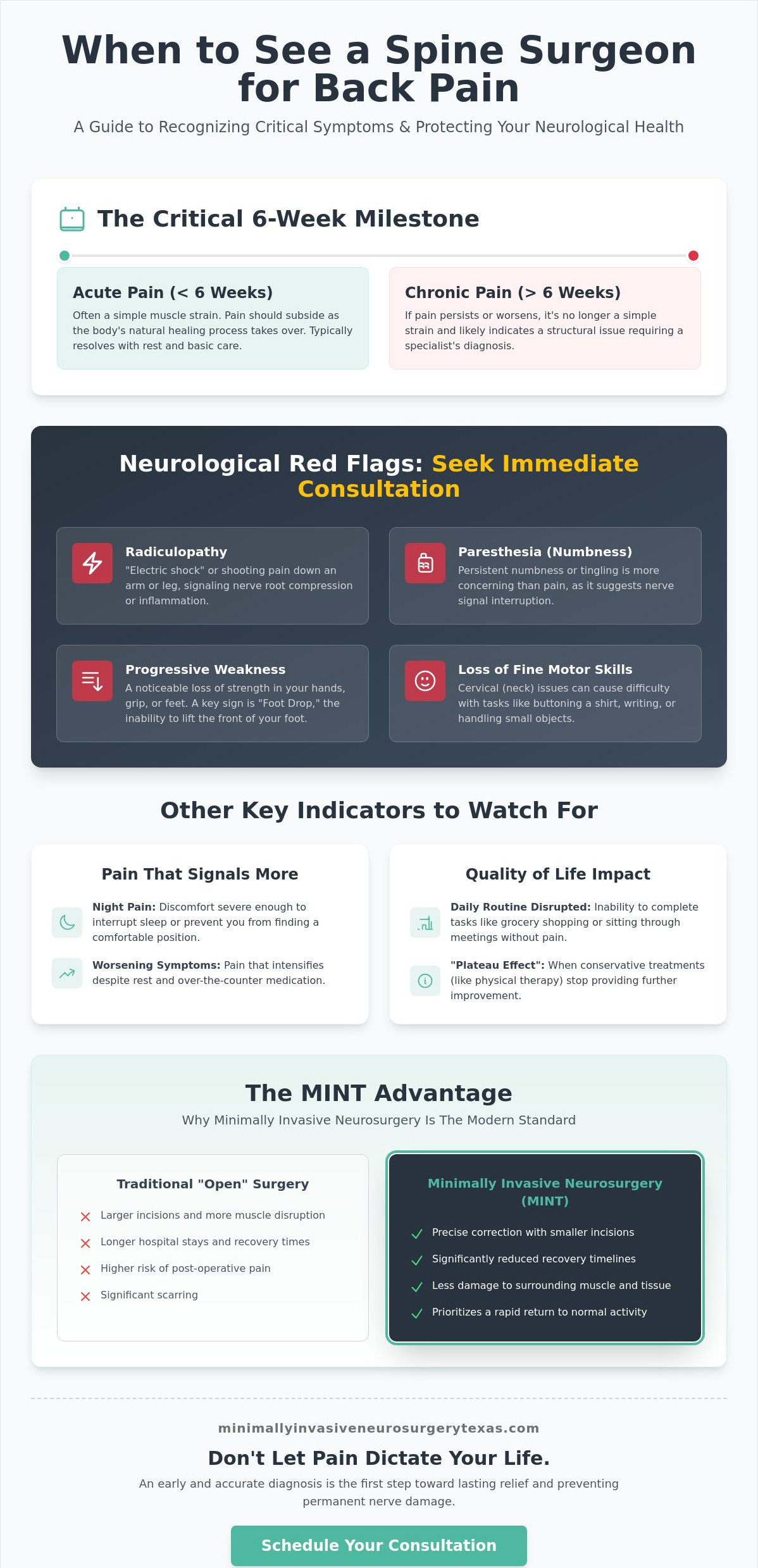
Mechanical back pain is common and often stems from poor posture or improper lifting. It typically resides in the lower back and doesn’t travel into the extremities. Clinical concern arises when pain persists beyond six weeks or begins to affect your daily quality of life. This transition marks the point where you should investigate when to see a spine surgeon for back pain. At our Lewisville and Plano offices, we frequently treat patients suffering from spinal stenosis, which is the narrowing of the spinal canal, or degenerative disc disease. These conditions are structural pathologies rather than simple strains. Dr. Kutz provides the clarity necessary to determine if your condition requires surgical intervention or if conservative therapy remains the best path forward.
Five Neurological Red Flags That Require a Surgical Consultation
While mechanical back pain often responds to rest, neurological “red flags” indicate that a spinal structure is actively compressing a nerve or the spinal cord. Identifying these symptoms early is the most effective way to prevent permanent nerve damage. When patients ask when to see a spine surgeon for back pain, Dr. Scott Kutz, a board-certified neurosurgeon, Fellow of the American Association of Neurological Surgeons, and Fellow of the American College of Surgeons, points to specific deficits that suggest conservative care is no longer sufficient. These symptoms often stem from conditions like neural foraminal stenosis, where the small openings for nerve roots narrow, or severe disc herniations.
Weakness, Numbness, and Tingling
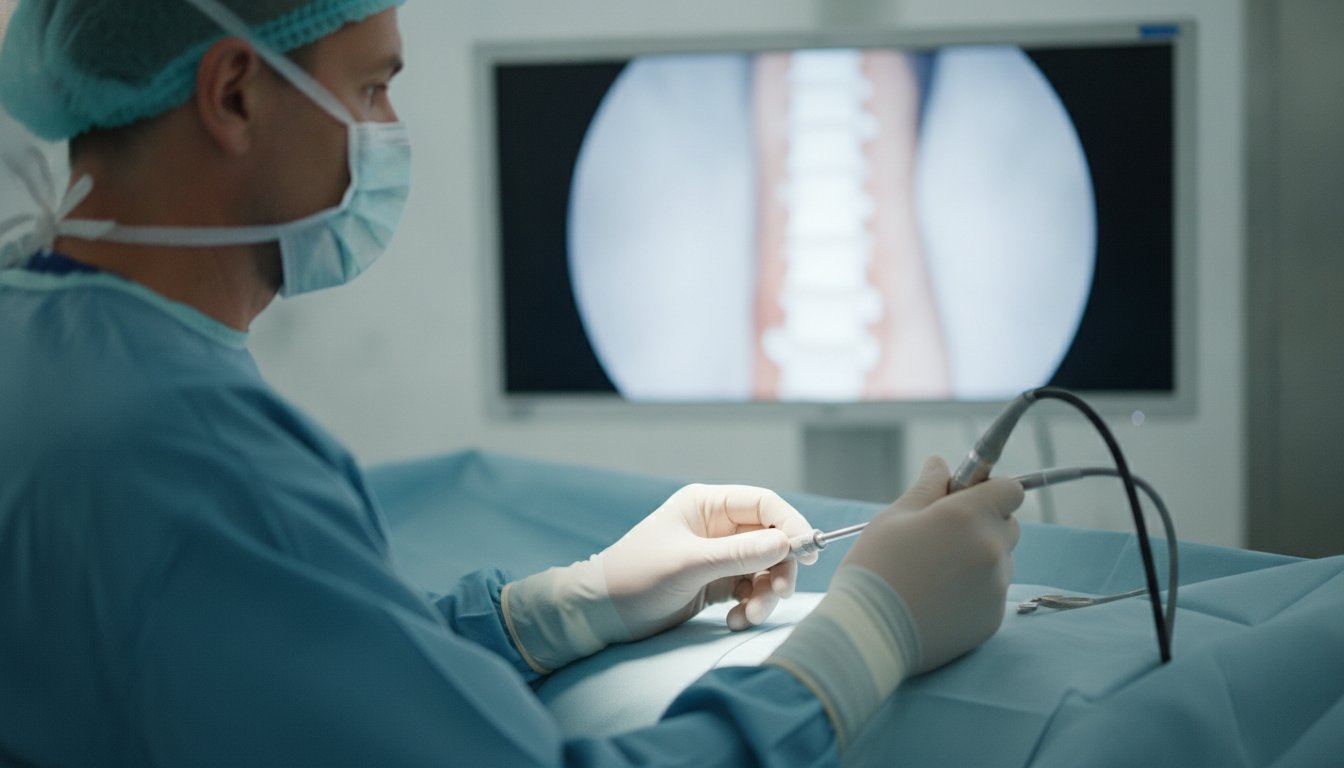
Progressive weakness in the legs or feet is a high-priority indicator for a surgical consultation. A specific condition known as “foot drop,” where you find it difficult to lift the front part of your foot while walking, often signals significant nerve root compression. Similarly, persistent “pins and needles” sensations or numbness in the extremities suggest radiculopathy, a condition where a nerve is pinched at the root. At our Lewisville and Plano offices, Dr. Kutz often utilizes endoscopic spine surgery to address these issues. This advanced technique allows him to decompress the affected nerves through an incision smaller than a thumbnail, facilitating a faster return to normal activity.
Radiating Pain and Mobility Changes
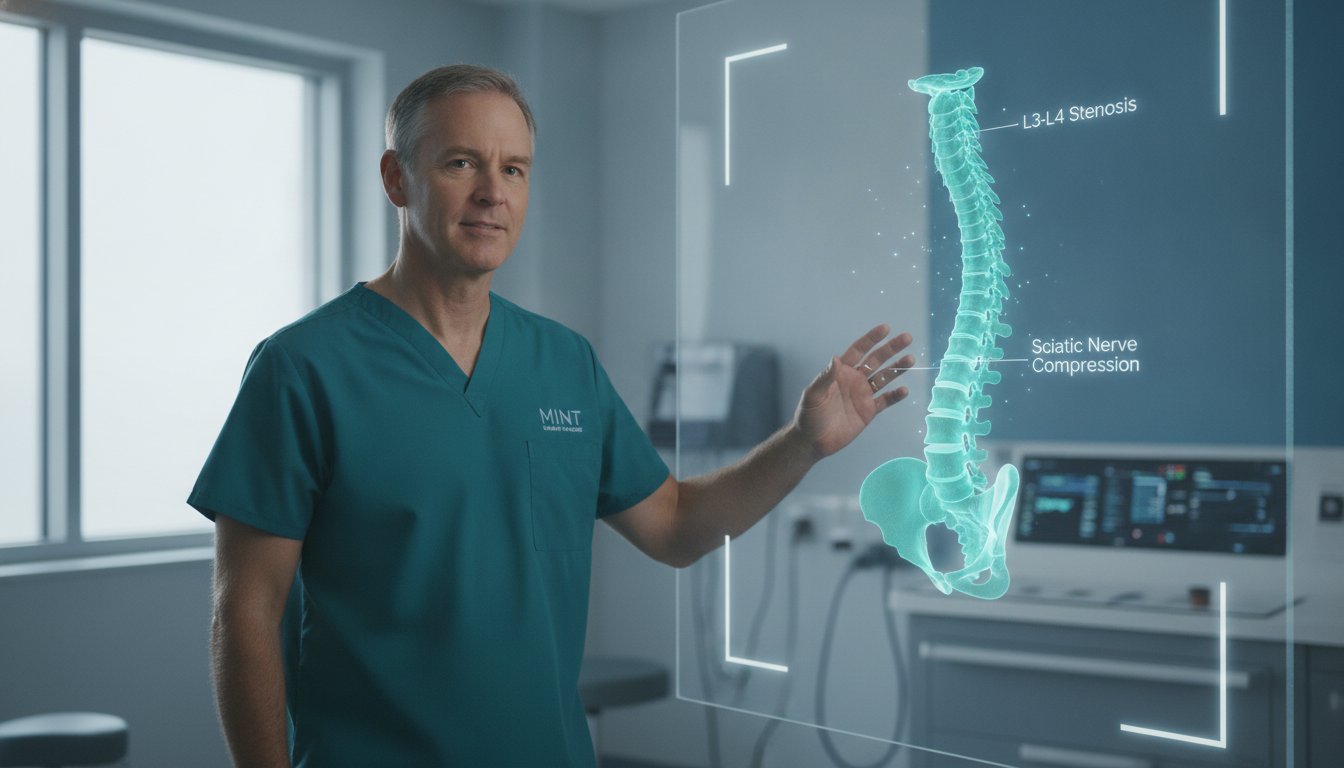
Pain that travels from the lower back through the buttocks and down the leg is known as sciatica. While mild sciatica may resolve with stretching, intense radiating pain that prevents standing or walking requires an expert evaluation. Another critical sign is neurogenic claudication, which is pain or cramping in the legs that worsens with walking but improves when you lean forward or sit down. This symptom typically suggests spinal stenosis, a narrowing of the spinal canal that puts pressure on the neural elements. Dr. Scott Kutz notes that when a patient loses the ability to walk a short distance without resting, it’s no longer just a pain issue; it’s a neurological deficit that requires surgical decompression to restore quality of life.
The most urgent red flag involves a rare but serious condition called cauda equina syndrome. If you experience sudden changes in bowel or bladder control or “saddle anesthesia,” which is numbness in the groin and inner thighs, you must seek immediate surgical intervention. These symptoms indicate that the bundle of nerve roots at the lower end of the spinal cord is under extreme pressure. Early intervention at our specialized center in Lewisville can prevent permanent paralysis or loss of function. If you notice any of these neurological changes, you should schedule a diagnostic evaluation to explore your minimally invasive spine techniques and protect your long-term mobility.
Conservative Care vs. Surgical Necessity: When to Pivot
Most patients begin their recovery journey with conservative treatments like physical therapy, rest, and anti-inflammatory medications. While these methods resolve many cases of mechanical back pain, they have a specific window of efficacy. Clinical guidelines generally suggest a six to twelve week period for non-surgical interventions. If your symptoms persist or worsen during this three-month timeframe, it is the logical point to determine when to see a spine surgeon for back pain. Dr. Scott Kutz, a board-certified neurosurgeon and Fellow of the American Association of Neurological Surgeons, emphasizes that delaying a specialist consultation can sometimes lead to avoidable nerve damage.
A common misconception is that surgery must always be a last resort. In reality, advanced minimally invasive spine surgery can be the most conservative choice when it prevents a patient’s neurological status from declining further. At our offices in Lewisville and Plano, we also provide critical second opinions for individuals suffering from Failed Back Surgery Syndrome. This condition occurs when a previous operation at another facility fails to provide lasting relief. Dr. Scott Kutz, who is also a Fellow of the American College of Surgeons, evaluates these complex cases with the same precision he applies to new diagnoses. He ensures every patient has a clear roadmap toward a return to normal activity.
Evaluating the Success of Physical Therapy
Physical therapy is an excellent tool for strengthening the core and improving flexibility. However, therapy cannot relocate a herniated disc or clear a narrowed spinal canal. You might notice that your pain returns immediately after a session or that steroid injections only provide a few weeks of relief. These are band-aid treatments that fail to address the underlying structural pathology. If you find yourself trapped in a cycle of temporary relief, transitioning from primary care to a specialist like Dr. Kutz is essential. He provides the diagnostic depth necessary to identify why conservative care has stalled and whether structural changes in the spine require a different approach.
The Impact on Daily Quality of Life
Chronic pain creates a heavy psychological and physical burden. It prevents you from participating in family events and diminishes your productivity at work. At MINT, we use patient-first communication to ensure your treatment plan aligns with your specific life goals. We don’t just treat images on an MRI; we treat the person behind the scan. You can see how this approach has changed lives by reading our patient testimonials. By focusing on motion-preserving techniques, Dr. Kutz helps patients in Lewisville and Plano reclaim their independence without the long recovery times associated with traditional open surgery.
Diagnostic Precision: What to Expect During Your Initial Spine Evaluation
Once you decide when to see a spine surgeon for back pain, the next step is a diagnostic evaluation that removes the guesswork from your recovery. Dr. Scott Kutz, a board-certified neurosurgeon, Fellow of the American Association of Neurological Surgeons, and Fellow of the American College of Surgeons, conducts a thorough physical and neurological exam. This process involves testing reflexes, muscle strength, and sensory responses to map exactly which nerve roots are affected. By identifying specific neurological deficits, Dr. Kutz can correlate your physical symptoms with the structural findings on your imaging.
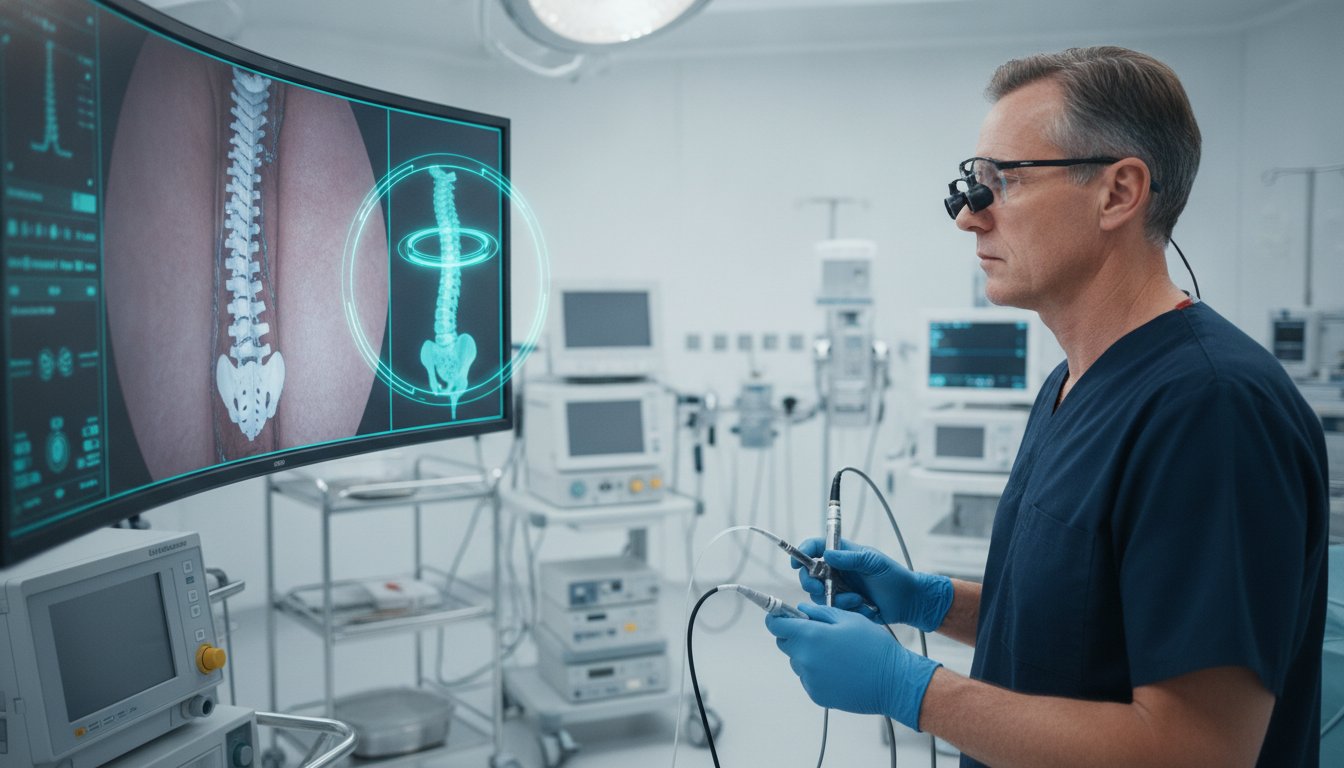
High-resolution MRI and CT scans are non-negotiable for surgical planning. Dr. Kutz uses these tools to see beyond the surface. For example, he distinguishes between a simple bulging disc and a sequestered fragment, which is a piece of the disc that has broken away from the main structure and migrated into the spinal canal. This precision ensures that any proposed treatment targets the actual cause of your pain rather than just the symptoms. Precision is further enhanced by the Globus Excelsius robotic navigation system. This technology allows Dr. Kutz to create a customized surgical blueprint before entering the operating room. It reduces the uncertainty often associated with traditional diagnostic methods by providing a clear, three-dimensional view of your unique anatomy.
Advanced Imaging and Nerve Testing
Dr. Kutz follows an evidence-based approach to confirm a diagnosis before recommending any intervention. By mapping the specific vertebrae and isolating the pain source, he avoids unnecessary procedures. This mapping is vital for conditions like spinal stenosis or spondylolisthesis, where multiple levels of the spine may appear abnormal on a scan, but only one is causing the actual clinical deficit. This focused approach ensures that the treatment is as minimally invasive as possible while still achieving a return to normal activity.
Robotic and AR Navigation in Diagnosis
At our Lewisville and Plano locations, we utilize Augmedics AR. This augmented reality headset provides Dr. Kutz with x-ray vision, allowing him to see the spinal structures through the skin in real-time during a procedure. When combined with robotic assistance, it ensures sub-millimeter accuracy for hardware placement or decompression. This level of precision is why patients from Dallas and Flower Mound choose MINT for their care. If you are ready for a definitive diagnosis, you should contact our team today to schedule your comprehensive initial evaluation.
Minimally Invasive Solutions in North Texas: Why MINT is the Logical Next Step
Deciding when to see a spine surgeon for back pain is a pivotal moment in your healthcare journey. It marks the transition from merely managing symptoms to seeking a definitive, long-term solution. At Minimally Invasive Neurosurgery of Texas (MINT), we specialize in minimally invasive spine techniques that offer a sophisticated alternative to traditional open surgery. Dr. Scott Kutz, a board-certified neurosurgeon, Fellow of the American Association of Neurological Surgeons, and Fellow of the American College of Surgeons, utilizes these advanced methods to achieve superior clinical outcomes. By accessing the spine through tiny incisions, he minimizes damage to the surrounding muscles and ligaments. This precision results in significantly less post-operative pain and faster recovery times for our patients in Dallas and Frisco.
Our practice functions as a specialized, boutique surgical center that prioritizes personal attention. Unlike large, impersonal hospital systems, our Lewisville and Plano offices provide a calm environment where your health is the top priority. Dr. Kutz brings over 20 years of experience to every case, ensuring that your treatment plan is as unique as your anatomy. Whether you are dealing with a herniated disc or complex spinal stenosis, MINT provides the high-tech expertise necessary to facilitate a safe and efficient recovery.
This focus on specialized, high-tier environments is mirrored in modern healthcare developments like Northlake Concierge Medical Center, which prioritize the same level of boutique excellence and professional infrastructure for patient-centered care.
Motion-Preserving Alternatives to Fusion
For younger or more active patients, artificial disc replacement represents a significant advancement in spinal care. Traditional spinal fusion surgery permanently joins two vertebrae, which can limit your flexibility and place extra stress on the rest of your spine. In contrast, disc replacement preserves the natural motion of your spinal segments. Dr. Kutz maintains extensive expertise in both cervical and lumbar disc replacements, helping patients maintain their range of motion. This approach protects long-term spinal health by reducing the likelihood of adjacent segment disease, where neighboring discs wear down due to the lack of mobility in the fused area.
The MINT Patient Experience
The MINT patient experience begins at our new Lewisville headquarters, which opened in 2026. From your first evaluation to your final follow-up, we focus on reducing tissue disruption and blood loss. We understand that the fear of a long recovery often prevents people from seeking the help they need. That is why we utilize cutting-edge robotic navigation and augmented reality to ensure every movement is precise and purposeful. Our mission is to move you through a logical, results-oriented journey that ends with a return to normal activity. If you are ready to address the root cause of your suffering, schedule a consultation with Dr. Scott Kutz today to explore your options for a pain-free future.
Reclaiming Your Mobility and Quality of Life
Understanding when to see a spine surgeon for back pain is the first step toward a definitive recovery. We have identified the critical neurological red flags, such as progressive weakness and radiating pain, that indicate a need for specialized intervention. Choosing a board-certified neurosurgeon like Dr. Scott Kutz ensures that you receive a diagnosis rooted in clinical authority and advanced technology. With over 20 years of experience, Dr. Kutz specializes in robotic-assisted and endoscopic spine surgery to provide the most precise care possible in North Texas.
Our boutique surgical centers in Lewisville and Plano prioritize your personal recovery journey. We focus on motion-preserving techniques that minimize tissue disruption and help you avoid the lengthy recovery times associated with traditional methods. Patients from Southlake, McKinney, and Allen can find expert, compassionate care close to home at our specialized facilities. You don’t have to navigate chronic pain alone. Schedule your consultation with Dr. Scott Kutz at MINT today to take the next step toward a return to normal activity. We are ready to help you rediscover a life without the limitations of spinal pain.
Frequently Asked Questions
How do I know if my back pain is muscular or a disc problem?
Muscular pain usually feels like a dull ache localized in the lower back that improves with rest and heat. In contrast, a disc problem often causes sharp, electric sensations that radiate into the buttocks or legs. If you experience numbness or weakness in your extremities, it likely indicates a structural issue like a herniated disc rather than a simple strain.
When should I stop physical therapy and see a spine surgeon?
You should consider when to see a spine surgeon for back pain if your symptoms do not improve after six to twelve weeks of consistent physical therapy. While therapy is effective for strengthening the core, it cannot relocate a herniated disc or widen a narrowed spinal canal. Dr. Scott Kutz recommends a specialist evaluation if conservative care fails to restore your daily mobility within this three-month window.
Does seeing a spine surgeon always mean I will have surgery?
No, a consultation is a diagnostic tool used to identify the exact source of your pain and determine the best course of action. Dr. Scott Kutz, a board-certified neurosurgeon, uses advanced imaging to see if your condition requires surgical intervention or if different conservative methods might work. Many patients at our Lewisville and Plano offices receive non-surgical treatment plans designed to preserve motion.
What are the ‘red flag’ symptoms for a herniated disc?
Critical red flags include progressive leg weakness, “foot drop,” and any sudden changes in bowel or bladder control. These symptoms indicate that a nerve root or the spinal cord is under significant pressure. Dr. Scott Kutz emphasizes that seeking early intervention for these neurological deficits is the most effective way to prevent permanent damage and ensure a return to normal activity.
Is minimally invasive spine surgery safer than traditional open surgery?
Minimally invasive spine surgery is generally safer because it utilizes smaller incisions that cause less disruption to the surrounding muscles and tissues. This approach significantly reduces blood loss and the risk of post-operative infection compared to traditional open methods. Dr. Scott Kutz performs these advanced procedures in Lewisville and Plano to help patients from McKinney and Allen recover with less physical impact.
How long is the recovery time after a minimally invasive procedure with Dr. Kutz?
Most patients return to light activity within two to four weeks after a minimally invasive procedure, though individual timelines vary based on the specific surgery. Traditional open surgeries often require several months of restricted movement and intense rehabilitation. Dr. Scott Kutz provides every patient with a customized recovery roadmap to ensure they regain their independence as quickly and safely as possible.
What should I bring to my first appointment at MINT in Lewisville or Plano?
You should bring your most recent MRI or CT scan images on a disc, along with the written radiologist reports and a list of current medications. Providing a detailed history of your previous physical therapy and injection results helps Dr. Scott Kutz determine when to see a spine surgeon for back pain was the necessary next step for your health. This information allows for a more precise diagnostic evaluation.
Will a spine surgeon help with sciatica that has lasted for months?
Yes, a spine surgeon can provide definitive relief for chronic sciatica by decompressing the specific nerve root that is causing your pain. If sciatica persists for months despite stretching and medication, it often suggests a structural problem like spinal stenosis or a sequestered disc fragment. Dr. Scott Kutz uses specialized diagnostic mapping to isolate the affected area and recommend a targeted, motion-preserving solution.