Minimally Invasive Neurosurgery of Texas (MINT), led by Dr. Scott Kutz, a board-certified neurosurgeon, Fellow of the American Association of Neurological Surgeons, and Fellow of the American College of Surgeons, provides specialized spinal care in Lewisville, TX, and Plano, TX, focusing on advanced minimally invasive spine surgery.
What if the “wait and see” approach to your back pain is actually the most dangerous decision you could make? It’s natural to feel anxious when a surgeon recommends an operation; the fear of a grueling recovery or conflicting medical advice often makes postponement feel like the safest path. However, Dr. Scott Kutz emphasizes that the risks of delaying spine surgery can lead to irreversible nerve damage and a permanent loss of function that even the most advanced technology cannot fully restore. You deserve clarity and confidence in your healthcare journey. This guide explains how modern medical advancements in 2026 make intervention safer than ever. We will examine the specific clinical signs that indicate surgical urgency and how North Texas patients now access faster recoveries through robotic and endoscopic precision.
Key Takeaways
- Chronic nerve compression can progress from manageable discomfort to permanent neurological deficits if left untreated.
- Postponing intervention often forces the body to compensate through gait changes, which places dangerous stress on other joints and spinal levels.
- Understanding the risks of delaying spine surgery helps patients recognize when intermittent tingling transitions into serious, constant numbness.
- Modern minimally invasive techniques at MINT offer a safer alternative to traditional surgery by significantly reducing recovery times and surgical anxiety.
- Dr. Scott Kutz provides expert evaluations in Lewisville and Plano to help patients return to their normal activities through precision care.
Understanding the Medical Necessity of Spinal Intervention
Minimally Invasive Neurosurgery of Texas (MINT) operates as a specialized center for patients facing complex spinal conditions in Lewisville, TX, and Plano, TX. Dr. Scott Kutz, a board-certified neurosurgeon, Fellow of the American Association of Neurological Surgeons, and Fellow of the American College of Surgeons, leads the practice with a focus on precision and patient outcomes. While most patients prefer to avoid the operating room, understanding the risks of delaying spine surgery is vital when structural issues progress beyond the reach of non-surgical care. Dr. Kutz views surgery as a targeted intervention for specific conditions rather than a first-line treatment for every patient.
At MINT, the clinical team prioritizes a patient’s quality of life and long-term mobility. Choosing to undergo a procedure is a significant decision that requires a balance of clinical data and personal goals. Dr. Kutz provides the authoritative guidance necessary to move from a state of painful uncertainty to a state of informed confidence regarding your spinal health. Our dedicated team ensures every patient understands their diagnosis before proceeding with a surgical plan.
When Conservative Care Reaches Its Limit
Dr. Scott Kutz typically recommends conservative treatments like physical therapy or epidural steroid injections to manage initial inflammation. These methods often provide relief by calming irritated nerves; however, they do not always address the underlying pathology. In a clinical context, pathology refers to the physical abnormality or disease process, such as a herniated disc or bone spur, that causes your symptoms. If these treatments fail to restore mobility or reduce pain after a standard course of six to twelve weeks, relying solely on them may mask a worsening condition. While therapy strengthens the surrounding muscles, it cannot physically remove a fragment of bone or disc material that is actively compressing a nerve root.
The Definition of Medically Necessary Spine Surgery
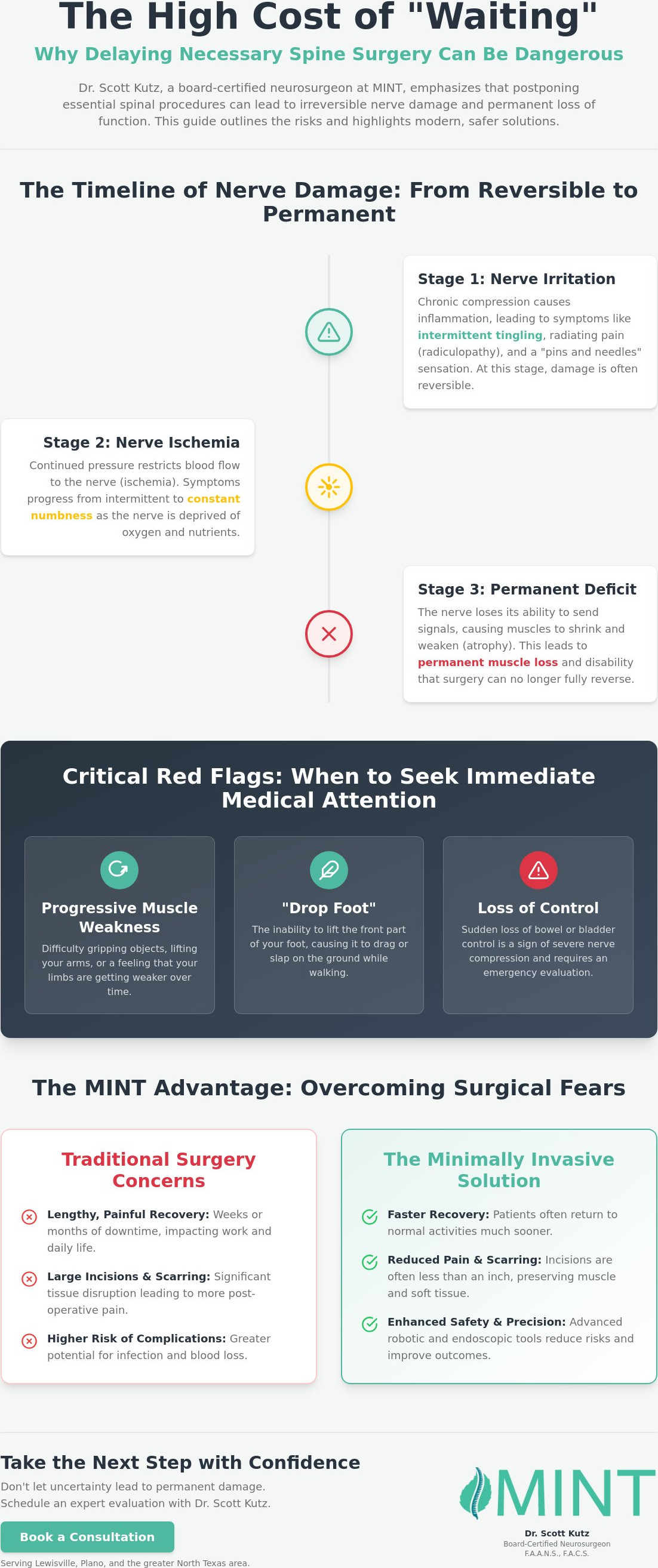
Medical necessity occurs when a patient presents with specific clinical indicators that suggest conservative care is no longer safe or effective. For example, Understanding Spinal Stenosis is key, as this narrowing of the spinal canal often requires surgical decompression to prevent permanent deficits. Dr. Kutz identifies urgent indicators such as progressive muscle weakness, a “drop foot” where you cannot lift the front of your foot, or a sudden loss of bowel and bladder control. These symptoms signal severe nerve compression that requires immediate attention. Delaying intervention at this stage transforms a manageable condition into a surgical emergency. Waiting too long can lead to chronic disability that even the most advanced surgery can no longer fully reverse.
Neurological Risks of Postponing Necessary Surgery
Neurological health depends on the unobstructed flow of signals between the brain and the body. Chronic nerve compression disrupts this flow and triggers a condition known as radiculopathy. Patients often experience this as a sharp, radiating pain that travels down the arms or legs. One of the significant risks of delaying spine surgery involves the physiological changes that occur within the nerve itself. Initially, the compression causes inflammation, leading to intermittent tingling or a “pins and needles” sensation. If the pressure remains, the nerve suffers from ischemia, which is a lack of adequate blood flow. This deprivation eventually causes the nerve to transition from a state of irritation to a state of constant numbness.
As the nerve continues to deteriorate, it loses the ability to transmit motor commands to the muscles. This lack of stimulation leads to muscle atrophy, where the muscle fibers physically shrink and lose their structural integrity. Dr. Scott Kutz, a board-certified neurosurgeon, Fellow of the American Association of Neurological Surgeons, and Fellow of the American College of Surgeons, explains that this muscle loss can become irreversible if the compression persists for too long. Once the muscle tissue replaces itself with fatty or fibrous tissue, even a successful surgery cannot restore the lost strength. This progression transforms a simple recovery into a permanent disability.
The Window of Opportunity for Nerve Recovery
Nerves possess a limited capacity to regenerate after a surgeon performs a decompression procedure. Dr. Scott Kutz uses advanced diagnostic imaging during consultations in Plano to evaluate the current state of your nerve health. He looks for signs of chronic inflammation or structural changes that indicate how much recovery potential remains. The longer a nerve remains under mechanical pressure, the lower the chance of achieving a full functional recovery. Patients who wait years often find that while their pain subsides after surgery, their strength does not return. If you are noticing persistent weakness, you should consider learning more about minimally invasive spine techniques to address the issue before it becomes permanent.
Myelopathy and Spinal Cord Compression
While radiculopathy affects individual nerve roots, myelopathy involves compression of the spinal cord itself. This condition creates significant neurological symptoms of spinal stenosis that affect the entire body below the site of injury. You might notice difficulty with fine motor skills, such as buttoning a shirt, or sudden issues with your balance and gait. Spinal cord tissue is much more sensitive than peripheral nerves and has almost no ability to repair itself once damaged. Damage to the spinal cord is often permanent; therefore, Dr. Scott Kutz typically recommends surgery for myelopathy to prevent further decline rather than to reverse existing deficits.
Structural Consequences and Compensatory Injuries
The human body functions as an interconnected system designed to distribute weight and movement across multiple structures. When a patient suffers from chronic back pain, they instinctively change how they move to avoid discomfort. This behavior, known as an antalgic gait, often involves limping or leaning to one side. While these adjustments provide temporary relief, they create a cascade of structural issues. One of the primary risks of delaying spine surgery is the development of compensatory injuries in the hips, knees, and ankles. By shifting your center of gravity, you place unnatural mechanical stress on joints that were never intended to carry that specific load.
The spine itself also suffers from these shifts. Dr. Scott Kutz, a board-certified neurosurgeon, Fellow of the American Association of Neurological Surgeons, and Fellow of the American College of Surgeons, frequently monitors patients for adjacent segment disease. This condition occurs when the spinal levels directly above or below the initial injury wear out prematurely because they are overcompensating for the damaged segment. Understanding the risks of untreated spinal stenosis is crucial, as the narrowing of the canal can lead to a collapse of the entire spinal column if the primary issue remains unaddressed. What could have been a straightforward, single-level decompression can quickly evolve into a complex multi-level fusion due to this structural decay.
Failed Back Surgery Syndrome and Advanced Pathology
Waiting until the spine becomes severely unstable significantly reduces the success rate of any future intervention. Dr. Scott Kutz often treats patients in Lewisville and Plano who delayed care for years and now face advanced pathology that requires extensive reconstruction. When the structural integrity of the spine is compromised beyond a certain point, the risk of Failed Back Surgery Syndrome increases because the surrounding tissues are too degraded to support the repair. Choosing Minimally Invasive Spinal Fusion in Texas at an earlier stage preserves more of your natural anatomy and ensures a stable foundation for recovery.
Chronic Pain and Central Sensitization
Minimally Invasive Solutions vs Traditional Surgery Fears
Many patients choose to live with chronic pain because they associate back surgery with long hospital stays and months of immobilization. However, the risks of delaying spine surgery often outweigh the actual impact of modern procedures. Dr. Scott Kutz, a board-certified neurosurgeon, Fellow of the American Association of Neurological Surgeons, and Fellow of the American College of Surgeons, utilizes minimally invasive spine techniques to transform the patient experience. Traditional open surgery requires large incisions and the detachment of significant muscle groups from the bone. In contrast, the specialized methods at MINT in Lewisville involve small incisions and muscle-sparing approaches. This precision results in minimal blood loss and a significantly faster return to normal activity. By avoiding the trauma associated with older methods, patients don’t have to fear the recovery process like they did in the past.
Dr. Scott Kutz emphasizes that modern technology has changed the risk-reward ratio for spinal intervention. When you delay a necessary procedure, you aren’t just avoiding a surgery; you’re allowing a structural problem to worsen while your body’s ability to heal diminishes. At our practice, we prioritize techniques that preserve your natural anatomy. These methods allow us to address the root cause of your pain without the extensive tissue damage that once made spine surgery a last resort. Our results-oriented rhythm moves you from a state of concern to a state of informed confidence as you realize that relief is closer than you think.
Endoscopic Spine Surgery and Artificial Disc Replacement
Endoscopic spine surgery represents the frontier of ultra-minimally invasive care. Dr. Kutz uses a tiny camera and specialized instruments through an incision smaller than a fingernail to treat herniated discs or stenosis. For patients with degenerative disc disease, artificial disc replacement offers a motion-preserving alternative to traditional fusion. Unlike fusion, which locks two vertebrae together, an artificial disc maintains the natural flexibility of the spine. Clinical data shows that ADR patients often return to light activity within weeks, which is a stark contrast to the months-long recovery periods associated with older methods. This rapid timeline helps patients reclaim their daily quality of life without the prolonged downtime they fear.
Advanced Technology: Robotics and AR
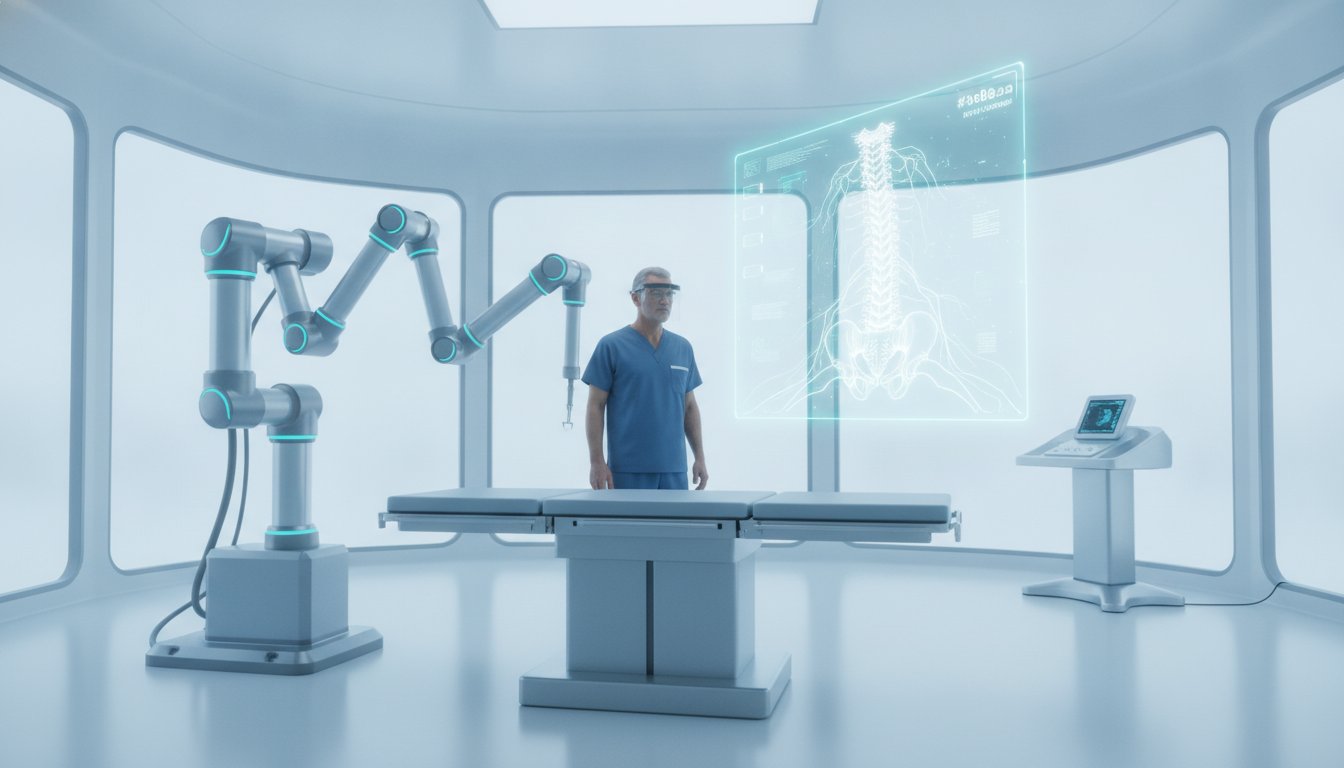
Technology further enhances safety and precision at our practice. Dr. Kutz employs the Globus Excelsius robotic navigation system, which acts as a highly accurate guide for implant placement. Additionally, Augmedics AR provides the surgeon with a “GPS” for the spine by overlaying a 3D map of the patient’s anatomy directly onto the surgical field. These technologies increase surgical accuracy and reduce the overall time spent under anesthesia. By leveraging these tools, MINT provides a level of precision that traditional open surgery cannot match. If fear of recovery has kept you from seeking help, schedule a consultation with Dr. Kutz to discuss your options and see how modern technology makes your recovery safer.
Taking the Next Step with Dr. Scott Kutz at MINT
Dr. Scott Kutz, a board-certified neurosurgeon, Fellow of the American Association of Neurological Surgeons, and Fellow of the American College of Surgeons, provides the clinical authority needed to address your spinal health concerns with precision. At Minimally Invasive Neurosurgery of Texas (MINT), we prioritize a patient-centered communication style that fosters trust and clarity. We understand that residents in Southlake, Flower Mound, and McKinney often feel hesitant when facing a surgical recommendation. Seeking a second opinion is a vital step in your healthcare journey, especially when you feel unsure about conflicting medical advice. The risks of delaying spine surgery can impact your long-term mobility and neurological health. Dr. Kutz personally reviews your MRI and CT imaging to ensure he identifies the exact structural cause of your pain before recommending any intervention.
Our practice focuses on providing a sophisticated level of care that balances high-tech innovation with compassionate reassurance. Our dedicated team at MINT guides you through every stage of the diagnostic process, moving you from a state of concern to a state of informed confidence. We maintain offices in Lewisville and Plano to ensure specialized neurosurgical care remains accessible to patients across North Texas. By choosing a boutique surgical center, you receive the personal attention and specialized expertise necessary for complex spinal conditions.
What to Expect During Your Consultation
During your visit to our Lewisville or Plano office, Dr. Kutz conducts a rigorous clinical assessment of your neurological function and mobility. He tests your reflexes, muscle strength, and sensory responses to identify the specific nerve roots involved in your condition. This assessment goes beyond what a static image can reveal; it focuses on how your pathology affects your physical capabilities. Dr. Kutz uses this data to determine if you are an ideal candidate for minimally invasive spine techniques. Our goal remains the same for every patient: we identify the least invasive path to a safe and effective recovery. We only recommend surgery when the clinical evidence suggests it is the best way to prevent permanent neurological deficits.
Regaining Your Quality of Life in North Texas
Reclaiming your quality of life means returning to the hobbies, family activities, and work responsibilities that define your daily happiness. Our new Lewisville headquarters serves as a state-of-the-art facility designed specifically for advanced spinal health and rapid recovery. This specialized environment provides the precision of a high-tech hospital without the impersonal nature of a large healthcare system. We invite you to explore our patient success stories to see how our results-oriented approach has helped others achieve a return to normal activity. Contact our team today to schedule a thorough evaluation at our Plano or Lewisville office. Let us help you navigate your recovery with the expertise and authority you deserve.
Secure Your Future Mobility Today
Understanding the risks of delaying spine surgery empowers you to make proactive decisions about your long-term health. Chronic nerve compression and structural decay don’t just cause pain; they fundamentally alter your body’s ability to function and recover. Dr. Scott Kutz, a board-certified neurosurgeon, Fellow of the American Association of Neurological Surgeons, and Fellow of the American College of Surgeons, utilizes his extensive training to ensure every patient in Lewisville and Plano receives a tailored plan. By prioritizing early intervention, you protect your nervous system from permanent deficits and avoid the complexities of advanced spinal pathology.
You deserve a life free from the limitations of chronic back pain. With specialized expertise in Artificial Disc Replacement (ADR) and endoscopic spine surgery, our team at Minimally Invasive Neurosurgery of Texas provides the precision necessary for a swift return to normal activity. We invite you to move beyond fear and toward a state of informed confidence. Schedule your consultation with Dr. Scott Kutz at MINT today to explore your options. Your journey toward lasting relief and restored function begins with a single, decisive step toward expert care.
Frequently Asked Questions
How do I know if my back pain is an emergency?
Back pain becomes a medical emergency if you experience a sudden loss of bowel or bladder control, progressive leg weakness, or numbness in the groin area. These symptoms often indicate cauda equina syndrome, a rare but serious condition that requires immediate surgical decompression to prevent permanent paralysis. Dr. Scott Kutz advises patients to seek urgent evaluation if they cannot lift the front of their foot or if pain becomes unresponsive to all medication.
Can nerve damage from delaying surgery be reversed?
Nerve damage reversal depends entirely on the duration and severity of the compression before the procedure. While surgery effectively stops further injury, nerves that have suffered from long-term ischemia, or lack of blood flow, may never regain full function. This uncertainty represents one of the primary risks of delaying spine surgery. Early intervention significantly increases the likelihood that your nerves will regenerate and restore your previous strength and sensation.
Is minimally invasive surgery safer than traditional open surgery?
Minimally invasive surgery typically offers a safer profile for many patients by reducing blood loss, infection rates, and trauma to surrounding tissues. Dr. Scott Kutz utilizes specialized instruments to access the spine through small incisions, which avoids the extensive muscle stripping required in traditional open procedures. This precise approach preserves the structural integrity of your spine and facilitates a much faster return to normal activity with significantly less postoperative pain.
What happens if I choose to never have the recommended surgery?
Choosing to forgo a necessary operation often leads to a permanent decline in mobility and chronic neurological deficits. Structural issues like severe spinal stenosis generally progress over time, which may eventually result in the inability to walk or stand for even short periods. You also risk developing central sensitization, a process where your brain becomes hardwired to process pain signals even if the initial inflammation or pressure subsides later in life.
How long is the recovery if I have surgery now versus waiting a year?
Having surgery now typically results in a shorter recovery because your body has not yet developed secondary joint damage or severe muscle wasting. Waiting a year allows for the progression of the risks of delaying spine surgery, such as adjacent segment disease, which often necessitates a more complex multi-level procedure. Patients who choose timely minimally invasive care often return to light activity within weeks, whereas those with advanced pathology face much longer rehabilitation timelines.
Does Dr. Scott Kutz offer second opinions for patients in Plano and Lewisville?
Dr. Scott Kutz frequently provides comprehensive second opinions for patients in Plano and Lewisville who feel uncertain about their current treatment recommendations. He performs a meticulous review of your MRI and CT scans to confirm your diagnosis and determine if you qualify for a less invasive surgical alternative. This evaluation provides the clinical clarity you need to move from a state of concern to a state of informed confidence regarding your care.
Will delaying surgery make the eventual procedure more expensive or complex?
Delaying a necessary procedure often increases its complexity and can lead to higher overall healthcare costs over time. A straightforward one-level decompression can evolve into a multi-level fusion if the surrounding spinal segments deteriorate due to prolonged instability. Additionally, 2026 data shows that while 81.3% of initial insurance denials are eventually reversed, the resulting delay often leads to more complicated clinical outcomes and extended periods of lost productivity.
Can physical therapy replace the need for surgery in cases of severe stenosis?
Physical therapy cannot physically widen the spinal canal or remove bone spurs that cause severe structural stenosis. While therapy serves as an excellent tool for early-stage management and core strengthening, it does not resolve the underlying mechanical compression of the spinal cord. Dr. Scott Kutz recommends surgery when the stenosis reaches a point where it causes progressive neurological deficits that exercise and conservative care can no longer manage safely.