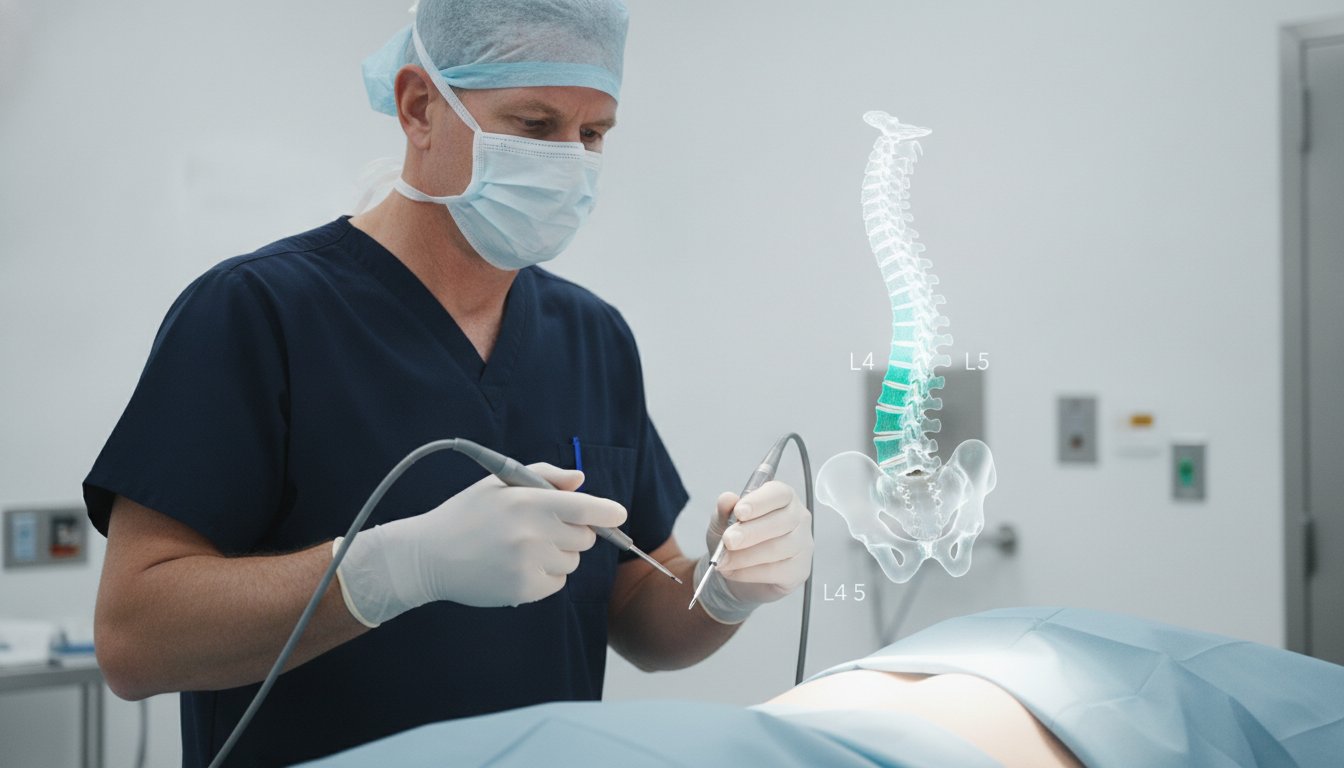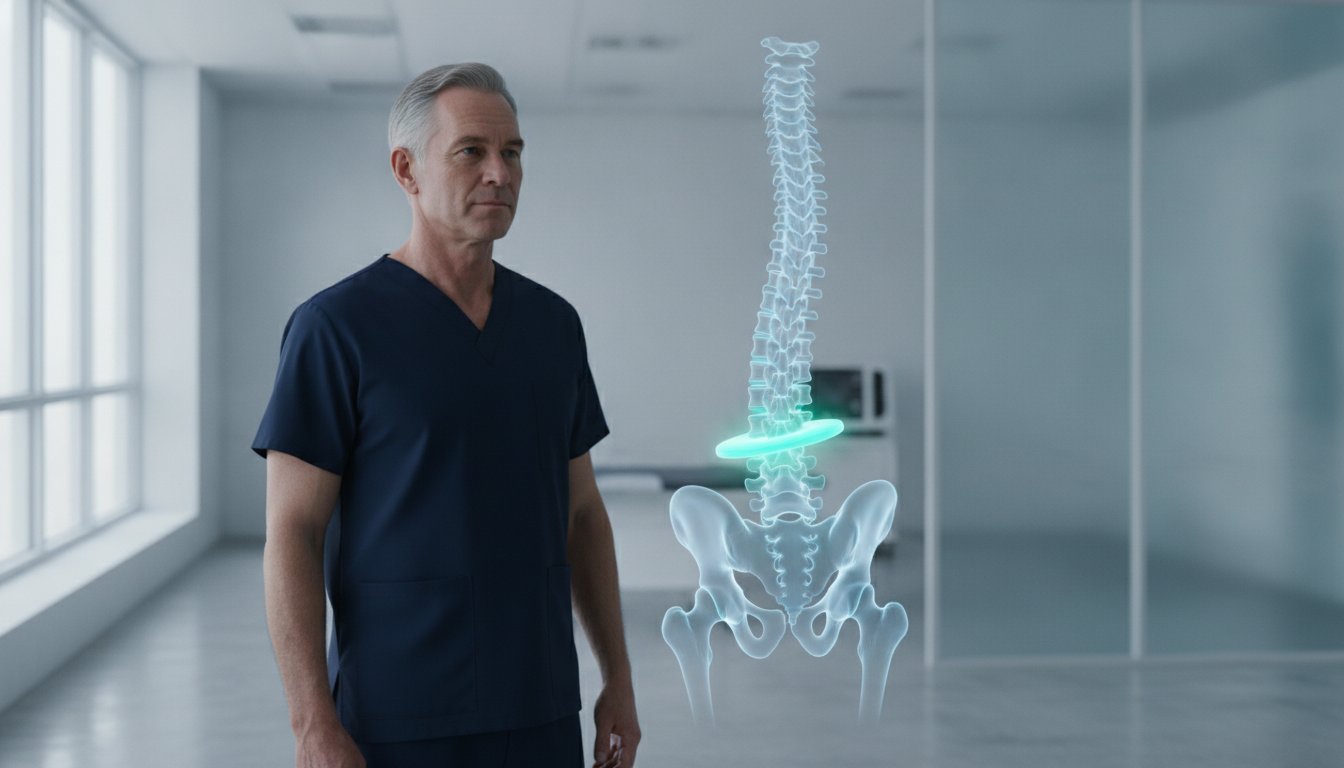
Minimally Invasive Neurosurgery of Texas (MINT), led by Dr. Scott Kutz, a board-certified neurosurgeon and Fellow of the American Association of Neurological Surgeons, provides advanced spine care in Lewisville and Plano, TX, for patients wondering when is surgery needed for herniated disc. Dr. Kutz specializes in motion-preserving techniques and minimally invasive spine surgery to help patients reclaim their quality of life from debilitating back and neck conditions.
What if the persistent, radiating pain in your leg isn’t just a nuisance you have to live with, but a signal that your body has reached a clinical tipping point? You’ve likely tried physical therapy, rest, and medications, yet the fear of permanent nerve damage or the inability to perform daily tasks still weighs heavily on your mind. Dr. Scott Kutz, who is also a Fellow of the American College of Surgeons, understands that choosing surgery is a significant decision that requires both clinical precision and compassionate care.
In this 2026 medical guide, you’ll discover the specific clinical indicators and emergency symptoms that necessitate surgical intervention. We’ll explore how modern, minimally invasive options offer high success rates, often ranging from 80% to 95%, while prioritizing a fast return to normal activity. This overview provides the clarity you need to move from a state of concern to informed confidence in your healthcare journey.
Key Takeaways
- Identify “red flag” symptoms like cauda equina syndrome that require immediate surgical intervention to prevent permanent nerve damage.
- Understand the specific clinical timeline for when is surgery needed for herniated disc after conservative treatments fail to provide relief within six to twelve weeks.
- Learn about modern minimally invasive spine surgery options that prioritize smaller incisions, reduced tissue disruption, and faster recovery times.
- Evaluate motion-preserving procedures like artificial disc replacement as a high-tech alternative to traditional spinal fusion for maintaining flexibility.
- Gain confidence in selecting a board-certified neurosurgeon with the specialized fellowship training necessary for precise spinal outcomes in Lewisville and Plano.
Understanding Herniated Discs and the Decision for Surgical Intervention
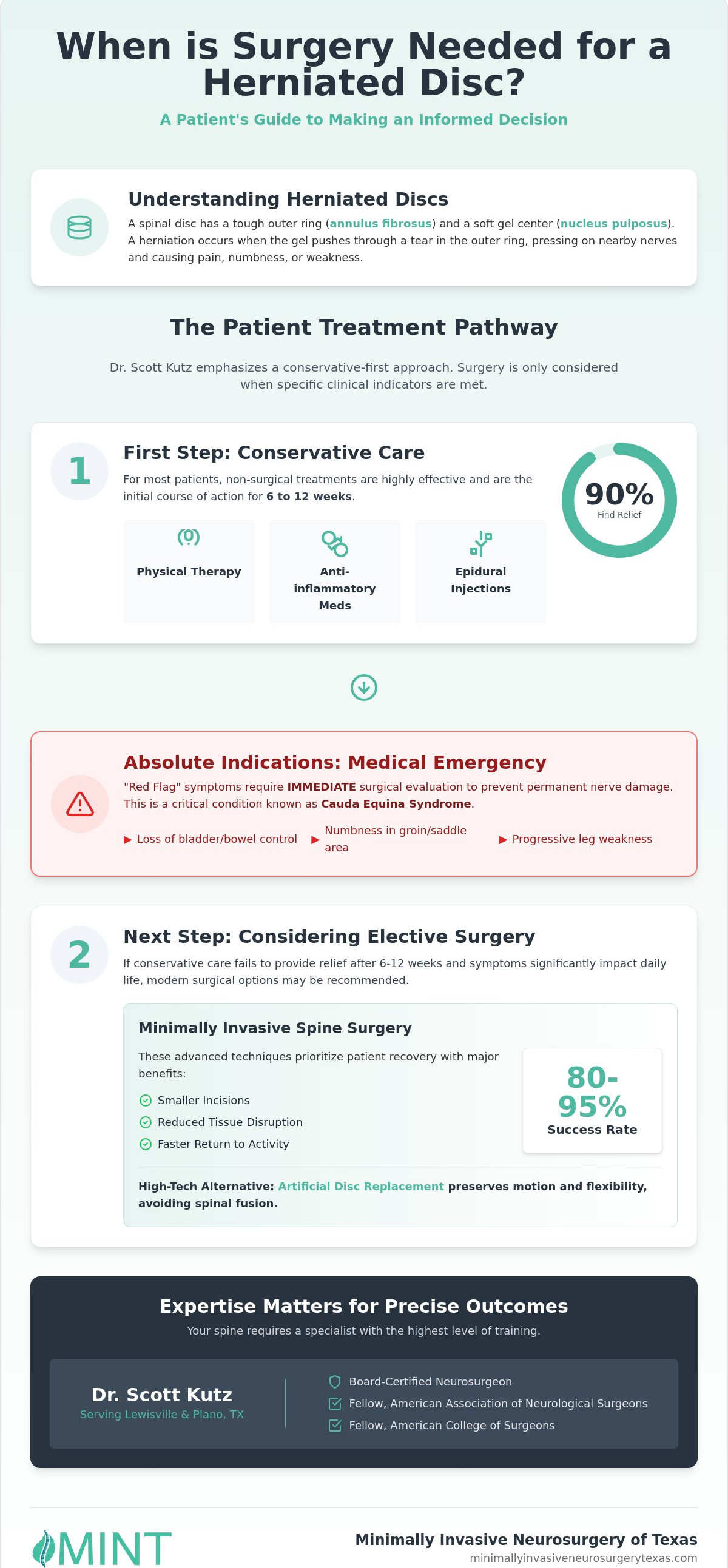
Your spinal discs act as sophisticated shock absorbers between the vertebrae of the spine. Each disc consists of a tough, fibrous outer ring called the annulus fibrosus and a soft, jelly-like center known as the nucleus pulposus. A herniation occurs when a tear in the outer ring allows the inner gel to escape and press against nearby nerves. For a comprehensive overview of spinal disc herniation, patients often review clinical classifications to understand how these tears impact their mobility. While the condition sounds alarming, many discs actually heal through a natural process called resorption, where the body’s immune system breaks down and absorbs the displaced material over time.
Determining when is surgery needed for herniated disc requires a meticulous diagnostic approach rather than a quick glance at a scan. Dr. Scott Kutz, a board-certified neurosurgeon and Fellow of the American Association of Neurological Surgeons, emphasizes that an accurate diagnosis requires matching a patient’s physical symptoms with high-resolution imaging results like an MRI. Sometimes an MRI shows a large herniation that causes no pain, while a small protrusion might cause intense agony. Dr. Kutz uses his over 20 years of experience to interpret these results with precision. His clinical philosophy centers on patient-first communication to ensure every individual understands their specific pathology and the available pathways to recovery.
The Role of Nerve Compression in Spinal Pain
Radiculopathy describes the pain, numbness, or weakness that travels along a nerve path when a disc compresses a nerve root. In the lower back, this often manifests as sciatica, a sharp pain that radiates from the hip down the leg. This compression happens because the nucleus pulposus triggers a chemical inflammatory response in addition to physical pressure. Dr. Kutz utilizes minimally invasive spine techniques to decompress these nerves with extreme care. The primary goal of any intervention is to relieve this pressure and prevent long term neurological damage or muscle wasting.
Why Most Patients Start with Conservative Care
Surgery is rarely the first step in a treatment plan at MINT. Most patients begin their journey with conservative options designed to manage symptoms while the body attempts to heal itself. These options include:
- Physical therapy to strengthen the supporting muscles of the spine.
- Non-steroidal anti-inflammatory medications to reduce localized swelling.
- Epidural steroid injections to deliver targeted relief to inflamed nerve roots.
Clinical data indicates that approximately 90 percent of patients find significant relief without surgery within six weeks of starting these conservative treatments. Dr. Kutz, who is also a Fellow of the American College of Surgeons, prioritizes these non-invasive methods before discussing surgical planning. This approach ensures that surgery remains a targeted solution for those who truly need it to return to normal activity.
Absolute Indications: When Herniated Disc Surgery is a Medical Emergency
While conservative care works for many, specific red flag indicators transform a chronic condition into an acute medical emergency. Understanding when is surgery needed for herniated disc becomes a matter of preventing permanent disability when these symptoms emerge. Cauda equina syndrome represents the most critical of these scenarios. This condition occurs when a massive disc herniation compresses the entire bundle of nerve roots at the lower end of the spinal cord. If you live in Plano or Lewisville and experience a sudden loss of bladder or bowel control, you must seek emergency surgical intervention immediately. These symptoms, along with saddle anesthesia, which is numbness in the groin, buttocks, and inner thighs, suggest that the nerves governing your most basic bodily functions are under extreme duress.
Another absolute indication for surgery is a progressive neurological deficit. This happens when muscle weakness in a leg or arm worsens despite rest and medication. Similarly, myelopathy occurs when the herniated material compresses the spinal cord itself rather than just an individual nerve root. Patients with myelopathy often report balance issues, a frequent tendency to trip, or a loss of fine motor skills, such as difficulty buttoning a shirt. Dr. Scott Kutz, a board-certified neurosurgeon and Fellow of the American Association of Neurological Surgeons, treats these cases as highest priority surgical events to preserve long term function. If you notice a rapid decline in your physical capabilities, you should contact a specialist immediately for an emergency evaluation.
Recognizing Cauda Equina Syndrome
The cauda equina is the bundle of nerve roots that resembles a horse’s tail at the end of the spinal canal. These nerves send and receive messages to and from the lower limbs and pelvic organs. When extreme pressure affects these roots, the risk of permanent paralysis or permanent loss of bladder control increases significantly. Clinical protocols suggest that surgical decompression must occur within a 24 to 48 hour window to achieve the best possible recovery outcomes. Dr. Scott Kutz, who is also a Fellow of the American College of Surgeons, prioritizes these emergency procedures to provide the relief necessary for nerve regeneration.
Progressive Muscle Weakness and Foot Drop
Foot drop is a specific type of weakness where you find it difficult or impossible to lift the front part of your foot while walking. This often causes the toes to drag along the ground, increasing the risk of falls. When a nerve is severely compromised, you may also notice muscle atrophy, which is the visible wasting away of muscle tissue due to a lack of nerve stimulation. Decompression surgery can halt this progression by removing the physical obstruction. By acting quickly, Dr. Kutz helps patients avoid permanent nerve death and facilitates a return to normal activity through precise surgical intervention.
Chronic Pain and Lifestyle: Deciding on Elective Surgery After Conservative Failure
While emergency indicators demand immediate action, most patients face a more nuanced question: how long should they endure pain before opting for an elective procedure? Surgery is typically considered when is surgery needed for herniated disc after conservative care fails to provide relief after six to twelve weeks. This window allows the body’s natural healing processes to work while preventing the condition from becoming a permanent fixture in your life. Dr. Scott Kutz works closely with patients in Lewisville and Plano to monitor this timeline. He believes that elective surgery is a joint decision based on clinical data and your personal goals for recovery.
Deciding on surgery involves a thorough assessment of your daily quality of life. When pain prevents sleep, work, or basic mobility, the physical and mental strain can become overwhelming. Dr. Scott Kutz, a board-certified neurosurgeon and Fellow of the American College of Surgeons, notes that waiting too long can sometimes be detrimental. Clinical evidence suggests that delaying surgery for more than six months after the onset of severe, non-responsive symptoms may reduce the success rate of nerve recovery. By choosing a timely intervention, you maximize the potential for the nerve to heal completely. You can see how other patients navigated this journey by visiting the MINT testimonials page.
Defining Failure of Conservative Treatment
Failure of conservative treatment does not mean the therapy was performed incorrectly. It simply means that despite a dedicated physical therapy plan, anti-inflammatory medications, and targeted injections, your pain remains at an unmanageable level. Dr. Kutz uses evidence-based spine care to evaluate these timelines. He often utilizes diagnostic imaging to confirm that the disc material still compresses the nerve despite your efforts at rehabilitation. If an MRI shows persistent compression after three months of dedicated therapy, the likelihood of the disc resorbing on its own decreases significantly. At this stage, surgical planning becomes a logical step toward a return to normal activity.
The Psychological and Physical Cost of Chronic Pain
Living with chronic nerve pain creates a heavy toll that extends beyond the spine. Persistent pain often leads to secondary issues like muscle imbalances as you subconsciously change the way you walk or stand to avoid discomfort. This “guarding” behavior puts undue stress on other joints and can eventually lead to chronic fatigue or depression. Surgery serves as a tool to break this cycle and restore your physical independence. Dr. Scott Kutz, who is also a Fellow of the American Association of Neurological Surgeons, focuses on techniques that minimize the impact of the procedure itself. The ultimate goal is to restore mobility and improve your overall quality of life before chronic pain causes permanent changes to your lifestyle.
Minimally Invasive Spine Surgery Options for Herniated Discs in 2026
When conservative treatments fail and you determine when is surgery needed for herniated disc, the next step involves selecting the most effective surgical methodology. Minimally invasive spine surgery (MISS) has become the clinical standard at Minimally Invasive Neurosurgery of Texas. These techniques utilize smaller incisions to reduce tissue disruption, which significantly lowers post-operative pain and accelerates recovery timelines. Dr. Scott Kutz, a board-certified neurosurgeon and Fellow of the American Association of Neurological Surgeons, utilizes these modern technologies at our Lewisville and Plano locations to ensure patients return to normal activity as quickly as possible.
Modern surgical intervention no longer requires the large, muscle-stripping incisions of the past. Instead, Dr. Kutz employs specialized instruments and high-definition visualization to address the herniation with extreme precision. These advancements allow most patients to undergo surgery as an outpatient procedure, returning home the same day. If you are experiencing lifestyle-limiting pain, you should schedule a consultation with Dr. Kutz to discuss which of these high-tech options fits your specific diagnostic profile.
Microdiscectomy vs. Endoscopic Discectomy
A microdiscectomy remains the gold standard for removing herniated disc material. During this procedure, Dr. Kutz makes a small incision and uses a microscope to identify and remove the portion of the disc pressing on the nerve. Endoscopic Spine Surgery represents an even less invasive evolution of this process. It involves the use of a tiny camera, or endoscope, and specialized tools passed through a small port. Both methods prioritize the preservation of healthy spinal structures, resulting in significantly less trauma to the surrounding muscles than traditional open surgery.
Artificial Disc Replacement: Preserving Mobility
Artificial Disc Replacement (ADR) offers a motion-preserving alternative to traditional spinal fusion. While a fusion joins two vertebrae together and limits movement, ADR replaces the damaged disc with a mechanical device that mimics the natural movement of the spine. Dr. Kutz, who is also a Fellow of the American College of Surgeons, frequently evaluates patients for ADR to reduce the risk of adjacent segment disease. This condition refers to the accelerated wear and tear on the spinal discs located directly above or below a fused segment. ADR maintains the natural biomechanics of your spine, providing a more aspirational outcome for long term mobility.
Advanced Precision with Robotics and AR
The integration of the Globus Excelsius robotic navigation system provides Dr. Kutz with unparalleled precision during complex procedures. This system ensures that any necessary hardware placement is accurate to within a single millimeter. Additionally, Augmedics augmented reality technology allows Dr. Kutz to see the patient’s internal spinal anatomy through the skin during the procedure. These proprietary technological systems act as a high-tech hallmark of our practice, ensuring that every patient in the Dallas and Fort Worth area receives care at the absolute forefront of modern surgical innovation.
Choosing a Specialist for Herniated Disc Care in Lewisville and Plano
Selecting the right surgeon is just as critical as the diagnosis itself. While many patients spend weeks researching when is surgery needed for herniated disc, the quality of the specialist determines the long-term success of the intervention. Dr. Scott Kutz is a board-certified neurosurgeon and a Fellow of the American Association of Neurological Surgeons. This distinction signifies that he has met the highest standards of clinical excellence and peer-reviewed expertise. By choosing a board-certified neurosurgeon, you ensure that your care is managed by a physician with the specialized fellowship training necessary to handle complex spinal pathologies with precision.
Minimally Invasive Neurosurgery of Texas (MINT) operates as a boutique surgical center, which offers significant advantages over large, impersonal hospital systems. Our practice prioritizes personal attention, ensuring you aren’t just a number in a high-volume facility. We serve patients across North Texas, including Lewisville, Plano, Dallas, McKinney, and Southlake. Our focus on Minimally Invasive Neurosurgery allows us to offer specialized care that traditional hospitals often overlook. Dr. Scott C. Kutz, who is also a Fellow of the American College of Surgeons, maintains a clinical environment where advanced technology meets compassionate, patient-centered communication.
What to Ask During Your Consultation
A consultation is your opportunity to gain clarity and confidence. Dr. Kutz encourages patients to arrive with specific questions to ensure they feel fully informed. You should ask about the surgeon’s specific experience with minimally invasive techniques like endoscopic discectomy or artificial disc replacement. Inquire about the expected recovery timelines and success rates for your specific diagnosis. It’s vital to understand all non-surgical and surgical options before you proceed. A specialist who provides medically grounded guidance without pressure helps you make the best decision for your unique lifestyle and health goals.
The MINT Patient Journey in Lewisville and Plano
The patient journey at MINT begins with a comprehensive initial evaluation. Dr. Kutz performs a thorough review of your medical history and a detailed analysis of your diagnostic imaging. Our practice philosophy centers on providing clear, accessible information without using fear-based language. We believe that an informed patient is a confident patient. Our new Lewisville headquarters, which serves as our primary office as of 2026, offers a convenient and high-tech environment for residents across the region. From the first scan to the final follow-up, our goal remains a swift return to normal activity through the most advanced spinal care available today.
Reclaim Your Mobility with Advanced Spine Care
Deciding on the next step for your spinal health requires a balance of clinical expertise and personal readiness. Whether you face an emergency red flag or have reached the limit of conservative therapy, the path to relief starts with a precise diagnosis. Dr. Scott Kutz uses his over 20 years of experience to help patients identify exactly when is surgery needed for herniated disc. By utilizing robotic-assisted navigation and endoscopic techniques, our team at MINT provides a sophisticated alternative to traditional, invasive procedures that often require much longer recovery times.
You don’t have to navigate chronic nerve pain alone. With specialized offices in Lewisville and Plano, Dr. Kutz offers a boutique surgical experience that prioritizes your return to normal activity. As a board-certified neurosurgeon and Fellow of the American Association of Neurological Surgeons, he combines high-tech innovation with a compassionate, patient-first philosophy. Schedule a consultation with Dr. Scott Kutz at our Lewisville or Plano office today. We’re ready to help you rediscover a life free from the limitations of spinal pain.
Frequently Asked Questions
How long should I wait before deciding on surgery for a herniated disc?
You should typically wait six to twelve weeks while participating in conservative treatments like physical therapy and medication before deciding on surgery. This timeframe allows your body’s natural healing processes to address the herniated material effectively. Dr. Scott Kutz monitors your progress during this period to ensure the nerve isn’t sustaining long term damage. If your pain remains unmanageable after this window, elective surgical planning becomes a medically sound next step toward recovery.
Is a herniated disc surgery considered a major operation in 2026?
Most herniated disc procedures in 2026 are minimally invasive, outpatient surgeries rather than traditional major operations. Advances in robotic navigation and endoscopic tools allow Dr. Scott Kutz to perform these repairs through incisions smaller than an inch. Patients often return home the same day and experience significantly less tissue trauma than with older surgical methods. This modern approach reduces the overall physical impact on your body and facilitates a much faster return to your daily routine.
What are the success rates for minimally invasive discectomy?
Success rates for minimally invasive discectomy generally range from 80% to 95% for the relief of leg pain, according to clinical registry data. These high percentages reflect the precision of modern techniques used at our Lewisville and Plano offices. While the success rate is high, Dr. Scott Kutz notes that the rate of reherniation remains between 5% and 15% over a ten year period. This makes post-operative care and lifestyle adjustments essential for maintaining long term spinal health and mobility.
Will I need physical therapy after my herniated disc surgery?
You will likely need a structured physical therapy program starting two to four weeks after your procedure to ensure a full return to normal activity. Therapy focuses on core stabilization and restoring flexibility to the muscles surrounding the spine to prevent future injuries. While MINT doesn’t offer in-house physical therapy, Dr. Scott Kutz provides specific clinical protocols for your therapist to follow; resources such as sportsinjurypt.com demonstrate the comprehensive rehabilitation necessary for such cases. This collaborative approach ensures your rehabilitation aligns perfectly with the specific requirements of your surgical recovery.
Can a herniated disc heal on its own without any surgical intervention?
A herniated disc can heal on its own through a natural process called resorption, where the body’s immune system breaks down the displaced disc material. Approximately 90 percent of patients find their symptoms resolve within six weeks without any surgical intervention. This is why Dr. Scott Kutz prioritizes conservative care for patients in Lewisville and Plano before discussing when is surgery needed for herniated disc. We only recommend surgery when these natural healing processes fail to provide adequate relief.
What is the recovery time for endoscopic spine surgery compared to traditional surgery?
Recovery from endoscopic spine surgery often takes only two to four weeks, whereas traditional open surgery can require several months of healing. Because endoscopic techniques involve minimal muscle disruption and no significant muscle stripping, patients typically experience a faster return to work and daily tasks. Dr. Scott Kutz utilizes these ultra-minimally invasive methods to reduce post-operative discomfort and minimize scarring. This efficiency allows you to transition from a state of pain to a state of active health much sooner.
Is artificial disc replacement better than spinal fusion for a herniated disc?
Artificial disc replacement is often a superior choice for younger or more active patients because it preserves natural spinal motion. Unlike spinal fusion, which joins vertebrae and can lead to accelerated wear in nearby discs, artificial disc replacement maintains the biomechanics of the spine. Dr. Scott Kutz, a board-certified neurosurgeon, evaluates each patient’s spinal anatomy to determine if they’re a candidate for this motion-preserving technology. This choice helps reduce the long term risk of adjacent segment disease and preserves your flexibility.
When is a herniated disc considered a medical emergency?
A herniated disc becomes a medical emergency if you experience red flag symptoms such as loss of bladder control, bowel dysfunction, or saddle anesthesia. Saddle anesthesia refers to numbness in the groin and inner thighs. These signs indicate cauda equina syndrome, a condition that requires surgical intervention within 24 to 48 hours to prevent permanent disability. If these symptoms appear suddenly, seek immediate care in Lewisville, Plano, or your nearest emergency department to protect your long term neurological health.