
What Is Lumbar Stenosis Surgery in Lewisville TX?
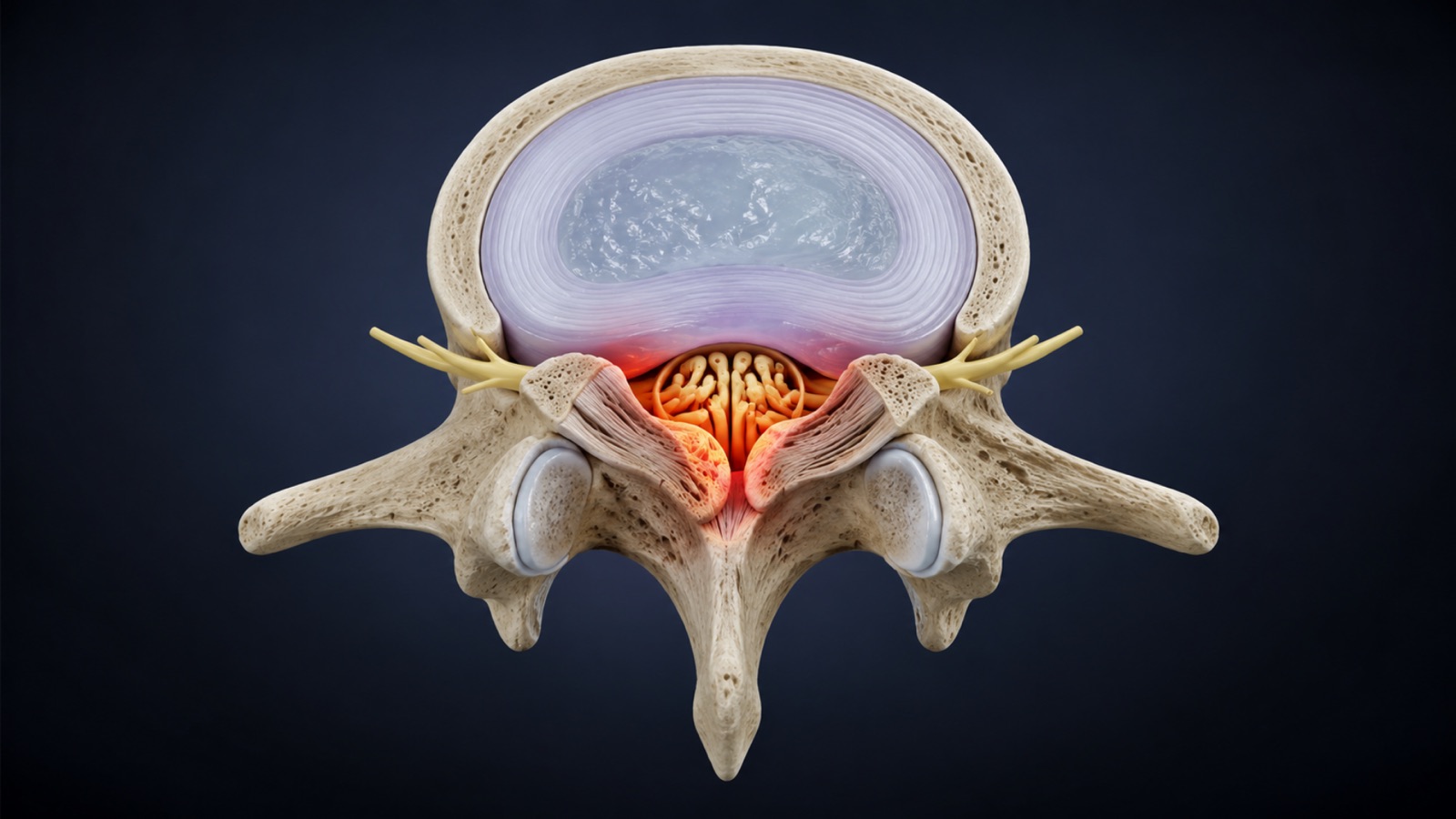
Lumbar spinal stenosis is a narrowing of the spinal canal or neural foramina in the lower back that compresses the spinal nerves. This compression produces a characteristic pattern of symptoms including leg pain, numbness, tingling, weakness, and a heavy or cramping sensation in the legs that typically worsens with standing and walking and improves with sitting or leaning forward. Physicians call this pattern neurogenic claudication, the hallmark symptom that distinguishes spinal stenosis from other causes of leg pain.
Lumbar stenosis is the most common reason for spine surgery in adults over 65. Most cases develop gradually from age-related degenerative changes including disc bulging, bone spur formation, facet joint enlargement, and thickening of the ligamentum flavum. These changes encroach on the space available for the spinal nerves, eventually producing symptoms when the narrowing becomes severe enough.
Scott C. Kutz, MD, a board-certified neurosurgeon at Minimally Invasive Neurosurgery of Texas, evaluates and treats lumbar spinal stenosis at the practice’s Lewisville and Plano, Texas locations. Dr. Kutz is a Fellow of the American Association of Neurological Surgeons and the American College of Surgeons, with 27 years of experience and over 6,000 successful spine surgeries. He prioritizes minimally invasive decompression techniques that relieve nerve pressure while preserving spinal stability.
When Does Lumbar Stenosis Require Surgery?
Not every patient with lumbar stenosis needs surgery. Many patients manage their symptoms effectively with conservative treatment for months or years. Surgery becomes a consideration when conservative approaches have not provided adequate relief, and the condition is significantly affecting quality of life.
Conservative treatment should come first. Dr. Kutz typically recommends that patients try physical therapy, anti-inflammatory medications, activity modification, and, when appropriate, epidural steroid injections before considering surgery. These treatments can reduce inflammation around compressed nerves and strengthen the spine’s supporting muscles. A sustained effort of at least six to twelve weeks is generally recommended before concluding that conservative care has not been adequate.
Signs that surgery may be appropriate include progressively shorter walking distance due to leg symptoms, leg pain or numbness that significantly limits daily activities such as grocery shopping or walking through a parking lot, progressive weakness in the legs or feet, and conservative treatments that have been tried faithfully without sufficient improvement.
Imaging must confirm a structural cause. An MRI must show narrowing of the spinal canal or neural foramina that matches the patient’s symptoms and physical exam findings. Imaging abnormalities without matching symptoms do not justify surgery on their own.
How Is Lumbar Stenosis Surgery Performed?
The goal of lumbar stenosis surgery is to create more space for the compressed spinal nerves by removing the bone, ligament, or disc material causing the narrowing. Dr. Kutz performs these decompression procedures using minimally invasive techniques that preserve the surrounding muscle and ligament structures.
Minimally invasive laminectomy is the most common procedure for central canal stenosis. The surgeon works through a tubular retractor inserted through a small incision, typically one to two inches. The retractor separates muscle fibers rather than cutting through them. Through this channel, the surgeon removes the lamina (the bony arch on the back of the vertebra) and any thickened ligamentum flavum that is compressing the spinal nerves. The magnified view through the operating microscope or endoscope allows precise removal of only the tissue causing the problem.
Minimally invasive laminotomy removes only a portion of the lamina, preserving more bone structure while still decompressing the nerve. This approach is appropriate when the stenosis is limited to a specific area rather than involving the entire canal at that level.
Minimally invasive foraminotomy widens the neural foramen, the bony exit window where a specific nerve root leaves the spinal canal. This procedure is appropriate when the stenosis primarily affects the exit canal rather than the central spinal canal. The surgeon removes the bone spur or disc material that is narrowing the foramen and compressing the nerve root.
Endoscopic spine surgery can treat focal lumbar stenosis through an incision smaller than a quarter inch in appropriate cases. The endoscope provides a high-definition, magnified view that allows precise decompression with minimal tissue disruption.
Minimally invasive fusion may be added when stenosis coexists with spinal instability. Spondylolisthesis, where one vertebra has slipped forward over the one below, is the most common form of instability seen alongside stenosis. In these cases, decompression alone could worsen instability, so fusion is added to provide structural support after relieving pressure.
The specific technique and approach Dr. Kutz selects depends on the location and extent of the stenosis, the number of levels involved, and whether instability is present. He uses the Globus Excelsius GPS Robotic Navigation Platform for procedures requiring screw placement and the Augmedics augmented reality system for enhanced visualization during complex decompressions.
Who May Be a Candidate for Surgery?
Candidates for lumbar stenosis surgery have imaging-confirmed narrowing of the spinal canal or neural foramina with symptoms that match the structural findings, have not responded adequately to conservative treatment, and have functional limitations that affect daily life.
Specific symptoms that may indicate surgical candidacy include leg pain, numbness, or weakness that follows a nerve distribution pattern, progressive difficulty walking due to leg cramping or heaviness, inability to stand for normal periods without developing leg symptoms, pain that improves with sitting or bending forward but worsens with standing or walking, and conservative treatments that have been tried for an adequate period without sufficient relief.
Candidacy requires an individualized evaluation. Dr. Kutz reviews each patient’s imaging, symptom history, physical examination, and prior treatment before recommending surgery. Patients considering lumbar stenosis surgery Lewisville TX can contact Minimally Invasive Neurosurgery of Texas at (972) 244-3491 to schedule a consultation.
Who May Not Be a Candidate?
Symptoms that do not correlate with imaging. If a patient has leg symptoms but the MRI does not show stenosis at a level that explains those specific symptoms, surgery is unlikely to help. Accurate clinical-radiologic correlation is essential.
Vascular claudication. Leg pain caused by peripheral arterial disease can mimic the symptoms of spinal stenosis. The two conditions can also coexist, which makes accurate diagnosis critical. Vascular claudication does not improve with spinal decompression.
Incomplete conservative treatment. Patients who have not completed an adequate trial of physical therapy, medications, and injections may still have nonsurgical options that could provide meaningful relief.
Medical conditions that make surgery unsafe. Patients with uncontrolled heart disease, severe pulmonary disease, active infections, or other conditions that significantly increase surgical risk require individual risk-benefit assessment.
Diffuse pain without a clear structural source. Generalized low back pain without a specific nerve compression pattern on imaging may respond poorly to decompression surgery. The source of pain must be clearly identifiable and surgically correctable.
Potential Benefits of Lumbar Stenosis Surgery
Minimally invasive decompression for lumbar stenosis can provide significant relief for patients who have not responded to conservative treatment. Benefits include relief of leg pain, numbness, tingling, and cramping, improved walking distance and endurance, improved ability to stand and perform daily activities, preservation of spinal stability when fusion is not needed, smaller incisions with less muscle damage compared to open surgery, reduced blood loss and lower infection risk, same-day or next-day discharge for many decompression procedures, faster recovery compared to traditional open laminectomy, and reduced post-operative pain and narcotic use.
A 2025 review published in Neurosurgery confirmed that minimally invasive spine surgery reduces recovery times and complication rates while maintaining outcomes comparable to open procedures (Ikwuegbuenyi et al., Neurosurgery, 2025). Individual results depend on symptom severity and duration, the extent of stenosis, overall health, and compliance with post-operative rehabilitation.
Risks and Complications
All surgical procedures carry risk. Patients should understand both general and procedure-specific risks before deciding on treatment.
General surgical risks include infection, bleeding, blood clots, and adverse reactions to anesthesia. These risks are generally lower with minimally invasive approaches because they involve smaller incisions and less tissue disruption.
Nerve injury is rare but possible. The surgeon works in proximity to the compressed spinal nerves throughout the procedure.
A dural tear can occur when the thin membrane covering the spinal cord and nerves is inadvertently punctured. This can cause a spinal fluid leak and headache. Most dural tears are repaired during the same procedure or heal on their own.
Incomplete decompression may occur if the stenosis is more extensive than anticipated or if the anatomy limits access. In rare cases, additional surgery may be needed.
Spinal instability can develop after decompression if too much bone is removed, particularly at levels where the facet joints are already compromised. This is why Dr. Kutz carefully evaluates stability before surgery and adds fusion when indicated.
Recurrence of stenosis is possible. New narrowing can develop at the same level or adjacent levels as degenerative changes continue. Maintaining a healthy weight and staying active helps reduce this risk.
Recovery After Lumbar Stenosis Surgery
Recovery timelines depend on whether the procedure is decompression alone or decompression with fusion.
Decompression only (laminectomy, laminotomy, foraminotomy): Most patients go home the same day or after one night. Walking begins within hours of surgery. Return to desk work typically occurs within one to two weeks. Light exercise and walking are encouraged early. Return to physically demanding work usually requires four to six weeks. Many patients notice immediate improvement in leg symptoms upon waking from surgery, though some nerve healing continues over weeks to months.
Decompression with fusion: Patients typically stay in the hospital for one to two nights. Walking begins the day of or the day after surgery. Return to desk work occurs within two to four weeks. Heavy lifting and strenuous activity are restricted for three to six months while the bone graft heals. Follow-up imaging monitors fusion progress.
General recovery guidelines for all procedures: The first week focuses on short, frequent walks and basic self-care. Ice therapy helps manage swelling. Pain is typically managed with a combination of over-the-counter medications and a short course of prescribed medication when needed. Physical therapy may be recommended to rebuild strength and flexibility. Driving is usually safe within one to two weeks once the patient is alert and off narcotic medications.
When to seek immediate medical attention. Contact the office or go to the emergency room if you experience sudden or progressive leg weakness, loss of bladder or bowel control, high fever with severe back pain, or worsening pain not controlled by prescribed medications.
Lumbar Stenosis Surgery Alternatives
Surgery is not the only option for lumbar stenosis, and Dr. Kutz discusses all alternatives with patients before recommending a procedure.
Physical therapy strengthens the muscles supporting the spine and improves flexibility. Core stabilization exercises, aquatic therapy, and flexion-based programs can provide meaningful symptom relief for many patients.
Epidural steroid injections deliver anti-inflammatory medication directly to the area around the compressed nerves. Injections can provide weeks to months of relief and may be repeated periodically.
Oral medications including anti-inflammatory drugs, neuropathic pain agents, and muscle relaxants can help manage symptoms.
Activity modification such as using a rolling walker, cycling instead of walking, or taking seated breaks can extend a patient’s functional capacity while managing symptoms.
Minimally invasive vs. open surgery. When surgery is indicated, minimally invasive approaches produce equivalent decompression with less tissue disruption. Open laminectomy remains appropriate for complex multilevel cases or when anatomy limits minimally invasive access.
Frequently Asked Questions
What is lumbar spinal stenosis?
Lumbar spinal stenosis is a narrowing of the spinal canal in the lower back that compresses the spinal nerves. It produces leg pain, numbness, weakness, and difficulty walking that typically worsens with standing and improves with sitting. Most cases result from age-related degenerative changes in the spine.
Does lumbar stenosis always require surgery?
No. Many patients manage symptoms effectively with physical therapy, medications, injections, and activity modification. Surgery is considered when conservative treatment fails to provide adequate relief and symptoms significantly limit daily activities.
What type of surgery treats lumbar stenosis?
The most common procedure is minimally invasive laminectomy, which removes bone and thickened ligament to create more space for the nerves. Endoscopic decompression and foraminotomy are options for select cases. Fusion is added when instability is present.
Is lumbar stenosis surgery performed as an outpatient procedure?
Many minimally invasive decompression procedures are performed on an outpatient or one-night basis at Minimally Invasive Neurosurgery of Texas. Procedures that include fusion typically require one to two nights.
How long does recovery take after lumbar stenosis surgery?
Decompression patients often return to desk work within 1 to 2 weeks and resume full activity within 4 to 8 weeks. Recovery is longer if fusion is performed, typically three to six months to return to full activity.
Will my leg pain improve immediately after surgery?
Many patients notice immediate improvement in leg symptoms upon waking from surgery. Some nerve healing continues over weeks to months, and gradual improvement in walking distance and endurance is common during this period.
Can lumbar stenosis come back after surgery?
Surgery effectively removes the current narrowing, but new stenosis can develop over time at the same or different levels as degenerative changes continue. Maintaining a healthy weight and staying physically active helps reduce this risk.
What is the difference between stenosis and a herniated disc?
A herniated disc occurs when disc material pushes out and compresses a nerve, often causing sudden sharp leg pain. Stenosis is a gradual narrowing of the spinal canal from multiple degenerative changes, typically causing progressive walking difficulty. Both conditions can compress nerves but develop differently and may require different surgical approaches.
When should I see a neurosurgeon for lumbar stenosis?
Consider a neurosurgical evaluation if your walking distance has progressively shortened due to leg symptoms, if conservative treatments have not provided adequate relief, or if you develop progressive leg weakness or changes in bladder or bowel function.
Who performs lumbar stenosis surgery Lewisville TX?
Scott C. Kutz, MD, at Minimally Invasive Neurosurgery of Texas. Call (972) 244-3491 to schedule a consultation.
Schedule a Consultation for Lumbar Spinal Stenosis Treatment and Surgery
Scott C. Kutz, MD, is a board-certified neurosurgeon serving patients at Minimally Invasive Neurosurgery of Texas in Lewisville and Plano, Texas. To discuss whether lumbar spinal stenosis treatment and surgery is appropriate for your condition, call (972) 244-3491 or request an appointment online.
- Lewisville: 1850 Lakepointe Drive, Suite 500, Lewisville, TX 75057
- Plano: 5465 Legacy Drive, Suite 650, Plano, TX 75024