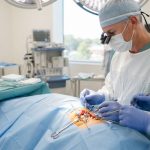
Image sourced from Canva
“Minimally invasive” is a phrase many people come across when they search for a neurosurgeon Frisco TX patients can see, but it is not always clear what it means in practice. At Minimally Invasive Neurosurgery of Texas, Dr. Scott Kutz, MD, a neurosurgeon board-certified by the American Board of Neurological Surgery (ABNS), evaluates patients from Frisco and across Dallas-Fort Worth at offices in Lewisville, TX, and Plano, TX.
This article explains how minimally invasive spine techniques work, how they compare with traditional open surgery according to published research, who may be a candidate, and what risks and alternatives patients should understand. It is educational and does not replace an individual evaluation.
If you want to know whether a minimally invasive approach could be part of your care, you can contact Minimally Invasive Neurosurgery of Texas to ask about an evaluation.
Key Takeaways
- Minimally invasive spine surgery uses smaller incisions and specialized tools designed to reduce disruption to muscles and soft tissue.
- Techniques include tubular retractors, endoscopic approaches, image guidance and motion-preserving procedures.
- Research comparing minimally invasive and open lumbar fusion has found less blood loss and shorter hospital stays on average, along with longer radiation exposure.
- Not every patient or condition is suited to a minimally invasive approach, and all spine surgery carries risks.
- Frisco-area patients are seen at the Plano, TX, and Lewisville, TX offices of Minimally Invasive Neurosurgery of Texas.
Table of Contents
- What Is Minimally Invasive Spine Surgery?
- Common Minimally Invasive Spine Techniques
- What Research Shows About Minimally Invasive and Open Approaches
- Who May Be a Candidate, According to a Neurosurgeon Frisco TX Patients See
- Risks and Alternatives to Minimally Invasive Spine Surgery
- Minimally Invasive Neurosurgery of Texas: Minimally Invasive Techniques in Lewisville and Plano, TX
- Take the Next Step With a Clearer Plan
- Frequently Asked Questions
What Is Minimally Invasive Spine Surgery?
Minimally invasive spine surgery is a group of techniques that allow a surgeon to treat a spinal problem through smaller incisions than traditional open surgery. Instead of making a long incision and pulling muscles away from the spine, the surgeon works through narrow openings using specialized instruments, cameras, and imaging.
The Goal: Less Tissue Disruption
The muscles along the spine help support posture and movement. Minimally invasive approaches are designed to gently separate, rather than cut or strip, those muscles where possible. The aim is to reach the problem area while typically causing less tissue disruption.
The Same Surgical Goals
A minimally invasive procedure usually has the same goals as an open procedure, such as relieving pressure on a nerve or stabilizing a segment of the spine. The difference is in how the surgeon reaches the spine, not in what needs to be accomplished.
Common Minimally Invasive Spine Techniques
Several tools and approaches fall under the minimally invasive umbrella. You can read an overview of the minimally invasive spine techniques used at the practice.
Tubular Retractors
A series of progressively larger tubes is inserted through a small incision to gently spread the muscle fibers apart. The surgeon then works through the final tube using a microscope or magnification.
Endoscopic Spine Surgery
Endoscopic surgery uses a thin tube with a high-definition camera and instruments. It is often used to remove disc material pressing on a nerve, which is why patients researching herniated disc treatment Frisco TX options sometimes ask about it.
Image Guidance and Fluoroscopy
Live X-ray imaging (fluoroscopy) and navigation systems help the surgeon confirm the correct level and position of instruments without a large incision.
Minimally Invasive Fusion
When a spinal segment needs to be stabilized, a minimally invasive lumbar fusion may be performed through smaller incisions, using screws and rods placed through the skin with imaging guidance.
Motion-Preserving Procedures
Some procedures, such as artificial disc replacement, are designed to maintain motion at a spinal segment rather than fusing it. Candidacy depends on the condition of the disc and surrounding joints.
What Research Shows About Minimally Invasive and Open Approaches
Comparisons between minimally invasive and open surgery should always be based on published evidence. A 2019 meta-analysis by Hammad and colleagues in the Journal of Orthopaedic Surgery and Research, which included 32 studies of transforaminal lumbar interbody fusion (TLIF), found reduced blood loss and shorter length of hospital stay for minimally invasive TLIF compared with open TLIF, with increased radiation exposure time. The same analysis found no significant difference in operative time.
What These Findings Mean
Studies like this one describe averages across many patients. They suggest minimally invasive approaches are often associated with less blood loss and shorter hospital stays for this type of fusion. They do not predict how any individual patient will do.
Trade-Offs to Understand
The increase in radiation exposure time reflects the greater reliance on live imaging during minimally invasive surgery. Both open and minimally invasive approaches remain established options, and the right choice depends on the condition being treated and the patient’s anatomy and health.
Who May Be a Candidate, According to a Neurosurgeon Frisco TX Patients See
Candidacy is decided individually after a full evaluation. Whether you first searched for a spine specialist Frisco practice or a back pain doctor Frisco TX residents recommend, the questions a surgeon considers are similar.
Factors a Specialist Considers
- The diagnosis and the exact location of the problem
- Imaging findings such as MRI and CT scans
- How symptoms have responded to non-surgical care
- Overall health, bone quality, and body weight
- Prior spine surgery at the same level
Conditions Sometimes Treated With Minimally Invasive Techniques
Minimally invasive approaches may be considered for herniated discs, spinal stenosis, certain types of spinal instability and some revision procedures. Some complex deformities or extensive problems may be better suited to other approaches. For more on how these decisions are made, read this guide to what Frisco-area patients should know about spine neurosurgery.
Risks and Alternatives to Minimally Invasive Spine Surgery
Smaller incisions do not remove risk. Every spine procedure, minimally invasive or open, carries potential complications.
General Surgical Risks
Risks include infection, bleeding, blood clots, reactions to anesthesia, nerve irritation or injury, a spinal fluid leak from a tear in the covering of the nerves, and the possibility that symptoms continue or further treatment is needed.
Risks Specific to Minimally Invasive Approaches
- Increased radiation exposure from intraoperative imaging, as noted in published research
- The possibility of changing to a larger open approach during surgery if needed
- For fusion procedures, the chance that the bones do not fuse as intended, or that screws or other hardware need revision
- For artificial disc replacement, implant wear, movement or settling of the implant, and bone forming around the implant that can limit its motion
Non-Surgical Alternatives
Many patients improve with physical therapy, medication, activity changes, or epidural steroid injections. These options are usually tried before surgery is considered. Recovery time after any procedure varies; many patients return to activity sooner than with open surgery, but timelines depend on the procedure and the person.
Warning Signs That Need Emergency Care
Seek emergency care for new loss of bladder or bowel control, numbness in the groin or inner thighs, rapidly worsening leg weakness, chest pain, trouble breathing, or sudden leg swelling or pain. For other concerns, see a qualified specialist for an evaluation.
Minimally Invasive Neurosurgery of Texas: Minimally Invasive Techniques in Lewisville and Plano, TX
Dr. Scott C. Kutz, MD, is a neurosurgeon and spine surgeon, board-certified by the American Board of Neurological Surgery (ABNS), with more than 25 years of experience and more than 6,000 patients treated. He is the founder and head neurosurgeon of Minimally Invasive Neurosurgery of Texas, a private practice in Lewisville, TX, and Plano, TX, dedicated exclusively to minimally invasive and motion-preserving surgical techniques for spinal conditions. He has been a Fellow of the American Association of Neurological Surgeons (AANS) since 2011 and the American College of Surgeons (ACS) since 2010.
Dr. Kutz specializes in endoscopic spine surgery, artificial disc replacement, sacroiliac joint fusion, and complex revision spine surgery. His approach prioritizes the least invasive appropriate option first, using advanced surgical techniques designed to minimize tissue disruption.
To review whether a minimally invasive approach may fit your situation, contact Minimally Invasive Neurosurgery of Texas.
Take the Next Step With a Clearer Plan
Minimally invasive spine techniques are designed to reach the spine with less disruption to surrounding tissue, and research on some procedures shows benefits such as less blood loss on average. They are not right for every patient, and they carry their own risks. Meeting with a neurosurgeon Frisco TX patients can reach is a practical way to learn whether these approaches fit your diagnosis.
Frisco-area patients are seen at the Plano, TX and Lewisville, TX offices. For more background, read this overview of spine neurosurgery for Frisco-area patients.
To discuss your concerns and next steps, contact Minimally Invasive Neurosurgery of Texas.
Frequently Asked Questions
What is minimally invasive spine surgery?
Minimally invasive spine surgery treats spinal problems through smaller incisions using tubes, cameras, specialized instruments and live imaging. It is designed to reach the spine with less disruption to surrounding muscles. The surgical goals are usually the same as open surgery, such as relieving nerve pressure or stabilizing a segment.
Is minimally invasive spine surgery safer than open surgery?
Studies show minimally invasive approaches are often associated with less blood loss and shorter hospital stays for certain procedures. Still, they also involve longer radiation exposure and carry their own risks. Neither approach is right for everyone. A specialist can explain how the options compare for your diagnosis.
How long is recovery after minimally invasive spine surgery?
Recovery time varies by procedure, overall health, and how many spinal levels are treated. Many patients return to light activities sooner than with open surgery, but full recovery can still take weeks to months. Your surgeon can give you a realistic range based on your procedure and situation.
Who is not a candidate for minimally invasive spine surgery?
Some patients with complex deformities, extensive multi-level problems, certain infections or tumors, or specific anatomy may be better served by other approaches. Bone quality and prior surgery can also affect candidacy. A specialist decides after reviewing your history, exam, and imaging, so candidacy depends on your diagnosis.
What are the risks of minimally invasive spine surgery?
Risks include infection, bleeding, blood clots, anesthesia reactions, nerve irritation or injury, spinal fluid leaks, increased radiation exposure, and possible change to an open approach. Fusion procedures may not fuse as intended. A specialist can explain which risks apply to your procedure and health history.
Does Dr. Scott Kutz perform endoscopic spine surgery?
Yes. Dr. Scott Kutz, MD, specializes in endoscopic spine surgery, along with artificial disc replacement, sacroiliac joint fusion, and complex revision spine surgery. Whether endoscopic surgery is appropriate depends on your diagnosis and imaging. Frisco-area patients can be evaluated at the Plano, TX, or Lewisville, TX office.
Medical Disclaimer: This article is for educational purposes only and is not medical advice. Individual results vary. Please consult a qualified physician about your specific condition. To discuss your options with Dr. Scott Kutz, MD, contact Minimally Invasive Neurosurgery of Texas.