A spine surgeon’s title alone doesn’t show which specialist may fit your condition. Dr. Scott Kutz, a board-certified neurosurgeon and Fellow of the AANS and ACS, leads Minimally Invasive Neurosurgery of Texas (MINT), which provides minimally invasive spine surgery in Lewisville and Plano, Texas.
In practical terms, understanding what is the difference between a neurosurgeon and a spine surgeon comes down to specialty and focus. Neurosurgeons train to treat the brain, spinal cord, and nerves. Orthopedic surgeons focus on bones and joints, and some also specialize in spine care. Both may treat conditions such as herniated discs and spinal stenosis, a narrowing that can put pressure on spinal nerves.
It’s reasonable to want a clear answer before deciding on back or neck care. This guide explains how training, board certification, areas of focus, and surgical approaches differ, and how a surgeon’s experience with your condition and proposed procedure can help you choose a specialist.
Key Takeaways
- “Spine surgeon” describes a focus, while a surgeon’s original specialty may be neurosurgery or orthopedic surgery.
- Both specialties can treat conditions such as herniated discs and spinal stenosis, though their training emphasizes different parts of the body.
- Compare fellowship training and experience with your specific condition and proposed procedure, not titles alone.
- Learn how nerve decompression, spinal fusion, and minimally invasive techniques address different spine problems.
- Use the nature of your condition, the surgeon’s expertise, and the recommended approach to guide your next step.
Neurosurgeon vs. Spine Surgeon: A Quick Definition
Minimally Invasive Neurosurgery of Texas provides minimally invasive spine surgery in Lewisville and Plano, Texas. Dr. Scott Kutz, a board-certified neurosurgeon and Fellow of the American Association of Neurological Surgeons and the American College of Surgeons, leads the practice’s care.
A neurosurgeon trains to treat conditions affecting the brain, spinal cord, and nerves. An orthopedic surgeon focuses on the body’s bones, joints, and related structures. Either may focus on spine surgery, so “spine surgeon” usually describes an area of practice rather than a surgeon’s original specialty.
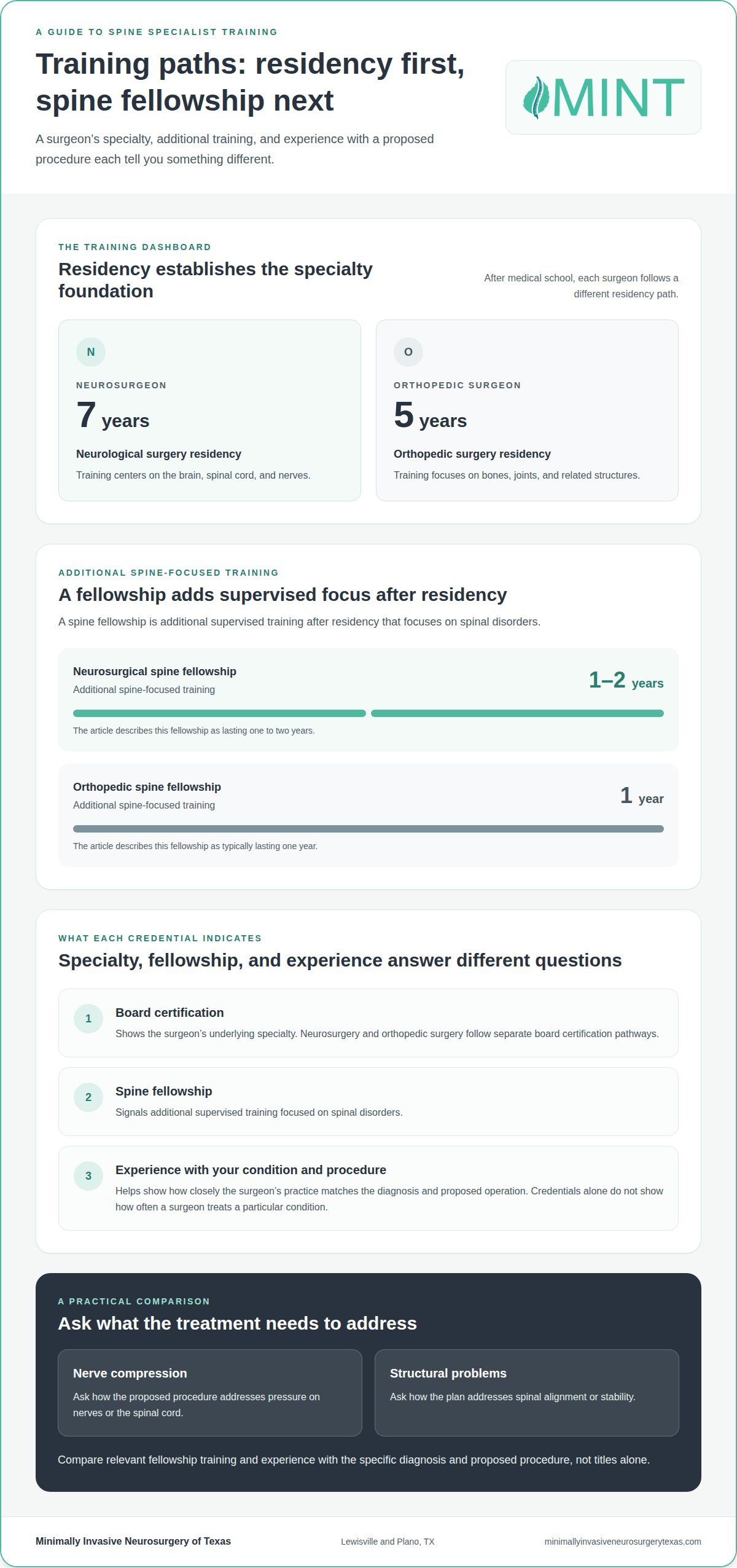
The training paths reflect these different foundations. After medical school, neurosurgeons complete a seven-year neurological surgery residency. Orthopedic surgeons complete a five-year orthopedic residency, and those who specialize in spine surgery may then complete a one-year spine fellowship. A fellowship is additional supervised training after residency that focuses on a particular area of care.
The roles also overlap. Both types of spine specialists can treat conditions such as a herniated disc, in which disc material presses on nearby nerves, or spinal stenosis, a narrowing that can put pressure on the spinal cord or nerves. They may also perform procedures to relieve this pressure or stabilize the spine.
The title alone therefore doesn’t tell you which surgeon suits a particular problem. The relevant question is whether the surgeon has training and experience with your diagnosis and the procedure under consideration. A patient with nerve compression may need a different surgical plan from someone with spinal instability, even when both consult a spine specialist. Dr. Kutz’s neurosurgical background and focus on spine care connect to minimally invasive spine surgery techniques, which aim to address spinal problems through less disruptive approaches.
What Is the Difference Between a Neurosurgeon and a Spine Surgeon?
The answer to what is the difference between a neurosurgeon and a spine surgeon depends on whether “spine surgeon” refers to a surgeon’s practice focus or original specialty. Neurosurgery centers on the brain, spinal cord, and nerves. A spine surgeon may have trained in neurosurgery or orthopedic surgery, then focused on surgical care for the spine.
That distinction can shape a surgeon’s clinical perspective. Neurosurgeons bring specific training in nervous system problems, including conditions affecting nerve roots or the spinal cord. Orthopedic spine surgeons focus on the spine’s bones, joints, ligaments, and supporting tissues. A patient with a spinal fracture or deformity may need careful assessment of spinal structure, while symptoms from nerve compression call for attention to how the affected nerve functions.
The specialties overlap in the operating room. Both neurosurgeons and orthopedic spine surgeons can perform a discectomy, which removes disc material pressing on a nerve. For example, either may treat sciatica, pain that travels along the path of an irritated nerve, when a herniated disc causes the pressure. Both also perform spinal instrumentation, using implants to help stabilize the spine.
Titles alone don’t establish which specialist fits your situation. The diagnosis, structures involved, and planned procedure matter. A surgeon’s experience with your specific problem can help clarify whether their training aligns with the treatment plan.
Consider the goal of care, not just the specialty name. If the plan targets nerve pressure, ask how the procedure addresses the affected nerve. If it aims to correct instability or a deformity, understand how it supports spinal alignment. These details explain the surgeon’s approach and why a particular specialist may suit your needs.
Fellowship Training and Board Certification
Neurosurgeons complete a seven-year neurological surgery residency; orthopedic surgeons complete a five-year orthopedic residency. Both specialties may add a spine fellowship, supervised postgraduate training focused on spinal disorders. Neurosurgical spine fellowships last 1-2 years, while orthopedic spine fellowships typically last one year.
In the United States, each specialty has a separate board certification pathway. Board certification reflects the surgeon’s underlying specialty, while a fellowship signals additional spine-focused training. Neither credential alone shows how often a surgeon treats a particular condition, such as nerve compression, pressure on a nerve or the spinal cord.
Use these criteria to understand a surgeon’s training and case mix:
| Specialist | Training foundation | Useful focus to discuss |
|---|---|---|
| Neurosurgeon | Neurological surgery residency | Spinal cord, nerves, and spine procedures |
| Orthopedic spine surgeon | Orthopedic surgery residency | Spinal bones, joints, and structural problems |
| Either specialty with a spine fellowship | Additional supervised spine training | Specific procedures and conditions treated |
Choose based on the surgeon’s experience with your diagnosis and proposed procedure, along with relevant fellowship training.
Ask how the surgeon’s fellowship prepared them for your planned operation and how regularly they perform it. For example, a case involving nerve compression calls for experience addressing pressure on nerves, while a structural problem may require expertise in spinal alignment or stability. A qualified surgeon should explain how their training fits the treatment plan.
Risks vary with the procedure and a patient’s health. Recovery after minimally invasive spine surgery may take 2-6 weeks; spinal fusion recovery may take 3-6 months. Spine problems need urgent medical evaluation when symptoms become sudden, severe, or rapidly worsen, since prompt assessment can identify possible effects on nerve or spinal cord function.
Neurosurgical Procedures Involving the Brain, Nerves, and Spine
Yes. Neurosurgeons and orthopedic spine surgeons can perform several of the same spine operations, including discectomy, nerve decompression, and spinal fusion. A discectomy removes disc material pressing on a nerve. The diagnosis, anatomy, and surgical goal help determine which procedure is appropriate.
Neurosurgeons treat disorders involving the brain, spinal cord, and nerves. The Centers for Disease Control and Prevention (CDC) identifies neurosurgeons as specialists who check the brain and spine. For spine conditions, they may decompress nerves, meaning they relieve pressure on spinal nerves or the spinal cord.
A herniated disc can compress a nerve root, the part of a nerve that branches from the spinal cord. A surgeon may remove the material pressing on it. In spinal stenosis, a narrowing around the spinal cord or nerves, decompression creates more space for these structures.
Spinal fusion addresses a different problem. The procedure joins vertebrae, the bones that form the spine, to stabilize an unstable segment. Surgeons may use instrumentation, such as implants, to support the spine while the bones fuse. The treatment plan depends on the diagnosis and the specific source of instability.
Neurosurgeons also perform operations involving the brain, while spine procedures may address spinal tumors, nerve compression, spinal cord injuries, or congenital spinal disorders. Congenital disorders develop before birth. A cervical procedure involves the neck portion of the spine, where nerves and the spinal cord remain central considerations.
Both specialties can perform common operations, but training and individual experience with each procedure vary. A patient considering fusion can ask about the surgeon’s experience with that operation; someone considering nerve decompression can ask how the plan targets the compressed nerve. Procedure-specific expertise connects the diagnosis to the surgical approach.
Choosing a Spine Specialist
Start with the condition and operation under consideration, not the surgeon’s title. A specialist’s experience treating your diagnosis and performing the proposed procedure matters. Neurosurgeons and orthopedic spine surgeons both treat conditions such as spinal stenosis, a narrowing that can put pressure on nerves. A structural problem, such as scoliosis, may call for particular experience with spinal deformity.
Patients often ask, “What is the difference between a neurosurgeon and a spine surgeon?” Compare the surgeon’s training and relevant case mix. A spine fellowship adds focused training after residency. Ask how that training relates to your diagnosis and how often the surgeon performs the recommended procedure. Experience with a specific operation can matter more than the surgeon’s original specialty.
- For spinal stenosis, ask how the proposed procedure will relieve pressure on nerves or the spinal cord.
- For scoliosis, ask about experience treating spinal curves and planning corrective procedures.
- For a herniated disc, ask how the recommended operation addresses disc material pressing on a nerve.
Case volume offers another point of comparison. One recommendation is to look for a spine surgeon with 500 or more spine cases. Also consider experience with your specific diagnosis and procedure, since overall case volume doesn’t show how closely a surgeon’s work matches your needs.
Understand the full treatment plan before deciding. Ask the doctor to explain the diagnosis, the goal of surgery, and why the proposed approach fits your spine. For example, nerve decompression relieves pressure, while spinal fusion joins bones to stabilize a segment. These procedures address different problems.
Make the comparison specific to your situation by asking, “What is the difference between a neurosurgeon and a spine surgeon for my diagnosis and proposed procedure?” Consider the answer alongside fellowship training, procedure-specific experience, and how clearly the surgeon connects your symptoms and imaging findings to the recommended operation.
Differences in Musculoskeletal and Neurological Focus
Orthopedic training centers on the musculoskeletal system: bones, joints, ligaments, and supporting tissues. In spine care, orthopedic spine surgeons apply that focus to fractures, spinal deformity, and instability. A vertebral fracture, for example, raises questions about bone structure and spinal stability. Orthopedic surgeons also consider nearby nerves when planning spine procedures.
Neurosurgical training focuses on the nervous system, including the brain, spinal cord, and nerves. In spine care, that perspective helps surgeons assess how compression, or pressure on a nerve, affects strength, sensation, and function. Spinal stenosis, a narrowing that can press on nerves or the spinal cord, shows how a structural change can also create a neurological problem.
The focus differs, but the work overlaps. Both specialties may perform decompression, which relieves pressure on nerves, and fusion, which joins spinal bones to stabilize them. The clinical emphasis depends on the problem:
- Fracture or instability: assess bone alignment and the spine’s ability to support movement.
- Nerve compression: assess which nerve the condition affects and how to relieve pressure.
- Spinal deformity: evaluate the curve, spinal balance, and effects on nearby nerves.
These examples show why a diagnosis rarely belongs to just one perspective. A patient with spinal stenosis may need both a review of the narrowed spinal canal and an assessment of nerve symptoms. A fracture that also compresses a nerve can require attention to structural stability and nervous system function.
Medical school and specialty training build different foundations, but spine surgeons in both fields can develop focused spine expertise. For a specific case, match the surgeon’s experience to the main challenge: spinal structure, nerve function, or both. That connection between diagnosis and surgical focus is more useful than specialty title alone.
Differences in Surgical Approaches
A surgeon’s specialty does not dictate a single surgical approach. Neurosurgeons and orthopedic surgeons may perform similar spine procedures, while residency and fellowship training shape their experience. The planned operation depends on the diagnosis, the spinal structures involved, and the treatment goal.
Minimally invasive surgery uses smaller incisions and specialized instruments to reach the treatment area. For example, endoscopic spine surgery uses a small camera to view the operative site. This approach can support targeted access, but the surgeon still needs to determine whether it suits the patient’s anatomy and condition.
Decompression removes or reshapes tissue that presses on a nerve or the spinal cord. A surgeon may recommend it for spinal stenosis, a narrowing that can create pressure around these structures. If the spine also needs stabilization, the plan may include fusion, a procedure that joins vertebrae. The appropriate approach follows the problem being treated, not simply the surgeon’s specialty.
Some operations address spinal deformity. Orthopedic surgeons often lead scoliosis surgery because of their experience with spinal alignment, while neurosurgeons may contribute expertise involving nerves and the spinal cord. Surgical teams can collaborate when a complex case involves both structural correction and nervous system considerations.
For a proposed procedure, focus on how the approach addresses your specific diagnosis. Ask what the surgeon plans to remove, preserve, or stabilize, and why. For instance, a decompression-only plan differs from decompression combined with fusion because each addresses a different surgical need. The surgeon’s experience with that procedure and chosen technique can help clarify whether the plan fits your case. A useful discussion connects imaging findings and symptoms to the proposed surgical steps and explains the role of each step in treatment.
Minimally Invasive Neurosurgery of Texas
Minimally Invasive Neurosurgery of Texas provides spine surgery in Lewisville and Plano, Texas, with Dr. Scott Kutz, a board-certified neurosurgeon and Fellow of the AANS and ACS. The practice focuses on spinal care, including minimally invasive approaches for appropriate conditions.
If you’re weighing a neurosurgeon against another type of spine specialist, consider how the surgeon’s training and procedure experience fit your diagnosis. Dr. Kutz’s neurosurgical background focuses on the nervous system and spine. That perspective matters when a condition affects spinal nerves or the spinal cord, the bundle of nerves that carries signals between the brain and body.
For example, a herniated disc can press on a nearby nerve and cause pain, tingling, or weakness. Spinal stenosis, a narrowing around the spinal cord or nerves, may also need careful evaluation. The right surgical plan depends on the affected structures, symptoms, and treatment goals, not the specialist’s title alone.
Minimally Invasive Neurosurgery of Texas offers minimally invasive spine surgery, minimally invasive neurosurgery, artificial disc replacement, and endoscopic spine surgery. These procedures address different spinal conditions and use different techniques. An evaluation can help clarify whether surgery fits the problem and which approach aligns with the diagnosis.
Consider a spine consultation if ongoing symptoms affect daily activities, imaging identifies a spinal problem, or a clinician has discussed surgery. Bring relevant imaging and a list of symptoms and prior treatments so the discussion can focus on your condition and options. Understanding the diagnosis and proposed procedure can make the choice of specialist clearer.
Contact Minimally Invasive Neurosurgery of Texas to discuss spine care with the practice.
Frequently Asked Questions
What Is the Difference Between a Referral from an Orthopaedic Spine Surgeon Versus a Neurosurgeon for Spine Surgery?
Either referral can direct attention to a spine problem, but neither alone establishes which surgeon should operate. The referring doctor may identify symptoms, imaging findings, and a question for surgical review. For example, a referral might request an assessment of persistent leg pain alongside a disc finding. The specialist evaluates how the findings relate to symptoms and discusses treatment options that match the problem.
What Is a Neurosurgeon?
A neurosurgeon is a physician trained to diagnose and surgically treat conditions involving the brain, spinal cord, and nerves. In spine care, the specialty can address issues such as nerve compression or a spinal cord problem. For example, a neurosurgeon may assess whether a patient’s weakness relates to pressure on a nerve. The surgeon’s specific spine training and experience help shape the evaluation and potential treatment plan.
Do Both Specialists Treat Spine Conditions?
Yes. Neurosurgeons and orthopedic spine surgeons both treat spine conditions, though their original training emphasizes different structures. Either specialty may evaluate a patient with back pain and a herniated disc. A patient with a spinal fracture may need particular attention to bone stability, while leg symptoms may prompt a close assessment of nerve function. The diagnosis and surgeon’s relevant experience help guide the choice.
Final Thoughts: Who’s Right for Your Spine Condition?
The right specialist has training and experience that fit your diagnosis and proposed procedure. For example, a patient considering surgery for a herniated disc can focus on the surgeon’s experience treating that condition and performing the recommended operation. Review how the surgeon explains the diagnosis, surgical goal, and alternatives. A clear connection between your symptoms, examination, imaging, and proposed plan helps you make an informed decision.
What Procedures Do They Perform?
Neurosurgeons and orthopedic spine surgeons may perform procedures such as discectomy, decompression, and spinal fusion. A discectomy removes disc material that presses on a nerve. Decompression relieves pressure on nerves or the spinal cord. Fusion joins spinal bones to stabilize an area. Surgeons may also use implants during some procedures. The diagnosis and surgical goal determine which operation fits, rather than the specialist’s title alone.
What Does a Spine Surgeon Treat and What Procedures Do They Perform?
A spine surgeon treats conditions affecting the spine, including herniated discs, spinal stenosis, instability, and deformity. Procedures may include removing material that compresses a nerve, widening space around spinal nerves, or joining vertebrae to stabilize the spine. For example, a treatment plan for a herniated disc may differ from one for spinal instability. The surgeon matches the procedure to the affected structure and the patient’s symptoms.
Can a Spine Surgeon Be a Neurosurgeon or an Orthopedic Surgeon?
Yes. A spine surgeon may begin with neurosurgical or orthopedic training, then focus on spine care. Neurosurgeons train to treat the brain, spinal cord, and nerves; orthopedic surgeons focus on bones, joints, and related structures. Both can pursue additional spine training and perform spine operations. For patients, the useful distinction is the surgeon’s experience with the specific condition and procedure, not the label “spine surgeon” alone.
What Training and Board Certification Do Neurosurgeons and Spine Surgeons Need in the United States?
Neurosurgeons complete a seven-year neurological surgery residency after medical school. Orthopedic surgeons complete a five-year orthopedic residency; those pursuing spine specialization may add a one-year spine fellowship. Neurosurgical spine fellowships last 1-2 years. Fellowship training adds focused experience, while board certification follows the surgeon’s underlying specialty. The United States does not have a separate board certification for a distinct spine-surgeon specialty.