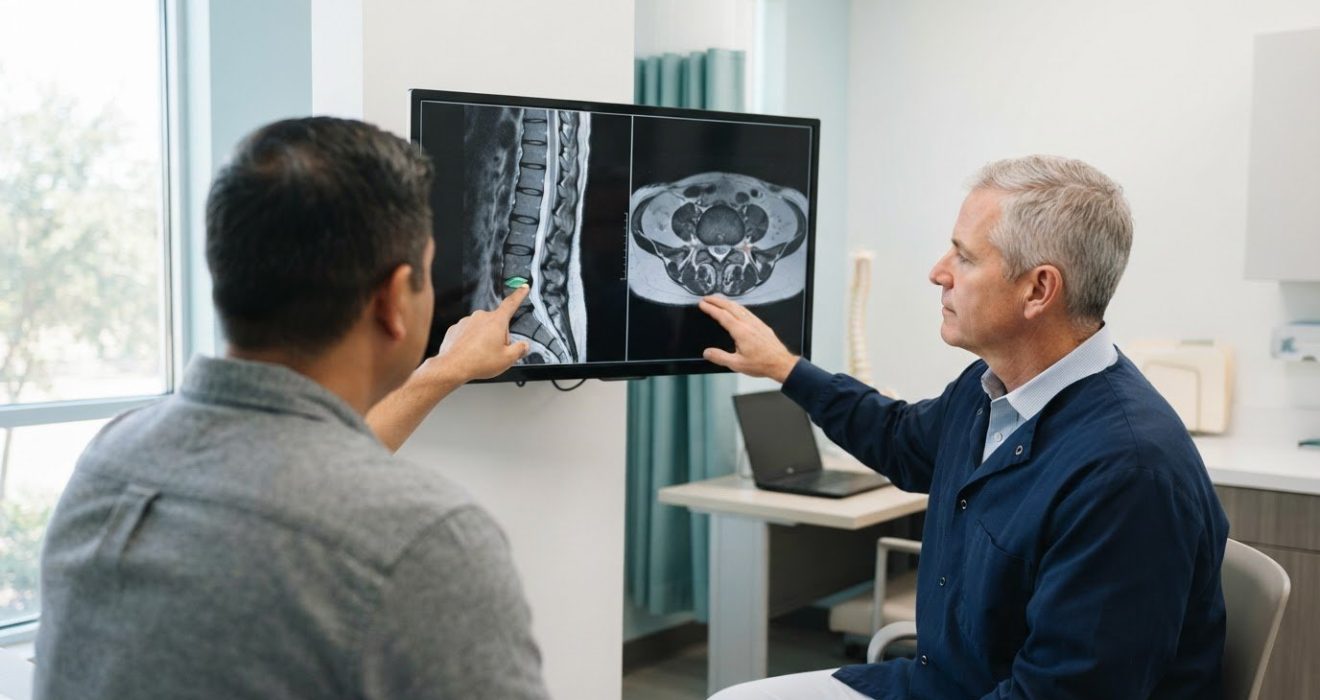
Minimally Invasive Neurosurgery of Texas (MINT), led by Dr. Scott Kutz, a board-certified neurosurgeon and Fellow of the AANS and ACS, provides minimally invasive spine surgery in Lewisville and Plano, TX. The best questions for a spine surgery second opinion help you understand your diagnosis, compare treatment options, and identify the outcomes that matter to you. Dr. Kutz emphasizes matching imaging findings with symptoms before weighing a surgical recommendation.
A recommendation for surgery doesn’t mean you need to rush into a decision. Preparing the best questions for a spine surgery second opinion can help you understand whether surgery makes sense, whether another approach may suit your needs, and what to consider if you wait.
This article covers the best questions for a spine surgery second opinion, including what to ask about nonsurgical care, risks, timing, recovery goals, and a surgeon’s experience. It also explains minimally invasive options, including endoscopic spine surgery, which uses a camera and instruments through a small incision. These topics can help you have a more informed conversation about treatment and how it may affect daily life.
Key Takeaways
- Compare surgical and nonsurgical options by their potential benefits, risks, and recovery demands before weighing a treatment plan.
- A second opinion can help clarify your diagnosis, explore alternatives, and feel more confident about whether and when to proceed.
- Discuss the daily activities you want to return to and the support you may need during recovery.
- Ask about a surgeon’s experience with the specific procedure and how they assess its potential outcomes.
- Find out whether a minimally invasive approach fits your condition, and note that the Centers for Medicare & Medicaid Services says Original Medicare Part B pays 80% of the Medicare-approved amount for a second opinion.
What Treatment Options Might Come Up?
A second opinion compares surgical and nonsurgical care in light of your symptoms, examination, and imaging. Doctors assess whether scan findings match your pain, weakness, or movement limitations. Ask what each option aims to improve and what could happen if you wait. For example, a herniated disc may cause leg pain, but imaging alone cannot show how much that pain disrupts your daily activities.
Nonsurgical treatment may include physical therapy, activity changes, image-guided injections, or pain-management strategies. These approaches can help manage symptoms without an operation, though they may not address every cause of nerve pressure. Ask how long to try each option, what changes would show progress, and which symptoms should prompt another evaluation. With Original Medicare Part B, Medicare pays 80% of the Medicare-approved amount for a second opinion, according to the Centers for Medicare & Medicaid Services.
If symptoms persist despite nonsurgical care, doctors may discuss procedures matched to the diagnosis. A discectomy removes the part of a disc pressing on a nerve. A laminectomy removes bone to create more room for nerves, while spinal fusion joins vertebrae to limit movement. Each procedure has different benefits, risks, and recovery demands. Reported spine surgery success rates range from 60% to 95%, depending on the procedure, diagnosis, and how clinicians define success.
Ask about specific risks, including infection, bleeding, nerve injury, and complications related to your health. Diabetes, for example, can increase the risks of cardiovascular complications, infection, and wound-healing problems. Ask how your health history affects the balance of potential benefits and surgical risks. Recovery also depends on the procedure and your condition, so discuss when you might resume walking, work, and other daily activities.
Different techniques can treat the same condition. Endoscopic spine surgery uses a camera and instruments through a cut under one inch to relieve pressure on a nerve. A minimally invasive endoscopic approach may limit tissue disruption compared with a more open approach, but suitability depends on the location and cause of nerve pressure. Ask why a surgeon recommends a specific technique, whether another approach could address the same problem, and how each option affects movement, risks, and recovery. Then compare the answers against your symptoms and priorities.
Spine Surgery: When Should You Get a Second Opinion?
Consider a second opinion before committing to major spine surgery if the diagnosis is unclear, the proposed procedure seems extensive, or you feel rushed. It may also help when symptoms persist despite treatment, your strength changes, or the recommendation doesn’t seem to address your daily limitations. A second surgeon can review your symptoms, examination, scans, and treatment history together. That review may confirm the original plan, revise the diagnosis, or identify other surgical options.
Bring the actual imaging scans, not just the written reports, along with prior treatment records and a current medication list. Ask the second surgeon to explain how each scan finding relates to your pain, numbness, or weakness. For example, a disc bulge may not explain your symptoms unless its location matches the affected nerve. If two doctors recommend different procedures, ask each to explain the expected benefits, risks, and effects on movement and quality of life.
A second opinion may identify treatments to try before surgery. Depending on the diagnosis, doctors may discuss physical therapy, activity changes, rest, pain medication, or image-guided injections. These approaches may help manage symptoms while you monitor strength and function. Ask what improvement would look like, how it will be measured, and which new symptoms could change the plan. Doctors may consider surgery when symptoms persist despite conservative care, neurological problems worsen, and imaging findings match the clinical condition.
How urgent is spine surgery, and what symptoms mean you shouldn’t delay? Sudden loss of bladder or bowel control, numbness around the groin, or rapidly worsening leg weakness calls for emergency care, not a routine second-opinion appointment. Without these warning signs, a second opinion can help assess whether surgery can wait, nonsurgical treatments remain reasonable, or monitoring fits the situation.
Does insurance cover a spine surgery second opinion, and what does it cost? Many health insurance plans cover a second or third opinion when you can justify the reason, according to Penn State Health Milton S. Hershey Medical Center. Your out-of-pocket cost depends on your plan and the clinician’s billing arrangements, so ask your insurer about coverage and expected costs. Some plans require a second opinion before certain surgeries, making an early coverage question useful.
Use the consultation to understand what each recommendation means for your goals, not simply to collect another opinion. Ask the surgeon to explain the diagnosis, alternatives, risks, and possible consequences of waiting. A clear comparison can help you decide whether the proposed treatment fits your symptoms and clarify your next step.
Discussing recovery goals and lifestyle with a surgeon
Connect recovery goals with the tasks that shape your daily life. Name specific activities, such as walking the dog, driving, preparing meals, or returning to desk work. Explain how lower back pain affects each task and what improvement would matter most. These examples help your surgeon relate medical recommendations to practical goals instead of discussing recovery as an abstract milestone.
Ask when you can resume basic activities after minimally invasive spine surgery. Basic activities may take a few weeks to resume, while full recovery can take several months. The procedure and your health affect that timeline. Ask what movement you can do early, how to increase activity, and which symptoms mean you should pause. Walking soon after back surgery can support recovery and shorten a hospital stay.
Discuss milestones by activity, not just by calendar date. For a discectomy, which removes disc material pressing on a nerve, light activity typically resumes in 2-4 weeks and normal activity around 6 weeks. After a laminectomy, a procedure that removes part of the bone covering the spinal canal, or artificial disc replacement, surgery that replaces a damaged spinal disc with an artificial one, light activity typically resumes in 4-6 weeks, with normal activity in 8-12 weeks. Ask how your planned procedure changes these expectations and when you can return to work, lifting, or exercise.
Recovery planning should account for responsibilities at home. Before surgery, describe your stairs, sleeping arrangements, and usual household tasks. Tell the care team whether someone can help with meals, shopping, or transportation while you recover. The team assesses at-home needs before surgery and may recommend support for a safe recovery. Ask which tasks to avoid at first and how your restrictions may change over time.
Bring a written list of goals and questions to the appointment, then record the answers. Ask how follow-up visits will track pain, strength, walking, and progress toward daily activities. Comprehensive follow-up commonly includes appointments at 1-3 weeks, 3 months, 6 months, and 1 year after surgery. A minimally invasive spine technique can shape the recovery plan, but your diagnosis and procedure also matter. Leave with clear activity guidance and a shared understanding of the next milestone.

Finding a surgeon with relevant specialty experience
Focus on experience with your diagnosis and the procedure under consideration, not spine surgery in general. A surgeon treating spinal stenosis, or narrowing around spinal nerves, needs relevant experience addressing that condition. Ask how often the surgeon performs the recommended procedure and what factors make it appropriate for your symptoms. For example, a surgeon performing 100 disc replacements per year has a different procedure-specific volume from one performing five per year. Volume provides context, not a complete measure of skill.
Ask the surgeon to explain their experience with the specific treatment they recommend. Find out whether they routinely perform that procedure for patients with similar symptoms and why it may address your problem. If the recommendation involves spinal fusion, ask what it aims to change and which alternatives could address the same diagnosis. A clear explanation should connect your examination and imaging findings to the treatment plan.
Discuss outcomes in terms that matter to your daily life. Ask how the surgeon defines success for your condition: less pain, improved strength, greater mobility, or returning to work. Ask which complications or repeat procedures the surgeon considers when weighing benefits and risks. Results depend on the diagnosis, procedure, and measure of success, so a general success figure may not predict your individual experience.
How can you compare hospitals and spine surgery centers in your area? Compare the surgeon’s experience with your specific procedure, how clearly the treatment plan is explained, and how the care team will follow your recovery. Ask who answers medical questions after surgery and how the team responds to changes in symptoms. These details show how clearly each setting supports your care, beyond its name or location.
Listen for reasoning, not pressure. A surgeon should explain why the proposed procedure fits your diagnosis, what other options could accomplish, and the tradeoffs each carries. If two surgeons recommend different approaches, ask each to explain the expected benefits and risks in light of your priorities. You can also ask whether the surgeon regularly performs the procedure and how the surgeon assesses patient outcomes. Specific, understandable answers can help you make a considered decision.
Evaluating minimally invasive surgery
Minimally invasive spine surgery changes how a surgeon reaches the spine. It uses specialized instruments through smaller openings than traditional open surgery. This describes the surgical access, not a different diagnosis or a guaranteed result. Ask which tissue the procedure targets, why that access suits your anatomy, and what the surgeon would do differently with an open approach. The comparison should explain the plan, not rely on the term “minimally invasive” alone.
Start by asking whether your symptoms and imaging point to a problem the proposed procedure can address. For example, endoscopic surgery uses a camera and instruments through a small incision to relieve pressure on a nerve. Ask whether the goal is to remove pressure, stabilize the spine, or address another structural issue. Then ask what findings might lead the surgeon to change the approach or recommend a different plan.
Compare the plan with spinal fusion, which joins vertebrae and limits movement at that segment. Fusion and a minimally invasive procedure do not always solve the same problem, so ask what each option targets in your case. Artificial disc replacement replaces a damaged disc while aiming to preserve motion. Discuss whether that option fits your diagnosis and goals, and how its purpose differs from fusion. A artificial disc replacement approach is relevant when the treatment discussion centers on replacing a disc.
Ask how the surgical approach could affect outcomes you can track, such as leg pain, walking, strength, sleep, or time away from work. Find out which risks relate to the procedure and which relate to your health or diagnosis. Ask how the surgeon will assess progress after surgery and what symptoms would prompt follow-up. These answers help you compare expected benefits and recovery demands without treating incision size as the only measure.
Before deciding, ask the surgeon to summarize the alternatives and explain why the recommended approach fits your condition. Clarify whether the plan aims to preserve movement, relieve pressure, or stabilize the spine. Ask what might change if you choose monitoring or continue nonsurgical care. A second opinion can help you compare these explanations and identify differences in the proposed approach. A sound decision considers the diagnosis, treatment goal, risks, and recovery plan together, not just the minimally invasive label.
Minimally Invasive Neurosurgery of Texas
Minimally Invasive Neurosurgery of Texas helps patients assess spine surgery options when pain, weakness, or imaging findings raise questions about the next step. Dr. Scott Kutz, a board-certified neurosurgeon and Fellow of the AANS and ACS, evaluates spine conditions and surgical plans. A second opinion can clarify how a diagnosis relates to symptoms and whether a proposed procedure fits the patient’s goals.
Minimally Invasive Neurosurgery of Texas provides Minimally Invasive Spine Surgery (MISS), Endoscopic Spine Surgery (ESS), and Artificial Disc Replacement. These options address different surgical needs. Endoscopic Spine Surgery (ESS) uses a camera and instruments through a small incision to reach the treatment area. Artificial Disc Replacement replaces a damaged disc while aiming to preserve movement. The appropriate option depends on the diagnosis, anatomy, symptoms, and treatment goals.
Consider an evaluation when a surgeon recommends an operation and you want another perspective on the procedure, risks, or recovery. It may also help if symptoms continue despite treatment, the proposed plan is unclear, or you want to understand whether a minimally invasive approach fits your condition. Bring imaging scans, reports, prior treatment records, and a medication list to support a focused discussion.
During the discussion, ask what the procedure aims to change and how the team will measure progress. A plan to relieve nerve pressure differs from one to replace a disc or stabilize the spine. Understanding that distinction can help you weigh the recommendation against your daily activities and recovery priorities.
Minimally Invasive Neurosurgery of Texas provides specialized surgical care for patients considering spine procedures in Lewisville and Plano. The practice can discuss whether an approach fits your clinical needs and explain the reasoning and tradeoffs behind a proposed plan. To discuss your spine surgery options, contact Minimally Invasive Neurosurgery of Texas.
Frequently Asked Questions
How a Second Opinion Supports Better Decision-Making?
A second opinion gives you another clinical perspective to compare with the first recommendation. To make the comparison useful, write down each surgeon’s diagnosis, proposed procedure, intended benefit, and main concern. Mark where the recommendations agree and differ. Then identify which differences matter most to your decision, such as preserving movement or addressing a specific activity limitation. This turns two consultations into a clearer decision framework.
Should I get a second opinion before spinal fusion?
Yes, consider getting another opinion before deciding on spinal fusion, especially if you don’t understand why the plan includes it. Ask what problem fusion aims to address, what findings support that choice, and whether another procedure could meet the same goal. Also discuss how limiting movement at the treated area fits your daily needs. A clear explanation should connect the proposed operation to your diagnosis and priorities.
What Should You Do if You Want a Second Opinion?
Tell your current doctor you want another perspective, then ask your health plan about coverage and referral steps. Gather a symptom timeline, medication list, treatment history, imaging, and reports from prior spine procedures. Write down the questions you most need answered. This preparation helps the next surgeon focus on what has changed, what you have tried, and which decision you need to make.
What can I expect during my second opinion appointment?
Expect the surgeon to review your health history, symptoms, previous care, and available imaging before discussing a recommendation. Describe when symptoms began, what makes them better or worse, and which activities they affect. Among the best questions for a spine surgery second opinion are those that clarify unfamiliar terms and the reasoning behind the plan. Before the appointment ends, summarize your understanding and invite the surgeon to correct it.
What do I do after receiving my second opinion?
After the appointment, review the written recommendations while the discussion is fresh. Note which conclusions match your first consultation and which need clarification. If you need more detail, ask the surgeon to explain the reasoning behind the diagnosis or proposed next step. Then decide what to discuss with your treating physician. Keep the opinions and relevant records together so your care team can review the same information.
What if the second opinion disagrees with the first?
A disagreement doesn’t automatically mean either surgeon made an error. Ask each surgeon which examination findings, imaging details, or treatment goals led to the recommendation. Clarify whether they disagree about the diagnosis, procedure, or timing. If the difference remains unclear, ask how each plan addresses your main symptoms and what it aims to change. Their explanations can help you identify the decision points that matter most.