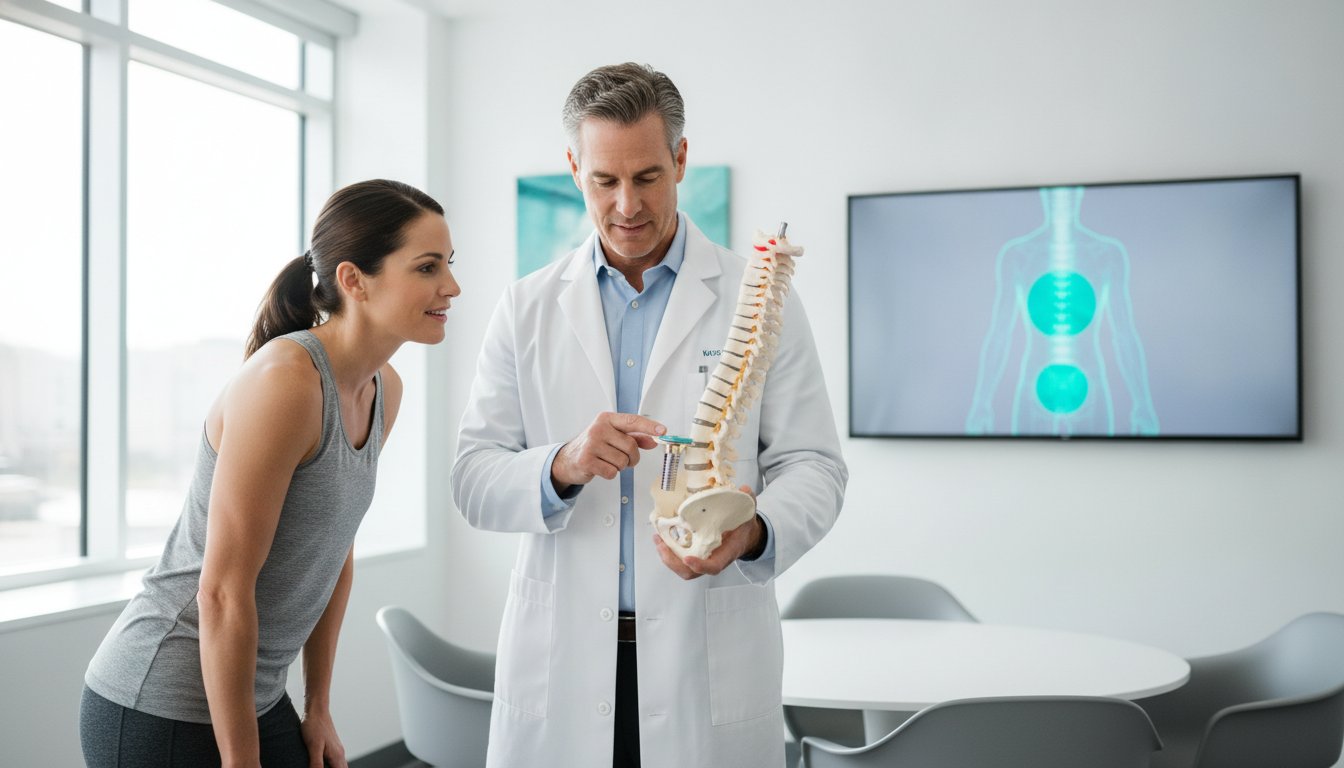
Minimally Invasive Neurosurgery of Texas (MINT), led by Dr. Scott Kutz, a board-certified neurosurgeon and Fellow of the AANS and ACS, provides specialized spine care. With primary locations in Lewisville and Plano, TX, Dr. Kutz offers advanced artificial disc replacement to patients seeking relief from chronic spinal conditions. He focuses on restoring function and mobility through high-tech, motion-preserving surgical techniques.
Choosing a spinal fusion might actually limit your future more than the injury itself. You likely worry that surgery means losing the ability to bend, twist, or move naturally. The fear of a long recovery or permanent stiffness often keeps people suffering from sciatica, which is chronic radiating pain that travels along the sciatic nerve, for years. Discover how artificial disc replacement Lewisville TX at MINT restores natural spinal mechanics and provides a faster recovery than traditional fusion. This guide explores the benefits of motion preservation and explains why Dr. Kutz’s specialized approach in Lewisville and Plano represents the gold standard for spinal health in 2026.
Key Takeaways
- Compare motion preservation to traditional fusion to understand how to maintain your natural range of motion after surgery.
- Review the advanced robotic and augmented reality tools Dr. Scott Kutz uses to enhance surgical accuracy and safety.
- Identify the specific symptoms and diagnoses that qualify you for artificial disc replacement Lewisville TX at MINT.
- Discover how motion-preserving surgery reduces recovery times and protects the health of your surrounding spinal segments.
What is Artificial Disc Replacement at MINT in Lewisville TX?
Minimally Invasive Neurosurgery of Texas (MINT) provides artificial disc replacement Lewisville TX to restore spinal function for patients suffering from debilitating back or neck pain. Dr. Scott Kutz, a board-certified neurosurgeon, performs this advanced procedure to replace damaged or degenerated intervertebral discs with high-tech prosthetic devices. These devices mimic the natural shock absorption and flexibility of a healthy human spinal disc. Patients visit the Lewisville headquarters and the Plano satellite office to access these motion-preserving solutions.
The procedure, often called Total disc replacement (TDR), addresses the root cause of chronic pain while maintaining the spine’s structural integrity. Unlike older methods that limit movement, this technique prioritizes the patient’s long-term quality of life. Dr. Kutz utilizes this technology to treat conditions like degenerative disc disease, which involves the gradual wear and tear of spinal discs over time.
The Role of Dr. Scott Kutz in Lewisville Spine Care
Dr. Scott Kutz brings over 20 years of specialized experience to every neurosurgical spine procedure he performs at MINT. He maintains prestigious fellowships with the American Association of Neurological Surgeons (AANS) and the American College of Surgeons (ACS). These credentials signify his commitment to the highest standards of surgical excellence. His focus on motion-preserving surgical approaches ensures patients receive the most advanced care available in North Texas. Dr. Kutz understands that preserving the natural mechanics of the spine leads to better long-term outcomes for active individuals.
Why Lewisville Residents Choose Arthroplasty Over Fusion
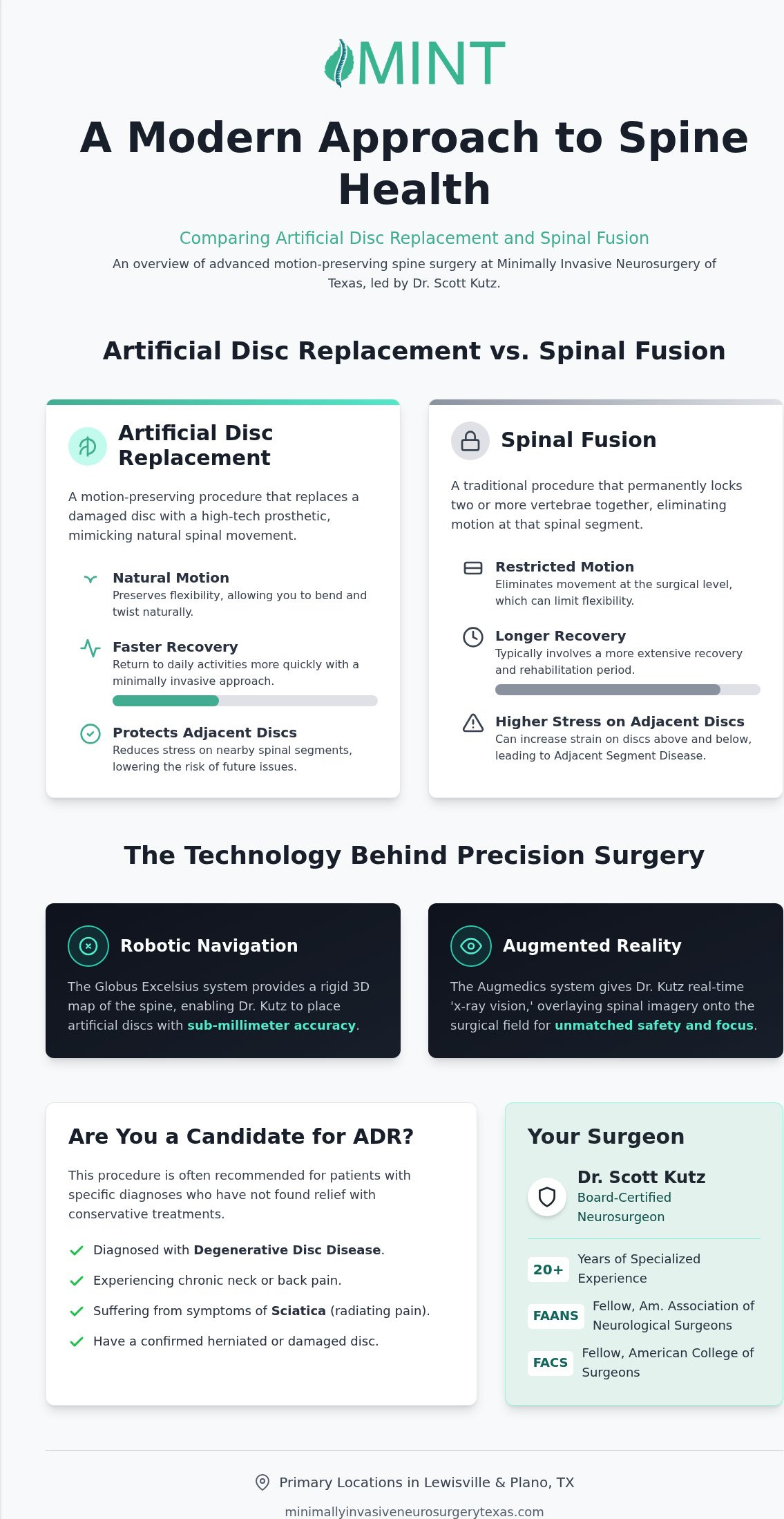
Arthroplasty, which refers to the surgical replacement or reconstruction of a joint, allows the treated spinal segment to move naturally. Many patients choose this over traditional fusion methods because it maintains their range of motion. Fusion locks two vertebrae together, which stops all movement at that specific segment. This lack of movement often forces other parts of the spine to work harder.
Patients who choose artificial disc replacement often experience less stress on the vertebrae adjacent to the surgical site. This reduces the risk of adjacent segment disease, a condition where the discs above or below a surgical site wear out faster due to increased pressure. The procedure requires smaller incisions, which leads to less post-operative pain and minimal scarring. This minimally invasive approach allows for a faster return to daily activities and a more comfortable recovery process.
The Technology Behind Precision Spine Surgery in 2026
Minimally Invasive Neurosurgery of Texas (MINT) utilizes the Globus Excelsius robotic navigation system to ensure sub-millimeter accuracy during disc placement. This high-tech approach allows Dr. Scott Kutz to perform artificial disc replacement Lewisville TX with unprecedented precision. Advanced surgical planning software enables a personalized approach based on the unique biomechanics of your spine. Biomechanics refers to the study of the mechanical laws relating to the movement and structure of your body. These modern technologies also reduce radiation exposure for both the patient and the surgical team during the procedure.
Robotic Navigation with Globus Excelsius
The Globus Excelsius system creates a rigid structural map of the spine to guide the neurosurgeon with extreme precision. This digital blueprint helps Dr. Kutz navigate complex anatomy without the need for large, invasive incisions. Precision placement reduces the risk of nerve irritation and improves the long-term stability of the artificial disc. When the prosthetic, or artificial device that replaces a damaged body part, fits perfectly into the disc space, the spine maintains better alignment. You can learn more about our robotic spine technology to understand how it supports a faster recovery.
Augmented Reality and Surgical Accuracy
The Augmedics augmented reality system provides Dr. Kutz with a ‘x-ray vision’ view of the spinal anatomy in real-time. This system uses a specialized headset to overlay 3D spinal images directly onto the surgeon’s field of view. Augmented reality (AR) involves the use of technology to superimpose digital information onto the physical world. This eliminates the need for the surgeon to look away from the patient at a separate monitor. Surgeons maintain constant eye contact with the surgical site, which enhances safety and focus. The result is a more efficient procedure with reduced time under anesthesia for the patient.
Every patient has a different spinal curvature and bone density. Our planning software analyzes these variables before the first incision occurs. By simulating the movement of the prosthetic within your specific anatomy, Dr. Kutz ensures the device will function optimally for years. If you want to discuss how these technologies can help you return to an active lifestyle, you may schedule a consultation at our Lewisville or Plano offices.
Artificial Disc Replacement vs. Spinal Fusion: Which is Better?
Spinal fusion locks two vertebrae together, which permanently stops motion at that specific segment. While this helps stabilize the spine, it fundamentally changes how your back moves. In contrast, artificial disc replacement maintains the natural range of motion. This preservation protects the rest of the spine from overcompensation, where other segments must move more to make up for the fused area. Clinical data from 2026 suggests that patients who choose artificial disc replacement Lewisville TX have a lower rate of secondary surgeries compared to fusion patients. ADR typically involves a faster return to work and physical activity because it does not require bone graft healing. A bone graft is a surgical procedure that uses transplanted bone to repair and rebuild diseased or damaged bones.
Understanding Adjacent Segment Disease
Fusion increases the mechanical load on the discs above and below the fused site. This extra stress often leads to rapid degeneration of those healthy discs over time. Doctors call this condition Adjacent Segment Disease, which refers to the wear and tear of spinal levels next to a previous fusion. ADR prevents this domino effect by distributing the load naturally across the entire spinal column. By mimicking the function of a healthy disc, the prosthetic device ensures that neighboring levels do not take on excessive pressure or strain during daily activities.
Recovery Timelines and Long-Term Mobility
The biological requirements for healing differ significantly between these two procedures. Fusion recovery often takes six to twelve months for the bone to fully solidify into a single structure. In contrast, most ADR patients return to light office work within two to four weeks. Full athletic activity is often possible within three months for artificial disc recipients. This rapid timeline allows patients at MINT to return to their normal routines without the prolonged restrictions often associated with traditional back surgery. Dr. Scott Kutz prioritizes these motion-preserving techniques to help patients in Lewisville and Plano achieve the best possible functional outcomes.
Choosing the right procedure depends on your specific spinal anatomy and the extent of your disc damage. While fusion remains a reliable option for instability or severe deformity, ADR offers a superior biological alternative for many active adults. Patients often find that maintaining their natural mobility leads to higher satisfaction and a more active lifestyle years after the procedure concludes.
Are You a Candidate for ADR in Lewisville TX?
Dr. Scott Kutz, a board-certified neurosurgeon and Fellow of the AANS and ACS, begins every diagnostic roadmap with a comprehensive physical exam. He reviews your medical history at the MINT offices in Lewisville and Plano to determine if you meet the specific criteria for artificial disc replacement Lewisville TX. Ideal candidates typically suffer from degenerative disc disease or a herniated disc that has not responded to at least six months of conservative care. Conservative care includes non-surgical treatments like physical therapy, activity modification, or anti-inflammatory medications.
Successful outcomes depend heavily on your bone quality. You must have sufficient bone density to support the prosthetic device without the risk of subsidence. Subsidence occurs when a surgical implant sinks into the surrounding bone tissue, which can lead to structural failure or loss of disc height. MINT utilizes advanced imaging, including high-resolution MRI and CT scans, to map the exact level of disc damage and assess your bone health before recommending surgery. This precision ensures the prosthetic integrates safely with your anatomy.
Symptoms That Indicate You May Need ADR
Persistent neck or back pain that radiates into the arms or legs often signals a need for a surgical evaluation. You might experience numbness, tingling, or weakness in the extremities, which are your hands and feet, caused by nerve compression. This pain frequently worsens with movement or during prolonged periods of sitting and standing. If these symptoms interfere with your daily quality of life or prevent you from working, motion-preserving surgery may offer a path back to a normal routine.
The Diagnostic Process at MINT
Our clinical team follows a structured protocol to ensure you receive the most effective treatment for your condition. This process includes the following steps:
- Step 1: Consultation — Meet with Dr. Kutz at our Lewisville or Plano office to discuss your symptoms and lifestyle goals.
- Step 2: Diagnostic Imaging — We use high-tech scans to confirm that the source of your pain is limited to one or two disc levels.
- Step 3: Evaluation — Dr. Kutz assesses your overall spinal alignment and bone health to ensure the prosthetic will remain stable.
- Step 4: Personalized Planning — We develop a motion-preserving surgical plan tailored to your unique biomechanics, which refers to the mechanical laws governing your body’s movement.
If you have struggled with chronic back pain and want to avoid the limitations of spinal fusion, you should explore your surgical options with a specialist. You can contact MINT today to schedule your initial diagnostic consultation with Dr. Scott Kutz.
Choosing the Right Neurosurgeon for Your Procedure
Choosing a surgeon for artificial disc replacement Lewisville TX requires a careful evaluation of specific clinical qualifications. You should first verify board certification by the American Board of Neurological Surgery (ABNS). Board certification indicates that a doctor has completed a recognized residency program and passed comprehensive exams in their specialty. Dr. Scott Kutz, a board-certified neurosurgeon and Fellow of the American Association of Neurological Surgeons (AANS) and the American College of Surgeons (ACS), has performed thousands of successful spinal procedures over two decades. This level of experience ensures that he can navigate the complexities of your spinal anatomy with precision.
You should also seek a surgeon who specializes specifically in minimally invasive spine techniques and motion preservation. Traditional surgeons might default to spinal fusion, but a specialist in arthroplasty, or joint replacement, focuses on maintaining your natural flexibility. Dr. Kutz utilizes the latest 2026 technology to maximize your safety and clinical outcome. His mastery of robotic navigation and augmented reality tools allows for a level of accuracy that traditional methods cannot match. This commitment to innovation ensures that you receive the most advanced care available in North Texas.
The MINT Patient-First Philosophy
We prioritize clear patient communication and ensure you understand every treatment option before you proceed with a surgical plan. Our clinical team believes that an informed patient experiences less anxiety and achieves better recovery results. We coordinate every aspect of your care journey, from the initial diagnostic imaging to your final recovery milestone. This comprehensive support allows you to focus entirely on your healing process. You can read our patient testimonials to see real results from North Texas residents who have successfully returned to their active lifestyles after treatment at MINT.
Next Steps: Schedule Your Consultation in Lewisville
Taking the first step toward a pain-free life begins with a professional evaluation by a motion preservation expert. Contact our Lewisville headquarters at (972) 244-3491 to speak with our compassionate staff and schedule your appointment. We also offer convenient appointments at our Plano location to serve the broader Dallas-Fort Worth Metroplex. You can visit our Artificial Disc Replacement page for more detailed information about how we restore natural spinal mechanics. Our team looks forward to helping you regain your mobility and return to the activities you love.
Restore Your Natural Mobility with Advanced Spine Care
Dr. Scott Kutz, a board-certified neurosurgeon and Fellow of the AANS and ACS, offers a transformative approach to spinal health. By choosing artificial disc replacement Lewisville TX at MINT, you prioritize motion preservation over the limitations of traditional fusion. This advanced procedure utilizes robotic navigation to ensure sub-millimeter accuracy while reducing your recovery time. You don’t have to live with radiating pain or the fear of permanent stiffness. Our specialized focus on minimally invasive spine surgery provides a reliable alternative for patients in Lewisville and Plano. You can regain your active lifestyle and protect your long-term spinal mechanics, which refers to the way your spine moves and handles physical stress. Take the first step toward lasting relief and informed confidence in your surgical journey. Schedule your consultation with Dr. Scott Kutz at MINT today to explore your options for a pain-free future. We look forward to helping you return to your normal daily activities with strength and flexibility.
Frequently Asked Questions
How long does an artificial disc replacement procedure take?
An artificial disc replacement procedure typically takes between one and two hours to complete for a single spinal level. Dr. Scott Kutz performs this surgery at our Lewisville and Plano facilities using minimally invasive techniques to reduce operative time. The total duration varies depending on your specific spinal anatomy and whether the surgeon treats multiple levels. Most patients spend a few hours in recovery before returning home the same day or the following morning.
Will my insurance cover artificial disc replacement in Lewisville TX?
Most major private insurance providers in Texas now cover artificial disc replacement Lewisville TX for patients who meet specific medical criteria. Blue Cross Blue Shield of Texas generally provides coverage for cervical disc replacement for up to two levels. Aetna and Cigna typically cover single-level lumbar procedures if you have failed six months of conservative treatment. Our staff at MINT helps you navigate the prior authorization process to ensure you receive the maximum benefits available.
What is the success rate for cervical disc replacement in 2026?
The success rate for cervical disc replacement in 2026 ranges between 85% and 95% for appropriately selected patients. This rate remains comparable to or slightly higher than traditional spinal fusion, which has a success rate of approximately 90%. Long-term studies published in 2023 show that motion-preserving surgery leads to lower rates of secondary procedures. Dr. Kutz utilizes robotic navigation to achieve these high success rates while protecting the surrounding spinal structures and maintaining natural movement.
Can I have multiple discs replaced at the same time?
Surgeons can replace multiple discs during the same procedure if the FDA has approved the specific device for multi-level use. In 2026, several devices like the BAGUERA C and prodisc C Vivo have approval for two-level cervical applications. Dr. Scott Kutz evaluates your spinal alignment and bone quality to determine if a multi-level replacement is safe for your condition. This approach addresses complex degenerative disc disease without the stiffness often associated with multi-level spinal fusion.
What happens if I am not a candidate for artificial disc replacement?
If you are not a candidate for a motion-preserving disc, Dr. Scott Kutz provides several other advanced surgical options. Patients with significant spinal instability or advanced arthritis may require a minimally invasive spinal fusion instead. Fusion involves joining two vertebrae together to stop painful movement. MINT also offers endoscopic spine surgery, which uses a tiny camera to treat herniated discs. We prioritize the least invasive method that will safely restore your daily function and quality of life.
How soon can I start physical therapy after my spine surgery?
Most patients begin a structured physical therapy program between two and four weeks after their spine surgery. While MINT does not offer in-house physical therapy, our team coordinates your care with local specialists in Lewisville and Plano. Early movement helps prevent scar tissue formation and strengthens the muscles supporting your spine. Dr. Kutz provides specific guidelines to ensure your rehabilitation progresses safely without putting excessive strain on the new prosthetic device during the initial healing phase.
Are there any restrictions on my movement after the artificial disc is placed?
You will face few long-term restrictions on your movement because the goal of the procedure is to preserve natural flexibility. During the first four to six weeks, Dr. Kutz advises against heavy lifting or high-impact athletic activities. This allows the bone to grow into the prosthetic device and secure it in place. Once you achieve full recovery, you can typically return to sports and physical labor without the permanent range-of-motion loss caused by traditional fusion surgery.
What is the difference between a neurosurgeon and an orthopedic surgeon for this surgery?
Neurosurgeons and orthopedic surgeons both perform spine surgery, but their training backgrounds differ. A neurosurgeon like Dr. Scott Kutz focuses specifically on the brain, spinal cord, and nervous system. This expertise is vital for procedures involving nerve compression syndromes, which are conditions where pressure on a nerve causes pain or numbness. Orthopedic surgeons focus on the musculoskeletal system, including bones and joints throughout the body. Dr. Kutz utilizes his specialized neurosurgical training to protect delicate neural structures during surgery.