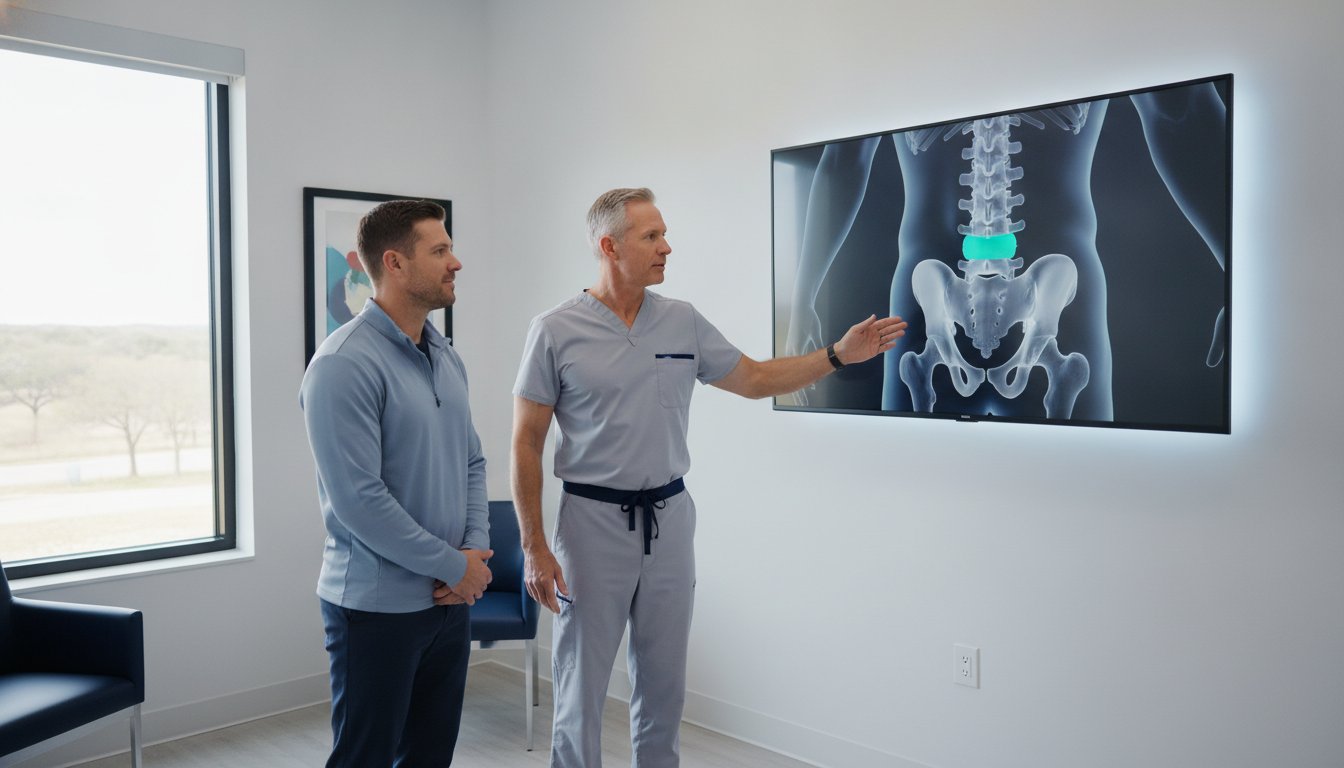
Minimally Invasive Neurosurgery of Texas (MINT) provides specialized spine care under the leadership of Dr. Scott Kutz, a board-certified neurosurgeon and Fellow of the AANS and ACS. The practice operates a state-of-the-art primary facility in Lewisville, which opened in January 2026, and a satellite office for patients seeking care in Plano, TX. Dr. Scott Kutz focuses on restoring quality of life through advanced, patient-centered neurosurgery.
Driving the Dallas North Tollway shouldn’t feel like a grueling test of endurance because of debilitating sciatica, which is radiating nerve pain that travels from the lower back down the leg. You likely feel frustrated by leg weakness or the fear that a surgical solution requires a long, painful hospital stay. We understand that your goal is to reclaim your mobility without the risks of traditional open-back surgery. Through precision-driven herniated disc treatment Plano TX, Dr. Scott Kutz utilizes minimally invasive techniques to resolve nerve compression with smaller incisions and faster recovery times. This guide explores the roadmap from diagnosis to a return to normal activities, highlighting how modern technology makes complete relief possible.
Key Takeaways
- Learn how Dr. Scott Kutz uses precision-driven techniques to provide herniated disc treatment Plano TX for patients seeking relief from debilitating nerve pain.
- Identify the difference between a herniated disc and a bulging disc, which is a condition where the spinal disc protrudes without tearing its outer layer.
- Compare conservative options like physical therapy with advanced surgical interventions to determine the most effective roadmap for your specific recovery needs.
- Understand how a microdiscectomy, which is the surgical removal of disc fragments through a small incision, serves as a highly effective solution for long-term relief.
- Discover why most patients return to light work within one to two weeks following a minimally invasive procedure at our Lewisville or Plano locations.
Understanding Herniated Disc Treatment in Plano TX at MINT
Minimally Invasive Neurosurgery of Texas (MINT) operates as a specialized surgical practice under the leadership of Dr. Scott Kutz, a board-certified neurosurgeon. We serve the North Texas community through our primary headquarters in Lewisville, which opened in January 2026, and our dedicated satellite office in Plano, TX. Dr. Kutz provides precision-driven herniated disc treatment Plano TX to help patients regain their mobility and return to normal activity. A herniated disc occurs when the soft inner core of a spinal disc pushes through a crack in the tougher exterior casing. This displacement often causes direct pressure on nearby nerves, resulting in the radiating pain and numbness commonly known as sciatica, which is nerve pain that travels from the lower back down the leg.
The Role of Dr. Scott Kutz in North Texas Spine Care
Dr. Scott Kutz is a board-certified neurosurgeon and a Fellow of the AANS and ACS with more than two decades of experience. These fellowships signify that he meets the highest standards of professional conduct and surgical skill in the field of neurosurgery. His career focuses on the treatment of complex spinal disorders using the latest technological innovations, such as robotic guidance and augmented reality. You can read about his commitment to excellence on our about us page. Dr. Kutz doesn’t just treat symptoms; he addresses the root cause of your pain. He maintains a philosophy of patient-first communication to ensure every individual feels heard and understood. He utilizes evidence-based care to create personalized roadmaps for recovery, moving beyond the impersonal nature of large hospital systems to provide tailored surgical and non-surgical solutions that prioritize your long-term health.
Why Specialized Neurosurgery Matters for Disc Issues
Specialized neurosurgery offers a distinct advantage for patients dealing with disc issues. While orthopedic surgeons treat the musculoskeletal system, neurosurgeons focus on the intricate relationship between the spine and the delicate nervous system. Dr. Kutz manages nerve compression syndromes, which occur when physical pressure disrupts nerve signals, with extreme precision. Understanding Spinal Disc Herniation is critical because the goal isn’t just to fix the disc, but to protect the nerve from permanent damage. At MINT, we emphasize minimally invasive spine techniques to reduce tissue trauma. These methods support motion preservation, which allows patients to maintain natural flexibility while achieving complete relief from radiating nerve pain. This specialized focus ensures that you receive the highest level of care for your neurological health and daily quality of life.
Symptoms and Causes of Spinal Disc Herniation
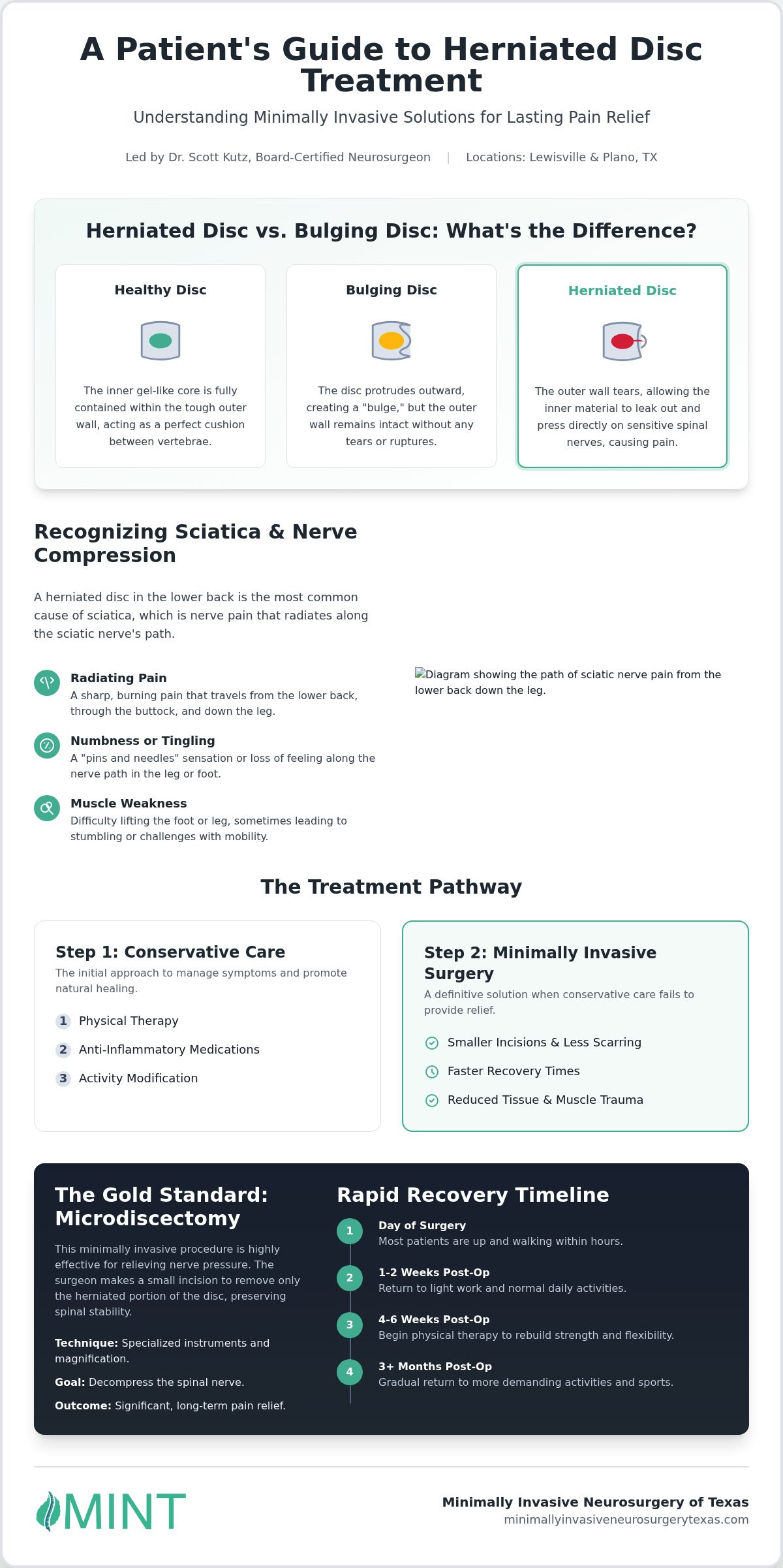
Spinal discs sit between the vertebrae to absorb impact and provide flexibility. When the tough outer layer of a disc ruptures, the soft inner material escapes. This material creates mechanical nerve compression, which is direct physical pressure on a spinal nerve. Many patients confuse this condition with a bulging disc. In a bulging disc, the outer wall remains intact but protrudes into the spinal canal. A herniated disc involves a structural tear that allows the inner core to leak. Understanding Herniated Disc Causes and Symptoms helps patients identify when they need professional herniated disc treatment Plano TX.
Several factors contribute to disc failure. Degenerative disc disease, which is the natural wear and tear of spinal discs over time, makes the outer layer more brittle and prone to injury. Sudden physical strain or repetitive heavy lifting can also trigger a rupture. Regardless of the trigger, the leaked disc material often causes chemical inflammation alongside physical pressure, leading to intense discomfort.
Recognizing Sciatica and Nerve Compression
Sciatica is the most common symptom of a lumbar herniated disc. This condition causes radiating pain that travels from the lower back through the hip and down the leg. Patients often describe a sharp, burning sensation or a feeling of tingling, which is a “pins and needles” sensation. This discomfort usually worsens during activities that increase internal spinal pressure, such as sitting for long periods, coughing, or sneezing. If you don’t address these symptoms, the condition may progress from simple pain to muscle weakness or a noticeable loss of sensation in the foot or leg.
When to Seek a Specialist in Plano or Lewisville
Early intervention remains the most effective way to prevent permanent nerve damage. You should seek an evaluation at our Plano or Lewisville locations if your pain persists for more than a few days or interferes with your daily mobility. Certain “red flag” symptoms require immediate medical attention. These include extreme weakness in the legs or a sudden loss of bladder or bowel control. These signs suggest severe nerve compromise that may require urgent intervention. You can learn more about our clinical expertise and the background of Dr. Scott Kutz on the MINT about us page. If you experience persistent radiating pain, it is time to schedule a consultation to explore your recovery options.
Comparing Conservative Care and Minimally Invasive Spine Surgery
Most patients begin their recovery journey with conservative treatments. These options include physical therapy and anti-inflammatory medications, which are drugs that reduce swelling and pain. While these methods help many individuals, they often manage symptoms rather than resolving the physical nerve compression. Epidural steroid injections, which are injections of corticosteroids into the space around spinal nerves to reduce inflammation, provide temporary relief. However, these injections do not remove the herniated disc material. If symptoms persist after six to twelve weeks of conservative care, herniated disc treatment Plano TX typically transitions to a surgical evaluation to prevent long-term nerve damage.
Minimally invasive spine surgery (MISS) represents a modern alternative to traditional open procedures. Traditional surgery often requires a hospital stay of several days, whereas MISS often allows for outpatient recovery. The primary difference lies in how the surgeon accesses the spine. Traditional methods involve large incisions and muscle detachment, while minimally invasive techniques utilize specialized tools to protect the surrounding tissue. This surgical philosophy prioritizes a faster return to normal activity and significantly reduces the physical impact on the body.
The Downside of Traditional Open Back Surgery
Traditional open back surgery carries several risks that modern techniques aim to avoid. Surgeons must make large incisions to view the spine directly, which leads to significant muscle tearing and increased blood loss. This trauma to the back muscles often causes intense post-operative pain and requires a longer hospital stay for monitoring and pain management. Additionally, older techniques carry a higher risk of failed back surgery syndrome, which is a clinical term for persistent pain that continues after a spinal procedure. These complications can delay a patient’s return to work and daily life for several months.
The Minimally Invasive Advantage at MINT
At MINT, Dr. Scott Kutz utilizes minimally invasive spine techniques to provide a superior patient experience. These procedures use small incisions, often less than an inch long, to preserve the local muscle tissue. Dr. Kutz uses precision tools and high-definition cameras to remove the herniated disc material without disturbing the healthy structures of the spine. This precision reduces post-operative pain and minimizes visible scarring. Patients in Plano and Lewisville benefit from faster healing times, with many individuals returning to light work within one to two weeks. This approach transforms a major surgical event into a targeted, manageable recovery process.
Advanced Surgical Options: Microdiscectomy and Endoscopic Discectomy
When conservative care fails to provide relief, Dr. Scott Kutz offers advanced surgical interventions that prioritize precision and rapid recovery. A microdiscectomy, which is the surgical removal of disc fragments through a small incision, remains the gold standard for herniated disc treatment Plano TX. This procedure targets the specific portion of the disc that compresses the nerve, which immediately relieves the source of radiating pain. For many patients, Dr. Kutz utilizes endoscopic spine surgery to further reduce the physical impact of the procedure. This technique uses a tiny tube and a high-definition camera to access the spine, which allows for a faster return to normal activity compared to traditional methods.
Our practice integrates proprietary technological systems to ensure the highest levels of surgical accuracy. Dr. Kutz uses the Globus Excelsius robotic navigation system to plan and execute complex spinal procedures. Additionally, he employs Augmedics AR, which is an augmented reality headset that provides the surgeon with a GPS for the spine. This technology allows Dr. Kutz to see the patient’s internal anatomy in three dimensions through the skin. This capability enhances safety and ensures the most precise placement of instruments during the operation.
How Endoscopic Spine Surgery Works
Endoscopic spine surgery represents the absolute forefront of modern surgical innovation. Dr. Kutz performs this procedure through a quarter-inch incision, which is roughly the size of a pencil eraser. He inserts an endoscope, which is a thin tube equipped with a light and a high-definition camera, into the spinal canal. This camera provides maximum nerve visibility and allows the surgeon to remove disc material with extreme delicacy. Because this method preserves the natural structure of the spine and minimizes tissue disruption, we typically perform this procedure as an outpatient service. Most patients leave the surgical center on the same day as their procedure.
Robotic Precision with Globus Excelsius
The Globus Excelsius system transforms how we approach spinal stabilization and disc repair. This robotic navigation system improves the accuracy of instrument placement by providing real-time feedback during the operation. By using this technology, Dr. Kutz reduces the need for repeated X-rays, which significantly lowers radiation exposure for the patient. Every Plano patient receives a personalized surgical plan based on their unique spinal anatomy. This high-tech approach ensures that the surgery addresses the specific mechanical cause of your pain while protecting healthy surrounding tissue. If you’re ready to explore these advanced options, contact MINT today to schedule your evaluation.
Minimally Invasive Neurosurgery of Texas (MINT) provides expert spine care under the leadership of Dr. Scott Kutz, a board-certified neurosurgeon and Fellow of the AANS and ACS. The practice treats patients at its primary headquarters in Lewisville, which opened in January 2026, and a satellite office in Plano, TX. Dr. Kutz specializes in minimally invasive procedures to restore patient mobility and quality of life.
Recovery and Long-Term Outcomes in Plano and Lewisville
Recovery after a minimally invasive discectomy is significantly faster than the recovery associated with traditional open surgery. Most patients return to light office work within one to two weeks following their procedure. Dr. Scott Kutz emphasizes the importance of post-operative walking to ensure a successful outcome. Walking encourages blood flow, which is the movement of blood through the circulatory system to deliver oxygen and nutrients to healing tissues. This gentle activity also prevents the formation of blood clots and helps the body process residual inflammation. Patients typically experience high success rates for nerve pain relief following a microdiscectomy, which is the surgical removal of herniated disc material. Dr. Kutz and his team provide comprehensive follow-up care at both our Lewisville and Plano locations to monitor your progress and ensure a smooth transition back to your daily routine.
The long-term goal of herniated disc treatment Plano TX is to provide lasting relief without the need for future interventions. Because minimally invasive techniques preserve the structural integrity of the spine, patients often maintain better long-term stability. Our clinical team works closely with each patient to develop a customized recovery plan that includes specific guidance on ergonomics and activity modification. This proactive approach helps prevent the recurrence of disc issues and supports a healthy, active lifestyle for years to come.
Life After Minimally Invasive Surgery
Life after surgery focuses on a return to normal activity levels without the burden of chronic pain. Unlike traditional spinal fusion, motion-preserving surgery protects adjacent spinal levels, which are the segments of the spine directly above and below the treated area. This specialized approach reduces the risk of future degeneration in other parts of the back. We encourage you to view patient testimonials to see real-world results from individuals who reclaimed their mobility. Achieving complete relief from radiating nerve pain allows you to enjoy hobbies, exercise, and family life again with total confidence.
Scheduling Your Consultation at MINT
You can schedule an evaluation by calling our office at (972) 244-3491. Our Plano satellite office offers a convenient location for residents in Collin County and surrounding areas like Allen, McKinney, and Frisco. Please remember that our primary headquarters moved to Lewisville in January 2026, so we no longer list Frisco as a primary service location. This modern facility serves as the hub for our advanced surgical innovations and patient-first care. Taking the first step toward a professional diagnosis provides the clarity you need to choose the right surgical or non-surgical roadmap for your recovery.
Reclaim Your Mobility and Active Lifestyle
Dr. Scott Kutz and the team at Minimally Invasive Neurosurgery of Texas (MINT) provide a clear path forward for those suffering from chronic nerve pain. By choosing advanced herniated disc treatment Plano TX, you gain access to motion-preserving techniques that prioritize your long-term spinal health. We utilize the Globus Excelsius robotic navigation system to ensure absolute precision during every procedure. This high-tech approach allows for smaller incisions and significantly reduces the recovery timeline to just one or two weeks for many patients.
Our practice balances clinical authority with compassionate care at our primary Lewisville facility, which opened in 2026, and our Plano satellite office. Dr. Scott Kutz is a board-certified neurosurgeon and a Fellow of the American Association of Neurological Surgeons who focuses on delivering lasting relief through evidence-based methodologies. You don’t have to let sciatica or leg weakness dictate your daily life any longer. Modern surgical innovation makes it possible to return to normal activity levels with confidence and comfort.
Schedule your consultation with Dr. Scott Kutz at MINT today to begin your journey toward a pain-free future. We look forward to helping you restore your mobility.
Frequently Asked Questions
Is surgery always necessary for a herniated disc in Plano TX?
Surgery is not always necessary for a herniated disc. Dr. Scott Kutz typically recommends a conservative approach for the first six to twelve weeks of care. This roadmap includes physical therapy and anti-inflammatory medications, which are drugs that reduce swelling and pain. We only consider surgical intervention if these methods fail to resolve your symptoms or if you experience progressive neurological deficits. Our goal for herniated disc treatment Plano TX is to find the least invasive path to recovery.
How long is the recovery after a minimally invasive microdiscectomy?
Recovery after a minimally invasive microdiscectomy is remarkably efficient. Most patients return to light work or office duties within one to two weeks. You should avoid heavy lifting and strenuous exercise for approximately six weeks to allow the spinal structures to heal fully. We encourage gentle walking immediately after the procedure to improve blood flow, which is the delivery of oxygen to healing tissues. This movement prevents stiffness and supports a faster return to normal activity levels.
What is the difference between a bulging disc and a herniated disc?
The primary difference lies in the structural integrity of the disc wall. A bulging disc occurs when the outer layer remains intact but protrudes into the spinal canal. A herniated disc involves a physical tear in that outer layer, which allows the soft inner core to leak out. This leaked material often causes direct nerve compression, which is physical pressure on a spinal nerve. Both conditions can cause significant pain, but they require different clinical strategies for long-term relief.
Does Dr. Scott Kutz accept insurance for herniated disc treatment?
Dr. Scott Kutz and the MINT team accept many major insurance plans for herniated disc treatment. Because coverage varies between providers and specific policies, we recommend contacting our office directly at (972) 244-3491 to verify your benefits. Our staff will help you understand your coverage for both diagnostic evaluations and surgical procedures. We prioritize transparency to ensure you can focus entirely on your recovery without unnecessary administrative stress regarding your healthcare journey.
Can a herniated disc heal on its own without surgical intervention?
A herniated disc can sometimes heal through a process called resorption. This occurs when the body recognizes the leaked disc material as a foreign substance and begins to break it down naturally. While this process can resolve symptoms over several months, it does not happen for every patient. If the disc material continues to cause severe nerve compression, surgical intervention may become necessary to prevent long-term damage and restore your daily quality of life and mobility.
What are the risks of ignoring symptoms of nerve compression?
Ignoring symptoms of nerve compression can lead to permanent neurological damage. Persistent pressure on a nerve can cause chronic muscle weakness, numbness, or a loss of fine motor skills in the legs. In severe cases, untreated compression may result in cauda equina syndrome, which is a medical emergency involving the loss of bladder or bowel control. Seeking early herniated disc treatment Plano TX ensures that Dr. Kutz can intervene before these complications become irreversible or life-altering.
Why is endoscopic spine surgery better than traditional open surgery?
Endoscopic spine surgery offers several advantages over traditional open procedures. Dr. Kutz uses a tiny quarter-inch incision and a high-definition camera to access the spine, which eliminates the need for large muscle tears. This technique reduces post-operative pain and minimizes scarring. Most endoscopic procedures are outpatient services, which are medical treatments that do not require an overnight hospital stay. Traditional surgery often requires multi-day hospital stays and a much longer period of restricted activity during healing.
Where are the MINT offices located in North Texas?
Minimally Invasive Neurosurgery of Texas operates two convenient locations to serve the North Texas community. Our primary headquarters is in Lewisville, which opened in January 2026 to provide advanced surgical care. We also maintain a satellite office in Plano, TX, to accommodate patients in Collin County and surrounding areas like Allen or McKinney. Please note that our practice relocated from Frisco to the new Lewisville facility to better serve our growing patient base with modern technology and specialized care.