
Minimally Invasive Neurosurgery of Texas provides Minimally Invasive Spine Surgery in Lewisville and Plano, TX. Dr. Scott Kutz, a board-certified neurosurgeon and Fellow of the AANS and ACS, leads the practice’s spine care.
Preparing for spine surgery means more than getting ready for procedure day. Organize medical preparation, transportation and support, home arrangements, and instructions for fasting and hygiene. Use this guide to plan ahead, while keeping your surgical team’s directions at the center of every decision.
Key Takeaways
- Complete the pre-admission tests your surgical team requests, and discuss every prescription, supplement, and blood thinner before changing how you take it.
- Choose a surgery coach who can help coordinate your ride home and support you during the first days of recovery.
- Reduce recovery-day strain by clearing walkways, moving frequently used items within easy reach, and preparing simple meals in advance.
- Follow your care team’s exact fasting schedule; instructions for food and clear liquids depend on your check-in time and anesthesia plan.
- Use the pre-surgery hygiene instructions, including when to shower and what to avoid near the surgical site, to prepare for the procedure.
Medical optimization and surgical risk assessment
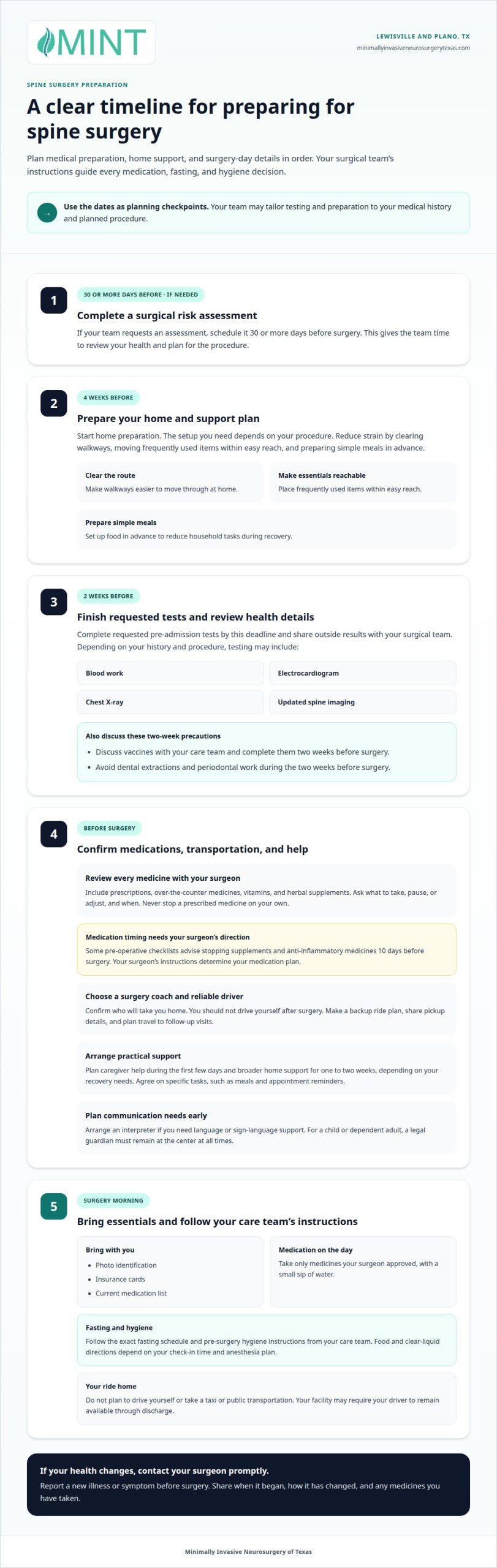
Start medical preparation as soon as your surgical team gives you a date. Complete requested pre-admission testing two weeks before surgery. A surgical risk assessment, if needed, belongs 30 or more days before surgery. These steps give your team time to review your health and plan for the procedure.
What should patients bring to a Lewisville hospital or surgery center for spine surgery? On the morning of surgery, bring photo identification, insurance cards, and a current medication list. Include prescriptions, over-the-counter medicines, vitamins, and herbal supplements so the team can review them accurately.
Testing depends on your medical history and planned procedure. Your team may request blood work, an electrocardiogram, a chest X-ray, or updated spine imaging before surgery. An electrocardiogram records the heart’s electrical activity. Complete requested tests by their deadlines and share results from outside appointments with your surgical team. Tell them about any health changes that could affect testing or clearance.
Review every medication with your surgeon. Blood thinners, such as medicines that reduce clotting, need special attention because some can affect anesthesia and recovery. Ask which medicines to take, pause, or adjust, and when to make each change. Never stop a prescribed medication on your own. Some pre-operative checklists advise stopping supplements and anti-inflammatory medicines 10 days before surgery, but your surgeon’s instructions determine your medication plan. Discuss aspirin, ibuprofen, diet pills, and herbal products early, rather than making last-minute changes.
- Complete requested pre-admission tests two weeks before surgery, and attend any scheduled medical clearance appointment.
- Discuss vaccines with your care team, and complete them two weeks before surgery.
- Avoid dental extractions and periodontal work during the two weeks before surgery.
- On surgery morning, take only medicines your surgeon approved, with a small sip of water.
What are the risks of not following spine surgery pre-operative instructions? Skipping requested tests or changing medicines without guidance can leave your team without information needed to plan anesthesia and recovery. Eating or drinking outside your instructions can also conflict with the fasting plan. Follow each instruction and report any difficulty promptly.
When should patients contact their surgeon before spine surgery about illness or new symptoms? Contact the surgeon as soon as an illness develops or a new symptom appears, rather than waiting until surgery morning. Describe when it began, how it has changed, and any medicines you have taken.
Keep your instructions and medication list together with your identification and insurance cards. If you have questions about preparation for endoscopic spine surgery, bring them to your care team before surgery. Comfortable clothing may also help you prepare for arrival, but follow the facility’s directions about what to wear.
Choosing a surgery coach and arranging transportation
Choose a surgery coach before your procedure and agree on specific responsibilities. This person can coordinate rides, organize appointment details, and help communicate your needs. A family member, friend, or trusted person in your support network may fill the role. Discuss what you’ll need during the first few days, including help getting home and managing essential daily tasks.
How do patients arrange transportation and post-surgery help after spine surgery? Arrange a driver to take you home and a caregiver to assist during your initial recovery. Plan for help at home for one to two weeks, depending on the support your recovery requires.
- Choose a reliable driver. Confirm who will drive you home from the hospital or surgery center, since you shouldn’t drive yourself after surgery.
- Make a backup plan. Identify another friend or relative who can step in if your first driver becomes unavailable.
- Schedule caregiver assistance. Ask a family member or trusted person to help during the first few days, then arrange broader support at home for one to two weeks.
- Coordinate appointments. Plan how you’ll travel to follow-up visits and any therapy appointments after surgery, rather than relying on your own driving.
- Confirm the pickup plan. Share the facility’s location and expected pickup details with your driver, and keep their phone number accessible.
If you’re having surgery at a center, arrange for someone to drive you home. Don’t plan to take a taxi or public transportation. Your driver should know that the facility may require them to remain available through discharge. A clear handoff helps you leave with the right person and continue home with support.
Plan practical assistance before your procedure. A caregiver can help with meals, household tasks, and communication while you focus on recovery. Agree on specific tasks in advance, such as bringing food within reach or keeping track of appointment times. If you expect to need help for one to two weeks, arrange coverage for that period instead of relying on one person’s availability.
Arrange language or communication support early. Patients who cannot read or speak English, or who need sign language, require an interpreter. Contact the Scheduling department as soon as possible to arrange one. If the patient is a child or dependent adult, a legal guardian must remain at the center at all times.
Before surgery, review transportation, home assistance, appointments, and interpreter arrangements with your coach. If a plan changes, promptly update everyone involved. Confirm each person’s role rather than relying on a general offer of help.
Home preparation and postoperative support
Begin preparing your home four weeks before spine surgery. The setup you need depends on your procedure. A minimally invasive microdiscectomy generally requires less extensive preparation than a large lumbar fusion. Use the time to clear pathways, arrange supplies, and make everyday tasks easier during recovery.
Walk through your home as if you need to avoid bending or reaching. Move frequently used items to a height between your hips and chest. Keep clothes, toiletries, and shower supplies within easy reach. This can reduce the need to stretch for essentials when routine movements feel difficult after surgery.
- Remove loose rugs and electrical cords from walkways. Clear routes between your bed, bathroom, and kitchen to reduce trip hazards.
- Set up a recovery space. Keep your phone, water, medications, and a place to rest nearby, so you can reach essentials without crossing the room.
- Place daily-use items within easy reach. Store dishes, clothing, and toiletries between hip and chest level to avoid repeated bending or reaching.
- Consider home safety equipment. Handrails, a raised toilet seat, and clear pathways can make common movements easier to manage.
- Gather recovery supplies before surgery. Stock groceries, prescribed medications, wound care products, slip-on shoes, and a grabber tool.
- Prepare simple meals two weeks before surgery. Stock your freezer with ready-made meals that you can reheat without extensive cooking.
- Plan for medication-related constipation. Pick up a stool softener and laxative before surgery, as pain medication often causes constipation.
Set up your home around the tasks you expect to manage. Place a chair near where you dress and group frequently used kitchen items together. Store supplies in one accessible place instead of scattering them across high shelves and low cabinets. Small changes can make preparation and recovery more manageable.
Review your home setup with the person helping you after surgery. Ask them to keep walkways clear, bring meals or groceries, and put supplies within reach. Complete support arrangements and requested health logistics two weeks before surgery. A written task list can help your support person focus on what matters most.
Keep the route from your entrance to your recovery space clear of cords, bags, and loose rugs. Check the bathroom for obstacles, and place toiletries within reach after a shower. If your procedure involves a larger lumbar fusion, plan for more extensive assistance than you might need after a minimally invasive microdiscectomy. Follow your surgical team’s activity instructions during recovery.
Transportation to and from surgery
Use your care coordinator’s arrival instructions to plan your trip to the facility. Arrive at the time they specify, not simply at the scheduled procedure time. Surgical teams commonly ask patients to arrive several hours before surgery. Build this into your driver’s schedule, and share the correct entrance and pickup details. Keep the coordinator’s instructions where both you and your driver can find them.
Plan for discharge before you leave home. Spine surgery discharge usually happens on the day of surgery, so your ride should remain reachable while the team completes recovery checks. Keep your caregiver’s phone number accessible and agree on how to contact them when staff provide pickup timing. If the team gives you a prescription, decide who can collect it and bring it home. Keep the prescription instructions with your discharge paperwork.
- Save the facility address and arrival instructions on your phone.
- Share pickup details with your driver before surgery day.
- Keep your identification, insurance card, and medication information together.
- Leave jewelry and other valuables at home.
- Ask your caregiver to help organize discharge papers and prescriptions.
If you receive sedation, a friend, relative, or dedicated caregiver must stay with you for 24 hours afterward. Sedation means medicine that relaxes you or makes you sleepy during a procedure. Arrange this support before surgery, and make sure the person understands the time commitment. This is separate from simply driving you home. Plan how your caregiver will remain available once you arrive, including help with basic needs such as reaching the toilet.
Plan transportation for follow-up clinic and therapy appointments as well. You may not be ready to drive, so discuss appointment dates with your caregiver before scheduling rides. Choose a physical therapy practice before surgery if your care plan includes therapy, and check whether it accepts your health insurance. Postoperative physical therapy, when recommended, generally starts at least 4-6 weeks after surgery once your provider clears you. Arrange rides around the start date and any follow-up visits.
On surgery morning, follow the arrival instructions and keep your phone charged. Confirm that your driver knows where to wait and how you’ll reach them after discharge. Pack comfortable clothing that is easy to put on for the trip home, and leave jewelry at home. Plan how you’ll manage toilet access during the ride and when you arrive, especially if there may be a longer wait. A clear transportation plan connects check-in, discharge, prescriptions, and appointments without leaving essential details to the last minute.
Fasting and pre-surgical hygiene
Use your surgical team’s written instructions to plan when to eat and drink. Fasting instructions can vary with your arrival time and anesthesia plan. Don’t combine a midnight cutoff with a separate check-in schedule unless your team directs you to. If instructions seem inconsistent, contact the team before surgery day to confirm which cutoff applies.
For surgery at a center, patients should have no food for eight hours before check-in. If you’ll receive general anesthesia or sedation, clear liquids may be allowed until two hours before check-in. Plain coffee or tea may count as clear liquids, but dairy, cream, and fats do not. If your team instructs you to drink a carbohydrate beverage, take it two hours before scheduled arrival. Follow the instructions for your procedure, not a schedule intended for someone else.
- Write down your check-in time. Count backward using the food and liquid cutoffs in your instructions.
- Ask about morning medications. Take only medicines your surgeon approved, with a small sip of water.
- Avoid alcohol before arrival. Stop drinking alcohol at least 12 hours before arriving for surgery.
- Tell your family member your fasting plan. Ask them not to offer food, drinks, or coffee after your cutoff.
For hygiene, shower with antibacterial soap the night before or morning of surgery, following the surgical team’s directions. This step helps reduce infection risk. Don’t shave at or near the surgical site within 48 hours before the procedure. Shaving can irritate the skin, so leave hair removal to the care team if needed. Choose clean, comfortable clothing for arrival, and follow any facility-specific clothing instructions.
Smoking and nicotine also matter when preparing for surgery. Nicotine can interfere with bone fusion and wound healing. Stop smoking or using tobacco products before surgery, and discuss timing with your surgical team. Don’t use tobacco after midnight on the night before surgery. If you have difficulty following fasting, hygiene, or smoking instructions, tell your team promptly instead of changing the plan yourself.
Before surgery day, place the written fasting directions somewhere visible, such as beside your medication list. Review the final cutoff with your family member or caregiver, especially if they’ll help you prepare breakfast or coffee. If you need help understanding instructions for your planned procedure, contact the surgical team about your pre-surgery instructions.
Instructions may use different reference points, so distinguish scheduled arrival from check-in and follow your medical team’s plan. The handbook instructs patients not to eat or drink anything after midnight on the night before surgery unless their medical team gives different directions. It also says to stop eating 8 hours before scheduled arrival and allows clear liquids up to 2 hours before scheduled arrival; if instructed to drink a carbohydrate drink, consume it 2 hours before scheduled hospital arrival. At the center, patients having a pain management procedure with sedation should have no food for six (6) hours before check-in.
Minimally Invasive Neurosurgery of Texas: Minimally Invasive Spine Surgery
Minimally Invasive Neurosurgery of Texas provides Minimally Invasive Spine Surgery for patients considering an operation for a spine condition. Patients can explore the practice’s spine care services and discuss options such as Endoscopic Spine Surgery, which uses small incisions and specialized instruments to access the spine.
Dr. Scott Kutz, a board-certified neurosurgeon and Fellow of the AANS and ACS, evaluates spine conditions and discusses treatment options with patients. If you’re considering surgery or preparing for a planned procedure, a conversation can help connect your diagnosis, treatment plan, and preparation questions. Contact Minimally Invasive Neurosurgery of Texas to discuss your spine surgery questions and next steps.
Take the Next Step With a Clear Plan
Use this Lewisville spine surgery pre-op checklist as a starting point for a focused conversation about your treatment goals. Bring forward any questions that remain about your procedure, recovery needs, or how your health history may shape preparation. Clear communication helps you understand the decisions ahead and participate actively in your care.
Minimally Invasive Neurosurgery of Texas offers Minimally Invasive Spine Surgery, MINIMALLY INVASIVE NEUROSURGERY, and Artificial Disc Replacement. Dr. Scott Kutz can discuss whether a surgical approach fits your spine condition and explain the options relevant to your situation. Understanding your treatment plan can help you prepare with greater purpose.
Contact Minimally Invasive Neurosurgery of Texas to discuss your spine surgery questions and next steps. You can move forward one informed decision at a time, with your health and recovery at the center of the conversation.
Frequently Asked Questions
What pre-operative tests are required before spine surgery in Lewisville, Texas?
Your surgical team determines which pre-operative tests you need based on your health and planned procedure. Testing may include blood work, an electrocardiogram, a chest X-ray, or updated spine imaging. If you’re preparing for surgery in Lewisville or Plano, use a checklist to track requested tests and deadlines. If another clinician recently completed a requested test, tell your team and keep the result ready to share.
How should patients prepare for spine surgery, including bathing and skin cleaning?
Shower with antibacterial soap the night before or morning of surgery, following your surgical team’s directions. Don’t shave at or near the surgical site within 48 hours before the procedure. Set out clean, comfortable clothing and shower supplies ahead of time, so you can follow the hygiene plan without rushing. Ask your surgical team before using a skin product that your instructions don’t mention.
Which medications and supplements should be stopped before spine surgery, and when?
Don’t stop prescribed medication without discussing it with your doctor. Ask your surgeon specifically about blood thinners, aspirin, ibuprofen, diet pills, herbal medicines, and supplements, since instructions depend on the medication and procedure. Some pre-operative checklists advise stopping supplements and anti-inflammatory medicines 10 days before surgery. Follow your own surgical team’s written directions, and record each medicine’s name and any instructed change.
When should patients stop eating and drinking before spine surgery?
Follow the fasting schedule your surgical team provides, because cutoffs depend on check-in time and anesthesia instructions. For surgery at a center, instructions may require no food for eight hours before check-in, with clear liquids allowed until two hours before check-in for general anesthesia or sedation. Dairy, cream, and fats don’t count as clear liquids. If your team gives you a different schedule, follow their instructions.
What pre-op instructions do Lewisville hospitals and spine surgery centers provide?
Pre-operative instructions typically cover testing, medication decisions, fasting, bathing, arrival time, and transportation after surgery. Use a Lewisville spine surgery pre-op checklist to organize questions about your specific instructions and record your care team’s answers. Your team may also explain what identification and medication information to bring. This article is for informational purposes only and is not a substitute for professional medical advice. Website content is provided “as is.”