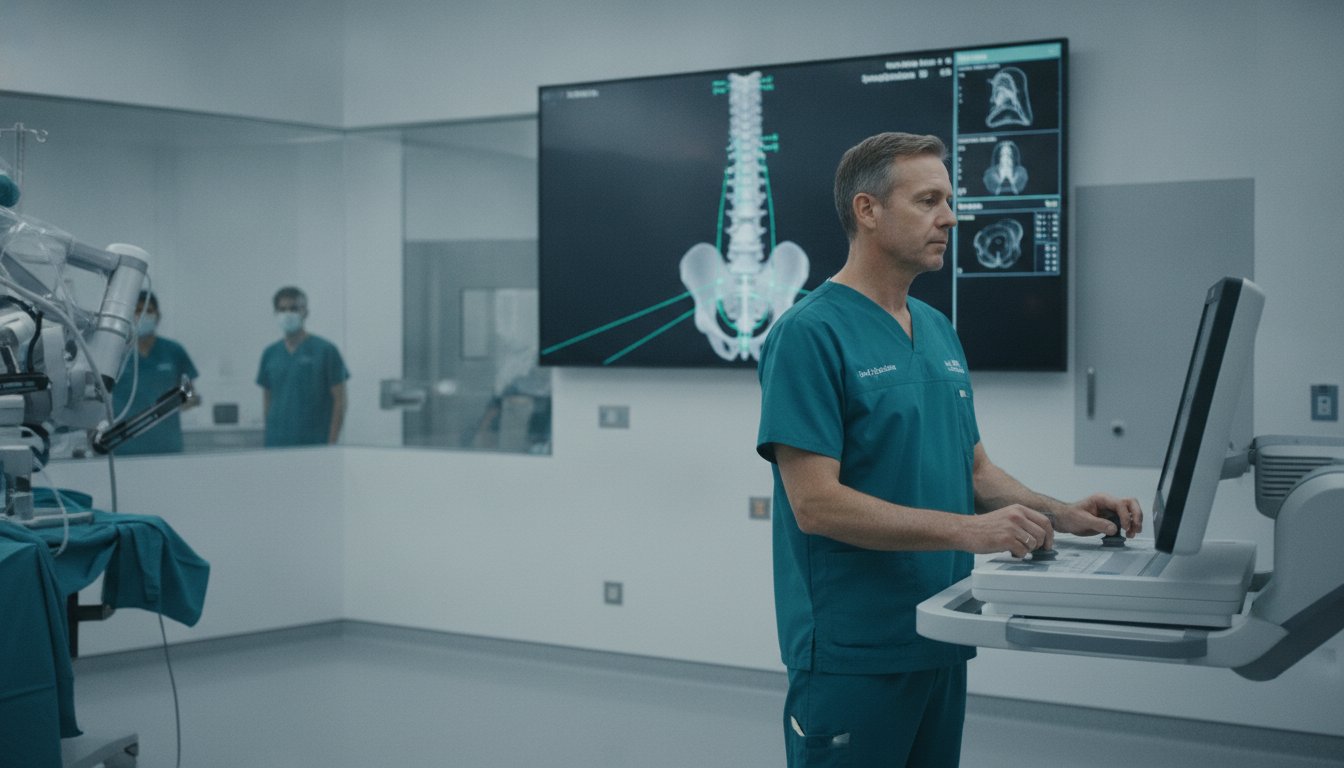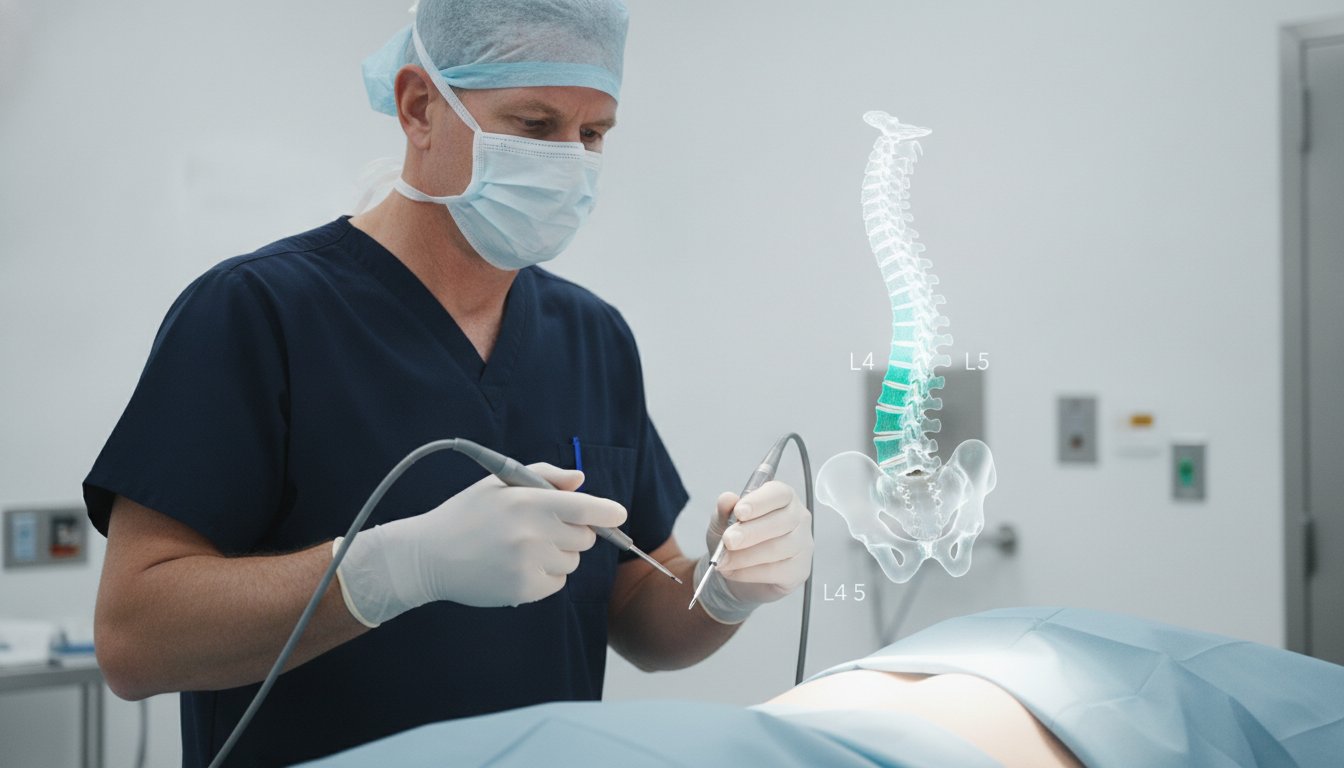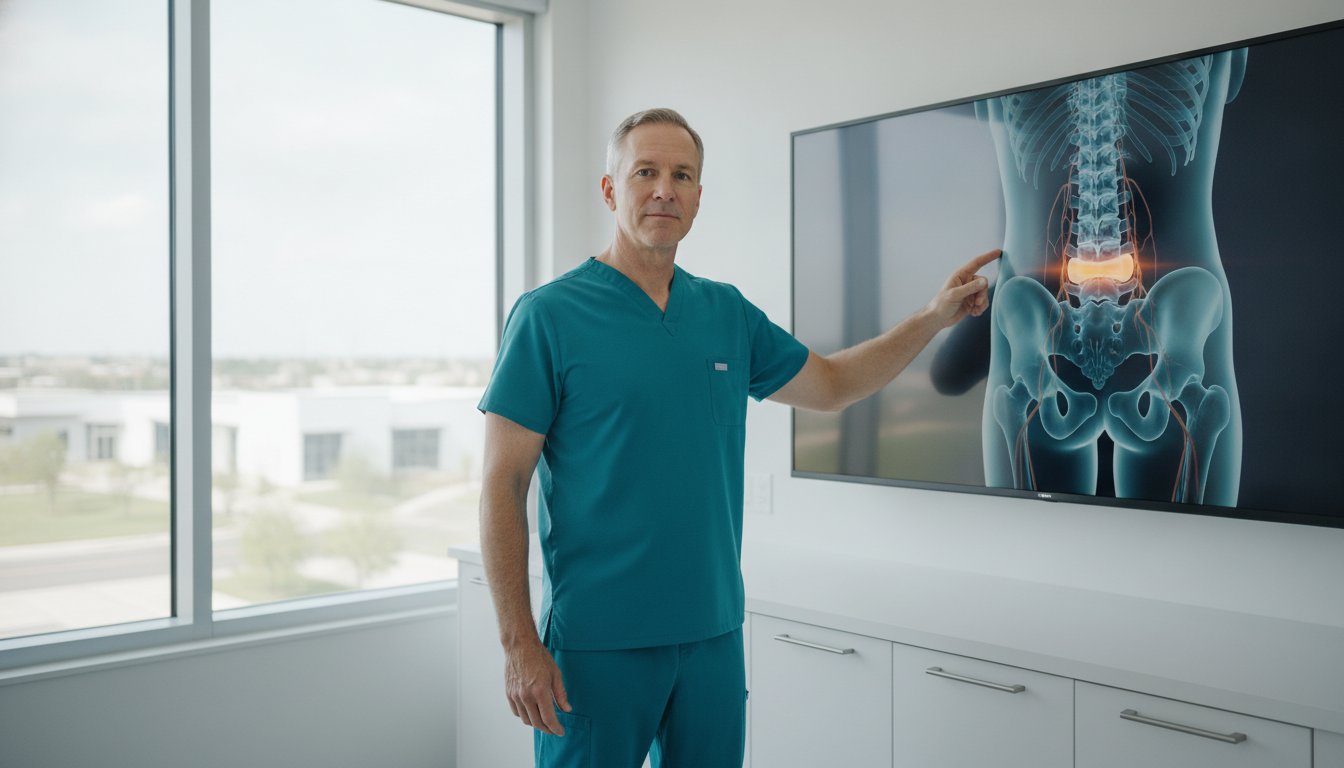
Minimally Invasive Neurosurgery of Texas (MINT), led by Dr. Scott Kutz, is a specialized surgical practice providing advanced spine surgery and sciatica relief to patients in Lewisville and Plano, TX.
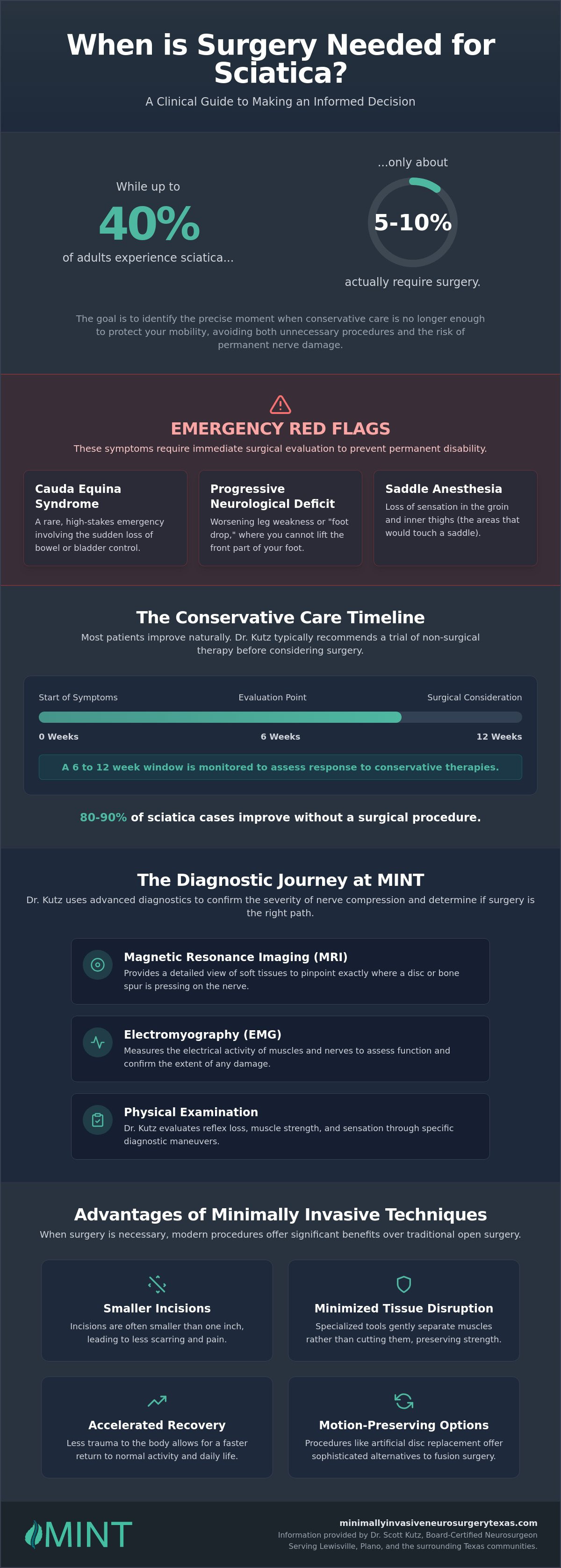
Did you know that while 40 percent of adults will experience the searing, radiating pain of sciatica in their lifetime, only about 5 to 10 percent actually require a surgical procedure? It’s understandable to feel overwhelmed by the persistent ache in your leg and the conflicting advice you might receive from different providers. You likely want to avoid the operating room at all costs, yet the fear of permanent nerve damage makes every step feel like a gamble. Dr. Scott Kutz, a board-certified neurosurgeon, Fellow of the American Association of Neurological Surgeons, and Fellow of the American College of Surgeons, understands that your health is the top priority. He emphasizes that knowing when is surgery needed for sciatica is not about rushing to treatment; it’s about identifying the precise moment when conservative care is no longer enough to protect your mobility.
In this 2026 guide, you’ll discover the clinical red flags and diagnostic timelines that determine when minimally invasive surgery becomes the necessary choice for lasting relief. We’ll explore the MINT philosophy of motion-preserving care and how modern technology allows for a faster return to normal activity. This overview provides the clear criteria you need to move from a state of concern to a state of informed confidence regarding your care in the Lewisville and Plano areas.
Key Takeaways
- Identify the critical neurological red flags that determine when is surgery needed for sciatica to protect your long term mobility.
- Learn why specialists recommend a six to twelve week trial of conservative therapy before pivoting to advanced surgical options.
- Discover how minimally invasive techniques use incisions smaller than one inch to minimize tissue disruption and accelerate your return to normal activity.
- Explore the advantages of motion preserving procedures and how they offer a sophisticated alternative to traditional open surgery.
- Gain confidence in your treatment path through the patient centered approach of Dr. Scott Kutz in Lewisville and Plano.
When is surgery needed for sciatica? Clinical Indicators and Red Flags
Dr. Scott Kutz, a board-certified neurosurgeon and Fellow of the American Association of Neurological Surgeons, leads Minimally Invasive Neurosurgery of Texas (MINT). He specializes in treating complex spinal conditions at our specialized offices in Lewisville and Plano, TX. Patients frequently visit us asking when is surgery needed for sciatica because they want to avoid long term complications while ensuring they don’t rush into a procedure unnecessarily. Dr. Kutz defines sciatica surgery as a targeted intervention to decompress the sciatic nerve. This becomes necessary when conservative, non-surgical methods fail to provide adequate relief from the radiating leg pain. For a comprehensive overview of sciatica, it’s helpful to understand that the condition usually stems from nerve root compression in the lumbar spine. The primary goal of any surgical intervention at MINT is to prevent permanent nerve damage and restore your mobility so you can achieve a return to normal activity.
The Emergency Red Flags for Immediate Surgery
While most cases resolve with time, certain symptoms require immediate surgical evaluation to prevent permanent disability. Dr. Kutz monitors for cauda equina syndrome; this is a rare, high stakes emergency involving the sudden loss of bowel or bladder control. If you experience these symptoms, seek emergency care immediately. Another critical indicator is a progressive neurological deficit. This often manifests as worsening leg weakness or “foot drop,” a condition where you cannot physically lift the front part of your foot while walking. Patients should also watch for saddle anesthesia. This refers to a loss of sensation in the groin and inner thighs, the specific areas that would touch a saddle while riding a horse. These red flags indicate that the nerve is under significant distress and requires decompression to avoid lasting harm.
Diagnostic Criteria Used by Dr. Scott Kutz
At MINT, we use advanced technology to confirm the severity of nerve impingement. Magnetic Resonance Imaging (MRI) plays a central role by providing a detailed view of the soft tissues, allowing Dr. Kutz to pinpoint exactly where a disc or bone spur is pressing on the nerve. To assess the actual function of the nerves, he may order Electromyography (EMG). This test measures the electrical activity of muscles and nerves to confirm the extent of any damage. During a physical examination at our Lewisville or Plano offices, Dr. Kutz also evaluates reflex loss and muscle strength through specific diagnostic maneuvers. These findings, combined with your clinical history, help him determine if minimally invasive spine surgery is the right path forward. Dr. Kutz, who is also a Fellow of the American College of Surgeons, ensures every diagnostic step prioritizes your safety. You can learn more about our team on our about us page. Our results oriented approach focuses on precision, ensuring that surgery is only recommended when the clinical evidence clearly supports it as the most effective route to recovery.
The Conservative Care Timeline: When to Pivot to Surgery
Most patients find that their symptoms resolve through the body’s natural healing processes. Statistical data indicates that 80 to 90 percent of sciatica cases improve without a surgical procedure, often within four to six weeks. Dr. Scott Kutz, a board-certified neurosurgeon and Fellow of the American College of Surgeons, typically monitors patient progress during a conservative therapy window of six to twelve weeks. This timeframe ensures that you receive the benefit of non-invasive care while protecting you from unnecessary risks. During this period, our team focuses on reducing inflammation and restoring function through non-surgical means.
Determining when is surgery needed for sciatica requires a careful assessment of how you respond to initial treatments. Conservative care at our practice often includes targeted physical therapy, anti-inflammatory medications, and epidural steroid injections. These methods aim to reduce swelling and take pressure off the nerve root. However, if these interventions don’t yield significant improvement after three months, the likelihood of a spontaneous recovery drops. According to clinical guidance on When to consider back surgery, Dr. Kutz explains that persistent compression can lead to irreversible changes in the nerve. Continuing conservative care past this point often yields diminishing returns for the patient.
Why Conservative Care May Fail
Structural abnormalities often prevent non-surgical methods from succeeding. In cases of severe disc herniation, the inner gel of a spinal disc leaks out and may be too substantial for the body to absorb naturally. Spinal stenosis creates a permanent narrowing of the bone spaces, leaving the nerve with no room to function regardless of how much physical therapy you perform. Additionally, spondylolisthesis involves the slipping of one vertebra over another. This creates a structural instability that requires a surgical solution to restore the proper alignment of your spine.
The Risks of Delaying Necessary Sciatica Surgery
Procrastinating on a necessary procedure can lead to permanent consequences. Nerves that remain compressed for months may develop chronic pain syndromes, where the pain persists even after the pressure is eventually removed. Muscle atrophy is another major concern; this wasting away of muscle tissue happens when the nerve stops sending signals to the leg muscles. This loss of function often has a profound psychological impact on patients throughout the Dallas-Fort Worth area as they lose their independence and quality of life. If you’re ready to explore a path toward relief, you can reach out to our team to discuss advanced endoscopic spine surgery options available at our Lewisville and Plano offices.
Minimally Invasive Surgical Options for Sciatica Relief
Once clinical red flags confirm when is surgery needed for sciatica, the focus at MINT shifts to selecting the most precise decompression method. Dr. Scott Kutz, a board-certified neurosurgeon, Fellow of the American Association of Neurological Surgeons, and Fellow of the American College of Surgeons, utilizes advanced minimally invasive spine surgery to treat patients in Lewisville and Plano. These modern techniques involve incisions often less than one inch in length. This reduced entry point significantly lowers tissue disruption compared to traditional open back surgery. By sparing the surrounding muscles and ligaments, patients typically experience less post-operative pain and a reduced risk of infection. This approach ensures your health remains the top priority throughout the surgical journey.
Microdiscectomy and Endoscopic Spine Surgery
Dr. Kutz frequently performs microdiscectomies to remove small fragments of bone or herniated disc material that irritate the nerve root. For even greater precision, he offers endoscopic spine surgery. This procedure utilizes a tiny camera to visualize the nerve through a microscopic portal. According to expert insights on sciatica, removing the mechanical source of compression is the primary surgical goal. By using an endoscope, Dr. Kutz avoids the need for large muscle retractors that often cause significant trauma in traditional procedures. This muscle-sparing approach protects the natural flexibility of your spine and helps you maintain long-term structural stability while moving toward a return to normal activity.
Robotic Navigation with Globus Excelsius
For complex cases involving spinal instability or the need for stabilization, our Plano and Lewisville facilities utilize Globus Excelsius robotic navigation. This technology functions like a high-tech GPS for the surgeon. It provides real-time imaging that allows Dr. Scott Kutz to decompress nerves or place hardware with sub-millimeter precision. He integrates this robotic system to ensure the highest level of accuracy during complex reconstructions. This high-tech hallmark distinguishes MINT from practices using traditional, less precise methods. Our results-oriented rhythm focuses on motion-preserving outcomes that facilitate a return to normal activity. This specialized care ensures that patients from McKinney, Allen, and Frisco receive the most modern surgical interventions available today at our boutique surgical center.
Recovery Milestones and Success Rates for MINT Patients
Patients often worry about the downtime required after they finally determine when is surgery needed for sciatica. Dr. Scott Kutz, a board-certified neurosurgeon and Fellow of the American Association of Neurological Surgeons, ensures that every patient at MINT receives a personalized recovery protocol designed for their specific anatomy and lifestyle. Because we utilize advanced minimally invasive spine surgery, the recovery process is significantly faster than traditional open procedures. Clinical data shows that microdiscectomy, one of the most common treatments for sciatica, has a success rate of up to 90 percent for the relief of radiating leg pain. This high success rate provides peace of mind for our patients in Southlake and Flower Mound who want to return to their active lives without the burden of chronic nerve compression.
Dr. Scott Kutz, who is also a Fellow of the American College of Surgeons, emphasizes that a successful outcome depends on both surgical precision and diligent post-operative care. Our results oriented approach has helped thousands of patients find relief; you can read many of their accounts in our patient success stories. By choosing a boutique surgical center like MINT, you receive specialized attention that larger hospital systems often struggle to provide.
The First 48 Hours After Surgery
Most patients experience same day discharge following a minimally invasive decompression or endoscopic procedure. You can manage mild discomfort at the incision site with prescribed medications or simple ice packs. Dr. Kutz encourages patients to begin gentle walking within hours of the procedure. This early mobility promotes healthy blood flow and prevents the stiffness often associated with traditional back surgery. While you should rest, staying completely bedridden is actually counterproductive to the healing process during these initial two days.
Weeks 2 through 6: Returning to Normal Activity
The transition back to daily responsibilities happens quickly for MINT patients. If you work a sedentary office job, you can typically return to your desk within one to two weeks. During your follow up visit, Dr. Scott Kutz will evaluate your progress and clear you to resume driving and light exercise. It’s critical to avoid heavy lifting; specifically anything over ten pounds; for the first six weeks. This restriction allows the treated disc to heal properly and prevents the risk of re-injury. Following these specific milestones ensures that your journey toward relief remains permanent and successful. If you are ready to reclaim your mobility, contact our Lewisville or Plano office to schedule your surgical consultation today.
The MINT Philosophy: Patient-Centered Care in Lewisville and Plano
The MINT philosophy prioritizes evidence-based care and clear communication over aggressive intervention. Dr. Scott Kutz, a board-certified neurosurgeon and Fellow of the American Association of Neurological Surgeons, leads our practice with a commitment to patient safety. We don’t believe in a one-size-fits-all approach to spinal health. Instead, we provide a sophisticated blend of clinical authority and compassionate reassurance. Our team ensures you understand every treatment option before moving toward surgical solutions. We serve the North Texas community with offices conveniently located in Lewisville and Plano. This specialized, boutique surgical center environment ensures you receive personal attention that larger hospital systems often lack. Your health is our top priority, and we focus every resource on helping you achieve a return to normal activity.
Meet Dr. Scott Kutz and the MINT Team
Choosing a board-certified neurosurgeon is vital for managing complex spinal conditions. Dr. Kutz is also a Fellow of the American College of Surgeons and completed his fellowship training in functional neurosurgery at Rush University Medical Center. This advanced training allows him to perform delicate procedures with the precision necessary to protect your long-term mobility. He approaches every case by asking when is surgery needed for sciatica based on the most current clinical data rather than rushing to the operating room. You can read testimonials from local patients who successfully regained their independence through our specialized care. These stories reflect our dedication to relieving suffering and restoring the quality of life for our neighbors in North Texas.
Scheduling Your Consultation in North Texas
We recently relocated our primary headquarters to Lewisville to provide enhanced convenience for our patients. We also maintain a satellite office in Plano to ensure accessible care across the region. The process for new patient evaluations is thorough and results-oriented. We perform a detailed review of your medical history and previous MRI scans to identify the exact source of your pain. We encourage residents of McKinney, Allen, and Dallas to seek a second opinion if they feel confused by conflicting medical advice. A consultation at MINT provides the clarity you need to move from a state of concern to a state of informed confidence. Our team stands ready to help you navigate your diagnostic journey and determine the most effective path toward lasting relief. Whether you require conservative management or advanced endoscopic spine surgery, we prioritize your recovery at every step.
Reclaiming Your Active Lifestyle with Specialized Care
Understanding when is surgery needed for sciatica allows you to take control of your health before permanent nerve damage occurs. While conservative treatments like physical therapy resolve many cases within six to twelve weeks, persistent neurological deficits or severe structural issues require a more precise intervention. Dr. Scott Kutz, a board-certified neurosurgeon, Fellow of the American Association of Neurological Surgeons, and Fellow of the American College of Surgeons, focuses on motion-preserving techniques that respect your body’s natural anatomy. Our use of advanced robotic navigation and endoscopic technology ensures that your surgical journey is as precise and efficient as possible.
You don’t have to navigate chronic radiating pain alone. With convenient offices in Lewisville and Plano, the MINT team provides the specialized attention you deserve in a boutique surgical setting. Whether you’re in McKinney or Dallas, seeking a professional evaluation is the first step toward relief. We invite you to schedule a consultation with Dr. Scott Kutz at MINT today to explore your options. Our results-oriented approach focuses on your long-term wellness and a swift return to normal activity. You can move forward with confidence knowing that expert care is available right here in North Texas.
Frequently Asked Questions
How long can I wait before sciatica surgery becomes dangerous?
You should not wait beyond the six to twelve week conservative therapy window if you experience progressive neurological deficits. Delaying intervention when muscle weakness or numbness worsens can lead to permanent nerve damage or chronic pain syndrome. Dr. Scott Kutz monitors patient progress in Lewisville and Plano to ensure that the window for a successful recovery remains open.
Is minimally invasive sciatica surgery better than traditional open surgery?
Minimally invasive techniques offer significant advantages including smaller incisions, reduced muscle trauma, and faster recovery times. These procedures allow most patients to return to normal activity much sooner than traditional open surgery. Dr. Scott Kutz uses advanced robotic navigation and endoscopic tools to achieve high precision while minimizing the physical impact on your body.
Will I need physical therapy after my sciatica procedure at MINT?
Yes, most patients begin a structured physical therapy program approximately four to six weeks after their procedure. While the surgery removes the source of nerve compression, therapy focuses on rebuilding core strength and restoring flexibility. This comprehensive approach helps prevent future injuries and ensures the long term success of your spinal health in North Texas.
What is the success rate of surgery for a herniated disc causing sciatica?
The success rate for a microdiscectomy typically ranges between 80 and 90 percent for the relief of radiating leg pain. This high level of efficacy makes it a reliable choice for patients determining when is surgery needed for sciatica to restore their quality of life. Dr. Scott Kutz, a board-certified neurosurgeon, utilizes these proven techniques to help patients achieve lasting relief.
Can sciatica return after a successful microdiscectomy?
Sciatica can return in approximately 5 to 15 percent of cases, often due to a new disc herniation at the same level or a different area of the spine. Maintaining a healthy weight and using proper lifting techniques significantly reduces this risk. Dr. Kutz provides every patient with a specific post-operative plan to protect their spine and maintain their surgical results.
Does insurance typically cover minimally invasive spine surgery for sciatica?
Most major insurance providers cover minimally invasive procedures when they are medically necessary for nerve decompression. Documentation of a failed trial of conservative care, such as physical therapy or injections, is usually required for approval. Our administrative teams in Lewisville and Plano assist patients with insurance verification to ensure they understand their benefits before scheduling a procedure.
What happens if I choose not to have surgery for severe sciatica?
Choosing not to have surgery for severe, persistent sciatica can lead to permanent muscle wasting and chronic numbness. If a nerve remains compressed for too long, the damage may become irreversible even if you eventually decide to have the procedure. Dr. Scott Kutz evaluates the severity of nerve impingement to help you weigh the risks of non-surgical management.
How soon can I return to sports after a minimally invasive decompression?
Most patients return to low impact activities like swimming or walking within four to six weeks. High impact or contact sports usually require a longer recovery period of three to six months to ensure the spinal structures have fully healed. Dr. Scott Kutz provides a customized timeline for every athlete to ensure a safe and permanent return to normal activity.