Minimally Invasive Neurosurgery of Texas (MINT), led by Dr. Scott Kutz, a board-certified neurosurgeon and Fellow of the AANS and ACS, provides specialized spinal stenosis treatment at their Lewisville headquarters and Plano satellite office. Dr. Kutz utilizes his 27 years of experience to offer motion-preserving care and advanced surgical solutions for patients throughout the region.
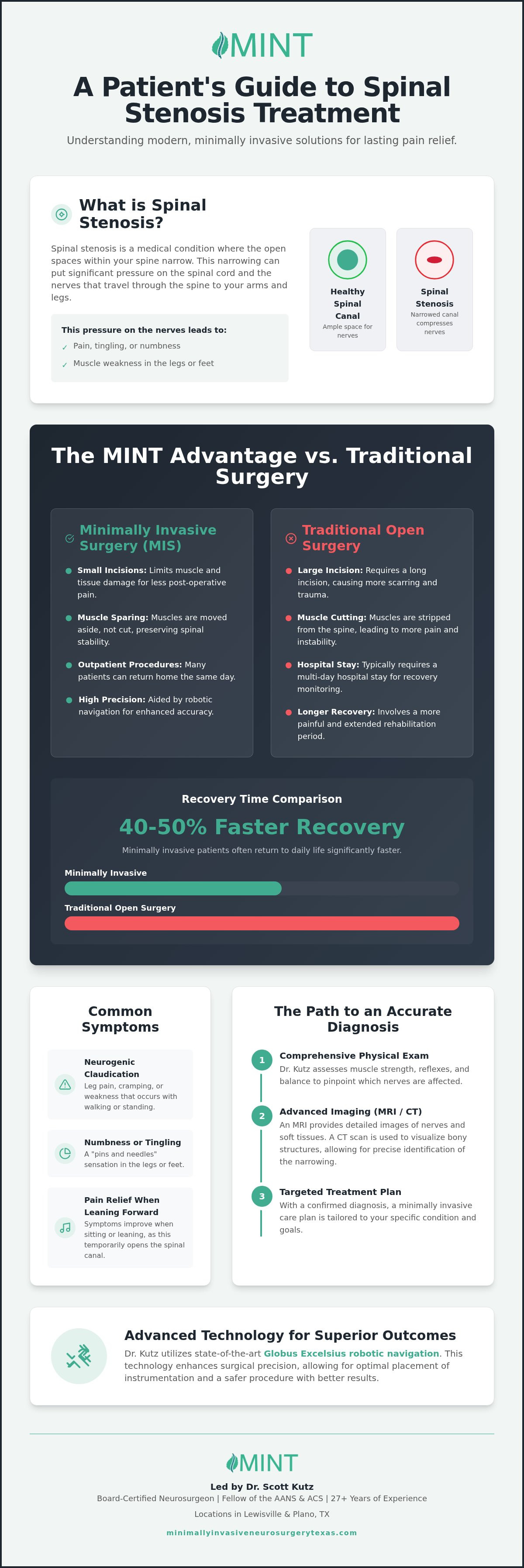
Did you know that patients who choose minimally invasive procedures often experience a 40 to 50 percent faster recovery time than those undergoing traditional open surgery? If you struggle with pain when walking or numbness in your legs, you likely feel that your mobility is slipping away. Spinal stenosis is a narrowing of the spaces within your spine that puts pressure on the nerves. It’s common to worry that surgery might lead to failed back surgery syndrome, which is a condition where pain persists even after an operation. At MINT, we believe your healthcare journey should lead to lasting relief. This article explains how Dr. Scott Kutz provides advanced spinal stenosis treatment Lewisville TX to help residents in Flower Mound and Southlake return to their daily lives. You’ll learn about precision-driven techniques that eliminate the need for long-term opioid use and get you back on your feet quickly.
Key Takeaways
- Learn how minimally invasive techniques, which use small incisions to limit tissue damage, help preserve muscle and reduce surgical trauma.
- Discover why patients seeking spinal stenosis treatment Lewisville TX, which addresses the narrowing of the spinal canal, benefit from outpatient procedures.
- Understand how Globus Excelsius robotic navigation allows Dr. Scott Kutz to achieve high levels of surgical precision.
- Identify the differences between traditional open surgery and modern outpatient methods that prioritize a return to normal activity.
- Gain insight into the diagnostic process and how imaging, such as an MRI, pinpoints the exact source of leg pain or numbness.
Understanding Spinal Stenosis and Nerve Compression in Lewisville
Minimally Invasive Neurosurgery of Texas (MINT) provides advanced surgical care under the direction of Dr. Scott Kutz, a board-certified neurosurgeon and Fellow of the AANS and ACS. From our primary headquarters in Lewisville and our satellite clinic in Plano, TX, we offer specialized spinal stenosis treatment Lewisville TX to restore mobility and comfort. Dr. Kutz utilizes more than 27 years of clinical expertise to help patients overcome chronic back and leg pain through modern, motion-preserving techniques.
Spinal stenosis involves the narrowing of the spinal canal, which is the hollow space protecting your spinal cord. This reduction in space places direct pressure on the nerves traveling through the spine. When nerves lack the necessary room to function, they send signals of pain, weakness, or numbness throughout the body. Dr. Kutz identifies whether a patient suffers from central stenosis, which affects the main canal, or foraminal stenosis, which impacts the small openings where individual nerve roots exit the spinal column. Identifying the specific type of narrowing allows our team to create a targeted minimally invasive care plan.
Common Symptoms Noted by North Texas Patients
Many patients in the Lewisville area describe a condition called neurogenic claudication. This medical term refers to leg pain, tension, or cramping that specifically occurs when you walk or stand. Unlike vascular issues, this pain stems from compressed nerves in the lower back. You might also notice a persistent heavy feeling in your legs or tingling sensations in your feet that make daily activities difficult. Most people find that sitting down or leaning forward provides immediate relief. This happens because those specific positions temporarily widen the spinal canal and reduce the pressure on your nerve roots.
Why Aging and Degeneration Affect the Lewisville Community
Natural wear and tear over time remains the most common cause of spinal canal narrowing. As we age, the body often develops bone spurs, which are hard, smooth projections that grow along the edges of bones. These spurs can encroach on the space reserved for nerves. Additionally, ligaments in the spine may thicken and lose flexibility, further crowding the canal. Osteoarthritis, which is the breakdown of protective cartilage in the joints, also contributes to these structural changes. While these issues often affect older adults, active residents in Flower Mound or Highland Village may notice symptoms earlier due to the physical demands of an athletic lifestyle. Dr. Kutz focuses on minimally invasive spine techniques to address these degenerative changes with minimal disruption to healthy tissue.
Specialized Diagnostic Procedures for Spinal Canal Narrowing
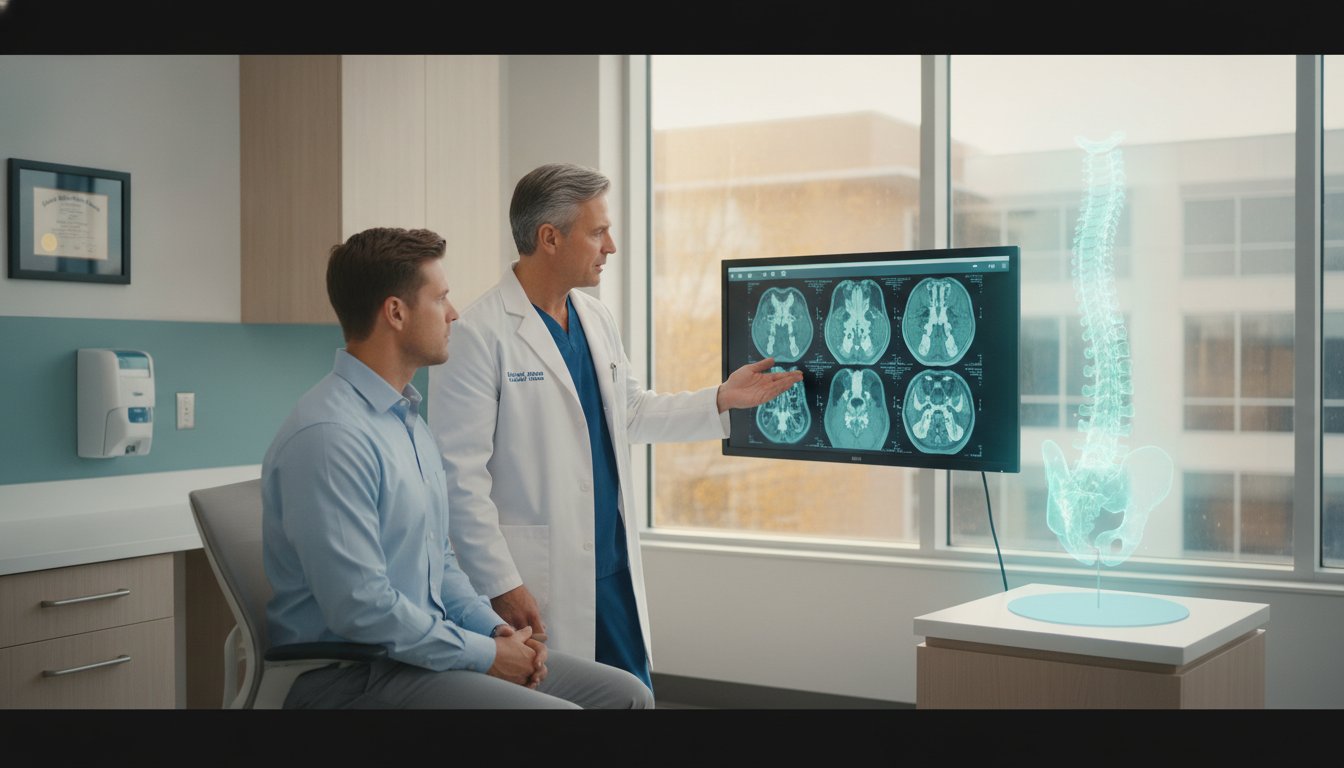
A successful recovery begins with an accurate diagnosis. Dr. Scott Kutz starts every evaluation with a comprehensive physical exam to assess your muscle strength and reflexes. This process helps him identify which nerves are under pressure. If you experience weakness in your feet or legs, these tests provide the first clues about the location of the narrowing. Providing effective spinal stenosis treatment Lewisville TX requires more than just a physical review; it requires advanced imaging to see inside the spinal canal.
Dr. Kutz relies on Magnetic Resonance Imaging, also known as an MRI, to view the soft tissues of your spine. This technology creates detailed pictures of your nerves, spinal cord, and intervertebral discs, which are the shock-absorbing cushions between your vertebrae. If you cannot undergo an MRI due to a pacemaker or other metal implants, we use a Computed Tomography (CT) scan. A CT scan uses specialized X-ray equipment to create cross-sectional images of the bony structures in your back. These images allow Dr. Kutz to pinpoint the exact level of compression with absolute certainty.
Ruling Out Other Conditions in Plano and Lewisville
Spinal stenosis symptoms often mimic other medical issues. For example, peripheral vascular disease, which is a circulation problem in the legs, or hip arthritis can cause similar pain when walking. Dr. Kutz works with patients from Plano and Dallas to rule out these possibilities. He may use diagnostic injections, which involve placing numbing medication near a specific nerve root. If your pain disappears immediately after the injection, it confirms that the nerve is the source of your suffering. This step ensures that we only recommend surgery when it’s truly necessary. If you want to confirm the cause of your leg pain, you can contact our Lewisville office for a consultation.
The Role of Electromyography (EMG) in Diagnosis
To determine the severity of your condition, Dr. Kutz might order an Electromyography, or EMG. This diagnostic test measures the electrical activity of your muscles in response to nerve stimulation. It helps our team in McKinney and Lewisville see if the compression is causing functional nerve damage or just temporary irritation. An EMG provides a clear picture of how well your nerves communicate with your muscles. This data is essential for planning a successful endoscopic spine surgery or other minimally invasive procedures.
Minimally Invasive vs Traditional Open Surgery for Stenosis
Traditional open surgery for spinal stenosis often requires long incisions and the extensive retraction of back muscles. This method frequently leads to significant post-operative pain and a slow recovery because the surgeon must strip muscle away from the bone. At MINT, Dr. Scott Kutz prioritizes minimally invasive spine techniques to avoid these complications. Instead of cutting through healthy tissue, he uses specialized dilators to gently separate muscle fibers. This approach creates a narrow path to the spine without causing permanent damage to the supporting structures of your back.
Smaller incisions offer several clinical advantages beyond just aesthetics. Patients experience significantly less blood loss during the procedure, which reduces the overall strain on the body. Because the surgical site remains small, the risk of post-operative infection decreases. For residents seeking effective spinal stenosis treatment Lewisville TX, these modern methods provide a safer alternative to the large-incision surgeries performed at traditional hospital systems. You can expect a more comfortable recovery and a faster return to your favorite activities.
Endoscopic Spine Surgery: A Precision Option
Dr. Kutz often utilizes endoscopic spine surgery to treat canal narrowing with extreme accuracy. During this procedure, he inserts an endoscope, which is a tiny camera, through a tube the size of a pencil. The camera provides a high-definition view of the spinal canal on a monitor. Using specialized micro-tools, Dr. Kutz removes bone spurs, also known as osteophytes, and thickened ligaments that compress the nerves. This precision ensures that he only removes the tissue causing the problem while leaving the rest of your spine undisturbed.
Motion-Preserving Alternatives to Spinal Fusion
Traditional stenosis surgery often includes spinal fusion to stabilize the back after removing bone. However, fusion permanently locks the vertebrae together, which limits your flexibility. For many patients in Southlake and Grapevine, maintaining a full range of motion is a top priority. Artificial disc replacement offers a motion-preserving solution. By replacing a damaged disc with a prosthetic joint, Dr. Kutz relieves the pressure on your nerves without sacrificing your ability to bend and twist. This technology mimics the natural function of your spine and helps prevent the stress on nearby joints often seen with traditional fusion.
Recovery Timelines and What to Expect After Treatment
Your recovery journey starts at our Lewisville headquarters, where we prioritize your comfort and safety from the moment you arrive. Dr. Scott Kutz performs many procedures on an outpatient basis. This means you can return home the same day to begin your recovery in a familiar setting. Most patients stand and walk within just a few hours of their spinal stenosis treatment Lewisville TX. Early movement is vital because it prevents complications and promotes faster tissue healing. While timelines vary, most patients return to light activity, such as office work or gentle walking, within 2 to 4 weeks.
Post-Operative Care in Lewisville and Plano
We emphasize walking as the most important part of your early post-operative care. Short, frequent walks around your home in Lewisville or Plano help rebuild strength and flexibility. During the first month, you must adhere to strict lifting restrictions. You shouldn’t lift anything heavier than 10 pounds to avoid straining the surgical site. Dr. Kutz and the MINT team provide a personalized recovery plan for every patient to ensure you have clear guidance at every step. If you have questions about your specific needs, contact our office to speak with a care coordinator.
Long-Term Outcomes and Quality of Life
The long-term goal of minimally invasive decompression is a significant reduction in leg pain and a return to your favorite hobbies. Many patients find they can return to gardening, golf, or traveling once they complete their recovery. Clinical studies indicate that laminectomy for spinal stenosis has a success rate of approximately 90 percent for properly selected patients. This high level of success allows you to regain the independence that chronic pain once took away. You can view real-world recovery stories and see how our patients have reclaimed their lives by reading our patient testimonials.
Why Dr. Scott Kutz and MINT Lead Spinal Care in North Texas
Dr. Scott Kutz, a board-certified neurosurgeon and Fellow of the American Association of Neurological Surgeons (AANS) and the American College of Surgeons (ACS), leads the team at MINT. With over 27 years of experience, Dr. Kutz has performed more than 6,000 successful surgeries. This level of expertise is critical when performing complex spinal stenosis treatment Lewisville TX. His background allows him to handle delicate nerve decompressions with the confidence that only decades of practice can provide. He focuses on restoring your quality of life by using the least invasive methods possible.
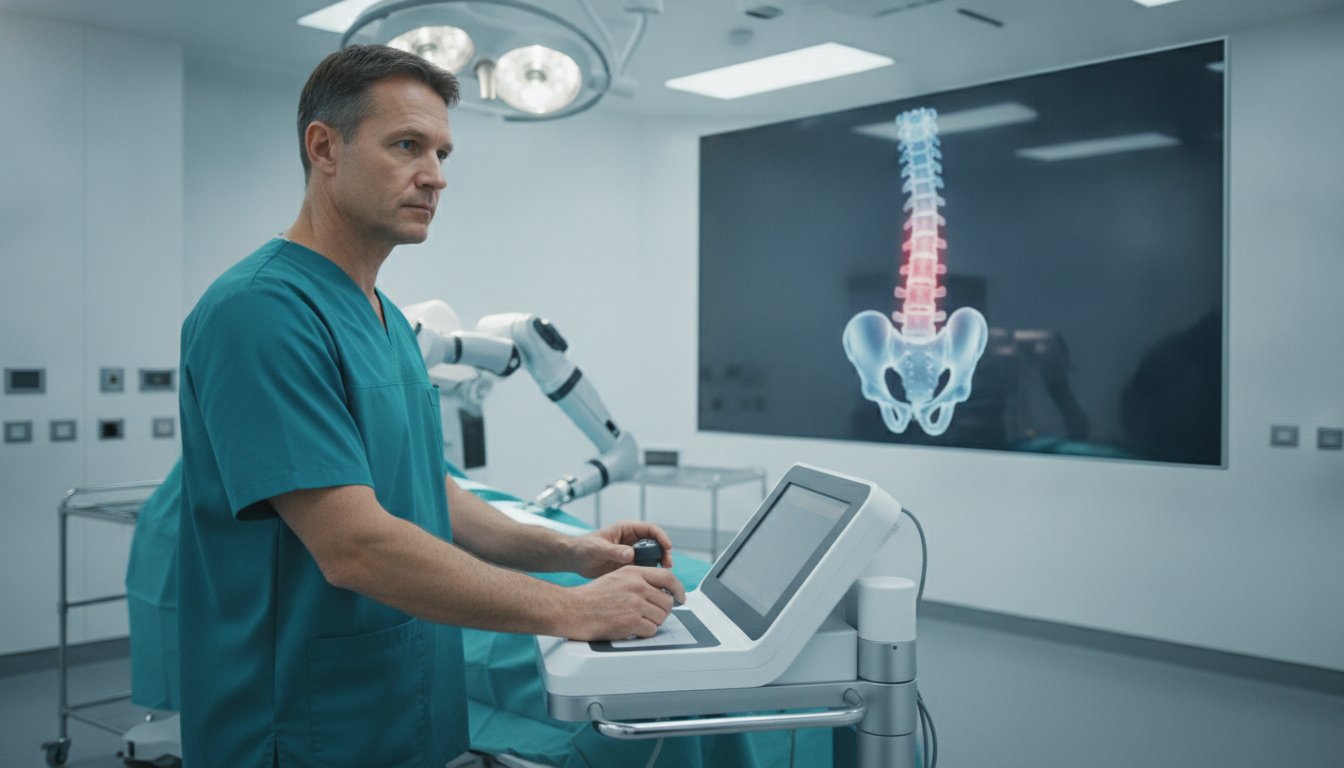
MINT stays at the forefront of surgical innovation by utilizing the Globus Excelsius robotic navigation system. This technology allows for unmatched precision by providing a rigid, GPS-like guide for the surgeon’s instruments. Also, Dr. Kutz uses the Augmedics AR system. Augmented Reality (AR) acts like X-ray vision. It projects a 3D image of your spinal anatomy directly onto the surgeon’s headset during the procedure. These tools ensure that every movement is accurate to the millimeter. This precision reduces the impact on healthy tissue and helps you return to normal activity faster.
A Patient-Centered Approach in Lewisville
The team at MINT follows a patient-first communication philosophy. We don’t just treat symptoms; we treat people. Dr. Kutz and his staff ensure you fully understand your diagnosis and all available options before you ever enter an operating room. Because we focus exclusively on spinal health, we offer a level of specialization that large, multi-specialty hospital systems often lack. This dedicated focus leads to better clinical outcomes and a more personalized experience for every patient. You aren’t just another number in a system; you’re a patient who deserves individual attention.
Convenient Access for the DFW Metroplex
Our primary headquarters is located in Lewisville, with a satellite office in Plano to serve the broader North Texas community. We provide advanced care to patients from McKinney, Allen, Dallas, and Southlake. Since our main office relocated to Lewisville in January 2026, we’ve expanded our capacity to help more residents find relief from chronic pain. We also serve patients from Frisco and Flower Mound who seek specialized neurosurgical care. If you’re ready to reclaim your mobility, visit our contact page to schedule your initial consultation and take the first step toward a pain-free life.
Reclaim Your Active Lifestyle in North Texas
Spinal stenosis shouldn’t dictate your quality of life or keep you from the activities you love. You’ve learned how modern, motion-preserving techniques allow for a much faster recovery than traditional open surgeries. By choosing advanced spinal stenosis treatment Lewisville TX, you benefit from smaller incisions and significantly less muscle disruption. Dr. Scott Kutz, a board-certified neurosurgeon with over 20 years of specialized clinical experience, uses the Globus Excelsius robotic navigation system to ensure the highest level of surgical precision. This technology, combined with his expertise, helps you return to normal activity with confidence.
Whether you live in Flower Mound, Southlake, or McKinney, our team is ready to help you find a path toward lasting relief. You don’t have to manage chronic leg pain or numbness on your own. Taking the first step toward recovery is as simple as reaching out to our specialized care team. Schedule your consultation at our Lewisville or Plano office today. We look forward to helping you restore your mobility and get back to the life you deserve.
Frequently Asked Questions
Is surgery the only treatment for spinal stenosis in Lewisville?
No, surgery is typically the last option for patients. Dr. Scott Kutz usually recommends conservative treatments first, such as physical therapy, anti-inflammatory medications, or epidural steroid injections. These injections involve placing medication directly into the space around the spinal nerves to reduce inflammation. If these methods do not provide relief after several months, we then discuss spinal stenosis treatment Lewisville TX to restore your mobility and reduce chronic pain.
How long does a minimally invasive stenosis procedure take?
Minimally invasive procedures usually take between 45 and 90 minutes to complete. The exact time depends on the number of levels in your spine that require decompression, which is the process of removing pressure from the nerves. Because Dr. Kutz uses advanced robotic navigation, he can complete the surgery with extreme efficiency. This reduced time under anesthesia helps you recover faster and return home to Lewisville or Plano the same day.
Can spinal stenosis return after surgery?
Yes, spinal stenosis can return in a different area of your spine. While surgery successfully treats the specific level causing your current pain, the natural aging process continues in other segments. This is often called adjacent segment disease, where the joints above or below the surgical site experience wear and tear over time. Maintaining a healthy weight and strong core muscles helps protect the rest of your spine from future narrowing.
What happens if spinal stenosis is left untreated?
Untreated spinal stenosis can lead to permanent nerve damage and a significant loss of mobility. Over time, the constant pressure on your nerves can cause chronic weakness, persistent numbness, or even loss of bowel and bladder control. This condition often results in a sedentary lifestyle, which increases the risk of other health issues like heart disease. Seeking early evaluation at our Lewisville headquarters prevents these long-term neurological complications from developing.
Will insurance cover minimally invasive spinal stenosis treatment in TX?
Most major insurance providers, including Medicare, cover minimally invasive spine surgery for medically necessary conditions. Because spinal stenosis is a structural issue that impacts your physical function, insurance companies typically recognize the necessity of decompression. Our team at MINT works directly with your provider to verify benefits and handle the billing process. We recommend checking your specific out-of-pocket maximums for 2026 to understand your potential costs before your procedure.
How do I know if I am a candidate for endoscopic spine surgery?
You may be a candidate if you have localized nerve compression and haven’t found relief through non-surgical care. Dr. Kutz evaluates every patient using advanced imaging to see if an endoscope, which is a tiny camera, can reach the affected area. This ultra-minimally invasive option is ideal for patients who want to avoid large incisions. Candidates usually have good overall health and a clear source of pain identified on an MRI scan.
What is the difference between central stenosis and foraminal stenosis?
Central stenosis occurs when the main spinal canal narrows, while foraminal stenosis involves the narrowing of the small openings where individual nerves exit. Central narrowing often causes pain or weakness in both legs simultaneously. Foraminal narrowing typically impacts just one side of the body. Both conditions require specialized spinal stenosis treatment Lewisville TX to create enough space for the nerves to function properly without being pinched by bone spurs or thickened ligaments.
Can I drive myself home after a stenosis procedure at MINT?
No, you cannot drive yourself home after any surgical procedure involving anesthesia. Even though minimally invasive surgery allows you to go home the same day, the medications impact your reaction times and judgment. You must arrange for a responsible adult to drive you to and from our Lewisville or Plano office. Most patients can resume driving within one to two weeks, provided they no longer take narcotic pain medications for their recovery.