
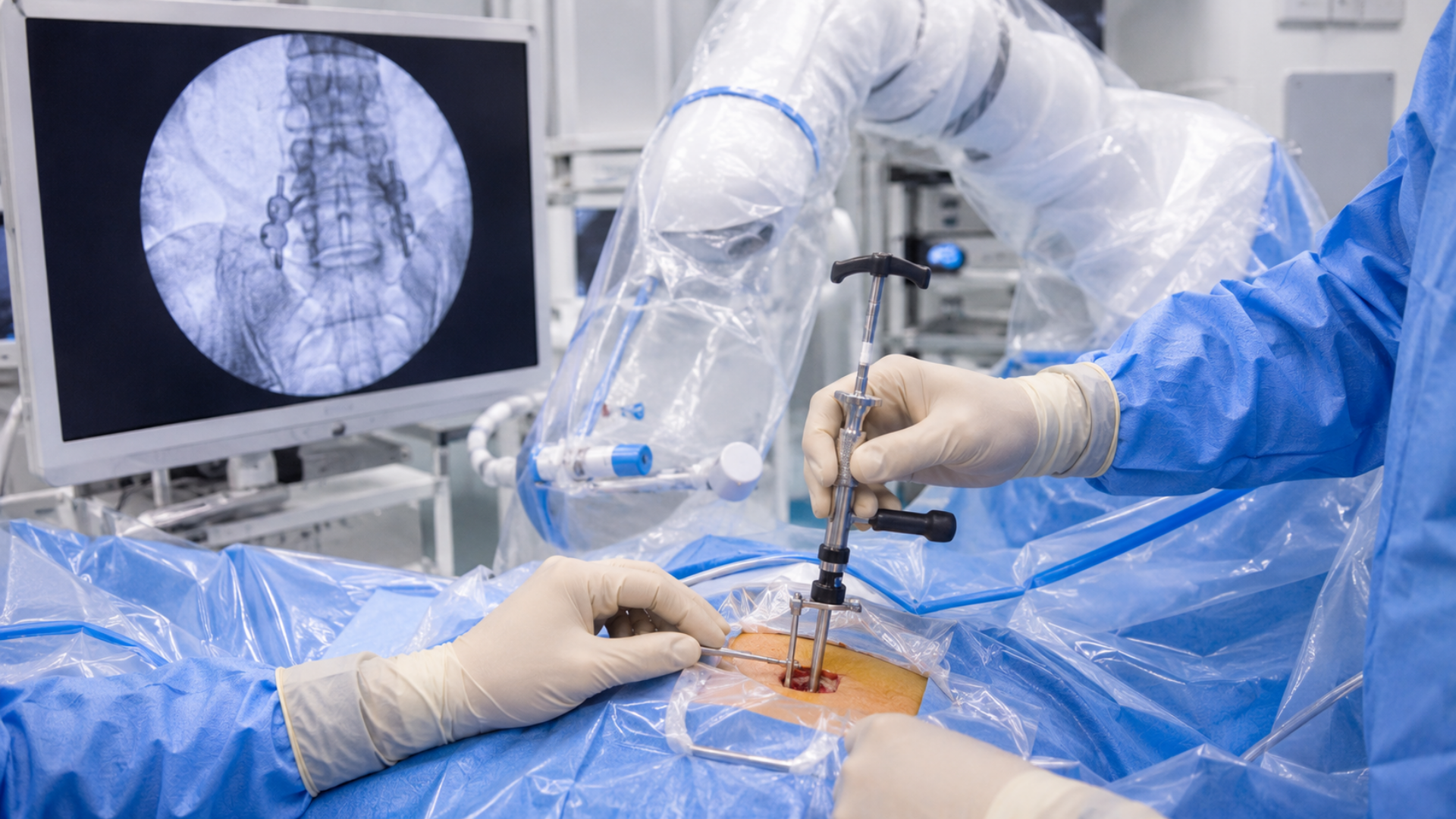
What Is Artificial Disc Replacement in Lewisville TX?
Artificial disc replacement is a surgical procedure that removes a damaged spinal disc and replaces it with an engineered implant designed to restore normal disc height, absorb shock, and preserve motion at the treated spinal level. Unlike spinal fusion, which permanently joins two vertebrae together and eliminates movement between them, artificial disc replacement maintains the spine’s natural ability to flex, extend, and rotate at the operated segment. This motion-preserving approach is the defining advantage of disc replacement and the primary reason surgeons consider it for appropriate candidates.
Scott C. Kutz, MD, a board-certified neurosurgeon at Minimally Invasive Neurosurgery of Texas, performs both cervical and lumbar artificial disc replacement using minimally invasive techniques at the practice’s Lewisville and Plano, Texas locations. Dr. Kutz is a Fellow of the American Association of Neurological Surgeons and a Fellow of the American College of Surgeons, with over 6,000 successful spine surgeries performed across his 27-year career. The practice uses FDA-approved artificial disc implants from multiple manufacturers, allowing Dr. Kutz to select the device best suited to each patient’s anatomy and condition.
The International Society for the Advancement of Spine Surgery has stated that it “strongly supports both cervical and lumbar total disc replacements, including multi-level use as approved by the FDA, as safe and effective treatment alternatives to fusion in appropriately selected patients.” A 2025 study in Global Spine Journal reviewing FDA IDE trial data and real-world outcomes confirmed that cervical disc replacement shows sustained improvement in pain and disability scores, with lower reoperation rates than anterior cervical discectomy and fusion (Issani et al., Global Spine Journal, 2025).
How Does Artificial Disc Replacement Work?
The procedure follows a straightforward sequence, though the surgical details vary depending on whether the replacement involves the cervical spine (neck) or the lumbar spine (lower back).
Cervical artificial disc replacement is performed through an incision at the front of the neck. The surgeon carefully moves aside the soft tissues to reach the cervical spine. The damaged disc is removed, and any bone spurs or disc fragments pressing on the spinal cord or nerve roots are cleared away. The surgeon then measures the disc space and selects the appropriately sized artificial disc. The implant is positioned between the two vertebrae, restoring the segment’s normal height and alignment. The artificial disc has bearing surfaces that allow controlled movement, mimicking the flexion, extension, and rotation of a healthy natural disc.
Lumbar artificial disc replacement is performed through an incision in the abdomen, approaching the lumbar spine from the front. This anterior approach avoids the back muscles entirely. The surgeon removes the damaged disc, prepares the disc space, and places the artificial implant. The lumbar approach requires careful coordination because the surgeon works near major blood vessels, so this procedure demands specialized training and experience.
In both cases, the surgery typically takes one to two hours. Most patients stay in the hospital for one to two nights. Dr. Kutz performs these procedures using minimally invasive techniques that reduce tissue disruption and improve recovery.
Cervical Disc Replacement vs. Lumbar Disc Replacement
While the fundamental concept is the same, cervical and lumbar disc replacement differ in several important ways that affect candidacy, surgical approach, and outcomes.
Cervical disc replacement is the more commonly performed and better studied. FDA-approved cervical disc devices have accumulated extensive long-term outcome data, with some trials reporting results at 10, 15, and even 20 years. Multiple randomized controlled trials show that cervical ADR provides sustained pain relief, preserves range of motion, and has lower reoperation rates than fusion. The procedure has seen a dramatic increase in adoption, with cervical disc arthroplasty procedures increasing by over 650 percent in the past decade, according to a 2025 analysis published in HSS Journal.
Lumbar disc replacement has a narrower candidate pool because the lower back has more complex anatomy and stricter patient-selection criteria. The lumbar spine bears significantly more weight than the cervical spine, and the facet joints in the lower back play a larger role in guiding movement. Patients with significant facet joint arthritis, spondylolisthesis, spinal stenosis requiring decompression, or prior lumbar fusion are generally not candidates for lumbar ADR. When patient selection criteria are met, however, lumbar disc replacement produces meaningful pain relief and functional improvement comparable to or better than fusion, with the added benefit of preserved motion.
Dr. Kutz evaluates each patient’s specific anatomy, disc pathology, facet joint health, spinal alignment, and overall condition to determine which approach, cervical ADR, lumbar ADR, or fusion, will produce the best long-term outcome.
What Conditions Does Artificial Disc Replacement Treat?
Artificial disc replacement treats conditions in which a damaged disc is the primary source of pain or nerve compression. The most common indications include:
Degenerative disc disease occurs when a spinal disc loses its height, hydration, and structural integrity over time. This degeneration can cause chronic neck or back pain and may lead to nerve compression as the disc collapses and the space around the nerves narrows.
A Cervical herniated disc causes neck pain, arm pain, numbness, tingling, or weakness when disc material pushes out and compresses a cervical nerve root or the spinal cord. Disc replacement removes the herniation and replaces the damaged disc in a single procedure.
Lumbar herniated disc with discogenic pain may be treated with lumbar ADR in select patients when the herniation is accompanied by disc degeneration and the patient meets the specific candidacy criteria for lumbar replacement.
Cervical radiculopathy is radiating arm pain caused by a compressed cervical nerve root. When the compression results from a herniated disc or disc-related bone spur, cervical disc replacement relieves the pressure while maintaining neck motion.
Cervical myelopathy caused by disc herniation or disc-related spinal cord compression may be addressed with disc replacement in appropriate cases. However, severe myelopathy from multilevel compression may require a different approach.
Who May Be a Candidate for Artificial Disc Replacement?
Patient selection is the single most important factor in achieving a successful outcome with artificial disc replacement. The procedure works best for patients who meet specific criteria.
Symptomatic disc disease confirmed by imaging. The patient must have neck or back pain, arm or leg pain, or neurological symptoms that correlate with disc pathology visible on MRI. The damaged disc must be clearly identified as the source of pain.
Failed conservative treatment. Candidates should have completed at least six months of nonsurgical treatment, including physical therapy, anti-inflammatory medications, and injections, without adequate relief.
One or two affected levels. Disc replacement is FDA-approved for one-level and two-level procedures in the cervical spine, and single-level procedures in the lumbar spine. Some surgeons perform multi-level cervical replacements when the anatomy and condition support it.
Adequate bone quality. The vertebrae above and below the replacement must be strong enough to support the implant. Patients with osteoporosis or severely weakened bone may not be suitable candidates.
Healthy facet joints. The small joints behind the disc must be in reasonable condition because they share the load of spinal movement with the artificial disc. Significant facet joint arthritis can compromise disc replacement results.
No significant spinal instability. The spine must maintain its normal alignment. Conditions such as spondylolisthesis, where one vertebra has slipped forward, generally require fusion rather than disc replacement.
To determine candidacy, Dr. Kutz performs a thorough evaluation, including a physical examination, symptom review, and detailed imaging analysis. Contact Minimally Invasive Neurosurgery of Texas at (972) 244-3491 to schedule a consultation.
Who May Not Be a Candidate?
Understanding who is not a candidate is equally important for making an informed decision. The following conditions generally exclude patients from artificial disc replacement.
Osteoporosis or severe osteopenia. Weakened bone cannot adequately support an artificial disc implant, increasing the risk of the device sinking into the vertebral body (subsidence).
Significant facet joint arthritis. When the facet joints behind the disc are severely degenerated, they cannot properly guide motion, and a disc replacement may not function as intended or may cause facet-related pain.
Spinal stenosis requiring posterior decompression. If the compression comes from behind the spinal cord or nerve roots (from thickened ligaments or bone spurs in the posterior elements), disc replacement alone will not resolve the problem.
Spondylolisthesis or spinal instability. A vertebra that has slipped out of alignment needs stabilization, which disc replacement does not provide.
Prior fusion at the same level. A segment that has already been fused cannot accept a motion-preserving implant.
Active infection or spinal tumor. These conditions require different treatment approaches.
Significant scoliosis or spinal deformity. Abnormal alignment affects how forces distribute across an artificial disc, potentially compromising its function and longevity.
Morbid obesity or conditions that prevent safe anterior surgical access. The anterior approach required for disc replacement may carry elevated risk for some patients.
Artificial Disc Implants Used at MINT
Dr. Kutz selects artificial disc devices from multiple FDA-approved manufacturers based on each patient’s anatomy, spinal level, and condition. Access to several implant options lets the surgeon match the device to the individual rather than using a one-size-fits-all approach.
Zimmer Biomet Mobi-C is a cervical disc replacement with a mobile-bearing design that allows natural, multi-directional motion. It is FDA-approved for both one-level and two-level cervical disc replacement.
Aesculap activ-L is designed for lumbar disc replacement with an adaptive motion profile that adjusts to the patient’s natural movement patterns.
Centinel Spine prodisc C and prodisc L provide options for both cervical and lumbar replacement with a ball-and-socket design that maintains controlled motion.
Orthofix M6 features an artificial annulus and nucleus that closely mimic the complex motion characteristics of a natural disc, including compression, flexion, extension, and lateral bending.
NuVasive Simplify Disc is a cervical replacement designed with a self-centering core that promotes natural motion while maintaining stability.
Each device has specific design characteristics that make it better suited for certain patients and anatomies. Dr. Kutz discusses the recommended implant with each patient as part of the surgical planning process.
Potential Benefits of Artificial Disc Replacement
The primary advantage of artificial disc replacement over spinal fusion is the preservation of motion at the treated spinal level. This difference has several downstream benefits.
Preserved spinal motion. The artificial disc maintains flexion, extension, and rotation at the operated level. Patients retain a more natural range of neck or back movement after surgery compared to fusion, which permanently eliminates motion at the treated segment.
Reduced risk of adjacent segment disease. When one level of the spine is fused, the levels above and below absorb additional mechanical stress during movement. Over time, this accelerated wear can cause degeneration at those neighboring levels, a condition called adjacent segment disease. By preserving motion, disc replacement distributes forces more naturally and may reduce this long-term risk.
Lower reoperation rates. FDA IDE trial data comparing cervical disc replacement to anterior cervical discectomy and fusion have consistently demonstrated lower reoperation rates for the disc replacement group over follow-up periods extending to 10 and even 20 years.
Faster rehabilitation. Because the artificial disc begins functioning immediately after placement, patients can often begin moving sooner than after fusion, which requires a period of bone healing. Most patients resume daily activities within two to six weeks.
No bone graft required. Unlike fusion, disc replacement does not require harvesting bone from the patient’s hip or using a bone graft substitute, which eliminates bone graft donor site pain and complications.
Effective pain relief. Clinical studies demonstrate that disc replacement produces pain relief and functional improvement comparable to or better than fusion for appropriate candidates.
These benefits apply when the procedure is performed on a well-selected candidate. Individual outcomes vary, and no surgical procedure guarantees a specific result.
Risks and Complications
Artificial disc replacement, like any surgery, carries risks that patients should understand before deciding on treatment.
General surgical risks include infection, bleeding, blood clots, and adverse reactions to anesthesia. The anterior surgical approach carries a small risk of injury to the esophagus or trachea (cervical) or to the major blood vessels and surrounding organs (lumbar).
Hoarseness or difficulty swallowing may occur temporarily after cervical disc replacement due to retraction of the esophagus and recurrent laryngeal nerve during the anterior neck approach. This typically resolves within days to weeks.
Implant-related complications can include device migration (movement from the intended position), subsidence (the implant sinking into the vertebral body), and, rarely, device failure. Modern implant designs and improved surgical techniques have reduced these risks.
Heterotopic ossification is the formation of unwanted bone around the artificial disc, which can limit the motion the device was designed to preserve. The clinical significance varies, and not all heterotopic ossification causes symptoms.
Nerve injury is a rare but possible complication of any spine surgery. The surgeon works near the spinal cord and nerve roots throughout the procedure.
Incomplete symptom relief may occur if the damaged disc was not the sole source of pain, or if other structural problems contribute to the patient’s symptoms. Accurate preoperative diagnosis is essential for maximizing the likelihood of a successful outcome.
The need for future surgery cannot be eliminated. While disc replacement has demonstrated lower reoperation rates than fusion in long-term studies, some patients may eventually require additional procedures.
Dr. Kutz discusses all risks specific to the patient’s planned procedure during the pre-operative consultation.
Recovery After Artificial Disc Replacement
Recovery after artificial disc replacement generally follows a faster timeline than recovery after fusion because the artificial disc provides immediate stability and motion. Bone healing, which is the rate-limiting factor in fusion recovery, is not required.
Hospital stay. Most patients stay in the hospital for one to two nights after disc replacement surgery. Some cervical disc replacements may be performed on an outpatient basis for appropriate candidates. A 2025 study of 1,043 patients who underwent cervical artificial disc replacement at an outpatient surgery center reported zero immediate postoperative transfers, no blood transfusions, and no readmissions, with all patients discharged home successfully within 24 hours (Girdler, DISC Surgery Center, 2025).
First one to two weeks. Patients walk the day of or the day after surgery. Light activities such as walking, dressing, and basic household tasks are encouraged. A soft cervical collar may be recommended for comfort after cervical disc replacement, though it is not always required. Driving is typically safe within one to two weeks once the patient is alert and off narcotic medications.
Two to six weeks. Most patients return to desk work and resume most daily activities during this period. Light exercise such as walking and gentle stretching may begin with clearance from Dr. Kutz.
Six to twelve weeks. Gradual return to more demanding physical activities. Patients are typically cleared for low-impact exercise, swimming, and light recreational activities.
Three to six months. Full activity clearance, including physically demanding work and contact sports, is individualized based on the patient’s progress, the spinal level treated, and the type of implant used.
When to seek immediate medical attention. Contact the office or go to the emergency room if you experience sudden or progressive weakness, difficulty swallowing that worsens instead of improving, loss of bladder or bowel control, high fever, or severe pain not controlled by prescribed medication.
Recovery timelines are estimates and vary by patient. Dr. Kutz provides individualized guidance based on each patient’s procedure and healing progress.
Artificial Disc Replacement vs. Spinal Fusion
The choice between disc replacement and fusion depends on the patient’s specific diagnosis, anatomy, and goals. Neither procedure is universally superior. Each has distinct advantages and appropriate applications.
Motion preservation vs. stabilization. Disc replacement preserves movement at the treated level. Fusion eliminates movement and stabilizes the segment by permanently joining the vertebrae together. For patients whose primary problem is disc-related pain or herniation with a structurally sound spine, disc replacement may be the better choice. For patients with spinal instability, significant facet joint disease, or deformity, fusion provides the structural support that disc replacement cannot.
Adjacent segment disease. Long-term data suggest that disc replacement may reduce the risk of adjacent segment degeneration because it maintains more natural force distribution across the spine. Fusion alters the biomechanics of neighboring segments, which can accelerate wear over time.
Reoperation rates. Multiple FDA IDE trials with 7- to 10-year follow-up, and one prospective randomized trial with 20-year data, have shown lower reoperation rates for cervical disc replacement than for anterior cervical discectomy and fusion.
Recovery. Disc replacement patients generally recover faster because the implant provides immediate stability. Fusion patients must wait for the bone graft to heal, which takes three to six months or longer. During this healing period, activity restrictions are typically more conservative.
When fusion is the right choice, it remains the standard of care for spinal instability, spondylolisthesis, multilevel disease in patients who do not meet ADR criteria, severe facet arthritis, osteoporosis, and revision cases where disc replacement is not feasible. Fusion is a proven, reliable procedure with decades of long-term outcome data.
During the consultation, we discuss the advantages and limitations of each approach so the patient can make an informed decision about the procedure that best fits their condition and long-term goals.
Why Choose Minimally Invasive Neurosurgery of Texas for Disc Replacement?
Artificial disc replacement demands precise surgical technique, thorough patient selection, and access to multiple implant options. Minimally Invasive Neurosurgery of Texas offers all three.
Dr. Kutz has performed over 6,000 spine surgeries, including cervical and lumbar artificial disc replacements, across his 27-year career. He earned his medical degree from the University of Illinois College of Medicine, completed his neurosurgical residency at Louisiana State University in New Orleans, and trained in stereotactic and functional neurosurgery at Rush University Medical Center in Chicago. He is board certified by the American Board of Neurological Surgery and holds fellowships in the American Association of Neurological Surgeons and the American College of Surgeons. Dr. Kutz has published peer-reviewed content on Spine-Health, including articles on sacroiliac joint fusion and posture-related disc issues.
The practice maintains relationships with multiple implant manufacturers, stocking cervical devices from Zimmer Biomet, Centinel Spine, Orthofix, and NuVasive, and lumbar devices from Aesculap and Centinel Spine. This ensures that Dr. Kutz can select the best device for each patient’s anatomy rather than being limited to a single option.
Minimally Invasive Neurosurgery of Texas serves patients at two North Texas locations:
Lewisville office: 1850 Lakepointe Drive, Suite 500, Lewisville, TX 75057 Plano office: 5465 Legacy Drive, Suite 650, Plano, TX 75024
The practice also serves patients from Frisco, Flower Mound, Denton, McKinney, Allen, and the greater Dallas-Fort Worth area.
Patients considering artificial disc replacement Lewisville TX can schedule a consultation by calling (972) 244-3491 or visit the contact page.
Frequently Asked Questions
What is artificial disc replacement? Artificial disc replacement is a surgical procedure that removes a damaged spinal disc and replaces it with an FDA-approved implant designed to restore disc height, absorb shock, and preserve motion at the treated level. Unlike fusion, which permanently eliminates movement between two vertebrae, disc replacement allows the spine to continue flexing and rotating naturally at the operated segment.
What is the difference between artificial disc replacement and spinal fusion? Fusion joins two vertebrae together to eliminate motion and stabilize the spine. Disc replacement removes the damaged disc and inserts a device that maintains motion. Fusion is appropriate for instability, deformity, and severe facet disease. Disc replacement is appropriate for patients with disc-related problems and otherwise healthy spinal structures who want to preserve motion and reduce the risk of adjacent segment disease.
Am I a candidate for artificial disc replacement? Candidates typically have symptomatic disc disease at one or two levels confirmed by MRI, have completed at least six months of conservative treatment without adequate relief, have adequate bone quality, healthy facet joints, and no significant spinal instability or deformity. Dr. Kutz performs a thorough evaluation to determine each patient’s candidacy.
Does artificial disc replacement work for both the neck and lower back? Yes. Cervical disc replacement treats disc problems in the neck, and lumbar disc replacement treats disc problems in the lower back. Cervical ADR is more commonly performed and has broader candidacy criteria. Lumbar ADR has stricter selection requirements due to the biomechanical demands of the lower spine.
What artificial disc brands does Dr. Kutz use? Dr. Kutz uses FDA-approved devices from multiple manufacturers, including Zimmer Biomet Mobi-C, Aesculap activ-L, Centinel Spine Prodisc C and L, Orthofix M6, and NuVasive Simplify Disc. The specific device is selected based on the patient’s anatomy, spinal level, and condition.
How long does recovery take after artificial disc replacement? Most patients return to light activities and desk work within two to six weeks. Full activity clearance typically occurs between three and six months depending on the procedure and the patient’s progress. Recovery from disc replacement is generally faster than from fusion because the implant provides immediate stability and does not require bone healing.
What are the risks of artificial disc replacement? Risks include infection, bleeding, nerve injury, implant migration or subsidence, heterotopic ossification, hoarseness or swallowing difficulty (cervical), vascular injury (lumbar), incomplete symptom relief, and the possibility of needing future surgery. During the consultation, Dr. Kutz reviews all risks specific to the patient’s planned procedure.
Does insurance cover artificial disc replacement? Coverage varies by insurance plan. Many plans cover cervical disc replacement for degenerative disc disease when conservative treatment has failed. Some plans have specific criteria that must be met. The team at Minimally Invasive Neurosurgery of Texas assists patients with insurance authorization and can explain the requirements specific to each patient’s plan.
How long does an artificial disc last? FDA IDE trials with follow-up extending to 10 and 20 years have demonstrated durable outcomes for cervical disc replacement, with sustained pain relief and preserved motion. The artificial disc is designed to function for the patient’s lifetime, though long-term monitoring is recommended.
Who performs artificial disc replacement in Lewisville and Plano TX? Scott C. Kutz, MD, a board-certified neurosurgeon at Minimally Invasive Neurosurgery of Texas, performs cervical and lumbar artificial disc replacement at the practice’s Lewisville and Plano offices. To schedule a consultation, call (972) 244-3491.