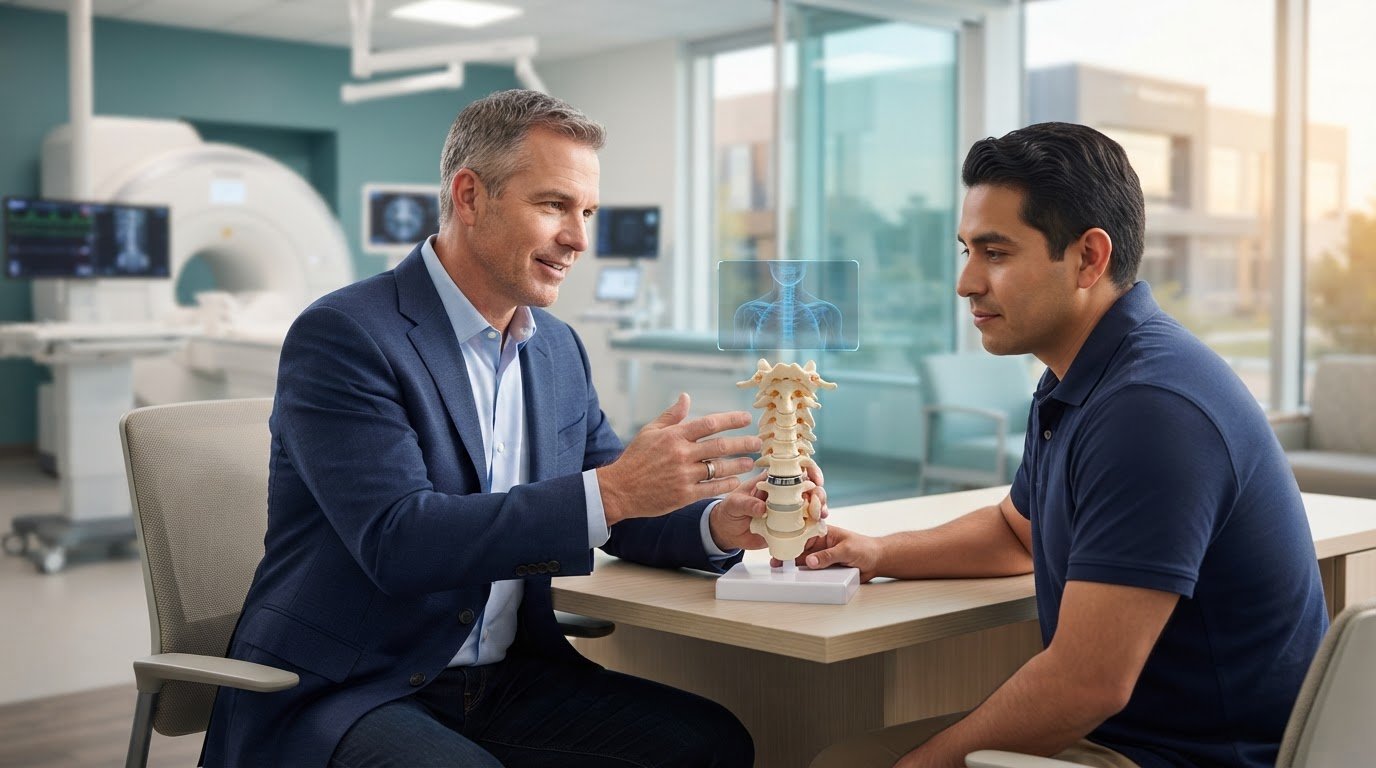
Minimally Invasive Neurosurgery of Texas (MINT), led by Dr. Scott C. Kutz, provides spinal care in Plano and Lewisville, TX. If you’re seeking a second opinion for spinal stenosis Plano TX, a specialist can help you discuss how scan findings relate to your symptoms, daily limitations, and treatment goals before deciding what to do next.
Spinal stenosis is a narrowing around the spinal nerves or spinal cord that may affect nearby nerves. Could your scan show narrowing without explaining all of your symptoms? Imaging is one part of the picture. A focused review can help you understand what the findings may mean in your situation.
It’s reasonable to have questions before proceeding with a recommended procedure or comparing nonsurgical and surgical care. This article explains what a spine specialist may review, which records to gather, and how to discuss treatment tradeoffs. You can learn more about MINT and its minimally invasive spine techniques.
Key Takeaways
- A second opinion for spinal stenosis Plano TX can help you discuss how your symptoms, examination, and imaging fit together.
- An MRI, or magnetic resonance imaging, shows spinal structures, but a specialist also considers your symptoms and physical examination.
- A spinal stenosis diagnosis does not automatically mean you need surgery. Ask how each option may address your goals and what limitations to consider.
- Before your appointment, gather available imaging and reports, medication details, prior treatment history, and clinician notes.
- MINT provides spinal care in Plano and Lewisville, TX. Dr. Scott C. Kutz is a board-certified neurosurgeon with more than 20 years of experience treating spinal disorders.
What Can a Second Opinion for Spinal Stenosis Plano TX Clarify?
MINT provides spinal care in Lewisville and Plano, TX. Dr. Scott C. Kutz is a board-certified neurosurgeon with more than 20 years of experience treating spinal disorders.
A second opinion for spinal stenosis Plano TX can help you better understand your diagnosis and compare care options. It doesn’t mean you need surgery or must reject your current clinician’s advice. It gives you another opportunity to review the information behind a recommendation and consider how each option fits your symptoms and priorities.
What does spinal stenosis mean?
Spinal stenosis means narrowing around the spinal nerves or spinal cord. Depending on its location and your individual condition, this narrowing may put pressure on nearby nerves and contribute to symptoms. Read a general overview of spinal stenosis to learn about its causes, symptoms, and treatment approaches.
An imaging finding alone doesn’t confirm that stenosis causes your symptoms. A specialist considers imaging alongside your symptom history and physical examination. For example, the location of narrowing matters when assessing whether it may relate to back pain, leg symptoms, or difficulty with everyday movement. Some people have narrowing on imaging without related symptoms, and a stenosis diagnosis doesn’t automatically call for surgery.
When might a second opinion help?
Another specialist’s perspective may help if your diagnosis feels unclear, symptoms continue, or you’re unsure about a proposed treatment plan. A focused review can help you understand what the findings mean, which questions remain, and whether the suggested next step fits your situation.
You might ask the specialist:
- Which findings support the diagnosis, and how do they relate to my symptoms?
- What goals would each treatment option address?
- What are the possible limitations or tradeoffs of the recommended approach?
- What information would help us decide whether to continue nonsurgical care or consider surgery?
MINT offers a local option for patients seeking a focused spinal stenosis discussion in Plano or Lewisville. If surgery comes up, ask whether a minimally invasive spine approach may suit your diagnosis and what factors guide that assessment. A clear conversation can help you decide whether to proceed, explore another option, or ask for more explanation.
How a Specialist Reviews Spinal Stenosis Symptoms and Imaging
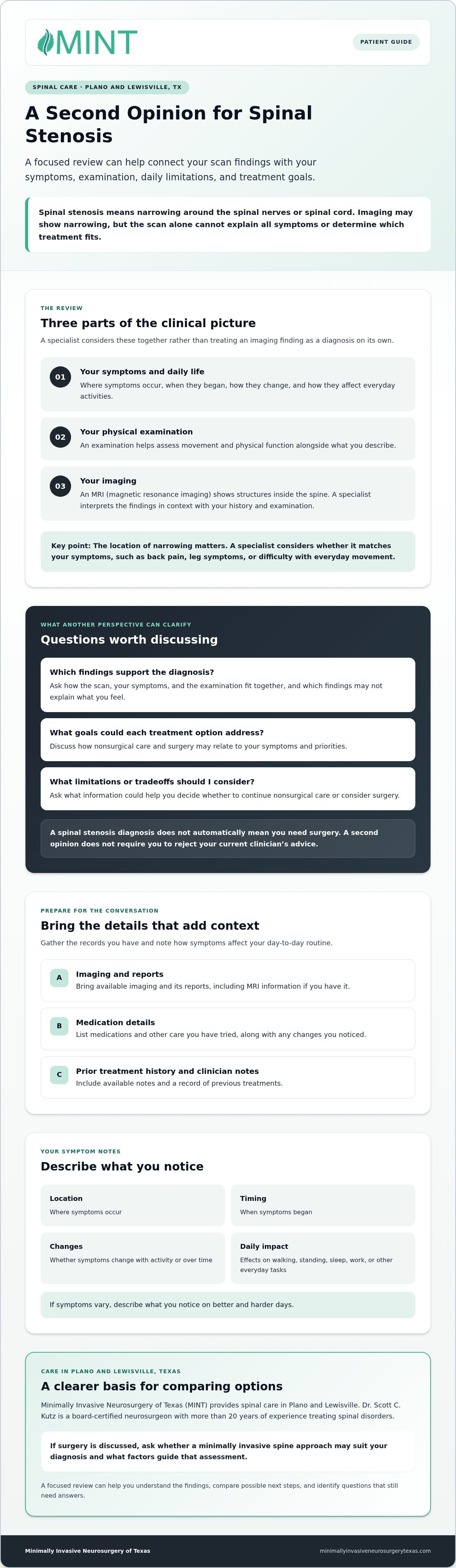
A specialist builds a clinical picture by considering your symptom history, physical examination, and relevant imaging together. Your description shows how symptoms affect daily life, an examination helps assess movement and physical function, and imaging shows structures inside the spine.
Imaging findings need clinical context. A scan alone cannot explain what you feel or determine which treatment fits. Your clinician should interpret the wording in light of your history and examination. For example, lumbar spinal stenosis means narrowing in the lower back around spinal nerves. A specialist considers whether the location matches your symptoms rather than treating the scan as a diagnosis on its own.
Which symptoms and daily limitations should I describe?
Bring a list of treatments you have tried and how your symptoms responded. Include medications and other care, along with any changes you noticed. You can also ask, “Which findings support the working diagnosis, and which findings don’t?” That question helps the specialist explain how your experience and clinical evidence fit together. A second opinion for spinal stenosis Plano TX gives you another opportunity to discuss those connections and clarify unanswered questions.
What can imaging show, and what can it not answer alone?
MRI means magnetic resonance imaging. It uses a magnetic field and radio waves to create detailed images of structures inside the body, including the spine. Those images can show structural changes, but a clinician must interpret their relevance to your symptoms and examination. The National Library of Medicine’s spinal stenosis overview also explains common symptoms, causes, diagnosis, and treatment.
Bring any existing MRI or other imaging reports, as well as the images if you have access to them. You don’t need to decide what the scan means before your appointment. Ask the specialist which findings may relate to your concerns and whether anything in the images does not fit the working diagnosis. For more context about the practice’s surgical approach, review MINT’s minimally invasive spine techniques.
Spinal Stenosis Treatment Options: Questions to Ask Before Deciding
A spinal stenosis diagnosis doesn’t automatically mean you need surgery. The next step depends on how your symptoms affect you, what the examination and imaging show, and how different options align with your goals. A second opinion for spinal stenosis Plano TX can help you understand the reasoning behind a recommendation and discuss alternatives without assuming one treatment fits everyone.
Depending on the individual evaluation, clinicians may discuss nonsurgical care or surgery. Nonsurgical options may aim to manage symptoms and support daily function. Surgery may be an option when the clinical assessment supports it and the expected benefits, limitations, and risks make sense for that patient. The American Academy of Orthopaedic Surgeons’ Lumbar spinal stenosis guide describes treatment approaches, but your treating specialist should explain which options apply to your diagnosis.
How can I compare nonsurgical care and surgery?
Ask what each proposed option aims to improve, how your clinician will assess progress, and what limitations or risks you should weigh. If surgery is discussed, ask why it is recommended for your specific diagnosis, what it is intended to address, and which alternatives remain reasonable. Your specialist can explain how your symptoms, examination, and imaging inform that recommendation.
Consider asking:
- What is the goal of this option for me?
- How will we know whether it helps?
- What are the potential limitations, risks, and alternatives?
- What might lead us to reconsider the plan?
These questions help you compare options by their purpose and tradeoffs, rather than by the procedure name alone. Your clinician can explain the details based on your health and findings.
What should I ask about minimally invasive spine surgery?
Minimally invasive surgery uses techniques intended to reduce disruption to surrounding tissue. It doesn’t guarantee a particular result or suit every case. Ask whether the approach fits the location and nature of your stenosis, what the procedure would address, and what tradeoffs it involves. For an overview of MINT’s approach, read about minimally invasive spine techniques.
A careful discussion should connect the proposed procedure to your symptoms and clinical findings. If you still have questions, you can contact MINT about a spine evaluation and ask how to discuss your diagnosis and options with the practice.
How to Prepare for a Spinal Stenosis Second Opinion Near Plano
A little preparation can help you focus your appointment on understanding the diagnosis, reviewing your options, and identifying questions that still need answers. For a second opinion for spinal stenosis Plano TX, gather the information you already have. You don’t need to interpret your records or collect every possible document before contacting a specialist.
Which records should I gather?
Bring available records that help the specialist understand your evaluation and care so far. These may include imaging reports and access to MRI or other scan images, notes from prior evaluations, medication details, treatment history, and clinician notes. If you don’t have copies, ask the office that holds your records how to share them. Check with the specialist’s office about its process and which materials would help before your appointment.
What questions should I bring to the appointment?
Write down your questions and goals in advance. Clear notes can help you explain what you hope to understand, especially if you have several concerns. Consider asking:
- How did you reach this diagnosis, and how do the findings relate to the symptoms I described?
- Which findings support the diagnosis, and what remains uncertain?
- Which options may fit my situation, and what are their goals and tradeoffs?
- What information or next step would help me make an informed decision?
Also note how symptoms affect your daily activities and what you would like to improve. For example, you might want to discuss how back or leg symptoms affect walking, standing, work, or sleep. Your priorities help the clinician explain treatment goals in terms that matter to you.
MINT serves patients in Plano through its satellite office and has its headquarters in Lewisville. Dr. Scott C. Kutz, a board-certified neurosurgeon with more than 20 years of experience treating spinal disorders, focuses on helping patients understand their diagnosis and choices. You can read more about Dr. Scott Kutz’s background.
Have your records and questions ready, then contact MINT to discuss a spinal stenosis second opinion and ask how to prepare for an appointment.
Seeking a Spinal Stenosis Second Opinion in Plano with MINT
A second opinion for spinal stenosis Plano TX can give you another opportunity to understand your diagnosis, discuss treatment options, and ask questions that remain unanswered. MINT focuses on spinal health and patient-centered discussions. The aim is to help you understand how your symptoms, examination, and imaging inform possible next steps, not to promise a particular treatment or outcome.
Dr. Scott C. Kutz is a board-certified neurosurgeon with more than 20 years of experience treating spinal disorders. MINT considers minimally invasive options when the clinical evaluation supports them. These techniques are intended to reduce disruption to surrounding tissue, but their suitability depends on the individual diagnosis.
What can I expect from a patient-focused discussion?
Expect an opportunity to describe your concerns and ask for clear explanations. You can discuss what the diagnosis means, how it relates to your symptoms, which options may apply, and what uncertainties remain. If a recommendation involves surgery, ask why the clinician considers it appropriate for your findings, what the procedure aims to address, and what alternatives you can discuss.
You can also ask the specialist to explain unfamiliar terms and how each option may relate to your goals, such as improving comfort during walking or other daily activities. For background on the practice’s approach, review its minimally invasive spine techniques.
How do I take the next step in Plano or Lewisville?
MINT has a satellite office in Plano and its headquarters in Lewisville, serving patients from these locations and surrounding North Texas communities. Before arranging an evaluation, gather any imaging reports, scan access, medication details, and notes about previous care that you already have. Write down what you hope to clarify so the discussion can stay focused on your questions and priorities.
If you’re considering another clinical perspective, contact MINT to ask about arranging an evaluation and how to prepare. A thoughtful conversation can help you understand your diagnosis and options without pressure to make an immediate decision.
Take Your Next Step with Clearer Information
A second opinion can help you connect spinal stenosis findings with your symptoms, understand why a specialist recommends a particular approach, and compare options according to your needs. Bringing imaging reports, treatment history, and questions can make the conversation more focused. A diagnosis doesn’t automatically mean surgery, and a specialist can explain what supports each possible next step.
MINT serves patients in Plano and Lewisville. Dr. Scott C. Kutz, a board-certified neurosurgeon with the American Board of Neurological Surgery and more than 20 years of experience treating spinal disorders, provides a focused perspective on spinal health and treatment choices.
If you’re considering a second opinion for spinal stenosis Plano TX, discuss your questions with the practice. Contact MINT to discuss a spinal stenosis second opinion. A clear conversation can help you feel more informed as you consider your care.
Frequently Asked Questions
What should I bring to a second opinion for spinal stenosis?
Bring the records you already have, including imaging reports and access to scan images, notes from earlier evaluations, medication details, and a summary of treatments you’ve tried. Write down when symptoms began, where you feel them, and how they affect activities such as walking or standing. Add your questions and goals. If you need records transferred, ask the office that holds them how to share them.
Can a second opinion change my spinal stenosis treatment plan?
Yes, a second opinion may offer a different interpretation or clarify why a clinician recommends a particular approach. A specialist reviews your symptoms, physical examination, and relevant imaging before discussing options. The discussion may confirm the current plan, raise alternatives, or identify questions that need more attention. A second opinion supports informed decision-making, but it can’t guarantee a specific recommendation or outcome.
Does spinal stenosis always require surgery?
No. Spinal stenosis means narrowing around the spinal nerves or spinal cord, and a diagnosis alone doesn’t mean you need surgery. A specialist considers your symptoms, examination, imaging, and personal circumstances before discussing care options. If surgery comes up, ask what the clinician hopes it will address, what alternatives may fit your situation, and what limitations or risks to consider.
How do doctors confirm spinal stenosis?
Doctors assess spinal stenosis by considering your symptom history, a physical examination, and relevant imaging together. MRI, or magnetic resonance imaging, creates detailed images of structures inside the body, including the spine. Imaging can show narrowing, but a clinician must interpret whether those findings fit your symptoms and examination. A scan alone doesn’t establish how much the narrowing affects you or determine the right treatment.
Can I get a second opinion for spinal stenosis in Plano, TX?
Yes. MINT provides specialized spine care in Plano and Lewisville, TX. Dr. Scott C. If you’re considering a second opinion for spinal stenosis Plano TX, ask the practice how to arrange an evaluation and what records may help the specialist review your case.
What questions should I ask a spine specialist about spinal stenosis?
Ask how the specialist reached the diagnosis and how it relates to your symptoms. Find out which examination or imaging findings support the assessment and what remains uncertain. You can also ask what each treatment option aims to improve, what limitations or risks to weigh, and how the clinician will assess progress. If surgery is discussed, ask why it may fit your specific diagnosis.
Is minimally invasive surgery an option for spinal stenosis?
Minimally invasive surgery may suit some people with spinal stenosis, depending on the location and nature of the narrowing and the overall clinical assessment. The approach uses techniques intended to reduce disruption to surrounding tissue, but it doesn’t guarantee a particular result or fit every patient. Ask the specialist what the procedure would address, why it may suit your case, and which alternatives you can consider.