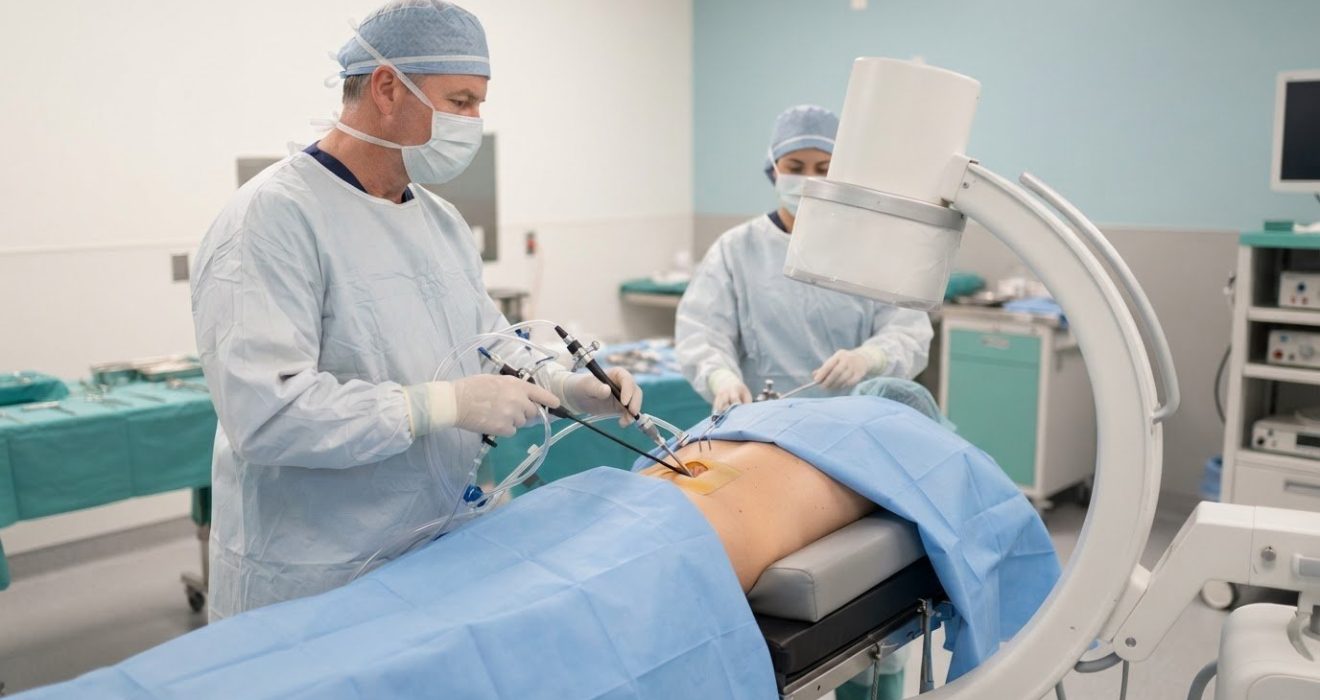
Minimally Invasive Neurosurgery of Texas provides minimally invasive spine surgery in Lewisville and Plano, Texas. Dr. Scott Kutz, a board-certified neurosurgeon and Fellow of the AANS and ACS, leads the practice.
Conservative treatments do not always ease pressure on a spinal nerve or keep symptoms from disrupting daily activities. In those cases, a specialist can assess whether minimally invasive surgery for a pinched nerve may address the source of pressure.
It is understandable to weigh possible benefits against surgical risks and recovery. This article outlines common nonsurgical treatments, when surgery may be considered, and how minimally invasive procedures work.
Key Takeaways
- Surgery may be considered when symptoms persist despite conservative care or interfere with daily activities.
- Identifying what compresses the nerve, such as a herniated disc or narrowed nerve opening, helps guide treatment decisions.
- Foraminotomy can widen the passage where a spinal nerve exits, while other procedures address different sources of pressure.
- Minimally invasive techniques use smaller incisions, but the appropriate procedure depends on the cause and location of nerve compression.
- Learn what to expect from treatment options, recovery, and the factors to discuss when weighing surgery.
Is It Time to Consider Surgery for Your Pinched Spinal Nerve?
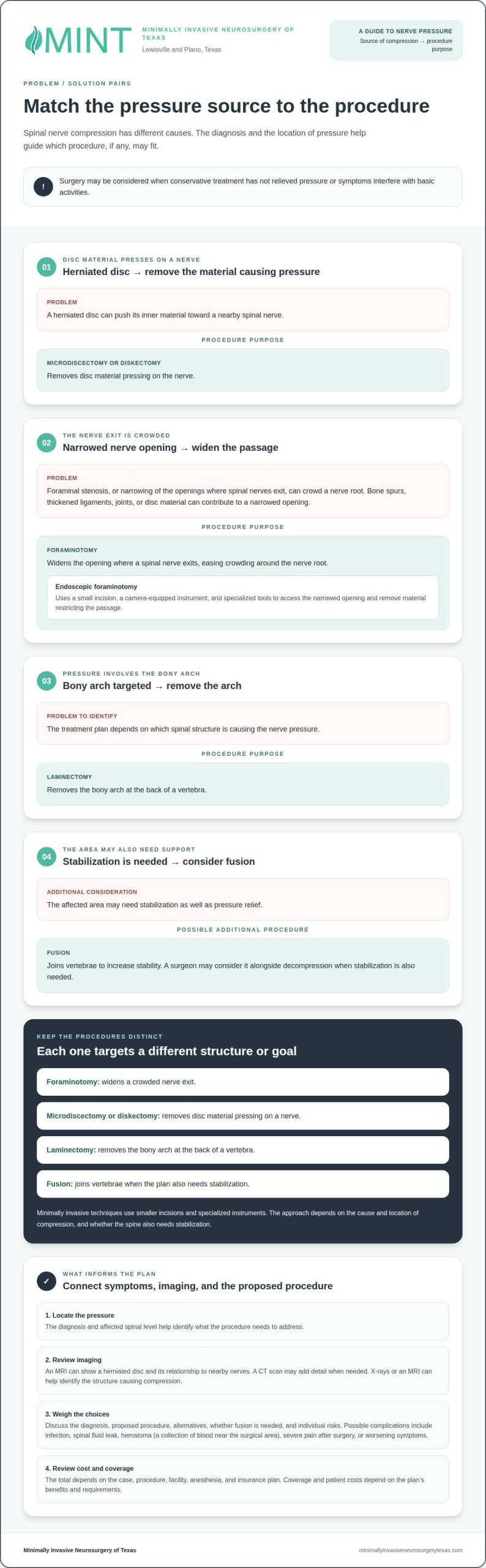
Surgery may be considered when conservative treatment has not relieved nerve pressure or symptoms interfere with basic activities. The next step is identifying the cause, such as a herniated disc or a narrowed nerve opening.
Conditions That Compress Spinal Nerves
Spinal nerve compression occurs when discs, bones, joints, or nearby tissues press on a nerve. Foraminal stenosis narrows the openings where spinal nerves exit, potentially causing pain, tingling, numbness, or weakness along the affected nerve’s path.
A herniated disc can push its inner material toward a nearby nerve. Other causes include central spinal stenosis, which narrows the spinal canal; facet joint arthritis; and spondylolisthesis, in which a vertebra shifts out of position. Accidents and falls can also injure tissues near spinal nerves. Identifying the specific cause matters because each condition may call for a different treatment.
Minimally Invasive Surgical Treatment
Minimally invasive spine surgery uses small incisions and specialized instruments to relieve pressure on a spinal nerve. A microdiscectomy removes the part of a herniated disc pressing on the nerve. A foraminotomy widens the opening where a nerve exits the spine.
These procedures address different sources of compression, so the diagnosis guides the surgical plan. Surgeons may consider whether the affected area also needs stabilization, sometimes through fusion, which joins vertebrae. Minimally invasive techniques use smaller incisions and can reduce disruption to surrounding muscle and tissue compared with open surgery. The endoscopic spine surgery approach uses a small camera and specialized instruments to access the affected area.
Costs, Coverage, and Surgical Risks
In the United States, the price depends on the case and follows a quote request; the procedure, facility, anesthesia, and insurance plan affect the total. Insurance coverage and patient costs depend on the specific plan’s benefits and requirements, so review the estimate and coverage details for the proposed procedure before deciding.
Possible complications include severe pain after surgery, worsening symptoms, infection, spinal fluid leak, and hematoma, a collection of blood near the surgical area. Discussing these risks alongside potential benefits can help patients weigh their options.
Before surgery, clinicians review the patient’s history and imaging. An MRI can show a herniated disc and its relationship to nearby nerves; a CT scan may provide additional detail when needed. X-rays or an MRI can also help identify the structure causing compression. Together, these findings connect symptoms to a specific spinal level and inform the treatment plan.
When comparing treatment options, patients can focus on the diagnosis, proposed procedure, alternatives, whether fusion is needed, and individual risks. A spine surgeon should explain how imaging supports the recommendation and how the procedure addresses the identified pressure. Patients can discuss these choices with their doctor and seek a second opinion before deciding on surgery.
What is minimally invasive nerve relief for the spine and neck?
Minimally invasive procedures relieve pressure on spinal nerves through small incisions and specialized instruments. The procedure depends on whether compression comes from a disc, bone, or narrowed nerve passage.
Foraminotomy and Other Decompression Procedures
A foraminotomy widens the opening where a spinal nerve exits, easing crowding around the nerve root. A diskectomy removes disc material pressing on a nerve, while a laminectomy removes the bony arch at the back of a vertebra.
These procedures address different structures, so the diagnosis helps determine which approach fits the compression. A surgeon may combine decompression with fusion, which permanently joins vertebrae, when stabilization is also needed. Decompression alone focuses on freeing the nerve; fusion adds a structural step.
Endoscopic Foraminotomy
Endoscopic foraminotomy uses a small incision to guide an endoscope, a slender instrument with a camera, toward a narrowed nerve opening. The surgeon views the area and removes material restricting the passage, such as bone spurs, thickened ligaments, or disc material.
In appropriate cases, this approach can address a pinched nerve while preserving neck movement. Symptoms may include pain, numbness, tingling, or weakness along the affected nerve’s path. Their location helps clinicians connect the diagnosis with the compressed nerve and select a procedure.
The Neural Foramen and Nerve Roots
The neural foramen is the opening between vertebrae through which a nerve root leaves the spinal column and travels into the body. In the cervical spine, or neck, these roots carry signals to the shoulders, arms, and hands.
Herniated discs, bone spurs, and thickened ligaments or joints can narrow this opening. Compression may cause neck pain or symptoms that travel into an arm or hand. Identifying the narrowed level matters because a procedure needs to reach the specific nerve passage causing symptoms.
Minimally invasive decompression, microdiscectomy, and fusion serve different purposes. Decompression widens a crowded passage, microdiscectomy removes herniated disc material, and fusion joins vertebrae to increase stability. The treatment plan depends on what is compressing the nerve and whether the spine also needs stabilization.
Foraminotomy, laminectomy, or diskectomy may each relieve pressure, but they do not remove the same tissue. Imaging and symptom patterns help pinpoint the target. Patients considering a procedure can discuss their spine-surgery options based on the source and location of nerve compression.
Conservative treatment options
Clinicians usually begin with conservative care for a pinched spinal nerve because symptoms can ease without surgery. The right approach depends on the cause of compression, such as a herniated disc, spinal stenosis, or irritated tissue near a nerve. Recovery may take a few days or weeks for some people. Persistent pain, numbness, tingling, or weakness warrants reassessment of the treatment plan.
Conservative care can address pain and movement while the body responds to the underlying problem. Treatment options include:
- Activity adjustments and rest: Temporary changes to activities that aggravate symptoms can reduce strain on the affected area. Prolonged inactivity, however, does not address every cause of nerve compression.
- Physical therapy: Guided exercises can improve movement and help relieve pressure on a nerve. A therapist may adapt exercises to the symptoms and the affected spinal region.
- Medication: Anti-inflammatory medicine can address inflammation and pain. Clinicians may also consider oral corticosteroids, which reduce inflammation, or other pain medicines based on the patient’s needs.
- Epidural steroid injections: These injections deliver anti-inflammatory medicine near spinal nerves. They may help control symptoms while other treatments continue.
Each option addresses symptoms differently. Medication may help with pain, while physical therapy focuses on movement and pressure. An injection may calm inflammation around a nerve. These treatments do not remove disc material or widen a narrowed passage, so the cause still matters. For example, a herniated disc and thickened ligaments can both compress nerves, but they involve different structures.
Clinicians may discuss surgery when symptoms persist despite conservative treatment or limit basic daily activities. The decision depends on how symptoms affect function, which spinal structure is causing compression, and whether imaging findings match the symptoms. Ongoing pressure can damage a nerve, so report changes in strength or sensation during follow-up.
Research summaries report pain relief after lumbar microdiscectomy in 90-95 percent of patients, while 4 percent report worsening symptoms. These figures describe surgical outcomes, not the results of conservative care, and do not predict an individual patient’s recovery. They help explain why clinicians weigh continued nonsurgical treatment against a procedure that directly removes pressure.
For context, endoscopic foraminotomy may be performed as an outpatient procedure under local or intravenous anesthesia. Many minimally invasive nerve-relief procedures also allow patients to return home the same day. These details apply to surgery, not conservative treatment. If nonsurgical care does not provide adequate relief, the diagnosis and source of compression guide whether a surgical option may be appropriate.
When surgery may be considered
Doctors generally consider surgery when conservative treatments, such as physical therapy, medication, or steroid injections, do not provide adequate relief. They also consider whether nerve symptoms limit basic activities and whether imaging identifies a matching source of pressure.
Time alone doesn’t determine whether surgery makes sense. Slipped discs and vertebrae out of position most often do not cause pain for longer than 6 weeks, but persistent symptoms need assessment in context. The key factors include pain severity, numbness or weakness, effects on daily function, and the structure compressing the nerve. Ongoing pressure can damage a nerve, so worsening symptoms deserve prompt medical attention.
A clinician evaluates the patient’s history and imaging before recommending a procedure. An MRI can show a herniated disc and help locate nerve compression; a CT scan may add detail when needed. The recommendation should connect the symptoms with the affected spinal level. If imaging shows one source of pressure but symptoms point elsewhere, clinicians need to resolve that difference before planning surgery.
For a pinched nerve in the neck, surgery may be discussed when symptoms persist despite nonsurgical treatment. Neck pain that radiates into the shoulder, arm, or hand can occur with numbness, tingling, or weakness. The pattern matters: symptoms in the arm or hand can help identify which cervical nerve root is under pressure, while imaging shows what is causing it.
Some neck symptoms call for urgent medical assessment rather than routine follow-up. Worsening bowel or bladder function, trouble walking or keeping balance, and difficulty with fine motor tasks, such as buttoning a shirt, can signal a more serious problem. Unlike stable pain alone, these changes can affect coordination, strength, or basic body functions.
When a herniated disc compresses a nerve, clinicians may discuss microdiscectomy if steroid injections or physical therapy have not provided adequate relief. The procedure removes disc material pressing on the nerve. For foraminal stenosis, which narrows the opening where a nerve exits the spine, a foraminotomy may address the crowded passage instead. The diagnosis determines which structure needs treatment.
Before choosing surgery, patients can discuss potential benefits, alternative treatments, risks, and recovery demands with their doctor. A second opinion can help clarify the proposed procedure when symptoms persist or recommendations differ. The decision should reflect the cause of compression and its effect on daily life, not simply the presence of pain or a particular number of weeks.
Minimally invasive spine surgery
Planning for minimally invasive spine care includes more than choosing a procedure. Patients also need a practical recovery plan that accounts for daily movement, work demands, and the surgeon’s instructions.
After microdiscectomy, patients can gradually increase walking, with one to two miles daily as a stated activity goal. Follow the surgical team’s directions and adjust the pace to recovery. Short walks can fit into daily routines without requiring a quick return to strenuous activity.
During the first week after surgery, patients should avoid slouching, bending, and lifting heavy items. These restrictions affect everyday tasks, such as picking up objects or sitting for long periods. Planning meals, household tasks, and help with lifting ahead of time can make it easier to follow recovery instructions.
Work plans depend partly on job demands. A person with a sedentary job may consider returning about three weeks after pinched-nerve surgery. Someone whose work involves heavy labor may need a few more weeks of relative rest. These timelines can help with planning, but the procedure and individual recovery guide the actual return.
Activity progression matters because healing continues after the incision closes. Follow the surgeon’s directions for walking, light exercise, and lifting rather than using pain relief alone to judge readiness. New or worsening symptoms also deserve attention during recovery.
Preparing questions about work, movement, and household responsibilities can make a surgical discussion more useful. The minimally invasive spine techniques considered for a patient can also inform recovery plans and restrictions.
If you’re weighing surgery and want to discuss how recovery may fit your routine, contact the practice about your treatment options.
Smaller incisions are intended to reduce disruption to the spine and surrounding soft tissue, muscle tearing, blood loss, and pain, while speeding recuperation. Compared with a standard open procedure, potential benefits include less pain, decreased blood-loss risk, lower infection risk, and faster recovery.
Thoracoscopic thoracic surgery uses a small tube-mounted camera to view the spine and affected nerves. It can remove a herniated disc without spinal fusion.
Minimally Invasive Neurosurgery of Texas: Minimally Invasive Spine Surgery
Minimally Invasive Neurosurgery of Texas provides minimally invasive spine surgery for patients whose spinal nerve compression may require surgery. When conservative care has not relieved symptoms or nerve pressure disrupts daily activities, a specialist can assess the cause and discuss whether a procedure fits the diagnosis.
Dr. Scott Kutz, a board-certified neurosurgeon and Fellow of the AANS and ACS, performs specialized spine surgery. Depending on the condition, treatment may include Endoscopic Spine Surgery, which uses a small camera and instruments to access the affected area, or another minimally invasive approach. The aim is to address the source of compression while limiting disruption to nearby tissue.
If persistent symptoms are affecting your routine, contact Minimally Invasive Neurosurgery of Texas in Lewisville or Plano to discuss your treatment options.
Take the Next Step Toward a Clearer Treatment Plan
Choosing minimally invasive surgery for a pinched nerve starts with a clear view of the decision ahead: what the diagnosis explains, which daily activities you hope to regain, and which trade-offs matter to you. Whether you want to walk more comfortably, sleep with less disruption, or return to work, sharing these priorities can make the treatment discussion more focused.
Minimally Invasive Neurosurgery of Texas offers minimally invasive neurosurgery, minimally invasive spine surgery, and artificial disc replacement. A focused conversation about your symptoms, imaging, and goals can help connect the source of nerve pressure with relevant treatment options.
Contact Minimally Invasive Neurosurgery of Texas to discuss your situation and possible next steps. Move forward with a clearer understanding of your choices and a plan centered on the activities that matter to you.
Frequently Asked Questions
What conditions can a microdiscectomy treat?
A microdiscectomy treats symptoms from a herniated disc pressing on a spinal nerve, particularly when pain travels from the back into a leg. It does not address every source of back pain. For example, if imaging shows bone growth or a narrowed nerve opening, an assessment can distinguish those causes from disc-related pressure. Matching the diagnosis to the symptoms helps guide procedure selection.
Are these procedures painful?
Anesthesia helps control pain during surgery, and patients may experience discomfort afterward. The surgical team can explain the expected pain-management plan and how to describe symptoms during recovery. Distinguish familiar incision discomfort from new or worsening numbness, weakness, or pain traveling into an arm or leg. Reporting changes gives the care team useful information about recovery and the affected nerve.
How are these procedures performed?
The surgical team plans access around the affected spinal level and the tissue that needs treatment. Before the procedure, patients can clarify the planned anesthesia, incision location, and expected discharge arrangements. These details vary with the operation and the patient’s condition. Understanding the plan helps patients prepare for transportation, home support, and instructions for the first stage of recovery.
How is microdiscectomy performed?
During a microdiscectomy, the surgeon uses X-ray imaging to confirm the disc level before removing material pressing on a nerve. The operation usually takes about one to two hours. The surgeon closes the incision after treating the targeted disc. Patients can ask which disc level the images show and which symptoms the procedure aims to address.
What are the benefits of microdiscectomy surgery?
Microdiscectomy removes disc material irritating a nerve without automatically requiring spinal fusion. This distinction matters to patients who want to understand how the procedure affects nearby vertebrae. In some cervical cases, the remaining disc can later herniate again or collapse. Discuss these possibilities alongside the potential benefit of nerve decompression and longer-term treatment options.
What does the recovery time look like for neck surgery?
Recovery after outpatient neck surgery typically takes a few weeks, while more complex operations can require a hospital stay of a few days. Patients can prepare by discussing help at home, work responsibilities, and activity restrictions before surgery. The care team’s instructions guide when each patient resumes driving, household tasks, and other routine activities.
Who is a candidate for microdiscectomy?
A patient may be a candidate when a herniated disc matches the nerve symptoms and conservative treatment has not provided enough relief. The assessment also considers how symptoms affect movement, work, sleep, and other daily activities. Bring a clear account of symptom changes and functional limits to the consultation. This information helps the surgeon connect imaging findings with the patient’s experience.
What minimally invasive surgeries are used for a pinched nerve in the spine?
Surgeons use procedures such as microdiscectomy, foraminotomy, laminotomy, and laminectomy to address different sources of nerve pressure. The treatment plan depends on whether the problem involves a disc, a narrowed nerve exit, or bone around the spinal canal. Patients can ask which anatomical finding supports the proposed operation and whether the plan includes fusion or preserves movement between vertebrae.
This information is for educational purposes only and is not a substitute for professional medical advice, diagnosis, or treatment. Website content is provided “as is.”