Recovery after two-level lumbar disc replacement takes time, with progress often unfolding over weeks. Dr. Scott Kutz, a board-certified neurosurgeon and Fellow of the AANS and ACS, leads Minimally Invasive Neurosurgery of Texas (MINT), which provides Artificial Disc Replacement in Lewisville and Plano, Texas.
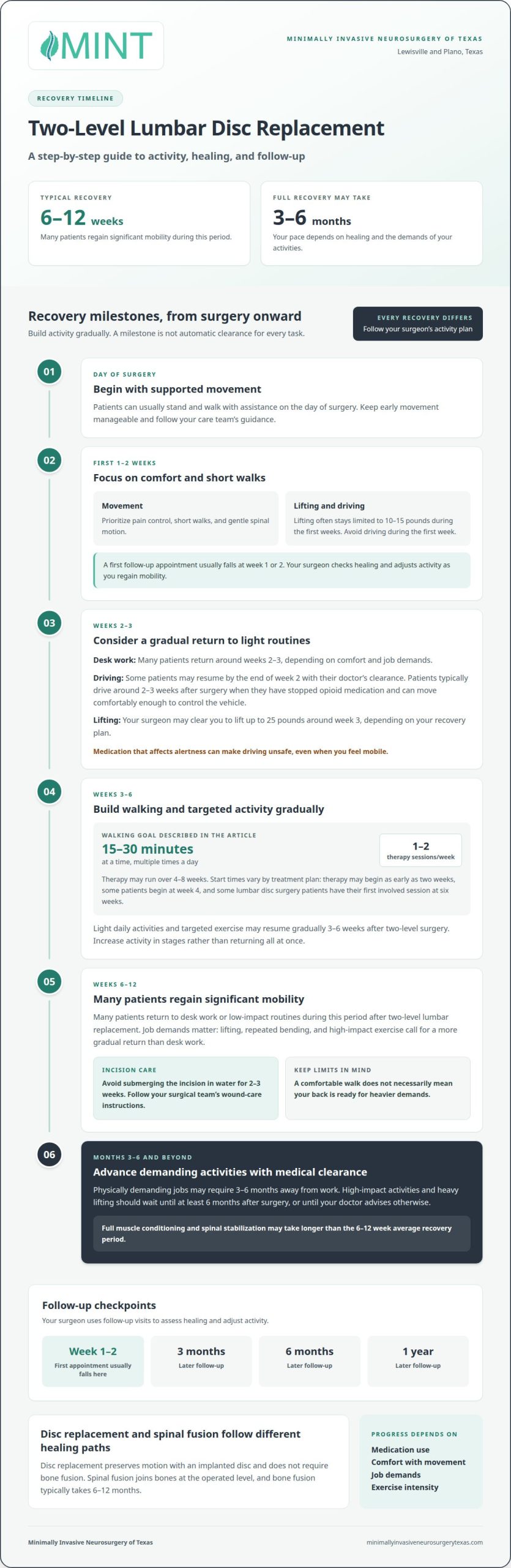
It’s understandable to wonder whether treating two discs means a longer recovery. The typical recovery timeline for 2-level disc replacement is 6 to 12 weeks, while full recovery may take 3 to 6 months. Your pace depends on how your body responds and how you progress through healing.
This guide covers what to expect during lumbar recovery, including early discomfort and fatigue, incision care, follow-up visits, and a gradual return to exercise. It also explains why recovery after a two-level procedure may take longer than after a single-level replacement, and which signs of progress can help you understand each stage.
Key Takeaways
- Plan a gradual return to work and exercise, since job demands and activity intensity affect the pace.
- Learn which early discomforts can occur and how to recognize changes that need prompt attention.
- Understand how incision care and follow-up visits support recovery and help track healing.
- See why recovery after a two-level procedure may take longer than after a single-level replacement.
- Find out how walking and guided activity can fit into a steady return to daily routines.
Does Two-Level Disc Replacement Delay Return To Exercise?
Patients can usually stand and walk with assistance on the day of Artificial Disc Replacement surgery. After two-level lumbar surgery, patients may return to desk work and light routines over the following weeks, while demanding work and vigorous exercise often require a more gradual return.
The recovery timeline for 2-level disc replacement depends on medication use, comfort with movement, job demands, and exercise intensity. Driving, work, and exercise each follow a different pace.
Walking and driving
Walking during early recovery means taking manageable steps to maintain mobility. Everyday movement may resume before you are ready for strenuous activity. Patients can usually stand and walk with assistance on the day of surgery, then gradually add short walks to their routine during the first week.
Avoid driving during the first week after surgery. Some patients may resume driving by the end of week 2 with their doctor’s clearance. Artificial disc replacement patients typically drive around 2-3 weeks after surgery when they have stopped opioid medication and can move comfortably enough to control the vehicle. Pain medication that affects alertness can make driving unsafe, even if a patient feels mobile.
Work and exercise activities
Returning to work and exercise means increasing activity in stages rather than immediately resuming your usual routine. Desk work places different demands on your back than lifting, repeated bending, or high-impact exercise, so the return plan should reflect the tasks involved.
For lumbar disc replacement, desk work may resume around weeks 2-3. After two-level lumbar replacement, many patients regain significant mobility and return to desk work or low-impact routines after 6-12 weeks. These timelines describe different groups: one refers to lumbar replacement generally, while the longer range addresses two-level lumbar surgery.
Work schedules also reflect job demands. Many people return to work two to six weeks after artificial disc replacement, while physically demanding jobs may require 3-6 months away. Light daily activities and targeted exercise may resume gradually 3-6 weeks after two-level lumbar surgery. For example, a patient with a desk job may build up sitting time before resuming a commute and full workday.
Exercise intensity matters. Patients should return to normal training gradually, with medical clearance. High-impact activities and heavy lifting should wait until at least 6 months after surgery, or as advised by the doctor. View the recovery timeline for 2-level disc replacement as a sequence of milestones, not automatic clearance for every activity. Patients can discuss specific goals, such as running or lifting at work, during follow-up visits.
Is Recovery Longer for Two-Level Lumbar Disc Replacement?
Two-level artificial disc replacement usually takes longer to recover from than single-level replacement. The average recovery time is 6 to 12 weeks, while full recovery may take 3 to 6 months.
Compared with two-level spinal fusion, disc replacement follows a different healing process. Fusion relies on bone joining across the operated levels, which typically takes six to 12 months; disc replacement does not require that bone-fusion process.
Activity restrictions and progression
Activity progression means gradually increasing movement while respecting early limits on lifting and spinal strain. A comfortable walk does not necessarily mean your back is ready for heavier physical demands.
During the first 1-2 weeks, patients usually focus on pain control, short walks, and gentle spinal motion. Lifting often stays limited to 10 to 15 pounds during the first weeks after surgery. The surgeon may clear artificial disc replacement patients to lift up to 25 pounds around week 3, as their recovery plan allows.
Physical therapy introduces targeted movement in stages. It may start as early as two weeks after surgery; some patients typically begin at week 4, while lumbar disc surgery patients may not have their first involved session until six weeks. These different start points reflect different treatment plans, not a single schedule for every patient.
Follow-up and lifestyle during recovery
Follow-up visits let the surgeon assess healing and adjust activity as the patient regains mobility. A first appointment usually falls at week 1 or 2, and later visits may occur at three months, six months, and one year.
Therapy can include 1-2 sessions per week over 4-8 weeks, with intensity increasing as progress allows. During weeks three through six, patients can build walking into their routine, aiming for 15 to 30 minutes at a time, multiple times a day. Short, regular walks support daily movement without replacing prescribed physical therapy.
Incision care also shapes early routines. Avoid submerging the incision in water for 2-3 weeks. Follow the surgical team’s wound-care instructions, and don’t treat a clean-looking incision as permission to lift or exercise beyond current limits.
Recovery compared with spinal fusion
Spinal fusion joins bones to limit movement at an operated level, while Artificial Disc Replacement preserves motion with an implanted disc. Fusion recovery includes time for the bones to unite; disc replacement follows a different healing pathway.
For lumbar fusion patients, bone fusion typically solidifies over six to 12 months. Two-level disc replacement has an average recovery time of 6 to 12 weeks, but complete muscle conditioning and spinal stabilization may take longer. These timelines describe different milestones, so the shorter recovery range does not mean every activity resumes at once.
A spine surgeon weighs the procedure, healing progress, and physical demands before advancing activity. For a discussion of how recovery planning applies to your case, contact the surgical team.
Early postoperative discomfort, swelling, and fatigue
During the first 24 to 48 hours after artificial disc replacement, patients commonly experience moderate discomfort, swelling, and fatigue. The operative area, meaning the part of the body where surgery took place, needs time to recover. Pain medication can help manage discomfort as patients begin short walks and other basic movements. Fatigue can also affect how much activity feels manageable during these first days.
Hospital stay and immediate monitoring
After lumbar disc replacement, patients can usually go home the same day, although some stay overnight. The care team monitors pain, movement, and recovery after surgery before discharge. The first 48 to 72 hours often feel the most challenging, so patients should plan for rest and help with routine tasks at home.
Swelling around the surgical site typically peaks 48 to 72 hours after surgery. External swelling often improves within the first two weeks, while internal healing continues for months. This difference matters: reduced visible swelling does not mean the spinal tissues have finished healing or that patients can immediately increase exercise.
Symptoms and possible complications
Some discomfort and swelling can occur early in recovery, but new or worsening symptoms deserve attention. Contact your surgeon about new or worsening numbness, tingling, or weakness in your arms or legs after Artificial Disc Replacement. These symptoms differ from ordinary fatigue because they involve changes in sensation or strength.
Discuss increased pain or swelling promptly with the surgical team, especially if symptoms worsen instead of easing. Describe when the change began, where it occurs, and whether movement affects it. Clear details help the surgeon assess the concern and determine appropriate follow-up.
Follow-up and regaining strength
The first follow-up appointment after artificial disc replacement usually takes place in week 1 or 2. The surgeon can review the incision, discuss symptoms, and assess early mobility. Patients should bring up changes in pain medication needs, fatigue, or walking ability during that visit.
Recovery continues beyond the first appointment. A gradual return to physical activity helps patients regain strength without confusing early improvement with complete healing. The artificial disc replacement procedure supports spinal motion, but the body still needs time to heal around the operative area. Follow-up care helps guide that progression and address concerns as they arise.
Incision care and follow-up appointments
Careful incision management supports healing after Artificial Disc Replacement. Protect the surgical cut while the surrounding tissue heals. Follow-up visits give the surgical team an opportunity to assess the wound and review your recovery.
Incision care and infection prevention
Incision care means protecting the surgical cut while tissue heals. Follow your care team’s wound instructions and keep the area clean as directed. Water exposure can affect wound healing, so patients should avoid submerging the incision for 2-3 weeks after artificial disc replacement. This includes baths and other activities that place the wound underwater.
At home, patients may need to change the dressing once or twice during the first one to two days. Follow the instructions for your dressing rather than changing it more often without guidance. Check the wound for redness, warmth, swelling, or discharge, and contact the surgeon if any of these signs appear. A fever above 101 degrees after spine surgery also warrants a call to the surgical team.
Wound healing and discomfort
During the first week, protect the incision and limit activities that strain the surgical area. Mild discomfort can occur as healing begins. Contact the surgical team if pain around the incision worsens, particularly if swelling also increases.
The surgical team typically removes sutures, which are stitches that close the wound, or steri-strips, adhesive strips that support the incision, around 10 to 14 days after surgery. At that visit, the team can inspect the wound and explain when patients can resume activities that expose it to water or friction. Skin that looks closed does not mean the deeper tissue has finished healing.
Take pain medication according to the prescribed instructions. Rest and short walks can be part of recovery, but avoid soaking the wound during the recommended healing period. Also avoid rubbing or placing direct pressure on the incision while it heals.
Follow-up appointments
The first follow-up after artificial disc replacement usually takes place at week 1 or 2. The surgeon can check the incision, review symptoms, and address questions about wound care or pain medication. Describe specific changes, such as new discharge or increasing redness, so the team can assess them.
Further visits may take place at three months, six months, and one year. These appointments help the team monitor healing and discuss activity progression. After the first year, follow-up may continue every one to two years, even if you feel well. Keep scheduled appointments so the surgical team can track your recovery over time.
Overall artificial disc replacement recovery timeline
After two-level cervical disc replacement, patients usually progress from early rest and gentle movement to increased daily activity over several weeks. These milestones describe cervical recovery. Lumbar recovery may take a few weeks longer, and the surgeon guides activity based on healing and symptoms.
Week 1: Patients focus on rest, incision care, and short walks. The surgeon may advise avoiding heavy lifting, neck twisting, and strenuous activity. Some patients experience temporary throat soreness or difficulty swallowing after cervical surgery. Use prescribed medications as directed, and report new or worsening symptoms.
Weeks 2-4: Patients often feel more comfortable and gradually increase daily activities. Desk work may become manageable during weeks 1-2, depending on symptoms and job demands. Avoid high-impact activity and heavy lifting during weeks 2-4. Driving generally waits until patients have stopped opioid medications and can move comfortably; the surgeon’s clearance matters.
Weeks 4-6: Many patients notice improved neck mobility and strength during this period. The surgeon may advance activity based on progress. Patients may resume jogging, swimming, or golf by six weeks after surgery, with the surgeon’s permission. A return to these activities does not mean every form of strenuous exercise is appropriate.
Around 3 months: Many patients notice significant improvement and return to most normal daily activities. Some reach full activity around this point, but physically demanding work or high-impact exercise may require more time and explicit clearance.
Months 3-6 and beyond: Recovery from cervical artificial disc replacement typically takes 3 to 6 months. Patients continue rebuilding strength and maintaining spine health. Full recovery may take four to six months, while follow-up care can continue as the surgeon tracks progress.
These milestones are a general framework, not a schedule for every patient. Two-level surgery treats two discs, and implant placement, symptoms, job demands, and healing progress all influence when patients can increase activity. A general Artificial Disc Replacement timeline cannot replace the surgeon’s guidance for an individual cervical procedure.
Keep follow-up appointments and discuss medications, new symptoms, or activity goals before changing your routine. Patients planning a return to work or exercise can discuss recovery planning with the surgical team.
Minimally Invasive Neurosurgery of Texas: Artificial Disc Replacement
Minimally Invasive Neurosurgery of Texas provides spine care for patients exploring surgical options for disc-related back problems, including Artificial Disc Replacement. These recovery milestones can help with planning, but they do not determine whether the procedure is right for you. That decision depends on your diagnosis, symptoms, and the levels involved.
If persistent symptoms affect daily activities, a discussion with a spine surgeon can help clarify whether artificial disc replacement fits your care plan. Patients in Lewisville and Plano, TX, can contact Minimally Invasive Neurosurgery of Texas to discuss their concerns and possible next steps.
Plan Your Next Step With Confidence
The recovery timeline for 2-level disc replacement gives you a framework, but a useful plan also connects healing to your own priorities. Think about the daily tasks you want to regain, the work or exercise you hope to return to, and the symptoms that have limited you. Those details can make a conversation about treatment more focused and practical.
Bring questions about activity limits, follow-up care, and what progress should look like in your situation. A clear discussion can help you understand whether Artificial Disc Replacement fits your needs and what decisions come next. Your care should consider both the procedure and the life you hope to return to.
Contact Minimally Invasive Neurosurgery of Texas to discuss your concerns and explore your next step. A thoughtful plan can help you move forward with greater clarity.
Frequently Asked Questions
How Do Surgeons Monitor Healing After Two-Level Disc Replacement?
Surgeons monitor healing through follow-up exams, symptom review, and imaging when needed. At appointments, describe changes in pain, sensation, strength, walking, or daily function, rather than reporting only whether you feel better. A surgeon may order X-rays around three months after spine surgery to assess healing. These images help evaluate the operated area alongside your symptoms and physical progress.
When can I return to work after artificial disc replacement surgery?
Return-to-work timing depends on your job’s physical demands and your recovery progress. A desk-based role may allow more flexibility than work involving lifting, repeated bending, or prolonged standing. Before returning, consider whether you can manage your commute, handle work tasks comfortably, and follow current activity limits. Share your specific duties with the surgeon so the plan reflects your actual workday.
Can I exercise after surgery?
Yes, you can return to exercise gradually, starting with activities suited to your current stage of recovery. Walking can help you stay mobile without immediately adding strenuous movements. Reduced pain does not automatically mean your surgeon has cleared you for heavy lifting, running, or vigorous training. Tell your surgeon which activities you want to resume, then follow their guidance on when and how to increase intensity.
Does the Severity of Lumbar Degeneration Affect Recovery After Surgery?
Yes, the extent of lumbar disc degeneration can influence symptom improvement after surgery. Advanced degeneration may accompany slower pain improvement, while pressure that compressed a nerve for a long time can also delay nerve recovery. Nerve compression means pressure on a nerve that can affect sensation or strength. These factors help explain why two patients who undergo similar procedures may experience different symptom changes.
How Does Muscle Soreness Affect Recovery After Two-Level LDR?
Muscle soreness can follow a new exercise or an increase in activity, and it may peak 24 to 72 hours afterward. Intense soreness may take 5 to 7 days to settle. Track what activity preceded the soreness and whether it improves with time. New or worsening numbness, tingling, or weakness differs from ordinary muscle soreness and calls for prompt contact with the surgeon.
What is the typical recovery timeline after two-level artificial disc replacement?
Recovery commonly spans 6 to 12 weeks, while full recovery may take 3 to 6 months. These ranges describe different milestones, not a single date when every activity resumes. Early recovery focuses on basic movement and symptom management; later progress involves rebuilding function and resuming more demanding routines. Patients should use follow-up guidance to understand which activities fit each stage.
How long does recovery take after two-level lumbar artificial disc replacement?
After two-level lumbar replacement, restoring function and core stability may take 10-16 weeks. Core stability means the coordinated strength that supports the spine during movement. This milestone can extend beyond the point when basic daily tasks feel manageable. Patients should consider walking, work, and exercise as separate goals, since each places different demands on the lower back.
What factors can speed up or delay recovery after two-level disc replacement?
Recovery depends partly on healing, how long nerves were compressed before surgery, the severity of disc degeneration, and the physical activities a patient hopes to resume. Smoking can impair tissue healing, so stopping well before surgery supports preparation. During recovery, follow activity limits and discuss new symptoms or difficulty progressing with the surgeon. These factors can help explain differences in recovery pace without assuming every patient follows the same course.