Minimally Invasive Neurosurgery of Texas (MINT), with Dr. Scott Kutz leading the practice, provides minimally invasive spine surgery in Lewisville and Plano, Texas. Dr. Kutz is a board-certified neurosurgeon and Fellow of the AANS and ACS. For patients considering Lewisville spine surgery for chronic neck pain, Dr. Kutz emphasizes that identifying the cause helps guide whether surgery fits the condition.
Ongoing neck pain can affect sleep, work, and everyday movement, but it does not automatically mean a patient needs surgery. Muscle strain, posture, disc changes, and pressure on spinal nerves can all contribute to symptoms, so an accurate evaluation is important.
Learn what may cause chronic neck pain, how a specialist evaluates it, and when a specialist may consider cervical spine surgery. This guide also explains how procedures such as artificial disc replacement may address certain spinal conditions, helping you understand the path from diagnosis to informed treatment decisions in Lewisville.
Key Takeaways
- Neck pain can stem from muscle strain, posture, spinal changes, or other conditions, so identifying its cause is an important first step.
- A specialist evaluates symptoms and medical history, then may use imaging or nerve tests to clarify what is causing the pain.
- A specialist may consider surgery when a spinal condition causes persistent symptoms or nerve compression and non-surgical care hasn’t provided enough relief.
- Procedures such as artificial disc replacement or decompression address different problems, so the diagnosis helps guide which approach may fit.
- Learn what a Lewisville spine surgery evaluation can involve and how minimally invasive techniques may apply to cervical conditions.
When Is Cervical Spine Surgery Needed?
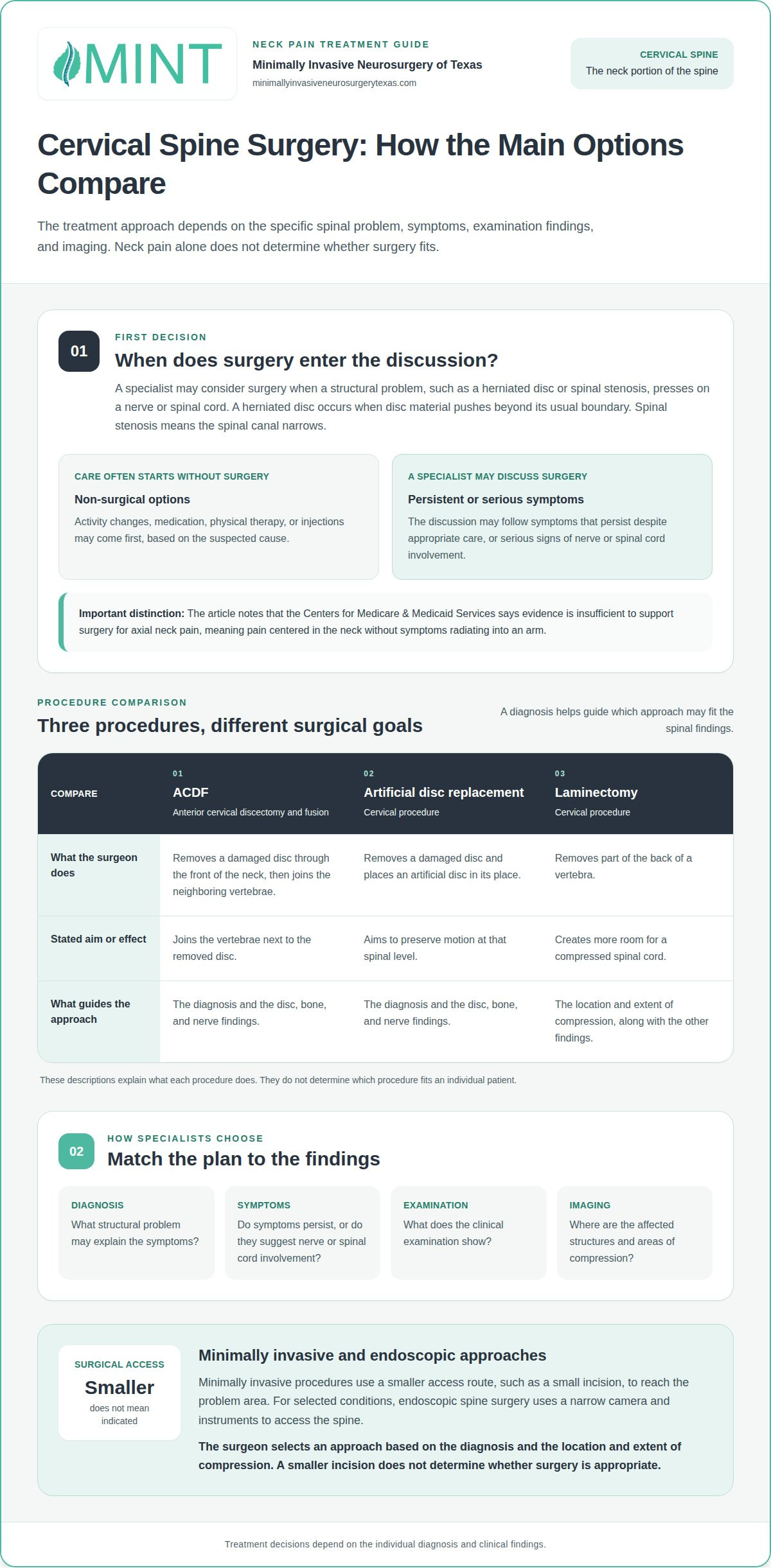
Cervical spine surgery addresses a structural problem in the neck, such as a herniated disc or spinal stenosis pressing on a nerve or the spinal cord. A specialist may consider surgery if non-surgical treatments, such as activity changes, medication, physical therapy, or injections, have not provided enough relief. The decision depends on the diagnosis, symptoms, examination findings, and imaging, not neck pain alone.
Conservative care often comes first because muscle strain or posture-related pain may improve without an operation. A clinician may recommend changes to activities, medication, physical therapy, or injections based on the suspected cause. Surgery enters the discussion if symptoms persist despite appropriate care, or if serious signs of nerve or spinal cord involvement develop. The Centers for Medicare & Medicaid Services says evidence is insufficient to support surgery for axial neck pain, meaning pain centered in the neck without symptoms radiating into an arm.
What types of neck surgery are available? Anterior cervical discectomy and fusion, or ACDF, removes a damaged disc through the front of the neck and joins the neighboring vertebrae. Cervical artificial disc replacement removes a damaged disc and places an artificial one in its place, with the aim of preserving motion at that level. A laminectomy removes part of the back of a vertebra to create more room for a compressed spinal cord.
Minimally invasive procedures use a smaller access route, such as a small incision, to reach the problem area. The surgeon selects an approach according to the disc, bone, and nerve findings, as well as the location and extent of compression. For selected conditions, endoscopic spine surgery uses a narrow camera and instruments to access the spine. A smaller incision does not determine whether surgery is appropriate; the diagnosis does.
How do Lewisville spine surgeons compare by credentials, hospital affiliations, and patient reviews? Consider board certification, training relevant to cervical conditions, and experience with the proposed procedure. Patient reviews can provide context about communication and care experiences, but they do not establish surgical qualifications or predict an individual outcome. A clear explanation of the diagnosis and treatment options also helps you assess whether the proposed plan addresses your specific findings.
Does insurance cover cervical spine surgery, and what referrals or prior authorization must patients obtain? Coverage and authorization requirements vary by plan and the documented medical reason for surgery. A plan may require a referral, clinical records, imaging, or prior authorization. The surgeon’s office can explain the clinical documentation for the proposed procedure; the insurer determines plan-specific coverage and approval requirements.
How long is recovery after cervical spine surgery, and when can patients return to work? Recovery depends on the procedure, the number of spinal levels the surgeon treats, healing, and job demands. Desk-based and physically demanding work may involve different restrictions. The surgical team provides activity guidance and assesses progress before recommending a return to work; there is no single timeline for every cervical procedure.
The U.S. District Court for the Eastern District of Pennsylvania describes 4 cervical laminectomy and fusion procedures at C4-C5 and C6-C7 in the case. Those level names identify locations in the cervical spine. This example illustrates why a surgical plan specifies the affected levels, rather than treating neck pain as one uniform condition.
What causes Neck Pain?
Neck pain can start with strained muscles, posture habits, an injury, or changes in the cervical spine. The location of discomfort and symptoms such as arm numbness can help distinguish among possible causes.
Common Causes of Neck Pain
Muscle strain can follow prolonged screen use, repetitive movement, or an awkward sleeping position. Stress may also tighten neck muscles and contribute to soreness. Leaning the head forward while using a phone, for example, can increase strain during everyday activities. These causes often affect muscles and soft tissues rather than indicating structural damage to the spine.
Conditions Associated With Neck Pain
Some neck symptoms relate to changes in the discs, joints, or bones. A herniated cervical disc occurs when disc material pushes beyond its usual boundary. Degenerative disc disease describes wear-related changes in a spinal disc. Cervical spinal stenosis means the spinal canal narrows, while cervical radiculopathy describes irritation or compression of a nerve root. These conditions can cause pain, tingling, or numbness that travels into an arm or hand.
Other possible causes include osteoarthritis, which affects joints, and bone spurs, which are bony growths. Whiplash can strain the neck during an accident. Osteoporosis weakens bones, while rheumatoid arthritis can affect joints. These conditions do not cause identical symptoms. A patient’s pattern of pain, stiffness, weakness, and numbness helps a clinician assess which cause may fit.
Neck and back pain can share causes, including poor posture, accidents, and degenerative spinal changes. However, symptoms in both areas do not automatically point to one diagnosis. A herniated disc in the neck may cause pain toward the shoulder or arm, while a lower spinal problem can produce symptoms elsewhere. The affected spinal region and the path of symptoms matter.
Not every aching neck reflects a condition that needs surgery. Muscle tension after a stressful day differs from persistent symptoms that a disc or irritated nerve may cause. A thorough evaluation connects your history and symptom pattern with examination findings. This helps identify the likely source and guide treatment, rather than assuming every case involves spinal damage.
Track the details that describe the problem: where pain starts, where it travels, and whether movement changes it. Include examples such as morning stiffness, pain after desk work, or numbness in the fingers. These specifics help a specialist distinguish muscle strain from possible nerve involvement. If persistent neck symptoms disrupt daily activities, arrange a neck pain evaluation to discuss their cause.
Neck pain evaluation and imaging
A medical evaluation connects your symptoms with physical findings and, when your clinician needs it, imaging. This process helps clarify whether neck or back problems involve muscles, bones, discs, or nerves.
Neck Pain Evaluation and Coordination
A clinician begins by reviewing your medical history and asking when the pain started, where it travels, and what makes it worse. The physical examination assesses movement, strength, sensation, and other findings that may point to nerve involvement. Pain extending from the neck into a hand, for example, gives the clinician a different symptom pattern to assess than discomfort limited to the neck.
Imaging can add detail when the examination suggests a structural cause. X-rays show bones and alignment; CT scans provide detailed bone images; MRI scans show discs and other soft tissues. An EMG, or electromyogram, tests electrical activity in muscles to assess nerve function. Clinicians interpret these results alongside symptoms, rather than treating an image alone as a diagnosis.
Coordination matters when symptoms involve both the neck and back. The clinician identifies which area best matches the pain pattern, examination, and imaging. This helps avoid mistaking a finding in one spinal region for the cause of symptoms elsewhere. If your clinician considers surgery, the diagnosis and affected structures guide the next steps.
Specialist Evaluation
Seek a spine specialist’s evaluation if neck pain follows an accident, feels severe, or continues over time. A specialist can review previous medical records and imaging, perform a focused physical examination, and determine whether additional tests may clarify the cause. Describe symptoms such as arm pain, weakness, tingling, or numbness, since their location can help identify possible nerve problems.
After an injury, prompt medical evaluation helps clinicians assess the neck before recommending treatment or movement. Severe pain or ongoing symptoms also warrant professional assessment, especially when they interfere with ordinary activities. A specialist considers the injury history, physical findings, and imaging together to distinguish conditions that may respond to non-surgical care from problems that need further evaluation.
Each test answers a different question. X-rays can show alignment or bone changes, while MRI can help assess discs and nerves. CT can clarify bone detail, and EMG can provide evidence about nerve function. The clinician selects tests based on the suspected problem and examination findings, including whether imaging could change the care plan.
Preparation can make the evaluation more useful. Describe when symptoms began, which activities affect them, and whether pain travels into the shoulder, arm, or hand. Share previous imaging and treatment records if you have them. These details help the specialist connect your history with examination findings and decide whether additional evaluation or a discussion of surgery makes sense.
Conditions that may require cervical spine surgery
Cervical surgery may address a damaged disc, narrowing around the spinal cord, or another structural problem. When the diagnosis and symptoms support surgery, it may relieve nerve pressure, improve function, or stabilize the spine.
What are the risks, complications, and success rates of cervical spine surgery? Every operation carries risks, and potential complications and outcomes depend on the procedure, the affected spinal levels, and the patient’s health. Surgery may relieve pain from nerve compression, improve mobility, prevent further spinal damage, or stabilize the neck, but no single success rate applies to every diagnosis.
Cervical Disc Herniation and Spinal Stenosis
A cervical disc herniation occurs when material from a neck disc pushes outward and may press on a nearby nerve root or the spinal cord. Cervical spinal stenosis means the spinal canal has narrowed, leaving less space for the spinal cord. Degenerative disc disease, trauma, and bone spurs can contribute to these conditions.
Specialists consider the location and extent of compression, the patient’s symptoms, and how those findings affect function. For example, a herniated disc pressing on a nerve differs from multilevel stenosis that narrows the canal at several neck levels. Cervical laminoplasty can enlarge the canal by reshaping and repositioning part of the vertebrae.
Symptoms of Cervical Nerve Compression
A compressed or irritated cervical nerve can cause pain that travels from the neck into a shoulder, arm, or hand. Some patients also experience tingling, numbness, or weakness in muscles served by that nerve. The symptom location can help clinicians connect the affected nerve with a cervical spine level.
Spinal cord compression can affect function beyond localized neck pain. Changes in hand use or movement may signal a more serious problem that needs prompt evaluation. Persistent symptoms, worsening weakness, or loss of function deserve careful assessment, because untreated nerve compression can cause lasting impairment in the affected area.
The procedure depends on the structure causing compression. A laminectomy removes part of the vertebra’s lamina, the bony plate at its back, to create more room for the spinal cord. A foraminotomy removes bone spurs or other tissue around the opening where a nerve root exits, relieving pressure at that opening.
For people considering Lewisville spine surgery for chronic neck pain, minimally invasive spine surgery uses small incisions or narrow access routes to reach selected spinal problems. The approach depends on the condition, location, and extent of the problem. A smaller incision alone does not mean an operation is appropriate. The surgeon weighs potential benefits against risks and explains how treatment may affect movement and symptoms.
A decision about Lewisville spine surgery for chronic neck pain should account for the diagnosis and structures involved. The minimally invasive techniques used for a cervical condition depend on its location and the treatment goal. Matching the procedure to the patient’s needs keeps the discussion focused on the source of compression.
Neck pain surgery in Lewisville, Texas
Lewisville patients considering neck surgery need a plan based on the cause of their symptoms. The diagnosis, affected cervical levels, and pressure on nerves or the spinal cord guide which procedure a surgeon may consider.
Which spine surgeons in Lewisville, Texas treat chronic neck pain? Dr. Scott Kutz is a board-certified neurosurgeon and Fellow of the AANS and ACS who treats spinal conditions. Neurosurgeons and orthopedic spine surgeons may both evaluate cervical problems, but their training differs. A specialist’s credentials and experience with the proposed procedure help you assess whether their expertise matches your diagnosis.
Procedure selection depends on examination and imaging findings. Anterior cervical discectomy and fusion, or ACDF, removes a damaged disc through the front of the neck and joins adjacent vertebrae. Artificial disc replacement removes the damaged disc and inserts an artificial one, aiming to maintain motion at that level. These procedures suit different clinical situations.
A laminectomy removes the lamina, the bony plate at the back of a vertebra, to create more room for a compressed spinal cord. A foraminotomy removes bone spurs or other tissue near the opening where a nerve root exits. Trauma, disc damage, and spinal stenosis can affect which structures need treatment and which surgical route is appropriate.
For patients researching Lewisville spine surgery for chronic neck pain, a useful surgical discussion connects the diagnosis to a specific goal. The surgeon should explain which cervical level the diagnosis identifies, how the proposed procedure addresses it, and whether it involves fusion or preserves motion. A plan for nerve-root compression, for example, may differ from one addressing narrowing around the spinal cord.
Minimally invasive techniques use a small incision or narrow access route for selected spine procedures. The approach depends on the condition, location, and extent of the problem. A smaller incision alone does not mean an operation is appropriate. The surgeon weighs potential benefits against risks and explains how the procedure may affect movement, symptoms, and recovery.
Lewisville patients can consider whether the surgeon clearly explains alternatives, including continued non-surgical care when the surgeon determines that surgery is not appropriate. A discussion about Lewisville spine surgery for chronic neck pain should connect the diagnosis to the proposed operation and explain how the plan addresses symptoms. Clear answers help patients understand the reasoning behind a recommendation.
For a focused discussion of cervical symptoms and possible treatment options, schedule an evaluation.
Minimally Invasive Neurosurgery of Texas
Minimally Invasive Neurosurgery of Texas helps patients in Lewisville and Plano understand whether a diagnosed cervical spine condition may benefit from surgery. Dr. Scott Kutz, a board-certified neurosurgeon and Fellow of the AANS and ACS, leads the practice, which focuses on spine surgery and minimally invasive approaches.
Consider an evaluation if chronic neck pain, arm symptoms, or imaging findings raise questions about a cervical procedure. A discussion can connect the diagnosis with appropriate options, including Minimally Invasive Spine Surgery (MISS), Endoscopic Spine Surgery (ESS), or Artificial Disc Replacement when clinically appropriate. The goal is to clarify the condition and possible next steps.
Contact Minimally Invasive Neurosurgery of Texas to discuss your neck pain and treatment options.
Take the Next Step Toward a Clear Care Plan
Choosing whether to pursue surgery is a personal decision. A focused conversation can connect your priorities, daily limitations, and treatment preferences with a practical care plan. For people considering Lewisville spine surgery for chronic neck pain, the next step is understanding how the diagnosis relates to potential procedures and what questions remain before deciding.
Minimally Invasive Neurosurgery of Texas provides Minimally Invasive Spine Surgery (MISS) and Endoscopic Spine Surgery (ESS). For eligible patients, the surgeon may also consider Artificial Disc Replacement. The appropriate option depends on the specific cervical condition and treatment goals.
Bring questions about daily activities, work, and concerns about surgery to your appointment. You deserve a clear explanation of how a proposed plan addresses your needs, including whether surgery makes sense for your situation.
Contact Minimally Invasive Neurosurgery of Texas to discuss your next steps. A clearer understanding can help you move forward with confidence.
Frequently Asked Questions
Looking for a location?
Minimally Invasive Neurosurgery of Texas has offices in Lewisville and Plano. The Lewisville office is at 1850 Lakepointe Drive, Suite 500, Lewisville, TX. The Plano office is at 5465 Legacy Drive, Suite 650, Plano, TX 75024. These are office addresses for care discussions, not a statement about where a surgery takes place. The planned procedure and surgeon’s arrangements determine the operative facility.
Why a Neurosurgeon?
A neurosurgeon specializes in conditions affecting the nervous system, including the spinal cord and spinal nerves. That training can be relevant when chronic neck symptoms involve nerve compression, spinal stenosis, or a herniated disc. Dr. Scott Kutz is a board-certified neurosurgeon specializing in spinal disorders and minimally invasive spine surgery. A focused spine evaluation can connect neurological symptoms with relevant cervical findings and treatment options.
What causes of chronic neck pain may require spine surgery?
Chronic neck pain may lead to a surgical discussion when a structural condition affects nerves or the spinal cord. Examples include a cervical herniated disc, degenerative disc disease, spinal stenosis, or injury-related damage. Pain alone does not identify the cause. Specialists consider symptoms, examination findings, and imaging together, especially when pain travels into an arm or comes with weakness, numbness, or changes in hand function.
When does a specialist recommend cervical spine surgery for chronic neck pain?
A specialist may recommend cervical surgery when a diagnosed spinal problem continues to cause significant symptoms despite non-surgical care, or when serious neurological symptoms develop. The decision depends on the source and location of compression, affected spinal levels, symptoms, and function. A disc pressing on a nerve, for example, may call for a different procedure than narrowing around the spinal cord.
Which hospitals and surgery centers near Lewisville perform cervical spine surgery?
The operating facility depends on the surgeon’s privileges and the planned procedure. The surgical team uses an office in Lewisville or Plano for evaluation and care planning, while the team coordinates the operation at its designated facility. Before surgery, patients should receive the facility name and instructions specific to their procedure. The surgical plan, rather than the office address, identifies where the operation takes place.