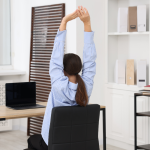
Image sourced from Canva
Long workdays at a desk, followed by a drive on a busy DFW highway, can leave the lower back stiff and sore by evening. At Minimally Invasive Neurosurgery of Texas, Dr. Scott Kutz, MD, a neurosurgeon board-certified by the American Board of Neurological Surgery (ABNS), sees many working adults at offices in Lewisville and Plano, TX, who want practical stretching exercises for low back pain Lewisville TX, and Plano commuters can fit into a busy day.
This article covers lower back pain stretches Plano TX desk workers can do at work and at home, simple habits that may reduce strain from sitting and driving, and the signs that mean it is time for a specialist evaluation rather than another stretch break.
If sitting or driving consistently triggers pain that does not settle, contact Minimally Invasive Neurosurgery of Texas to discuss an evaluation.
Key Takeaways
- Back pain is common among working-age adults. In a 2019 national survey, 39.0% of U.S. adults reported back pain in the past three months.
- Long periods of sitting can leave the hips and lower back feeling stiff, and regular movement breaks may help.
- Several gentle stretches can be done in a chair or standing beside a desk.
- Workstation and car seat adjustments are simple changes that may reduce strain.
- Leg pain, numbness, or weakness during sitting or driving is a reason to see a qualified specialist.
Table of Contents
- How Does Sitting Affect Low Back Pain?
- Stretching Exercises for Low Back Pain Lewisville TX Desk Workers Can Do at Work
- Habits for Your Workstation and Commute
- Risks, Limits and Other Options
- Minimally Invasive Neurosurgery of Texas: Care for Working Adults in Lewisville and Plano
- Take the Next Step With a Clearer Plan
- Frequently Asked Questions
How Does Sitting Affect Low Back Pain?
How Common Back Pain Is
According to NCHS Data Brief No. 415, Back, Lower Limb, and Upper Limb Pain Among U.S. Adults, 2019, based on the 2019 National Health Interview Survey, 39.0% of U.S. adults reported back pain in the past three months. The same brief reported that women (40.6%) were more likely than men (37.2%) to report back pain. Back pain was the most commonly reported pain location in the survey.
What Happens During Long Periods of Sitting
Sitting is not harmful on its own, but staying in one position for hours can leave muscles feeling tight and joints feeling stiff. Many people slump forward as the day goes on, especially when looking at a laptop. The hip flexors stay shortened, and the muscles that support the spine may tire.
The Commute Adds Up
In the Dallas-Fort Worth area, a long drive often bookends the workday. Car seats that tilt you backward, a wallet in a back pocket, or reaching for pedals can all add strain. For people with existing back pain, the combination of desk time and drive time can make symptoms more noticeable by evening.
Stretching Exercises for Low Back Pain Lewisville TX Desk Workers Can Do at Work
These gentle stretches are commonly taught for people who sit for long periods. Move slowly and stop if you feel sharp, shooting, or spreading pain. The practice’s guide to stretching exercises for lower back pain includes additional floor-based stretches for home.
Seated Figure-Four Stretch
Sit near the front of your chair with both feet flat. Cross one ankle over the opposite knee and gently lean forward with a straight back until you feel a stretch in the buttock. Hold for 20 to 30 seconds and switch sides.
Seated Trunk Rotation
Sit tall with feet flat. Place one hand on the outside of the opposite knee and gently turn your upper body toward that side. Keep the movement small and comfortable, hold for a few breaths, and repeat on the other side.
Standing Hip Flexor Stretch
Stand beside your desk and step one foot back into a short lunge. Gently tuck your pelvis under until you feel a stretch at the front of the back hip. Hold the desk for balance and keep your upper body upright.
Standing Back Extension
Stand with your hands on your lower back or hips and gently lean back a small amount, then return to upright. Some people find this helpful after sitting, while others, including some people with spinal stenosis, may find it uncomfortable. Skip it if it increases pain.
Seated Hamstring Stretch
Sit near the edge of your chair and straighten one leg with the heel on the floor. Keeping your back straight, hinge forward slightly from the hips until you feel a stretch behind the thigh. Hold for 20 to 30 seconds and switch.
Habits for Your Workstation and Commute
Move Every 30 to 60 Minutes
Many people find it helpful to stand up, walk a few steps, or change positions regularly. A phone reminder or a habit like standing during calls can make breaks automatic. Short, frequent movement is often easier on the back than one long break.
Adjust Your Workstation
Set your chair so your feet rest flat and your knees are about level with your hips. Use the backrest, and add a small cushion behind your lower back if that feels more comfortable. Raise your monitor to around eye level to reduce slumping.
Set Up Your Car Seat
Sit close enough to reach the pedals without stretching, with your seat back fairly upright. Remove a wallet or phone from your back pocket before driving. On longer drives, plan short stops to stand and walk when it is safe to do so.
Stay Active Outside Work
Walking, swimming, or other low-impact activity during the week may help balance the effects of sitting. Regular activity is often encouraged as part of non-surgical low back pain care DFW patients use.
Risks, Limits and Other Options
When Stretches May Not Help
Desk stretches are meant for general stiffness, not for every cause of back pain. Pain from a herniated disc, spinal stenosis, or a sacroiliac joint problem may need a more specific plan. If pain is centered near the low back and buttock and persists, a specialist may evaluate whether the sacroiliac (SI) joint or another structure is involved.
Other Non-Surgical Options
Physical therapy, strengthening programs, medications recommended by your physician, and, for some patients, injections are other non-surgical options. Many people with back pain are treated without surgery, though results vary.
Seek Emergency Care
Seek emergency care right away if back pain comes with new loss of bladder or bowel control, numbness in the groin or inner thighs, rapidly worsening leg weakness, or fever with severe back pain. For persistent symptoms that are not emergencies, see a qualified specialist for an evaluation.
Minimally Invasive Neurosurgery of Texas: Care for Working Adults in Lewisville and Plano
Dr. Scott C. Kutz, MD, is a neurosurgeon and spine surgeon, board-certified by the American Board of Neurological Surgery (ABNS), with more than 25 years of experience and more than 6,000 patients treated. He is the founder and head neurosurgeon of Minimally Invasive Neurosurgery of Texas, a private practice in Lewisville, TX, and Plano, TX, dedicated exclusively to minimally invasive and motion-preserving surgical techniques for spinal conditions. He has been a Fellow of the American Association of Neurological Surgeons (AANS) since 2011 and the American College of Surgeons (ACS) since 2010.
His approach prioritizes the least invasive appropriate option first. For working adults, an evaluation often looks at how symptoms affect sitting, driving, and job tasks, and which form of low back pain treatment Lewisville TX patients may consider fits their daily life. The Plano office at 5465 Legacy Drive, Suite 650 is convenient for many people working in the Legacy area.
To review your options with Dr. Scott Kutz, MD, contact Minimally Invasive Neurosurgery of Texas.
Take the Next Step With a Clearer Plan
Gentle stretching exercises for low back pain Lewisville TX and Plano desk workers can do, combined with regular movement breaks and a few workstation and car seat changes, may make long days more comfortable for many people. These habits are simple, but they are most helpful when done consistently.
For more stretches you can do at home, see the practice’s lower back pain stretching guide. If sitting or driving keeps triggering pain, or you notice leg symptoms, an evaluation at the Lewisville or Plano, TX office can help identify the cause.
When you are ready, contact Minimally Invasive Neurosurgery of Texas to discuss your concerns and next steps.
Frequently Asked Questions
How often should I get up from my desk if I have back pain?
Many people find it helpful to stand, stretch, or walk for a minute or two every 30 to 60 minutes. There is no single rule for everyone. The goal is to avoid staying in one position for hours. If breaks do not ease your symptoms, consider an evaluation with a qualified specialist.
Can I stretch at my desk without getting on the floor?
Yes. Seated figure-four stretches, seated trunk rotations, seated hamstring stretches, and standing hip flexor stretches can all be done in or beside a chair. Move slowly, stay within a comfortable range, and stop any stretch that causes sharp or spreading pain, numbness, or tingling.
Is a standing desk helpful for back pain?
Some people find that alternating between sitting and standing feels more comfortable than doing either all day. Standing for long periods can also cause fatigue, so changing positions regularly is usually the goal. Comfort varies from person to person, and a standing desk is not a treatment on its own.
Why does my back hurt more after driving?
Long drives keep you in one position, and car seats that recline too far or sit too low can encourage slouching. Reaching for pedals and sitting on a back-pocket wallet may add strain. Adjusting your seat and taking breaks may help. Persistent pain or leg symptoms deserve an evaluation.
When should desk-related back pain be evaluated?
Consider a specialist evaluation if pain lasts more than a few weeks, keeps returning, travels into your leg, or comes with numbness or weakness. Seek emergency care for loss of bladder or bowel control, groin numbness, or rapidly worsening leg weakness. A specialist can evaluate the cause and discuss your options.
Can poor posture cause long-term back problems?
Posture is one factor among many, including activity level, fitness, genetics, and age, and no single posture suits everyone. Changing positions often, staying active, and setting up a comfortable workstation are practical steps. A specialist can evaluate symptoms that persist despite these changes, and results vary from person to person.
Medical Disclaimer: This article is for educational purposes only and is not medical advice. Individual results vary. Please consult a qualified physician about your specific condition. To discuss your options with Dr. Scott Kutz, MD, contact Minimally Invasive Neurosurgery of Texas.