Image sourced from Canva
Back pain is one of the most common reasons adults look for medical help, and many people eventually search for a neurosurgeon Frisco TX residents can see when the pain does not go away. At Minimally Invasive Neurosurgery of Texas, Dr. Scott Kutz, MD, a neurosurgeon board-certified by the American Board of Neurological Surgery (ABNS), evaluates patients from Frisco and the wider Dallas-Fort Worth area at offices in Lewisville, TX, and Plano, TX.
This article answers a practical question: when might back pain be worth a specialist evaluation, and what usually happens before anyone talks about surgery? It covers common causes, signs that deserve attention, emergency warning signs, and the non-surgical and surgical options a specialist may discuss.
If your back pain has been changing your routine, you can contact Minimally Invasive Neurosurgery of Texas to ask whether an evaluation makes sense for you.
Key Takeaways
- The CDC reports that 39.0% of U.S. adults had back pain in the past three months in 2019, and the share rose with age.
- Most back pain improves with time and conservative care, but pain that persists, spreads, or causes weakness may deserve a specialist’s review.
- Certain symptoms, such as new loss of bladder or bowel control, call for emergency care rather than a scheduled visit.
- A specialist evaluation focuses on finding the cause first, and non-surgical options are usually part of the plan.
- Frisco-area patients are seen at the Plano, TX, and Lewisville, TX offices of Minimally Invasive Neurosurgery of Texas.
Table of Contents
- What Causes Back Pain That Lingers?
- Signs Back Pain May Call for a Specialist Evaluation
- Back Pain Warning Signs That Need Emergency Care
- How Back Pain Care Usually Progresses for a Neurosurgeon Frisco TX Patient
- Non-Surgical Options and Surgical Risks
- Minimally Invasive Neurosurgery of Texas: Back Pain Evaluations in Lewisville and Plano, TX
- Take the Next Step With a Clearer Plan
- Frequently Asked Questions
What Causes Back Pain That Lingers?
Back pain has many possible sources, and more than one can be involved at the same time. Data from the CDC’s National Center for Health Statistics show that 39.0% of U.S. adults had back pain in the past three months in the 2019 National Health Interview Survey, and that back pain was more common in older age groups. Understanding the likely source helps guide treatment.
Muscle and Soft Tissue Strain
Strains of the muscles and ligaments that support the spine are a frequent cause of sudden back pain. They often follow lifting, twisting, or a change in activity and tend to improve over days to weeks with gentle movement and time.
Disc and Joint Changes
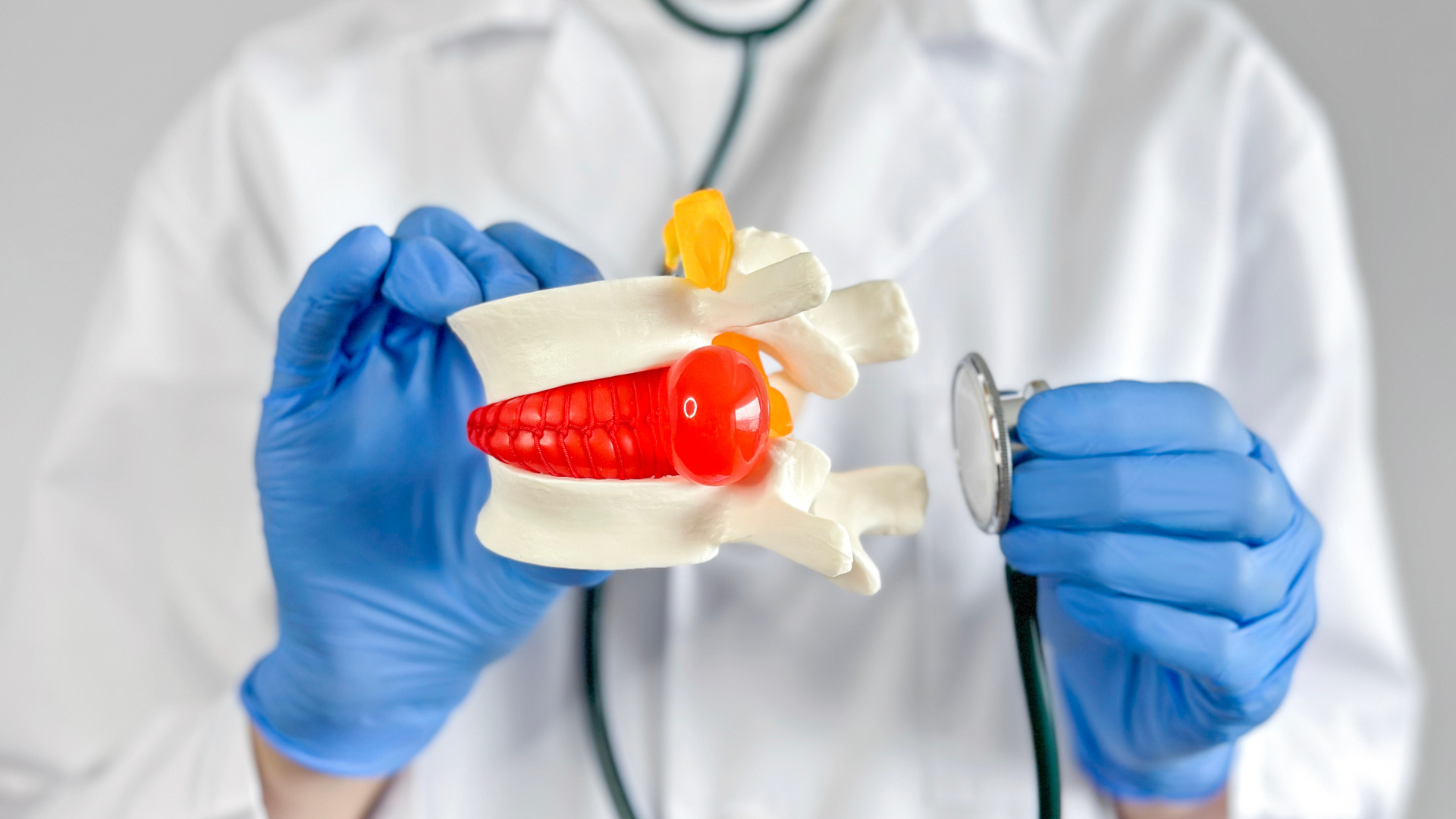
The discs between the vertebrae act as cushions. With age, they can lose water content and height, a process called degenerative disc disease. The small facet joints at the back of the spine and the sacroiliac (SI) joints where the spine meets the pelvis can also become sources of pain.
Nerve Compression
When a disc bulges or herniates, or when the spinal canal narrows (spinal stenosis), nearby nerves can become compressed or irritated. This may cause pain that travels down the leg, often called sciatica, along with numbness, tingling, or weakness. Patients researching herniated disc treatment Frisco TX options are often dealing with this type of nerve-related pain.
Signs Back Pain May Call for a Specialist Evaluation
Many people start with a back pain doctor Frisco TX search, a primary care visit, or physical therapy. That is a sensible starting point. A specialist evaluation may be worth discussing when certain patterns appear.
Pain That Lasts Beyond Several Weeks
Pain that has not improved after several weeks of reasonable conservative care, such as activity changes, medication, and physical therapy, may deserve a closer look. A specialist can review whether imaging or a different treatment approach would help clarify the cause.
Pain That Travels Into the Leg
Pain that radiates from the lower back into the buttock, thigh, or below the knee suggests a nerve may be involved. This is especially worth discussing if it comes with numbness or tingling.
Weakness or Changes in Function
Signs such as foot drop (difficulty lifting the front of the foot), trouble standing on tiptoes, or needing to stop and sit after walking short distances can point to nerve compression. Changes like these are a reason to see a qualified specialist for an evaluation rather than waiting it out.
Pain That Limits Daily Life
Even without weakness, back pain that interferes with sleep, work, or family responsibilities over time is a fair reason to ask about specialist input.
Back Pain Warning Signs That Need Emergency Care
Some symptoms should never wait for an office appointment. Seek emergency care if back pain comes with:
- New loss of bladder or bowel control, or difficulty urinating
- Numbness in the groin, buttocks, or inner thighs (sometimes called saddle numbness)
- Rapidly worsening weakness in one or both legs
- Fever, chills, or unexplained weight loss
- Pain that began after a significant fall, car accident, or other trauma
- Chest pain or trouble breathing
Why These Signs Matter
These symptoms can be associated with conditions that need prompt diagnosis and treatment. An emergency department can evaluate them quickly. For symptoms that worry you but are not emergencies, see a qualified specialist for an evaluation.
How Back Pain Care Usually Progresses for a Neurosurgeon Frisco TX Patient
Back pain care is usually a stepwise process, and different professionals play different roles.
Primary Care and Physical Therapy
A primary care physician often handles the first visit, checks for warning signs, and may recommend medication, activity changes, and physical therapy. A physical therapist works on strength, flexibility, and movement patterns that reduce stress on the spine.
Interventional and Pain Management Care
If pain continues, a physician may recommend injections, such as epidural steroid injections, which can help calm inflamed nerves for some patients. These are tools that can also help clarify where pain is coming from.
When a Neurosurgeon Becomes Involved
A neurosurgeon is often consulted when symptoms persist, when nerve-related signs appear, or when imaging shows a structural problem such as a herniated disc or stenosis. Whether a patient first searched for a spine specialist Frisco or was referred by another doctor, the evaluation looks at the whole picture before recommending any treatment. Many patients are advised to continue non-surgical care after that visit.
For more background on how spine care works for patients in this area, read this guide to what Frisco-area patients should know about spine neurosurgery.
Non-Surgical Options and Surgical Risks
A balanced conversation about back pain covers both conservative care and, when relevant, surgical options and their risks.
Common Non-Surgical Options
- Physical therapy and a home exercise program
- Anti-inflammatory or other medications, as appropriate for your health
- Heat, ice, and gradual return to activity
- Epidural steroid injections or other interventional procedures
- Weight management and workplace ergonomic changes
Many patients improve with these approaches. How long to try them depends on your diagnosis and symptoms.
When Surgery Is Considered
Surgery may be discussed when a structural problem matches the symptoms and conservative care has not provided enough improvement, or when nerve function is declining. For example, patients with lumbar spinal stenosis who continue to have leg symptoms may discuss options such as lumbar spinal stenosis surgery with a specialist.
Understanding the Risks
All spine procedures carry risks, including infection, bleeding, blood clots, reactions to anesthesia, nerve irritation or injury, a tear in the covering of the nerves that can cause a spinal fluid leak, and the possibility that symptoms continue or further treatment is needed. Recovery time varies by procedure and by patient.
Minimally Invasive Neurosurgery of Texas: Back Pain Evaluations in Lewisville and Plano, TX
Dr. Scott C. Kutz, MD, is a neurosurgeon and spine surgeon, board-certified by the American Board of Neurological Surgery (ABNS), with more than 25 years of experience and more than 6,000 patients treated. He is the founder and head neurosurgeon of Minimally Invasive Neurosurgery of Texas, a private practice in Lewisville, TX and Plano, TX dedicated exclusively to minimally invasive and motion-preserving surgical techniques for spinal conditions. He has been a Fellow of the American Association of Neurological Surgeons (AANS) since 2011 and the American College of Surgeons (ACS) since 2010.
Dr. Kutz specializes in endoscopic spine surgery, artificial disc replacement, sacroiliac joint fusion, and complex revision spine surgery. His approach prioritizes the least invasive appropriate option first. Frisco-area patients are seen at 5465 Legacy Drive, Suite 650 in Plano or at the main office, 1850 Lakepointe Drive, Suite 500 in Lewisville.
If back pain has been affecting your daily life, contact Minimally Invasive Neurosurgery of Texas to discuss an evaluation.
Take the Next Step With a Clearer Plan
Back pain is common, and most of it improves. When it lingers, travels into the leg, or begins to limit what you can do, looking for a neurosurgeon Frisco TX patients can see is a reasonable step toward understanding the cause. An evaluation gathers your history, exam, and imaging so you can weigh non-surgical and surgical options with a specialist.
Patients from Frisco are welcome at the Plano, TX, and Lewisville, TX offices. You can also learn more about spine neurosurgery for Frisco-area patients before your visit.
To talk through your symptoms and next steps, contact Minimally Invasive Neurosurgery of Texas.
Frequently Asked Questions
How long should back pain last before I see a specialist?
There is no single cutoff, but many doctors suggest a specialist review if back pain has not improved after several weeks of conservative care, or sooner if pain travels into the leg or causes numbness or weakness. Your primary care doctor can help you decide when a referral makes sense.
Is a neurosurgeon the right doctor for back pain?
A neurosurgeon is one of several specialists who treat back pain, and is often consulted when nerve symptoms or structural problems such as herniated discs or stenosis are suspected. Many patients start with primary care or physical therapy. The right specialist depends on your symptoms and how they respond to initial care.
What back pain symptoms are an emergency?
Seek emergency care for back pain with new loss of bladder or bowel control, numbness in the groin or inner thighs, rapidly worsening leg weakness, fever, pain after significant trauma, or chest pain or trouble breathing. These signs can point to conditions that need prompt evaluation, so do not wait for an office visit.
Will I need an MRI for my back pain?
Not always. Many cases of back pain improve without imaging. An MRI is more often considered when pain persists despite conservative care, when nerve symptoms such as weakness are present, or when warning signs suggest another cause. A specialist decides based on your history and exam findings.
Can back pain improve without surgery?
Yes. Many people with back pain improve with time, physical therapy, medication, activity changes, or injections. Surgery is generally considered only when a structural problem matches the symptoms and conservative care has not helped enough. Results vary, and a specialist can explain which options fit your diagnosis.
Where can Frisco patients see Dr. Scott Kutz for back pain?
Frisco-area patients can see Dr. Scott Kutz, MD at 5465 Legacy Drive, Suite 650 in Plano, TX, or at the main office at 1850 Lakepointe Drive, Suite 500 in Lewisville, TX. There is no Frisco office. Call (972) 244-3491 to ask about scheduling at either location.
Medical Disclaimer: This article is for educational purposes only and is not medical advice. Individual results vary. Please consult a qualified physician about your specific condition. To discuss your options with Dr. Scott Kutz, MD, contact Minimally Invasive Neurosurgery of Texas.