Image sourced from Canva
A herniated disc is one of the most common reasons people search for a neurosurgeon Frisco TX patients can see, often after weeks of back pain or pain that shoots down a leg. At Minimally Invasive Neurosurgery of Texas, Dr. Scott Kutz, MD, a neurosurgeon board-certified by the American Board of Neurological Surgery (ABNS), evaluates patients from Frisco and across the Dallas-Fort Worth area at offices in Lewisville, TX, and Plano, TX.
This article explains what a herniated disc is, how it can cause symptoms, and the range of treatment options that are commonly discussed, from physical therapy to minimally invasive surgery. It also covers the risks and the reasons many patients never need an operation.
If you have been told you may have a herniated disc and want to understand your options, you can contact Minimally Invasive Neurosurgery of Texas to ask about an evaluation.
Key Takeaways
- A herniated disc happens when the soft center of a spinal disc pushes through its tougher outer layer and may irritate a nearby nerve.
- Many herniated discs improve with conservative care, and the body can reabsorb herniated disc material over time.
- Common non-surgical options include physical therapy, medication, activity changes, and epidural steroid injections.
- Surgery, such as a minimally invasive or endoscopic discectomy, may be discussed when symptoms persist or nerve function declines.
- Frisco-area patients are seen at the Plano, TX, and Lewisville, TX offices of Minimally Invasive Neurosurgery of Texas.
Table of Contents
- What Is a Herniated Disc?
- How Specialists Evaluate a Possible Herniated Disc
- Non-Surgical Herniated Disc Treatment Options
- When a Neurosurgeon Frisco TX Patients See May Discuss Surgery
- Risks and Alternatives to Herniated Disc Surgery
- Minimally Invasive Neurosurgery of Texas: Herniated Disc Care in Lewisville and Plano, TX
- Take the Next Step With a Clearer Plan
- Frequently Asked Questions
What Is a Herniated Disc?
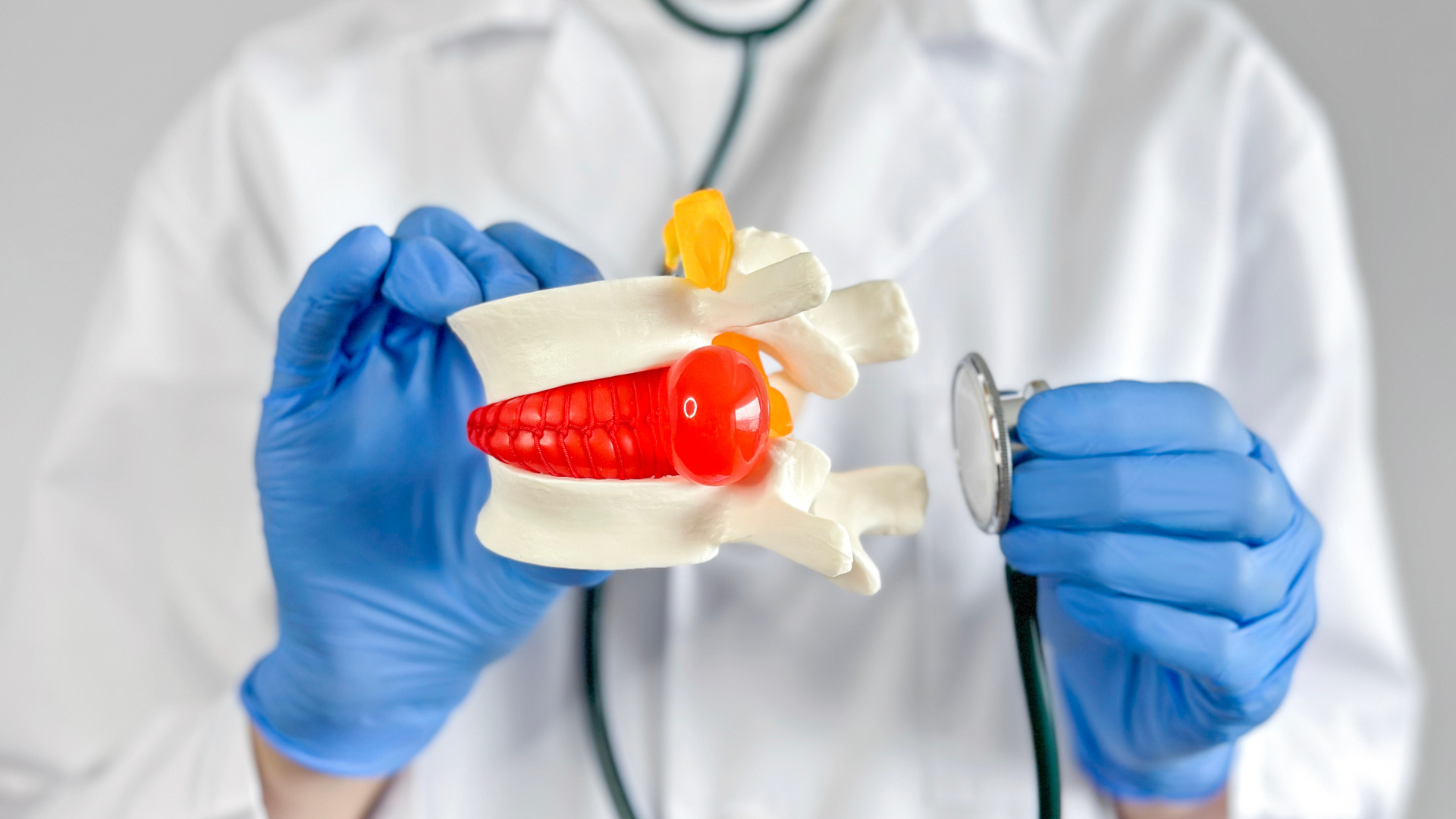
The spine is made of bones called vertebrae, separated by discs that work like cushions. Each disc has a tough outer ring (the annulus) and a softer, gel-like center (the nucleus). A herniated disc, sometimes called a slipped or ruptured disc, occurs when part of that softer center pushes through a weak spot in the outer ring.
Where Herniated Discs Happen
Herniated discs are most common in the lower back (lumbar spine), followed by the neck (cervical spine). These areas move and bend the most, which places more stress on the discs over time.
How a Herniated Disc Causes Symptoms
A herniated disc does not always cause pain. Some are found by chance on an MRI in people who have no symptoms at all. When symptoms do occur, they usually come from pressure or inflammation affecting a nearby nerve. In the lower back, this can cause pain that travels into the buttock and leg (sciatica), along with numbness, tingling, or weakness. In the neck, symptoms may travel into the shoulder, arm, or hand.
Common Risk Factors
Age-related changes in the discs play a large role. Other factors linked with disc herniation include repetitive heavy lifting, smoking, higher body weight, and prolonged sitting.
How Specialists Evaluate a Possible Herniated Disc
Whether a patient first searched for a back pain doctor Frisco TX residents recommend or for a spine specialist Frisco practice, a careful evaluation is the starting point for any treatment plan.
History and Physical Exam
A specialist asks when symptoms began, where pain travels, and what makes it better or worse. A neurological exam checks strength, reflexes, and sensation to see which nerve may be involved.
Imaging
An MRI is the most common imaging test for evaluating a herniated disc because it shows discs and nerves in detail. Imaging is most helpful when its findings match the symptoms and exam, since disc changes are common even in people without pain.
Matching Findings to Symptoms
The goal is to connect the symptoms, exam, and imaging into one clear picture. This step guides whether non-surgical care, further testing, or a surgical discussion makes sense. For symptoms that concern you, see a qualified specialist for an evaluation.
Non-Surgical Herniated Disc Treatment Options
Most people researching herniated disc treatment Frisco TX options are relieved to learn that conservative care is usually the first step. There is also evidence that the body can reabsorb herniated disc material. A 2024 systematic review in Orthopedic Reviews by Xie and colleagues, which pooled 34 studies on lumbar disc herniation, reported spontaneous resorption of herniated disc material after conservative treatment in 76.6% of cases. Resorption on imaging does not always match symptom improvement, but it helps explain why many patients improve without surgery.
Physical Therapy and Exercise
A physical therapist can guide exercises that improve core strength, flexibility, and posture, which may reduce pressure on irritated nerves.
Medications
Anti-inflammatory medications and other prescriptions may help manage pain and inflammation, depending on your health history.
Activity Modification
Short periods of relative rest, followed by a gradual return to movement, are usually recommended. Prolonged bed rest is generally discouraged.
Epidural Steroid Injections
An epidural steroid injection places anti-inflammatory medication near the irritated nerve. For some patients, it can relieve symptoms in the short term and allow them to progress with therapy.
When a Neurosurgeon Frisco TX Patients See May Discuss Surgery
Surgery is not the default for a herniated disc. It may be discussed when:
- Leg or arm pain persists despite an adequate trial of conservative care
- Weakness, numbness, or other nerve-related signs are progressing
- Symptoms significantly limit daily activities, and the imaging matches the symptoms
Minimally Invasive and Endoscopic Discectomy
A discectomy removes the portion of disc material pressing on a nerve. Minimally invasive approaches use smaller incisions and specialized instruments designed to limit disruption to surrounding muscle. Endoscopic spine surgery uses a small camera and instruments passed through a narrow tube. Whether a patient is a candidate depends on the location and type of herniation, imaging findings, and overall health.
Shared Decision-Making
The decision to have surgery belongs to the patient, made with a specialist’s guidance. A good discussion covers goals, risks, alternatives, and what recovery may involve. You can read more about the overall process in this guide to what Frisco-area patients should know about spine neurosurgery.
Risks and Alternatives to Herniated Disc Surgery
Every treatment has trade-offs, and an informed choice means understanding them.
Risks of Discectomy
General surgical risks include infection, bleeding, blood clots, and reactions to anesthesia. Risks more specific to discectomy include:
- Recurrent disc herniation at the same level, which may need further treatment
- A tear in the protective covering of the nerves (dura), which can cause a spinal fluid leak
- Nerve irritation or injury, which can cause numbness, weakness, or ongoing pain
- In endoscopic or minimally invasive procedures, the possibility of changing to a larger open approach during surgery
Recovery time varies; many patients return to light activity sooner than with open surgery, but timelines depend on the procedure and the person.
Alternatives to Surgery
Alternatives include continuing physical therapy, medication, activity changes, and injections, along with simply allowing more time when symptoms are stable or improving. A specialist can help you weigh these options against your symptoms and goals.
Minimally Invasive Neurosurgery of Texas: Herniated Disc Care in Lewisville and Plano, TX
Dr. Scott C. Kutz, MD, is a neurosurgeon and spine surgeon, board-certified by the American Board of Neurological Surgery (ABNS), with more than 25 years of experience and more than 6,000 patients treated. He is the founder and head neurosurgeon of Minimally Invasive Neurosurgery of Texas, a private practice in Lewisville, TX, and Plano, TX, dedicated exclusively to minimally invasive and motion-preserving surgical techniques for spinal conditions. He has been a Fellow of the American Association of Neurological Surgeons (AANS) since 2011 and the American College of Surgeons (ACS) since 2010.
Dr. Kutz specializes in endoscopic spine surgery, artificial disc replacement, sacroiliac joint fusion, and complex revision spine surgery. His approach prioritizes the least invasive appropriate option first, using advanced surgical techniques designed to minimize tissue disruption.
To review your herniated disc treatment options with Dr. Scott Kutz, MD, contact Minimally Invasive Neurosurgery of Texas.
Take the Next Step With a Clearer Plan
A herniated disc can be painful and disruptive, but it is also a condition where many patients improve with conservative care. When symptoms persist, or nerve signs appear, seeing a neurosurgeon Frisco TX patients can reach can help clarify the cause and the full range of options, from therapy to minimally invasive surgery.
Frisco-area patients are seen at the Plano, TX and Lewisville, TX offices. Learn more about spine neurosurgery for Frisco-area patients as you prepare.
If you would like to talk through your diagnosis and next steps, contact Minimally Invasive Neurosurgery of Texas.
Frequently Asked Questions
Can a herniated disc heal on its own?
Many herniated discs improve without surgery. Research shows the body can reabsorb herniated disc material over time, and symptoms often ease with physical therapy, medication and activity changes. How quickly this happens varies by patient, so a specialist can help monitor progress and watch for any nerve-related changes.
What is the first treatment for a herniated disc?
Conservative care is usually the first step. This often includes physical therapy, anti-inflammatory or other medications, a gradual return to activity, and sometimes an epidural steroid injection. The right combination depends on your symptoms, overall health and how your body responds over the first several weeks.
When is surgery considered for a herniated disc?
Surgery may be considered when pain persists despite an adequate trial of conservative care, when weakness or numbness is progressing, or when symptoms seriously limit daily life and imaging matches the symptoms. The decision is shared between you and your surgeon, and results vary depending on your diagnosis.
What are the risks of herniated disc surgery?
Risks include infection, bleeding, blood clots, anesthesia reactions, nerve irritation or injury, a spinal fluid leak from a tear in the nerve covering, and recurrent herniation at the same level. A minimally invasive procedure may occasionally need to change to a larger approach. A specialist can explain your specific risks.
What is endoscopic discectomy?
Endoscopic discectomy is a minimally invasive procedure that uses a small camera and instruments passed through a narrow tube to remove disc material pressing on a nerve. It typically involves a small incision and less tissue disruption. Not every patient is a candidate, and recovery time varies by patient.
What symptoms of a herniated disc need emergency care?
Seek emergency care for new loss of bladder or bowel control, numbness in the groin or inner thighs, or rapidly worsening weakness in one or both legs. These signs can indicate significant nerve compression that needs prompt evaluation. Do not wait for a scheduled appointment if they appear.
Medical Disclaimer: This article is for educational purposes only and is not medical advice. Individual results vary. Please consult a qualified physician about your specific condition. To discuss your options with Dr. Scott Kutz, MD, contact Minimally Invasive Neurosurgery of Texas.