Minimally Invasive Neurosurgery of Texas (MINT), which Dr. Scott Kutz, a board-certified neurosurgeon and Fellow of the AANS and ACS, leads, provides minimally invasive spine surgery and endoscopic spine surgery in Lewisville and Plano, Texas. A Plano TX endoscopic posterior cervical foraminotomy uses an endoscope, a small camera, to help a surgeon enlarge the opening where a nerve exits the neck’s spine.
A smaller incision is only part of the decision. The surgeon also needs to determine whether the source of your symptoms and your imaging findings fit this nerve-decompression procedure. University of Utah Health says an endoscopic posterior cervical foraminotomy usually takes around 60-90 minutes.
This guide explains what cervical foraminotomy treats, which factors may make someone a candidate, and what risks to discuss. You’ll also learn how the surgeon reaches the nerve from behind the neck and how the endoscopic technique works, helping you prepare for a more informed conversation about care.
Key Takeaways
- Learn how cervical foraminotomy can relieve pressure on a nerve leaving the neck and which symptoms may lead a surgeon to consider it.
- Understand how symptoms and imaging findings help determine whether an endoscopic approach may fit your situation.
- Review possible complications and recovery considerations, including when driving may be appropriate after surgery.
- Follow the main steps of the endoscopic posterior technique and see how it differs from an open approach.
- Find out how Dr. Scott Kutz’s neurosurgical practice serves patients in Plano and Lewisville, Texas.
Minimally Invasive Neurosurgery of Texas: Endoscopic Spine Surgery in Plano, TX
Minimally Invasive Neurosurgery of Texas provides Endoscopic Spine Surgery (ESS) in Plano and Lewisville, with Dr. Scott Kutz, a board-certified neurosurgeon and Fellow of the AANS and ACS, actively leading care. The procedure uses a small camera and specialized instruments to treat a spinal problem through a limited opening. The approach focuses on the spine while aiming to reduce disruption to nearby tissue.
For someone considering cervical foraminotomy, the key question is whether the source of neck or arm symptoms matches a problem surgery can address. A foraminotomy enlarges the opening where a spinal nerve exits, which can relieve pressure on that nerve. Endoscopic techniques provide a magnified view of the treatment area through a small incision. The right approach depends on symptoms, examination findings, and imaging, not simply on the smaller access point.
Dr. Kutz’s neurosurgical training informs the evaluation of spinal conditions and surgical options. A neurosurgeon assesses how the spine, nerves, and symptoms relate, then considers whether a minimally invasive procedure fits the patient’s clinical picture. This assessment helps distinguish nerve compression from other possible sources of discomfort and guides a discussion of potential benefits, limitations, and risks.
Minimally invasive surgery does not mean that every patient needs an operation or that recovery is the same for everyone. The procedure must suit the specific anatomy and cause of symptoms. If the surgeon identifies a suitable problem, the discussion can cover how the endoscopic method reaches the treatment area and what recovery may involve. If another approach better fits the findings, the evaluation should explain why.
Patients exploring endoscopic spine surgery can use the clinical discussion to understand the proposed procedure and how it relates to their goals. Clear explanations help patients weigh treatment choices with confidence and make a plan centered on returning to normal activity.
What Is a Cervical Foraminotomy?
A cervical foraminotomy widens an opening in the neck’s spine where a nerve exits. The endoscopic technique uses a camera and instruments through a small incision.
Conditions and Symptoms Treated
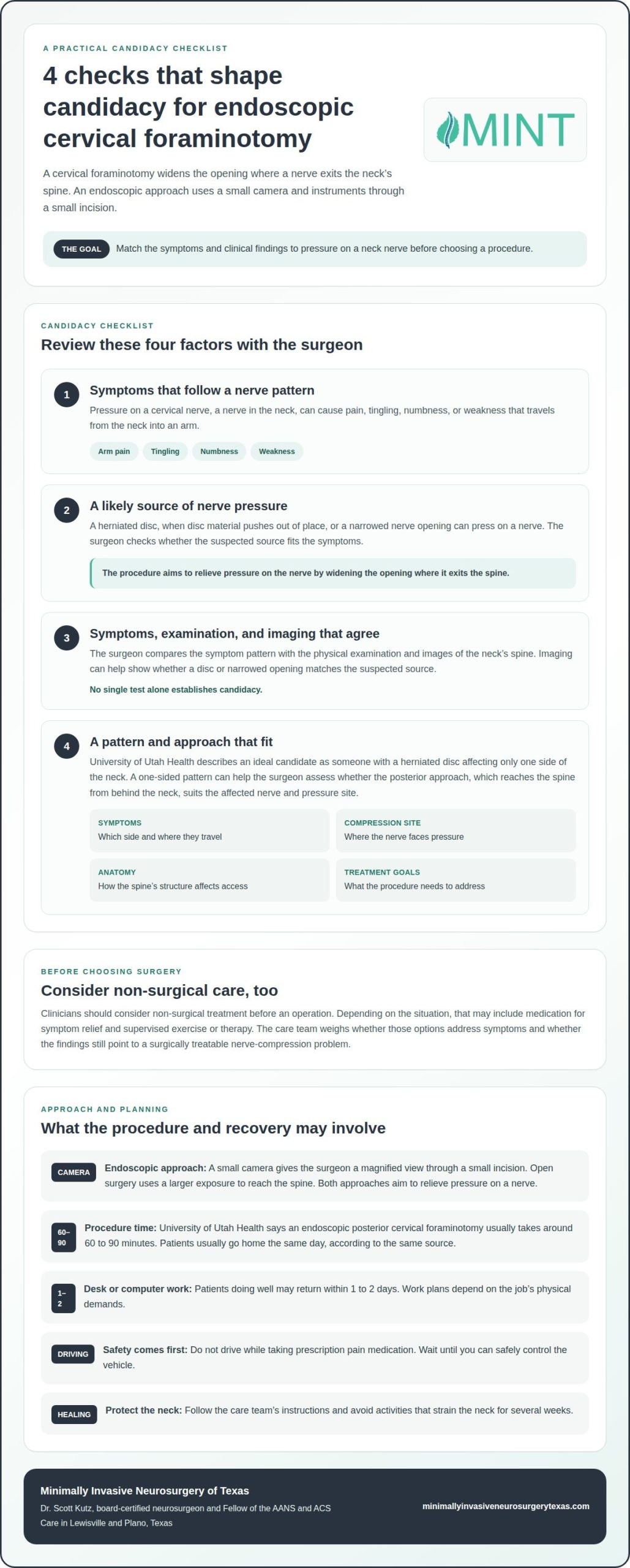
The procedure addresses pressure on a cervical nerve, which a herniated disc or a narrowed nerve opening can cause. Compression can cause pain, tingling, numbness, or weakness that travels from the neck into an arm. Before recommending treatment, the surgeon relates these symptoms to examination findings and imaging.
After surgery, follow instructions to protect the neck while it heals. Avoid activities that strain the neck for several weeks, and do not drive after taking prescription pain medication.
Endoscopic and Open Surgery
Endoscopic surgery uses a camera to show the treatment area through a small incision. Open surgery uses a larger exposure to reach the spine directly. Both approaches aim to relieve pressure on a nerve. The surgeon weighs the compression site, anatomy, and treatment goals when choosing an approach.
University of Utah Health says an endoscopic posterior cervical foraminotomy usually takes around 60-90 minutes. Patients usually go home the same day, according to University of Utah Health.
Recovery and work plans depend on the job’s physical demands. Patients doing well may return to low-impact desk or computer work within 1-2 days. Driving must wait until the patient no longer takes prescription pain medication and can safely control the vehicle.
For a procedure in the Plano area, discuss the planned hospital or surgery center as part of the surgical plan. To assess a surgeon’s qualifications, review board certification and neurosurgical training, then ask about direct experience with endoscopic cervical procedures. Dr. Scott Kutz is a board-certified neurosurgeon and Fellow of the AANS and ACS.
After surgery, follow the care team’s instructions and report concerns through the recommended follow-up process. These steps help the team monitor recovery and address questions as they arise.
Candidate criteria
A surgeon considers endoscopic posterior cervical foraminotomy when symptoms, examination findings, and imaging point to pressure on a cervical nerve. The goal is to match treatment to the source of nerve irritation.
University of Utah Health describes an ideal candidate as someone with a herniated disc affecting only one side of the neck. For a Plano TX endoscopic posterior cervical foraminotomy, this one-sided pattern can help the surgeon assess whether the posterior approach suits the affected nerve and compression site. The surgeon also checks whether symptoms, such as arm pain or tingling, match examination and imaging findings.
Before surgery, the diagnostic process connects symptoms and physical examination findings with images of the cervical spine. Imaging can show whether a disc or narrowed nerve opening matches the suspected source. The surgeon selects tests according to the clinical question and findings, since no single test alone establishes candidacy.
Clinicians should consider non-surgical treatment before a patient proceeds to an operation. Depending on the situation, clinicians may discuss medication for symptom relief and supervised exercise or therapy. The key question is whether these approaches adequately address symptoms and whether examination and imaging still point to a surgically treatable nerve-compression problem.
A surgeon also weighs the symptom pattern, affected side, compression site, and patient’s goals. For example, a clear match between one-sided arm symptoms and imaging of the corresponding nerve may support further discussion. If symptoms do not align with imaging, careful assessment is important before selecting an operation.
There is no single imaging checklist for every patient. The surgeon selects diagnostic tests based on the history, examination, and images needed to understand suspected compression. For a Plano TX endoscopic posterior cervical foraminotomy, ask how each finding supports the proposed procedure, what alternatives remain, and how potential benefits relate to your symptoms. This discussion clarifies whether the anatomy and clinical picture support an endoscopic approach.
Candidacy involves more than neck pain or an abnormal scan. The decision rests on a consistent connection among symptoms, examination findings, and nerve pressure, along with consideration of non-surgical care. This focused assessment helps determine whether surgery addresses the underlying problem.
There is no fixed set of imaging or diagnostic tests that the surgeon must order for every patient. The surgeon chooses tests based on the history and examination, using cervical spine images to assess whether a disc or narrowed nerve opening corresponds to the symptoms and suspected nerve compression.
Complications and risks
Endoscopic posterior cervical foraminotomy aims to relieve pressure on a cervical nerve, but surgery carries risks. Possible complications include infection, bleeding, nerve injury, and a reaction to anesthesia. A dural tear, an opening in the membrane around the spinal cord, can also occur. The endoscope provides a camera view, but it does not eliminate these risks.
Some patients continue to have neck or arm symptoms after surgery. The surgeon may not fully relieve nerve pressure, or the original symptoms may have another cause. Symptoms can also return if the treated area changes or continues to irritate the nerve. Reviewing how examination findings, imaging, and symptoms fit together helps clarify the purpose and limits of the operation.
Nerve injury deserves careful discussion because cervical nerves carry signals between the neck, arms, and hands. A change in nerve function can affect sensation, strength, or pain. Ask how the surgeon protects the nerve during the procedure and which symptoms require follow-up. The surgeon can explain risks based on the treatment area and your anatomy.
Infection and bleeding are surgical risks involving the incision and treatment area. Understand how the care team monitors healing and what instructions apply after the operation. Anesthesia also carries risks, which the anesthesia team assesses alongside your health history and medications. Sharing that history helps the team plan the procedure.
Spinal stability is another consideration. Removing bone to enlarge a nerve opening changes the treated area, so the surgeon plans the amount and location of bone removal carefully. Ask how the proposed technique addresses compression while preserving nearby structures. The discussion can also cover alternatives, expected symptom relief, and what may happen if the procedure does not resolve the original problem.
Before consenting, review the specific risks, potential benefits, and recovery instructions with the surgical team. Clarify how the team will respond to concerns after surgery and which changes in symptoms need prompt attention. A clear plan helps you understand the trade-offs involved in treating nerve compression with cervical foraminotomy.
Endoscopic posterior cervical foraminotomy technique
The surgeon approaches the cervical spine from the back of the neck. An endoscope, a narrow camera, provides a magnified view through a small incision. University of Utah Health describes an incision about 7 millimeters wide for this procedure. The surgeon uses that view to reach the nerve opening and address the compression.
The main procedural steps follow a focused sequence:
- The surgical team positions the patient for access to the back of the neck and prepares the treatment area.
- The surgeon makes a small incision and guides the endoscope toward the affected nerve opening.
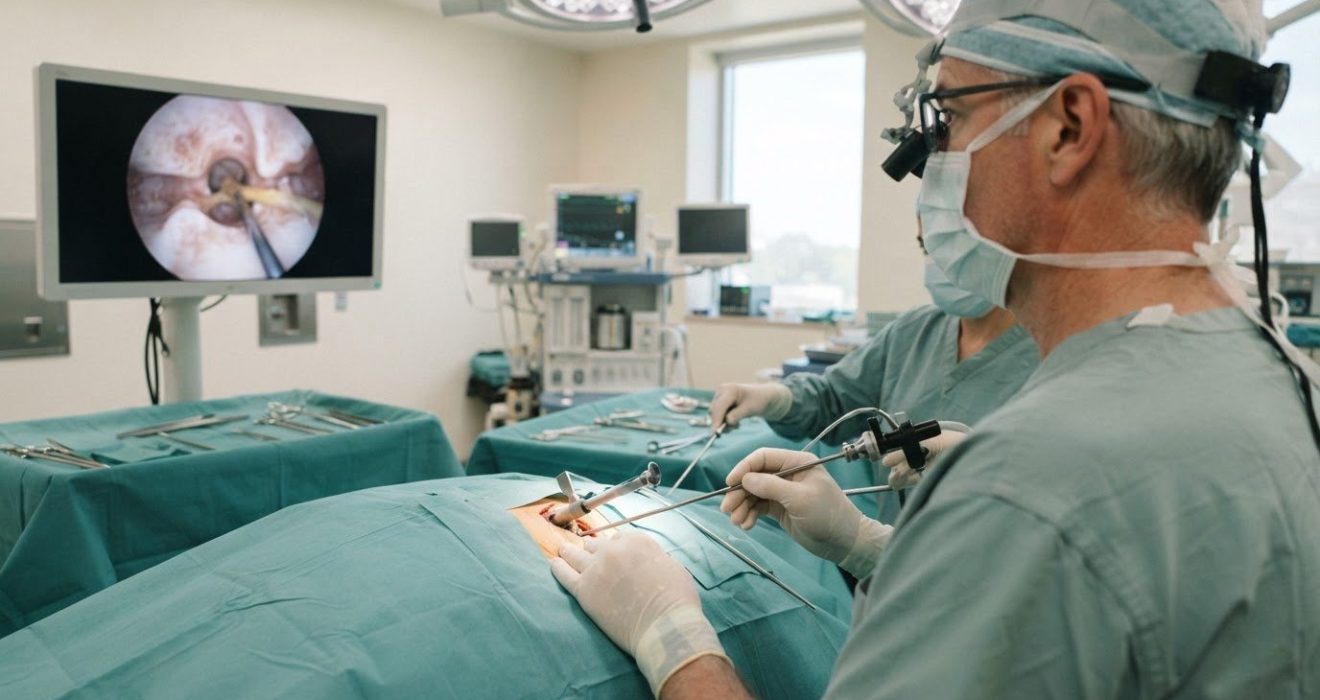
- The endoscope sends images to a monitor, helping the surgeon see the bone and tissue around the nerve.
- The surgeon enlarges the foramen, the opening where the nerve exits, by removing the material that presses on it.
- The surgeon checks the nerve opening and closes the incision after completing the decompression.
The central goal is decompression, or reducing pressure on the nerve. The posterior route approaches the spine from behind, rather than through the front of the neck, and directs the surgeon’s work toward the affected opening. This focused access differs from procedures that treat other spinal levels or require a different route.
The endoscope helps the surgeon view the operative area through a small access point. A smaller incision describes the entry site, not the full extent of treatment. The surgeon still works carefully around cervical nerves and nearby structures. The location and cause of compression guide the specific work performed.
The planned technique should connect directly to the imaging findings and symptoms. A clear explanation identifies which nerve opening needs treatment, what the endoscope helps the surgeon see, and what tissue the surgeon may need to remove. These details make the procedure easier to understand and distinguish it from a general description of neck surgery.
Which surgeons in Plano, TX perform endoscopic posterior cervical foraminotomy?
Dr. Scott Kutz performs this procedure in Plano. He is a board-certified neurosurgeon and Fellow of the AANS and ACS. His credentials reflect his neurosurgical training, while a focused discussion can clarify how his experience applies to endoscopic cervical procedures.
Relevant experience for this operation includes evaluating cervical nerve compression and planning an endoscopic approach from the back of the neck. Ask how the surgeon connects your symptoms with imaging, identifies the affected nerve opening, and explains the planned decompression. These details show how the surgeon approaches your diagnosis rather than describing endoscopic surgery only in general terms.
Credentials and procedure-specific experience answer different questions. Board certification and professional fellowship describe training and qualifications. Experience with endoscopic cervical surgery relates more directly to the technique the surgeon is considering. A useful consultation explains both and connects the surgical plan to your examination and imaging findings.
During a consultation, discuss these points with the surgeon:
- Which cervical nerve opening appears compressed, and what imaging supports that conclusion?
- How does the proposed endoscopic route address the source of pressure?
- What risks, alternatives, and recovery considerations apply to your planned procedure?
- How will the surgeon assess whether your symptoms match the imaging findings?
Clear answers help you understand the reasoning behind the operation. For example, the surgeon should explain how a finding on your cervical images relates to arm pain, numbness, or weakness. The explanation should also identify the treatment goal and what the procedure cannot address.
Plano patients can distinguish general neurosurgical credentials from a direct discussion of the specific technique. Dr. Kutz’s board certification and AANS and ACS fellowships provide information about his professional qualifications. The consultation then connects those credentials with the anatomy, symptoms, and surgical plan relevant to endoscopic posterior cervical foraminotomy.
Postoperative planning is another part of the discussion. The surgeon or care team begins postoperative follow-up with a phone call or text message 1-2 days after surgery. Patients can use that contact to raise questions about the instructions and confirm how to follow them. The postoperative instructions state that a brace is unnecessary in most cases after surgery, so patients can ask whether that guidance applies to their situation and what to do if they are unsure.
Incision care guidance also matters: patients are advised to leave incision skin tapes on for 5-10 days or until they fall off, whichever comes sooner. The instructions advise patients not to use heat after surgery because it can worsen inflammation and swelling. Keeping these directions clear can help patients understand their care plan and know what questions to bring to postoperative follow-up.
Minimally Invasive Neurosurgery of Texas: Endoscopic Spine Surgery
Minimally Invasive Neurosurgery of Texas provides endoscopic spine surgery for patients in Plano and Lewisville, Texas. Dr. Scott Kutz, a board-certified neurosurgeon and Fellow of the AANS and ACS, leads care. The practice’s spinal care in Plano and Lewisville focuses on helping patients understand their diagnosis and available treatment options.
Endoscopic Spine Surgery (ESS) uses a camera and specialized instruments to reach a treatment area through a small incision. For cervical foraminotomy, the surgeon enlarges the opening where a nerve exits the cervical spine. The goal is to address pressure on that nerve. The approach depends on the condition and the plan the surgeon develops for each patient.
A consultation can clarify whether surgery fits the problem. Discuss the proposed operation, its purpose, possible risks, and alternatives. The conversation is also an opportunity to consider how treatment aligns with your goals and daily activities. Clear, patient-centered discussion supports informed decisions without assuming one technique suits every diagnosis.
The practice’s spine surgery offerings include:
- Endoscopic spine surgery for selected spinal conditions.
- Minimally invasive spine surgery using specialized surgical techniques.
- Artificial Disc Replacement, which replaces a damaged spinal disc with an artificial one.
For patients considering cervical surgery, a clinical discussion can explain how the proposed procedure relates to their condition and treatment goals. Dr. Kutz can review the surgical plan and discuss what the operation aims to address. You can also raise questions about alternatives and recovery instructions before deciding how to proceed.
Patients in Plano or Lewisville with questions about endoscopic treatment can contact Minimally Invasive Neurosurgery of Texas to discuss their care.
Frequently Asked Questions
What Medications Does the Care Team Prescribe After Surgery?
Postoperative prescriptions include a steroid dose pack, pain medication, and a 2-day course of antibiotics. Follow each prescription’s directions and keep an accurate list of medicines you already take. If a medication causes a concern or you have an allergy, tell the care team promptly. Don’t change or stop a prescribed medicine without instructions from the prescribing clinician.
Who is a candidate for endoscopic posterior cervical foraminotomy, and what are the eligibility criteria?
Eligibility depends on whether the proposed operation fits the diagnosis, overall health, and treatment goals. The surgeon considers whether the patient can safely undergo the planned procedure and understands its limits and alternatives. Bring a current medication list and relevant medical history to the evaluation. These details help the care team discuss individual considerations that imaging alone cannot capture.
How is endoscopic posterior cervical foraminotomy performed, and how long does it take?
The surgeon performs the operation with endoscopic visualization, treating the targeted nerve opening from behind the neck. The length of the operation depends on the treatment plan and the anatomy involved. Ask how the planned scope of treatment affects the time estimate for your case. The surgical team can explain what to expect before the procedure and during immediate recovery.
What are the risks, complications, and success rates of endoscopic posterior cervical foraminotomy?
A universal success rate cannot predict an individual patient’s result. Outcomes depend on the diagnosis, treatment target, and how clinicians define success. Ask the surgeon how progress is assessed, including changes in the symptoms that prompted treatment and your ability to manage daily activities. Discuss the risks that apply to your health and planned procedure before deciding.
How does endoscopic posterior cervical foraminotomy compare with ACDF, open foraminotomy, and other treatments?
These treatments address spinal problems through different operative plans, and they don’t suit every diagnosis equally. ACDF means anterior cervical discectomy and fusion, a distinct procedure that includes fusion. Other options may involve a different surgical route or non-surgical care. Ask which option addresses the specific problem your evaluation identified and how its trade-offs relate to your treatment goals.