
What should you do when back pain continues despite following a physical therapy plan? Persistent symptoms don’t automatically mean you need surgery. Minimally Invasive Neurosurgery of Texas (MINT), led by Dr. Scott Kutz, provides specialized spine care in Lewisville and Plano, Texas. Dr. Kutz is a board-certified neurosurgeon and Fellow of the AANS and ACS.
It’s frustrating when exercises and consistent effort don’t restore your comfort or mobility. Physical therapy can improve strength and function, but it may not address every source of pain, such as a herniated disc or narrowing around spinal nerves.
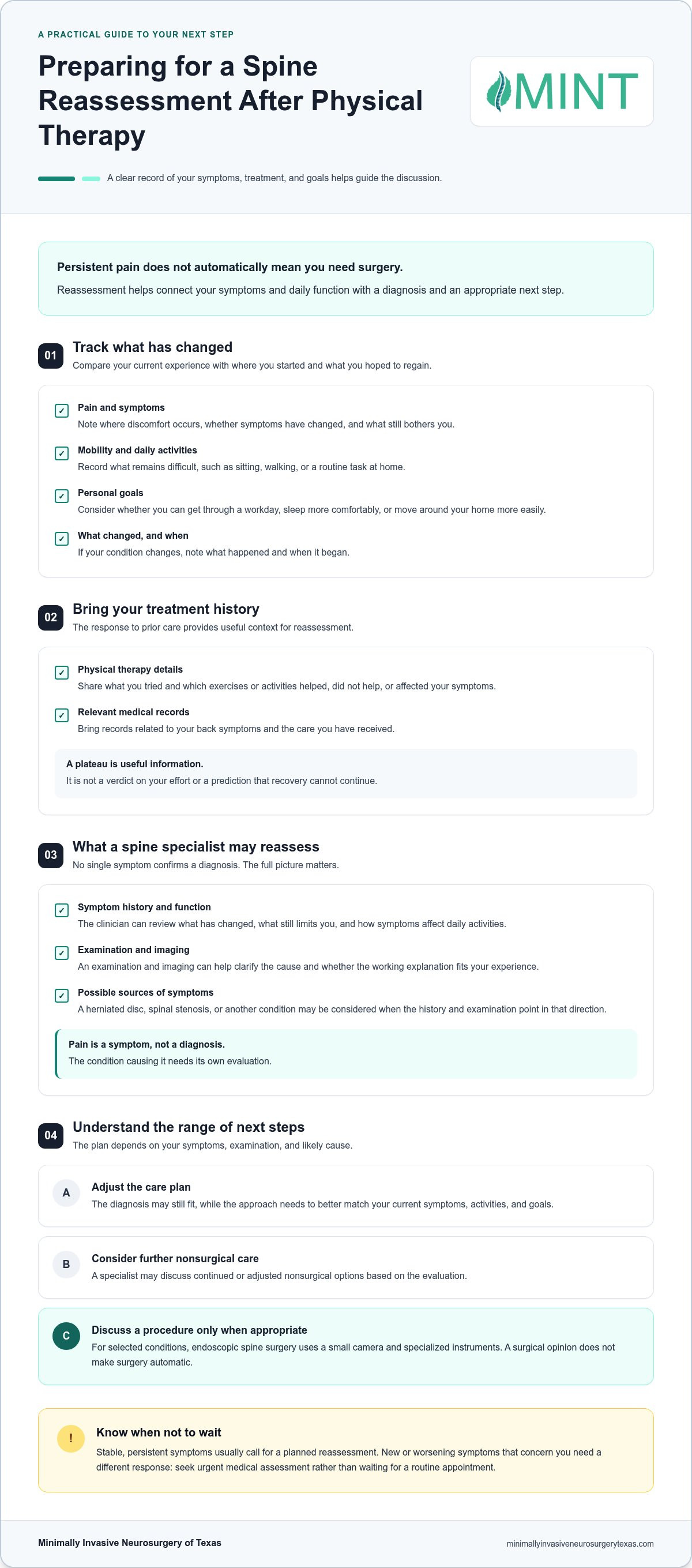
This guide explains what to do when physical therapy for back pain fails, why symptoms may persist, and what a specialist may reassess. You’ll learn what records and symptom details to bring to an appointment, how imaging and an examination can help clarify the cause, and how a specialist weighs appropriate next steps. Those may include further nonsurgical care or, for selected conditions, a procedure such as endoscopic spine surgery, which uses a small camera and specialized instruments. The goal is a clear diagnosis and an evidence-based plan, not an automatic leap to surgery.
Key Takeaways
- Ongoing pain after therapy can mean the diagnosis or treatment plan needs reassessment, not that therapy was pointless.
- Track changes in your pain, mobility, and daily activities to help explain what has and hasn’t improved.
- Bring prior therapy details and relevant medical records to a spine reassessment, where symptoms and examination findings guide next steps.
- Knowing what to do when physical therapy for back pain fails starts with clarifying the likely cause and discussing options that fit your situation.
- A surgical opinion helps determine whether a procedure may suit your diagnosis and goals. It does not mean surgery is automatic.
When Physical Therapy for Back Pain Has Not Helped, What Does That Mean?
Minimally Invasive Neurosurgery of Texas (MINT), led by Dr. Scott Kutz, a board-certified neurosurgeon and Fellow of the AANS and ACS, provides specialized spine care in Lewisville and Plano, Texas.
If you’re wondering what to do when physical therapy for back pain fails, start by reframing the word “fails.” Ongoing pain or difficulty with daily activities doesn’t prove that you or your therapist did something wrong. It means your progress, symptoms, and care plan may need another look. Pain can have different sources, and improving strength or movement may not address every one. Persistent symptoms also don’t automatically mean you need surgery.
Reassessment can help connect your current symptoms and function with the next appropriate step. A spine specialist can review what has changed, what still limits you, and whether the working explanation for your pain fits your experience. That review may clarify whether to adjust the plan or consider other options. Procedures such as endoscopic spine surgery apply only to selected conditions, not to every person whose pain continues.
What counts as a meaningful lack of progress?
Progress looks different for each person. You might still have pain, find that sitting or walking remains difficult, or struggle with a routine task that you hoped to resume. Symptoms may also change without improving in a way that matters to you. Compare your current function with your starting point and personal goals, such as getting through a workday, sleeping more comfortably, or moving around your home with less difficulty.
There’s no single therapy duration that defines a lack of progress for everyone. Consider whether you see changes in pain, mobility, or confidence with movement, and share those observations with your clinician. A plateau is useful information, not a verdict on your effort or a prediction that recovery cannot continue.
When should back pain receive prompt medical attention?
Persistent symptoms that remain stable usually call for a planned reassessment. New or worsening symptoms that concern you need a different response: seek urgent medical assessment rather than waiting for a routine appointment. A qualified clinician can help determine how quickly you need care based on the symptoms and your health history.
For general background on the range of causes and types of back pain, see this overview. It can provide context, but it can’t identify the cause of your symptoms or replace an individual clinical evaluation. If your condition changes, note what changed and when, and tell the clinician assessing you.
Why Back Pain Can Continue After Physical Therapy
Physical therapy focuses on movement, strength, and function, but its effect depends partly on the cause of your pain and how well the treatment plan fits your symptoms and goals. A plan that helps one person may not address another person’s main pain source. That’s one reason what to do when physical therapy for back pain fails often starts with understanding whether the diagnosis and care plan still make sense.
Pain is a symptom, not a diagnosis; the condition causing it needs its own evaluation. For example, radiculopathy means irritation or compression of a spinal nerve. It can cause pain, tingling, numbness, or weakness that travels from the back into a leg. These symptoms can help guide an evaluation, but they don’t prove a specific cause on their own.
A herniated disc occurs when material inside a spinal disc pushes through its outer layer. Spinal stenosis means narrowing in spaces around the spinal canal or nerves. Either condition can contribute to symptoms for some people, but neither explains every case of ongoing back pain. Pain may also involve more than one source, so a clinician considers the full pattern rather than drawing conclusions from one symptom.
Could the diagnosis or pain source need another look?
A clinician can compare your symptom history with your daily function and response to prior treatment. They may consider whether a herniated disc, spinal stenosis, or another condition fits the overall picture. Sacroiliac joint disorders, which affect the joints connecting the base of the spine to the pelvis, may also contribute when the examination and history point in that direction.
No single symptom confirms a diagnosis. A careful review helps distinguish possibilities and determine whether further evaluation makes sense.
Could the therapy plan need adjustment?
Sometimes the working diagnosis remains appropriate, but the plan needs to better match your current needs. A clinician may review which activities still cause difficulty, which movements feel easier, and how symptoms respond to the exercises or other care you’ve tried. These details help shape a useful discussion about the next step.
New, persistent, or changing symptoms can all inform that review. An incomplete response doesn’t mean you lacked effort or that your physical therapist did something wrong. It may show that your condition needs a closer look or that the approach should change.
Keep track of what has changed since treatment began, including where discomfort occurs and which daily activities remain difficult. Share that information during a spine evaluation so the clinician can connect your experience with the examination and your treatment history. A more precise understanding of the likely pain source can help clarify which options fit your situation, without assuming that every persistent symptom calls for surgery.
What Happens During a Spine Reassessment After Physical Therapy?
A spine reassessment helps connect your current symptoms, daily function, and treatment history with a clearer plan. If you’re considering what to do when physical therapy for back pain fails, expect a conversation and clinical evaluation, not an automatic recommendation for surgery. The specialist uses what you share and what the examination shows to decide whether further evaluation may help.
A typical reassessment may include these steps:
- Review your symptoms. Explain when the pain began, where you feel it, whether it travels, and what makes it better or worse. Describe how it affects activities such as sitting, walking, working, or sleeping.
- Discuss prior care. Share the physical therapy approaches you tried, your goals, and what changed during or after treatment. Include medications you take and whether they affected your symptoms.
- Complete an examination. The clinician may assess movement, strength, sensation, and other findings relevant to your symptoms. These observations help the specialist understand how your condition affects function.
- Consider further evaluation. The clinician may recommend imaging, which uses tests such as an MRI or X-ray to create pictures of structures inside the body, when your history and examination support that step. Not everyone needs a new scan.
What information should you bring?
Prepare a brief timeline: when symptoms started, how they have changed, and where discomfort travels. Note which daily tasks feel limited and what you hope to do more comfortably. Bring available imaging reports, relevant medical records, and a list of medications with how you take them.
Summarize the therapy plan, including exercises or other approaches you tried, how consistently you could follow them, and what helped or aggravated symptoms. This isn’t a test of your effort. It gives the clinician practical context for understanding your response and discussing whether the plan needs adjustment.
How does a specialist connect findings to options?
The specialist considers your symptom history, examination findings, and relevant imaging together. A scan can show anatomical changes, but it can’t explain by itself whether a finding causes your pain. The clinician checks whether the location and nature of those changes fit your symptoms and functional limitations before discussing possible next steps.
You can ask how each proposed option relates to the working diagnosis and what the examination suggests. A consultation supports informed choices. It doesn’t commit you to surgery. The goal is to understand the reasoning behind the plan, including whether the clinician recommends monitoring, further evaluation, or discussing a procedure. For general context, compare your questions with the article’s earlier overview of back pain conditions, while relying on your clinician to interpret your individual findings.
What Can You Do Next if Physical Therapy Has Not Relieved Back Pain?
If you’re deciding what to do when physical therapy for back pain fails, use the next appointment to turn your experience into a practical plan. A clinician can reassess your symptoms and discuss whether to adjust care, continue non-surgical treatment, or consider a procedure. The right direction depends on the diagnosis, examination findings, and goals that matter to you.
- Document what has changed. Note your current symptoms, what makes them better or worse, and which daily activities remain difficult. Include changes you noticed during therapy and afterward.
- Arrange a reassessment. Share your symptom summary and any previous evaluation so the clinician can consider your history alongside your current concerns.
- Bring relevant records. Gather available imaging reports, medication details, and a concise summary of the therapy approaches you tried and your response.
- Discuss your goals and questions. Explain what you hope to do more comfortably, then ask how each proposed option fits the working diagnosis and examination findings.
How can you prepare for a useful appointment?
Keep your notes brief and specific. Instead of writing only “back pain,” describe a limitation, such as difficulty standing long enough to prepare a meal or sitting through a work task. Add when the symptoms began, how they have changed, and what treatment you have already tried. Bring records you have, but don’t delay an appointment just because you can’t collect every document beforehand.
Prepare questions about the diagnosis, reasonable alternatives, possible benefits, and relevant risks. Ask what the clinician hopes each option will improve, and how you’ll know whether the plan is helping. Clear goals make it easier to compare the proposed approach with the activities you want to return to.
What questions can clarify your treatment choices?
Start with the reasoning: “What findings support this explanation for my pain?” Then ask which options fit the assessment and whether the clinician recommends further evaluation first. If a procedure comes up, ask how it addresses the suspected source of symptoms, what benefits the clinician expects, and what risks apply to your circumstances. You can also ask how the care team will measure progress toward your functional goals.
For some people, the discussion may focus on continued or adjusted non-surgical care. For others, a procedure may warrant consideration if the evaluation identifies a relevant condition and findings support that option. Minimally invasive techniques describe procedures that use smaller incisions and specialized approaches, but they don’t suit every diagnosis. This overview of minimally invasive spine techniques can help you understand procedural approaches to discuss with your specialist.
A thoughtful reassessment helps you understand why a next step may fit, what alternatives exist, and how the plan connects to daily function. Discuss your next steps with the MINT team.
When a Spine Surgery Opinion May Be Worth Discussing
A spine surgery opinion can help clarify whether a procedure fits your diagnosis and goals. It doesn’t mean a surgeon recommends surgery for every patient or that you must choose an operation. A specialist may consider surgery if symptoms continue to limit daily life and the clinical evaluation points to a condition that a procedure could address. Other patients may have a suitable non-surgical path.
The decision draws on your diagnosis, symptoms, examination findings, imaging when appropriate, and personal goals. A scan alone doesn’t determine whether surgery makes sense. The specialist looks for agreement between the images, your symptoms, and the examination, then explains how possible options relate to those findings.
What does an endoscopic spine surgery discussion involve?
Endoscopic spine surgery is a minimally invasive procedure that uses an endoscope, a small viewing instrument, to help the surgeon see the treatment area. Whether this approach fits depends on the diagnosed condition and clinical assessment. It isn’t a default next step after physical therapy, and a discussion doesn’t promise a particular result.
If the specialist raises this option, ask what problem the procedure would address and how the findings support it. You can review the practice’s information about endoscopic spine surgery as background for that conversation.
How can a specialist help you make an informed decision?
Dr. Scott Kutz is a board-certified neurosurgeon who specializes in spinal disorders. During an evaluation, he can discuss how your symptoms, examination, relevant imaging, prior care, and personal goals inform the available options. A clear conversation should explain the reasoning behind a recommendation, potential benefits and risks relevant to your case, and whether non-surgical care remains appropriate.
MINT’s specialized spine care in Lewisville and Plano, Texas, centers on explaining diagnoses and treatment choices. A specialist discussion can help you understand whether further evaluation, continued non-surgical care, or a procedure deserves consideration. You can ask questions and weigh options without treating surgery as inevitable.
Contact MINT to discuss a spine evaluation.
Move Forward With a Clearer Plan
Persistent back pain can make it tempting to keep pushing through the same routine or assume surgery must come next. You have another option: use your experience and clinical findings to guide a thoughtful conversation about what fits your needs. If you’re weighing what to do when physical therapy for back pain fails, focus on the daily activities you want to regain and the questions that will help you understand your choices.
A spine evaluation can help you discuss whether your diagnosis explains your symptoms, what options make sense, and how each option relates to your goals. Dr. Scott C. Kutz is board-certified by the American Board of Neurological Surgery and has more than 20 years of experience treating spinal disorders. MINT provides patient-centered spine care in Lewisville and Plano, Texas, with time devoted to explaining diagnoses and treatment options.
You deserve a plan grounded in your individual evaluation, not assumptions about what comes next. Contact MINT to discuss your next steps and move toward a more informed path forward.
Frequently Asked Questions
How long should I try physical therapy before reassessing back pain?
Follow the review points your clinician sets for your treatment plan rather than relying on a universal number of weeks. At each check-in, note whether you can do more, less, or the same amount of a specific activity, such as walking around the block or getting dressed. If your progress stalls or your symptoms change before the planned review, tell your care team so they can advise you on timing.
Can physical therapy make back pain worse?
Some exercises may cause temporary discomfort, but you shouldn’t assume every increase in pain is an expected response. Record which activity triggered it, how the discomfort felt, and whether it eased after you stopped. Share those details with your physical therapist or clinician before your next session. If symptoms feel severe or concerning, seek medical guidance instead of trying to push through or diagnose the cause yourself.
Does back pain after physical therapy mean I need surgery?
No. Pain after physical therapy alone doesn’t establish that surgery is appropriate. A surgical consultation can help you understand whether a procedure has a clear role, but you can use the discussion to learn about alternatives and decide what questions remain. If you’re considering what to do when physical therapy for back pain fails, ask what would need to be true for surgery to help and what other paths may fit your situation.
What happens if imaging shows a herniated disc?
Ask the clinician to review the actual images with you and explain which details matter for your symptoms. A herniated disc describes a change in the disc, but the finding alone doesn’t tell you what treatment you need. You can ask whether the location matches your symptoms, whether the images are recent enough for the current evaluation, and whether the finding changes the care plan.
Should I keep doing my physical therapy exercises if my back still hurts?
Follow the instructions your physical therapist gave you, and don’t add repetitions or new movements on your own to try to speed progress. Keep a brief exercise log with the movement, repetitions, and how you felt afterward. That record can help your therapist decide whether you should continue the routine as written or get individualized guidance before your next session.
Can I get a second opinion about back pain that has not improved?
Yes. You can seek another clinical perspective if you want more clarity about a diagnosis or proposed plan. To make that visit useful, bring a concise medication list, prior visit notes, imaging reports, and your own written questions. You might ask what the clinician agrees or disagrees with and what additional information, if any, would help you make a decision.
When should I seek urgent care for back pain?
Seek urgent medical attention if your symptoms change suddenly, worsen quickly, or feel alarming, rather than waiting for a routine appointment. A qualified clinician can assess what’s happening and advise how quickly you need care. If you believe you face an immediate medical emergency, contact emergency services. For symptoms that persist without an urgent change, arrange a timely clinical review and describe what has changed.