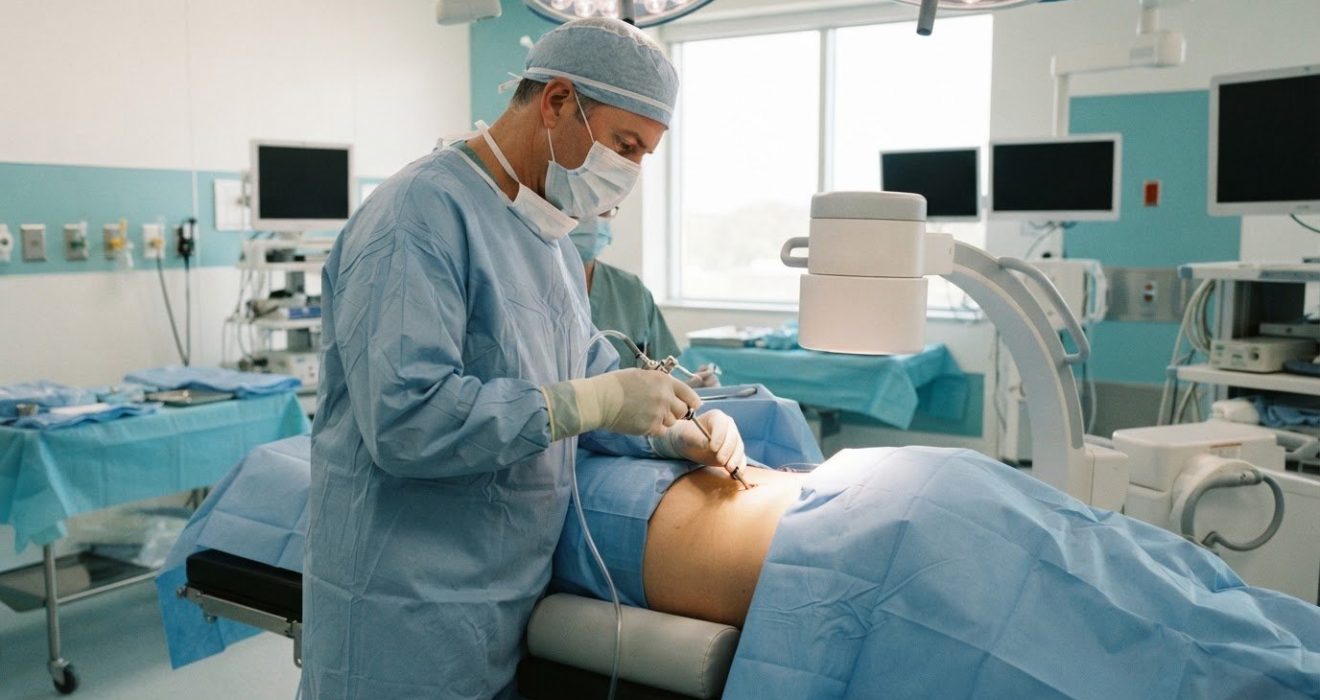
Minimally Invasive Neurosurgery of Texas provides spine surgery in Lewisville and Plano, TX. Board-certified neurosurgeon and Fellow of the AANS and ACS Dr. Scott Kutz leads the practice, which focuses on minimally invasive spinal care, including endoscopic spine surgery.
Sciatica, pain that travels along the sciatic nerve from the lower back into the leg, does not automatically mean surgery. For patients considering Lewisville, TX spine surgery for sciatica relief, Dr. Kutz evaluates whether symptoms and clinical findings point to a spinal cause that surgery can address.
Learn when to consult a pain management doctor or spine surgeon, how sciatica is assessed, and how procedures may relieve pressure on a nerve. Understanding the diagnosis can help you decide on a next step toward returning to normal activity.
Key Takeaways
- Know when back pain or sciatica calls for a pain specialist, a spine surgeon, or emergency care.
- Recognize how persistent lower back pain and radiating leg symptoms can guide the next step in care.
- Understand how a discectomy can address nerve pressure from a herniated disk.
- Learn how spinal decompression and nerve root blocks may fit into care for sciatica.
- Explore how minimally invasive spine surgery may address nerve compression while supporting a return to normal activity.
Should I see a pain management doctor or a spine surgeon for back pain?
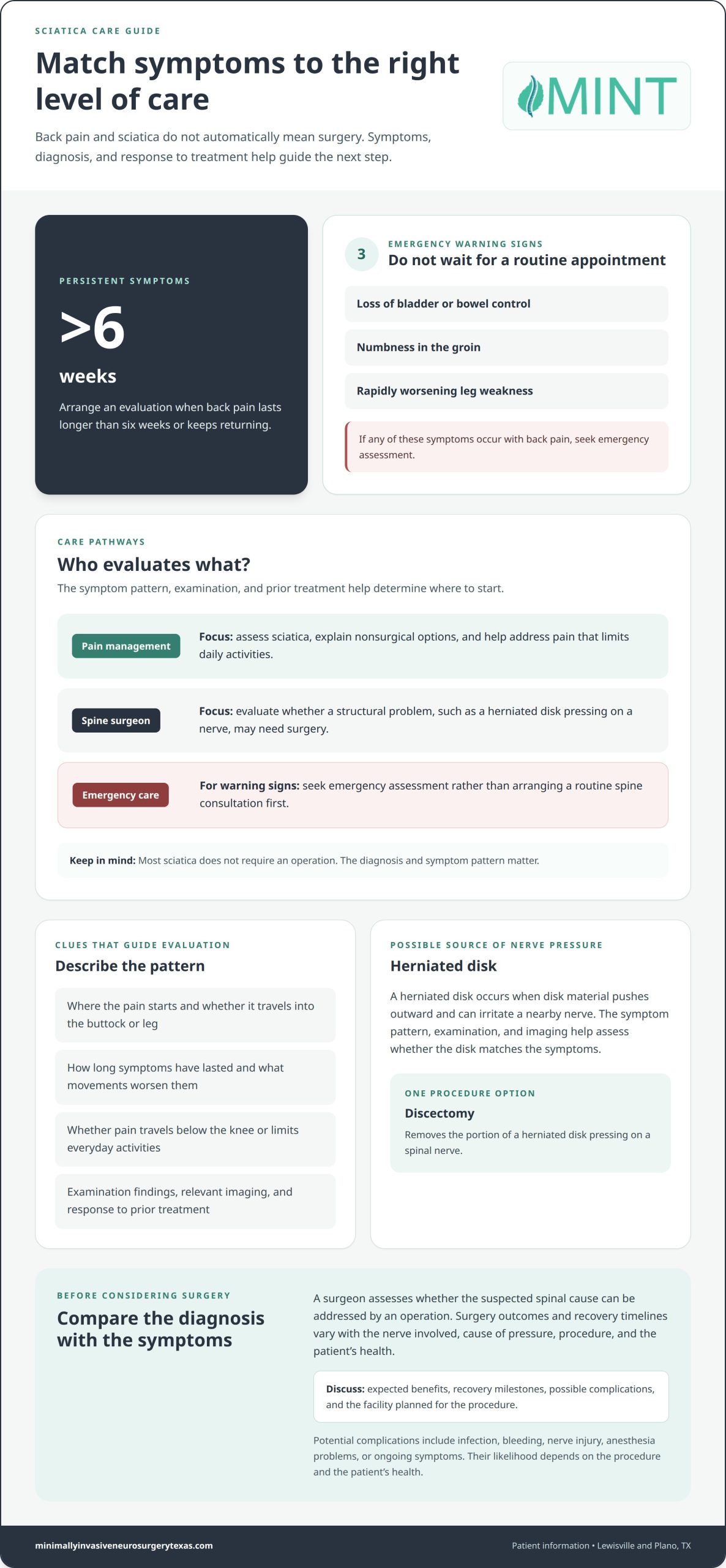
Choose care based on your symptoms, diagnosis, and response to treatment. Most people manage sciatica, which causes pain that travels along the path of a nerve from the lower back into the leg, without surgery, while certain warning signs require emergency care.
Symptoms Requiring Immediate Care
Go to an emergency room if you have back pain and lose bladder or bowel control, feel numbness in the groin, or develop rapidly worsening leg weakness. These symptoms can signal serious pressure on nerves that control movement or bladder and bowel function. Do not wait for a routine appointment if they appear.
Medical City Lewisville Hospital stands at 500 West Main Street, Lewisville, Texas 75057. Seek emergency assessment for these warning signs rather than arranging a routine spine consultation first.
Spine Specialists and Local Care
A pain management doctor can assess sciatica, explain nonsurgical options, and help address pain that limits daily activities. A spine surgeon evaluates whether a structural problem, such as a herniated disk pressing on a nerve, may need surgery. Most sciatica does not require an operation, so the diagnosis and symptom pattern matter.
In Lewisville and across North Texas, patients may also seek orthopedic care. An orthopedic specialist focuses on bones, joints, and related structures; a spine specialist evaluates conditions affecting the spine and nearby nerves. Symptoms, examination findings, and prior treatment help determine where to start.
Medical City Lewisville Hospital provides a named local hospital option at 500 West Main Street. That location alone does not identify where a particular spine operation takes place. During surgical planning, the patient and surgeon can discuss the facility for the proposed procedure, including whether it will take place at a hospital or surgery center. For example, endoscopic spine surgery describes a procedure, not a specific facility.
Surgery Outcomes and Risks
There is no single success rate or recovery timeline for every sciatica operation. The nerve involved, cause of pressure, procedure, and patient’s health all shape expected pain relief and return to activity. The surgeon should explain likely benefits and recovery milestones for the proposed operation.
Potential complications include infection, bleeding, nerve injury, anesthesia problems, or ongoing symptoms. Their likelihood depends on the procedure and the patient’s health. The surgical team can explain how it reduces risks and responds to complications.
Insurance coverage depends on the patient’s plan, diagnosis, and proposed procedure. Review the policy’s benefits and approval requirements for that operation. Coverage varies, and no plan covers every spine surgery in every case.
Chronic Low Back Pain, Sciatica, and Symptom Relief
Chronic low back pain can disrupt walking, sleep, and work, especially when it travels into a leg. The pain’s pattern and duration, along with its effect on movement, help guide diagnosis and treatment.
Pain Patterns and Common Causes
For some patients, low back pain stays near the waist; sciatica travels from the lower back into the buttock or leg. A herniated disk occurs when disk material pushes outward and can irritate a nearby nerve. Spinal narrowing, muscle strain, arthritis, and fractures can also contribute to back symptoms.
Notice whether leg pain follows a consistent path, such as from the buttock down the back of the thigh. A clinician considers that pattern, a physical examination, and relevant imaging to assess the cause. Stretching may be part of a symptom-relief plan, but movements should suit the diagnosis and avoid aggravating symptoms.
When to Consult a Specialist
Arrange an evaluation if back pain lasts longer than six weeks or keeps returning. A back pain specialist can assess persistent pain, limited movement, or leg symptoms that interfere with daily tasks. For example, recurring pain that makes walking or sitting difficult deserves attention, even when symptoms fluctuate.
Bring a clear account of when symptoms began, which movements worsen them, and whether pain travels below the knee. These details help the specialist compare the symptom pattern with examination findings and consider treatment options. A history of fractures or a previous back injury also matters during diagnosis.
Pain Management and Surgical Care
Pain management focuses on controlling symptoms and supporting function through nonsurgical care. A spine surgeon evaluates whether a structural problem, such as pressure on a nerve from a herniated disk, may need surgery. The diagnosis, symptom severity, and response to prior treatment help distinguish these paths. Patients considering Lewisville TX spine surgery for sciatica relief can discuss whether their diagnosed cause is suited to a surgical approach.
An appointment request in Lewisville can begin with your symptoms and relevant prior records. The consultation reviews the pain pattern, examination findings, and available imaging to discuss suitable next steps. For persistent leg pain, a surgeon may consider Lewisville TX spine surgery for sciatica relief when a spinal diagnosis matches the symptoms and surgery can address the source of pressure.
Discectomy for Pressure Caused by a Herniated Disk
A discectomy removes the portion of a herniated disk pressing on a spinal nerve. Spinal nerves carry signals between the spinal cord and the body; pressure can cause pain that travels from the lower back into a leg. Before considering this operation, the surgeon compares your symptoms and examination findings with imaging.
A herniated disk can contribute to spinal stenosis, a narrowing around the spinal canal or nerve openings. The disk can extend into space the nerves need, while other changes can also narrow those passageways. Spinal stenosis can occur in the lower back or neck and can cause leg symptoms or neck pain. The location and cause of narrowing guide the treatment discussion.
Pressure on a nerve can cause radiating pain, tingling, numbness, or weakness. A clinician considers the symptom pattern and its effect on movement when assessing possible nerve involvement. Persistent weakness or sensory changes warrant prompt clinical evaluation because they can affect daily function. Imaging helps determine whether a herniated disk matches the symptoms, rather than treating an incidental finding alone.
Microdiscectomy removes disk material through a smaller surgical opening; laminectomy removes part of the bone covering the spinal canal to create more room. Spinal fusion joins vertebrae to limit movement between them. These procedures address different problems, so the surgeon selects among them based on the diagnosis, nerve pressure, and spinal stability.
For a patient whose sciatica matches pressure from a herniated disk, discectomy targets that pressure directly. It does not treat every cause of leg pain or every case of spinal stenosis. A surgical appointment should clarify which disk level causes symptoms, what the proposed procedure will remove, and how the team will assess recovery. A discussion of minimally invasive spine techniques can explain how surgeons approach spinal conditions while limiting disruption to nearby tissue.
Pain that continues after spine surgery raises a different question from whether a herniated disk is pressing on a nerve. Spinal cord stimulation, a treatment that uses electrical signals to target pain, is one option for persistent pain after spine surgery. You may want to discuss it if pain remains, but that does not mean the original source of symptoms is still present or that the same approach suits every situation. A follow-up discussion can clarify which symptoms remain, whether they resemble the earlier pain, and what the clinician believes may be contributing. This keeps the conversation focused on your current experience, not the operation alone.
The page describes high-frequency spinal cord stimulation systems that operate at 10 kHz. A patient considering this option can ask what the system aims to address in their particular case, how the care team would determine whether it is appropriate, and what outcomes the team would use to assess its value. It is also reasonable to ask how this discussion relates to the earlier diagnosis and the reasons for surgery. These questions do not presume that stimulation will resolve pain or replace evaluation of a possible cause; they help clarify the role the clinician is considering for it. The clinician can explain how the available information about symptoms and prior treatment informs the next step, and what uncertainties remain. Clear expectations can make it easier to compare continued assessment with the treatment options the clinician discusses.
Spinal Decompression to Relieve Pressure on Spinal Nerves
Spinal decompression surgery creates space around an affected spinal nerve or the spinal cord. Physicians consider it when pressure on a nerve in the lower back matches a patient’s symptoms.
Sciatica and Radiating Nerve Pain
Sciatica describes pain that travels from the lower back into the buttock or leg along an irritated nerve. The pain may feel sharp, burning, or electric, and it can occur with tingling or weakness. Its path helps physicians assess which nerve may be involved and whether the cause lies in the lumbar spine.
A nerve root block targets a spinal nerve where it exits the spine. Physicians may use nerve root blocks or transforaminal epidural injections, which deliver medication through an opening in the spine into the space around a spinal nerve, as common treatments for sciatica and herniated disks. These are different from surgery: an injection does not create lasting space around a nerve under pressure.
Lumbar Nerve Compression
Lumbar nerve compression occurs when pressure affects nerves in the lower back. A herniated disk or spinal narrowing can reduce the space around a nerve and trigger pain that radiates into the leg. Spinal decompression addresses the pressure by creating space around the affected area.
The treatment decision depends on whether the identified compression explains the patient’s symptoms. Physicians assess the location of pain, changes in sensation or strength, and medical imaging. For example, leg pain that pressure on a lower-back nerve causes presents a different treatment question from back pain without matching nerve symptoms.
Nerve root blocks can be part of nonsurgical treatment, while decompression surgery directly addresses physical pressure. A physician considers the diagnosis, symptom severity, and response to earlier treatment when comparing these options. A block may also help identify whether a specific nerve contributes to the pain, but it does not replace a full evaluation.
Severe or persistent radiating pain may prompt a closer review of the spine and available treatment options. Decompression does not treat every cause of sciatica, so identifying the cause matters. For example, physicians consider whether a herniated disk, narrowed space, or another spinal issue explains the patient’s symptoms before discussing surgery.
Artificial disc replacement serves a different purpose from decompression. It replaces a damaged spinal disk rather than creating space around a nerve under pressure. Physicians consider the diagnosis and the problem each procedure addresses, helping patients understand why one option may suit their case better than another.
Minimally Invasive Spinal Surgery
Minimally invasive surgery uses focused access to treat a spinal problem a clinician has diagnosed. For sciatica, the key question is whether a procedure can address the nerve pressure causing symptoms.
Minimally Invasive Surgical Approach
Minimally invasive spine surgery uses smaller incisions and specialized instruments to reach the treatment site. For example, endoscopic spine surgery uses a small camera to help the surgeon view the spine during treatment. The approach aims to limit disruption to nearby tissue while treating a specific structural cause, such as a herniated disk pressing on a nerve.
A spine specialist compares the patient’s symptoms with examination and imaging findings. This helps distinguish nerve compression from other causes of leg pain. The surgeon then explains the procedure’s purpose, expected recovery milestones, and potential risks. A focused plan matters because surgery treats a spinal problem the specialist has identified, not every cause of sciatica.
Physical therapy may support recovery by helping patients rebuild movement and strength after surgery. The care team can align activity progression with the procedure and the patient’s function. For example, someone returning to regular walking may follow a different progression from someone whose work requires repeated lifting. The surgeon’s instructions guide that process.
Outcomes involve more than pain scores. Specialists also consider changes in leg symptoms, walking, sleep, and daily activity. A fall or vehicle collision can raise additional concerns about injury, so clinicians include that history when evaluating the spine. These details help shape a treatment plan around the condition clinicians diagnosed and the patient’s goals.
Surgery Options for Sciatica
Lewisville TX spine surgery for sciatica relief may involve options such as discectomy, decompression, or endoscopic spine surgery. A discectomy removes disk material pressing on a nerve, while decompression creates space around compressed nerves. The diagnosis, location of pressure, and match between imaging and symptoms guide the choice of procedure.
For someone considering Lewisville TX spine surgery for sciatica relief, a specialist first determines whether the diagnosis and symptoms point to a spinal cause that surgery can treat. Minimally invasive surgery does not mean every patient needs an operation. The specialist considers the source of sciatica, its effect on daily activities, and prior treatment before recommending an approach.
The practical takeaway is to match the procedure to the source of symptoms. Ask the surgeon which nerve or spinal structure is causing the problem, what the operation is intended to change, and how the team will track recovery. Clear answers help you understand the plan and the steps toward returning to normal activity.
Minimally Invasive Neurosurgery of Texas
Minimally Invasive Neurosurgery of Texas offers patients in Lewisville and Plano an evaluation when sciatica symptoms, examination findings, and imaging point to a spinal cause. The practice assesses whether spine surgery fits the diagnosed problem.
Dr. Scott Kutz, a board-certified neurosurgeon and Fellow of the AANS and ACS, leads the practice’s treatment of spinal conditions. During an evaluation, he considers where pain travels, whether weakness or numbness affects movement, and whether imaging shows matching nerve compression. These details help determine whether surgery may address the cause or whether another treatment path is more appropriate.
The practice offers Minimally Invasive Spine Surgery and minimally invasive neurosurgery. These approaches use targeted techniques to treat spinal problems while limiting disruption to nearby tissue. For a patient whose herniated disk causes leg pain, the clinical discussion can focus on the affected nerve, the procedure’s purpose, and what recovery involves. The diagnosis, not the name of a technique, guides the surgical plan.
Endoscopic Spine Surgery uses a small camera to help the surgeon see the treatment area. Artificial Disc Replacement replaces a damaged spinal disk with an artificial one. These procedures address different spinal conditions, so the surgeon considers the diagnosis and treatment goal before discussing either option. A procedure suited to one spinal problem may not fit another.
Prepare for an evaluation by bringing relevant imaging and a concise history of your symptoms, prior treatment, and changes in daily activity. For example, note whether leg pain limits walking or whether numbness affects a particular area. These details help the surgeon compare your experience with examination findings and explain possible next steps clearly.
If sciatica or leg pain continues to affect daily life, contact Minimally Invasive Neurosurgery of Texas to discuss an evaluation in Lewisville or Plano.
Frequently Asked Questions
Can sciatica be treated without surgery?
Yes. Most people manage sciatica without surgery. Nonsurgical options may include transforaminal epidural injections, which deliver medication near the spinal nerve responsible for irritation, or nerve root blocks, which target a specific nerve. The appropriate approach depends on the diagnosis and symptoms. For example, a patient whose leg pain improves with nonsurgical treatment may not need an operation, while persistent symptoms warrant reassessment.
Do I need an MRI before my appointment?
You can attend an appointment without an MRI, or magnetic resonance imaging, a scan that creates detailed pictures of body structures. Bring previous imaging and reports, if available, so the clinician can review them alongside your symptoms and examination. The clinical question and evaluation findings guide whether the clinician needs imaging. A brief timeline of your symptoms, prior treatments, and changes in strength or sensation can also make the visit more informative.
Looking for a location?
The Lewisville clinical office is at 1850 Lakepointe Drive, Suite 500, Lewisville, Texas. Minimally Invasive Neurosurgery of Texas also serves patients through its Plano office. If you plan an in-person visit, use the appointment details that the practice provides to confirm which location applies. Bring relevant spine imaging and a concise history of your back or leg symptoms to help inform the discussion.
Which spine surgeons in Lewisville, TX treat sciatica?
Dr. Scott Kutz treats spinal conditions, including sciatica, through Minimally Invasive Neurosurgery of Texas. He is a board-certified neurosurgeon and Fellow of the AANS and ACS. A spine surgery evaluation can help determine whether a structural problem matches your leg symptoms and whether surgery may fit. For example, the assessment may consider how a herniated disk relates to nerve pressure and pain.
When is surgery recommended for sciatica instead of nonsurgical treatment?
Surgeons consider sciatica surgery when the diagnosis links a spinal cause to the patient’s symptoms and nonsurgical care has not adequately addressed the problem. They weigh the location of nerve pressure, its effect on movement and daily activities, and the purpose of the proposed procedure. For example, a discectomy removes disk material pressing on a nerve, while another cause of leg pain may call for a different plan.
Which Lewisville-area hospitals and surgery centers perform spine surgery?
Medical City Lewisville Hospital is a local hospital option, but its location alone does not establish where a spine operation takes place. The patient and surgeon can discuss whether the surgeon will perform the proposed procedure at a hospital or surgery center.