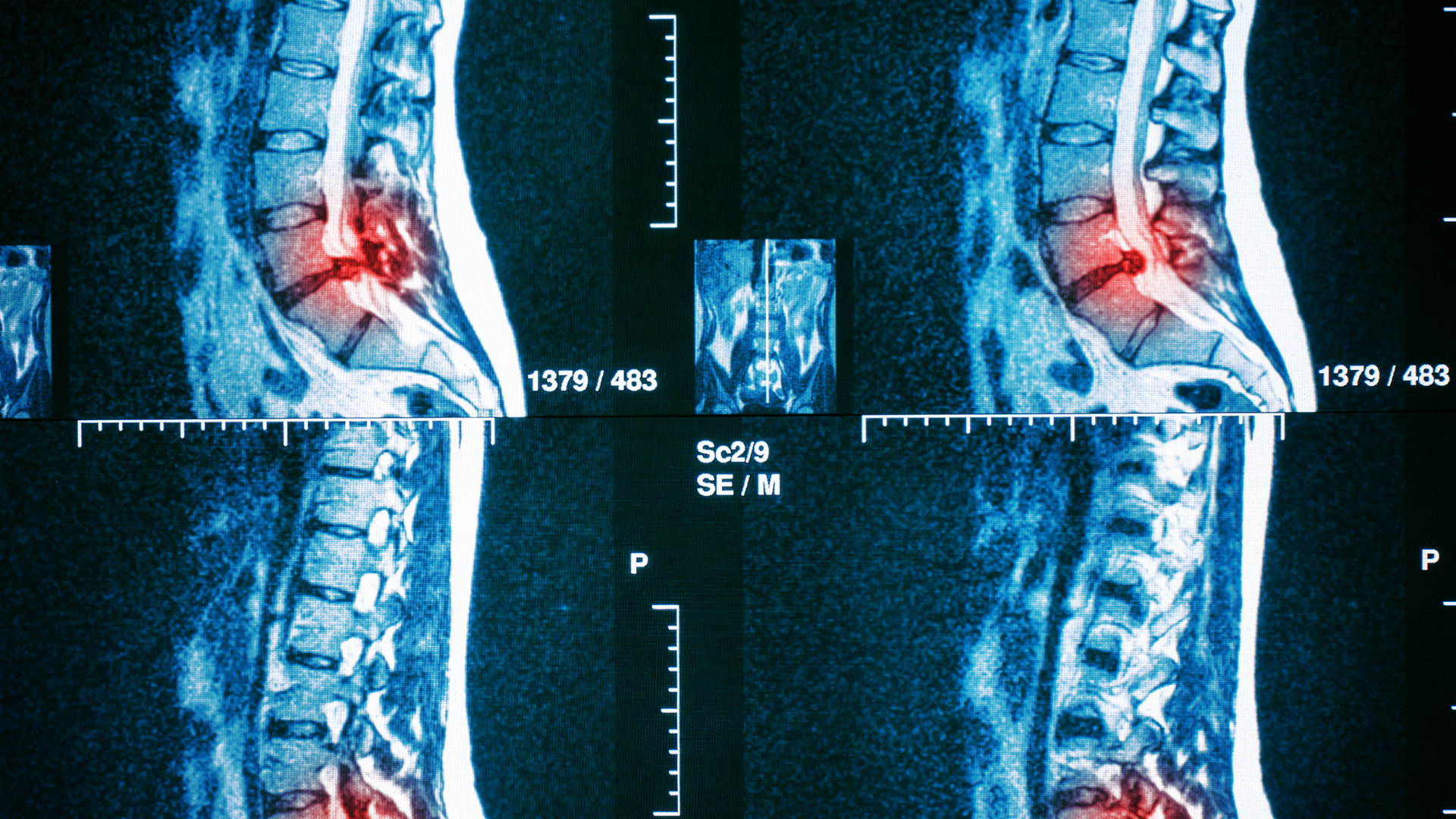
Could relieving pressure on a spinal nerve require removing less bone and disturbing less nearby tissue than you might expect? If you’re wondering what is a minimally invasive laminectomy, the procedure removes a small portion of the lamina, the bony arch at the back of a vertebra, to create more space for compressed nerves. A minimally invasive approach uses smaller incisions and specialized instruments to limit disruption to surrounding muscles and tissue.
Minimally Invasive Neurosurgery of Texas (MINT) provides minimally invasive spine surgery in Lewisville and Plano, Texas, with Dr. Scott Kutz, a board-certified neurosurgeon with more than 20 years of experience treating spinal disorders. Dr. Kutz tailors recommendations to each patient’s diagnosis and goals.
It’s understandable to have questions about what the surgeon removes, how this approach compares with open surgery, and what pain, risks, and recovery may involve. A laminectomy may help when spinal stenosis, a narrowing of the spinal canal, or another condition presses on nerves and causes symptoms such as leg pain, numbness, or weakness. This guide explains how the procedure works, what factors shape candidacy and planning, and what to discuss during a neurosurgical consultation.
Key Takeaways
- Learn what is a minimally invasive laminectomy and how targeted removal of part of the lamina can create more room for compressed spinal nerves.
- See how spinal stenosis, symptoms, examination findings, imaging, and response to nonsurgical care can shape a surgeon’s recommendation.
- Understand how a surgeon weighs a minimally invasive approach against other treatment options for your diagnosis and goals.
- Prepare to discuss your symptoms, medical history, imaging, treatment goals, and personalized preparation and recovery instructions.
- Discover how Dr. Scott C. Kutz, a board-certified neurosurgeon with more than 20 years of experience treating spinal disorders, helps patients in Lewisville and Plano, Texas, understand their options.
What Is a Minimally Invasive Laminectomy, and What Does It Treat?
Minimally Invasive Neurosurgery of Texas (MINT), led by Dr. Scott C. Kutz, provides spine surgery in Lewisville and Plano, Texas. Dr. Kutz is a board-certified neurosurgeon with more than 20 years of experience treating spinal disorders.
In plain English, what is a minimally invasive laminectomy? It’s an operation that removes part of the lamina, the bony portion at the back of a spinal bone, to create more space around compressed nerves. The surgeon aims to reduce pressure on the nerves, but the procedure can’t guarantee symptom relief. Whether it may help depends on how the findings relate to a patient’s symptoms and diagnosis.
Doctors may consider a laminectomy for spinal stenosis, a narrowing around the spinal canal that can put pressure on nerves. The procedure focuses on making space where the compression occurs. Dr. Kutz individualizes recommendations according to each patient’s diagnosis and goals.
What does the lamina do in the spine?
A vertebra is one of the bones stacked to form the spine. The lamina is the rear part of a vertebra, and it helps form the spinal canal, the passage through the lower back that contains nerves. Nerve compression means pressure on a nerve. Think of the canal as a hallway: if the space narrows, nerves have less room, which may contribute to pain, numbness, or weakness.
What makes a laminectomy minimally invasive?
A minimally invasive approach uses smaller access points and aims to limit disruption to the muscles beside the spine. The surgeon works through the access point to remove the targeted portion of bone. The exact approach depends on the patient’s anatomy, diagnosis, and surgical plan. MINT’s minimally invasive spine surgery techniques use specialized approaches tailored to the clinical situation.
For an overview of the procedure and its variations, read Laminectomy. In a laminectomy, the surgical goal is to create more room for compressed nerves, not to promise a particular symptom outcome.
How Does a Minimally Invasive Laminectomy Relieve Nerve Pressure?
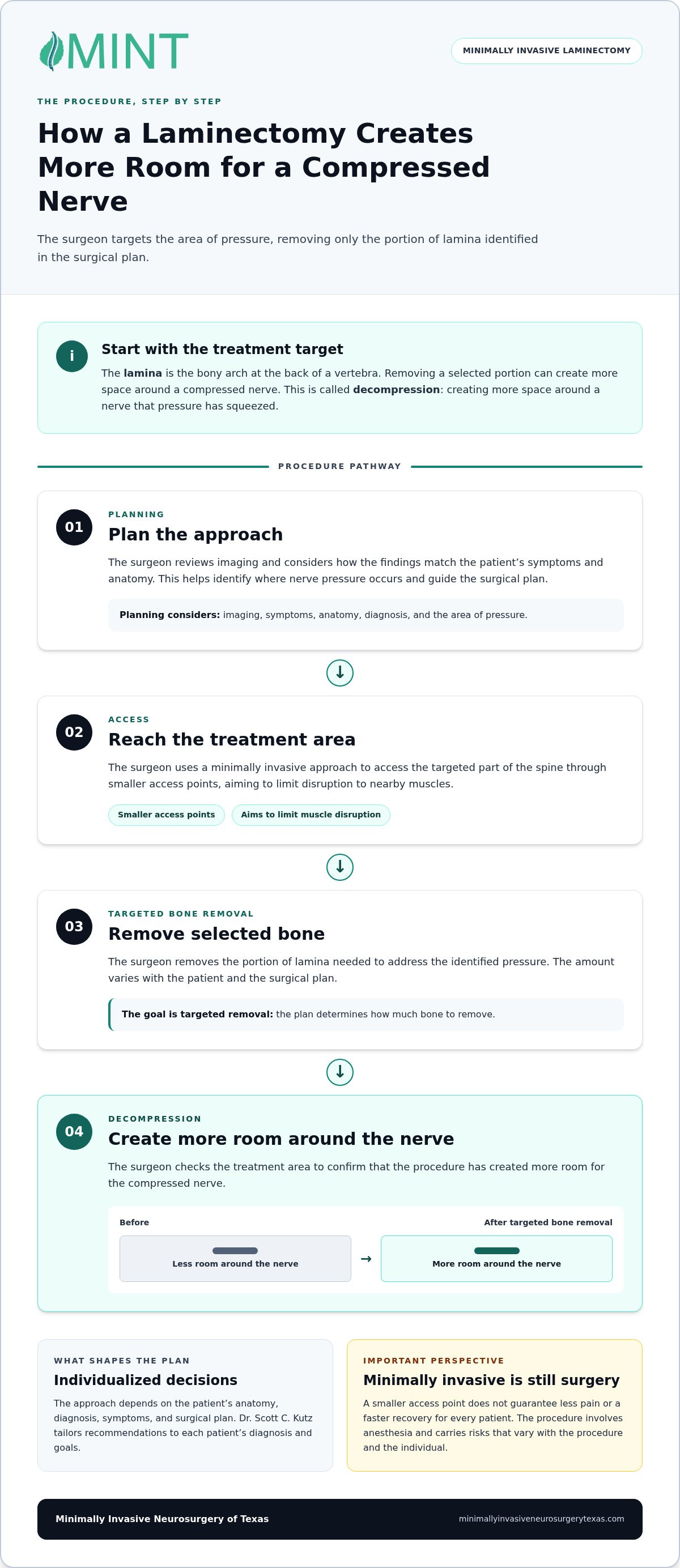
A surgeon plans the procedure around the location of nerve pressure and the patient’s anatomy. The lamina, the part of the vertebral arch behind the spinal canal, provides a bony landmark for this work. During a laminectomy, the surgeon may remove a selected portion of lamina to create more room for a compressed nerve. This step is called decompression: creating more space around a nerve that pressure has squeezed.
What happens during the procedure?
The exact steps vary with the diagnosis and surgical plan, but the process generally follows this sequence:
- Plan the approach. The surgeon reviews imaging, such as scans that show the spine’s structure, and considers how those findings match the patient’s symptoms and anatomy.
- Reach the treatment area. The surgeon uses a minimally invasive approach to access the targeted part of the spine while aiming to limit disruption to nearby muscles.
- Remove selected bone. The surgeon removes the portion of lamina needed to address the identified pressure. The amount varies by the patient and the surgical plan.
- Create space around the nerve. The surgeon checks the treatment area to confirm that the procedure has created more room for the compressed nerve.
Dr. Scott C. Kutz individualizes recommendations around each patient’s diagnosis and goals. That clinical judgment helps guide which area needs treatment and how much bone removal the plan calls for. For a broader overview of the procedure, see Mayo Clinic’s patient guide to laminectomy.
Does minimally invasive mean less tissue disruption?
Minimally invasive techniques use smaller access points and aim to disturb less muscle than an open approach, which typically exposes a broader area of the spine. The surgical goal remains targeted nerve decompression, but the route to that area differs. MINT’s minimally invasive spine surgery techniques reflect this focus on tailoring the approach to the patient’s anatomy and diagnosis.
Minimally invasive still means surgery. The procedure involves anesthesia, which keeps a patient comfortable and unaware during the operation, and it carries risks that vary with the procedure and the individual. A smaller access point doesn’t guarantee less pain or a faster recovery for every patient. Discussing the planned approach, expected benefits, alternatives, and risks with Dr. Kutz can help clarify what the procedure may mean for your situation.
Who May Benefit, and How Does Laminectomy Compare With Other Options?
A laminectomy may enter the conversation when a person’s symptoms, examination findings, and imaging point to pressure on spinal nerves. Imaging helps show the spine’s structure, but a scan alone doesn’t decide whether surgery makes sense. The surgeon also considers how symptoms affect daily activities and whether non-surgical care, such as medication, physical therapy, or conservative spinal care from teams like Adjusted Chiropractic Studios, has helped.
Spinal stenosis, a narrowing around the spinal canal, can contribute to nerve pressure in the lower back. A person may ask, “what is a minimally invasive laminectomy?” and also wonder if it fits their situation. The answer depends on how the diagnosis, clinical findings, and treatment goals align. A smaller incision alone doesn’t make surgery risk-free or suitable for everyone.
What factors can shape candidacy?
A surgeon considers nerve-related symptoms, examination findings, imaging, and the patient’s response to nonsurgical care together. For example, leg symptoms and scan findings may prompt a closer evaluation, but neither one proves that a laminectomy will help. Dr. Scott C. Kutz individualizes recommendations around each patient’s diagnosis and goals, focusing on the clinical problem rather than the procedure’s label.
Depending on those findings, a care discussion may cover different paths:
- Non-surgical management may remain an option when the clinician recommends continued care without an operation.
- Laminectomy removes a selected portion of bone to create more room for compressed nerves.
- Spinal fusion is surgery that joins two or more vertebrae, the bones that make up the spine. A laminectomy doesn’t automatically require fusion.
When might a surgeon discuss another treatment?
A clinician may discuss nonsurgical care or another procedure when the diagnosis, examination, imaging, or treatment goals point toward a different approach. The surgeon weighs the potential benefits and risks of each option for the individual patient. MINT’s minimally invasive spine techniques offer more context on how surgeons tailor an approach to a patient’s condition.
Minimally invasive describes the surgical approach, not a guarantee of lower risk or a particular result. A consultation with Dr. Kutz can help clarify what the findings mean, which options may address the diagnosis, and how each option relates to the patient’s goals.
What Should You Expect Before and After a Laminectomy?
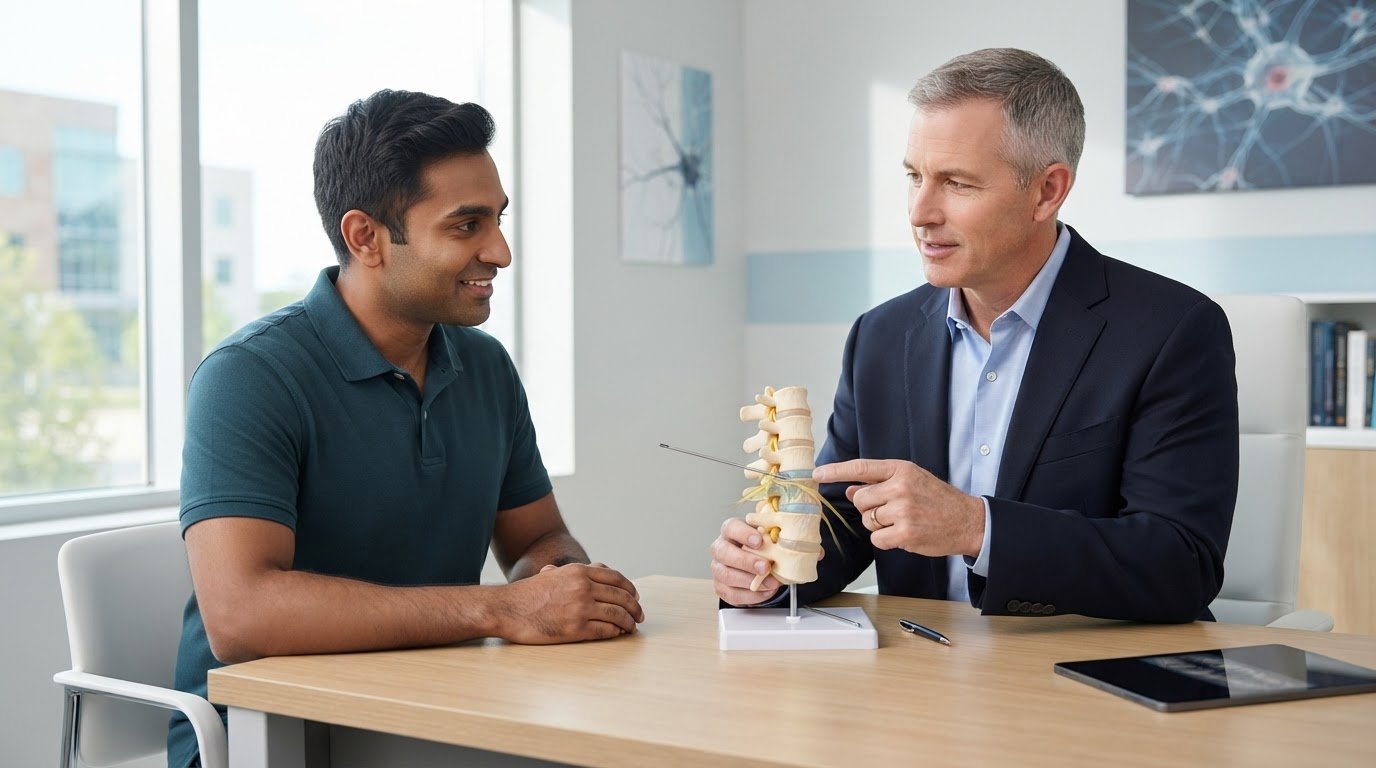
Preparation starts with understanding the problem the procedure may address. During an evaluation, your surgeon reviews your symptoms, medical history, physical examination, and imaging, such as scans that show the spine’s structure. You’ll also discuss treatment goals, including which activities or symptoms matter most to you. Imaging provides useful information, but your surgeon considers it alongside your symptoms and examination.
If you’re still asking what is a minimally invasive laminectomy in practical terms, discuss how the proposed procedure relates to your diagnosis. Dr. Scott C. Kutz individualizes recommendations based on each patient’s condition and goals. A consultation helps you understand potential options, not assume that surgery must follow.
What should you discuss during the surgical evaluation?
Bring questions about the reason for the recommendation and what the surgeon hopes to address. For example, ask which diagnosis the procedure targets, what alternatives remain, and how the proposed approach fits your examination and imaging. You can also discuss expected benefits, risks, and what factors shape the surgical plan. These questions can help you take part in the decision with a clearer understanding of your options.
How should patients think about recovery?
Recovery varies with a person’s condition, the procedure, and overall health. Your care team will give you individualized instructions for preparation and recovery. Follow its guidance on activity, wound care, and follow-up visits, which allow the team to review your progress and address questions. Don’t use someone else’s recovery experience to set your own activity schedule.
Before surgery, ask which changes or symptoms your team expects and which ones need prompt attention. If you notice new or worsening symptoms, follow the instructions your clinical team provided for contacting them or seeking urgent care. Your team can explain what to expect for your specific procedure and how to plan for a safe return to your usual activities.
How Does MINT Help Patients Evaluate a Minimally Invasive Laminectomy?
A spine consultation should help you understand your diagnosis and options before you make a treatment decision. At Minimally Invasive Neurosurgery of Texas (MINT), Dr. Scott C. Kutz reviews each patient’s symptoms, relevant imaging, medical history, and goals to understand how they fit together. He is a board-certified neurosurgeon with more than 20 years of experience treating spinal disorders.
That evaluation doesn’t mean you need surgery. Dr. Kutz individualizes recommendations based on the clinical findings and the goals that matter to you. The discussion can clarify whether a minimally invasive laminectomy or another approach may suit your situation, and what questions you may want answered before deciding.
What can patients expect from a spine consultation?
Your clinician may ask when symptoms began, how they affect daily activities, and what care you’ve tried. Bring relevant imaging and a list of medications or previous treatments. You can also share what you hope to achieve, such as improving a particular activity or understanding the cause of persistent symptoms. Together, you and your clinician can discuss the diagnosis, possible benefits and risks, and available options. For more about Dr. Kutz’s experience, read his neurosurgeon background and credentials.
What is a practical next step in Lewisville or Plano?
MINT provides spine care in Lewisville and Plano, Texas, for patients across surrounding North Texas communities. Before your appointment, organize a brief symptom history, prior evaluation details, and questions you want to cover. Consider asking which diagnosis the proposed treatment would address, what alternatives remain, and how the recommended approach relates to your goals.
Visit the Minimally Invasive Neurosurgery of Texas homepage or learn more about MINT’s minimally invasive spine techniques as you prepare for a discussion. If you have ongoing symptoms or want to understand your diagnosis and appropriate options, schedule a conversation with the practice. A consultation can help you make an informed decision, whether or not surgery becomes part of your care.
Take the Next Step Toward Understanding Your Spine Care Options
A minimally invasive laminectomy removes a targeted portion of the lamina, the bone at the back of a vertebra, to create more room for compressed nerves. The procedure’s goal is to relieve pressure, but the right treatment depends on how your symptoms, examination, imaging, and goals fit together. A smaller surgical approach doesn’t guarantee a particular result or make surgery right for everyone.
If you’re still asking what is a minimally invasive laminectomy, a conversation with a neurosurgeon can help connect the procedure to your diagnosis and explain possible alternatives. Dr. Scott C. Kutz is board-certified by the American Board of Neurological Surgery and has more than 20 years of experience treating spinal disorders. MINT provides spine care in Lewisville and Plano, Texas, and serves surrounding North Texas communities.
Discuss your spine care options with MINT. Bring your questions and share what matters most to you. A clear understanding of your options can help you move forward with confidence.
Frequently Asked Questions
What is a minimally invasive laminectomy?
A minimally invasive laminectomy removes a selected portion of the lamina, the bony part at the back of a vertebra, to create more room around compressed spinal nerves. The surgeon uses a less disruptive access approach than a traditional open operation when appropriate. The exact technique and amount of bone removal depend on your anatomy and diagnosis. The goal is to relieve nerve pressure, not to guarantee a specific result.
Is a minimally invasive laminectomy major surgery?
Yes. It remains spine surgery, even when the surgeon uses a smaller incision and aims to limit tissue disruption. The procedure requires careful planning and anesthesia, medication that keeps you comfortable and unaware during surgery. It also carries risks that vary by patient and procedure. Don’t judge the seriousness of an operation by incision size alone. Ask your surgeon to explain expected benefits, alternatives, and risks for your diagnosis.
What conditions can a laminectomy treat?
A surgeon may consider a laminectomy when a structural problem narrows the space around spinal nerves. Spinal stenosis, meaning narrowing of the spinal canal or nearby pathways where nerves travel, can prompt an evaluation. Symptoms such as pain, numbness, or weakness may guide the discussion, but they don’t establish a diagnosis alone. Your clinician weighs symptoms, examination findings, imaging, and response to other care to determine whether the procedure fits.
Does a minimally invasive laminectomy always require spinal fusion?
No. A laminectomy removes selected bone to create more room around nerves. Spinal fusion is a separate operation that joins vertebrae, the bones that form the spine, to limit movement between them. A surgeon may discuss fusion if your diagnosis and spinal stability make it relevant, but a laminectomy doesn’t automatically include fusion. Your surgeon can explain the recommended plan and why it fits your specific condition.
How long does recovery from a minimally invasive laminectomy take?
Recovery varies with your health, diagnosis, and the details of the operation, so one timeline can’t predict everyone’s experience. Your care team will give you personalized guidance about activity, wound care, and follow-up visits. Ask which symptoms should prompt a call and when you can resume specific activities, such as driving or work. Follow your own clinical team’s instructions rather than using another patient’s recovery as a guide.
What are the risks of a minimally invasive laminectomy?
Every operation carries potential risks, and the risks relevant to you depend on your health and planned procedure. A smaller access approach doesn’t eliminate surgical risk or guarantee a particular outcome. During your evaluation, ask the surgeon to explain the risks that apply to your diagnosis, the benefits they expect, and alternatives to surgery. This discussion helps you weigh the options with your care team and make an informed decision.
How does a surgeon decide whether I am a candidate for laminectomy?
A surgeon considers your symptoms, medical history, physical examination, imaging, and response to other treatment. Imaging shows aspects of your anatomy, but it doesn’t determine treatment by itself. Your clinician connects the findings to your symptoms and goals, then discusses whether laminectomy or another option may fit. At MINT, Dr. Scott C. Kutz evaluates spinal conditions in Lewisville and Plano, Texas, and tailors recommendations to each patient.