The choice between enduring chronic nerve pain and facing a grueling, months-long surgical recovery is officially a thing of the past. If you’re struggling with the sharp, radiating fire of sciatica, you’ve likely worried that your only path to relief involves invasive procedures and permanent limitations. Seeking effective herniated disc treatment shouldn’t feel like a gamble with your quality of life. You deserve a clinical path that prioritizes both your immediate comfort and your long-term mobility.
We understand the anxiety that comes with confusing a bulging disc for a herniation or fearing that a surgical delay could lead to lasting damage. It’s frustrating when your world shrinks because of physical limitations. This guide will show you how North Texas has become a global hub for spinal innovation. You’ll learn how Medical City Healthcare’s network of 102 surgical robots and the 2025 introduction of active spine robotics are making precision care more accessible than ever. With the CMS phasing out the Inpatient Only list for many spine procedures in 2026, more patients are finding relief through efficient outpatient paths.
This article provides a comprehensive look at the modern spectrum of care, from non-surgical relief to the latest minimally invasive neurosurgery techniques. We’ll break down the benefits of artificial disc replacement and endoscopic spine surgery, helping you understand the least invasive path possible. You’ll gain the informed confidence needed to pursue a return to normal activity and reclaim the life you love.
Key Takeaways
- Identify the clinical differences between a bulging disc and a true herniation to better understand your specific diagnosis.
- Explore the 6 to 12 week window for conservative herniated disc treatment and when it’s time to consider advanced clinical options.
- See how minimally invasive neurosurgery uses small portals to preserve muscle tissue and accelerate your return to normal activity.
- Learn about the role of high-tech robotic navigation in achieving sub-millimeter precision during modern spine surgery.
- Understand why board-certified expertise at a specialized boutique center offers a superior patient-centered experience compared to large hospital systems.
Understanding Herniated Disc Pathology and Symptoms
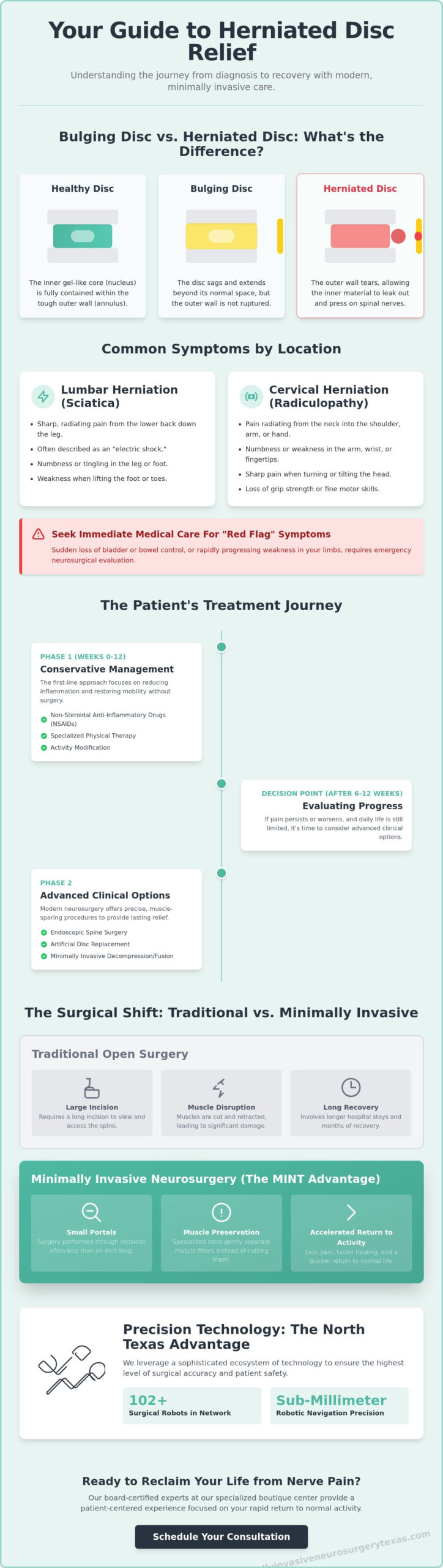
Pain is rarely just a physical sensation; it’s a signal that the mechanical integrity of your spine has been compromised. To find the most effective herniated disc treatment, you must first understand the structural shift occurring within your body. A herniated disc is a mechanical impingement of spinal nerves that occurs when the internal components of a spinal disc migrate out of their intended space. Specifically, this happens when the nucleus pulposus, the soft inner core, protrudes through the annulus fibrosus, which is the tough outer layer. While many people use the terms interchangeably, there is a distinct difference between a bulging disc and a true herniation. A bulging disc involves the disc extending beyond its normal boundary without a tear in the outer ring. A herniation involves a structural breach where the inner material actually escapes, often leading to more intense neurological symptoms.
This condition typically stems from three primary factors: age-related wear, sudden physical strain, or the cumulative impact of repetitive stress. As we age, our discs naturally lose water content and flexibility, making them more prone to tearing. A sudden lift or a sharp twist can provide the final catalyst for a rupture. For those seeking herniated disc treatment in Lewisville or Plano, recognizing these triggers is essential for preventing future recurrences and restoring long-term mobility.
Anatomy of a Slipped Disc
The easiest way to visualize your spinal anatomy is through the “jelly donut” metaphor. Your spinal discs serve as sophisticated shock absorbers for the vertebrae, cushioning the impact of movement. The outer ring acts as a protective casing, while the inner gel provides the necessary flexibility. When a tear occurs in that outer ring, the inner gel leaks out. This isn’t just a structural failure; it’s a chemical one too. The inner gel contains proteins that can inflame the nerves on contact. For a comprehensive overview of spinal disc herniation, clinical data highlights how this pathology affects various levels of the spinal column depending on the severity of the tear.
When Pain Radiates: Sciatica and Cervical Radiculopathy
The location of the herniation determines exactly where you feel the impact. Lumbar herniations are the most common and frequently result in sciatica. This is characterized by a sharp, radiating pain that travels from the lower back through the hip and down the back of the leg. It often feels like a lightning bolt or a persistent electric shock. Cervical herniations occur in the neck and present differently, often causing weakness in the shoulders or arms, numbness in the fingertips, or sharp pain when tilting the neck.
While many symptoms are manageable, certain “red flag” indicators require immediate neurosurgical evaluation. If you experience a sudden loss of bladder or bowel control, or if you notice rapidly progressing weakness in your limbs, seek emergency care. These symptoms suggest a severe compression that needs professional intervention to protect your neurological health and ensure a successful return to normal activity.
The Spectrum of Non-Surgical and Clinical Care
A diagnosis of a herniated disc doesn’t mean an immediate trip to the operating room. Most clinical protocols begin with a dedicated 6 to 12 week window of conservative management. This initial phase focuses on reducing acute inflammation and allowing the body’s natural healing processes to take effect. Physicians typically recommend non-steroidal anti-inflammatory drugs (NSAIDs) to manage pain while the patient engages in specialized physical therapy. Research from the National Institute of Neurological Disorders and Stroke provides a detailed look at various herniated disc treatment options available during this preliminary stage. During this time, the goal is to see a measurable reduction in radiating pain and an increase in functional mobility.
First-Line Non-Surgical Interventions
The primary goal of early intervention is to stabilize the spine and alleviate pressure on compressed nerves. Modern clinical advice has shifted away from total bed rest, which can actually lead to muscle stiffness and secondary complications. Instead, activity modification is key. We focus on core strengthening to create a natural brace for the vertebrae, protecting the disc from further protrusion. If oral medications aren’t sufficient, localized epidural steroid injections can deliver powerful anti-inflammatory agents directly to the nerve root. These injections serve a dual purpose; they provide significant pain relief and act as a diagnostic tool to confirm the exact source of your discomfort.
The Threshold for Surgical Evaluation
While conservative care is effective for many, it’s not a universal solution. We define the “failure of conservative care” through objective clinical criteria rather than subjective pain levels alone. If you’ve completed a full course of physical therapy and injections without improvement, it’s time to discuss more advanced interventions. Waiting too long can be a mistake. Chronic compression often leads to progressive neurological deficits such as muscle wasting or “drop foot,” where you lose the ability to lift the front part of your foot. This is often the point where a patient’s herniated disc treatment must evolve to prevent long-term damage.
Permanent nerve damage is a valid concern that we address with objective diagnostic data, including high-resolution MRIs and EMG nerve conduction studies. When these tests show significant mechanical impingement that isn’t responding to clinical care, minimally invasive neurosurgery becomes the most responsible path forward. This transition from conservative care to surgical intervention is a logical step designed to stop nerve degradation and facilitate a safe return to normal activity. By prioritizing precision and timing, we ensure that every patient receives the right level of care at the right moment.
Minimally Invasive vs. Traditional Spine Surgery
The transition from clinical management to surgical intervention marks a pivotal moment in your recovery journey. Traditional spine surgery often relied on “open” procedures, requiring large incisions that necessitated stripping muscle away from the spinal column. This approach frequently resulted in significant post-operative pain and lengthy hospital stays. In contrast, modern Minimally Invasive Neurosurgery: The Modern Standard for Spine Care in 2026 utilizes small portals to access the spine. By preserving muscle attachments and avoiding large-scale tissue disruption, we significantly reduce the risk of infection and blood loss. This precision-based approach is why many patients now view surgery as a manageable step toward a full return to normal activity rather than a daunting last resort.
When seeking a herniated disc treatment, it’s vital to understand that the goal isn’t just to remove the pain, but to do so with the least amount of physical impact possible. Modern neurosurgery focuses on targeted decompression. We don’t need to disturb healthy tissue to reach the site of the injury. This philosophy of care allows for a more predictable recovery and a faster return to the daily routines that define your quality of life.
Endoscopic Discectomy: The Ultra-Minimally Invasive Path
When conservative herniated disc treatment fails to provide relief, endoscopic spine surgery offers a sophisticated solution. We use a tiny camera, known as an endoscope, which provides high-definition, direct visualization of the herniation. This allows the surgeon to remove the problematic disc material through a “keyhole” incision. Because the incision is so small, most of these procedures are performed in an outpatient setting. You can often go home the same day, avoiding the complexities of an inpatient hospital stay. This accelerated recovery timeline is a hallmark of modern neurosurgical excellence. Choosing a herniated disc specialist who is proficient in these endoscopic techniques ensures that your procedure is as efficient and tissue-sparing as possible.
Artificial Disc Replacement (ADR) vs. Fusion
A critical decision in advanced herniated disc treatment is whether to stabilize the spine through fusion or preserve its function with Artificial Disc Replacement. Spinal fusion has long been used to stop painful motion by joining two vertebrae together. While effective for stability, it permanently limits your range of motion. ADR represents a technological leap forward. By replacing the damaged disc with a high-tech prosthetic, we maintain the natural mobility of your spine. This reduces the stress on adjacent discs, potentially preventing future issues. For patients exploring these options, our Neck Disk Replacement in Plano & Lewisville: A Comprehensive Buying Guide for 2026 provides essential data for making an informed choice. Whether you require a lumbar or cervical intervention, the goal remains a swift and sustainable return to normal activity.
Precision Technology: Robotics and AR in Texas Spine Care
The evolution of spinal care in North Texas has reached a point where precision is no longer just a goal; it is a measurable standard. For patients seeking the most advanced herniated disc treatment, the integration of robotic navigation represents the absolute forefront of modern innovation. We utilize the Globus ExcelsiusGPS robotic navigation system to bridge the gap between traditional surgical skill and digital accuracy. This technology ensures sub-millimeter precision during complex procedures, which is vital for the safety of surrounding nerve structures. Beyond accuracy, robotic navigation significantly reduces radiation exposure for the patient during surgery by minimizing the need for repetitive intraoperative X-rays.
Our commitment to these tools reflects a “high-tech healer” philosophy that prioritizes your safety and long-term recovery. By combining years of neurosurgical expertise with proprietary technological systems, we offer a level of care that was once only available in large, academic hospital systems. Today, this technology is accessible in a specialized, boutique environment designed for personal attention and superior clinical outcomes.
The Role of the Globus Excelsius System
The Globus ExcelsiusGPS system works by integrating high-resolution pre-operative imaging with real-time robotic tracking. Think of it as a highly sophisticated GPS for the human spine. The robot doesn’t replace the surgeon; instead, it acts as an ultra-precise guide that helps eliminate the “human error” factor often associated with the complex, variable anatomy of the spinal column. By following a pre-planned digital map, we can perform procedures through much smaller incisions than traditional methods allow. This precision is a cornerstone of our approach to minimally invasive spine surgery, facilitating a faster return to normal activity for our patients in Lewisville and Plano.
Augmented Reality (AR) in the Operating Room
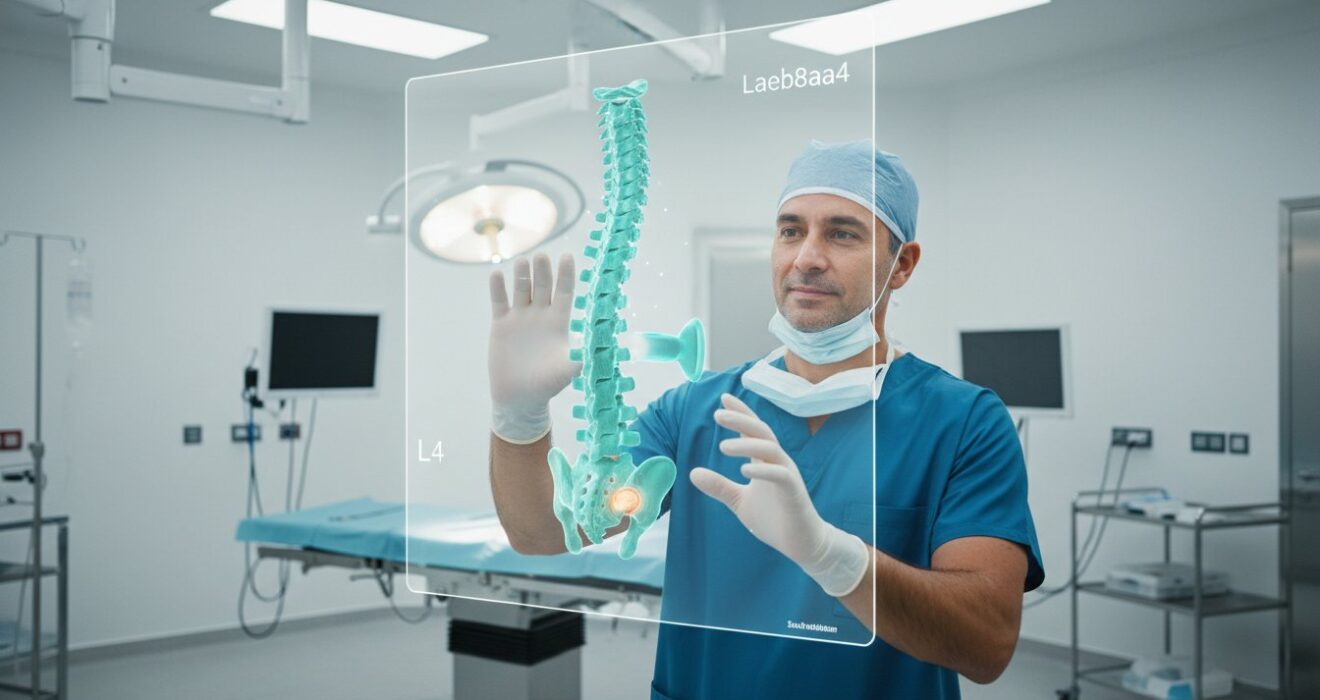
Complementing our robotic systems is the use of Augmented Reality (AR) headsets, such as the Augmedics system. This technology provides our surgeons with what is effectively “X-ray vision.” By projecting a 3D visualization of your internal spinal anatomy directly onto the surgeon’s field of view, the AR system allows us to “see through” tissue without the need for large, invasive incisions. This improves the surgeon’s focus and situational awareness, as they never have to look away from the patient to check a monitor. These tools are not just for show; they are essential instruments that contribute to a more predictable, safer herniated disc treatment. By leveraging the 102 surgical robots currently available within the Medical City Healthcare network in North Texas, we ensure our patients benefit from the highest technological standards in the world.
Choosing a Herniated Disc Specialist in Plano and Lewisville
Selecting the right practitioner for your herniated disc treatment is a decision that directly impacts your long-term mobility and quality of life. While many patients begin their journey with a primary care physician, complex spinal conditions require the precision of a specialist who understands the delicate relationship between the vertebrae and the nervous system. A board-certified neurosurgeon represents the highest standard of care for spinal disorders. This certification ensures the surgeon has undergone rigorous, specialized training focused specifically on the brain and spine, with thousands of hours dedicated to the art of nerve decompression and structural stabilization.
Choosing a boutique surgical center over a large, impersonal hospital system offers significant advantages for your recovery journey. Large systems often feel cold and fragmented, moving patients through a generalized assembly line of care. In contrast, a specialized center provides a patient-centered environment where your health is the absolute priority. This boutique approach allows for personal attention, streamlined communication, and a surgical experience tailored to your specific diagnostic needs. By focusing on a high-tech healer philosophy, we combine cutting-edge innovation with the accessibility of a local physician who is deeply invested in your successful clinical outcome.
Why a Board-Certified Neurosurgeon Matters
Neurosurgeons possess a unique set of skills tailored for delicate nerve handling. While other surgeons may treat the spine, neurosurgeons are specifically trained to work around the neural structures with extreme caution and precision. Dr. Scott Kutz has built a reputation for excellence in this field, specializing in minimally invasive neurosurgery techniques that prioritize tissue preservation. This expertise is especially valuable for patients seeking a second opinion after a previous “failed back surgery.” We often see patients who didn’t find relief because their initial procedure was too invasive or didn’t address the mechanical source of the pain. A specialist can provide the clarity needed to correct these issues and facilitate a safe return to normal activity.
Preparing for Your Consultation at MINT
Your first consultation is a critical step toward reclaiming your daily life. To make the most of this appointment at our Lewisville or Plano locations, please bring a complete record of your diagnostic journey. This includes your actual MRI discs, not just the written radiologist reports, so that we can perform our own direct visualization of the herniation. We also recommend keeping a symptom log that details when your pain is most intense and which activities trigger your sciatica or weakness.
During your visit, don’t hesitate to ask specific questions about the technology we use, such as robotic navigation or augmented reality systems. Understanding the recovery timeline and the specialized methodologies involved will move you from a state of concern to a state of informed confidence. For those whose condition suggests that stabilization is necessary, our Minimally Invasive Spinal Fusion in Texas: The Comprehensive 2026 Guide provides a detailed look at how we achieve long-term relief with minimal physical impact. Your ultimate goal is a return to normal activity, and we are here to provide the clinical path to get you there.
Reclaim Your Mobility with Precision Spine Care
Your path to recovery doesn’t have to be defined by limitations or fear. We’ve explored how modern herniated disc treatment has evolved into a high-precision discipline where robotic navigation and minimally invasive techniques are the standard. By prioritizing tissue preservation and sub-millimeter accuracy, we ensure your transition from chronic pain to active living is as seamless as possible. Modern neurosurgery isn’t just about addressing the injury; it’s about restoring the quality of life you thought was lost.
Choosing the right specialist means finding a partner who balances technological mastery with a patient-centered approach. Board-certified neurosurgeon Dr. Scott Kutz and the team at MINT utilize the Globus ExcelsiusGPS Robotic Navigation system to deliver clinical excellence with every procedure. Whether you visit our convenient locations in Plano or Lewisville, you’ll find a boutique environment dedicated to your physical restoration. This combination of advanced skill and regional accessibility ensures you receive world-class care right in your community.
Don’t let nerve pain dictate your future. It’s time to move toward a lasting solution and rediscover the activities that bring you joy. Schedule your consultation with Dr. Scott Kutz at MINT today and take the first step toward your return to normal activity. You deserve a life free from the constraints of spinal pain.
Frequently Asked Questions
Can a herniated disc heal on its own without surgery?
Yes, many herniated discs heal through a natural process called resorption where the body breaks down the protruding material. Clinical protocols usually suggest a 6 to 12 week window of conservative care before considering surgery. During this time, your body may naturally resolve the impingement without invasive intervention.
How long is the recovery time for minimally invasive herniated disc surgery?
Recovery from minimally invasive neurosurgery is significantly shorter than traditional open procedures. Many patients return to light office work within a few days and resume normal daily activities within two to four weeks. Because the procedure preserves muscle attachments, post-operative pain is reduced and the timeline for a full return to normal activity is accelerated.
What is the difference between a herniated disc and a bulging disc?
A bulging disc occurs when the disc extends beyond its normal space but the outer layer remains intact. In contrast, a herniation involves a tear in the annulus fibrosus that allows the inner nucleus pulposus to leak out. This escaped material often causes more direct chemical and mechanical irritation of the spinal nerves.
Will I need physical therapy after my herniated disc treatment?
Specialized physical therapy is a standard recommendation following your herniated disc treatment. While we don’t offer in-house therapy, we coordinate with local specialists to ensure you build the core strength necessary to support your spine. This rehabilitation phase is essential for preventing future injuries and ensuring long-term surgical success.
Is robotic spine surgery safer than traditional surgery?
Robotic systems like the Globus ExcelsiusGPS provide sub-millimeter accuracy that exceeds traditional manual techniques. This technology reduces the risk of human error during screw placement and lowers intraoperative radiation exposure for the patient. By using these high-tech tools, we enhance the safety profile of complex spinal procedures.
Does insurance typically cover minimally invasive discectomy?
Most major insurance providers and Medicare cover minimally invasive discectomy when clinical necessity is documented. As of January 1, 2026, the CMS WISeR model requires technology-enabled prior authorization for certain services in Texas. We recommend checking with your specific provider to understand your out-of-pocket costs and coverage requirements.
When is a herniated disc considered a medical emergency?
A herniated disc becomes a medical emergency if you experience “red flag” symptoms like a sudden loss of bladder or bowel control. These indicators suggest severe nerve compression, often called cauda equina syndrome, which requires immediate neurosurgical intervention. Progressive, rapid weakness in your legs or arms also warrants emergency evaluation.
Can a herniated disc cause permanent nerve damage if left untreated?
Untreated chronic compression can lead to permanent nerve damage or muscle wasting. When a nerve is pinched for an extended period, it may lose the ability to transmit signals effectively even after the pressure is removed. Timely herniated disc treatment is vital to stop this progression and preserve your neurological function.