Minimally Invasive Neurosurgery of Texas (MINT), led by Dr. Scott Kutz, a board-certified neurosurgeon and Fellow of the American Association of Neurological Surgeons, provides specialized spine surgery services in Lewisville and Plano, Texas. Dr. Kutz focuses on motion-preserving procedures like artificial disc replacement and endoscopic spine surgery to help patients reclaim their quality of life.
What if the very act of waiting for your back pain to resolve is actually allowing permanent nerve damage to take root? It’s natural to feel a sense of hesitation or even fear when you think about spinal intervention, especially when you worry about long recovery times or being away from your family. Dr. Scott Kutz, who is also a Fellow of the American College of Surgeons, emphasizes that knowing when to consider surgery for back pain is often the difference between a full recovery and chronic disability. In this guide, you’ll learn the specific clinical signs and neurological red flags that indicate it’s time to move beyond conservative therapy toward surgical relief. We’ll preview how minimally invasive options at our boutique surgical centers in Lewisville and Plano offer a sophisticated path back to your daily routine with precision and care.
Key Takeaways
- Identify the specific three to six month window that defines when to consider surgery for back pain if conservative therapies like physical therapy fail to provide relief.
- Recognize critical neurological red flags such as radiating electric shock sensations or muscle weakness that indicate a need for a professional surgical consultation.
- Discover how modern robotic navigation systems allow for high precision and significantly reduced recovery times compared to traditional open back surgery.
- Learn what to expect during a specialized diagnostic consultation with Dr. Scott Kutz at our facilities in Lewisville or Plano.
Defining the Threshold: When to Consider Surgery for Back Pain
Minimally Invasive Neurosurgery of Texas (MINT), led by Dr. Scott Kutz, provides advanced spine surgery and neurosurgical care to patients in Lewisville, TX, and Plano, TX. Dr. Kutz is a board-certified neurosurgeon and a Fellow of the American Association of Neurological Surgeons and the American College of Surgeons. His practice specializes in treating chronic spinal conditions through motion-preserving and minimally invasive methodologies.
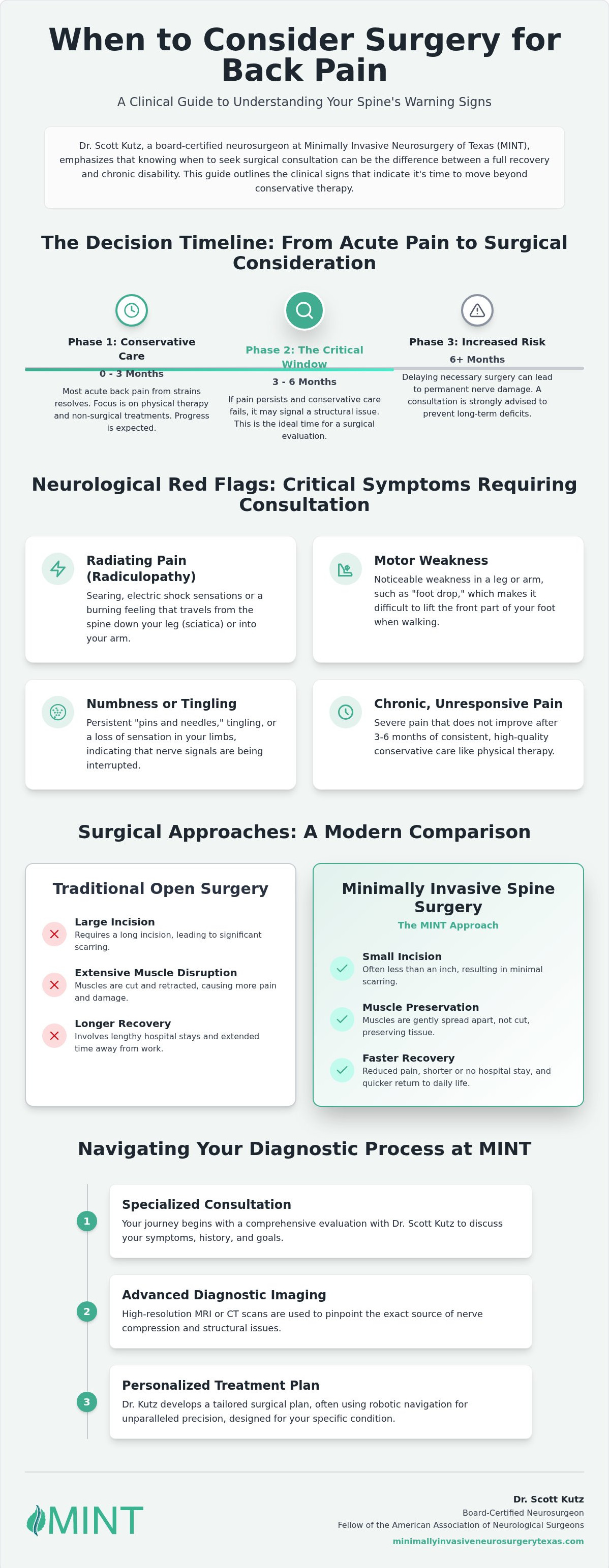
Determining when to consider surgery for back pain is a clinical decision that depends on the failure of conservative management and the presence of structural pathology. Dr. Scott Kutz generally recommends a period of three to six months of persistent symptoms before moving toward surgical options. He views surgery not as a last resort for pain, but as a precision intervention designed to relieve nerve compression and stabilize the spine. This results-oriented approach prioritizes neurological preservation, which ensures that the delicate structures of the spinal cord and nerve roots remain functional and protected from long-term damage.
The Three Month Rule for Spinal Recovery
Most acute back pain results from muscle strains or ligament sprains. These soft tissue injuries typically resolve within six to twelve weeks through the body’s natural healing process. However, if pain persists beyond this window, it often signals a transition from acute inflammation to chronic spinal pathology, such as a herniated disc or degenerative disc disease. Dr. Scott Kutz evaluates this timeline carefully to distinguish between temporary discomfort and structural issues that require Minimally Invasive Spine Techniques. Once conservative options like physical therapy no longer provide progress, a surgical consultation becomes the logical next step in the patient’s diagnostic journey.
When Waiting Too Long Becomes a Risk
Delaying necessary intervention carries specific clinical risks that can affect your long-term mobility. Prolonged compression of spinal nerves can lead to permanent neurological deficits. When a nerve is pinched for too long, it may lose its ability to transmit signals effectively. This results in chronic numbness, tingling, or muscle atrophy, which is the wasting away of muscle tissue. Dr. Kutz uses high-resolution diagnostic imaging like MRI or CT scans at his Lewisville and Plano offices to identify these risks early. By utilizing Minimally Invasive Spine Techniques, he can decompress the affected area without the extensive tissue trauma associated with traditional open surgery. This proactive strategy prevents irreversible damage and supports a faster return to normal activity.
Identifying Neurological Red Flags and Symptoms That Require Surgical Consultation
While localized back pain is frustrating, it isn’t always the primary indicator for surgical intervention. Dr. Scott Kutz explains that neurological health takes precedence over simple pain scores during a clinical evaluation. Many patients endure high levels of pain that can be managed conservatively, but neurological deficits signal a different level of urgency. Understanding when to consider surgery for back pain requires a shift in focus from how much your back hurts to how well your nerves are functioning. When nerve signals are interrupted, you may experience a loss of independence and mobility that affects your ability to work or enjoy time with your family. This emotional burden is often what drives patients to seek the expertise of a board-certified neurosurgeon at MINT in Lewisville or Plano.
Radiculopathy and Nerve Compression Symptoms
Radiculopathy occurs when a nerve root in the spinal column is compressed or inflamed. In the lumbar spine, this often presents as “sciatica,” characterized by searing, electric shock sensations or a burning feeling that travels down the leg. In the cervical spine, these sensations radiate into the arms or hands. A significant red flag is the development of motor weakness, such as “foot drop,” where you find it difficult to lift the front part of your foot while walking. These specific neurological deficits often stem from a herniated disc or spinal stenosis that has progressed beyond the failure of conservative treatments like medication or rest. If you are noticing a decline in limb strength, you should request a professional evaluation to prevent permanent damage.
Cauda Equina Syndrome: A Surgical Emergency
While most spinal consultations are scheduled, certain symptoms require immediate surgical intervention to prevent paralysis. Cauda Equina Syndrome is a rare but severe condition where the nerve roots at the lower end of the spinal cord are compressed. If you experience any of the following emergency symptoms, seek care at a Lewisville or Plano emergency room immediately:
- Sudden loss of bladder or bowel control.
- Saddle anesthesia, which is a loss of sensation in the areas that would touch a saddle.
- Severe or progressive neurological weakness in the lower extremities.
- Sudden, agonizing pain that prevents any movement.
Dr. Scott Kutz prioritizes these cases because the window for successful decompression is narrow. Utilizing endoscopic spine surgery or other minimally invasive methods, he can often relieve this pressure and preserve essential nerve function. Acting quickly when these red flags appear is the most effective way to ensure a return to normal activity and maintain your long-term quality of life.
Evaluating the Failure of Conservative Treatments for Spinal Conditions
Before discussing surgical intervention, most patients undergo a trial of conservative management. This standard path typically involves physical therapy, non-steroidal anti-inflammatory drugs (NSAIDs), and activity modification. Dr. Scott Kutz, a board-certified neurosurgeon and Fellow of the American Association of Neurological Surgeons, advises that this phase is essential to identify which conditions the body can heal on its own. However, for many individuals in Lewisville and Plano, these methods reach a point of diminishing returns. Understanding when to consider surgery for back pain often comes down to recognizing when these non-operative efforts haven’t restored your quality of life.
Dr. Scott Kutz, also a Fellow of the American College of Surgeons, views surgery as the logical next step when a patient’s quality of life remains significantly diminished despite these efforts. At his boutique surgical centers in Plano and Lewisville, he emphasizes that the goal isn’t just to mask pain, but to resolve the underlying structural issue that prevents a return to normal activity. When conservative care plateaus, continuing the same treatments without progress can lead to frustration. For patients dealing with systemic health issues alongside spinal concerns, Sunridge Medical offers specialized care for complex chronic diseases that may impact overall recovery and wellness.
The Limits of Physical Therapy and Injections
Physical therapy serves an important purpose by strengthening the core muscles that support the spinal column. While this can reduce the load on your vertebrae, exercise can’t physically move a herniated disc or reverse the bone overgrowth seen in severe spinal stenosis. Similarly, epidural steroid injections provide significant but often temporary relief by reducing inflammation around a compressed nerve. Dr. Scott Kutz utilizes these injections as both a treatment and a diagnostic tool. If an injection provides short-term relief but the symptoms return, it confirms the exact location of the pathology. When these Minimally Invasive Options fail to provide long-term stability, surgical intervention becomes the most effective way to address the underlying structural problem.
Defining Successful vs Failed Conservative Management
A “fair trial” of conservative care usually lasts between six and twelve weeks. During this time, you should audit your progress to determine if your condition is improving or plateauing. If you find that your pain scores remain high despite consistent therapy, it’s likely time to discuss a more permanent solution. Dr. Kutz looks for specific indicators of failure, such as the inability to perform daily tasks or a continued reliance on high doses of medication. You can evaluate your own progress using this simple checklist:
- Is your radiating leg or arm pain decreasing in intensity?
- Can you walk further now than you could six weeks ago?
- Has your sleep quality improved because of reduced nighttime discomfort?
- Do you still require daily anti-inflammatory medication to function?
If the answer to these questions is no, you’ve reached a plateau. In these cases, Dr. Scott Kutz offers Minimally Invasive Spine Techniques at our facilities in Plano and Lewisville. These procedures aim to resolve the issue at its source, allowing you to move past the cycle of temporary treatments.
Comparing Traditional Open Surgery to Minimally Invasive Spine Techniques
Traditional open surgery often requires a long incision that forces the surgeon to pull back large groups of muscle to reach the spine. This trauma to the surrounding tissue leads to significant post-operative pain and longer hospital stays. At MINT, Dr. Scott Kutz utilizes tiny portals and high-definition visualization to perform the same corrective work with far less impact. For patients in Lewisville and Plano, determining when to consider surgery for back pain involves more than just identifying the right time; it requires choosing the right methodology to ensure a faster return to normal activity.
Dr. Scott Kutz, a board-certified neurosurgeon and Fellow of the American Association of Neurological Surgeons, leverages the Globus Excelsius robotic navigation system to achieve unmatched precision. This technology allows him to map the patient’s anatomy in three dimensions before the first incision is even made. Because the instruments pass through smaller openings, the surrounding muscle tissue remains largely intact. This preservation results in reduced blood loss, a lower risk of infection, and a significantly easier recovery process compared to traditional methods. Dr. Kutz, who is also a Fellow of the American College of Surgeons, prioritizes these high-tech solutions to minimize the physical toll on his patients.
The Advantages of Endoscopic Spine Surgery
Dr. Scott Kutz specializes in Endoscopic Spine Surgery, a technique that uses a thin, camera-tipped tube to visualize the spinal structures. This ultra-minimally invasive approach allows the surgeon to treat herniated discs or spinal stenosis through an incision often smaller than a postage stamp. Most patients experience such a rapid recovery that they can return home the same day. This efficiency makes it an ideal option for those who want to avoid the lengthy downtime associated with hospital-based open procedures.
Motion-Preserving Options: Artificial Disc Replacement
For many patients in the North Texas area, Artificial Disc Replacement offers a superior alternative to traditional spinal fusion. While fusion locks two vertebrae together, a replacement disc maintains the natural range of motion in the spine. This motion preservation reduces the stress on adjacent spinal levels, which can prevent future degenerative issues. Ideal candidates often include active individuals with single-level disc disease who wish to maintain their flexibility and athletic lifestyle.
If you are ready to explore these modern alternatives, schedule a consultation with Dr. Scott Kutz at our Lewisville or Plano office today.
Navigating the Diagnostic Process at Minimally Invasive Neurosurgery of Texas
Understanding when to consider surgery for back pain marks the transition from managing symptoms to pursuing a definitive cure. At Minimally Invasive Neurosurgery of Texas (MINT), this transition begins with a comprehensive diagnostic evaluation that prioritizes your long-term neurological health. Dr. Scott Kutz, a board-certified neurosurgeon and Fellow of the American Association of Neurological Surgeons, leads this process at our advanced facilities in Lewisville and Plano. He combines over 20 years of clinical experience with a patient-first communication philosophy to ensure you feel confident in your care plan.
A successful outcome relies on an accurate diagnosis. Dr. Kutz, who is also a Fellow of the American College of Surgeons, conducts a thorough physical exam and a detailed review of your medical history. While many practices rely solely on MRI reports, Dr. Kutz often utilizes diagnostic blocks to pinpoint the exact source of your pain. A diagnostic block involves a targeted injection of local anesthetic near a specific nerve or joint. If the injection provides immediate, temporary relief, it confirms the structural cause of your discomfort. This evidence-based approach ensures that any subsequent Minimally Invasive Spine Surgery targets the correct pathology with absolute precision.
What to Expect During Your First Consultation
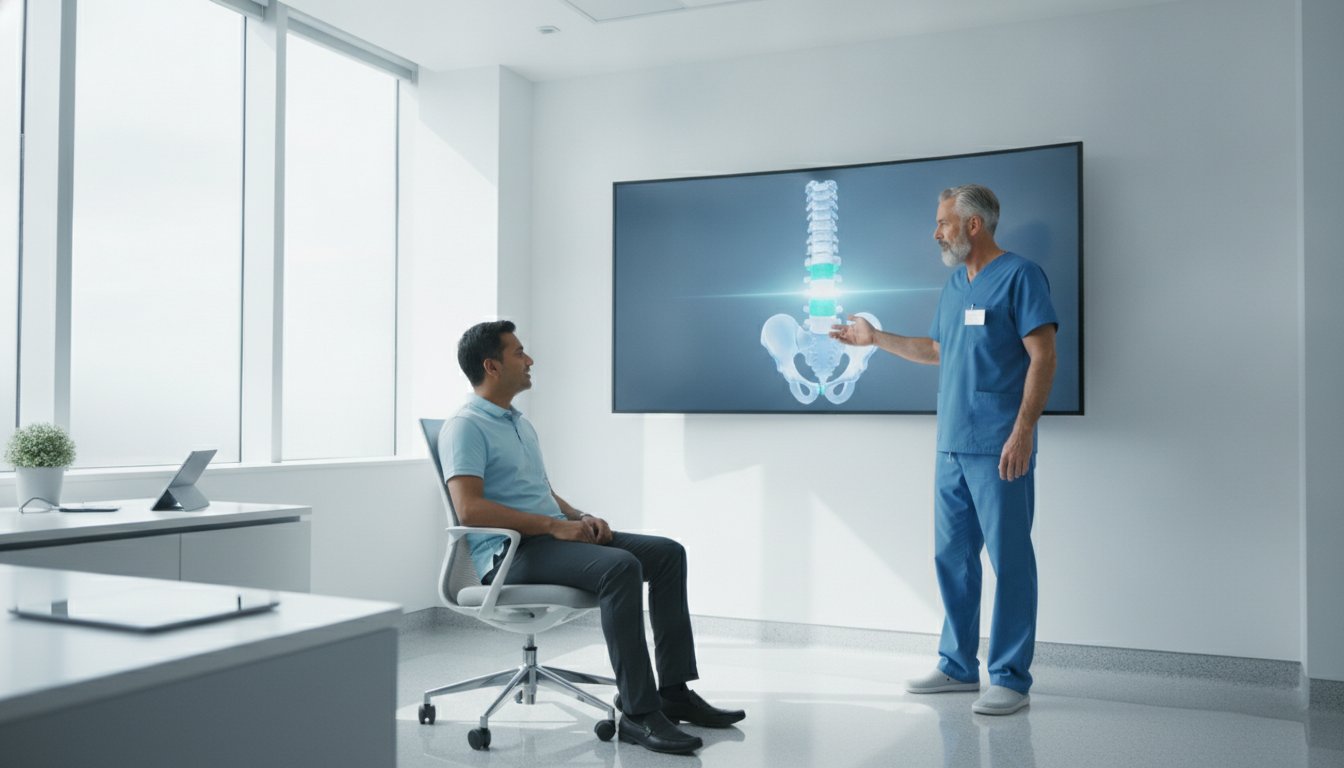
We provide a collaborative environment where Dr. Kutz listens to your personal recovery goals. Whether you want to return to a demanding career or simply enjoy a walk in a local park, your objectives shape the entire diagnostic journey. During the consultation, Dr. Kutz reviews your previous imaging and the specific timeline of your conservative treatment failures. Our boutique surgical center recently expanded with a new headquarters in Lewisville, which opened in 2026 to better serve our growing community. This location, along with our established Plano office, offers convenient access to world-class neurosurgical expertise right here in North Texas.
Your Personalized Recovery Roadmap
Every patient at MINT receives a surgical plan tailored to their specific anatomy and lifestyle. Dr. Kutz utilizes the most advanced technological systems available in modern medicine to enhance patient safety. He frequently employs the Globus Excelsius robotic navigation system, which provides a three-dimensional map of the spine for unparalleled instrument placement. Additionally, he incorporates Augmedics, an augmented reality (AR) headset that allows him to see your internal spinal structures as if through the skin. These innovations lead to smaller incisions, less tissue disruption, and a predictable path back to your normal routine. Contact our office today to schedule a professional evaluation and take the first step toward a life without chronic back pain.
Reclaiming Your Active Lifestyle with Precision Care
Deciding when to consider surgery for back pain requires a balance of clinical evidence and a commitment to your long-term quality of life. If you’ve exhausted conservative therapies or noticed neurological red flags like radiating pain and weakness, specialized intervention is the path forward. Dr. Scott Kutz provides a sophisticated diagnostic roadmap that moves you beyond temporary relief toward a permanent structural solution. By utilizing advanced robotic navigation and augmented reality technology, he ensures that every procedure prioritizes neurological preservation and a rapid return to normal activity.
As a board-certified neurosurgeon and Fellow of the American Association of Neurological Surgeons, Dr. Kutz offers high-tech healing at our boutique surgical centers. Our convenient offices in Lewisville and Plano provide the personalized attention you deserve without the coldness of a large hospital system. You don’t have to navigate chronic pain alone. Schedule a consultation with Dr. Scott Kutz at MINT today to discover how our minimally invasive methodologies can restore your mobility and confidence. We look forward to helping you start your journey toward recovery and lasting progress.
Frequently Asked Questions
How long should I wait before considering back surgery?
You should typically wait between three and six months while attempting conservative treatments like physical therapy and anti-inflammatory medication. Dr. Scott Kutz explains that most acute muscle strains resolve within this window through the body’s natural healing process. If your symptoms persist or worsen after twelve weeks of non-operative care, it is time to schedule a professional evaluation at our Lewisville or Plano facilities.
Can back pain go away on its own without surgery?
Many cases of acute back pain resolve on their own within six to twelve weeks through rest and activity modification. However, structural issues like a severely herniated disc or spinal stenosis often require intervention to achieve lasting relief. Understanding when to consider surgery for back pain is vital when your symptoms reach a plateau and no longer respond to stretching or exercise.
Is minimally invasive spine surgery safer than traditional surgery?
Minimally invasive techniques generally offer a lower risk of infection and significantly less blood loss than traditional open surgery. By utilizing tiny portals and robotic navigation, Dr. Scott Kutz preserves the surrounding muscle tissue and reduces the physical toll on the body. This modern approach leads to shorter hospital stays and a much faster return to normal activity for our patients.
What are the signs that back pain is actually a nerve problem?
Nerve-related pain typically presents as radiating sensations like electric shocks, burning, or tingling that travel down your arms or legs. You may also experience motor weakness, such as difficulty lifting your foot or a loss of grip strength in your hands. Dr. Scott Kutz, a board-certified neurosurgeon, identifies these neurological red flags as clear indicators of nerve root compression that requires specialized attention.
What happens if I decide not to have surgery for a herniated disc?
Choosing to avoid surgery for a herniated disc can lead to chronic pain or permanent neurological deficits if the nerve remains compressed for too long. Untreated compression may eventually cause muscle atrophy, which is the wasting away of muscle tissue, or a permanent loss of sensation. Dr. Scott Kutz evaluates the severity of your disc herniation to determine if surgery is necessary to protect your long-term mobility.
How do I know if my doctor is a qualified spine surgeon?
A qualified surgeon must hold board certification and maintain fellowships with recognized professional organizations. Dr. Scott Kutz is a board-certified neurosurgeon and a Fellow of the American Association of Neurological Surgeons and the American College of Surgeons. These credentials, combined with over 20 years of experience, demonstrate the high level of clinical authority and expertise required for complex spinal procedures.
Will I need physical therapy after minimally invasive surgery?
Most patients participate in a targeted physical therapy program following their procedure to rebuild core strength and spinal flexibility. While minimally invasive methods involve smaller incisions and less tissue disruption, professional guidance helps you regain your full range of motion safely. Dr. Scott Kutz provides a personalized recovery roadmap to ensure your transition back to daily life is efficient and successful.
As you return to your routine, it is important to avoid high-strain activities like heavy landscaping; for expert help with these tasks, you can visit Statement Tree Care to learn about professional tree removal and safety solutions.
Does insurance typically cover minimally invasive spine procedures?
Most major insurance providers cover minimally invasive procedures when they are medically necessary and conservative treatments have failed. You should verify your specific benefits, as most plans require pre-authorization before you move forward with a surgical plan. Our offices in Lewisville and Plano can assist you in understanding how your coverage applies to advanced options like artificial disc replacement or endoscopic surgery.