Minimally Invasive Neurosurgery of Texas (MINT), led by board-certified neurosurgeon Dr. Scott Kutz, provides specialized cervical radiculopathy treatment Plano TX and Lewisville to resolve nerve compression through advanced, motion-preserving techniques.
What if that persistent, electric shock traveling down your arm isn’t just a pulled muscle that needs more rest? Many patients in Plano experience a frustrating loss of grip strength or a constant radiating ache that makes daily tasks feel impossible. You likely want relief but fear the long recovery times associated with traditional open spine surgery. Dr. Scott Kutz, a Fellow of the American Association of Neurological Surgeons and a Fellow of the American College of Surgeons, understands this hesitation. He utilizes precision-guided, minimally invasive techniques to decompress nerves and restore your quality of life. This article explains how these advanced methodologies provide permanent relief and help you return to your normal activities quickly. We detail how specialized care at MINT preserves your neck’s range of motion while eliminating the source of your suffering.
Key Takeaways
- Learn how cervical radiculopathy, or nerve root compression in the neck, triggers radiating arm pain and how Dr. Scott Kutz identifies the source.
- Compare various options for cervical radiculopathy treatment Plano TX, ranging from conservative medication management to advanced surgical interventions at MINT.
- Discover the advantages of motion-preserving artificial disc replacement for maintaining your natural neck flexibility and avoiding traditional spinal fusion.
- Find out how minimally invasive spine surgery techniques reduce recovery times and post-operative pain so you can return to your normal activities sooner.
- Review the credentials of Dr. Scott Kutz, a board-certified neurosurgeon and Fellow of the American Association of Neurological Surgeons and the American College of Surgeons.
What is Cervical Radiculopathy and How is it Treated in Plano?
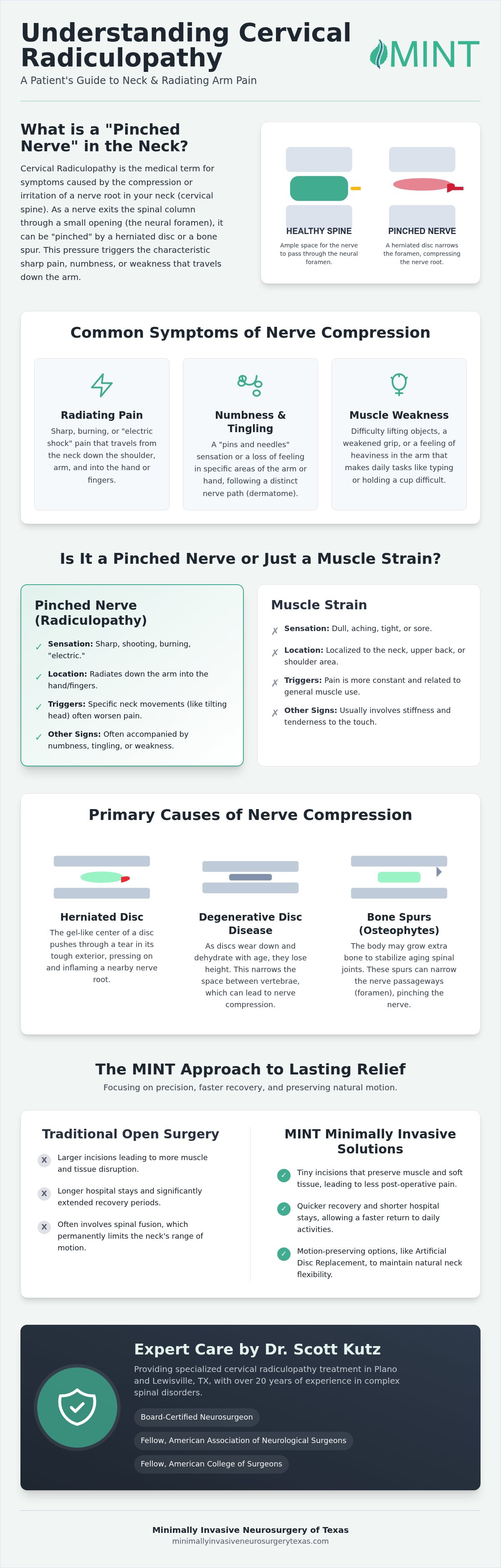
Patients often mistake the sharp, electric sensations of a pinched nerve for a simple muscle pull. However, cervical radiculopathy involves the inflammation or compression of a nerve root as it exits the spinal column. This condition requires specialized care because it directly impacts the nervous system and can lead to permanent damage if left untreated. Dr. Scott Kutz, a Fellow of the American Association of Neurological Surgeons and a Fellow of the American College of Surgeons, offers comprehensive diagnostic evaluations at both the Lewisville headquarters and the Plano satellite office.
Understanding the Anatomy of the Cervical Spine
The neck contains seven cervical vertebrae that form a protective tunnel for the spinal cord. These bones provide the necessary structure for head movement while shielding delicate neural tissue. Between each vertebra sits a fibrocartilaginous disc. These discs function as shock absorbers, allowing for flexibility and preventing the vertebrae from grinding against one another during activity.
Spinal nerves branch out from the spinal cord and exit the column through small windows called the neural foramen. In a healthy spine, these exit points provide plenty of space for the nerves to pass through. When a disc herniates or bone spurs develop, the neural foramen narrows. This narrowing places direct pressure on the nerve root, which triggers the symptoms associated with radiculopathy.
The Difference Between a Pinched Nerve and Muscle Pain
Distinguishing between a muscle strain and a neurological issue is critical for effective treatment. Muscle pain typically feels like a dull ache or stiffness localized in the neck or shoulder blades. It often responds well to heat, ice, and rest. In contrast, Cervical Radiculopathy produces radiating symptoms that travel down the arm and into the hand.
These symptoms follow specific patterns called dermatomes, which Dr. Kutz uses to help identify the exact location of the compression. For instance, compression of the C7 nerve root may cause numbness in the middle finger, while C5 compression often affects the deltoid muscle. Because these issues involve the nervous system, they may lead to muscle weakness or a loss of grip strength. Seeking a consultation at Minimally Invasive Neurosurgery of Texas ensures that you receive a diagnosis based on clinical excellence and certified authority rather than guesswork.
Identifying Symptoms and Causes of Nerve Compression
Symptoms of nerve root compression rarely remain static. You might notice that sharp pain or tingling intensifies when you tilt your head or look over your shoulder. This happens because specific neck movements further reduce the space in the neural foramen, physically pinching the nerve. Patients often report muscle weakness or a “heavy” feeling in the arm that makes lifting a coffee cup or typing difficult. Chronic symptoms like these require a professional evaluation to prevent permanent nerve damage. Dr. Scott Kutz, a board-certified neurosurgeon, Fellow of the American Association of Neurological Surgeons, and Fellow of the American College of Surgeons, uses precision-based surgical planning to identify the exact source of compression. This ensures that your cervical radiculopathy treatment Plano TX addresses the root cause rather than just the surface symptoms.
Common Causes of Cervical Radiculopathy
A herniated disc is one of the most frequent triggers for nerve irritation. When the soft, jelly-like center of a spinal disc leaks through a tear in the outer layer, it releases inflammatory chemicals. These substances irritate the nearby nerve root even if the physical pressure is minimal. Degenerative disc disease also plays a major role. As discs age and lose hydration, the space between vertebrae collapses. This collapse often leads to the formation of bone spurs, or osteophytes. These hard bumps grow near the joints and can press directly into the spinal nerves. Additionally, spinal stenosis causes a generalized narrowing of the spaces within your spine, often resulting from a combination of ligament thickening and arthritic changes.
When to Seek Urgent Neurosurgical Care
While many cases begin with manageable discomfort, certain “red flag” symptoms indicate a need for immediate intervention. A sudden loss of coordination, severe arm weakness, or difficulty with fine motor skills like buttoning a shirt suggests significant nerve distress. Early intervention is vital because it prevents long-term neurological deficits that may become irreversible over time. Dr. Kutz begins the diagnostic process with a thorough physical exam followed by advanced imaging. An MRI provides a detailed look at soft tissues like discs and nerves, while an EMG (electromyography) measures the electrical activity of muscles to confirm nerve damage.
Understanding the Conservative vs Surgical Treatment Options is the first step toward recovery. If you are experiencing persistent radiating pain, you should request a diagnostic evaluation at our Plano or Lewisville office to determine if you are a candidate for minimally invasive spine surgery.
Most patients beginning their search for cervical radiculopathy treatment Plano TX hope to find relief without entering an operating room. Dr. Scott Kutz, a board-certified neurosurgeon and Fellow of the American Association of Neurological Surgeons, prioritizes this preference by exploring every viable non-surgical avenue first. This patient-first philosophy ensures that surgery remains a definitive solution rather than a rushed first step. The clinical team at Minimally Invasive Neurosurgery of Texas (MINT) focuses on accurate diagnosis to determine if conservative measures can realistically resolve the underlying nerve irritation.
Interventional Pain Management Strategies
Non-surgical care often begins with a combination of activity modification and anti-inflammatory medications. These tools help calm the initial irritation and reduce swelling around the nerve root. For more persistent cases, cervical epidural steroid injections deliver powerful anti-inflammatory agents directly to the space near the compression. These injections can provide significant relief by quieting the chemical inflammation that often accompanies a herniated disc. To better understand the nature of your condition, you might ask What is Cervical Radiculopathy? according to clinical research.
While MINT does not provide in-house physical therapy, Dr. Kutz frequently recommends it as a foundational first step. Specialized therapists help patients improve their posture and strengthen the supporting musculature of the cervical spine. Some individuals also find that specialized chiropractic adjustments are a helpful addition to their wellness routine; for instance, you might visit Restore Chiropractic Center to learn about their focus on upper cervical health. These methods manage symptoms effectively but do not always fix a structural issue like a large bone spur. If the mechanical compression is severe, conservative care may only provide temporary results.
When is Surgery Necessary for Cervical Radiculopathy?
Conservative methods have limitations. If symptoms do not improve after six to twelve weeks of dedicated non-surgical care, surgery often becomes the most predictable path to recovery. Progressive neurological worsening, such as increasing muscle weakness or a loss of sensation in the hand, dictates a more urgent need for intervention. In these cases, waiting too long can lead to permanent nerve damage.
Dr. Scott Kutz, who is also a Fellow of the American College of Surgeons, specializes in minimally invasive spine surgery. These modern techniques serve as a sophisticated alternative to traditional, more invasive procedures. By focusing on decompressing the nerve through micro-incisions, Dr. Kutz helps patients achieve a fast return to daily activities. This approach prioritizes long-term relief and the preservation of natural neck motion through options like artificial disc replacement, ensuring that patients can reclaim their quality of life with minimal disruption.
Minimally Invasive Surgical Solutions for Lasting Relief
When conservative measures fail to provide adequate relief, surgical intervention becomes the most effective path to decompress the affected nerve. Dr. Scott Kutz specializes in providing cervical radiculopathy treatment Plano TX through advanced, minimally invasive techniques. Unlike traditional open surgery, these methods focus on precision and tissue preservation. Dr. Kutz, a board-certified neurosurgeon and Fellow of the American Association of Neurological Surgeons, utilizes specialized tools to address the structural cause of your pain while minimizing the impact on surrounding muscles.
- Endoscopic Spine Surgery: Dr. Kutz uses tiny cameras and specialized instruments to decompress nerves through quarter-inch incisions. This high-tech approach allows for exceptional visibility and precision.
- Posterior Cervical Foraminotomy: This procedure creates more space for the nerve root by removing bone spurs or disc fragments from the back of the neck. It effectively relieves pressure without requiring a full disc removal.
- Cervical Microdiscectomy: During this precision procedure, Dr. Kutz removes the specific portion of herniated disc material that is pressing against the nerve.
The Benefits of Motion Preservation
Traditional spinal fusion joins two vertebrae together to stop painful movement, but this often limits your natural range of motion. Dr. Kutz prioritizes motion-preserving alternatives like artificial disc replacement whenever possible. By replacing a damaged disc with a prosthetic device, the neck maintains its natural flexibility and rotation. This approach also reduces the risk of adjacent segment disease; a condition where the spinal levels above and below a fusion experience accelerated wear and tear because they must compensate for the lack of movement at the fused site.
Recovery Timelines for Minimally Invasive Procedures
The primary advantage of minimally invasive spine surgery (MISS) is the significantly reduced impact on the body. These techniques result in less blood loss and involve much smaller incisions than traditional methods. Because Dr. Kutz does not need to strip large muscle groups away from the bone, patients experience less post-operative pain. Many patients at our Lewisville and Plano locations return home the same day or after a brief period of observation.
While every recovery is unique, most patients return to light activities and office work within one to two weeks. You can typically resume more strenuous activities and exercise after a few weeks of healing. This efficient timeline supports our ultimate goal of helping you achieve a fast return to your normal daily routine. If you are ready to explore your surgical options for lasting relief, you can schedule a consultation with Dr. Scott Kutz at Minimally Invasive Neurosurgery of Texas today.
Why Patients Choose Dr. Scott Kutz at MINT
Dr. Scott Kutz brings over two decades of experience to patients seeking cervical radiculopathy treatment Plano TX and Lewisville. He couples this extensive clinical background with the persona of a high-tech healer, utilizing cutting-edge robotic technology to ensure surgical precision. As a board-certified neurosurgeon, Dr. Kutz holds prestigious credentials as a Fellow of the American Association of Neurological Surgeons and a Fellow of the American College of Surgeons. These certifications signify his commitment to the highest standards of surgical care and professional excellence within the Dallas-Fort Worth area.
At Minimally Invasive Neurosurgery of Texas (MINT), the team prioritizes a patient-centered approach that balances clinical authority with compassionate reassurance. Dr. Kutz ensures every individual understands their diagnosis and the specific mechanical reasons behind their nerve compression. He incorporates advanced minimally invasive spine techniques to reduce the physical impact of surgery. This focus on modern methodology helps patients move from a state of chronic concern to informed confidence regarding their recovery journey.
Convenient Care in Plano and Lewisville
Accessibility is a cornerstone of our practice philosophy. While MINT relocated its primary headquarters to Lewisville in 2026, it maintains a dedicated satellite office in Plano to ensure easy access for North Texas residents. This dual-location model allows our team to serve patients from surrounding communities including Frisco, Allen, McKinney, and Southlake with ease. Patients often seek out Dr. Kutz for a second opinion on spine surgery to confirm if they are candidates for less invasive, motion-preserving alternatives to traditional fusion. Our boutique surgical center environment avoids the coldness of a large hospital system, providing personal attention that prioritizes your comfort and quality of life.
Commitment to Clinical Excellence
Precision defines every procedure at MINT. Dr. Kutz utilizes sophisticated navigation systems like Globus Excelsius to enhance accuracy during delicate spinal work. This robotic-assisted technology allows for the most precise placement of hardware and decompression of nerves possible. Unlike general neurosurgical practices that may handle cranial cases, MINT focuses exclusively on spinal health. This specialization provides a depth of expertise that translates into better clinical outcomes and faster recovery timelines for our patients.
Our results-oriented rhythm mirrors the diagnostic journey of our patients. We begin by acknowledging your health as our top priority and move quickly toward a technical solution that fits your lifestyle. You can view patient testimonials to see real-world examples of how our specialized care has helped others achieve a fast return to normal activity. By choosing Dr. Scott Kutz, you’re selecting a surgeon who operates at the absolute forefront of modern surgical innovation while remaining deeply rooted in the local community.
Reclaim Your Life from Radiating Nerve Pain
Living with the electric sensations of radiating arm pain or the frustration of muscle weakness shouldn’t be your permanent reality. Dr. Scott Kutz provides specialized cervical radiculopathy treatment Plano TX and Lewisville to address the structural source of your symptoms with surgical precision. By choosing motion-preserving options like artificial disc replacement or advanced endoscopic decompression, you avoid the limitations of traditional spinal fusion. These techniques prioritize your quality of life and ensure a fast return to normal activity.
Dr. Kutz is a board-certified neurosurgeon and Fellow of the American Association of Neurological Surgeons and the American College of Surgeons. He utilizes his 20 years of experience and state-of-the-art technology to deliver clinical excellence with a compassionate touch. Don’t allow nerve compression to limit your mobility or your future. You can schedule a consultation with Dr. Scott Kutz at MINT today to begin your journey toward lasting relief. Our dedicated team is ready to provide the specialized care you need to move forward with confidence.
Frequently Asked Questions
Is cervical radiculopathy the same as a pinched nerve in the neck?
Cervical radiculopathy is the clinical term for a pinched nerve in the neck. It occurs when a nerve root is compressed or inflamed as it exits the spinal column. Dr. Scott Kutz explains that while “pinched nerve” is a common descriptor, radiculopathy specifically refers to the neurological symptoms that result from this compression. These symptoms include pain, numbness, or tingling that travels away from the neck and into the arm.
Can cervical radiculopathy go away on its own without surgery?
Many patients find relief through non-surgical methods without ever needing an operation. Dr. Scott Kutz typically recommends conservative cervical radiculopathy treatment Plano TX as a first step for six to twelve weeks. This approach often includes anti-inflammatory medications and specialized physical therapy to reduce nerve irritation. However, if a structural issue like a bone spur causes severe mechanical compression, the condition may require surgical intervention to prevent long-term damage.
How long does it take to recover from minimally invasive neck surgery?
Most patients return to light activities and office work within one to two weeks after a minimally invasive procedure. Because Dr. Scott Kutz utilizes micro-incisions and avoids stripping large muscle groups, the recovery is significantly faster than traditional open surgery. You can typically resume more strenuous exercise after several weeks of healing. This efficient timeline supports our goal of helping you achieve a fast return to your normal daily routine.
Will I lose range of motion in my neck after treatment?
You will likely preserve or even improve your range of motion if you undergo a motion-preserving procedure like artificial disc replacement. Unlike traditional spinal fusion, which joins vertebrae together and limits flexibility, modern techniques maintain the natural rotation of your neck. Dr. Kutz prioritizes these methods at our Plano and Lewisville offices to reduce the risk of adjacent segment disease and keep your spine moving naturally.
What is the success rate of artificial disc replacement for radiculopathy?
Clinical studies show high satisfaction rates for patients undergoing modern surgical interventions for nerve-related arm pain. Research from multi-center studies indicates that 92% of patients undergoing minimally invasive spine surgery report positive outcomes. Additionally, patient satisfaction rates for endoscopic and motion-preserving procedures consistently exceed 85% at two-year follow-ups. These statistics highlight the reliability of advanced neurosurgical techniques performed by a board-certified specialist like Dr. Scott Kutz.
Does Dr. Scott Kutz accept insurance for cervical radiculopathy treatment?
Minimally Invasive Neurosurgery of Texas works with various insurance providers, though coverage depends on your specific plan and medical necessity. Patients should verify their benefits with their insurance provider before beginning cervical radiculopathy treatment Plano TX. Our office team helps coordinate this process to ensure you understand your options. We prioritize clear communication to help you move from a state of concern to a state of informed confidence.
How do I know if my arm pain is caused by my neck?
Arm pain caused by the neck usually follows a radiating pattern known as a dermatome. If you feel sharp, electric sensations that travel from your shoulder down to your fingers, the source is likely a compressed nerve root in the cervical spine. Muscle strains usually stay localized in the shoulder or neck area. Dr. Scott Kutz uses MRI and EMG testing to confirm the exact source of your neurological symptoms.
What happens if cervical radiculopathy is left untreated?
Leaving nerve compression untreated can lead to permanent neurological deficits and chronic suffering. Chronic pressure on a nerve root may cause irreversible muscle wasting, loss of fine motor skills, or permanent numbness in the hand. Dr. Scott Kutz emphasizes that early intervention is critical for decompressing the nerve before the damage becomes irreversible. Seeking a professional evaluation at MINT ensures you protect your long-term mobility and upper body strength.