Minimally Invasive Neurosurgery of Texas (MINT) is the specialized practice of Dr. Scott Kutz, a board-certified neurosurgeon and Fellow of the American Association of Neurological Surgeons (AANS). From our clinics in Lewisville and Plano, TX, Dr. Kutz provides advanced neurosurgical care for nerve compression. He focuses on motion-preserving techniques and endoscopic spine surgery, which is a procedure using a tiny camera and small incisions to minimize tissue damage.
What if the sharp, radiating pain down your legs isn’t a permanent burden, but a structural problem that a specialist can resolve? You likely feel exhausted by the constant numbness and tingling that prevents a good night’s sleep. This article shows you how to find effective nerve pain treatment Lewisville TX by treating the root cause of chronic nerve compression. Dr. Scott C. Kutz, MD, uses precision neurosurgery to help patients achieve long-term relief. You will learn about modern diagnostic steps, outpatient surgical options, and the path to a quick return to normal physical activities.
Key Takeaways
- Learn how radiculopathy, or pressure on a spinal nerve root, causes chronic pain and why treating the structural root cause is essential for long-term relief.
- Explore advanced diagnostic tools like high-resolution MRI scans that allow Dr. Scott Kutz to map nerve compression with extreme precision in Lewisville and Plano.
- Discover why modern nerve pain treatment Lewisville TX favors minimally invasive neurosurgery over traditional open procedures to reduce recovery time and muscle damage.
- Understand the advantages of endoscopic spine surgery, which is a technique that uses a small camera to remove fragments pressing on nerves through tiny incisions.
- See how motion-preserving options like artificial disc replacement help you return to normal physical activities without the limitations of traditional spinal fusion.
Understanding Chronic Nerve Pain and Radiculopathy
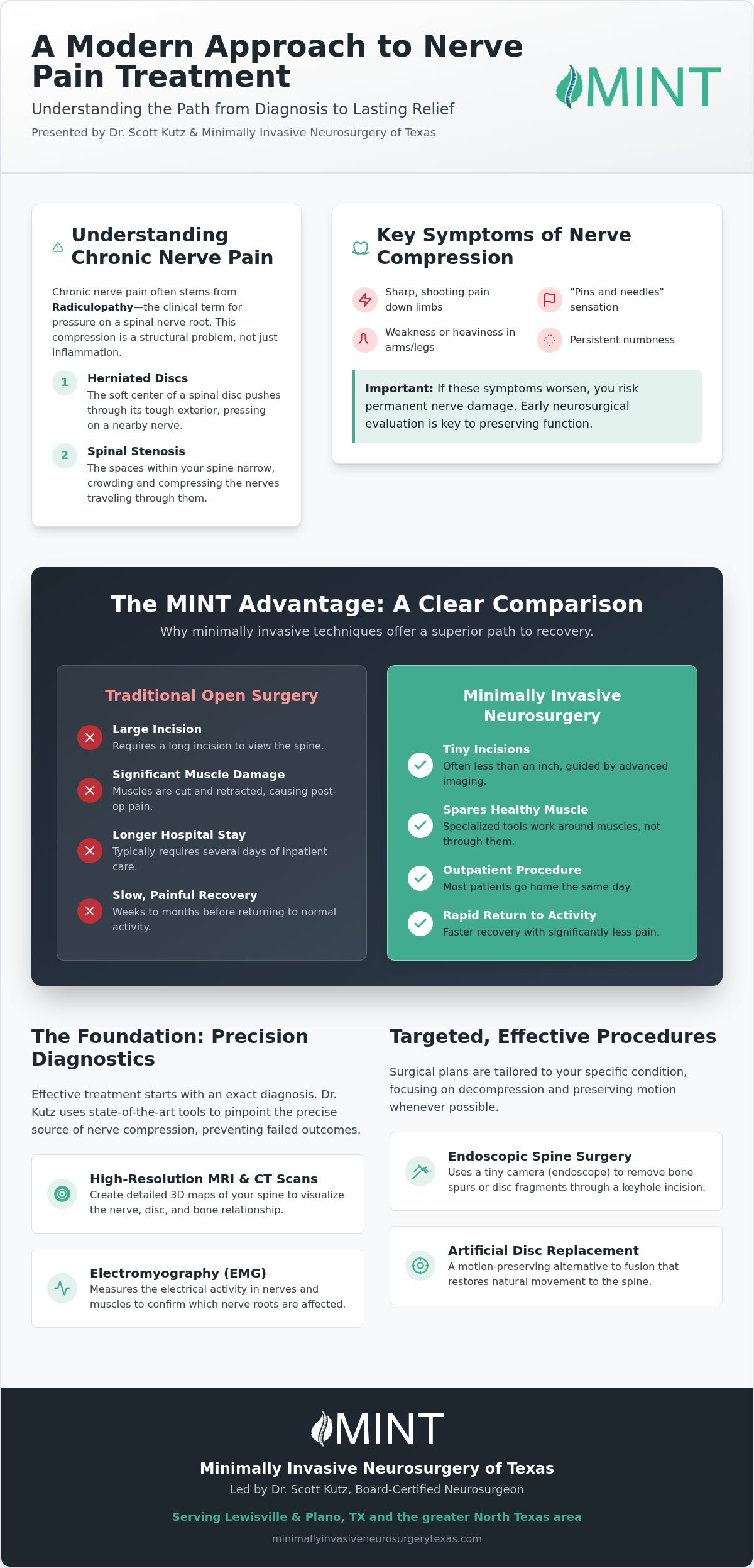
Minimally Invasive Neurosurgery of Texas (MINT) and Dr. Scott Kutz provide specialized nerve pain treatment Lewisville TX and Plano. Chronic nerve pain often originates from radiculopathy, which is the clinical term for pressure on a spinal nerve root. This compression usually results from structural changes in the spinal column that physically crowd the neural pathways. Conditions like herniated discs, where the soft center of a spinal disc pushes through a crack in the tougher exterior, or spinal stenosis, which is the narrowing of the spaces within your spine, frequently cause this distress.
When a nerve remains compressed for an extended period, it can lead to permanent neurological damage. Dr. Scott Kutz, a board-certified neurosurgeon, emphasizes that patients need a comprehensive neurosurgical evaluation to identify these mechanical blockages early. While some minor discomfort might resolve with rest, chronic compression requires a specialist’s eye to ensure the nerve’s long-term health and function. Understanding the source of your pain is the first step toward a successful recovery.
Symptoms of Nerve Compression in the Spine
Recognizing the signs of nerve impingement helps you seek care before damage becomes irreversible. Patients often describe sharp, shooting pains that travel from the lower back into the legs or from the neck into the arms. This sensation differs significantly from a standard dull muscle ache. You might also notice a heavy or weak feeling in your limbs, which doctors call a motor deficit. This weakness indicates that the nerve cannot effectively transmit signals to your muscles. Other common indicators include persistent numbness that does not resolve with position changes, a “pins and needles” sensation that frequently disrupts sleep, or a loss of coordination when walking.
Why Conservative Treatments Often Fail
Many patients attempt physical therapy or chiropractic care before seeking nerve pain treatment Lewisville TX at MINT. While these methods help manage muscle tension, they cannot move a physical bone spur or a ruptured disc that is pressing on a nerve. Epidural steroid injections, which are anti-inflammatory medications delivered near the spinal nerves, may provide temporary relief by reducing local swelling. For readers looking for more information on how these treatments are used for lower extremity pain, Illinois Podiatry Specialists explains the role of therapeutic injections in managing discomfort. However, these injections do not fix the underlying structural problem causing the compression. If you delay a surgical consultation while neurological symptoms worsen, you increase the risk of permanent functional loss. Dr. Scott Kutz focuses on treating the mechanical root cause to help patients achieve a true return to normal activity.
Advanced Diagnostics for Nerve Pain in Lewisville and Plano
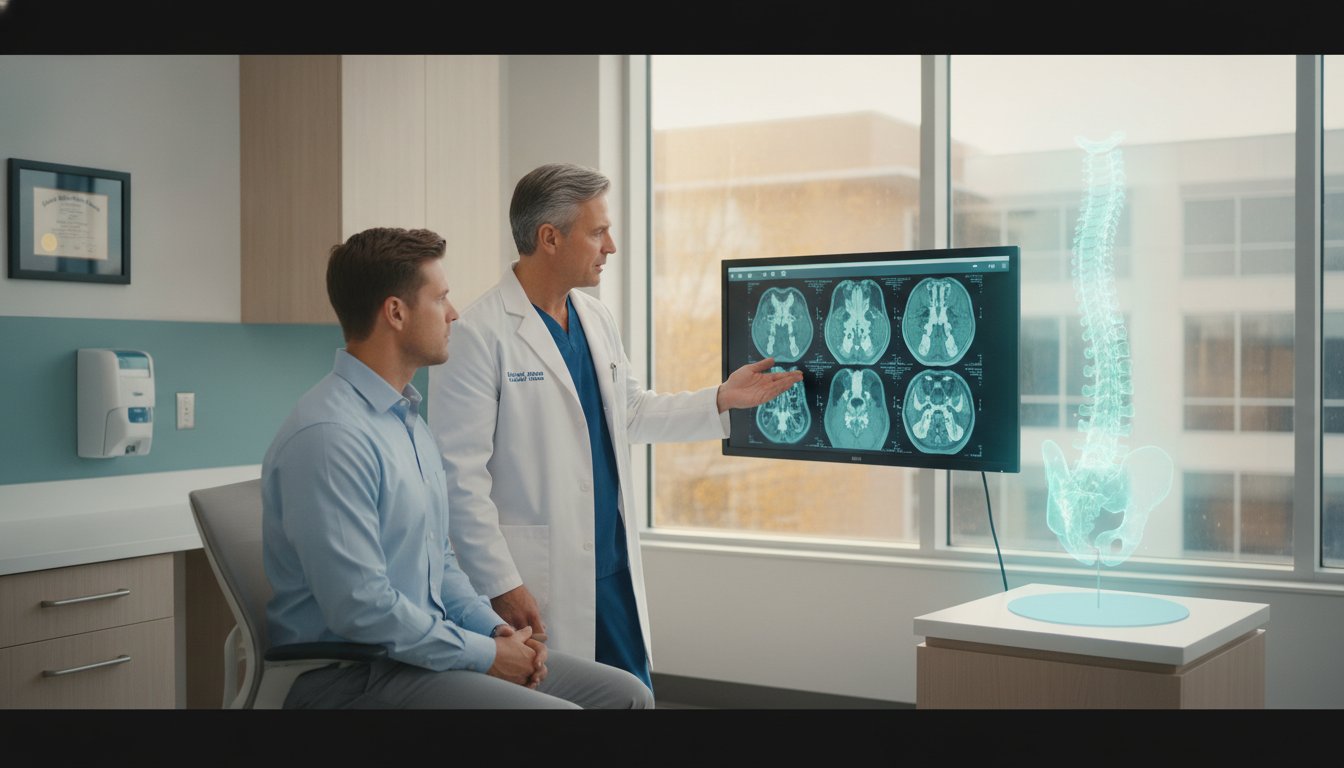
Effective nerve pain treatment Lewisville TX begins with identifying the exact location of the structural problem. Dr. Scott Kutz uses high-resolution MRI and CT scans to visualize the spine with incredible detail. These images allow him to map the site of compression precisely. By seeing the relationship between the nerves and the vertebrae, which are the individual bones of the spine, he can build a surgical plan that targets the correct level. This accuracy ensures that the procedure addresses the specific mechanical issue rather than a general area of discomfort.
This level of precision is critical for patients throughout North Texas, including Dallas, Fort Worth, McKinney, and Southlake. Many patients come to MINT after experiencing failed back surgery syndrome. This condition refers to chronic pain that persists even after a previous spinal procedure. Often, the original surgery failed because the surgeon did not address the specific source of the nerve impingement. Accurate diagnostics prevent this outcome by ensuring the treatment matches the pathology. Dr. Kutz prioritizes a clear diagnosis before suggesting any surgical intervention.
The Role of Electromyography (EMG)
To complement imaging, Dr. Kutz often uses electromyography, or EMG. This diagnostic test measures the electrical activity of your muscles in response to nerve stimulation. Nerve conduction studies often accompany an EMG to track how fast electrical signals move through your peripheral nerves. These tests help localize the source of pain by showing exactly where a nerve is losing function. Integrating these functional tests with static imaging provides a complete picture of your spinal health and confirms which nerve roots require decompression.
Precision Surgical Planning
Modern neurosurgery relies on advanced technology like 3D spinal mapping. Dr. Kutz uses these tools to identify the smallest possible entry point for decompression. Systems like Globus Excelsius and Augmedics provide robotic and augmented reality guidance. This technology allows the surgeon to navigate the complex anatomy of the spine with sub-millimeter accuracy. If you are struggling with radiating pain, you can request an appointment for a diagnostic evaluation in Lewisville to find a clear path forward.
Minimally Invasive Nerve Pain Treatment vs. Traditional Surgery
Dr. Scott Kutz performs nerve pain treatment Lewisville TX using advanced minimally invasive neurosurgery. Traditional spine surgery often requires a long incision and the detachment of significant muscle groups from the spine. This invasive approach causes extensive tissue trauma and leads to a painful, protracted recovery. In contrast, Dr. Kutz uses specialized instruments to access the spinal column through tiny incisions, often no larger than a postage stamp. These techniques allow him to treat the structural cause of your pain without the collateral damage associated with older methods.
He prioritizes muscle-sparing techniques during every procedure. Instead of cutting through major back muscles, he uses tubular retractors, which are small tubes that gently push muscle fibers aside. This method preserves the structural integrity of the back and results in significantly less post-operative pain. Because these procedures cause minimal disruption to the body, patients in Lewisville and Plano typically return home the same day. This outpatient approach is a hallmark of the care provided at MINT, serving residents from Dallas, Fort Worth, and McKinney.
Benefits of Smaller Incisions
The use of smaller openings offers several clinical advantages beyond just a smaller scar. Smaller incisions drastically reduce the risk of surgical site infection and minimize blood loss during the procedure. Patients also appreciate the aesthetic benefit of minimal scarring compared to the large, visible marks left by traditional open surgery. Perhaps most importantly, these techniques eliminate the need for an extended hospital stay. Most MINT patients recover in the comfort of their own homes, which reduces the overall stress of the surgical experience and helps prevent hospital-acquired complications.
Faster Return to Normal Activity
The most significant difference between traditional and minimally invasive care is the recovery timeline. Traditional open surgery often requires weeks or months of restricted movement while large muscle groups heal. Minimally invasive procedures often allow patients to begin walking within hours of the operation. Most individuals return to their daily routines within a few days rather than months.
Dr. Kutz utilizes motion-preserving techniques to help patients stay active. You can learn more about minimally invasive spine techniques to see how these advancements change the surgical experience. By focusing on the structural cause of pain with minimal physical impact, MINT helps patients reclaim their quality of life quickly. This efficiency is why many active adults in North Texas choose neurosurgical intervention over long-term pain management.
Effective Procedures for Lasting Nerve Relief
Dr. Scott Kutz offers several advanced procedures to provide long-term nerve pain treatment Lewisville TX and Plano. While injections only mask symptoms temporarily, these surgical interventions fix the structural compression causing your distress. Dr. Kutz performs these outpatient procedures at accredited surgical facilities using the latest medical technology. He specializes in motion-preserving techniques that allow patients to maintain their natural flexibility and activity levels.
Microdiscectomy remains a highly effective option for treating herniated discs in the lumbar spine, which is the lower back. During this surgery, Dr. Kutz removes the specific portion of the disc material that is pressing on the spinal nerve. This action immediately relieves the mechanical pressure and the resulting radiating pain. Because he uses a high-powered microscope and specialized small instruments, the incision remains tiny. Most patients experience immediate relief from leg pain following this procedure and return home within hours.
Endoscopic Decompression
Endoscopic spine surgery is a procedure that uses a tiny camera and specialized tools to decompress nerves through a very small opening. This technique is particularly effective for treating foraminal stenosis, which is the narrowing of the openings where nerves exit the spinal canal. By visualizing the internal anatomy on a high-definition monitor, Dr. Kutz can remove bone spurs or thickened ligaments with extreme precision. This ultra-minimally invasive approach minimizes disruption to the surrounding tissues. You can explore the endoscopic spine surgery options at MINT to see how this technology helps patients avoid traditional open surgery.
Artificial Disc Replacement (ADR)
Artificial disc replacement provides a modern alternative to traditional spinal fusion for maintaining range of motion. While fusion joins two vertebrae together and permanently limits movement, ADR replaces a damaged disc with a prosthetic device that mimics natural spinal function. This procedure effectively relieves nerve pain caused by degenerative disc disease, which is the wear and tear of spinal discs over time. Maintaining this range of motion reduces the stress on surrounding spinal levels and may prevent future issues. View our artificial disc replacement guide to learn how this technology supports an active lifestyle.
Choosing the right procedure depends on a clear diagnosis and a thorough evaluation by a board-certified neurosurgeon. Dr. Kutz and the team at MINT prioritize finding the least invasive solution that provides the most durable results. If you are ready to address the root cause of your chronic pain, contact MINT to schedule your consultation in Lewisville or Plano.
Your Recovery and Results with Dr. Scott Kutz
Dr. Scott Kutz is a board-certified neurosurgeon and a Fellow of the American College of Surgeons (ACS). This fellowship signifies that his surgical training and professional conduct meet the highest international standards. At Minimally Invasive Neurosurgery of Texas (MINT), he provides high-precision nerve pain treatment Lewisville TX and Plano. Our team prioritizes patient-first communication to ensure you understand every phase of your recovery journey. Most patients experience immediate relief from radiating nerve pain once Dr. Kutz performs a decompression. Decompression is a surgical procedure that removes the bone or disc material physically pressing on a spinal nerve.
Following your procedure, our practice provides structured follow-up care to monitor your healing progress. This specialized attention ensures a safe and effective return to your favorite activities. Dr. Kutz focuses on motion-preserving techniques, which means he aims to keep your spine moving naturally rather than locking it in place with a fusion. This approach is the cornerstone of our “return to normal activity” promise. We believe that a successful surgery shouldn’t just stop the pain but also restore your ability to live an active life.
What to Expect After Surgery
During the typical 24-hour post-operative window, most minimally invasive patients recover in the comfort of their own homes. You’ll likely begin a transition from surgical rest to light stretching and walking within the first day. This early movement is vital because it prevents muscle stiffness and promotes healthy blood flow to the surgical site. Unlike traditional open surgery, these modern techniques don’t require weeks of bed rest. Most patients find that they can resume sedentary work within a few days. You can read our patient testimonials to see real results from patients who have undergone these advanced procedures.
Schedule Your Consultation in Lewisville
We encourage patients from Flower Mound, Southlake, and McKinney to visit our Lewisville headquarters. This facility serves as a boutique surgical center where you receive personal attention from a dedicated local physician. Dr. Kutz also offers expert second opinions for complex nerve pain cases. If a previous doctor told you that surgery was too risky or that you had to live with the pain, a neurosurgical evaluation can provide new options. A clear diagnosis from a board-certified specialist is the first step toward lasting relief. Contact MINT today to start your journey toward a pain-free life.
Reclaim Your Active Lifestyle in Lewisville
Chronic nerve pain often signals a mechanical issue in the spine that requires more than just surface-level care. By focusing on the structural root cause, Dr. Scott Kutz helps patients move past the cycle of temporary relief. Modern diagnostics like high-resolution MRI and EMG allow him to target the exact site of compression with sub-millimeter accuracy. You now understand how motion-preserving techniques and minimally invasive procedures offer a faster, safer alternative to traditional open surgery.
Choosing professional nerve pain treatment Lewisville TX connects you with a neurosurgeon who is board-certified by the American Board of Neurological Surgery and has over 20 years of clinical experience. Dr. Kutz uses specialized motion-preserving spinal technology to protect your natural range of motion while resolving pain. This clinical expertise ensures you receive a personalized plan that supports your specific recovery goals. Schedule your nerve pain consultation with Dr. Scott Kutz to begin your journey toward a pain-free life. You can return to the activities you love with confidence.
Frequently Asked Questions
Is minimally invasive nerve pain treatment permanent?
Minimally invasive procedures provide a permanent solution for nerve pain by removing the physical obstruction pressing on the nerve. While degenerative changes can occur elsewhere in the spine over time, the specific decompression performed by Dr. Kutz addresses the root cause at that level. This approach offers a more durable outcome than temporary treatments like steroid injections or nerve blocks that only mask symptoms.
How long is the recovery after endoscopic spine surgery?
Most patients return to light activities and sedentary work within a few days of their endoscopic spine surgery. This ultra-minimally invasive technique uses a tiny incision that heals quickly and causes minimal tissue disruption. You will typically begin walking within hours of the procedure. While you should avoid heavy lifting for several weeks, the overall recovery timeline is significantly shorter than traditional open back surgery.
Can Dr. Scott Kutz treat sciatica without a major fusion surgery?
Dr. Scott Kutz frequently treats sciatica using motion-preserving techniques instead of permanent spinal fusion. Procedures like microdiscectomy or endoscopic decompression remove the material pressing on the sciatic nerve without locking the vertebrae together. This preserves your natural flexibility and spinal health. These outpatient options provide effective nerve pain treatment Lewisville TX and allow for a much faster return to your normal physical activities.
What is the difference between a pain management doctor and a neurosurgeon?
A pain management doctor typically focuses on reducing symptoms through medication, physical therapy, or injections. A neurosurgeon like Dr. Scott Kutz identifies and corrects the mechanical or structural issues causing those symptoms through surgical intervention. While pain management provides temporary relief, a neurosurgical evaluation determines if a physical blockage requires decompression. Choosing a board-certified neurosurgeon ensures you address the actual source of nerve impingement.
Does insurance cover minimally invasive nerve decompression in Texas?
Most major insurance providers in Texas cover minimally invasive nerve decompression when medical necessity exists for the procedure. Every plan has different requirements for prior authorization, especially following recent regulatory updates for pain management procedures. You should verify your specific benefits with your provider before scheduling. The team at MINT helps patients navigate the insurance process to ensure they understand their coverage for nerve pain treatment Lewisville TX.
What happens if I delay treatment for my compressed nerve?
Delaying treatment for a compressed nerve increases the risk of permanent neurological damage and chronic functional loss. Long-term pressure on a nerve root can lead to muscle wasting, permanent numbness, or a loss of motor control in your limbs. If you experience foot drop or significant weakness, you require an immediate evaluation. Early intervention by a neurosurgeon prevents the progression of these symptoms and ensures a better chance for a full recovery.
Will I need physical therapy after my procedure at MINT?
Dr. Kutz often recommends a brief course of physical therapy to help you regain core strength and flexibility after your procedure. While the surgery fixes the structural compression, therapy ensures your muscles support your spine correctly as you return to activity. This collaborative approach helps prevent future injuries and strengthens the surgical outcome. Most patients find that a structured exercise program accelerates their recovery and improves their long-term results.
How do I know if I am a candidate for artificial disc replacement?
You may be a candidate for artificial disc replacement if you have chronic nerve pain caused by degenerative disc disease at one or two levels. This procedure works best for patients who do not have significant joint arthritis or spinal instability. Dr. Scott Kutz performs a detailed diagnostic evaluation in Lewisville or Plano to determine if ADR is the right motion-preserving choice for your specific spinal anatomy.