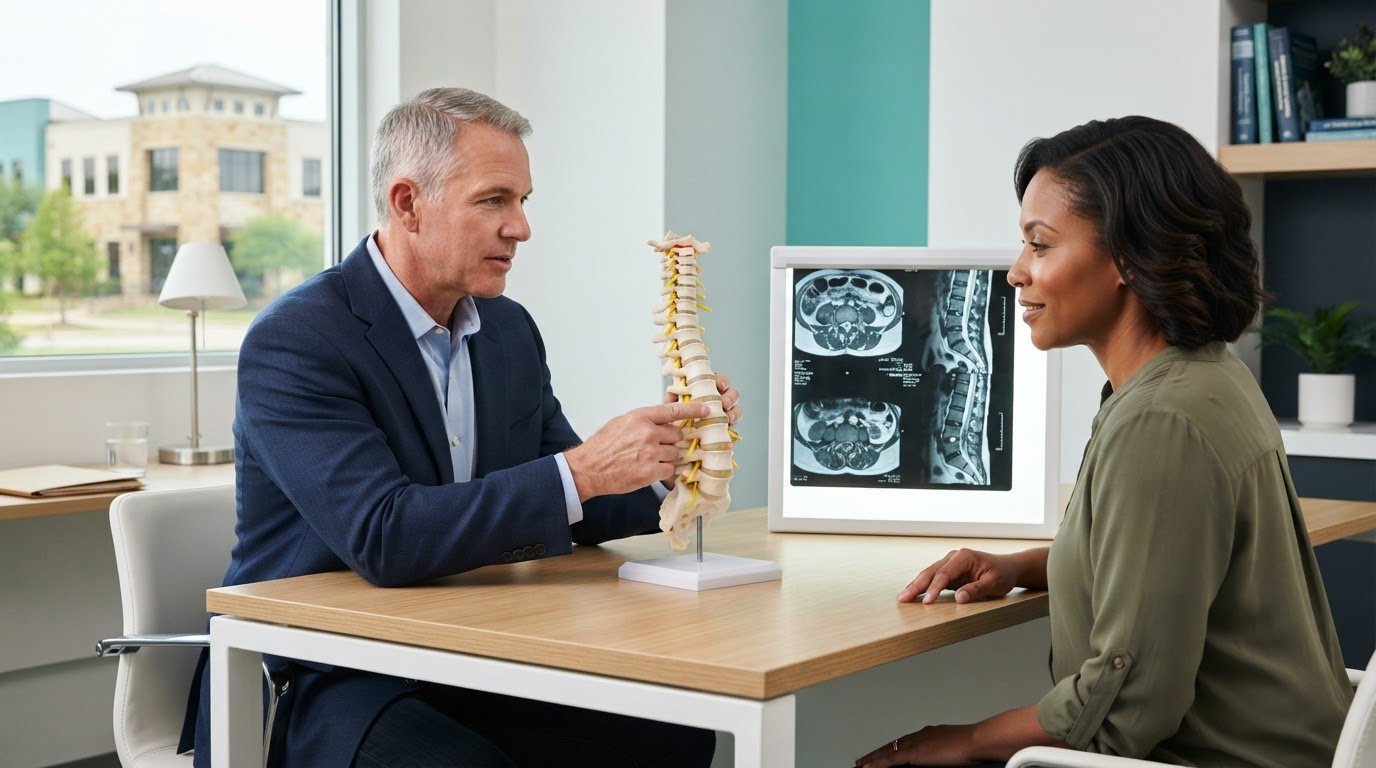
Minimally Invasive Neurosurgery of Texas (MINT), led by Dr. Scott C. Kutz, provides second opinions for spinal stenosis in Lewisville, TX, and Plano, TX. If you’re seeking a second opinion for spinal stenosis Lewisville TX, a consultation can help clarify what your imaging shows and whether those findings fit your symptoms.
Should an MRI, or magnetic resonance imaging scan, alone determine whether you need spine surgery? It’s reasonable to want a clear explanation before choosing treatment, especially if specialists recommend different approaches. A second opinion can help you understand the diagnosis, discuss options, and consider how each recommendation may affect your daily activities. Surgery doesn’t always mean fusion, which joins bones together. Some procedures decompress nerves by removing tissue that presses on them.
This article explains what a second opinion can clarify, which medical records and imaging to gather, and how to compare recommendations from spine specialists in Lewisville and Plano. You’ll also find questions to help you decide on an informed next step.
Key Takeaways
- A second opinion for spinal stenosis Lewisville TX can help you compare a diagnosis and treatment recommendations with your symptoms and daily needs.
- A specialist may review your medical history, neurological exam, imaging, and treatments you’ve already tried.
- Seeking another opinion doesn’t mean you’ve decided to have surgery or distrust your current specialist.
- Prepare for a focused consultation by gathering your records, imaging, symptom notes, and questions. Confirm transfer requirements with the practice.
- MINT provides spinal stenosis second opinions in Lewisville and Plano with Dr. Scott C. Kutz, a board-certified neurosurgeon with more than 20 years of experience treating spinal disorders.
What a second opinion for spinal stenosis Lewisville TX can clarify
Definition: Minimally Invasive Neurosurgery of Texas (MINT), led by Dr. Scott C. Kutz, provides spinal stenosis second opinions and specialized spine care in Lewisville, TX, and Plano, TX.
A second opinion can help you understand whether the diagnosis fits your symptoms and which treatment options may suit your needs. Another specialist reviews the information available and the plan you’ve been given. Seeking that review does not mean you need surgery.
What does spinal stenosis mean?
Stenosis means narrowing. In the spine, it describes a tighter-than-usual space in the spinal canal, which protects the spinal cord and nerves, or in the smaller openings where nerves exit. The lumbar spine, or lower back, can develop this narrowing. You can read a general overview of spinal stenosis, including its types and symptoms.
An imaging scan can show narrowing, but that finding alone doesn’t establish that it is causing pain or other symptoms. A specialist considers whether the location and degree of narrowing fit your experience, such as pain, tingling, numbness, or weakness. Symptoms can have other causes, so imaging needs to be considered in context.
What can another spine specialist review?
A specialist may consider your symptom history, examination findings, imaging, previous treatments, and the recommendation you received. A neurological examination checks functions such as strength, sensation, and reflexes. The clinician can compare those findings with your scan and discuss whether the diagnosis and proposed plan fit together.
For example, if an MRI shows narrowing in the lower back but your symptoms don’t appear to match the affected area, that difference may prompt further discussion about the diagnosis or other possible causes. If the findings do align, the review can help explain how the narrowing may affect nerve function and everyday activities.
The discussion can also clarify what you’ve already tried and what options may remain. Depending on your diagnosis and circumstances, a specialist may discuss continued nonsurgical care or whether surgery deserves consideration. MINT evaluates spinal stenosis and offers minimally invasive spine surgery, including endoscopic spine surgery, when clinically appropriate. Learn more in the minimally invasive spine care overview.
How a specialist evaluates spinal stenosis and treatment options
A specialist review brings several pieces of information together. The appointment may include a discussion of your health history and symptoms, a neurological examination, a review of imaging, and a conversation about previous treatments. The examination checks nerve-related functions such as strength and sensation. The clinician may also ask how lower back pain affects activities like standing, walking, or bending, and what you hope to do more comfortably.
How symptoms and imaging findings fit together
Imaging shows the spine’s structure, while symptoms and examination findings add context. A specialist may compare the location of narrowing on a scan with areas of pain, tingling, numbness, or weakness. Nerve compression means pressure on a nerve. It can contribute to symptoms, but neither a scan description nor a symptom alone confirms the cause.
The clinician may ask what changes your symptoms, including whether movement or stretching affects your lower back pain. Don’t assume a particular stretch will help or that discomfort means you should push through it. Ask a qualified clinician whether stretching or other movement is appropriate for your diagnosis and current symptoms.
Which treatment recommendations might be discussed?
Recommendations depend on your diagnosis, symptoms, daily function, overall health, and previous care. Your specialist may discuss continued nonoperative care, meaning treatment without surgery, or a surgical evaluation. The American Academy of Orthopaedic Surgeons explains common treatment options for spinal stenosis. Ask which approaches may fit your circumstances and what goals they address.
Endoscopic spine surgery is one type of minimally invasive surgery. A surgeon uses a small camera and instruments through a small incision to reach the treatment area. It isn’t right for every patient. The specialist considers your diagnosis and individual anatomy before discussing whether it may apply. Read about MINT’s endoscopic spine surgery service for more procedural context.
If you’re considering a second opinion for spinal stenosis Lewisville TX, ask how your symptoms, imaging, prior care, and goals inform the recommendations. Before your visit, confirm with the practice how to share your records and imaging.
Does a spinal stenosis second opinion mean you need surgery?
No. Seeking another opinion does not, by itself, mean surgery is necessary. A second consultation gives you an opportunity to clarify the diagnosis, understand the reasoning behind a treatment plan, and discuss options. You can ask for that clarity without signaling distrust of your current specialist. It’s reasonable to want to understand a major decision before choosing a path.
A second opinion can help you compare how specialists connect your symptoms, examination findings, imaging, prior care, and personal goals. It also has limits. Clinicians may interpret the same information differently, and another visit may not produce one definitive answer. The aim is a clearer, informed discussion, not a guaranteed agreement or a promise to avoid surgery.
Why might two specialists recommend different plans?
Specialists may weigh your symptoms, scan findings, daily limitations, and response to previous treatment differently. They may also have different views about whether to continue nonoperative care or discuss a surgical evaluation. A difference in recommendations doesn’t automatically mean one clinician is wrong. Ask each specialist which findings support their plan and how it fits your priorities.
For general background, MedlinePlus offers an overview of Spinal Stenosis, including causes, symptoms, diagnosis, and treatment. Use educational information to prepare questions, not to diagnose yourself or decide which recommendation fits your individual case.
What questions help clarify whether surgery fits?
Bring direct questions to the discussion. For example, ask:
- What specific diagnosis would surgery address, and what findings support it?
- What goal would the procedure target, such as easing leg symptoms or improving walking function?
- What alternatives could I consider, and what trade-offs or material risks apply to my situation?
- What might happen if I continue my current care, and what changes should prompt me to check back?
These questions can help you compare recommendations on the same terms. Consider whether each specialist explains the evidence, expected goals, alternatives, and risks in a way you understand. Then weigh those answers alongside your symptoms, daily activities, and preferences. You don’t have to make a decision before you feel informed.
If you’re considering a second opinion for spinal stenosis Lewisville TX, use the consultation to discuss your individual diagnosis and treatment choices in Lewisville or Plano. Shared decision-making means you and your clinician review the relevant information together and discuss a plan that reflects your health needs and goals.
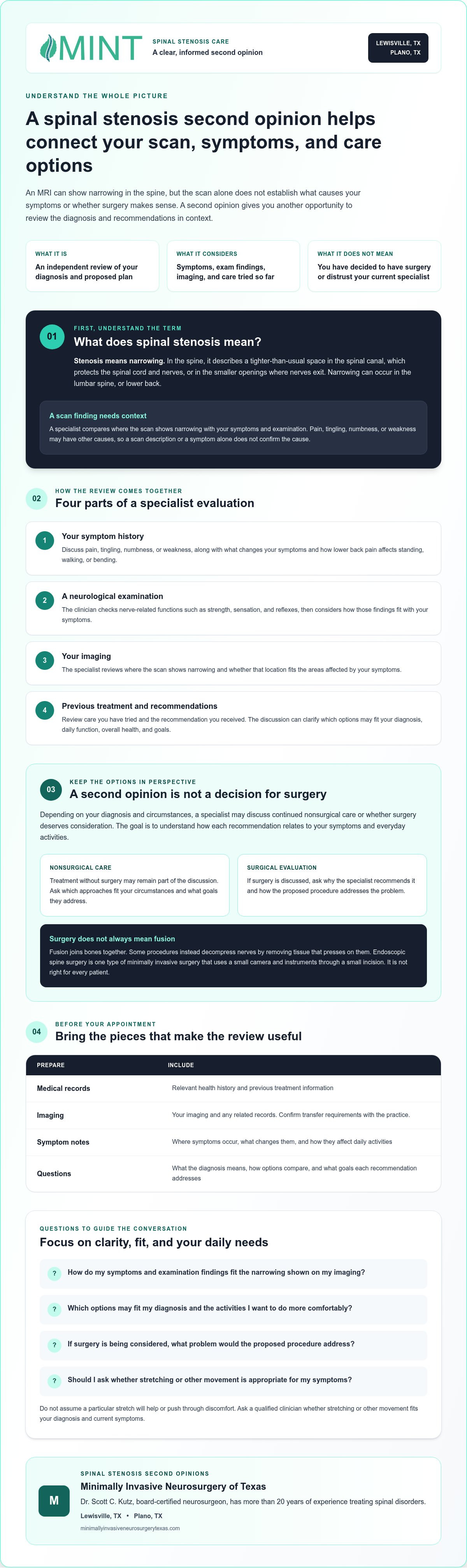
How to prepare for a spinal stenosis second opinion in Lewisville or Plano
A little preparation can help you make good use of your consultation. Before your visit in Lewisville or Plano, gather information about your symptoms, previous care, and imaging. If you’re traveling from nearby communities such as Flower Mound or Dallas, check record-transfer details with the practice before making the trip.
Which records and imaging should you gather?
Use this checklist as a starting point, then adapt it to what you have available:
- Imaging reports and image files: Collect reports and copies of scans related to your spine. Ask the office which imaging formats it accepts and how to send or bring them before your appointment.
- Medication list: Write down your current medicines and note any treatments you have stopped.
- Prior treatment summary: Record what care you’ve tried, when you tried it, and whether it changed your symptoms.
- Symptom notes: Describe when symptoms began, where you feel them, what triggers or eases them, and how they affect activities such as walking, standing, or sleeping.
- Questions and recommendations: Bring the treatment plan you want reviewed and note anything you’d like the specialist to explain.
Don’t assume the office can access images just because another facility took them. Confirm transfer steps and accepted formats directly with the practice before your visit. This gives you time to request records if needed and helps the specialist review the materials relevant to your consultation.
What should you ask during the consultation?
Start with questions that connect the diagnosis to your experience. Ask how the imaging and examination findings relate to your symptoms, and which treatment options may fit your specific case. You can also ask what goal each option aims to address, what trade-offs or risks you should understand, and what information would help you compare recommendations.
Write down the answers, or bring a trusted support person who can help you listen and take notes. You don’t need to resolve every question in one conversation. The goal is to leave with a clearer understanding of the diagnosis and the reasoning behind the options.
Dr. Scott C. Kutz is a board-certified neurosurgeon with more than 20 years of experience treating spinal disorders. Learn more about the practice and physician background. If you’re preparing for a second opinion for spinal stenosis Lewisville TX, contact MINT to ask about consultation and record-transfer steps.
Request a spinal stenosis second opinion with MINT in Lewisville, TX
A second opinion can bring your diagnosis, imaging, symptoms, and treatment recommendations into one focused discussion. The goal is to help you understand how these details relate and what options may fit your needs, not to steer you toward a specific procedure. Use the conversation to clarify what a recommendation aims to address and what questions you still need answered.
What makes a second-opinion consultation useful?
A useful consultation gives you room to explain how spinal stenosis affects your daily life, ask about findings in your records, and discuss treatment choices in light of your goals. Dr. Scott C. Kutz is a board-certified neurosurgeon with more than 20 years of experience treating spinal disorders. Learn more about Minimally Invasive Neurosurgery of Texas.
MINT evaluates spinal stenosis and offers minimally invasive spine surgery, including endoscopic spine surgery, when clinically appropriate. A minimally invasive approach may suit some patients, but the diagnosis and individual clinical details guide whether it fits. Review MINT’s minimally invasive spine techniques for procedural context.
A second opinion for spinal stenosis Lewisville TX should help you understand the reasoning behind your options. It can’t guarantee a particular recommendation or outcome. Bring your questions, share what matters most to you, and ask the specialist to explain how the available information supports each option.
How can Lewisville and Plano patients take the next step?
MINT provides specialized spine care in Lewisville and Plano, TX. Before arranging a visit, ask the practice about appointment steps and how to send your medical records and imaging. Confirm which file formats the office accepts and whether you should bring copies, reports, or both.
You can review your options at your own pace. If you’re ready to ask about a second-opinion consultation, contact MINT about scheduling and record requirements. The practice can clarify next steps, and your specialist can discuss which options may apply to your situation.
Take the next step with a clearer understanding
A spinal stenosis second opinion can help you understand how imaging findings relate to your symptoms, compare treatment recommendations, and identify records or questions that can support a more informed discussion. Seeking another perspective doesn’t commit you to surgery. It gives you space to consider the options alongside your health needs and daily goals.
Minimally Invasive Neurosurgery of Texas serves patients in Lewisville and Plano, Texas. Dr. Scott C. Kutz, a board-certified neurosurgeon, has more than 20 years of experience treating spinal disorders. The practice emphasizes patient-centered communication and evidence-based spine care, so you can discuss your diagnosis and appropriate options without assuming a particular treatment or result.
If you’re considering a second opinion for spinal stenosis Lewisville TX, take the next step at your own pace. Contact MINT to discuss a spinal stenosis second opinion and ask how to prepare your records and imaging. A clear conversation can help you move forward with greater understanding and confidence.
Frequently Asked Questions
Is a second opinion worth getting for spinal stenosis?
Yes. Another qualified review can help clarify how the diagnosis relates to your symptoms, what your imaging shows, and which treatment options may fit your needs. It doesn’t automatically mean you need surgery, and it doesn’t invalidate your first clinician’s view. Bring your records and ask how each recommendation accounts for your health history and personal goals, such as managing symptoms or improving your ability to walk and handle daily activities.
Can spinal stenosis improve without surgery?
Some patients discuss nonoperative management, meaning care that doesn’t involve surgery, with their clinicians. The right approach depends on symptoms, examination findings, imaging, overall health, and previous care. Other patients may need a surgical evaluation to understand their options. No general answer can predict an individual outcome or determine which approach suits you. Discuss your diagnosis and circumstances with a qualified spine specialist before making treatment decisions.
What happens during a second opinion for spinal stenosis?
A specialist may review your health history, symptoms, examination findings, imaging, previous treatments, and earlier recommendations. That review can help clarify the diagnosis and discuss options that may fit your circumstances, including whether further evaluation is needed. Appointment processes vary by practice. Before your visit, contact the Lewisville or Plano office to confirm which records and imaging to bring or send, and how to transfer them.
Should I bring my MRI to a spinal stenosis second opinion?
Bring relevant MRI reports, and ask the practice how to share the actual image files. A report summarizes findings, while the images let the specialist review the anatomy directly, so both can provide useful context. Also bring details about prior treatments and a current medication list. Confirm which image formats the office accepts and how to submit them before your visit. Don’t assume another facility has already transferred your scan.
Can two doctors give different recommendations for spinal stenosis?
Yes. Clinicians may weigh your symptoms, examination findings, imaging, previous treatment, and personal goals differently. A difference in recommendations doesn’t automatically mean one clinician is wrong. Ask each specialist which findings support the plan, what alternatives you could consider, and what goals each option aims to address. Comparing the reasoning can help you make a more informed decision than choosing based on one claim alone.
When should spinal stenosis symptoms receive urgent medical attention?
Seek prompt medical assessment for new or rapidly worsening neurological symptoms, meaning changes in nerve function, including significant weakness or changes in bowel or bladder control. Don’t wait for a routine second-opinion appointment if these symptoms occur. Contact emergency medical services or go to an emergency department for urgent assessment. Online information can’t determine what’s causing your symptoms, so have a qualified clinician evaluate the situation.
Where can I get a spinal stenosis second opinion near Lewisville, TX?
Minimally Invasive Neurosurgery of Texas provides specialized spine care for patients in Lewisville and Plano, TX. Dr. Scott C. If you’re seeking a second opinion for spinal stenosis Lewisville TX, contact the practice to ask about appointment details and which records and imaging you should bring or send.