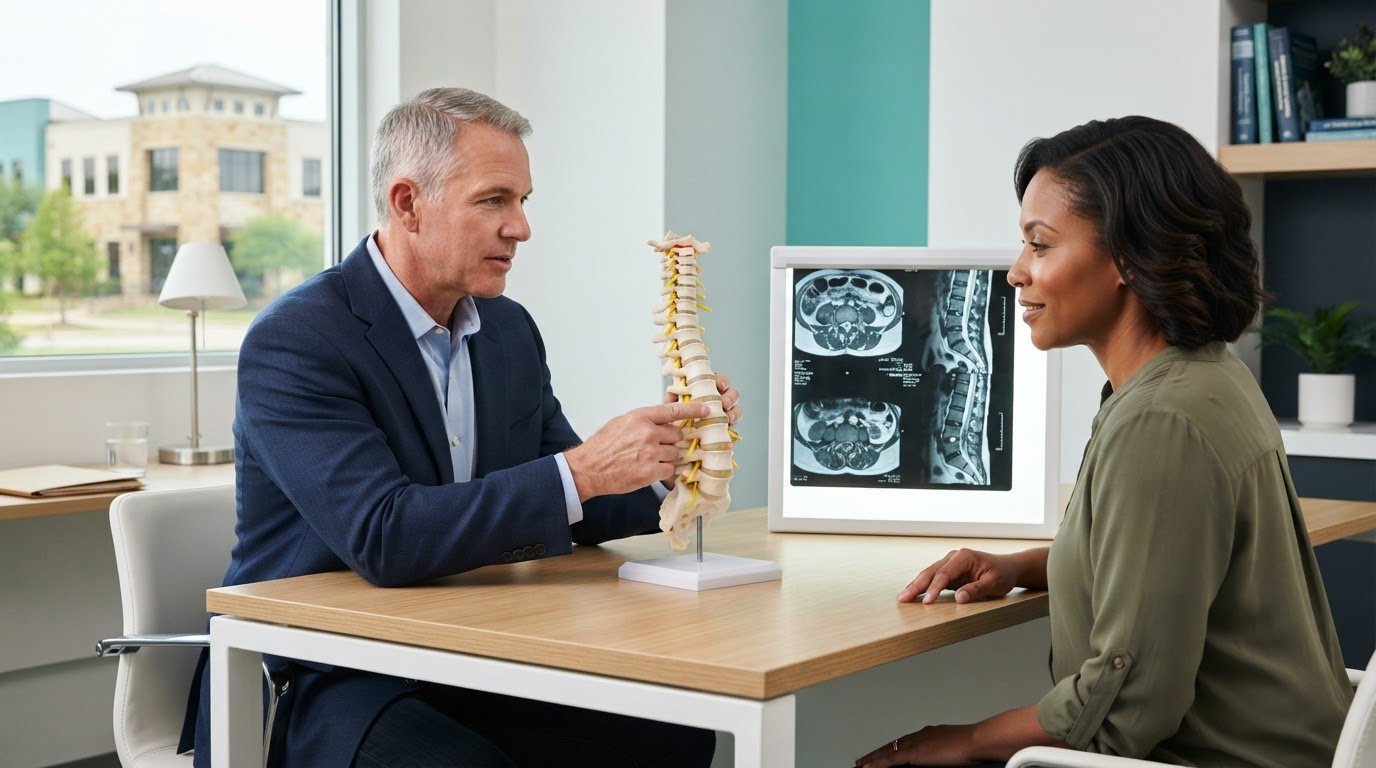
If you’re considering outpatient back surgery Plano TX, Minimally Invasive Neurosurgery of Texas (MINT), led by Dr. Scott C. Kutz, provides spine surgery evaluations for patients in Plano and Lewisville, TX.
Can back surgery happen without an overnight hospital stay? Outpatient describes the care setting, not a guarantee tied to a particular procedure. It’s understandable to wonder whether you’ll qualify, when you can go home, and how you’ll manage recovery there.
Dr. Kutz, a board-certified neurosurgeon with more than 20 years of experience treating spinal disorders, evaluates each patient’s condition and health before discussing appropriate options. Minimally invasive surgery uses smaller incisions and aims to limit tissue disruption, but the technique alone doesn’t determine whether outpatient care fits. This article explains how the procedure and care setting differ, what to ask about anesthesia, discharge, and follow-up, and why your surgeon must determine the appropriate setting. A local evaluation can help you understand your options without pressure to proceed.
Key Takeaways
- For outpatient back surgery Plano TX, ask how your diagnosis, symptoms, imaging, and overall health shape the recommended procedure and care setting.
- Outpatient surgery may suit some patients, but your treating team must assess you and the planned procedure together.
- Bring relevant imaging and medical records to your consultation when available. Ask about anesthesia, discharge plans, and follow-up.
- MINT serves patients in Plano and Lewisville, TX. Dr. Scott C. Kutz is board-certified by the American Board of Neurological Surgery and has more than 20 years of experience treating spinal disorders.
Outpatient Back Surgery in Plano, TX: What the Term Means for Patients
Minimally Invasive Neurosurgery of Texas (MINT), led by Dr. Scott C. Kutz, provides spine surgery and specialized spine care to patients in Lewisville and Plano, TX.
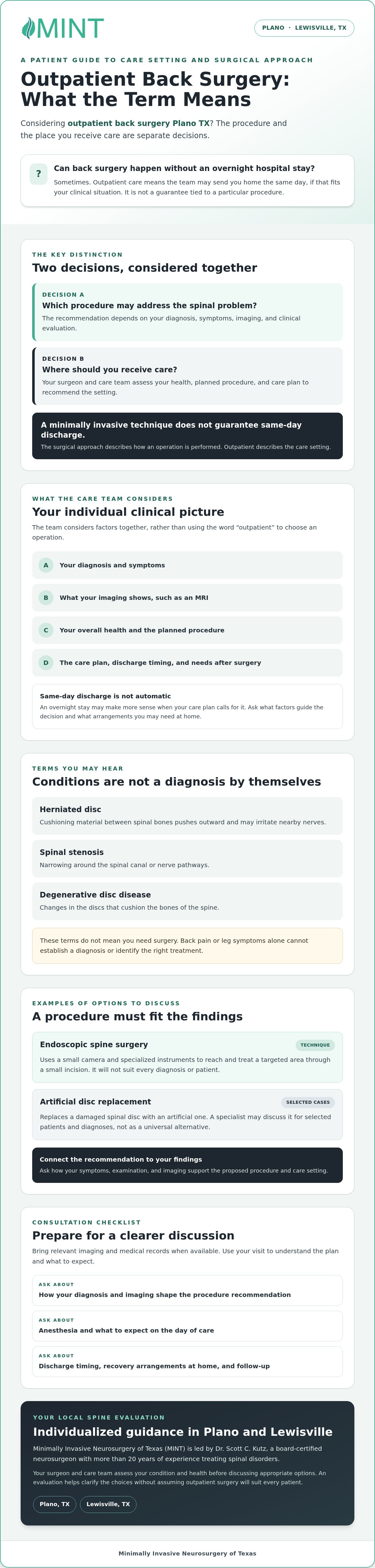
If you’re researching outpatient back surgery Plano TX, separate two decisions: which procedure may address your condition and where your surgical team recommends you receive care. “Outpatient” doesn’t guarantee that a particular operation will happen without an overnight stay. Your surgeon and care team recommend a setting after assessing your health and care plan.
What does outpatient back surgery mean?
Outpatient surgery means the care team may send you home the same day rather than keep you in the hospital overnight, if that is appropriate for your clinical situation. Your care team assesses your condition and planned procedure to determine the setting and discharge timing. An overnight stay may make more sense when your care plan calls for it. Ask what factors guide that decision and what arrangements you’ll need for recovery at home.
Minimally invasive surgery describes an approach designed to limit disruption to muscles and other tissues. Minimally invasive spine surgery (MISS) may involve specialized techniques, but the approach alone doesn’t determine whether you can go home the same day. For example, endoscopic spine surgery uses a small camera to help the surgeon view the treatment area. The procedure and the care setting are separate decisions.
Which back conditions may lead someone to discuss surgery?
A consultation may explore surgery when symptoms, imaging, and clinical evaluation point to a spinal problem that could benefit from an operation. A herniated disc occurs when cushioning material between the spinal bones pushes outward and may irritate nearby nerves. Spinal stenosis means narrowing around the spinal canal or nerve pathways. Degenerative disc disease describes changes in the discs that cushion the bones of the spine.
These terms don’t mean that you need surgery. Back pain or leg symptoms alone can’t establish a diagnosis or identify the right treatment. A spine specialist considers your symptoms, imaging, and overall clinical picture before discussing options. MINT provides individualized spine evaluations in Plano and Lewisville, TX, without assuming that outpatient surgery will suit every patient.
Which Back Surgery Options Might a Plano Specialist Discuss?
A Plano spine specialist doesn’t choose a procedure based on the word “outpatient.” The recommendation depends on your diagnosis, symptoms, imaging, and clinical evaluation. Imaging, such as an MRI, shows structures inside the spine. Your symptoms and examination help the specialist assess how those findings relate to your concerns.
A surgical technique describes how a surgeon performs a procedure; the care setting describes where you receive care. A minimally invasive approach doesn’t guarantee same-day discharge. Your specialist discusses the procedure and setting as separate decisions, then considers them together in your care plan.
When might a surgeon discuss endoscopic spine surgery?
Endoscopic spine surgery uses a small camera and specialized instruments to reach and treat a targeted area through a small incision. A surgeon may discuss it when the technique fits the spinal problem, but it won’t suit every diagnosis or patient. Learn more about endoscopic spine surgery, and ask how the surgeon would apply it to your findings and goals.
The American Academy of Orthopaedic Surgeons explains what patients should know about outpatient spine surgery. That overview can help you prepare questions, but your surgeon and care team must determine whether an outpatient setting fits your planned procedure and clinical needs.
How does a specialist choose among spine procedures?
Your specialist weighs what diagnosis best explains your symptoms, what your imaging shows, your overall health, and what you hope treatment will help you do. The discussion should connect each proposed procedure to the problem it aims to address. If the diagnosis or options remain unclear, ask how the findings support the recommendation.
Artificial disc replacement replaces a damaged spinal disc with an artificial one. A specialist may discuss it for selected patients and diagnoses, not as a universal alternative to other procedures. The right option depends on an individual evaluation, not on a procedure’s name or the possibility of outpatient care.
If you’re exploring outpatient back surgery Plano TX, a focused consultation can help you compare the proposed procedure with the recommended care setting. You can contact MINT about a spine evaluation and discuss your questions with the practice.
Is Outpatient Back Surgery Safe and Right for Every Patient?
Outpatient surgery may suit some patients, but it isn’t right for everyone. The surgeon and care team assess the patient and planned procedure together before recommending a setting. The decision is about whether the care plan fits the person’s health needs, not simply whether a procedure may take place outside the hospital.
A minimally invasive technique alone doesn’t determine whether you’ll leave the facility the same day. The same operation may prompt different care-setting recommendations for different patients. A surgeon may consider a patient’s overall health and the complexity of the procedure alongside the diagnosis. A technique designed to limit tissue disruption doesn’t remove the need to assess those individual factors.
What factors can affect the recommended care setting?
Ask how your diagnosis, health history, planned procedure, and support needs shape the care plan. These details work together, so a general list can’t tell you whether you personally qualify for outpatient surgery. Only your treating clinician can review your medical information, assess your individual risks, and explain the recommended setting.
Bring up any concerns that could affect planning, including health conditions or questions about managing the first part of recovery at home. Your care team can explain which details matter for your situation. Don’t use another patient’s experience or a procedure’s usual setting as a substitute for that discussion.
What should patients clarify about risks and discharge?
Before surgery, ask the team to walk you through what to expect. Clear answers can help you understand the plan without assuming a particular discharge time or recovery result.
- What type of anesthesia will the team use? Anesthesia refers to medicines that prevent pain or awareness during a procedure.
- What monitoring will I need after surgery, and what will the team assess before discharge?
- What could change the plan, including a decision to stay overnight?
- What instructions should I follow at home, and whom should I contact with concerns?
Your surgeon and care team should explain patient-specific risks and instructions before the procedure. If you’re considering outpatient back surgery Plano TX, ask how your health and the proposed operation affect the recommendation. A direct conversation can clarify the plan while leaving the clinical decision with the professionals who know your case.
How to Prepare for a Back Surgery Consultation in Plano
Some preparation can help you use your consultation well. Before your visit, write down what you want the specialist to understand about your symptoms and what you need to know about procedure options, the care setting, and recovery planning.
What information should you bring to a spine evaluation?
Gather relevant information if you have it, and ask the office which records or imaging would help before your appointment. Imaging, such as an MRI (magnetic resonance imaging, which creates pictures of structures inside the body), can help a clinician assess the spine alongside your symptoms and examination.
- Symptom timeline: Note when symptoms began, where you feel them, and how they affect daily activities.
- Medications and health history: List current medications and relevant health conditions.
- Previous care: Summarize treatments you’ve tried and how they affected your symptoms.
- Your questions: Write down what you want clarified so you can refer to it during the visit.
The clinician reviews the information available and your individual concerns before discussing suitable options. These details guide the conversation, but they don’t determine a diagnosis or treatment plan on their own.
Which questions help clarify an outpatient surgery plan?
Ask the surgeon to explain the reasoning behind the recommendation, including how the proposed procedure relates to your diagnosis and goals. Then clarify whether outpatient care is being considered. The surgeon and care team determine the setting based on your situation, including your health and the procedure.
- Which procedure do you recommend, and why does it fit my diagnosis?
- Are you considering outpatient care for my procedure? What could change that plan?
- What individual risks should I understand, and how will the team monitor me?
- What discharge instructions should I expect, and what support should I plan for at home?
- What follow-up should I expect, and whom should I contact if I have concerns?
Clear answers can help you compare the procedure and care setting without assuming a particular discharge time or recovery timeline. For a personalized spine evaluation, contact MINT to discuss your consultation.
Discuss Outpatient Back Surgery Options With MINT in Plano or Lewisville
Minimally Invasive Neurosurgery of Texas (MINT) focuses on spine care for patients in Plano and Lewisville, TX. Dr. Scott C. Kutz is a neurosurgeon board-certified by the American Board of Neurological Surgery, with more than 20 years of experience treating spinal disorders. MINT emphasizes individualized, evidence-based evaluation and considers minimally invasive options when they fit a patient’s needs. Explore the practice’s spine care services.
What can patients discuss with Dr. Scott Kutz?
A spine evaluation can help clarify what your diagnosis means, how your symptoms and imaging inform the discussion, and which procedures may suit your situation. You can also ask how the surgeon weighs the procedure and care setting separately. An outpatient plan isn’t automatic, and a consultation doesn’t mean you need to choose surgery.
Before making a decision, make sure you understand the diagnosis, the reasons for each option, and any questions that remain. You can learn more about MINT’s approach and Dr. Kutz’s background on the practice’s About Us page.
How can Plano and Lewisville patients take the next step?
Prepare a short list of questions about your evaluation, potential procedures, and whether outpatient care may fit your circumstances. Ask the practice what records or imaging may help the clinician understand your case. During the discussion, invite the care team to explain any medical terms or recommendations you don’t understand.
If you’re researching outpatient back surgery Plano TX, contact MINT to ask about a spine evaluation in Plano or Lewisville and what local care options may be available. Reaching out can help clarify your questions and possible next steps. It doesn’t commit you to surgery.
Make Your Next Spine Care Decision With Clarity
Outpatient back surgery describes a possible care setting, not a promise of same-day discharge. The surgeon and care team weigh the procedure and your individual health needs together. Your diagnosis, symptoms, imaging, and goals also help shape which options deserve discussion.
If you’re considering outpatient back surgery Plano TX, bring questions about the recommended procedure, anesthesia, discharge planning, risks, and follow-up to a spine evaluation. You deserve to understand your diagnosis and choices before deciding what comes next.
Minimally Invasive Neurosurgery of Texas serves patients in Plano and Lewisville, TX. Dr. Scott C. Kutz is board-certified by the American Board of Neurological Surgery. Contact MINT to discuss a spine evaluation and ask about your concerns without committing to surgery.
Frequently Asked Questions
Is outpatient back surgery safe?
Outpatient back surgery may suit some patients, but no care setting fits everyone. The surgeon and care team assess your health, diagnosis, and planned procedure together before recommending where you should receive care. Ask how your health history affects the plan, what monitoring the team expects, and what risks apply to you. Your clinician can explain the reasoning without promising an outcome or discharge time.
Can back surgery be performed as an outpatient in Plano, TX?
Some back surgeries may take place in an outpatient setting, depending on the procedure and the patient’s clinical needs. If you’re researching outpatient back surgery Plano TX, ask a Plano-area spine specialist whether outpatient care is appropriate for your specific case. MINT serves patients in Plano and Lewisville, TX, but confirm which care setting and facility your surgical team recommends for your treatment.
Who decides whether I can have outpatient back surgery?
Your treating surgeon and care team decide whether outpatient care fits your situation. They consider your diagnosis, planned operation, overall health, and care needs rather than relying on the procedure name alone. Share your health history and ask the surgeon to explain the recommendation. You can also ask what might change the plan, including whether the team may recommend an overnight hospital stay instead.
What conditions may lead a doctor to discuss back surgery?
A doctor may discuss surgery for a herniated disc, when cushioning material between spinal bones pushes outward and may irritate nearby nerves; spinal stenosis, a narrowing around the spinal canal or nerve pathways; or degenerative disc disease, changes in the discs that cushion the spine’s bones. These diagnoses don’t automatically mean you need surgery. Often, conservative care and targeted physical therapy are recommended first; to see how structured rehabilitation programs support recovery, check out RED Physiotherapy. A specialist reviews your symptoms, imaging, and clinical findings before discussing treatment options.
Does minimally invasive back surgery guarantee same-day discharge?
No. Minimally invasive surgery describes an approach designed to limit tissue disruption. It doesn’t guarantee that you’ll leave the facility on the day of surgery. Your surgeon and care team determine the care setting and discharge timing based on your procedure and individual clinical assessment. Ask what the team will evaluate before discharge, what could change the plan, and what instructions you’ll need if you go home.
What should I ask at a back surgery consultation?
Ask which procedure the surgeon recommends and how it relates to your diagnosis, symptoms, and imaging. Clarify whether outpatient care is under consideration, what could change that plan, and what individual risks you should understand. Also ask about anesthesia, post-surgery monitoring, discharge instructions, follow-up, and whom to contact with concerns. Bring a symptom timeline, medication list, and relevant records or imaging when available.