
Minimally Invasive Neurosurgery of Texas (MINT), led by Dr. Scott Kutz, provides spine-focused care, including artificial disc replacement, in Lewisville and Plano, TX.
What if my insurance denies disc replacement? A denial can feel like a decision about your future, but it reflects the insurer’s coverage review, not a final clinical answer about your care. You deserve to understand the reason and discuss what comes next without rushing into another treatment decision.
Insurers may cite plan criteria or documentation concerns. Read the written notice closely, then use its explanation to shape your next questions.
This guide explains how to understand the denial, organize a focused discussion with your treating physician, and consider appropriate next steps. A clinical conversation can help clarify your diagnosis, the treatment rationale, and the spine-care options that may fit your needs.
Key Takeaways
- Read the written denial closely to identify the insurer’s reason, any requested records, and the plan instructions that apply.
- If you’re wondering what if my insurance denies disc replacement, use the stated reason to guide your next questions and discuss a focused response with your treating physician.
- Separate the next step by purpose: an appeal addresses the coverage decision, plan clarification addresses documentation or instructions, and clinical reassessment addresses medical suitability.
- Gather your denial notice, plan documents, relevant medical records, and a dated communication log before speaking with your insurer or surgeon.
- A spine specialist can review your diagnosis and treatment options, but the insurer makes its own coverage decision.
What does it mean if insurance denies artificial disc replacement?
Minimally Invasive Neurosurgery of Texas (MINT), led by Dr. Scott Kutz, provides artificial disc replacement in Lewisville and Plano, TX. Artificial disc replacement is surgery that removes a damaged spinal disc, the cushioning structure between the bones of the spine, and replaces it with an artificial one.
If you’re asking, what if my insurance denies disc replacement, start by separating the insurer’s coverage decision from your medical evaluation. A denial means the insurer declined to approve or cover the requested care under its review. It doesn’t, by itself, determine whether the procedure suits your condition. The overview of total disc replacement (TDR), or artificial disc replacement (ADR) explains the procedure itself; your plan documents explain how your insurer evaluates coverage.
An insurance decision answers whether a plan will cover care; a physician’s assessment answers whether that care may fit your diagnosis and health needs. These decisions involve different questions, and one doesn’t automatically resolve the other. MINT’s artificial disc replacement care focuses on discussing the clinical context and treatment options with patients.
What reasons might an insurer give for denying disc replacement?
Denial notices may cite plan terms, authorization criteria, or missing or unclear documentation. Authorization means the insurer’s review of a requested service before it agrees to cover it. Plans can use different criteria, so don’t assume another patient’s experience explains your decision. Read the full written notice, find the specific reason, and compare that explanation with your own plan documents.
An insurer may also say the submitted information doesn’t establish “medical necessity.” In this context, medical necessity means the insurer’s stated coverage criterion for deciding whether a service qualifies under the plan. It doesn’t serve as a universal conclusion about your condition or determine, on its own, which treatment a physician should recommend. Check which records or plan criteria the notice discusses, and note any details you don’t understand.
Does a denial mean disc replacement is medically inappropriate?
No. A coverage denial and a clinical assessment don’t answer the same question. Your treating physician evaluates your diagnosis, symptoms, medical history, and available spine-care options. Clinical suitability means whether a treatment may be appropriate for your individual condition after that medical evaluation. Not every patient qualifies for surgery, and a denial doesn’t prove that you do or don’t.
Instead, use the notice as a starting point for a focused discussion. Ask your physician to explain the diagnosis and the reasoning behind the treatment recommendation, then consider whether the insurer’s stated concern reflects coverage criteria, missing information, or a clinical question. The next step depends on those details. An appeal may make sense in some situations, while further plan clarification or a reassessment of treatment options may better address others.
How can you respond to an insurance denial for disc replacement?
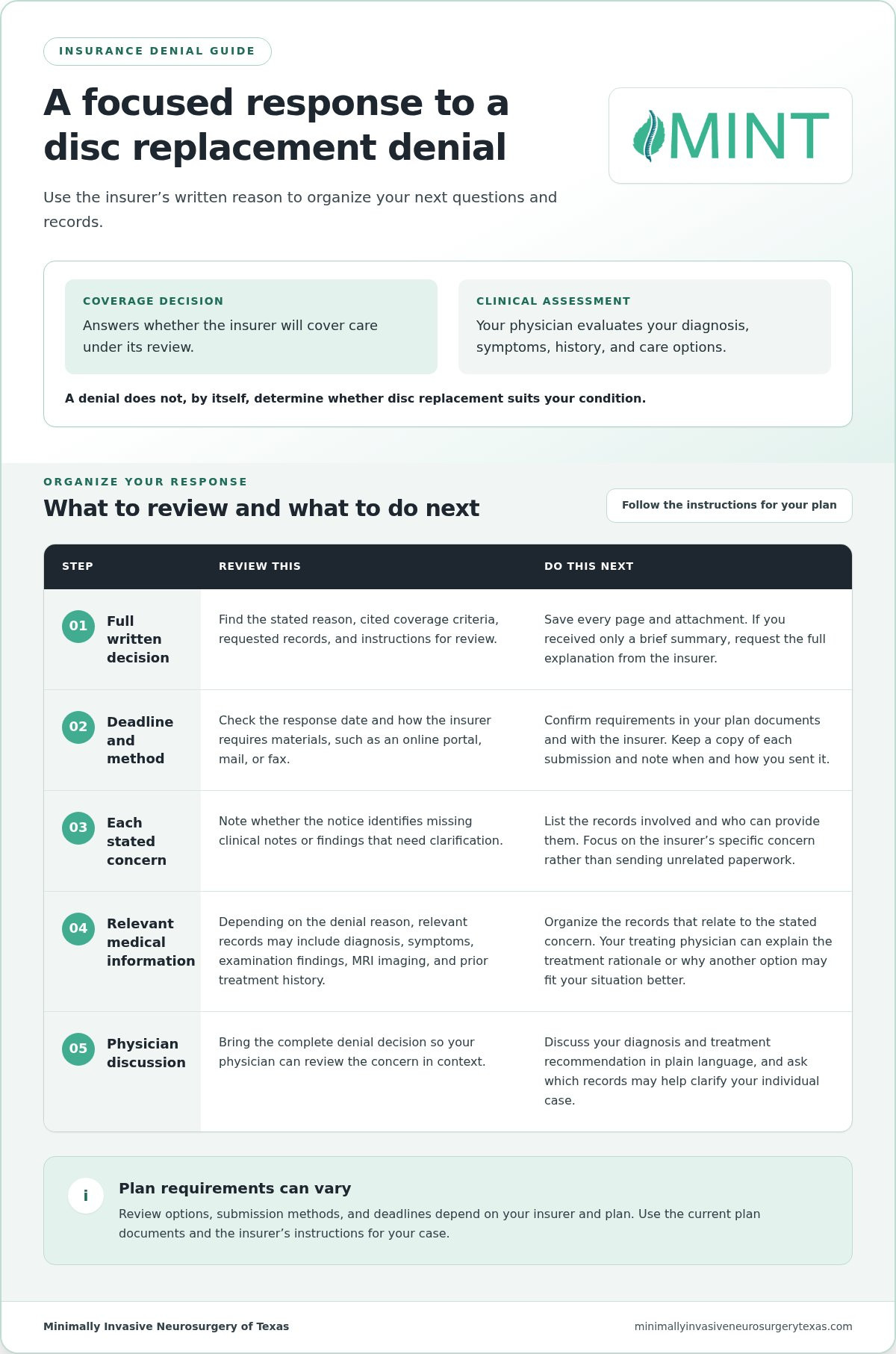
A denial gives you a reason to investigate, not a reason to guess. If you’re asking what if my insurance denies disc replacement, use the written decision to guide a calm, organized response. Follow these steps, and check your current plan documents because review options, submission methods, and deadlines vary by insurer and plan.
- Get the complete written decision. Save every page of the denial notice and any attachments. Identify the stated reason, any coverage criteria the insurer cites, the records it requests, and instructions for asking the insurer to review its decision. If you received only a brief summary, contact the insurer and request the full explanation.
- Mark the deadline and required submission method. Find the date by which you must respond, plus instructions for submitting materials, such as an online portal, mail, or fax. Don’t rely on a general timeframe from another patient or website. Your plan documents and insurer provide the requirements that apply to your case. Keep a copy of everything you send and note when and how you submitted it.
- Match each concern to the records it involves. If the notice points to missing clinical notes, make a list of the requested records and identify who can provide them. Clinical notes are the written records of your visits, symptoms, examination, and treatment. If the insurer cites unclear findings, write down which part needs clarification. A specific list helps you and your care team address the stated concern rather than sending unrelated paperwork.
- Organize relevant medical information. Depending on the reason for denial, useful records may include your diagnosis, symptoms, examination findings, imaging such as MRI pictures of the spine, and prior treatment history. Artificial disc replacement is a specific procedure, and the artificial disc replacement service involves an individualized clinical discussion. Your treating physician can explain how your records support the treatment rationale, or why another option may fit your situation better.
- Ask your treating physician to clarify the clinical picture. Share the complete decision, not just its conclusion. Your physician can review the stated concern, explain the diagnosis and recommendation in plain language, and identify records that may help clarify your individual case. If the notice uses unfamiliar terms, ask the insurer to explain how its cited plan criteria apply. Neither a physician’s letter nor additional records guarantee approval.
- Choose a response route and track it. Follow the review instructions in your plan and keep a dated log of calls, names, reference details, and submitted documents. If you’re unsure how your diagnosis or treatment rationale connects to the insurer’s questions, a focused discussion with a spine specialist can help you prepare. MINT offers patient-centered spine-care discussions in Lewisville and Plano; you can contact the practice about a clinical discussion.
Should you appeal, consider another treatment, or seek a second opinion?
You don’t have to treat an insurance denial as a choice between appealing and changing your care. Each next step addresses a different question: why the plan declined coverage, whether it needs more information, or whether disc replacement fits your medical needs. If you’re weighing what if my insurance denies disc replacement, first identify which question the denial leaves unanswered.
| Next step | Question it addresses | When it may help |
|---|---|---|
| Appeal or request a review | Does the coverage decision reflect the plan’s criteria and the information submitted? | The notice identifies a disputed interpretation or a reason you want the insurer to review. |
| Ask the plan for clarification | What criterion or documentation does the insurer say applies? | The notice uses unclear terms or doesn’t explain what information the plan needs. |
| Seek clinical reassessment | Does disc replacement remain medically suitable, or should you discuss other options? | You need a clearer explanation of your diagnosis, treatment rationale, or alternatives. |
When might an appeal or reconsideration make sense?
A review may make sense when the insurer points to missing records or interprets submitted information in a way you and your physician want to address. Follow the review instructions in your plan and denial notice. Ask your treating physician to clarify relevant findings or provide records that respond to the stated concern. Keep copies of every submission and note when and how you sent it. A review may not change the decision, so avoid assuming a particular outcome.
An appeal also shouldn’t delay urgent medical attention. If your symptoms change suddenly or you have a pressing health concern, contact your treating clinician promptly rather than waiting for an insurance review to finish.
How does disc replacement differ from spinal fusion?
Artificial disc replacement aims to replace a damaged disc while preserving movement at that spinal level. Spinal fusion is surgery that joins bones together to limit movement at a spinal segment, the section of the spine where the bones and disc meet. These procedures have different goals. Neither automatically suits every patient, and a denial of one procedure doesn’t establish that the other is appropriate.
A physician weighs your diagnosis, anatomy, meaning the structure of your spine, examination findings, symptoms, and medical history when discussing treatment. That conversation can clarify whether disc replacement remains a reasonable option or whether another approach deserves consideration. MINT’s artificial disc replacement care includes discussion of the procedure and individual clinical context. A second opinion, meaning an additional physician’s assessment, can also help you understand the reasoning and options before making a decision.
Choose the next step based on the question you need answered, not pressure to act quickly. You can discuss your diagnosis and treatment considerations with a spine specialist in Lewisville or Plano.
What should you prepare before speaking with your insurer or surgeon?
A little preparation can make a difficult conversation more focused. If you’re wondering what if my insurance denies disc replacement, gather the documents that explain both the insurer’s decision and your medical situation. Keep one set for your insurer and another for your surgeon, and write down questions as they come to mind.
Use this checklist to get ready:
- Denial notice: Bring the complete written decision, including any pages that explain the reason, cite plan criteria, or describe review instructions.
- Plan documents: Locate the current coverage information for your plan. Mark any sections that seem relevant to the denial, and note review routes, submission instructions, and plan-specific deadlines.
- Medical records: Gather relevant visit notes, imaging reports, examination findings, diagnosis information, and prior treatment records. These details can help your physician explain the clinical context of the requested procedure.
- Communication log: Record the date, time, and subject of each insurer conversation. Include the representative’s name or reference details when available, what they told you, and any next step they described.
- Questions for each conversation: Write down what you need clarified so you can use the time effectively and avoid relying on memory.
What questions can help clarify the coverage decision?
Ask the insurer which specific plan criterion or documentation issue led to the decision. If the notice uses unclear language, ask the representative to explain what the plan means and which records it considered. Then ask what review options the plan lists for your case, what deadline applies, how you should submit supporting records, and how the insurer confirms receipt. Note the answers and compare them with the written instructions in your plan documents.
Don’t assume that a general deadline or process applies to every plan. Ask about the requirements that apply to your own decision, then keep copies of any forms, records, and confirmation details. A clear written record can help you track what you’ve submitted and follow up if you need to.
What should you discuss with your spine surgeon?
Bring the same denial notice and relevant medical records to your physician. Ask how your diagnosis and clinical findings relate to the proposed procedure, which details support the treatment rationale, and whether the insurer’s stated concern points to information your care team can clarify. Discuss potential risks, possible benefits, and medically appropriate alternatives for your individual case. A physician can explain clinical considerations, but can’t control the insurer’s coverage decision.
If you’re discussing a neck procedure, MINT’s artificial disc replacement information can provide context for your questions. Use it to prepare for a clinical discussion, not to decide which option suits your diagnosis.
For a focused discussion about your diagnosis and spine-care options, contact the team about your spine-care questions.
How can a spine specialist help after a disc replacement denial?
An insurance denial can leave you unsure whether to question the coverage decision, revisit the treatment plan, or both. A spine specialist can help you understand the medical side of that decision. The specialist can review your diagnosis and proposed care, explain the reasoning in plain language, and help you identify questions to raise with your insurer. The specialist cannot make the insurer approve coverage or guarantee an appeal outcome.
What can a clinical review help you understand?
Dr. Scott C. Kutz is a board-certified neurosurgeon with more than 20 years of experience treating spinal disorders. During a clinical review, he can discuss your diagnosis, symptoms, examination findings, and imaging, such as MRI pictures that show spinal structures. He can explain how those details relate to the proposed procedure and whether other spine-care options warrant discussion for your individual situation.
A clear clinical rationale may help you understand why your physician recommends a particular approach. It can also help you identify whether the insurer’s stated concern involves medical information, plan documentation, or a question about treatment suitability. The physician can clarify relevant records and explain clinical considerations, but the insurer makes its own coverage decision. A review cannot guarantee coverage or appeal success.
Patients who want to understand Dr. Kutz’s experience and MINT’s spine-focused practice can learn more about the physician and practice background. For North Texas patients, MINT provides spine-care discussions in Lewisville and Plano, Texas.
How do you move forward without rushing a decision?
Take the time you need to understand three separate things: what the denial says, what your plan’s written instructions require, and what your physician believes fits your medical needs. These questions may involve different information and different next steps. You can ask your care team to explain unfamiliar terms, discuss the reasoning behind the proposed treatment, and describe medically appropriate alternatives without assuming that you must choose one immediately.
A denial doesn’t require you to change treatment on the spot. It also doesn’t determine whether disc replacement suits your condition. Keep the coverage process moving according to your plan’s stated instructions while you discuss your health and options with your treating physician. If symptoms change, tell your clinician. Seek timely medical guidance for urgent or worsening symptoms rather than waiting for an insurance review to conclude.
For a patient-centered discussion of your diagnosis and next steps, contact the MINT team about your next steps.
Take your next step with a clearer plan
A coverage denial can create pressure to make a quick choice. You can pause, clarify what the insurer’s decision means, and discuss what fits your health needs before changing course. If you’re still asking what if my insurance denies disc replacement, focus your next conversation on the questions that remain unanswered, including how the plan reached its decision and what your physician recommends for your situation.
Dr. Scott C. Kutz and the MINT team offer spine-focused care in Lewisville and Plano, Texas. Dr. Kutz is board-certified by the American Board of Neurological Surgery and has more than 20 years of experience treating spinal disorders. A discussion can help you understand your diagnosis, treatment rationale, and available options, without promising insurance approval or a particular outcome.
Arrange a spine-care discussion with the MINT team. You can move forward thoughtfully, one informed decision at a time.
Frequently Asked Questions
Can I appeal if my insurance denies artificial disc replacement?
Often, you can request a review, but your plan determines whether an appeal applies and how you must submit it. If you’re asking what if my insurance denies disc replacement, check your denial notice and current plan documents for the review process, required materials, and deadline. A review may not change the decision. Keep a copy of each document you send and make a note of the submission date.
How do I find out why my insurer denied disc replacement?
Ask your insurer for the full written decision if you only received a brief notice or verbal explanation. Then ask the representative to identify the specific plan provision or coverage criterion behind the denial and explain any terms you don’t understand. For example, ask whether the insurer’s concern involves a particular record or how it interpreted information already submitted. Compare the explanation with your plan documents.
Does an insurance denial mean I am not a candidate for disc replacement?
No. The insurer decides whether the request meets its plan’s coverage requirements; your physician evaluates whether the procedure may suit your health and diagnosis. Those answers can differ. Ask your treating physician to explain how your examination, symptoms, and spine images relate to the recommendation. A clinical assessment can also clarify whether another treatment deserves discussion. Neither a denial nor an appeal decision replaces individualized medical advice.
Can my surgeon submit additional records after a disc replacement denial?
Your surgeon’s office may be able to provide records or clinical clarification for a review, depending on the insurer’s instructions and the stage of the process. Ask what information the insurer needs, then share the complete denial notice with your care team. For instance, if the notice identifies an unclear finding, your physician can determine whether relevant visit notes or imaging reports help explain your case. Additional records don’t guarantee approval.
What happens if my plan denies the appeal for disc replacement?
First, read the appeal decision and ask your plan what review options, if any, remain for your case. Your next step may involve seeking clarification, considering an available further review, or discussing your medical options with your physician. The plan documents and insurer can explain the applicable route. Keep the decision and any response instructions together, and don’t delay urgent medical guidance while you consider coverage matters.
Can I ask for a second opinion after an insurance denial?
Yes. You can ask another spine specialist to review your diagnosis, examination findings, medical history, and spine images, meaning tests such as MRI scans or X-rays. A second opinion can help you understand the reasoning behind a proposed procedure or hear another perspective on appropriate options. It doesn’t automatically change the insurer’s decision, but it can give you more context for a thoughtful discussion with your treating physician.
Will an insurer cover spinal fusion if it denies disc replacement?
Not automatically. An insurer evaluates a spinal fusion request, a procedure that joins bones in the spine, under the terms and criteria of your plan. The clinical question also differs: your physician must determine whether fusion fits your diagnosis and spinal condition. Ask the insurer how its plan reviews that specific procedure, and discuss the potential risks, benefits, and alternatives with your physician before considering a change in treatment.