Minimally Invasive Neurosurgery of Texas (MINT), led by Dr. Scott C. Kutz, a board-certified neurosurgeon and Fellow of the AANS and ACS, provides specialized endoscopic spine surgery at its primary headquarters in Lewisville, TX, and its satellite office in Plano, TX.
Chronic back pain shouldn’t force you into a life of merely managing symptoms when a permanent resolution is within reach. You likely worry that surgery means weeks of immobilization, large scars, and significant muscle damage. These fears often keep people from seeking the help they need to regain their mobility. Dr. Kutz utilizes endoscopic spine surgery Lewisville TX to address these concerns by offering a high-tech alternative to traditional open procedures. Endoscopic surgery uses a tiny camera called an endoscope and specialized tools inserted through a small tube to treat spinal conditions without large incisions.
This article explores how this motion-preserving technique allows you to return to daily activities within days. You’ll learn about the clinical precision of advanced navigation systems and how Dr. Kutz provides long-term relief from nerve compression with minimal scarring. This approach shifts the focus from temporary relief to lasting recovery through surgical innovation.
Key Takeaways
- Dr. Scott Kutz provides endoscopic spine surgery Lewisville TX at the MINT headquarters to help patients resolve chronic pain through ultra-precise technology.
- Learn why incisions smaller than 20 millimeters significantly reduce muscle damage and blood loss compared to traditional open surgery.
- Discover the clinical timeline that allows most patients to return to light daily activities within 24 to 48 hours after their procedure.
- Explore how advanced systems like Globus ExcelsiusGPS and Augmedics augmented reality (AR), a technology that allows surgeons to see through tissue, improve surgical accuracy.
- Identify if you are a candidate for motion-preserving techniques to treat a herniated disc, a condition where the soft center of a spinal disc pushes through its tough outer casing.
Defining Endoscopic Spine Surgery in Lewisville TX at MINT
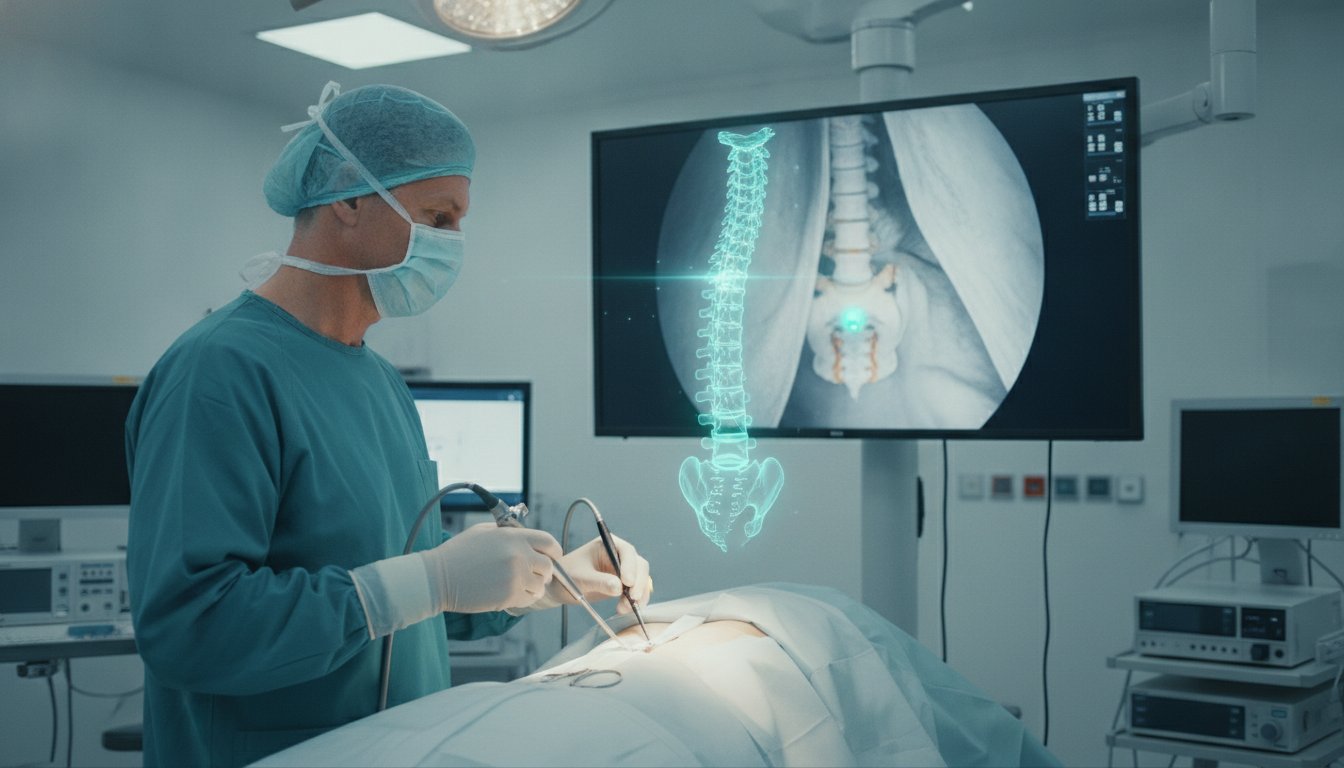
Minimally Invasive Neurosurgery of Texas (MINT) provides endoscopic spine surgery Lewisville TX as a primary solution for chronic spinal conditions. Dr. Scott Kutz, a board-certified neurosurgeon, leads the practice at the Lewisville headquarters and the Plano satellite office. This advanced technique uses an endoscope, which is a thin tube equipped with an HD camera and light. The endoscope allows Dr. Kutz to visualize the spine through a tiny incision typically smaller than a dime. Because the surgeon treats the source of pain through this small portal, they don’t need to cut through major muscle groups. This preservation of tissue is a hallmark of minimally invasive spine surgery, which focuses on achieving clinical goals with the least amount of disruption to the body.
The Role of Dr. Scott Kutz in Advanced Spine Care
Dr. Scott Kutz brings more than 20 years of surgical experience to patients in North Texas. He is a board-certified neurosurgeon and holds fellowships with the American Association of Neurological Surgeons (AANS) and the American College of Surgeons (ACS). These credentials reflect his commitment to professional excellence and clinical authority. Dr. Kutz prioritizes motion-preserving techniques, such as endoscopic spine surgery, to help patients maintain their natural flexibility. His approach helps individuals avoid the permanent limitations often associated with traditional spinal fusion, which is a procedure that joins two or more vertebrae together to stop movement. Patients trust his expertise because he combines the skills of a high-tech healer with the compassion of a local physician.
Why Lewisville Patients Choose MINT for Spinal Health
The MINT Lewisville headquarters opened in January 2026 to offer residents access to modern surgical planning technology. This facility serves patients from Lewisville, Plano, Flower Mound, and Highland Village. Choosing a local, specialized surgical center allows patients to receive personalized care plans that larger hospital systems often lack. Dr. Kutz and his team ensure every patient understands their surgical journey before any procedure begins. This clarity helps reduce anxiety about recovery and long-term outcomes. By combining high-tech tools with a dedicated local presence, MINT helps patients achieve a faster return to normal activity. The practice focuses on resolving pain rather than just managing it, providing a clear path toward improved quality of life.
How Endoscopic Procedures Compare to Traditional Open Surgery
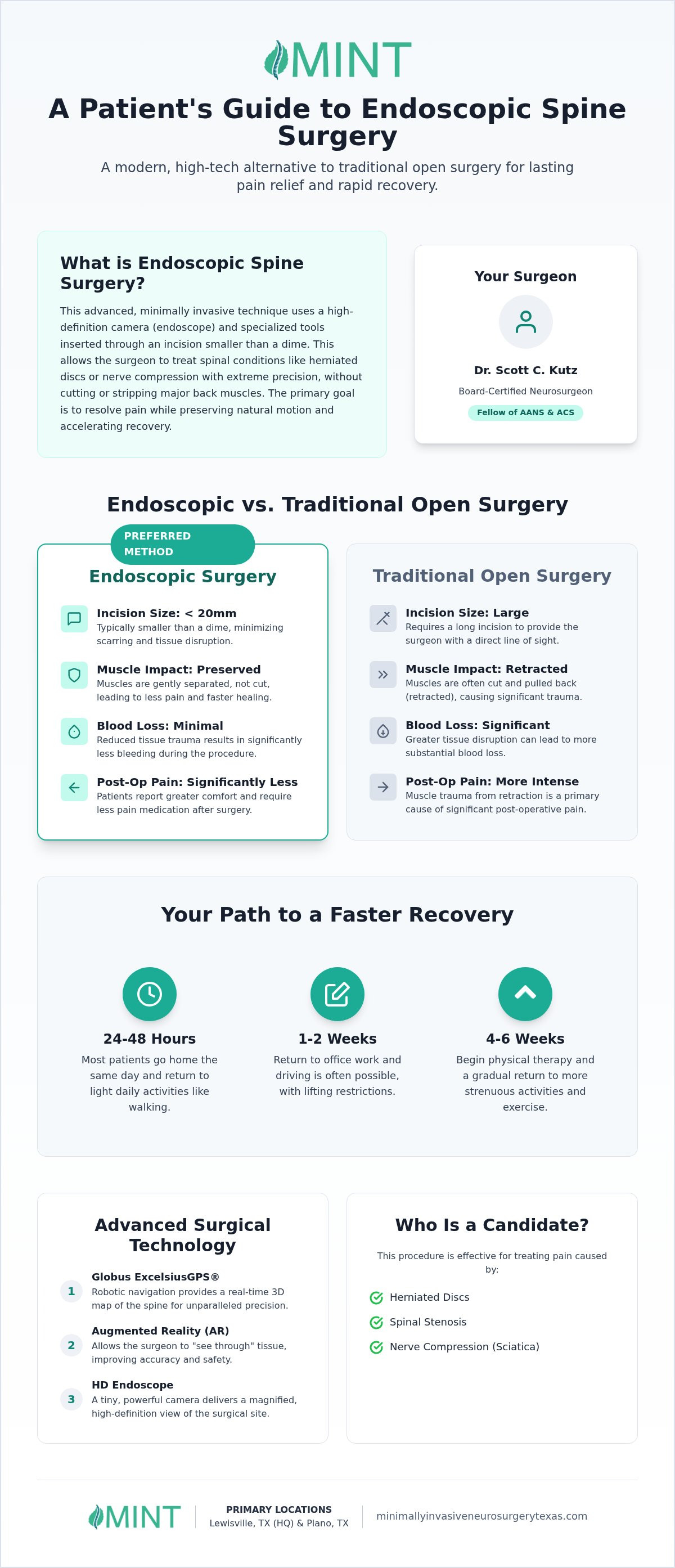
Traditional back surgery often requires a large incision that forces the surgeon to pull back or strip muscles away from the spinal column. This process, known as muscle retraction, frequently causes significant tissue trauma and blood loss. In contrast, endoscopic spine surgery Lewisville TX utilizes an incision smaller than a dime, typically measuring only 20 millimeters. Instead of a wide opening, Dr. Kutz uses a narrow tube to reach the spine. This method preserves the structural integrity of the surrounding tissues and minimizes the physical impact on the body.
The endoscope provides a high-definition, magnified view of the internal anatomy. This visual clarity allows the surgeon to identify nerves and blood vessels with extreme precision. Because the camera sits directly at the surgical site, the surgeon doesn’t rely on the naked eye through a deep, dark opening. This increased visibility reduces the risk of accidental nerve irritation. Patients often report significantly less post-operative pain because the muscles remain attached to the bone throughout the entire procedure.
Visualizing the Difference: Incision Size and Tissue Impact
The endoscope acts as a portal for specialized instruments. These tools pass through a small tube, which creates a much smaller surgical footprint than traditional methods. Reduced tissue disruption directly correlates to a lower risk of infection because a smaller wound has less exposure to the environment. Smaller scars also provide a better aesthetic result for the patient. Beyond the surface, the lack of muscle damage accelerates the internal healing process. This allows the body to focus energy on recovering from the specific spinal correction rather than repairing extensive soft tissue injuries.
Clinical Outcomes: Blood Loss and Hospital Stays
Clinical data shows that endoscopic techniques lead to more stable recoveries. Most procedures at the MINT Lewisville headquarters are outpatient, which means patients return home the same day. Traditional surgery might require a multi-day hospital stay for monitoring and pain management. Because Dr. Kutz minimizes blood loss during the operation, patients experience fewer systemic complications. Research indicates that patients who undergo endoscopic spine surgery require less heavy narcotic pain medication. This reduction in pharmaceutical reliance helps avoid common side effects like nausea or cognitive fog. If you want to see if this approach is right for your condition, you can schedule a consultation with our team.
By prioritizing minimally invasive spine techniques, MINT ensures that the surgical intervention does not create new problems. Traditional open surgery can sometimes lead to excessive scar tissue, known as epidural fibrosis, which may cause secondary pain. Endoscopic methods lower this risk by keeping the surgical field localized. This precision-focused philosophy helps patients reach their goal of a rapid return to normal activity.
Qualifying for Endoscopic Spine Surgery: Conditions and Symptoms
Dr. Scott Kutz recommends endoscopic spine surgery Lewisville TX for patients who haven’t found relief through physical therapy or medication. This conservative-first approach ensures that endoscopic spine surgery remains a targeted solution for persistent issues rather than a first resort. Surgery becomes a viable option when chronic pain limits your mobility or prevents you from working. Dr. Kutz reviews your medical history and diagnostic imaging to confirm that a minimally invasive procedure can resolve the underlying pathology.
One common condition treated at MINT is a herniated disc. This occurs when the soft center of a spinal disc pushes through a crack in the tougher exterior casing. The displaced material often presses against nearby nerves, which causes sharp pain or weakness in the back and limbs. Spinal stenosis, which is the narrowing of the spaces within your spine, also responds well to endoscopic decompression. This procedure creates more room for the nerves and reduces inflammation. Patients with sciatica, a condition that causes radiating pain down the leg, often experience immediate relief once Dr. Kutz removes the source of nerve pressure.
Treating Degenerative Disc Disease and Foraminal Stenosis
Degenerative disc disease involves the gradual wear and tear of spinal discs over time. As these discs lose their height and hydration, they can lead to instability and chronic discomfort. Neural foraminal stenosis occurs when the openings where nerves exit the spine become narrow and compressed by bone spurs or thickened ligaments. Dr. Kutz uses specialized endoscopic tools to remove these obstructions with extreme accuracy. This precision allows him to decompress the nerve without destabilizing the rest of the spinal column. By focusing only on the problematic tissue, he helps patients maintain their natural range of motion.
When to Seek a Consultation at MINT
You should schedule an evaluation if you experience persistent numbness or tingling in your extremities. Chronic back pain that lasts for more than six weeks often requires a specialist’s intervention to prevent long-term nerve damage. Dr. Kutz evaluates patients from Lewisville, Plano, and McKinney to determine if they’re candidates for minimally invasive spine techniques. He prioritizes diagnostic accuracy to ensure every patient receives the most effective treatment plan. Early intervention often leads to better clinical outcomes and a faster return to normal activity.
Navigating Your Recovery: A Step-by-Step Clinical Timeline
Your recovery begins at the MINT Lewisville headquarters immediately after Dr. Scott Kutz completes the procedure. In the dedicated recovery suite, clinical staff monitor your initial progress before you return home the same day. Most patients resume light daily activities, such as walking or light housework, within 24 to 48 hours. This rapid transition is a primary benefit of endoscopic spine surgery Lewisville TX. Because the procedure avoids major muscle trauma, your body can focus on healing the surgical site rather than repairing damaged soft tissue.
The First Week: Initial Healing and Pain Management
During the first seven days, you should prioritize gentle walking. This movement promotes healthy blood flow and prevents post-operative stiffness. The incision site is smaller than 20 millimeters and requires very little maintenance. You’ll typically only need to change a simple bandage. Most patients report that their original nerve pain, which is the discomfort caused by pressure on spinal nerves, disappears almost immediately upon waking from anesthesia. Dr. Kutz provides a customized post-operative plan to manage any minor soreness at the incision site, though most people find they need far less medication than they expected after endoscopic spine surgery.
Weeks Two through Six: Returning to Normal Activity
Many patients return to office-based work within one to two weeks of their procedure. This timeline is significantly shorter than the recovery for a traditional spinal fusion, which is a surgery that joins vertebrae together and often requires months of healing. By the six-week mark, Dr. Kutz usually clears patients for more vigorous exercise and physical labor. Long-term success depends on your commitment to the stretching and strengthening protocols developed by the MINT team. These exercises stabilize the spine and prevent future injury by reinforcing the muscles that support your back.
Clinical outcomes at MINT demonstrate that patients return to their professional lives much faster than those undergoing traditional open discectomy, which is the removal of disc material through a large incision. This efficiency allows you to reclaim your quality of life without the burden of a long hospital stay. By utilizing minimally invasive spine techniques, Dr. Kutz ensures that your path to wellness is as short and safe as possible. If you’re ready to start your journey toward a pain-free life, contact MINT today to discuss your options.
Advanced Spine Care Technology at Our Lewisville Headquarters
The MINT Lewisville headquarters, which opened in January 2026, serves as a hub for surgical innovation in North Texas. Dr. Scott Kutz utilizes specialized surgical systems like the Globus ExcelsiusGPS for robotic navigation to provide the highest level of care. This technology provides real-time feedback during the procedure and ensures that Dr. Kutz performs every endoscopic spine surgery Lewisville TX with sub-millimeter precision. MINT remains the primary choice for patients in Plano, Dallas, and Southlake who want access to the latest surgical innovations. By combining these advanced tools with a patient-centered philosophy, Dr. Kutz helps individuals achieve lasting relief from chronic spinal conditions.
Precision-Based Surgical Planning with Robotic Assistance
Robotic navigation systems allow Dr. Kutz to map your unique anatomy before he makes the first incision. This planning phase involves creating a three-dimensional model of your spine to identify the safest path to the problematic disc or nerve. By using the Globus ExcelsiusGPS, Dr. Kutz reduces the time you spend in the operating room. This efficiency improves overall patient safety and minimizes exposure to radiation from traditional imaging. The combination of robotic precision and endoscopic visualization ensures that the surgeon addresses only the target area while protecting healthy surrounding structures. This approach represents the highest standard of spine care available in 2026.
Your Path to Mobility Starts in Lewisville
Dr. Kutz also utilizes Augmedics, which is an augmented reality (AR) system. This technology allows surgeons to see through tissue to the underlying anatomy by projecting a digital map onto their surgical headset. This “x-ray vision” helps Dr. Kutz place implants or decompress nerves with incredible confidence. MINT focuses on helping patients regain their quality of life through evidence-based neurosurgery. This means every treatment plan relies on proven clinical research and the latest technological breakthroughs. Patients who choose MINT benefit from a high-tech healer who understands the nuances of complex spinal structures.
The practice serves a wide regional area from its central Lewisville location, including residents in Allen, McKinney, and Fort Worth. Patients no longer need to travel to large, impersonal hospital systems to find world-class technology. MINT provides a boutique environment where you receive personal attention from a board-certified neurosurgeon who is also a master of cutting-edge robotics. If you’re ready to resolve your chronic back pain and return to normal activity, contact MINT at (972) 244-3491 to schedule a consultation with Dr. Scott Kutz today. Your journey toward a pain-free life begins with a precise diagnosis and a high-tech treatment plan tailored to your specific needs.
Reclaim Your Active Lifestyle in Lewisville
Dr. Scott Kutz, a board-certified neurosurgeon with over 20 years of clinical experience, helps you transition from chronic pain to lasting mobility. By choosing endoscopic spine surgery Lewisville TX at the state-of-the-art MINT headquarters, you benefit from ultra-precise techniques that preserve healthy tissue. Smaller incisions lead to faster healing, while advanced robotic navigation ensures sub-millimeter accuracy. This specialized approach allows most patients to return to their daily routines within days rather than months.
Dr. Kutz and his team prioritize your long-term wellness through motion-preserving care. Whether you’re dealing with a herniated disc or spinal stenosis, which is the narrowing of the spinal canal, a targeted solution exists. You don’t have to accept life with limited mobility or fear the recovery process associated with traditional methods. Take the first step toward a pain-free future by visiting our modern facility in Lewisville or our satellite office in Plano.
Schedule your consultation with Dr. Scott Kutz at MINT today and rediscover the activities you love. A faster recovery is possible when you partner with a high-tech healer dedicated to your health.
Frequently Asked Questions
What is the success rate of endoscopic spine surgery for herniated discs?
Clinical studies often report success rates exceeding 90 percent for endoscopic discectomy, which is the removal of herniated disc material through an endoscope. This high rate of success stems from the ultra-precise visualization provided by the high-definition camera. Dr. Kutz uses these tools to ensure he removes the entire fragment pressing on the nerve. Most patients experience significant relief from radiculopathy, which is pain that travels along a nerve path, immediately following the procedure.
How long is the hospital stay for an endoscopic procedure in Lewisville?
Most patients do not require an overnight hospital stay after endoscopic spine surgery Lewisville TX. Dr. Kutz performs these procedures in an outpatient setting, allowing you to recover in the comfort of your own home. You’ll spend a few hours in the MINT Lewisville recovery suite while the clinical staff monitors your vitals. Once you meet the discharge criteria, such as walking comfortably and managing pain with oral medication, you’re free to leave.
Can I drive myself home after endoscopic spine surgery at MINT?
You cannot drive yourself home after your procedure at MINT. Every patient receives some form of anesthesia or sedation to ensure comfort during the surgery. These medications impair your reaction time and judgment for at least 24 hours. You must arrange for a responsible adult to drive you home and stay with you for the first night. You can typically resume driving once you no longer take narcotic pain medication, which are strong prescription painkillers, and regain full leg mobility.
Does insurance typically cover minimally invasive endoscopic procedures?
Most major insurance providers cover minimally invasive endoscopic procedures when they’re medically necessary. This necessity usually requires documentation that you’ve tried conservative treatments like physical therapy or medication without success. The MINT administrative team works with your insurance company to verify benefits and obtain any required prior authorizations. We recommend contacting your provider directly to understand your specific out-of-pocket costs, such as deductibles or co-insurance payments, before scheduling your surgical procedure.
Is Dr. Scott Kutz an orthopedic surgeon or a neurosurgeon?
Dr. Scott Kutz is a board-certified neurosurgeon, not an orthopedic surgeon. While both specialties treat the spine, a neurosurgeon undergoes extensive training specifically focused on the brain, spinal cord, and peripheral nerves. Dr. Kutz is a Fellow of the American Association of Neurological Surgeons (AANS). This background allows him to handle delicate neural structures with extreme care. His expertise in neurosurgery ensures that your procedure prioritizes the protection of the nervous system and the relief of nerve compression.
What are the risks of endoscopic spine surgery compared to open surgery?
Endoscopic surgery significantly reduces risks like infection and excessive blood loss compared to traditional open surgery. Because the incision is smaller than a dime, there’s less exposure to environmental contaminants. However, all surgeries carry some risk, including nerve irritation or a dural tear, which is a small leak in the fluid-filled sac surrounding the nerves. Dr. Kutz uses robotic navigation and high-definition visualization to minimize these risks and ensure the safest possible outcome for every patient.
How soon can I return to the gym after my spine procedure?
You can resume light gym activities, such as using an elliptical or walking on a treadmill, approximately two to four weeks after surgery. Dr. Kutz encourages gentle walking immediately after your procedure to prevent stiffness. However, you must avoid heavy lifting or high-impact exercises until the six-week mark. This waiting period allows the internal tissues to heal completely. Dr. Kutz provides a specific clinical timeline based on your individual progress and the complexity of your procedure.
Do I need a referral to see Dr. Kutz at the Lewisville or Plano offices?
Whether you need a referral depends entirely on your specific insurance plan. Many PPO plans allow you to schedule a consultation at the Lewisville or Plano offices without a referral from a primary care physician. However, HMO plans usually require a formal referral to cover the cost of the specialist visit. You can call the MINT team at (972) 244-3491, and our staff will help you determine the requirements for your specific insurance coverage before your appointment.