Minimally Invasive Neurosurgery of Texas (MINT), led by board-certified neurosurgeon Dr. Scott Kutz, provides endoscopic spine surgery Lewisville TX patients can discuss in Lewisville and Plano, Texas. Endoscopic spine surgery uses a small camera and specialized instruments to treat selected spinal conditions through a small incision.
A smaller incision doesn’t automatically make spine surgery the right choice. If back or leg pain disrupts your daily life, you may be wondering whether this procedure could help. The answer depends on the cause of your symptoms, your imaging results, and whether the approach fits your condition, not incision size alone.
Dr. Kutz has more than 20 years of experience treating spinal disorders. During endoscopic spine surgery, a surgeon guides specialized instruments with the help of a camera. A smaller incision can limit disruption to nearby tissue, but it doesn’t make every procedure simple or remove its risks.
This guide explains how the procedure works, which conditions it may address, and what risks and recovery considerations to discuss with your surgeon. You’ll also learn what information to bring to an evaluation and how to ask whether endoscopic treatment for a herniated disc, where disc material presses on a nerve, fits your diagnosis.
Key Takeaways
- Learn how endoscopic spine surgery Lewisville TX patients explore may address selected spinal conditions through a small incision.
- Understand why candidacy depends on your diagnosis, symptoms, examination, imaging, and individual health factors.
- Compare evaluation, nonsurgical care, and surgical options to see how each may fit your treatment decisions.
- Prepare for your consultation by gathering medical records, noting symptoms and goals, and writing down questions.
- Explore patient-centered spine care with Dr. Scott C. Kutz in Lewisville or Plano.
What Endoscopic Spine Surgery in Lewisville Treats and How It Works
Minimally Invasive Neurosurgery of Texas (MINT), led by Dr. Scott C. Kutz, provides endoscopic spine surgery in Lewisville and Plano, Texas. If you’re exploring endoscopic spine surgery Lewisville TX, start by understanding which spinal condition may explain your symptoms.
Endoscopic spine surgery uses an endoscope, a slim instrument with a camera, to show the surgeon the treatment area. The camera sends images to a screen while the surgeon guides specialized instruments through a small incision. The surgeon plans treatment around your diagnosis and symptoms. A smaller incision doesn’t mean surgery suits every patient or that the procedure carries no risks.
What happens during an endoscopic spine procedure?
The endoscope gives the surgeon a view of the area involved in the spinal problem. The surgeon uses that view to guide specialized instruments toward the treatment site. The exact approach depends on your condition and the findings from your evaluation. Endoscopic surgery falls within the broader category of minimally invasive spine surgery, which uses techniques intended to reach spinal structures while limiting disruption to surrounding tissue. Learn more about MINT’s endoscopic spine surgery approach.
The camera helps the surgeon see, but it doesn’t determine what needs treatment. Before recommending a procedure, the surgeon evaluates your diagnosis and considers how well it explains your symptoms. This assessment connects the procedure to a specific clinical need instead of choosing surgery based on incision size alone.
Which spinal conditions may lead to a surgical evaluation?
A herniated disc occurs when material inside a spinal disc extends beyond its usual boundary and may irritate a nearby nerve. Spinal stenosis means narrowing around the spaces that protect spinal nerves. Depending on the location and severity of the problem, these conditions can cause symptoms in your back, legs, or other areas.
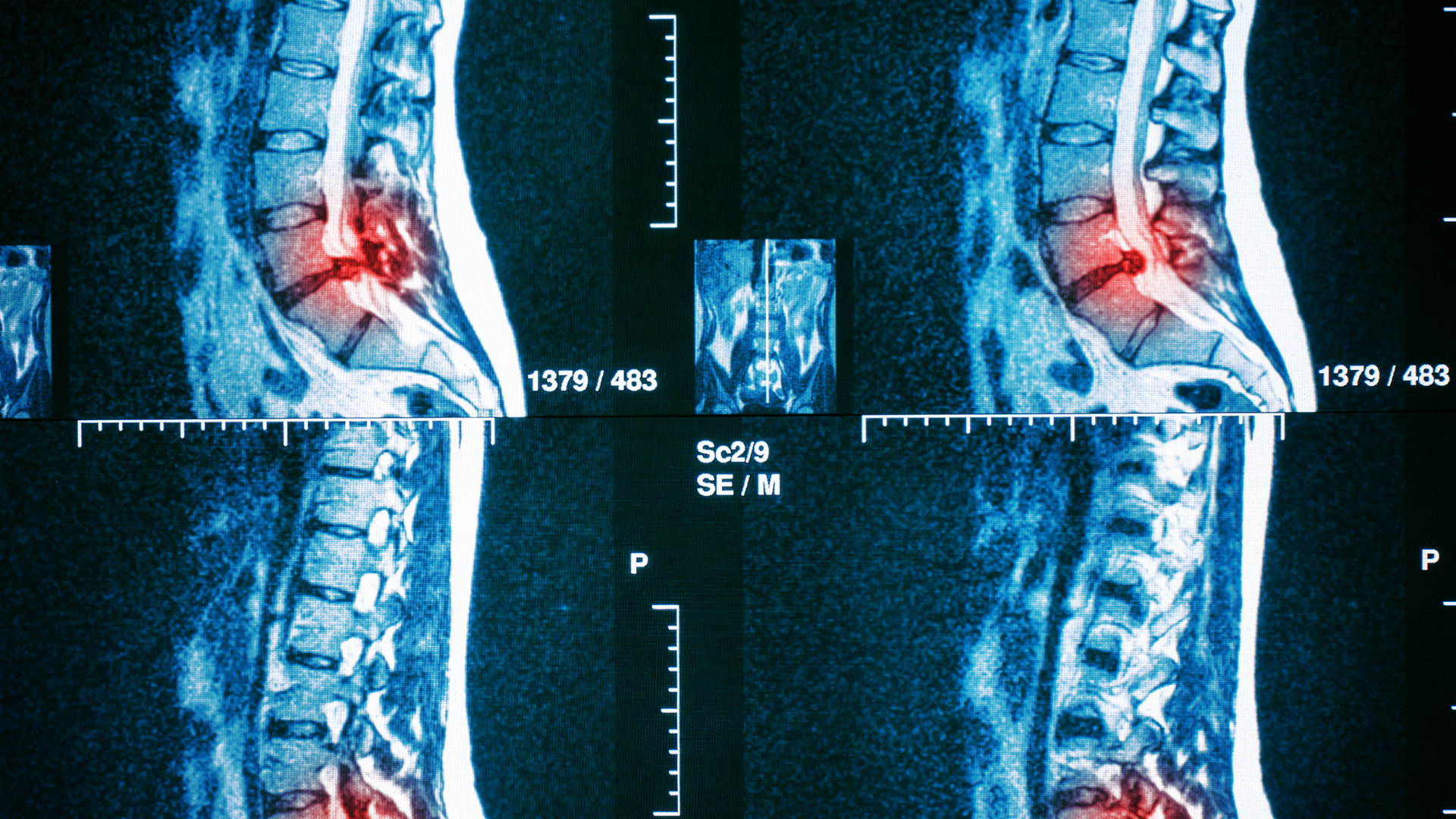
Symptoms alone don’t confirm that either condition needs surgery. A clinician reviews your history, examination, and imaging, such as scans that show spinal structures. The clinician then considers whether the imaging findings match your symptoms and whether a surgical option makes sense. A careful evaluation can help you understand what may cause your discomfort and which treatment choices fit your situation.
How a Lewisville Spine Surgeon Evaluates Endoscopic Surgery Candidacy
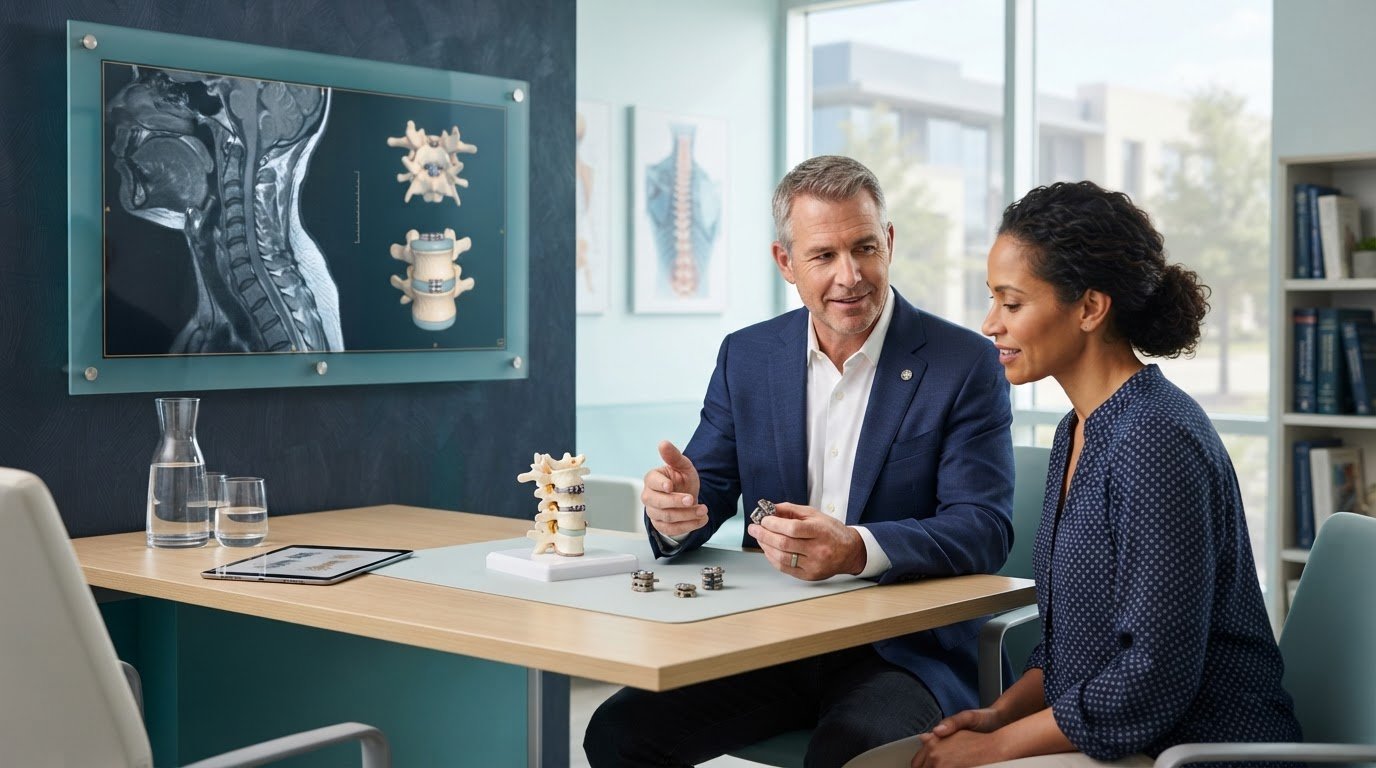
Could endoscopic spine surgery suit your symptoms? Candidacy depends on your diagnosis, symptoms, physical examination, imaging, and individual health factors. A minimally invasive approach doesn’t automatically make surgery the right choice. During a consultation, the surgeon assesses whether your symptoms correspond with a spinal condition the procedure could treat.
Dr. Scott C. Kutz uses a diagnosis-led evaluation to connect your concerns with clinical findings before discussing treatment options. He considers how symptoms affect your daily activities and whether your examination and imaging point to the same cause. An overview from Mayo Clinic on endoscopic spinal surgery also describes endoscopic techniques as part of minimally invasive spine care. The technique alone, however, doesn’t determine whether surgery suits you.
What information helps the surgeon assess your condition?
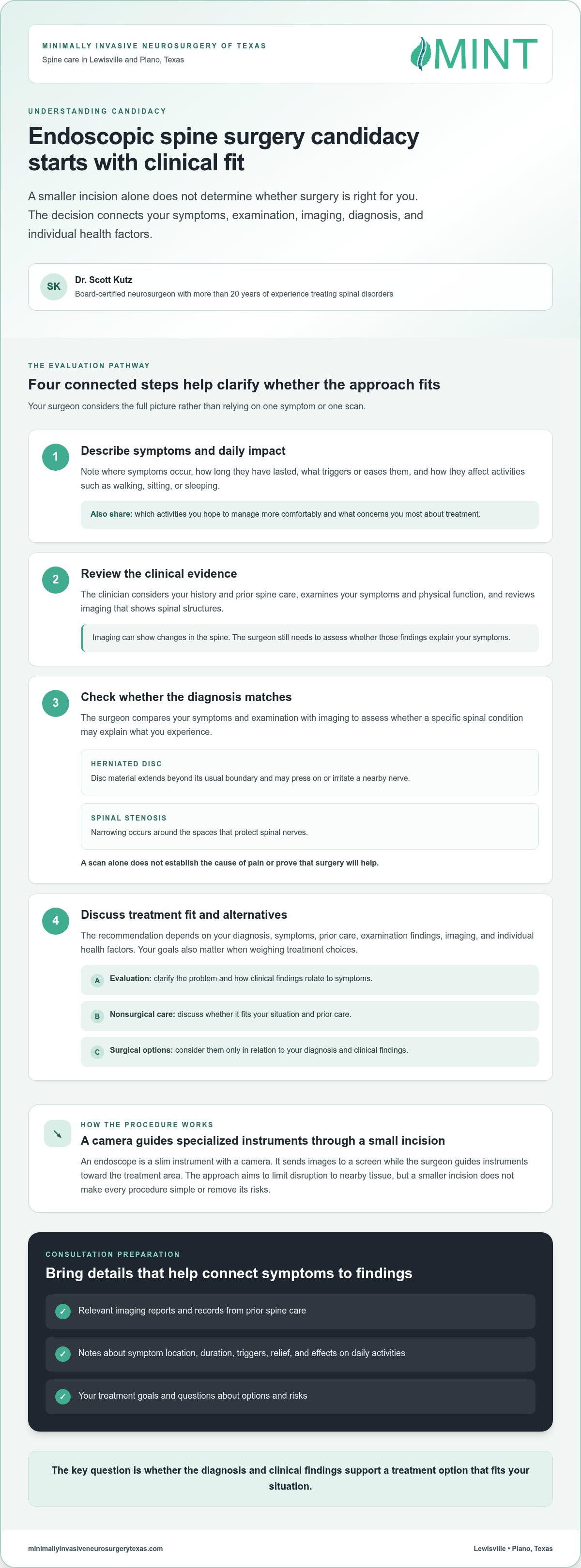
Bring relevant imaging reports and records from prior spine care. Note where your symptoms occur, how long they’ve lasted, what triggers or eases them, and how they affect activities such as walking, sitting, or sleeping. These details help the surgeon understand your experience alongside your clinical information.
During the examination, the clinician assesses your symptoms and physical function, then compares those findings with imaging, such as scans that show spinal structures. Imaging can reveal changes in your spine, but the surgeon must consider whether those changes explain your symptoms. A picture alone doesn’t establish the cause of pain or prove that surgery will help.
How do diagnosis and treatment goals shape the recommendation?
A herniated disc occurs when disc material extends beyond its usual boundary and may press on a nearby nerve. Spinal stenosis means narrowing around the spaces that protect spinal nerves. Because these conditions affect different structures, the surgeon considers your symptoms and imaging in light of the suspected diagnosis rather than treating the conditions as interchangeable.
Your goals matter, too. Tell the surgeon which activities you hope to manage more comfortably and what concerns you most about treatment. Dr. Kutz can weigh those priorities against the clinical findings and discuss appropriate alternatives before recommending a procedure. For an evaluation focused on endoscopic spine surgery Lewisville TX, you can read about MINT’s endoscopic spine surgery care or request a spine consultation.
Endoscopic Spine Surgery Compared With Other Back-Care Options
Back-care decisions don’t start with choosing a technique. A clinician considers your diagnosis, symptoms, prior care, and examination findings to decide which options make sense. An evaluation may clarify the problem first, include a discussion of nonsurgical care, or lead to a conversation about surgery. No procedure name can replace an individualized consultation.
When might nonsurgical care remain part of the discussion?
A clinician may discuss nonsurgical options based on your symptoms, diagnosis, overall health, and care history. This conversation helps you understand each option’s purpose and how the surgeon will assess whether it addresses your needs. An evaluation doesn’t mean you will have surgery. Ask how each choice relates to your diagnosis and what factors guide the next step.
How does endoscopic surgery differ from open spine surgery?
Endoscopic surgery uses a camera-equipped instrument to help the surgeon view the treatment area through a smaller surgical opening. Open surgery typically gives the surgeon access through a more direct, wider exposure of the area. The appropriate access depends on your spinal problem and the treatment you need. Neither approach guarantees a particular recovery or outcome, and both require careful planning and carry risks.
For an endoscopic spine surgery Lewisville TX evaluation, the surgeon considers whether the technique fits your specific condition, not simply whether it uses a smaller incision. Dr. Scott C. Kutz discusses your diagnosis, symptoms, prior care, and treatment goals when reviewing options. This individualized assessment helps you understand why a surgeon may recommend one approach over another or discuss nonsurgical care instead.
Preparing for an Endoscopic Spine Surgery Consultation in Lewisville
A focused consultation connects your symptoms, medical history, and treatment goals. Before discussing endoscopic spine surgery in Lewisville, organize information that can help Dr. Scott C. Kutz understand what you’re experiencing and what care you’ve already tried. You don’t need to arrive with every answer. Clear notes and thoughtful questions can make the conversation more useful.
What should you bring and describe at the appointment?
Gather what you have available, then use this short preparation sequence:
- Collect records. Bring imaging reports and available scans, relevant spine-care records, a list of medications, and notes about treatments you’ve tried.
- Write a symptom timeline. Note where discomfort or other symptoms occur, when they began, whether anything triggers or eases them, and how they affect daily activities.
- Identify your goals. Describe what you hope to do more comfortably, such as walking, working, sleeping, or returning to routine activities.
- Prepare questions. Write down concerns about your diagnosis, treatment choices, possible risks, recovery considerations, and follow-up planning.
Specific examples can help. Instead of noting only “back pain,” describe when it occurs and which activities it limits. Share changes over time, too. This context helps the clinician compare your account with examination findings and imaging, which shows structures inside the body.
Which questions can help you make an informed decision?
Ask questions that clarify how the surgeon reached a recommendation and how it relates to your priorities. For example:
- What diagnosis may explain my symptoms, and how do my examination and imaging support it?
- Which treatment options fit my findings, and what risks should I understand for each?
- If you recommend endoscopic surgery, why does that approach suit my condition?
- What recovery considerations and follow-up planning should I expect in my individual case?
Discuss the benefits and limits of each option, including what the surgeon expects treatment to address. Ask for clarification if a medical term or recommendation feels unclear. A patient-centered consultation should give you room to understand the reasoning before making a decision.
For more information about the procedure, read MINT’s endoscopic spine surgery service details. If you’re ready to discuss your symptoms and questions with the Lewisville or Plano spine-care team, request a consultation.
Discuss Endoscopic Spine Surgery With MINT in Lewisville or Plano
Deciding whether to pursue surgery starts with understanding what may cause your symptoms. Minimally Invasive Neurosurgery of Texas (MINT) focuses on spinal care and patient-centered conversations about appropriate treatment options. An evaluation can help you understand how your symptoms, examination, and imaging relate to a diagnosis, and whether endoscopic spine surgery belongs in the discussion. Surgery isn’t inevitable.
Dr. Scott C. Kutz is a board-certified neurosurgeon specializing in spinal disorders and minimally invasive spine surgery. He has more than 20 years of experience treating spinal disorders and holds board certification from the American Board of Neurological Surgery. MINT explains recommendations and treatment options so you can make informed decisions about how to proceed.
What can patients expect from a patient-centered evaluation?
The discussion begins with your concerns and medical history. Dr. Kutz reviews your symptoms, examination findings, and imaging, such as scans that show your spinal structures. He considers whether the findings fit together and whether a spinal condition may explain your symptoms.
If surgery may help, the conversation can cover the proposed procedure’s purpose, other appropriate options, risks, and recovery considerations for your case. You should understand the reasoning behind a recommendation before deciding what comes next. An evaluation may also clarify why another treatment pathway better fits your diagnosis and goals. No approach guarantees a particular result, so discuss how the surgeon expects each option to address your concerns.
Learn more about MINT’s endoscopic spine surgery care and how this technique fits within a diagnosis-led treatment discussion.
How can Lewisville and Plano patients take the next step?
MINT’s primary office serves patients in Lewisville, and the practice also has a satellite office in Plano. The team supports people from Dallas-Fort Worth and nearby North Texas communities who seek focused spine care. If you’re considering endoscopic spine surgery in Lewisville, TX, bring your imaging reports, prior spine-care records, symptom notes, and questions to an evaluation. These details can guide a focused discussion.
Request an appointment with MINT to discuss your symptoms and care options. A consultation gives you a place to understand your diagnosis and consider a recommendation without assuming surgery must follow. Request a spine evaluation in Lewisville or Plano.
Take the Next Step Toward Clearer Answers
Endoscopic spine surgery uses a camera-guided approach to treat selected spinal conditions, but a smaller incision alone doesn’t make surgery the right choice. Your diagnosis, symptoms, imaging, health, and goals should guide the discussion. Preparing records and questions can help you understand the recommendation and weigh appropriate options.
If you’re exploring endoscopic spine surgery Lewisville TX, MINT offers patient-centered spine evaluations in Lewisville and Plano. Dr. Scott C. Kutz is board-certified in neurological surgery and has more than 20 years of experience treating spinal disorders. Lewisville serves as the primary office, with a satellite office in Plano.
You deserve a clear explanation of what may cause your symptoms and which treatment paths fit your situation. Request a patient-centered spine surgery consultation to discuss your concerns with MINT. An informed conversation can help you take your next step with greater confidence.
Frequently Asked Questions
What is endoscopic spine surgery?
Endoscopic spine surgery uses an endoscope, a slim instrument with a camera, to help a surgeon see the treatment area. The surgeon uses the camera’s view to guide specialized instruments during a procedure for a selected spinal condition. This approach falls within minimally invasive spine surgery, which aims to reach the treatment area while limiting disruption to nearby tissue. Your diagnosis determines whether this method may fit your care.
Who may be a candidate for endoscopic spine surgery?
You may be a candidate when your symptoms, examination findings, and imaging point to a spinal condition the procedure can address. A surgeon also considers your overall health, prior care, and treatment goals. A minimally invasive approach doesn’t automatically make surgery appropriate. A consultation helps determine whether your diagnosis explains your symptoms and whether endoscopic surgery or another option makes sense.
Can endoscopic spine surgery treat a herniated disc?
Yes, a surgeon may use endoscopic surgery to treat selected herniated discs. A herniated disc occurs when material inside a spinal disc extends beyond its usual boundary and may press on a nearby nerve. The surgeon reviews your symptoms and imaging to see whether the disc explains your concerns and whether a procedure fits your condition. A herniated disc diagnosis alone doesn’t mean you need surgery.
Is endoscopic spine surgery better than open surgery?
Neither approach works better for every patient. Endoscopic surgery uses a camera and specialized instruments through a smaller surgical opening, while open surgery gives the surgeon more direct access to the treatment area. The right approach depends on your spinal condition, treatment needs, and clinical assessment. Both approaches require careful planning and carry risks. Discuss why the surgeon recommends a particular technique for your case.
How should I prepare for an endoscopic spine surgery consultation?
Bring available imaging and reports, records from prior spine care, medication details, and information about treatments you’ve tried. Write down where your symptoms occur, how long they’ve lasted, what affects them, and which daily activities they limit. Note your treatment goals, too. Ask how your diagnosis connects to your symptoms, which options fit your findings, and what risks, recovery considerations, and follow-up planning may involve.
Where can I discuss endoscopic spine surgery near Lewisville, TX?
Minimally Invasive Neurosurgery of Texas (MINT) discusses spine care in Lewisville and Plano, Texas. Lewisville serves as the practice’s primary office, and Plano has a satellite office. Dr. Scott C. Kutz, a board-certified neurosurgeon who specializes in spinal disorders and minimally invasive spine surgery, has more than 20 years of experience treating spinal disorders. A consultation can help clarify whether endoscopic surgery suits your diagnosis.
Does a smaller incision mean endoscopic spine surgery has no risks?
No. A smaller incision doesn’t remove the risks of surgery or guarantee a particular outcome. The procedure still requires careful planning, and risks vary with your health and the specific spinal condition. Ask the surgeon to explain the risks that apply to your case, the expected benefits, and other appropriate options. Understanding these details can help you make an informed decision without assuming surgery is inevitable.